Tuesday, 21 July 2026

Consumer Alert: Certificate Swapping Fraud – A Growing Threat to the Diamond Industry

 The Diamond Certification Laboratory of Australia (DCLA) Issues Warning to Consumers and the Jewellery Trade

The Diamond Certification Laboratory of Australia (DCLA) Issues Warning to Consumers and the Jewellery Trade

The Diamond Certification Laboratory of Australia (DCLA) is warning both the jewellery trade and the public about an increasingly concerning practice involving the misuse of legitimate diamond grading certificates.

Over recent years, laboratories around the world have identified instances where an authentic grading certificate is presented with a different stone than the one originally examined. In many cases, the original natural diamond has allegedly been replaced with a laboratory-grown diamond or a diamond simulant such as moissanite or cubic zirconia, while the genuine certificate is retained to give the replacement stone an appearance of legitimacy.

These practices have the potential to deceive buyers, undermine confidence in the jewellery industry, and expose innocent consumers to significant financial loss.

A Recent Case Submitted to the DCLA

The DCLA recently examined a stone submitted by a member of the public who believed they owned a natural diamond.

The owner advised the laboratory that the stone had previously been represented as a natural diamond and further claimed that it had been assessed by an Australian gemologist in their local area.

Following comprehensive gemmological testing using multiple independent testing methods, the DCLA determined that the submitted stone was not a natural diamond.

Cases such as this reinforce the importance of independent laboratory verification before purchasing, selling, or insuring any significant diamond.

The DCLA makes no comment regarding how the substitution may have occurred or whether any individual or business was responsible. Determining whether a criminal offence has taken place is a matter for the relevant authorities.

How Certificate Swapping Can Occur

A legitimate laboratory certificate describes only the specific diamond that was examined at the time of grading.

If that diamond is later removed from its jewellery setting and replaced with another stone, the certificate no longer relates to the stone being presented.

Unscrupulous individuals may attempt to exploit this by presenting an authentic certificate alongside a completely different stone, creating the false impression that the replacement stone has been independently graded.

This practice can occur with:

  • Laboratory-grown diamonds substituted for natural diamonds.
  • Moissanite substituted for natural diamonds.
  • Cubic zirconia or other simulants presented as genuine diamonds.
  • Lower-quality natural diamonds substituted for higher-grade stones.

In every case, the certificate itself may be genuine, but it no longer corresponds to the stone being offered.

Why Professional Laboratory Verification Matters

Modern gemmological testing involves far more than simply using a handheld diamond tester.

The DCLA utilises advanced gemmological instrumentation together with traditional microscopic examination to identify natural diamonds, laboratory-grown diamonds and diamond simulants.

Every significant diamond should be verified by an independent laboratory whenever there is doubt regarding its identity or whenever ownership changes.

Consumers should be particularly cautious when:

  • Purchasing second-hand diamonds.
  • Buying diamonds through online marketplaces.
  • Purchasing from private sellers.
  • Acquiring diamonds accompanied by older certificates where the stone has been removed from its original setting.
  • Buying unusually inexpensive diamonds that appear “too good to be true.”

Protect Yourself

Consumers can significantly reduce their risk by following a few simple precautions:

  • Always compare the stone to the laboratory certificate.
  • Where possible, verify any laser inscription against the grading report.
  • Request an independent examination before completing a purchase.
  • Retain invoices and supporting documentation.
  • Purchase from reputable jewellers who provide clear provenance and after-sales support.

If You Believe You Have Been Defrauded

If you discover that a diamond has been substituted or that a certificate does not correspond to the stone supplied, you should:

  • Preserve all documentation and correspondence.
  • Obtain an independent laboratory report.
  • Contact your state’s consumer protection agency.
  • Report suspected criminal activity to your local police.
  • Notify relevant jewellery industry organisations where appropriate.

Reporting suspected fraud not only assists your own case but also helps protect future consumers from becoming victims of similar scams.

Maintaining Confidence in the Industry

The overwhelming majority of jewellers, diamond dealers and gemologists operate with honesty, professionalism and integrity. However, even isolated cases of certificate misuse can damage public confidence in the industry.

Independent laboratory verification remains one of the most effective safeguards against misrepresentation.

The DCLA encourages consumers to seek independent expert advice whenever uncertainty exists regarding a diamond’s identity. Verification before purchase—or before resale—can prevent costly mistakes and help maintain confidence throughout Australia’s diamond industry.

Diamond Certification Laboratory of Australia (DCLA)

Protecting consumer confidence through independent scientific diamond identification and grading.

Monday, 20 July 2026

Nature vs Technology: Why Large Natural Diamonds Are Exceptionally Rare While Large Laboratory-Grown Diamonds Are Increasingly Common

 Large Diamonds Are Exceptionally Rare

For billions of years, nature has been producing diamonds deep beneath the Earth’s surface under immense pressure and temperatures exceeding 1,000°C. Every natural diamond is the result of a geological journey unlike any other gemstone, carrying with it a unique record of the Earth’s history.

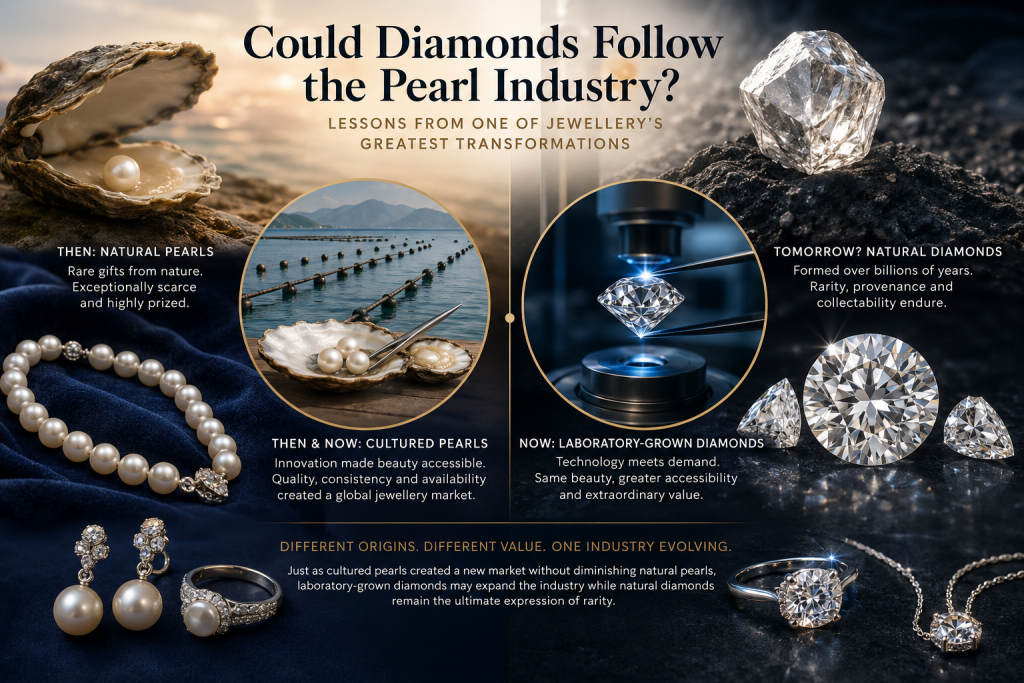
Today, laboratory-grown diamonds are manufactured in controlled environments over a period of weeks rather than billions of years. While they possess the same crystal structure as diamond, the economics of their production are almost the complete inverse of nature.

Nature’s Ratio: Large Diamonds Are Exceptionally Rare

Natural diamond deposits follow a remarkably predictable size distribution.

The overwhelming majority of diamonds recovered from mines around the world are small crystals. As crystal size increases, rarity increases exponentially. Large gem-quality rough diamonds are exceptionally uncommon because their growth requires an uninterrupted geological environment over immense periods of time. Even minor changes in pressure, temperature, or surrounding chemistry can halt growth or fracture a developing crystal.

This means that:

  • Small diamonds make up the vast majority of natural production.
  • Medium-sized diamonds are considerably less common.
  • Large diamonds are exceptionally rare.
  • Very large, high-quality diamonds are among the rarest natural materials on Earth.

This natural scarcity is why diamonds above several carats increase dramatically in value. Their rarity is not created by marketing—it is governed by geology.

Laboratory Production: The Reverse Distribution

Laboratory-grown diamonds operate under a completely different economic model.

Manufacturers begin with a tiny diamond seed and grow additional carbon onto it using either High Pressure High Temperature (HPHT) or Chemical Vapour Deposition (CVD) technology.

Unlike mining, where large diamonds are rarely discovered, laboratory production often aims to grow the largest crystal economically possible.

The production costs of a laboratory-grown diamond are concentrated in operating the equipment rather than discovering the crystal. Once a growth cycle has begun, extending growth to produce a larger crystal is frequently more profitable than manufacturing numerous small stones.

As a result:

  • Larger laboratory-grown rough is increasingly common.
  • Multiple large diamonds can be produced from a single manufacturing facility every month.
  • Production volumes are limited primarily by equipment capacity and electricity costs rather than geological rarity.

In many modern factories, larger diamonds are actually preferred because they provide greater manufacturing flexibility and can be cut into multiple finished stones.

The distribution therefore becomes almost the reverse of nature.

Why Large Natural Diamonds Are Exceptionally Rare


Billions of Years vs Several Weeks

Natural diamonds typically formed between one and three billion years ago within the Earth’s mantle at depths approaching 150 to 250 kilometres.

Their growth occurred slowly under constantly changing geological conditions before volcanic eruptions transported them to the Earth’s surface through kimberlite and lamproite pipes.

Laboratory-grown diamonds, by comparison, are produced in controlled chambers over several weeks.

Every variable—including temperature, pressure, gas composition and growth rate—is carefully managed by technicians rather than nature.

A Record of Earth’s History

One of the most fascinating differences lies within the crystal itself.

Natural diamonds contain microscopic traces of the environment in which they formed. These include tiny amounts of nitrogen, boron, hydrogen and numerous other trace elements that became incorporated into the crystal lattice over geological time.

Many natural diamonds also contain microscopic mineral inclusions originating from deep within the Earth’s mantle. These tiny crystals provide scientists with valuable information about regions of the Earth that can never be directly sampled.

In effect, every natural diamond is a geological time capsule.

Laboratory-grown diamonds, however, are produced from highly purified carbon sources under carefully controlled conditions. Their objective is consistency rather than geological complexity.

Consequently, laboratory-grown diamonds are composed almost entirely of carbon, with very low levels of naturally occurring trace elements. Depending on the manufacturing process, they may instead exhibit characteristics associated with their production, including metallic catalyst residues in some HPHT-grown diamonds or growth-related structural features in CVD-grown diamonds.

Rather than recording billions of years of Earth’s geological history, laboratory-grown diamonds primarily reflect the manufacturing process used to create them.

Why These Differences Matter

Although natural and laboratory-grown diamonds share the same fundamental crystal structure and hardness, their origin is entirely different.

Natural diamonds represent an irreplaceable finite resource created by geological processes that cannot be replicated by nature within any human timescale. Their rarity is determined by billions of years of Earth history and the extremely low probability of large crystal formation.

Laboratory-grown diamonds represent an impressive technological achievement. They are manufactured products whose supply is governed by industrial capacity, advances in production technology and manufacturing costs.

Understanding these differences is essential when assessing rarity, long-term availability and market value. As laboratory production continues to expand, large laboratory-grown diamonds are expected to become increasingly accessible, while large natural diamonds will remain among the rarest and most sought-after treasures ever created by nature.

The DCLA Perspective

At the Diamond Certification Laboratory of Australia (DCLA), every diamond is identified and graded according to internationally recognised gemmological standards. Whether natural or laboratory-grown, accurate identification allows consumers, jewellers and collectors to make informed decisions based on origin, rarity and value.

While both categories have their place within today’s jewellery market, they should never be considered equivalent in terms of geological origin. One is a remarkable product of Earth’s natural history, while the other is a remarkable achievement of modern science.

Understanding that distinction remains fundamental to informed purchasing and responsible disclosure throughout the diamond industry.

Source: DCLA

Sunday, 19 July 2026

The Evolution of Diamond Necklaces: Choosing the Perfect Style for Every Stage of Life

 A diamond necklace is far more than a beautiful piece of jewellery it is one of the most personal and enduring investments a person can own. Throughout history, diamond necklaces have symbolised love, achievement, elegance and family heritage.

A diamond necklace is far more than a beautiful piece of jewellery it is one of the most personal and enduring investments a person can own. Throughout history, diamond necklaces have symbolised love, achievement, elegance and family heritage. Unlike fashion trends that come and go, a well-crafted diamond necklace can be worn for decades and eventually passed from one generation to the next.

Today’s jewellery designers have created an incredible variety of necklace styles to suit different ages, lifestyles and occasions. From delicate solitaire pendants to spectacular multi-stone tennis necklaces, there is a perfect design for every woman.

The Teen Years (18–25): Simplicity with Meaning

For younger women, understated elegance remains the most popular choice. A single diamond pendant offers sophistication without appearing overly formal.

Popular choices include:

  • Round Brilliant Solitaire Pendant
  • Pear Shape Diamond Pendant
  • Oval Diamond Pendant
  • Heart Shape Diamond Pendant
  • Initial or personalised diamond necklaces

Diamonds between 0.20 and 0.75 carats are the most common for this age group, typically set in 18ct white gold, yellow gold or rose gold.

The pear-shaped diamond has become particularly fashionable, offering a contemporary appearance while creating the illusion of greater size.


Young Professionals (25–35): Building a Jewellery Collection

As careers develop and special milestones arrive, many women begin investing in larger diamonds and more versatile pieces.

Popular styles include:

  • Larger Solitaire Pendants
  • Diamond Halo Pendants
  • Floating Diamond Necklaces
  • Station Necklaces
  • Graduated Diamond Necklaces

Diamond sizes generally range from 0.50 to 2.00 carats, depending on personal preference.

Oval, emerald and pear-shaped diamonds have become favourites during this stage because they appear larger than round diamonds of the same weight while maintaining exceptional elegance.

Many women also begin layering necklaces of varying lengths, creating a sophisticated modern look.


The Luxury Years (35–50): Statement Jewellery

This is often when jewellery collections expand significantly.

Women increasingly choose necklaces suitable for business functions, formal events and evening occasions.

Popular designs include:

Diamond Tennis Necklaces

Diamond Tennis Necklaces


The diamond tennis necklace has experienced an extraordinary resurgence in popularity.

Consisting of individually matched diamonds linked seamlessly together, these necklaces provide continuous brilliance around the neckline.

Modern versions include:

  • Round Brilliant Tennis Necklaces
  • Oval Diamond Tennis Necklaces
  • Pear Shape Tennis Necklaces
  • Emerald Cut Tennis Necklaces
  • Mixed Shape Tennis Necklaces

Many luxury jewellers now produce alternating combinations of:

  • Pear and Round
  • Oval and Round
  • Emerald and Pear
  • Cushion and Oval

These mixed-shape designs create movement and visual interest while showcasing multiple cutting styles.


Mature Elegance (50+): Timeless Investment Pieces

For established collectors, craftsmanship becomes just as important as diamond size.

Many clients seek exceptional pieces featuring:

  • Large Solitaire Diamonds
  • Fancy Colour Diamonds
  • Multi-row Tennis Necklaces
  • Graduated Diamond Rivière Necklaces
  • Rare Fancy Shape Designs

These necklaces are often worn for black-tie events, weddings and significant family celebrations.

Investment-quality diamonds are frequently selected in D to F colour and Internally Flawless to VS clarity, although beauty should always take precedence over laboratory grades alone.


The Most Popular Diamond Shapes for Necklaces

Each diamond shape creates a completely different appearance.

Round Brilliant

The world’s most popular diamond cut.

With 58 carefully arranged facets, the Round Brilliant delivers maximum sparkle and remains the classic choice for solitaire pendants and tennis necklaces.


Pear Shape

Elegant and feminine, the pear combines the brilliance of a round diamond with the graceful length of a marquise.

Its elongated profile flatters the neckline and has become one of today’s fastest-growing luxury jewellery trends.


Oval Brilliant

Oval diamonds provide exceptional brilliance while appearing larger than a round diamond of equal carat weight.

They also create a slimming visual effect, making them particularly popular in pendants.


Emerald Cut

Known for elegance rather than sparkle, emerald cuts display long mirror-like reflections.

Their sophisticated appearance appeals to collectors seeking understated luxury.


Cushion Cut

A beautiful combination of vintage romance and modern brilliance.

Soft rounded corners give the cushion cut a timeless appeal that pairs beautifully with halo settings.


Marquise

Originally commissioned for French royalty, the marquise shape creates maximum finger or neckline coverage while using less carat weight.

Its dramatic silhouette remains a favourite for statement jewellery.


Radiant Cut

Combining the outline of an emerald cut with the brilliance of a round diamond, radiant cuts offer exceptional fire and versatility.


Multi-Stone Necklaces: The New Luxury Trend

One of the strongest jewellery trends today is the multi-stone diamond necklace.

Rather than showcasing one large centre diamond, these necklaces feature carefully matched diamonds arranged in artistic patterns.

Popular designs include:

  • Graduated Pear Shapes
  • Alternating Oval and Round Diamonds
  • Emerald and Pear Combinations
  • Fancy Shape Mixes
  • Floating Multi-Diamond Designs
  • Flexible Tennis Necklaces

These necklaces create extraordinary brilliance while allowing designers to produce unique, wearable works of art.


Choosing the Right Metal

The metal selected can dramatically influence the appearance of the diamonds.

18ct White Gold

  • The most popular choice for colourless diamonds.
  • Enhances brightness and creates a clean contemporary appearance.

18ct Yellow Gold

  • Increasingly fashionable.
  • Provides warmth and vintage elegance.
  • Particularly beautiful with champagne and yellow diamonds.

18ct Rose Gold

  • Romantic and modern.
  • Complements many skin tones beautifully.

950 Platinum

  • The premium choice for exceptional diamonds.
  • Naturally white, hypoallergenic and extremely durable.
  • Often preferred for high-value necklaces because of its strength and longevity.

Quality Matters More Than Size

While larger diamonds naturally attract attention, beauty ultimately depends on the quality of the cut, the precision of craftsmanship and the matching of individual stones.

In tennis necklaces, every diamond should display consistent colour, clarity, cut proportions and brilliance. Even slight differences can disrupt the necklace’s overall appearance. Hand-selected, well-matched diamonds create a seamless ribbon of light that distinguishes exceptional craftsmanship from mass-produced jewellery.

Similarly, claw alignment, stone spacing, articulation and finishing all contribute to the elegance, comfort and durability of a necklace. These details are often overlooked but are hallmarks of fine jewellery.


The DCLA Recommendation

Whether purchasing a first diamond pendant or investing in a magnificent tennis necklace, buyers should always seek independent diamond certification for significant stones. A professionally graded diamond provides confidence in its quality, authenticity and value, ensuring informed purchasing decisions.

A beautifully crafted diamond necklace is more than an accessory it becomes part of a family’s story. With thoughtful design, expert craftsmanship and carefully selected diamonds, these timeless pieces can be treasured for generations, celebrating life’s milestones while preserving both sentimental and lasting value.

Source: DCLA

Thursday, 16 July 2026

Choosing the Right Precious Metal for Fine Diamond Jewellery

 When purchasing a fine diamond, most buyers focus on the stone itself its cut, colour, clarity and carat weight. While these characteristics determine a diamond's beauty and rarity, the precious metal and the method used to manufacture the jewellery are equally important in creating a piece that will last for generations.

Why Gold Purity, Colour and Craftsmanship Matter

When purchasing a fine diamond, most buyers focus on the stone itself its cut, colour, clarity and carat weight. While these characteristics determine a diamond’s beauty and rarity, the precious metal and the method used to manufacture the jewellery are equally important in creating a piece that will last for generations.

At the Diamond Certification Laboratory of Australia (DCLA), we believe that exceptional diamonds deserve exceptional craftsmanship. Understanding the differences between gold purity, precious metal colours, platinum alloys, and manufacturing techniques allows buyers to make informed decisions when investing in fine jewellery.

Understanding Gold Karats

Pure gold is 24 karat (24K), meaning it contains 99.9% gold. Although pure gold is highly valuable, it is also extremely soft, making it unsuitable for most jewellery designed to be worn every day.

Gold is therefore alloyed with other precious metals to improve its hardness, durability and colour.

24 Karat Gold (99.9% Pure)

  • Bright, rich yellow colour.
  • Extremely soft and easily scratched.
  • Rarely used for diamond engagement rings.
  • Commonly used for bullion and investment products.

18 Karat Gold (75% Pure Gold)

18K gold contains 75% pure gold and 25% carefully selected alloy metals.

This has long been regarded as the premium standard for fine jewellery because it offers the ideal balance between purity, strength and luxury.

Advantages include:

  • Rich, warm colour.
  • Excellent corrosion resistance.
  • Superior long-term value.
  • Strong enough to securely hold valuable diamonds.
  • Preferred by leading luxury jewellery houses worldwide.

For high-quality natural diamonds, 18K gold provides the perfect combination of beauty and structural integrity.

14 Karat Gold (58.5% Pure Gold)

14K gold contains a greater proportion of alloy metals, making it:

  • Harder than 18K.
  • More resistant to scratching.
  • Less expensive.
  • Slightly paler in colour.

While popular for commercial jewellery, it lacks the richness and prestige associated with premium diamond pieces.

9 Karat Gold (37.5% Pure Gold)

Commonly found in mass-produced jewellery, 9K gold is:

  • The most affordable.
  • Significantly harder due to higher alloy content.
  • Less resistant to tarnishing.
  • Lower in intrinsic gold value.

Although perfectly suitable for everyday jewellery, it is generally not considered the ideal choice for exceptional diamonds or heirloom-quality pieces.

Gold Colours

Many people are surprised to learn that all coloured gold begins as naturally yellow gold. Different alloy metals create the various colours available today.

Yellow Gold

Traditional yellow gold is produced using silver and copper alloys while maintaining the natural warmth associated with pure gold.

It complements:

  • White diamonds
  • Yellow diamonds
  • Champagne diamonds
  • Vintage-inspired jewellery

White Gold

White gold is created by alloying gold with metals such as palladium or nickel before being finished with a rhodium plating.

Its bright white appearance enhances colourless diamonds by providing a clean, contemporary look.

Because rhodium naturally wears over time, white gold jewellery may require replating every few years to maintain its brilliant finish.

Rose Gold

Rose gold obtains its distinctive blush colour from a higher copper content.

Its popularity continues to grow because it:

  • Flatters most skin tones.
  • Provides a romantic appearance.
  • Beautifully complements pink diamonds and champagne diamonds.

Why Premium Diamonds Deserve 18K Gold or 950 Platinum

The finest diamonds represent extraordinary rarity and value. Their setting should offer equal levels of quality and longevity.

Professional jewellers generally recommend either 18K gold or 950 platinum for important diamond jewellery.

18 Karat Gold

18K gold provides:

  • Excellent strength.
  • High precious metal content.
  • Beautiful colour.
  • Long-term durability.
  • Greater prestige.

950 Platinum

Platinum is considered the ultimate jewellery metal.

950 platinum contains 95% pure platinum, making it one of the purest precious metals used in jewellery.

Its advantages include:

  • Naturally white colour that never requires rhodium plating.
  • Exceptional durability.
  • Outstanding resistance to corrosion.
  • Excellent security for diamond settings.
  • Hypoallergenic properties.
  • Greater density, providing substantial weight and a luxurious feel.

Unlike gold, platinum displaces rather than loses metal when scratched, allowing it to retain its integrity over many decades.

For important engagement rings and investment-quality diamonds, 950 platinum remains the benchmark for premium jewellery.

Handmade Jewellery versus Cast Jewellery

The manufacturing process also plays a significant role in the quality and longevity of a finished piece.

Handmade Jewellery

Handmade jewellery is individually crafted by highly skilled jewellers using traditional techniques.

Each component is fabricated, shaped and assembled by hand.

Advantages include:

  • Superior structural strength.
  • Greater attention to detail.
  • Better stone positioning.
  • Exceptional finishing.
  • Easier future repairs and restoration.
  • Greater individuality.

Because the metal is worked and compressed during fabrication, handmade pieces often possess greater density and durability than cast jewellery.

These techniques require years of experience and many hours of labour, making handmade jewellery the pinnacle of fine craftsmanship.

Cast Jewellery

Most modern jewellery is manufactured using lost-wax casting.

A wax model is produced, surrounded by investment material, and molten precious metal is poured into the mould.

Advantages include:

  • Excellent consistency.
  • Intricate design possibilities.
  • Faster production.
  • Lower manufacturing costs.
  • Ideal for producing matching collections.

Modern casting technology has advanced enormously and, when performed to high standards, produces beautiful jewellery suitable for everyday wear.

However, cast jewellery can occasionally contain microscopic porosity within the metal and generally lacks the density achieved through traditional hand fabrication.

The Importance of Matching Quality with Quality

An exceptional diamond deserves a setting that reflects its rarity.

There is little logic in placing a rare, perfectly cut diamond into a lower-purity metal or a poorly manufactured setting. Likewise, even the finest handcrafted ring cannot compensate for an inferior diamond.

The finest jewellery achieves harmony between all components:

  • A beautifully cut natural diamond.
  • High-purity 18K gold or 950 platinum.
  • Expert setting techniques.
  • Precision craftsmanship.
  • Thoughtful design.
  • Long-term durability.

When these elements come together, the result is more than jewellery it becomes an heirloom capable of being worn, admired and passed from one generation to the next.

At the DCLA, we encourage consumers to evaluate not only the quality of the diamond, but also the precious metal, craftsmanship and manufacturing methods used to create the finished piece. These factors collectively determine the beauty, security and longevity of jewellery that may be treasured for a lifetime.

Source: DCLA

Consumer Alert: Certificate Swapping Fraud – A Growing Threat to the Diamond Industry

  The Diamond Certification Laboratory of Australia (DCLA) Issues Warning to Consumers and the Jewellery Trade The Diamond Certification Lab...