Showing posts with label jewellery Design. Show all posts

Wednesday, 5 August 2026

Luxury Diamond Jewellery Trends for 2026, The Return of Quality, Individuality and Timeless Style

 Today's luxury jewellery buyers are no longer chasing fleeting trends they are investing in craftsmanship, exceptional natural diamonds and pieces that will be treasured for decades.

For years, fashion dictated what jewellery people wore. In 2026, that has changed.

Today’s luxury jewellery buyers are no longer chasing fleeting trends they are investing in craftsmanship, exceptional natural diamonds and pieces that will be treasured for decades. Whether purchasing an engagement ring, anniversary gift or investment-quality diamond, buyers are demanding authenticity, rarity and expert craftsmanship.

At the DCLA Diamond Exchange in Sydney, we’ve seen a noticeable shift in buying habits. Clients are becoming more educated, asking deeper questions about diamond quality, provenance and long-term value rather than simply focusing on size.

Here are the biggest luxury diamond jewellery trends shaping 2026.


Natural Diamonds Continue to Define Luxury

While laboratory-grown diamonds have found their place in the jewellery market, natural diamonds continue to dominate the luxury sector.

Collectors and high-end buyers increasingly appreciate the rarity of a diamond that formed naturally over billions of years.

Many clients now seek:

  • Exceptional cut quality
  • Excellent optical performance
  • Higher colour and clarity grades
  • Larger certified natural diamonds
  • Rare fancy colour diamonds

Rather than purchasing multiple fashion pieces, many Australians are choosing one extraordinary diamond that can become a family heirloom.


Yellow Gold Makes a Strong Return

White gold and platinum remain popular, but yellow gold has firmly re-established itself as the metal of choice for luxury jewellery.

Its rich colour complements both white and fancy coloured diamonds while offering a timeless appearance that suits every generation.

Popular yellow gold pieces include:

  • Solitaire engagement rings
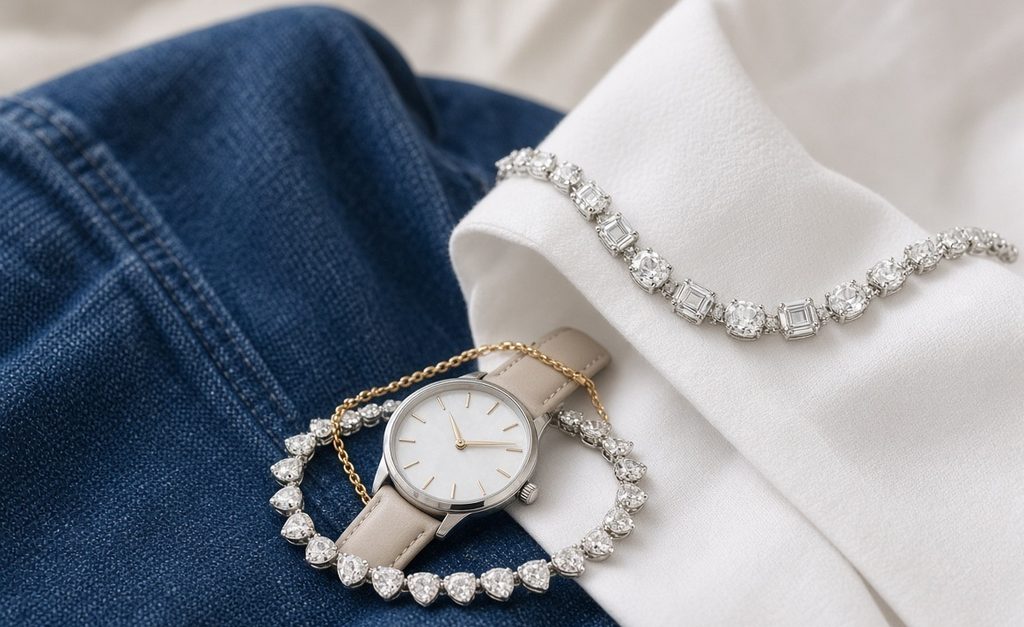
  • Diamond tennis bracelets
  • Large diamond hoops
  • Modern signet rings
  • Classic diamond pendants

Many jewellers are also pairing yellow gold with platinum claws, combining warmth with the security and durability of platinum settings.


Fancy Shape Diamonds Are More Popular Than Ever

Round brilliant diamonds remain Australia’s favourite, but fancy shapes continue gaining momentum.

Some of the fastest-growing choices include:

  • Oval
  • Emerald Cut
  • Pear
  • Cushion
  • Radiant
  • Marquise

These shapes offer individuality while often appearing larger than round diamonds of the same carat weight.

Elegant elongated diamonds also create a flattering appearance when worn in engagement rings.


Minimalist Designs with Maximum Impact

Luxury no longer means excessive.

Modern jewellery embraces clean lines, refined proportions and exceptional workmanship.

Simple designs featuring beautifully cut diamonds are proving more desirable than heavily ornate settings.

Current favourites include:

  • Four-claw solitaire rings
  • Hidden halo engagement rings
  • Floating diamond pendants
  • Fine diamond line necklaces
  • Bezel-set diamond bracelets

The emphasis is now on allowing the quality of the diamond to speak for itself.


Coloured Diamonds and Rare Gemstones Continue to Impress

For buyers wanting something truly unique, coloured diamonds remain among the world’s most desirable gemstones.

Natural:

  • Pink diamonds
  • Blue diamonds
  • Yellow diamonds
  • Green diamonds

continue attracting collectors worldwide.

Coloured sapphires, emeralds and rubies are also making a strong comeback, particularly when paired with brilliant white diamonds in custom-designed jewellery.

Australian Argyle pink diamonds remain especially sought after due to their limited supply following the mine’s closure.


Custom Jewellery Is Becoming the New Luxury

Increasingly, clients are choosing bespoke jewellery over mass-produced designs.

Rather than selecting a ring from a display cabinet, buyers are working directly with experienced jewellers to create something entirely unique.

Custom jewellery allows clients to choose:

  • The perfect diamond
  • Their preferred setting
  • Precious metal
  • Finger fit
  • Personal design details

The result is jewellery that reflects the owner’s personality rather than current fashion trends.


Exceptional Diamond Cut Is Receiving Greater Attention

Consumers have become far more knowledgeable.

Rather than concentrating solely on carat weight, many buyers now understand that cut quality has the greatest influence on a diamond’s beauty.

An expertly cut diamond delivers:

  • Superior brilliance
  • Greater fire
  • Improved scintillation
  • Better face-up appearance
  • Stronger long-term desirability

This growing awareness has increased demand for premium cut grades and independently graded diamonds.


Ethically Sourced Diamonds Matter More Than Ever

Responsible sourcing has become an expectation rather than a selling point.

Australian buyers increasingly ask where their diamonds originated and whether they comply with international ethical standards.

Reputable jewellers now provide:

  • Independent diamond grading
  • Transparent sourcing
  • Conflict-free assurances
  • Full certification

Confidence in a diamond’s identity has become almost as important as the diamond itself.


Investment Pieces Are Back

Economic uncertainty has encouraged many Australians to purchase jewellery with lasting value.

Rather than fashion accessories, buyers are seeking pieces that can be enjoyed today while potentially becoming tomorrow’s family heirlooms.

Popular investment purchases include:

  • Large certified natural diamonds
  • Diamond tennis bracelets
  • Solitaire pendants
  • Classic stud earrings
  • Fancy coloured diamonds

Unlike seasonal fashion, these pieces remain desirable generation after generation.


Quality Craftsmanship Never Goes Out of Style

Perhaps the strongest trend of all is a renewed appreciation for exceptional craftsmanship.

Precision setting, hand finishing and thoughtful design separate truly luxurious jewellery from mass-produced alternatives.

At DCLA Diamond Exchange, we continue to see clients choosing quality over quantity—investing in beautifully crafted jewellery that celebrates the rarity of natural diamonds and the skill of the jeweller who created it.

Luxury is no longer defined simply by size or price.

It is defined by authenticity, exceptional craftsmanship and timeless beauty.


Thoughts

The jewellery trends of 2026 demonstrate that true luxury is moving away from short-lived fashion and back towards enduring quality.

Natural diamonds, outstanding craftsmanship, ethical sourcing and personalised design are driving today’s luxury market. Buyers are becoming more informed and more selective, recognising that the finest jewellery is not only beautiful to wear but can also become a lasting family treasure.

Whether you’re purchasing an engagement ring, upgrading your diamond collection or creating a bespoke piece, choosing independently graded natural diamonds and expert craftsmanship remains the best investment in lasting beauty.


Disclaimer: This article is intended for general information only and should not be considered financial or investment advice. Jewellery and diamond values vary according to market conditions, rarity, quality and consumer demand. Buyers should seek independent advice and obtain certification from recognised laboratories, such as DCLA, before making significant diamond or jewellery purchases.

Sunday, 2 August 2026

Men's Jewellery: From Kings and Warriors to Everyday Style

 From Kings and Warriors to Everyday Style

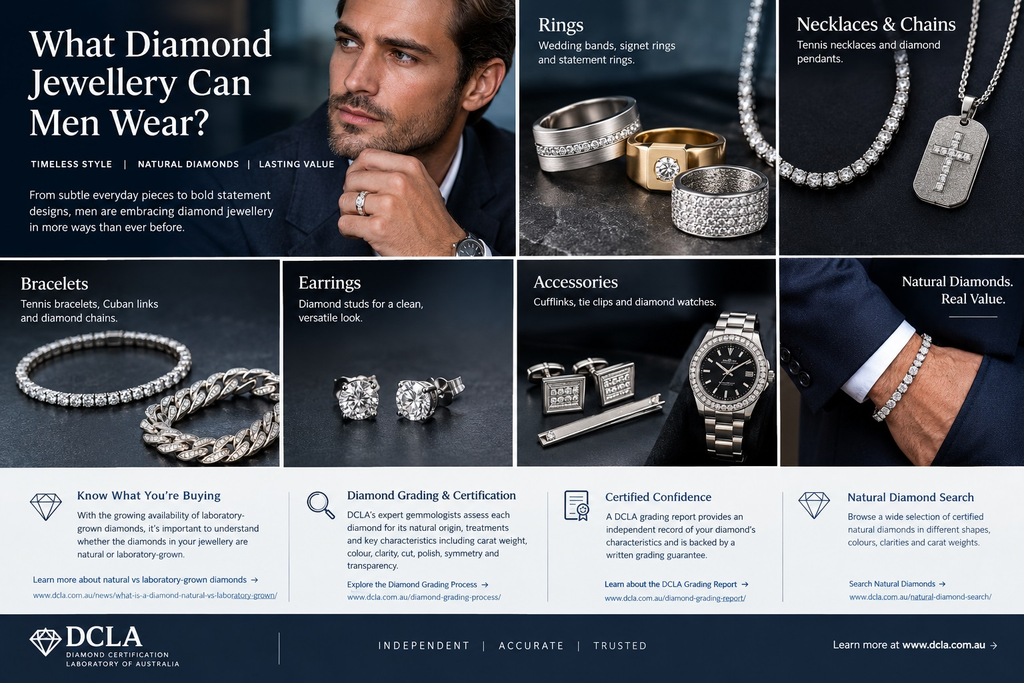
For thousands of years, jewellery has been a symbol of power, wealth, achievement and identity. Yet unlike today, there was a time when only kings, emperors, warriors and the wealthy elite had the privilege of wearing precious metals and gemstones. What was once reserved for royalty has evolved into an everyday expression of personal style, with men’s jewellery now enjoying one of the strongest revivals in modern history.

The Ancient Origins of Men’s Jewellery

Long before jewellery became associated with fashion, it represented status and survival.

Ancient Egyptian pharaohs wore elaborate gold collars, bracelets and gemstone-encrusted rings as symbols of divine authority. Gold was considered the flesh of the gods, while lapis lazuli, turquoise and carnelian were believed to offer protection and spiritual power.

In Ancient Rome, signet rings identified influential families, while decorated armour, gold wreaths and ceremonial jewellery distinguished military leaders and senators. The ability to wear precious metals was often regulated by social class.

Across Asia, jade carvings, gold ornaments and finely crafted jewellery denoted wisdom, prosperity and noble birth. In many cultures, jewellery was more than decoration—it was a visible declaration of rank.

Jewellery of Kings and Nobility

Throughout the Middle Ages and Renaissance, jewellery became increasingly exclusive.

European monarchs commissioned master jewellers to create crowns, chains of office, gemstone rings and ceremonial swords adorned with diamonds, rubies, emeralds and sapphires. These magnificent pieces were designed not simply to display wealth but to reinforce authority.

Sumptuary laws in many countries even dictated who could wear certain gemstones or precious metals. Diamonds, pearls and gold were often restricted to royalty and aristocracy, making jewellery an unmistakable marker of privilege.

Portraits of kings such as Henry VIII or Louis XIV reveal men lavishly adorned with necklaces, brooches, rings and precious stones—far removed from today’s understated image of masculine fashion.

The Victorian Shift

The Industrial Revolution dramatically changed society.

As manufacturing expanded and a growing middle class emerged, jewellery slowly became more accessible. Men’s fashion, however, became increasingly conservative. Dark suits replaced ornate clothing, and jewellery was reduced largely to practical or symbolic items such as:

  • Wedding bands
  • Pocket watches and chains
  • Cufflinks
  • Tie pins
  • Signet rings

For much of the twentieth century, Western men’s jewellery remained restrained, with elegance replacing extravagance.

Cultural Traditions Never Disappeared

While Western fashion became more conservative, many cultures continued to celebrate men’s jewellery.

Indian weddings remain famous for elaborate gold necklaces, bracelets and rings worn by grooms. Middle Eastern cultures have long valued gold jewellery as both adornment and a store of wealth. African tribal jewellery continues to represent heritage, leadership and identity.

These traditions helped preserve the idea that jewellery could remain an important part of masculine identity.

The Modern Renaissance

Over the past two decades, men’s jewellery has undergone a remarkable transformation.

Today’s man is no longer limited to a wedding ring and watch. Jewellery has become a form of self-expression, confidence and individuality.

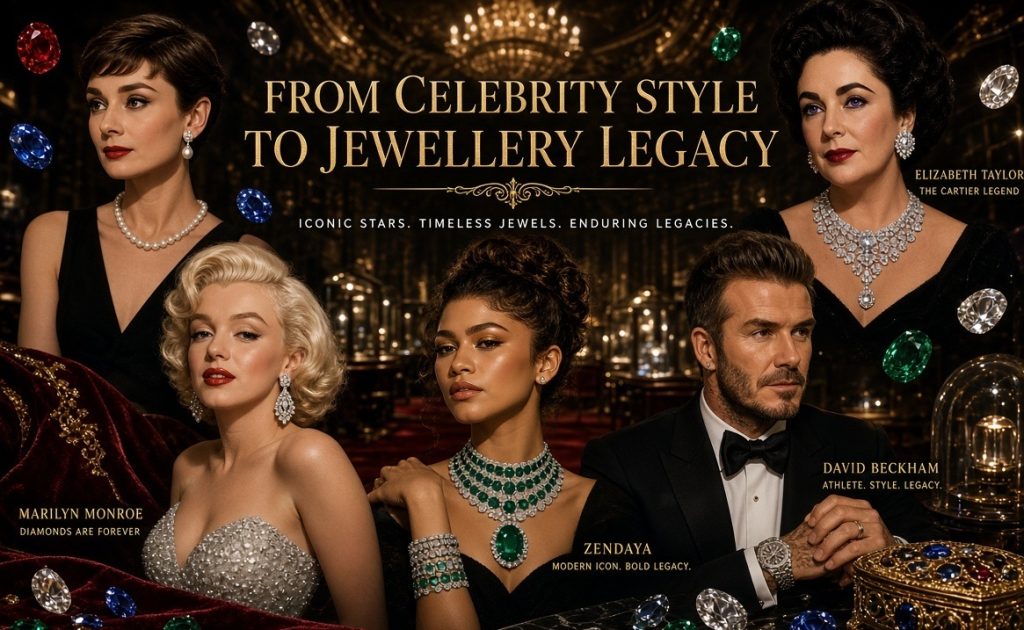
Professional athletes, musicians, actors and entrepreneurs have normalised the wearing of luxury jewellery. Diamond tennis bracelets, layered necklaces, pinky rings, signet rings, earrings and diamond-set watches are now common across all age groups.

Social media has accelerated this trend, exposing consumers to international fashion and encouraging personal style rather than strict dress codes.

What was once seen as extravagant has become mainstream.

Jewellery for Every Man

Modern jewellery collections cater for every personality and lifestyle.

Some men prefer understated elegance with a platinum wedding band and classic cufflinks.

Others embrace bold fashion with diamond earrings, Cuban link chains, coloured gemstone rings or oversized tennis bracelets.

Materials have also diversified:

  • Yellow Gold offers timeless luxury.
  • White Gold provides a contemporary appearance.
  • Rose Gold delivers warmth and individuality.
  • Platinum remains the premium choice for durability and prestige.
  • Diamonds continue to symbolise strength, success and permanence.
  • Coloured gemstones allow men to express personality through sapphires, emeralds, rubies and even black diamonds.

The result is unprecedented choice, allowing jewellery to reflect the individual rather than social status alone.

Jewellery as a Statement of Success

Historically, jewellery represented inherited wealth.

Today it more often represents personal achievement.

A successful entrepreneur may purchase a diamond ring to celebrate a milestone. An athlete may invest in a custom chain after winning a championship. A father may receive an engraved bracelet marking the birth of a child.

These pieces become deeply personal, commemorating life’s important moments rather than simply displaying wealth.

Quality Matters More Than Ever

As men’s jewellery grows in popularity, consumers are becoming increasingly knowledgeable about craftsmanship and authenticity.

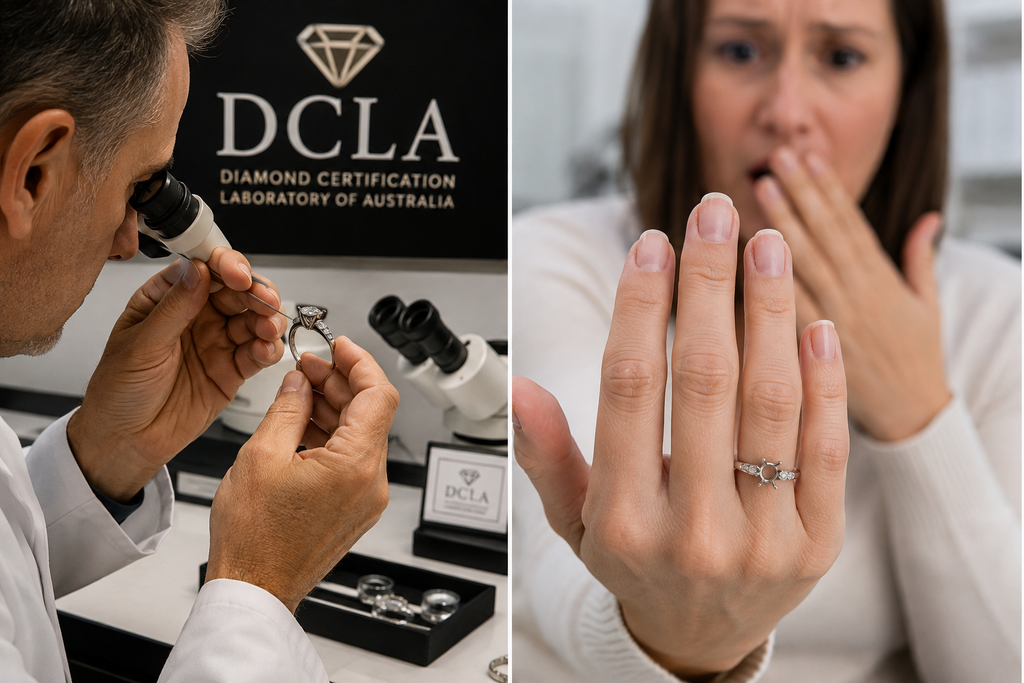
Understanding the quality of diamonds, coloured gemstones and precious metals has never been more important. Independent grading and certification provide buyers with confidence that their jewellery matches the quality they are paying for.

Whether purchasing a diamond ring, gemstone pendant or bespoke bracelet, expert assessment ensures transparency, accuracy and long-term value.

The Future of Men’s Jewellery

The evolution of men’s jewellery reflects broader changes in society. Personal style is no longer defined by rigid traditions but by individuality, confidence and self-expression.

The distinction between formal jewellery and everyday jewellery continues to blur, with men comfortably wearing pieces that previous generations reserved for special occasions.

In many ways, history has come full circle. Jewellery has once again become an important part of masculine identity—but unlike the days of kings and nobles, it is no longer reserved for the privileged few. Today, every man has the opportunity to express his personality, celebrate his achievements and invest in beautifully crafted jewellery that can be worn, treasured and eventually passed on to future generations.

At DCLA, we believe that understanding the quality and authenticity of diamonds and gemstones is just as important as appreciating their beauty. As men’s jewellery continues to evolve, independent grading and expert knowledge remain essential for anyone investing in fine jewellery designed to last a lifetime.

Tuesday, 28 July 2026

The Hidden Light Within Diamonds: How Fluorescence Can Enhance Beauty, Character and Value

 When people admire a diamond, they usually focus on the famous Four Cs carat, colour, clarity and cut. Yet one fascinating characteristic often overlooked by consumers is fluorescence. Far from being a flaw, fluorescence is a natural optical phenomenon that, in many diamonds, enhances their appearance and contributes to their individuality.

When people admire a diamond, they usually focus on the famous Four Cs carat, colour, clarity and cut. Yet one fascinating characteristic often overlooked by consumers is fluorescence. Far from being a flaw, fluorescence is a natural optical phenomenon that, in many diamonds, enhances their appearance and contributes to their individuality.

For gemmologists, fluorescence provides another layer of information about a diamond’s identity. For collectors and jewellery lovers, it can add an entirely different dimension of beauty particularly in rare coloured diamonds.

What is Diamond Fluorescence?

Fluorescence occurs when a diamond is exposed to ultraviolet (UV) light. Invisible ultraviolet rays excite trace structural defects within the diamond crystal, causing it to emit visible light. Once the UV source is removed, the glow disappears almost instantly.

Approximately 25–35% of natural diamonds exhibit some degree of fluorescence, while only around 10% display fluorescence strong enough to be easily observed.

The overwhelming majority fluoresce blue, although yellow, orange, white and even green fluorescence can occasionally occur.

This phenomenon has fascinated gemmologists for over a century and remains an important grading characteristic documented by leading laboratories such as the DCLA, GIA and other internationally recognised laboratories.

Nature’s Hidden Signature

Fluorescence is not an artificial treatment or enhancement. It is a natural characteristic formed deep within the Earth millions or even billions of years ago during a diamond’s crystallisation.

Different trace elements and atomic irregularities create different reactions to ultraviolet light, making fluorescence something of a natural fingerprint for each diamond.

In many cases, fluorescence remains completely invisible during everyday wear, only revealing itself under sunlight rich in ultraviolet radiation or beneath UV lamps.

The Blue Glow of White Diamonds

One of the most beneficial effects of fluorescence is seen in Cape-series white diamonds, particularly those in the H through M colour grades.

These diamonds contain a slight yellow body colour. Since blue is complementary to yellow on the colour spectrum, blue fluorescence can visually neutralise a portion of that warmth when the diamond is viewed in daylight.

The result is that many fluorescent diamonds appear:

  • Whiter
  • Brighter
  • Fresher
  • Slightly higher in colour than their laboratory grade may suggest

This effect is especially noticeable in outdoor lighting, where natural ultraviolet light is abundant.

For decades, experienced jewellers have recognised that a well-cut H, I, J or K colour diamond with medium blue fluorescence can face up remarkably white while offering excellent value compared with higher colour grades.

Only in a very small percentage of diamonds with very strong fluorescence can an undesirable oily or hazy appearance occur. Extensive studies have shown this affects only a minority of fluorescent diamonds, meaning fluorescence should be judged on the individual stone rather than by reputation alone.

Fluorescence and Fancy Coloured Diamonds

Fluorescence and Fancy Coloured Diamonds


While fluorescence can improve the appearance of white diamonds, it becomes even more intriguing in the world of fancy coloured diamonds.

Here, fluorescence often contributes to the personality and visual excitement of the stone.

The Legendary Argyle Pink Diamonds

Among the world’s most treasured gemstones are the famous Argyle Pink Diamonds from Western Australia.

Many of these extraordinary diamonds display medium to strong blue fluorescence despite possessing vivid pink body colour.

The blue fluorescence creates a remarkable contrast with the diamond’s natural pink hue. Under ultraviolet-rich lighting, the diamond can appear even more vibrant and alive, adding another dimension to its already exceptional beauty.

Researchers have long associated the fluorescence in Argyle diamonds with the unique geological conditions that produced their distinctive pink colour—conditions unlike those found in almost any other diamond deposit on Earth.

Rather than detracting from their value, fluorescence has become part of the fascinating character that collectors admire in these exceptionally rare gems.

The Magical Chameleon Diamond

Perhaps no diamond demonstrates the beauty of fluorescence more dramatically than the Chameleon Diamond.

These exceptionally rare diamonds possess the remarkable ability to temporarily change colour.

Normally appearing olive green, grey-green or yellowish-green, they can shift to warmer yellow tones after gentle heating or following prolonged storage in darkness.

Many Chameleon diamonds also exhibit an intense and often spectacular fluorescence under ultraviolet light.

This interaction between colour change and fluorescence creates one of the most captivating visual displays found in any gemstone.

Scientists continue to study the exact atomic mechanisms responsible for this behaviour, making Chameleon diamonds one of gemmology’s enduring mysteries.

Fluorescence Adds Personality

Every fluorescent diamond possesses its own unique response to ultraviolet light.

Some emit a soft blue glow.

Others display a vibrant electric blue.

Rare stones may fluoresce yellow, orange or even white.

For collectors, this individuality makes fluorescence another characteristic that distinguishes one diamond from another. It reminds us that no two natural diamonds are truly identical.

Understanding Fluorescence in Jewellery

When selecting a diamond, fluorescence should never be viewed in isolation.

Instead, it should be considered alongside:

  • Cut quality
  • Overall transparency
  • Colour
  • Clarity
  • Optical performance

A beautifully cut fluorescent diamond may appear more lively than a non-fluorescent equivalent, particularly in natural daylight.

In coloured diamonds, fluorescence often enhances the stone’s uniqueness and visual appeal, becoming part of its identity rather than a grading curiosity.

A Feature Worth Appreciating

For many years, fluorescence was misunderstood and sometimes unfairly discounted in the marketplace. Modern research and decades of gemmological observation have demonstrated that this perception is overly simplistic.

In many diamonds particularly those in the H to M colour range blue fluorescence can improve the apparent face-up colour. In rare fancy coloured diamonds such as Argyle Pinks and Chameleon diamonds, fluorescence contributes to the extraordinary visual characteristics that make these gems so highly prized.

Like fingerprints, inclusions and crystal growth patterns, fluorescence tells part of the story of a diamond’s geological journey.

It is one more reminder that natural diamonds are products of nature, each possessing characteristics that cannot be duplicated exactly.

Understanding fluorescence allows consumers to appreciate diamonds not simply for their colour or clarity, but for the remarkable optical phenomena hidden within them revealed only when nature shines a different kind of light.

Source: DCLA

Wednesday, 22 July 2026

From Imagination to Heirloom: How the DCLA Brings Your Jewellery Vision to Life

 Every remarkable piece of jewellery begins with an idea.

Every remarkable piece of jewellery begins with an idea.

It may be inspired by a treasured memory, a family diamond, a milestone anniversary, an engagement, or simply a design you have always dreamed of owning. While many jewellers offer standard collections, the DCLA Diamond Exchange takes a different approach transforming your ideas into exceptional jewellery that will be treasured for generations.

Where Every Design Begins

The journey starts with a conversation.

The DCLA’s experienced in-house jewellery designers work closely with each client to understand not only what they want their piece to look like, but also the story behind it. Every detail is considered from the choice of gemstones and precious metals to the proportions, balance and practicality of the design.

Whether you have a hand-drawn sketch, a collection of photographs, or simply an idea in your mind, our designers can translate your vision into a professionally developed concept.

Bringing Your Vision to Paper

Before a single piece of precious metal is cast, your ideas are transformed into detailed design drawings.

This stage allows every aspect of the jewellery to be refined and perfected. Stone placement, setting styles, proportions and fine details are carefully evaluated to ensure the finished piece is both beautiful and structurally sound.

Clients have the opportunity to review the design, make changes and collaborate with our designers until every detail is exactly as they imagined.

It is a process that combines artistic creativity with technical expertise.

Crafted Using the Finest Materials

Beautiful jewellery begins with exceptional materials.

The DCLA Diamond Exchange sources premium natural diamonds, laboratory-grown diamonds and coloured gemstones from trusted suppliers around the world. Every diamond can be independently verified and certified, giving clients complete confidence in the quality of their purchase.

Only high-quality precious metals are used, including platinum, 18-carat gold and other premium alloys selected for their beauty, durability and longevity.

The result is jewellery that is designed not only to impress today, but to last for generations.

Precision Manufacturing Meets Traditional Craftsmanship

Creating exceptional jewellery requires more than beautiful design it demands outstanding craftsmanship.

The DCLA Diamond Exchange combines modern production technology with traditional hand-finishing techniques to achieve extraordinary results.

Each piece is carefully manufactured using precision engineering before being expertly assembled, set, polished and inspected by experienced craftsmen. Every stage of production is carried out with meticulous attention to detail to ensure the highest standards of quality.

Nothing leaves the workshop until it meets the exacting standards expected of the DCLA name.

Creating Tomorrow’s Family Heirlooms

Creating Tomorrow's Family Heirlooms


Fine jewellery is more than an accessory it is a legacy.

The engagement ring that begins a marriage may one day be passed to a daughter or granddaughter. A custom pendant may become a cherished family keepsake. A pair of earrings may celebrate a significant achievement and carry its story through future generations.

These are not simply purchases; they are future heirlooms.

By combining inspired design, exceptional materials and uncompromising craftsmanship, the DCLA Diamond Exchange creates jewellery that is intended to be worn, loved and handed down for decades to come.

Experience the Difference

At the DCLA Diamond Exchange, every creation is unique because every client is unique.

From your very first idea through to the finished masterpiece, our in-house designers and master craftsmen guide you through every stage of the journey, ensuring your vision becomes reality.

Whether you are redesigning inherited jewellery, creating the perfect engagement ring, or commissioning a one-of-a-kind masterpiece, the DCLA Diamond Exchange has the expertise, technology and passion to transform your imagination into jewellery that will become part of your family’s history.

Source: DCLA

Diamond Light Return: How Cut, Angles and Facets Control the Way a Diamond Performs

  A diamond is far more than a beautiful gemstone. It is a precisely engineered optical crystal, and the way it interacts with light is gove...