Showing posts with label Handmade Jewellery. Show all posts

Wednesday, 5 August 2026

Luxury Diamond Jewellery Trends for 2026, The Return of Quality, Individuality and Timeless Style

 Today's luxury jewellery buyers are no longer chasing fleeting trends they are investing in craftsmanship, exceptional natural diamonds and pieces that will be treasured for decades.

For years, fashion dictated what jewellery people wore. In 2026, that has changed.

Today’s luxury jewellery buyers are no longer chasing fleeting trends they are investing in craftsmanship, exceptional natural diamonds and pieces that will be treasured for decades. Whether purchasing an engagement ring, anniversary gift or investment-quality diamond, buyers are demanding authenticity, rarity and expert craftsmanship.

At the DCLA Diamond Exchange in Sydney, we’ve seen a noticeable shift in buying habits. Clients are becoming more educated, asking deeper questions about diamond quality, provenance and long-term value rather than simply focusing on size.

Here are the biggest luxury diamond jewellery trends shaping 2026.


Natural Diamonds Continue to Define Luxury

While laboratory-grown diamonds have found their place in the jewellery market, natural diamonds continue to dominate the luxury sector.

Collectors and high-end buyers increasingly appreciate the rarity of a diamond that formed naturally over billions of years.

Many clients now seek:

  • Exceptional cut quality
  • Excellent optical performance
  • Higher colour and clarity grades
  • Larger certified natural diamonds
  • Rare fancy colour diamonds

Rather than purchasing multiple fashion pieces, many Australians are choosing one extraordinary diamond that can become a family heirloom.


Yellow Gold Makes a Strong Return

White gold and platinum remain popular, but yellow gold has firmly re-established itself as the metal of choice for luxury jewellery.

Its rich colour complements both white and fancy coloured diamonds while offering a timeless appearance that suits every generation.

Popular yellow gold pieces include:

  • Solitaire engagement rings
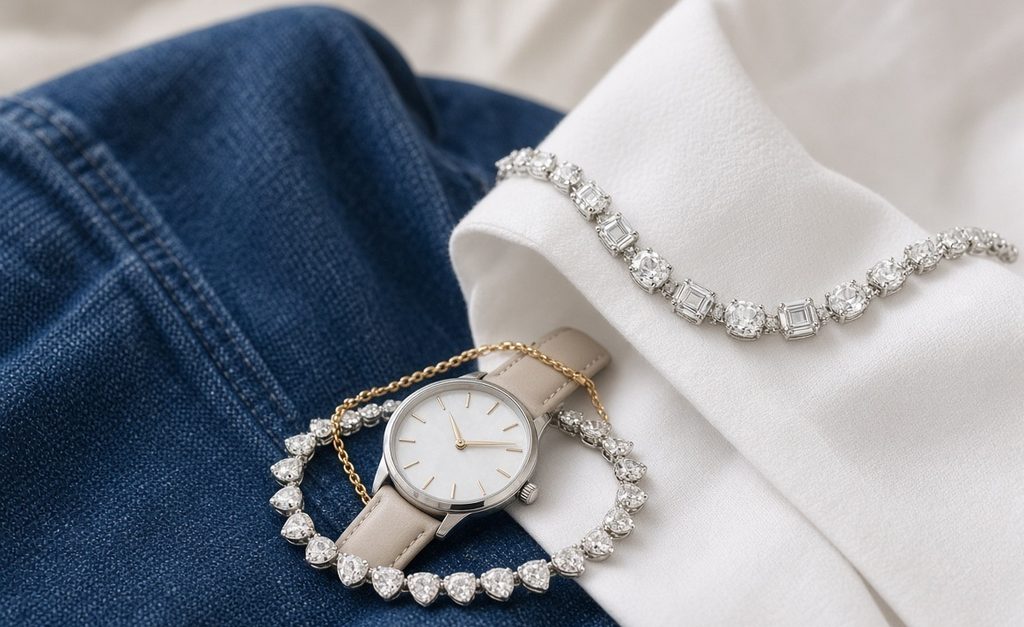
  • Diamond tennis bracelets
  • Large diamond hoops
  • Modern signet rings
  • Classic diamond pendants

Many jewellers are also pairing yellow gold with platinum claws, combining warmth with the security and durability of platinum settings.


Fancy Shape Diamonds Are More Popular Than Ever

Round brilliant diamonds remain Australia’s favourite, but fancy shapes continue gaining momentum.

Some of the fastest-growing choices include:

  • Oval
  • Emerald Cut
  • Pear
  • Cushion
  • Radiant
  • Marquise

These shapes offer individuality while often appearing larger than round diamonds of the same carat weight.

Elegant elongated diamonds also create a flattering appearance when worn in engagement rings.


Minimalist Designs with Maximum Impact

Luxury no longer means excessive.

Modern jewellery embraces clean lines, refined proportions and exceptional workmanship.

Simple designs featuring beautifully cut diamonds are proving more desirable than heavily ornate settings.

Current favourites include:

  • Four-claw solitaire rings
  • Hidden halo engagement rings
  • Floating diamond pendants
  • Fine diamond line necklaces
  • Bezel-set diamond bracelets

The emphasis is now on allowing the quality of the diamond to speak for itself.


Coloured Diamonds and Rare Gemstones Continue to Impress

For buyers wanting something truly unique, coloured diamonds remain among the world’s most desirable gemstones.

Natural:

  • Pink diamonds
  • Blue diamonds
  • Yellow diamonds
  • Green diamonds

continue attracting collectors worldwide.

Coloured sapphires, emeralds and rubies are also making a strong comeback, particularly when paired with brilliant white diamonds in custom-designed jewellery.

Australian Argyle pink diamonds remain especially sought after due to their limited supply following the mine’s closure.


Custom Jewellery Is Becoming the New Luxury

Increasingly, clients are choosing bespoke jewellery over mass-produced designs.

Rather than selecting a ring from a display cabinet, buyers are working directly with experienced jewellers to create something entirely unique.

Custom jewellery allows clients to choose:

  • The perfect diamond
  • Their preferred setting
  • Precious metal
  • Finger fit
  • Personal design details

The result is jewellery that reflects the owner’s personality rather than current fashion trends.


Exceptional Diamond Cut Is Receiving Greater Attention

Consumers have become far more knowledgeable.

Rather than concentrating solely on carat weight, many buyers now understand that cut quality has the greatest influence on a diamond’s beauty.

An expertly cut diamond delivers:

  • Superior brilliance
  • Greater fire
  • Improved scintillation
  • Better face-up appearance
  • Stronger long-term desirability

This growing awareness has increased demand for premium cut grades and independently graded diamonds.


Ethically Sourced Diamonds Matter More Than Ever

Responsible sourcing has become an expectation rather than a selling point.

Australian buyers increasingly ask where their diamonds originated and whether they comply with international ethical standards.

Reputable jewellers now provide:

  • Independent diamond grading
  • Transparent sourcing
  • Conflict-free assurances
  • Full certification

Confidence in a diamond’s identity has become almost as important as the diamond itself.


Investment Pieces Are Back

Economic uncertainty has encouraged many Australians to purchase jewellery with lasting value.

Rather than fashion accessories, buyers are seeking pieces that can be enjoyed today while potentially becoming tomorrow’s family heirlooms.

Popular investment purchases include:

  • Large certified natural diamonds
  • Diamond tennis bracelets
  • Solitaire pendants
  • Classic stud earrings
  • Fancy coloured diamonds

Unlike seasonal fashion, these pieces remain desirable generation after generation.


Quality Craftsmanship Never Goes Out of Style

Perhaps the strongest trend of all is a renewed appreciation for exceptional craftsmanship.

Precision setting, hand finishing and thoughtful design separate truly luxurious jewellery from mass-produced alternatives.

At DCLA Diamond Exchange, we continue to see clients choosing quality over quantity—investing in beautifully crafted jewellery that celebrates the rarity of natural diamonds and the skill of the jeweller who created it.

Luxury is no longer defined simply by size or price.

It is defined by authenticity, exceptional craftsmanship and timeless beauty.


Thoughts

The jewellery trends of 2026 demonstrate that true luxury is moving away from short-lived fashion and back towards enduring quality.

Natural diamonds, outstanding craftsmanship, ethical sourcing and personalised design are driving today’s luxury market. Buyers are becoming more informed and more selective, recognising that the finest jewellery is not only beautiful to wear but can also become a lasting family treasure.

Whether you’re purchasing an engagement ring, upgrading your diamond collection or creating a bespoke piece, choosing independently graded natural diamonds and expert craftsmanship remains the best investment in lasting beauty.


Disclaimer: This article is intended for general information only and should not be considered financial or investment advice. Jewellery and diamond values vary according to market conditions, rarity, quality and consumer demand. Buyers should seek independent advice and obtain certification from recognised laboratories, such as DCLA, before making significant diamond or jewellery purchases.

Tuesday, 4 August 2026

Diamond Setting Styles: Beauty, Light Performance and Security – Choosing the Right Setting for Every Gem

 The Purpose of a Jewellery Setting

When most people admire a beautiful diamond ring, they naturally focus on the gemstone itself. Yet one of the most important decisions in jewellery design isn’t the diamond—it’s how the diamond is set.

The setting influences far more than appearance. It determines how much light reaches the gemstone, how secure it will remain during everyday wear, how easily it can be cleaned, and even how large or brilliant it appears.

There is no single “best” setting. The ideal choice depends on the gemstone’s shape, durability, intended use, and the wearer’s lifestyle. Understanding the differences helps ensure both beauty and longevity.

The Purpose of a Jewellery Setting

A jewellery setting has three primary roles:

  • Securely hold the gemstone.
  • Maximise the stone’s visual appeal.
  • Complement the overall design of the jewellery.

Finding the right balance between these objectives is the hallmark of good jewellery design.

Claw (Prong) Settings

The claw setting is the most recognised and widely used method of setting diamonds.

Small metal claws grip the gemstone around its girdle while leaving most of the stone exposed.

Advantages

One of the greatest strengths of a claw setting is light performance.

Because very little metal covers the diamond, light can enter from the top and sides before reflecting back through the crown. This often produces exceptional brilliance, fire and scintillation.

Other advantages include:

  • Maximum light exposure
  • Makes the diamond appear larger
  • Easier to clean
  • Classic and timeless appearance
  • Suitable for almost every diamond shape

Disadvantages

With more of the diamond exposed, the stone is also more vulnerable to knocks.

Over many years of wear, claws can gradually wear down, bend or catch on clothing. If this occurs unnoticed, the security of the diamond may be compromised.

Regular inspections by a qualified jeweller are recommended, particularly for engagement rings worn every day.

Bezel Settings

A bezel setting surrounds the gemstone with a continuous rim of precious metal.

Rather than gripping the stone with claws, the metal wraps around the edge, securely locking it into place.

Advantages

Bezel settings offer exceptional protection.

The surrounding metal shields vulnerable edges and corners from accidental impacts, making them ideal for active lifestyles.

Benefits include:

  • Outstanding security
  • Excellent protection against chips
  • Smooth profile that won’t catch on clothing
  • Modern, elegant appearance
  • Ideal for everyday wear

Light Performance

Because the metal surrounds the edge of the gemstone, slightly less light enters from the sides.

For well-cut diamonds this difference is often minimal, but coloured gemstones may appear deeper or richer in colour due to the enclosed design.

Many designers intentionally use bezels to enhance coloured gemstones such as sapphires, emeralds and rubies.

Pressure (Tension) Settings

One of the most visually striking styles is the pressure, or tension, setting.

Rather than traditional claws, the gemstone is held in place by carefully engineered pressure within the metal band itself, creating the illusion that the diamond is floating.

Advantages

  • Contemporary appearance
  • Maximum visibility of the gemstone
  • Excellent light exposure
  • Unique and minimalist design

Engineering Matters

Although they appear delicate, genuine tension settings are highly engineered.

The ring must be manufactured with extremely precise tolerances so the pressure remains constant throughout the life of the ring.

This is not a setting style suitable for every gemstone.

Only durable stones with sufficient hardness and toughness—such as diamonds and some sapphires—are generally considered appropriate.

How Light Affects Beauty

Many consumers assume that more exposed stone automatically means more sparkle.

While greater light exposure certainly helps, sparkle primarily comes from the quality of the diamond’s cut.

A poorly cut diamond in an open claw setting may still appear lifeless, while an exceptionally cut diamond in a bezel setting can remain brilliantly attractive.

The setting enhances beauty—but it cannot compensate for poor cutting.

Security vs Brilliance

Jewellery design often involves balancing competing priorities.

A six-claw solitaire may maximise brilliance while offering good security.

A bezel may sacrifice a small amount of side light but significantly increase protection.

The best choice depends on how the jewellery will be worn.

For engagement rings worn every day, security often becomes just as important as appearance.

Why Diamond Shape Changes Everything

Not every diamond shape performs equally in every setting.

Round Brilliant

The strongest and most versatile shape.

Works exceptionally well in claw, bezel and tension settings.

Princess Cut

Its pointed corners are vulnerable to chipping.

V-shaped claws or bezel settings provide much greater protection.

Emerald Cut

Large open facets emphasise clarity rather than sparkle.

Bezel settings often complement its elegant geometric appearance while protecting its cropped corners.

Pear, Marquise and Heart Shapes

These shapes all feature delicate points that require additional protection.

Specialised claws or partial bezels are commonly used to reduce the risk of damage.

Oval and Cushion Cuts

These shapes are extremely versatile and perform beautifully in most setting styles.

Coloured Gemstones Require Different Considerations

Unlike diamonds, many coloured gemstones have different hardness and toughness.

Emeralds, for example, are significantly more susceptible to chipping due to their natural internal fractures.

Tourmalines, opals and tanzanites also require greater protection than diamonds.

For these gemstones, bezel settings or protective claw arrangements often provide the safest long-term solution.

Lifestyle Should Guide the Design

A setting should suit the owner’s lifestyle as much as their personal taste.

Someone working with their hands every day may benefit from the security and low profile of a bezel setting.

A person seeking maximum brilliance in an engagement ring may prefer a traditional claw setting.

Athletes, healthcare workers and tradespeople often choose lower-profile settings that reduce the risk of accidental impact.

Craftsmanship Makes the Difference

Regardless of the setting style chosen, craftsmanship remains the most important factor.

Poorly positioned claws, uneven bezels or incorrectly engineered tension settings can all compromise both beauty and security.

An experienced jeweller understands how metal behaves over decades of wear and how different gemstone shapes respond to everyday use.

The best jewellery combines engineering with artistry, ensuring the setting protects the gemstone while allowing it to display its full beauty.

Final Thoughts

A diamond or coloured gemstone may be the centrepiece of a piece of jewellery, but the setting is what allows it to shine safely for generations.

Whether choosing a classic claw setting, a protective bezel or a striking tension design, the decision should always consider light performance, durability, gemstone shape and the wearer’s lifestyle.

Beautiful jewellery is not simply about selecting an exceptional gemstone—it is about designing a setting that allows that gemstone to remain secure, brilliant and admired for a lifetime.


DCLA Note: Professional inspection of gemstone settings is recommended every 12 months, particularly for rings worn daily. Routine maintenance can identify worn claws, loose stones or metal fatigue before a gemstone is lost, helping preserve both the beauty and value of your jewellery.

Tuesday, 28 July 2026

The Hidden Light Within Diamonds: How Fluorescence Can Enhance Beauty, Character and Value

 When people admire a diamond, they usually focus on the famous Four Cs carat, colour, clarity and cut. Yet one fascinating characteristic often overlooked by consumers is fluorescence. Far from being a flaw, fluorescence is a natural optical phenomenon that, in many diamonds, enhances their appearance and contributes to their individuality.

When people admire a diamond, they usually focus on the famous Four Cs carat, colour, clarity and cut. Yet one fascinating characteristic often overlooked by consumers is fluorescence. Far from being a flaw, fluorescence is a natural optical phenomenon that, in many diamonds, enhances their appearance and contributes to their individuality.

For gemmologists, fluorescence provides another layer of information about a diamond’s identity. For collectors and jewellery lovers, it can add an entirely different dimension of beauty particularly in rare coloured diamonds.

What is Diamond Fluorescence?

Fluorescence occurs when a diamond is exposed to ultraviolet (UV) light. Invisible ultraviolet rays excite trace structural defects within the diamond crystal, causing it to emit visible light. Once the UV source is removed, the glow disappears almost instantly.

Approximately 25–35% of natural diamonds exhibit some degree of fluorescence, while only around 10% display fluorescence strong enough to be easily observed.

The overwhelming majority fluoresce blue, although yellow, orange, white and even green fluorescence can occasionally occur.

This phenomenon has fascinated gemmologists for over a century and remains an important grading characteristic documented by leading laboratories such as the DCLA, GIA and other internationally recognised laboratories.

Nature’s Hidden Signature

Fluorescence is not an artificial treatment or enhancement. It is a natural characteristic formed deep within the Earth millions or even billions of years ago during a diamond’s crystallisation.

Different trace elements and atomic irregularities create different reactions to ultraviolet light, making fluorescence something of a natural fingerprint for each diamond.

In many cases, fluorescence remains completely invisible during everyday wear, only revealing itself under sunlight rich in ultraviolet radiation or beneath UV lamps.

The Blue Glow of White Diamonds

One of the most beneficial effects of fluorescence is seen in Cape-series white diamonds, particularly those in the H through M colour grades.

These diamonds contain a slight yellow body colour. Since blue is complementary to yellow on the colour spectrum, blue fluorescence can visually neutralise a portion of that warmth when the diamond is viewed in daylight.

The result is that many fluorescent diamonds appear:

  • Whiter
  • Brighter
  • Fresher
  • Slightly higher in colour than their laboratory grade may suggest

This effect is especially noticeable in outdoor lighting, where natural ultraviolet light is abundant.

For decades, experienced jewellers have recognised that a well-cut H, I, J or K colour diamond with medium blue fluorescence can face up remarkably white while offering excellent value compared with higher colour grades.

Only in a very small percentage of diamonds with very strong fluorescence can an undesirable oily or hazy appearance occur. Extensive studies have shown this affects only a minority of fluorescent diamonds, meaning fluorescence should be judged on the individual stone rather than by reputation alone.

Fluorescence and Fancy Coloured Diamonds

Fluorescence and Fancy Coloured Diamonds


While fluorescence can improve the appearance of white diamonds, it becomes even more intriguing in the world of fancy coloured diamonds.

Here, fluorescence often contributes to the personality and visual excitement of the stone.

The Legendary Argyle Pink Diamonds

Among the world’s most treasured gemstones are the famous Argyle Pink Diamonds from Western Australia.

Many of these extraordinary diamonds display medium to strong blue fluorescence despite possessing vivid pink body colour.

The blue fluorescence creates a remarkable contrast with the diamond’s natural pink hue. Under ultraviolet-rich lighting, the diamond can appear even more vibrant and alive, adding another dimension to its already exceptional beauty.

Researchers have long associated the fluorescence in Argyle diamonds with the unique geological conditions that produced their distinctive pink colour—conditions unlike those found in almost any other diamond deposit on Earth.

Rather than detracting from their value, fluorescence has become part of the fascinating character that collectors admire in these exceptionally rare gems.

The Magical Chameleon Diamond

Perhaps no diamond demonstrates the beauty of fluorescence more dramatically than the Chameleon Diamond.

These exceptionally rare diamonds possess the remarkable ability to temporarily change colour.

Normally appearing olive green, grey-green or yellowish-green, they can shift to warmer yellow tones after gentle heating or following prolonged storage in darkness.

Many Chameleon diamonds also exhibit an intense and often spectacular fluorescence under ultraviolet light.

This interaction between colour change and fluorescence creates one of the most captivating visual displays found in any gemstone.

Scientists continue to study the exact atomic mechanisms responsible for this behaviour, making Chameleon diamonds one of gemmology’s enduring mysteries.

Fluorescence Adds Personality

Every fluorescent diamond possesses its own unique response to ultraviolet light.

Some emit a soft blue glow.

Others display a vibrant electric blue.

Rare stones may fluoresce yellow, orange or even white.

For collectors, this individuality makes fluorescence another characteristic that distinguishes one diamond from another. It reminds us that no two natural diamonds are truly identical.

Understanding Fluorescence in Jewellery

When selecting a diamond, fluorescence should never be viewed in isolation.

Instead, it should be considered alongside:

  • Cut quality
  • Overall transparency
  • Colour
  • Clarity
  • Optical performance

A beautifully cut fluorescent diamond may appear more lively than a non-fluorescent equivalent, particularly in natural daylight.

In coloured diamonds, fluorescence often enhances the stone’s uniqueness and visual appeal, becoming part of its identity rather than a grading curiosity.

A Feature Worth Appreciating

For many years, fluorescence was misunderstood and sometimes unfairly discounted in the marketplace. Modern research and decades of gemmological observation have demonstrated that this perception is overly simplistic.

In many diamonds particularly those in the H to M colour range blue fluorescence can improve the apparent face-up colour. In rare fancy coloured diamonds such as Argyle Pinks and Chameleon diamonds, fluorescence contributes to the extraordinary visual characteristics that make these gems so highly prized.

Like fingerprints, inclusions and crystal growth patterns, fluorescence tells part of the story of a diamond’s geological journey.

It is one more reminder that natural diamonds are products of nature, each possessing characteristics that cannot be duplicated exactly.

Understanding fluorescence allows consumers to appreciate diamonds not simply for their colour or clarity, but for the remarkable optical phenomena hidden within them revealed only when nature shines a different kind of light.

Source: DCLA

Jewellery Costs vs Selling Prices: How to Buy Smart, Protect Your Investment, and Know Your Options When It’s Time to Sell

  Understanding the Difference Between What Jewellery Costs and What It Is Worth Buying a piece of jewellery is often an emotional decision....