Showing posts with label diamond jewellery. Show all posts

Friday, 30 October 2026

Inherited Jewellery and Family Valuables, Why Expert Assessment Matters

 Protecting the Value of an InheritanceWhen a loved one passes away, their estate may contain a lifetime of accumulated possessions, including diamond rings, gold chains, bracelets, watches, coins, precious stones and other valuable jewellery. Some pieces may have been purchased recently, while others may have been passed down through several generations.

Inherited jewellery, diamonds, gold and family heirlooms can represent significant financial and sentimental value. Before dividing an estate, selling precious items or passing them on to the next generation, it is essential to understand exactly what you own. With three generations of gold and diamond industry experience and the specialist capabilities of the Diamond Certification Laboratory of Australia (DCLA), families, estate lawyers and executors can access the expertise they need to make informed decisions with confidence.

Protecting the Value of an Inheritance

When a loved one passes away, their estate may contain a lifetime of accumulated possessions, including diamond rings, gold chains, bracelets, watches, coins, precious stones and other valuable jewellery. Some pieces may have been purchased recently, while others may have been passed down through several generations.

Many of these items carry stories, memories and emotional significance. However, their financial value is not always obvious.

An old engagement ring may contain a significant natural diamond. A collection of gold jewellery may be worth considerably more than its owner realised. A brooch, pendant or inherited watch may contain valuable materials or gemstones that have never been professionally examined.

Equally, a piece that looks impressive may have a lower resale value than expected, while an older valuation may no longer accurately reflect current market conditions.

The first step in protecting an inheritance is establishing what the estate actually contains and obtaining an appropriate professional assessment of its value.

The DCLA and The Gold Company provide specialist expertise to help clients understand their diamonds, jewellery and precious metals, with services suited to individual owners, families and professional estate representatives.

For a broader overview of the available services, visit The Gold Company’s Jewellery and Diamond Valuation and Estate Services.

Why Professional Assessment Matters

Diamonds, gemstones and precious metals require different forms of examination. A visual inspection alone cannot reliably establish every characteristic that may influence an item’s value.

A diamond’s quality depends on several factors, including its cut, colour, clarity and carat weight. Its origin, treatments, proportions and other characteristics may also be relevant.

The distinction between natural and laboratory-grown diamonds is particularly important. Both are genuine diamonds, but their origins and market characteristics differ. A stone’s appearance or a basic diamond tester cannot reliably establish whether it formed naturally or was grown in a laboratory.

The DCLA provides independent diamond grading and identification services using qualified gemmological expertise and specialised laboratory equipment.

Learn more about the DCLA Diamond Grading Report and Certification Service.

Professional assessment is equally important when dealing with gold and other precious metals. Jewellery may contain different purities of gold, mixed metals, gemstone settings, replacement components or materials that are not immediately apparent. Hallmarks can provide useful clues, but they should not always be treated as conclusive evidence of an item’s composition.

The Gold Company offers professional precious-metal testing, including X-ray fluorescence (XRF) technology, which can analyse the metal composition of suitable items without the need for destructive testing.

Read more about XRF Gold Testing and Understanding the Gold Content of Jewellery.

Combining practical industry experience with appropriate testing helps reduce uncertainty and gives owners a more reliable basis for deciding what to do next.

Three Generations of Gold and Diamond Expertise

The DCLA’s approach is supported by a heritage of gold and diamond industry knowledge spanning three generations, from mining and manufacturing through to diamond processing, jewellery, trading and professional laboratory assessment.

This experience provides a perspective that extends well beyond the appearance of a finished piece of jewellery. It includes an understanding of how diamonds are cut and polished, how precious metals are used in jewellery manufacturing, and how quality, condition and market demand can influence value.

That depth of practical knowledge matters when examining inherited items because every piece is different.

A diamond may require specialist laboratory identification. A gold bracelet may need its metal purity established. An antique ring may warrant consideration of its gemstones, craftsmanship, condition and design, rather than simply calculating the weight of its gold.

The DCLA combines this industry heritage with modern gemmological technology and independent assessment.

Its Sydney laboratory uses specialised equipment to examine diamond characteristics, including instruments that assist with diamond screening, microscopic examination, growth-pattern analysis and precise measurement.

Explore the DCLA Laboratory and its Testing Technology.

The principle is straightforward: experience helps identify the questions that need to be asked, while appropriate testing provides evidence to support the assessment.

For clients entrusted with valuable family assets, that combination offers an important level of reassurance.

Inherited Diamonds: Know Exactly What You Have

Diamonds are often among the most significant assets found in inherited jewellery. Yet many families have little documentation about the stones they own.

An engagement ring may have been purchased decades ago, with no original invoice or laboratory report. A diamond necklace may have been passed down through several generations. A loose stone may have been removed from an old setting without any accompanying paperwork.

In these circumstances, assumptions can be costly.

A diamond’s size alone does not determine its value. Two diamonds of similar carat weight can have very different values because of differences in colour, clarity, cut quality, proportions, treatments and market demand.

It is also important to establish whether the stone is natural or laboratory-grown where that distinction is relevant.

An independent grading report can document a diamond’s examined characteristics, providing a reference for future insurance, estate administration, sale or personal records.

The DCLA’s Diamond Certification FAQs explain the purpose of diamond reports, the grading process and the distinction between certification and valuation.

What if the diamond is still set in a ring?

Many inherited diamonds remain mounted in their original jewellery. Depending on the setting and the examination required, accurate grading may require the stone to be removed so that its weight, measurements, colour and clarity can be assessed more precisely.

This should not be undertaken casually. Removing a stone can affect the setting, particularly where the jewellery has a complex or delicate construction. The appropriate procedure should be discussed with the laboratory and a suitably qualified jeweller before any work is undertaken.

The DCLA explains these considerations in its Diamond Grading Report information.

The objective is to obtain reliable information while treating the jewellery with appropriate care.

Gold Jewellery: More Than Just Its Weight

Gold jewellery is another common component of an inheritance. Chains, rings, bracelets, earrings, brooches and watches may contain substantial quantities of precious metal, even when they are damaged, unfashionable or no longer worn.

However, the value of a gold item depends on more than its overall weight.

The purity of the gold, the amount of actual gold present, current market prices and the terms offered by a prospective buyer all influence its potential resale value. Gemstones, design, craftsmanship and collectability may also matter, meaning some pieces should be assessed as jewellery rather than simply as scrap metal.

For example, an inherited diamond ring may contain both valuable gold and a diamond that deserves independent examination. Selling the entire item solely on the basis of its gold content could overlook other sources of value.

Professional assessment helps determine whether an item is best considered for its precious-metal content, its gemstones, its craftsmanship or a combination of these factors.

The Gold Company provides specialist assistance with gold, silver, platinum, diamonds and jewellery. Its team can explain the available options before a client decides whether to retain, sell or otherwise deal with an item.

For further information, see The Gold Company’s Gold Buying and Testing Services.

Estate Lawyers, Executors and Trustees: Establishing Clarity

For estate lawyers, executors and trustees, inherited jewellery can introduce additional responsibilities.

Before an estate can be distributed, the relevant assets may need to be identified, assessed and documented. Where several beneficiaries are involved, a clear record of the items and their assessed values can help establish a more informed basis for distribution.

Without appropriate documentation, disagreements can arise. One beneficiary may believe a diamond ring is worth considerably more than another family member’s jewellery, while an executor may have no reliable evidence to support either assumption.

A structured assessment can help clarify the assets involved and identify items that require further specialist examination.

Depending on the circumstances, the work may include:

  • Identifying and recording individual jewellery items.
  • Examining diamonds and other gemstones.
  • Testing gold and other precious metals.
  • Obtaining independent diamond grading reports where appropriate.
  • Preparing written valuations for the intended purpose.
  • Documenting findings to assist estate administration and discussions with beneficiaries.
  • Explaining options for retaining, distributing or realising the assets.

The appropriate scope of work depends on the estate and the requirements of the legal representative. A grading report, an estate inventory and a formal valuation serve different purposes, so it is important to establish what documentation is required before the assessment begins.

The Gold Company offers a dedicated Jewellery and Diamond Estate Service for families, executors, trustees and solicitors requiring confidential assessments, documented reporting and assistance in understanding their options.

For significant diamonds, the DCLA’s independent laboratory services can provide additional gemmological information to support the process.

Together, these capabilities help make the handling of precious estate assets more transparent and better informed.

Dividing an Inheritance Fairly

Even within close families, dividing an inheritance can be difficult. Sentimental attachment often plays a significant role, and the perceived value of a treasured item may not correspond to its financial value.

One family member may wish to retain a parent’s engagement ring, while another prefers to receive gold jewellery or the proceeds from the sale of a valuable diamond.

Having the items professionally assessed before making these decisions can help everyone understand the assets involved.

A written valuation, where appropriate, provides a reference point for discussions about distribution. Independent diamond grading can also help distinguish between stones that might otherwise appear similar.

This does not remove the emotional considerations associated with inheritance, nor does it determine how a family should divide its possessions. Rather, it provides useful information to help family members and their advisers make their own decisions.

Where the estate contains substantial or particularly valuable diamonds, obtaining appropriate independent documentation before distribution can also make future insurance, sale or transfer arrangements easier to manage.

The objective is to protect the interests of the estate and its beneficiaries by ensuring that important decisions are made with a proper understanding of the items involved.

Understanding the Difference Between a Grading Report and a Valuation

One of the most important distinctions in professional jewellery assessment is the difference between identifying a diamond’s characteristics and determining its monetary value.

A diamond grading report describes the characteristics established during the examination. It is not, by itself, a statement of what the diamond is worth in dollars.

A valuation, on the other hand, estimates monetary value for a particular purpose and at a particular point in time.

For example, an insurance replacement valuation may estimate the cost of replacing an item with a comparable piece through an appropriate retail channel. A resale assessment considers a different question: what the item might realistically achieve in the relevant second-hand or trade market.

These figures can differ substantially.

The original retail price is not necessarily the amount an owner will receive when selling inherited jewellery, and an old insurance valuation should not automatically be treated as a current resale value.

Understanding the purpose of the assessment is therefore essential.

The DCLA explains this distinction in its article, Is a Diamond Valuation the Same as a Diamond Certificate?.

For broader information about professional valuations and their uses, visit the DCLA Appraisal and Valuation Information.

By establishing the correct purpose from the outset, clients can obtain documentation suited to their actual needs rather than relying on a report that answers a different question.

What If You Want to Sell Inherited Jewellery?

Not every family wants to retain all the jewellery they inherit. Some beneficiaries prefer to keep selected pieces and sell the remainder, while others may choose to sell an entire collection.

Before making that decision, it is worth understanding what the items contain and how they are likely to be assessed by prospective buyers.

An item containing a significant diamond may warrant independent grading. Gold jewellery may need to be tested for purity and weight. Pieces with unusual designs, important provenance or collectable characteristics may require a different approach from ordinary scrap gold.

The selling process should begin with knowledge, not assumptions.

The DCLA’s article, Selling a Diamond? Here’s the Paperwork You Need to Know About, explains why independent documentation can help establish a common reference point when discussing a diamond with prospective buyers.

For those considering the sale of inherited gold jewellery, The Gold Company’s guide, Selling Inherited Jewellery in Australia: What You Need to Know, provides further information about the practical considerations involved.

Having an informed assessment does not oblige an owner to sell. It simply provides a stronger basis for deciding whether to retain, insure, distribute or sell the items.

Protecting Your Own Valuables for the Future

The same principles apply even when no inheritance is involved.

Many people own jewellery accumulated over decades, including engagement rings, wedding bands, diamond earrings, necklaces, watches and family heirlooms. Important documents may be missing, descriptions may be incomplete, and valuations may no longer reflect current replacement costs.

Maintaining appropriate records can make a difference when dealing with insurance, estate planning or the eventual transfer of valuables to family members.

Depending on the item and its purpose, useful records may include photographs, descriptions, purchase documentation, independent diamond reports and current valuations.

Owners should also review whether their existing insurance documentation remains suitable and whether the values recorded reflect the purpose of the policy.

The DCLA provides information about Jewellery Valuations, including the importance of maintaining records for valuable possessions.

Taking these steps while the owner is still able to explain the history of each item can help future family members understand what they have inherited and what further assessment may be needed.

Experience, Technology and Personal Service

Precious jewellery deserves more than a cursory inspection or an assumption about its worth. It deserves to be examined by people who understand diamonds, gold and the jewellery industry.

The DCLA brings specialist gemmological expertise and advanced laboratory technology to the identification and grading of diamonds. The Gold Company provides practical assistance with jewellery, precious-metal testing, valuations and inherited assets.

The group’s three generations of gold and diamond industry knowledge provide valuable context for understanding the materials, craftsmanship and market considerations behind these possessions.

Whether you are an estate lawyer managing a deceased estate, an executor responsible for distributing family assets, a family dividing an inheritance or an individual seeking clarity about a treasured possession, the objective remains the same: to help you understand what you own and make informed decisions about what comes next.

There is no need to guess, and there is no obligation to sell simply because an item has been assessed.

Professional advice should give you the information and options you need, allowing you to decide what is right for you and your family.

DCLA and The Gold Company: Expertise When It Matters

From a single inherited engagement ring to a substantial estate containing diamonds, gold and other precious valuables, the right assessment can make an important difference.

With three generations of gold and diamond industry experience, decades of practical knowledge and the specialist capabilities of the DCLA laboratory, we are here to help families and professional advisers navigate the complexities of precious assets.

Before you divide it, sell it, insure it or pass it on, make sure you know what you have.

Visit DCLA for independent diamond grading, identification and laboratory services, or visit The Gold Company to learn more about jewellery and precious-metal assessments, valuations and estate services.

DCLA and The Gold Company — generations of knowledge, specialist expertise and professional guidance to help protect the value of your diamonds, jewellery and family valuables.

Friday, 23 October 2026

From a Child’s First Charm to a Lifetime of Luxury

 From a Child’s First Charm to a Lifetime of Luxury

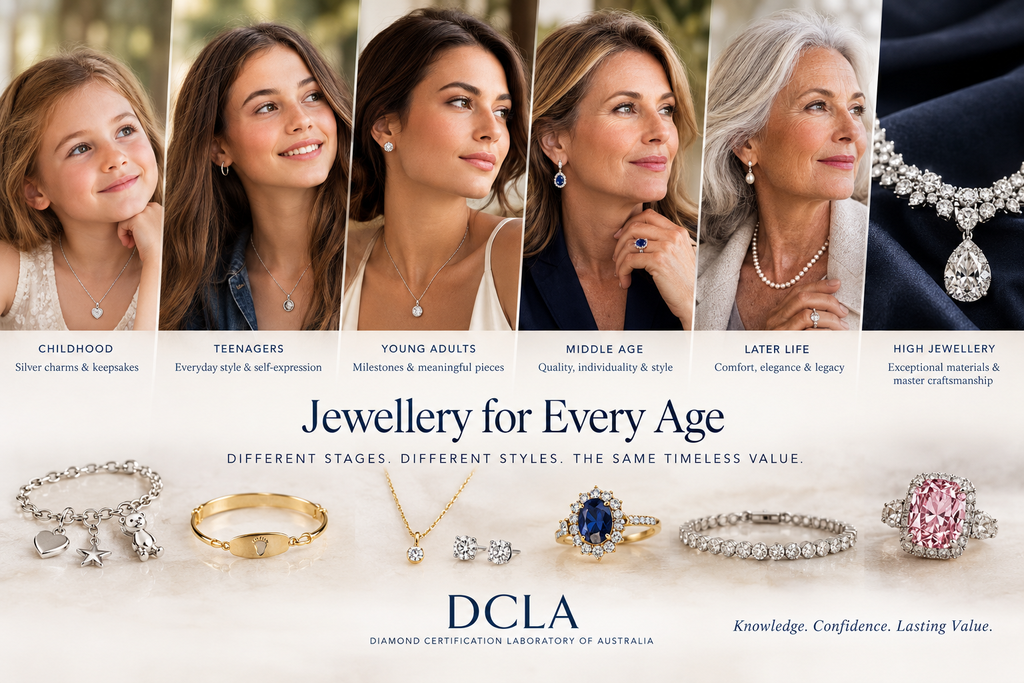
Jewellery has a special place in our lives. It marks milestones, celebrates achievements, expresses personal style and carries memories from one generation to the next. From a child’s first silver charm to a diamond engagement ring or an exceptional high jewellery creation, the pieces we choose often reflect not only our age, but also our lifestyle, personal taste and the significance of the occasion.

At DCLA, we understand that jewellery is about much more than its appearance. The choice of metal, the size and design of a piece, the quality of its gemstones and its financial value all influence its suitability for the person who wears it. What works beautifully for a young child may be entirely different from what appeals to a teenager, a professional adult or an older woman who has spent a lifetime appreciating fine jewellery.

Childhood: Small Pieces, Lasting Memories

A child’s first piece of jewellery is often a gift to mark a birthday, a religious or family celebration, or another important milestone. These early pieces may have modest monetary value, but their sentimental significance can be enormous.

Silver charms, small pendants, simple bracelets and keepsake jewellery are popular choices for younger children. They offer an introduction to jewellery without the need for large gemstones or elaborate designs. As children grow, collecting charms can become a personal tradition, with each addition representing a memory, an achievement or someone special.

Gold baby jewellery, including small keepsake bracelets and delicate pendants, is also traditionally given to celebrate a birth or christening. These pieces are often selected for their enduring material value and the possibility of keeping them as family heirlooms.

However, jewellery for babies and young children requires particular care. Small detachable charms, chains, sharp edges and loose components can present choking, entanglement or other safety risks. Jewellery should be age appropriate, well made and used with proper supervision. For babies, wearing jewellery during sleep or unsupervised periods should be avoided.

At this stage of life, simplicity, comfort and safety matter far more than size or monetary value.

Teenagers: Personal Style Begins to Emerge

As children become teenagers, jewellery often becomes a way to express individuality. Fashion, friendship, music, personal interests and changing trends begin to influence their choices.

Sterling silver, gold-plated pieces, simple gold chains, personalised pendants, earrings and charm bracelets are popular options. Some teenagers prefer understated designs, while others gravitate towards bold statement pieces or contemporary jewellery featuring coloured gemstones.

The financial value of these pieces can vary considerably. Fashion jewellery offers an affordable way to experiment with different styles, while solid gold and selected gemstone pieces may be purchased as more enduring gifts.

Durability becomes increasingly important, particularly for teenagers who wear jewellery daily. The quality of clasps, settings and chains can make a considerable difference to how well a piece withstands everyday use.

This is also an age when jewellery can become an introduction to precious metals and gemstones. Understanding the difference between sterling silver, solid gold, natural diamonds and laboratory-grown diamonds helps young buyers appreciate that appearance, material composition and market value are not necessarily the same thing.

Young Adults: Jewellery That Marks Important Milestones

For young adults, jewellery often takes on a deeper significance. Graduations, first jobs, birthdays, anniversaries and relationships provide opportunities to invest in pieces that can be worn for years.

Gold chains, diamond pendants, elegant earrings and fine bracelets are popular choices. Engagement rings and wedding jewellery may become particularly important, combining personal meaning with careful consideration of design, craftsmanship and budget.

At this stage, the choice often moves beyond fashion towards longevity. A well-made piece in gold or platinum, for example, may be suitable for regular wear and can potentially become a family heirloom.

Diamonds are frequently chosen for their durability and enduring appeal. However, a diamond’s value depends on several factors, including carat weight, colour, clarity, cut quality, whether it is natural or laboratory-grown, and prevailing market conditions.

Two diamonds of the same carat weight can differ substantially in appearance and value. This is why professional gemmological assessment can be important when purchasing a significant diamond or comparing different stones.

The most expensive piece is not necessarily the most suitable. The best choice is one that reflects the wearer’s taste, intended use and budget while offering the quality and characteristics that matter to them.

Jewellery has a special place in our lives. It marks milestones, celebrates achievements, expresses personal style and carries memories from one generation to the next


Middle Age: Confidence, Quality and Individual Taste

As personal style develops, many people begin to favour quality over quantity. Rather than accumulating numerous fashion pieces, they may choose fewer items with better craftsmanship, more distinctive designs or greater personal significance.

This can be the time when jewellery collections expand to include substantial gold pieces, diamond rings, coloured gemstones, bespoke creations and designer jewellery.

Some people prefer classic, understated elegance. Others enjoy bold designs that make a statement. There is no single style associated with any age group, and individual preference should always take precedence over assumptions about what someone should wear.

Financial circumstances may also influence purchasing decisions. A buyer might choose a modest diamond pendant for everyday use and reserve a larger, more valuable piece for special occasions. Another may prefer one exceptional item rather than several smaller purchases.

Bespoke jewellery offers further opportunities to create something personal. The wearer can select the metal, gemstone, proportions and setting to suit their style, comfort and intended use.

At DCLA, understanding the characteristics of the gemstones used in a piece is an important part of appreciating its quality. The design may catch the eye, but the stone itself, the workmanship and the integrity of the materials contribute to the finished result.

Later Life: Elegance, Comfort and Sentimental Value

For older women, jewellery can represent a lifetime of memories, relationships and personal achievements. An engagement ring worn for decades, a necklace received on a special anniversary or a brooch passed down through the family may carry a significance that extends far beyond its monetary value.

Some women continue to enjoy substantial diamond jewellery and high-end designer pieces. Others increasingly favour lightweight earrings, comfortable bracelets, simple gold pendants or versatile pieces that are easy to wear and secure.

Practical considerations may become more important over time. Lightweight designs, reliable clasps, comfortable ring profiles and settings that do not easily catch on clothing can make everyday jewellery more enjoyable.

Ring size can also change over a lifetime, and older pieces may require professional inspection, repair or resizing to remain suitable for wear.

This is also an age when inherited jewellery becomes particularly meaningful. An older piece may be cherished for its history, redesigned to reflect a new generation’s tastes, or assessed to establish its gemstone characteristics and potential market value.

Importantly, age does not determine taste. An older woman may prefer contemporary minimalist jewellery just as readily as she may appreciate an elaborate diamond necklace. The right piece is always the one that suits the individual.

High Jewellery: Exceptional Materials and Master Craftsmanship

At the highest end of the jewellery market, pieces can represent extraordinary levels of craftsmanship, design and material value.

Exceptional natural diamonds, rare coloured gemstones, substantial precious metals and intricate settings may come together in bespoke creations or high jewellery collections. These pieces are often commissioned for major milestones, collected as luxury objects or passed down through generations.

Their value can reflect a combination of rarity, gemstone quality, provenance, designer recognition, craftsmanship and demand within the relevant market.

A large diamond alone does not guarantee exceptional value. Cut quality, colour, clarity, treatments, natural or laboratory-grown origin and the quality of the finished jewellery all influence how a piece is assessed.

For significant purchases, independent gemmological examination and appropriate documentation can help establish what a buyer is acquiring. A laboratory report describes the characteristics of a gemstone within the scope of the examination; it is not automatically a valuation or a guarantee of future resale value.

At this level, the distinction between a beautiful piece of jewellery and an exceptional one often lies in the details that are not immediately obvious to the untrained eye.

Understanding Jewellery Value: Price Is Only Part of the Story

The monetary value of jewellery can differ enormously, from an affordable silver charm to a piece containing rare diamonds worth hundreds of thousands of dollars or more.

Several factors influence value:

  • Materials: Sterling silver, gold and platinum have different material values, while alloys, purity and weight also matter.
  • Gemstones: Size, quality, rarity, origin and whether a stone is natural or laboratory-grown can materially affect its market value.
  • Craftsmanship: Design, setting quality, finishing and the skill involved in creating the piece contribute to its appeal and desirability.
  • Brand and provenance: A recognised designer, documented history or notable previous ownership may influence market demand.
  • Condition: Wear, damage, repairs, missing stones and alterations can affect both appearance and value.
  • Market and resale considerations: Retail price, insurance replacement value and likely resale proceeds are different measures and should not be confused.

A piece purchased for a substantial amount may not necessarily achieve the same price when resold. Equally, an older piece of jewellery that appears dated or modest may contain a valuable diamond or gemstone that deserves closer examination.

This is particularly relevant when families inherit jewellery, divide an estate or consider selling pieces they no longer wear.

Jewellery That Connects Generations

One of the most remarkable qualities of jewellery is its ability to connect people across generations. A gold bracelet given to a baby may eventually become a treasured keepsake. A diamond ring purchased for a wedding may be passed to a child or grandchild. A collection assembled over decades can tell the story of a family in a way few other possessions can.

As jewellery moves between generations, its sentimental importance may remain constant even as fashion, preferences and market values change.

Before selling, redesigning or dividing inherited jewellery, it can be worthwhile to establish exactly what the pieces contain. A professional assessment may identify gemstones that were previously overlooked, clarify the characteristics of a diamond or help determine whether an item warrants a formal valuation.

Understanding what you own allows you to make more informed decisions about its future.

The DCLA Perspective: Knowledge Matters at Every Stage

From a child’s first silver charm to an exceptional natural diamond, jewellery deserves to be appreciated for what it is, how it was made and what it means to the person who owns it.

At DCLA, our focus is on the gemmological characteristics and identification of diamonds and other gemstones. Understanding a stone’s identity and characteristics can be particularly important when purchasing fine jewellery, evaluating inherited pieces or considering a significant investment in a diamond.

Whether you are choosing a meaningful gift, designing a bespoke piece or seeking greater confidence in a valuable jewellery purchase, informed decisions begin with knowledge.

Jewellery may change with age, but its ability to celebrate life’s milestones never loses its appeal. The most suitable piece is not necessarily the biggest or most expensive. It is the one that combines appropriate design, quality, comfort and personal meaning for the person who wears it.

For expert guidance on diamond identification and gemmological assessment, contact DCLA to discuss your requirements.

DCLA reports provide information on gemstone characteristics and identification within the scope of the examination. They are not, in themselves, valuations or guarantees of market value.

Thursday, 22 October 2026

Do You Follow the Trend or Are You a Trendsetter?

 Engagement rings and bespoke jewellery are becoming more personal, with couples looking beyond traditional designs to explore distinctive diamond cuts, coloured gemstones, sculptural settings and meaningful details that tell their own story.

Your jewellery should reflect who you are, not simply what is fashionable.

Engagement rings and bespoke jewellery are becoming more personal, with couples looking beyond traditional designs to explore distinctive diamond cuts, coloured gemstones, sculptural settings and meaningful details that tell their own story.

In 2026, the focus is shifting towards individuality, craftsmanship and jewellery designed to be worn and treasured for a lifetime. From the revival of antique-inspired diamonds to contemporary settings and bold, architectural bands, there are more ways than ever to create a piece that reflects your personality.

At DCLA Diamond Exchange, we believe the best jewellery is not necessarily the piece everyone else is wearing. It is the piece that feels right for you.

So, do you follow the trend, or are you a trendsetter?

If you are considering designing a bespoke engagement ring or a special piece of jewellery, the DCLA Diamond Exchange team is here to guide you through the possibilities and help bring your dream design to life.

1. Cushion Cut Diamonds: A Romantic Classic Reimagined

Cushion cut diamonds are enjoying renewed interest thanks to their distinctive combination of soft, rounded corners and beautiful faceting. Available in square and rectangular shapes, they offer a romantic character that works equally well in vintage-inspired and contemporary jewellery.

For those who appreciate something less conventional, antique-style cushion cuts can provide a unique appearance, with individual characteristics that distinguish one diamond from another.

At DCLA Diamond Exchange, we can help you explore cushion cut diamonds and consider how their proportions, faceting and overall appearance will complement your chosen design.

2. Oval Cut Diamonds: A Modern Twist on a Favourite

Oval diamonds remain a popular choice for engagement rings, offering an elegant, elongated shape that can create a graceful appearance on the finger.

The latest designs are exploring new ways to showcase this familiar cut. East-west settings, where the oval diamond sits horizontally across the band rather than vertically, offer a fresh alternative to traditional engagement ring styles.

Whether you prefer a classic oval diamond on a delicate band or a contemporary design with a more distinctive setting, a bespoke approach allows you to make the style your own.

3. Coloured Gemstones: Beauty Beyond the White Diamond

White diamonds remain timeless, but coloured gemstones offer another way to express individuality.

Yellow and pink diamonds, blue sapphires, yellow sapphires, rubies, emeralds and other gemstones can introduce colour, character and personal meaning to a piece of jewellery. Pearls may also appeal to those seeking a softer, more unconventional aesthetic.

Sapphires are particularly attractive for everyday jewellery, with a Mohs hardness of 9, making them highly resistant to scratching.

The right gemstone depends on more than colour alone. Its durability, suitability for the intended setting and the way it interacts with light are all important considerations when designing jewellery to last.

4. Bezel Settings: Contemporary Style with Practical Appeal

A bezel setting surrounds the diamond or gemstone with a rim of metal, creating a clean, sculptural appearance while helping protect the stone’s edges.

This style has become increasingly popular among people who want their engagement ring to feel like an integral part of their everyday wardrobe.

Bezel settings work beautifully with oval, round, cushion and other diamond shapes. They can be designed with a minimal profile for a contemporary look or incorporated into more elaborate designs featuring contrasting metals and decorative details.

For those who value both style and practicality, a bespoke bezel setting offers plenty of creative possibilities.

5. Flush Settings: Understated Elegance

Flush settings, sometimes called gypsy settings, position a diamond within the band so that the stone sits level with the surrounding metal.

The result is a streamlined design that offers subtle sparkle without a prominent raised setting. This approach is particularly appealing to people who prefer understated jewellery or a ring that fits comfortably into an active lifestyle.

Small diamonds can also be incorporated into the band to add detail and brilliance without making the centre stone the only focal point.

At DCLA Diamond Exchange, we believe thoughtful design is about how all the elements work together, from the choice of diamond to the smallest details in the band.

6. Wider Bands: Jewellery with Presence

Delicate bands will always have their place, but wider bands are attracting attention for their bold, architectural appearance.

A substantial band can create a striking foundation for a centre diamond, while textured finishes, pavé-set stones and carefully considered proportions can add depth and individuality.

Wider bands also provide opportunities for personalisation through engraving, contrasting metals and distinctive design features.

The key is achieving the right balance between appearance, comfort and wearability. A well-designed ring should feel as good on the hand as it looks.

7. Asscher Cut Diamonds: Geometric Beauty

The Asscher cut is admired for its square outline, stepped facets and distinctive hall-of-mirrors effect.

Its architectural appearance makes it an appealing choice for those who appreciate symmetry, precision and understated sophistication. It can work beautifully in traditional platinum or white gold settings, as well as contemporary designs featuring yellow gold or stronger geometric lines.

Asscher cut diamonds also suit a range of personal styles, making them an interesting option for anyone looking beyond the more familiar round and oval shapes.

For a truly distinctive design, the proportions of the stone, the setting and the width of the band can all be tailored to create a harmonious result.

8. Gemstones with Cultural and Personal Meaning

Jewellery often represents far more than its materials. Family heritage, cultural traditions, personal milestones and shared experiences can all influence the choice of a gemstone.

Rubies, emeralds, jade and other coloured stones may carry particular significance for the person wearing them. Incorporating a meaningful gemstone into an engagement ring or bespoke piece can create a lasting connection between the jewellery and its owner.

Some people prefer to follow traditional symbolism, while others choose a stone because of a personal memory or simply because they love its colour.

There is no single correct approach. The most meaningful design is one that reflects the person who will wear it.

9. Men’s Engagement Rings: A Shared Celebration

Engagement rings are no longer confined to traditional expectations. More couples are exploring matching or complementary rings as a way to celebrate their commitment together.

Design options range from understated bands and flush-set diamonds to Asscher cut stones, cognac diamonds and distinctive coloured gemstones.

A men’s engagement ring can be designed to complement a partner’s ring without being identical, allowing both people to express their individual tastes while sharing a common theme.

At DCLA Diamond Exchange, bespoke design means creating jewellery around the people who will wear it, rather than limiting them to conventional styles.

10. Antique Details: The Appeal of Timeless Craftsmanship

Antique-inspired jewellery continues to attract those who appreciate intricate workmanship and designs with a sense of history.

Signet-style forms, milgrain edges, hand engraving, vintage-inspired bezels and decorative motifs can introduce character and individuality to a contemporary piece.

Enamel detailing can also create striking contrasts, adding colour and an element of traditional craftsmanship.

These details can be incorporated into a newly designed ring without sacrificing modern comfort or practicality. The result can combine the charm of an earlier era with the precision and personalisation of contemporary jewellery design.

For many people, the appeal lies in creating something that feels as though it could have been treasured for generations.

Create Your Own Trend with DCLA Diamond Exchange

Trends can provide inspiration, but they should never dictate what you wear. A fashionable design today may change in popularity tomorrow, while a thoughtfully created piece of jewellery can remain meaningful for decades.

At DCLA Diamond Exchange, we understand that choosing a diamond or designing a bespoke ring involves more than selecting a shape or setting. It is about understanding your preferences, exploring the available options and bringing the individual elements together into a piece that feels uniquely yours.

Whether you are drawn to the romance of a cushion cut, the geometry of an Asscher diamond, the practicality of a bezel setting or the character of a coloured gemstone, our team can guide you through the design process.

You do not have to know exactly what you want before you begin. Sometimes the best designs start with an idea, a photograph, a favourite gemstone or simply a conversation about what you love.

Do you follow the trend, or are you a trendsetter?

If you are ready to create something different, speak with the DCLA Diamond Exchange team about designing a bespoke piece of jewellery that reflects your style, your story and your vision.

Your dream jewellery. Your design. Your story.

Visit DCLA Diamond Exchange to explore the possibilities and begin your bespoke jewellery journey.

Inherited Jewellery and Family Valuables, Why Expert Assessment Matters

  Inherited jewellery, diamonds, gold and family heirlooms can represent significant financial and sentimental value. Before dividing an est...