Showing posts with label sell diamond jewellery. Show all posts

Tuesday, 11 August 2026

Selling a Diamond? Here’s the Paperwork You Need to Know About

 Selling a diamond is very different from selling an ordinary piece of jewellery. A diamond can be worth thousands, tens of thousands, or considerably more, but its value depends on characteristics that cannot simply be judged by looking at the stone.

Selling a diamond is very different from selling an ordinary piece of jewellery. A diamond can be worth thousands, tens of thousands, or considerably more, but its value depends on characteristics that cannot simply be judged by looking at the stone.

If you are thinking about selling a diamond, one of the most important questions you should ask is:

“Do I have an independent diamond grading report for my stone?”

If the answer is no, obtaining an independent report before you sell can be one of the smartest steps you take.

What paperwork do you need to sell a diamond?

There is no single piece of paperwork that every seller must have in every situation. However, the more information you can provide about a diamond, the easier it is for a potential buyer to establish exactly what they are purchasing.

Ideally, you should have:

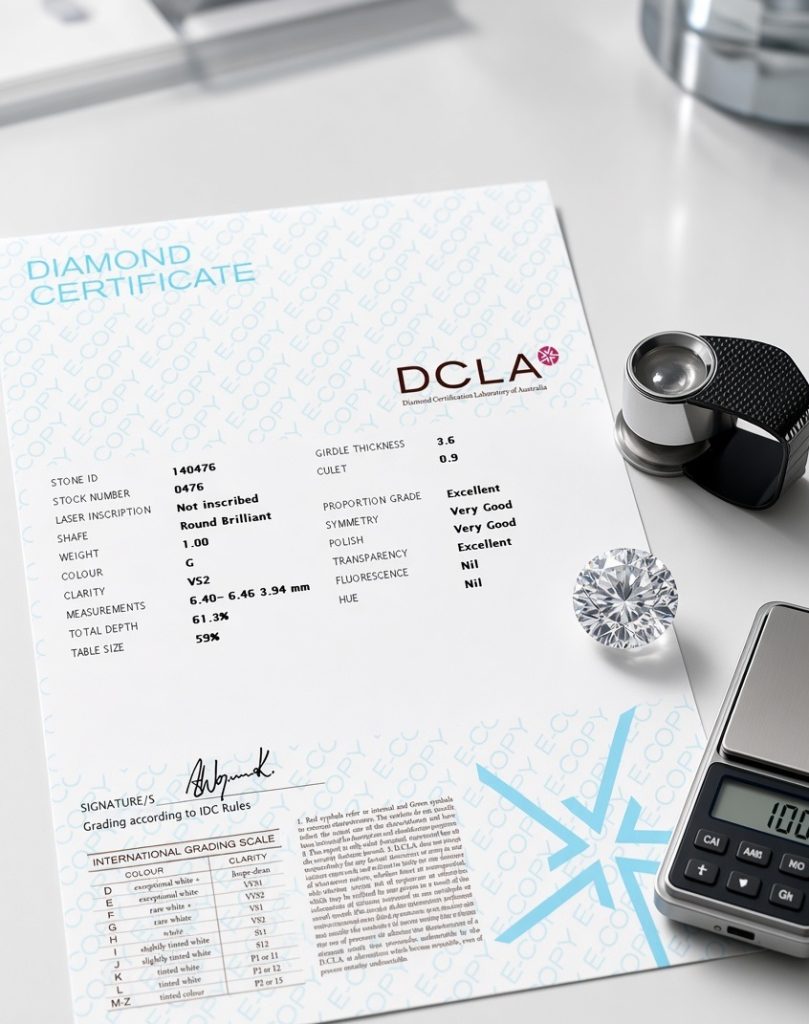
  • An independent diamond grading report or certificate
  • Your original purchase invoice, if available
  • Any previous valuation or insurance documentation
  • Details of the jeweller or supplier from whom the diamond was purchased
  • Any previous laboratory report
  • Information about whether the diamond is natural or laboratory-grown
  • Any documentation relating to treatments or enhancements
  • The original jewellery purchase paperwork, if the diamond is still mounted

Not having these documents does not mean you cannot sell your diamond.

However, it can make the process more difficult.

A buyer may have to conduct their own examination and testing before being prepared to make an offer. Until the diamond’s identity and quality have been independently established, there may be uncertainty surrounding its value.

What if I don’t have a diamond certificate?

This is extremely common.

Many people inherit diamonds, purchase jewellery years ago, lose the original paperwork, or simply were never given an independent grading report when they bought the diamond.

You may have a valuation from an insurance company or jeweller, but it is important to understand that a valuation and a diamond grading report are not the same thing.

A valuation generally provides an estimated monetary value for a particular purpose and point in time.

A grading report describes the diamond itself.

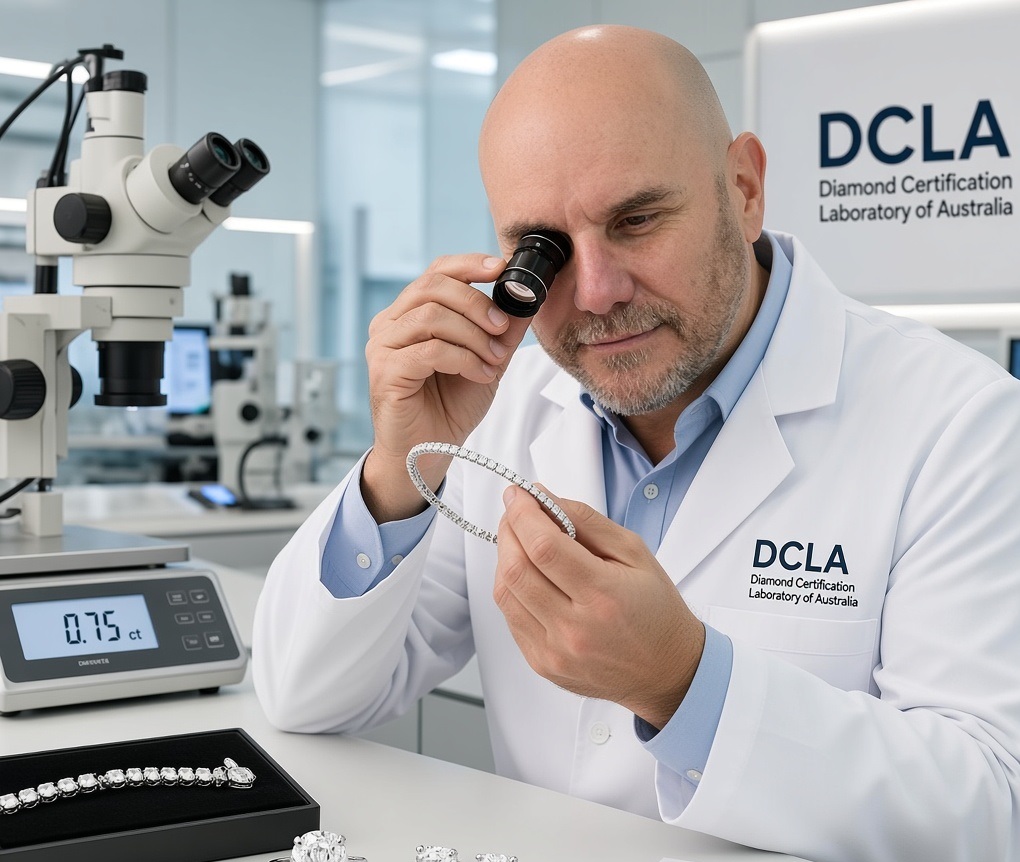
It can document characteristics such as carat weight, colour, clarity, measurements, cut, polish, symmetry, fluorescence and other identifying characteristics. DCLA also identifies whether a diamond is natural or laboratory-grown and records relevant treatments or enhancements.

That distinction becomes particularly important when you are trying to sell.

Why an independent diamond report matters

Imagine trying to sell a car without knowing its exact model, engine size, year or service history.

The buyer may still be interested, but they have less information and therefore more uncertainty.

Diamonds work in a similar way.

A reputable independent laboratory removes much of that uncertainty by providing an objective assessment of the stone.

Instead of telling a potential buyer:

“I was told this is a 1.50-carat G colour VS1 diamond.”

you can provide an independent laboratory report documenting the diamond’s characteristics.

That gives the buyer something they can examine, verify and compare.

DCLA reports include a unique certificate identification number, detailed diamond characteristics and are securely archived, with an online certificate verification service available.

Why certification can help you sell internationally

One of the biggest advantages of having a recognised independent laboratory report is that you are no longer relying solely on your own description of the diamond.

A properly documented diamond can be presented to jewellers, dealers, insurers and potential buyers in different markets with a much greater level of confidence.

This is particularly important if you are considering selling outside Australia.

DCLA is an internationally recognised Australian diamond grading laboratory, established in 2001 to provide certification in Australia according to International Diamond Council (IDC) standards. DCLA states that its reports are produced in accordance with IDC and CIBJO standards and that the laboratory is internationally accredited and recognised.

DCLA is also listed on RapNet and IDEX, giving its reports additional recognition within the international diamond trade.

The result is simple: a properly documented diamond is easier for a potential buyer to understand, verify and compare.

Why choose DCLA?

If you have a diamond without a report, having it independently graded by a recognised laboratory can give you a significant advantage when you eventually decide to sell.

DCLA has been operating since 2001 and was established specifically to bring internationally compliant diamond grading to the Australian market.

The laboratory grades diamonds according to International Diamond Council standards and uses advanced testing technology to identify natural and laboratory-grown diamonds, detect treatments and assess the diamond’s characteristics.

Just as importantly, DCLA operates independently.

The diamond is assigned a unique identification number when it enters the laboratory, with customer information removed from the grading process. This helps ensure that the grading assessment is independent and not influenced by the commercial interests of a buyer or seller.

Consistency is important when selling a diamond

Diamond grading is not simply about putting a number on a stone.

Small differences in colour, clarity, cut and other characteristics can have a significant effect on market value.

This is why consistency and recognised grading standards matter.

A report from an independent laboratory gives the market a common reference point.

Instead of different buyers relying on different descriptions, they can refer to the same documented characteristics.

That can be particularly valuable when a diamond is being offered to buyers outside your local market.

A certificate is not a valuation

There is one important point every diamond owner should understand.

A diamond grading report is not a valuation.

The report describes the diamond; it does not guarantee what somebody will pay for it.

The eventual selling price depends on many factors, including current market conditions, the diamond’s characteristics, demand, the buyer, and whether the stone is being sold privately, through the trade or as part of a jewellery piece.

However, knowing exactly what you have puts you in a much stronger position when discussing price.

What happens if the diamond is still in a ring?

If your diamond is mounted in a ring or other jewellery, the laboratory may need to examine the stone carefully and, depending on the setting, remove it to provide an accurate grading assessment.

DCLA notes that accurate grading of the diamond itself can require the stone to be loose. Simple claw settings may sometimes be removed in the laboratory, while more complex settings such as bezel settings may require additional consideration because removal can potentially affect the jewellery.

This is another reason to have the diamond assessed professionally before you begin the selling process.

Don’t rely on paperwork produced by the seller

An important principle when buying or selling diamonds is independence.

A document produced by a retailer, dealer or other party with a financial interest in the diamond is not the same as an independent laboratory grading report.

The purpose of an independent laboratory is to assess the diamond objectively rather than to sell it.

DCLA specifically recommends checking that a diamond report comes from an independent laboratory rather than from a merchant or retailer with a financial interest in the stone.

Your diamond may be worth more than you think — or less

One of the biggest mistakes diamond owners make is assuming that an old valuation or the price originally paid tells them what their diamond is worth today.

Neither necessarily reflects today’s market.

The diamond market changes, and the price originally paid for a piece of jewellery can include manufacturing, design, retail margins, branding, GST and other costs that may not be recoverable when the item is sold.

Before selling, it is therefore important to establish exactly what you own.

What is the diamond?

Is it natural or laboratory-grown?

What is its carat weight?

What are its colour and clarity grades?

How has it been cut?

Is it treated?

Does it have an identifiable laboratory report?

Once these questions have been answered, you can approach the selling process with considerably more information.

Have a diamond but no certificate?

Don’t assume you have a problem.

If you have inherited a diamond, lost the original paperwork, bought an older diamond without certification, or simply want to establish exactly what you own before selling, an independent DCLA grading report can provide the documentation you need.

With DCLA’s international recognition, IDC-based grading standards, secure report records and verification system, your diamond can have documentation that is meaningful beyond simply having a piece of paper in your hand.

Before you sell your diamond, know what you have.

A professional, independent diamond grading report can give you the confidence to approach the market with accurate information and can make it easier for potential buyers to assess your stone whether they are in Australia or looking at the diamond from an international market.

DCLA Independent Diamond Certification Since 2001

If your diamond does not have a current independent grading report, DCLA can assess and certify the stone, providing a detailed record of its characteristics and identity.

Don’t sell your diamond based on what you think it is worth.

Get the diamond independently assessed, documented and certified first.

Tuesday, 6 May 2025

US Watch and Jewelry Sales Steady Again in March

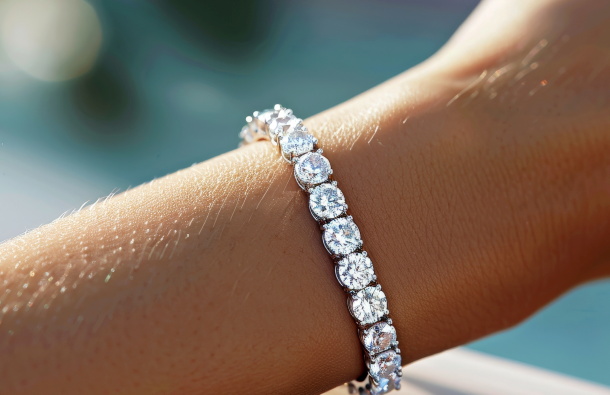
Diamond Bracelet

Watch and jewelry sales in the US remained steady in March, with a slight overall increase of 0.4 per cent, according to the latest US Department of Commerce figures.

Jewelry sales rose slightly, while watch sales dipped, as consumers opted for higher-priced items, but bought fewer of them.

In February overall sales increased by just 0.2 per cent and in January they fell by 1.0 per cent

The US government’s BEA (Bureau of Economic Analysis) reported a 0.7 per cent increase in consumer spending in March, the biggest increase for two years, but said it was largely driven by a rush to buy cars before US reciprocal tariffs forced prices up.

Watch and jewelry sales have been characterized by very modest increases in recent months, following on from a year of sustained growth – 10 per cent or more in some months – as shown below.

Reciprocal US tariffs – announced in April, then paused until July – will almost certainly hit sales, as producers forced to either absorb the costs or pass them on to consumers.

Source: DCLA

Monday, 28 April 2025

US Jewelry Sector Shrinks Again in Q1

The decline in the US jewelry sector continues, with yet another drop in the number of retail, wholesale and manufacturing businesses.

The decline in the US jewelry sector continues, with yet another drop in the number of retail, wholesale and manufacturing businesses.

The total number fell by 3.4 per cent – just under 800 businesses – to 22,330 year-on-year, according to the latest update from the Jewelers Board of Trade (JBT), which provides commercial credit information. The figures take account of both closures and new business openings.

The figure for the previous quarter, Q4 2024, was -3.2 per cent, and for Q3 2024 it was -3.3 per cent, indicating a steady rate of decline.

The biggest fall in Q1 2025 was among jewelry manufacturers, down 4.6 per cent to 2,119. The number of retailers fell 3.5 per cent, down to 16,959 and the number of wholesalers fell 2.5 per cent to 3,252.

JBT reported the opening of 68 new retail jewelers in the US during Q1.

Source: DCLA

Thursday, 19 September 2024

The dazzling jewellery made for pets

 The dazzling jewellery made for pets

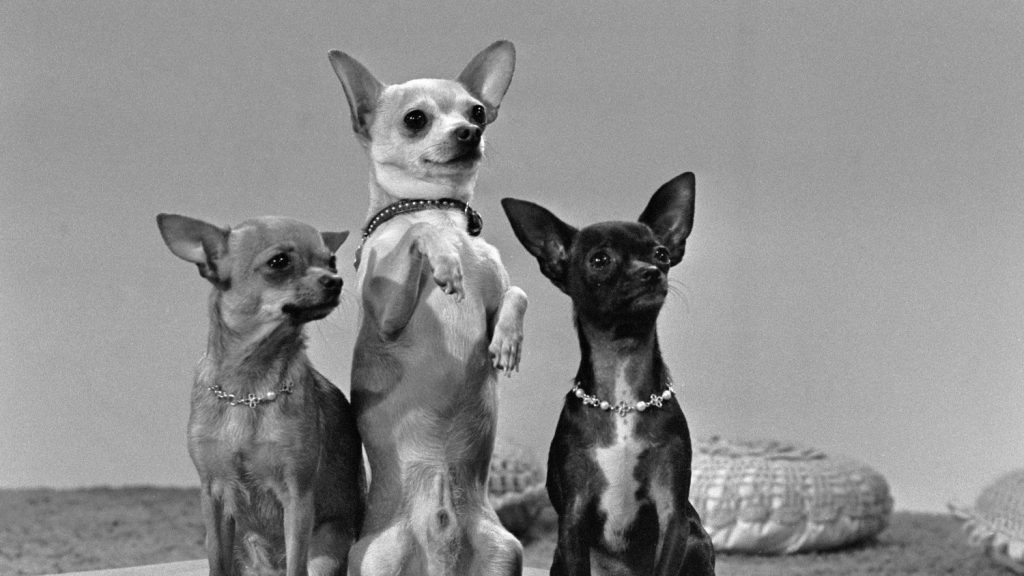
Since ancient times, jewelled collars, saddles and bridles have ensured that animal companions

Since ancient times, jewelled collars, saddles and bridles have ensured that animal companions were as finely jewelled as their owners. Animal bling seems to have been particularly popular from the mid-19th century. Vogue’s 1896 article “Swagger Dogs” told its readers that “Dog jewelry forms an interesting exhibit, is marvelously fine and valuable, if absurdly extravagant”. These dogs sported jewelled collars, leg bracelets and bangles galore.

Lord Berners, the model for Nancy Mitford’s Lord Merlin in The Pursuit of Love, was well known for decorating his pet dalmatians with diamond necklaces, while the poet Elizabeth Barrett Browning made a collar for her dog Flush from a mosaic bead necklace. When Frances Work (Mrs Aurel Batonyi), the great-grandmother of Diana, Princess of Wales, visited the casino with her dog, she matched her jewels with its own diamond collar. The Daily Express of 1903 even recommended “diamond studded dog-collars with receptacles for scent” for smartly dressed dogs. According to early 20th-century newspapers, some dogs even wore bracelets around their paws and gem-set earrings. One of the gifts given to Jenny and Rosie Dolly, the fabulously glamorous cabaret dancers of the 1930s, was a pair of tortoises. These came from the besotted retail magnate Harry Selfridge, their shells set by Cartier with 4-carat blue diamonds.

The Dolly Sisters in the 1920s

The Dolly Sisters in the 1920s

The modern dog with a generous budget could choose from the famously expensive Amour Amour collars, the top-of-the-range set with 52 carats of diamonds, to elegant options from Hermès, Louis Vuitton, Tiffany and Christian Louboutin (with signature red lining). Sadly cats haven’t attracted the same attention from jewellers, although they might not have the same patience for dressing up as their dog counterparts.

The size M Loubicollar dog collar from Christian Louboutin

The size M Loubicollar dog collar from Christian Louboutin

Animal lives are shorter than human ones and bereaved owners often wanted a record of their animal companions, often through paintings and photographs but also via memorial jewellery set with their images and sometimes even hair.

The brooch with a portrait of Nero made for Jane Carlyle

The brooch with a portrait of Nero made for Jane Carlyle

Jane Carlyle’s little dog Nero was a great comfort to her through the ups and downs of her marriage to the author Thomas Carlyle. Nero, painted as “large as a sheep” to Jane’s dismay, can be seen lying comfortably on the sofa in Robert Tait’s painting of the Carlyles at home. When Nero died in February 1860, Jane turned to the painter to help her create a memorial. Writing to Tait, she asked him to send her a photograph of the detail of Nero from the painting to make into a brooch.

Queen Victoria’s collie Gipsy, painted by Friedrich Wilhelm Keyl

Queen Victoria’s collie Gipsy, painted by Friedrich Wilhelm Keyl

Jane Carlyle wasn’t the only bereaved owner to want a lasting memory of her pet. Queen Victoria extended her appetite for sentimental jewellery to her animals. As well as a photograph album recording all the dogs in the Windsor kennels, one of her favourite dogs was immortalised in a jewel. In 1863 the Prince of Wales ordered a crystal brooch with the image of the Queen’s recently deceased collie Gipsy from the royal jewellers, Garrards. Some years later, as Edward VII, he kept strands of his favourite terrier Jack’s hair in a locket on his desk.

Amour Amour is the world’s most expensive dog collar with the price tag of $3.2 million

Amour Amour is the world’s most expensive dog collar with the price tag of $3.2 million

And although in general cats have not been lucky enough to be gifted jewels during their seven lifetimes, they have also been turned into a glittery accessory.

Mary Russell, Duchess of Bedford, was well known for her passion for Siamese cats. According to Boudoir Magazine in 1904, she wore a locket holding the portrait of Goblin, her favourite cat. Goblin’s thoughts on the matter are not recorded.

Source: DCLA

Tuesday, 8 February 2022

Sell Platinum, Diamonds, Gold and Silver

We ensure you are always in the best position to #sell your #gold and #silver with our price advantage.


Visit our office in the Sydney CBD and meet with one of our trained gold buyer specialists.

Sell Gold Jewellery


We will be delighted to have a chat with you about the gold market and how you can use your old gold and silver to find a financial solution. 💰💰💰

Sell Gold and Silver


Call us for a price or appointment. 02 9020 5150

Website: GoldCompany

Sunday, 15 September 2019

If you have a Diamond Ring which you wish to sell …


DCLA provides a quick insight and options on how to resale and save you all the trouble.
Eventually we all have this experience. Someone close to us may leave property, air looms or a piece of Jewellery.
The resale value of a piece of jewelry may be very different from the original purchase price, determining this value can be a tedious and frustrating journey in itself.
While figuring out what to do with Property, figurines or crystal candy dishes we find something unexpected. A piece of Jewellery with what looks to be a diamond.
Should you choose to keep or bestow the item upon a loved one the story ends here.
However, if you want to sell it this is where your journey of discovery begins.
Advice is cheap and in some cases unqualified, so always look carefully at the source when taking it.
You may be told or hear the sole value of any piece of diamond Jewellery, unless from a recognised name like Cartier or Tiffany’s is in the diamond.
Alternatively, you might be told the value is in the piece as a whole.
Simple Fact is every item will be different.
One constant every expert will agreed on, is if there is a diamond of significant size in the engagement ring. The main diamond should be appraised by a Gemological laboratory of the level of DCLA, GIA or HRD.
The idea of removing the diamond from its setting and shipping it to one of these top recognised laboratories around the world seems daunting. So before you take this step call and ask the advice of the laboratory.
First Step
Michael Cohen and Roy Cohen, veterans in the diamond trade and third generation diamond experts explain “If you don’t have access to one of these laboratories in your area. Visit a trusted Jeweller in your area. Ask them to look at the stone in the mounting”. If the diamond can be safely removed, ask the Jeweller to give a costing for the service.
You can then submit the stone directly or through the Jeweller to qualified internationally recognised laboratory.
After submitting the lose diamond to a laboratory like the DCLA, HRD or GIA. A definitive grade with natural diamond or natural origin on the report, will be attributed to the diamond this will give the ultimate value.
This can take from a few days to weeks depending on the individual laboratory.
Laboratory Fees vary by carat size and gemological work required, this would be a very small percentage of the diamonds value so well worth the expense.
Once this is complete, most people that have reached this point have taken the decision to sell.
Next step
Based on the 4c’s size, colour, clarity and the shape of the diamond working out the value is not complicated.
A bit of online research will give an indicative retail value. However, the Buying or selling percentages and profits are determined by some shopping the items around.
Visit a ‘Trusted’ Jeweller or independent diamond dealer to get advice or an offer. Expect differences in price when a diamond new a is originally purchased, to when it is resold.
Every Jeweller will have different profit margins. In addition, each dealer will work with different qualities or sizes so finding the right buyer may take a few visits.
Using a Broker or Auction house
There are a number of ways to sell your jewelry, directly to a dealer or back into the trade or via a store on consignment or through a physical auction to name a few.
Be assured with the correct paperwork, and add extra security with Cold Laser inscription on the diamond linking the zone to the report permanently.

Source: DCLA

If you have a Diamond Ring which you wish to sell …


DCLA provides a quick insight and options on how to resale and save you all the trouble.
Eventually we all have this experience. Someone close to us may leave property, air looms or a piece of Jewellery.
The resale value of a piece of jewelry may be very different from the original purchase price, determining this value can be a tedious and frustrating journey in itself.
While figuring out what to do with Property, figurines or crystal candy dishes we find something unexpected. A piece of Jewellery with what looks to be a diamond.
Should you choose to keep or bestow the item upon a loved one the story ends here.
However, if you want to sell it this is where your journey of discovery begins.
Advice is cheap and in some cases unqualified, so always look carefully at the source when taking it.
You may be told or hear the sole value of any piece of diamond Jewellery, unless from a recognised name like Cartier or Tiffany’s is in the diamond.
Alternatively, you might be told the value is in the piece as a whole.
Simple Fact is every item will be different.
One constant every expert will agreed on, is if there is a diamond of significant size in the engagement ring. The main diamond should be appraised by a Gemological laboratory of the level of DCLA, GIA or HRD.
The idea of removing the diamond from its setting and shipping it to one of these top recognised laboratories around the world seems daunting. So before you take this step call and ask the advice of the laboratory.
First Step
Michael Cohen and Roy Cohen, veterans in the diamond trade and third generation diamond experts explain “If you don’t have access to one of these laboratories in your area. Visit a trusted Jeweller in your area. Ask them to look at the stone in the mounting”. If the diamond can be safely removed, ask the Jeweller to give a costing for the service.
You can then submit the stone directly or through the Jeweller to qualified internationally recognised laboratory.
After submitting the lose diamond to a laboratory like the DCLA, HRD or GIA. A definitive grade with natural diamond or natural origin on the report, will be attributed to the diamond this will give the ultimate value.
This can take from a few days to weeks depending on the individual laboratory.
Laboratory Fees vary by carat size and gemological work required, this would be a very small percentage of the diamonds value so well worth the expense.
Once this is complete, most people that have reached this point have taken the decision to sell.
Next step
Based on the 4c’s size, colour, clarity and the shape of the diamond working out the value is not complicated.
A bit of online research will give an indicative retail value. However, the Buying or selling percentages and profits are determined by some shopping the items around.
Visit a ‘Trusted’ Jeweller or independent diamond dealer to get advice or an offer. Expect differences in price when a diamond new a is originally purchased, to when it is resold.
Every Jeweller will have different profit margins. In addition, each dealer will work with different qualities or sizes so finding the right buyer may take a few visits.
Using a Broker or Auction house
There are a number of ways to sell your jewelry, directly to a dealer or back into the trade or via a store on consignment or through a physical auction to name a few.
Be assured with the correct paperwork, and add extra security with Cold Laser inscription on the diamond linking the zone to the report permanently.

Source: DCLA

Diamond Light Return: How Cut, Angles and Facets Control the Way a Diamond Performs

  A diamond is far more than a beautiful gemstone. It is a precisely engineered optical crystal, and the way it interacts with light is gove...