Showing posts with label Sell Gold Jewellery. Show all posts

Wednesday, 2 September 2026

Selling Jewellery: How to Make the Right Decision When Sentiment and Value Collide

 Selling a piece of jewellery is rarely just a financial decision., Understand the Difference Between Sentimental Value and Market Value

Selling a piece of jewellery is rarely just a financial decision.

Whether you are selling because of a divorce, upgrading to something new, financial pressures, or dividing an estate, jewellery can carry memories, family history and enormous sentimental value. This can make the decision emotionally difficult, particularly when you are unsure what the jewellery is actually worth or how to go about selling it.

The most important advice is simple: do not rush.

Take the Emotion Out of the First Step

When emotions are involved, it can be difficult to make a clear financial decision. A ring, necklace, bracelet or pair of earrings may represent a marriage, a loved one, an important occasion or a family connection.

Before deciding to sell, take some time to establish exactly what you own.

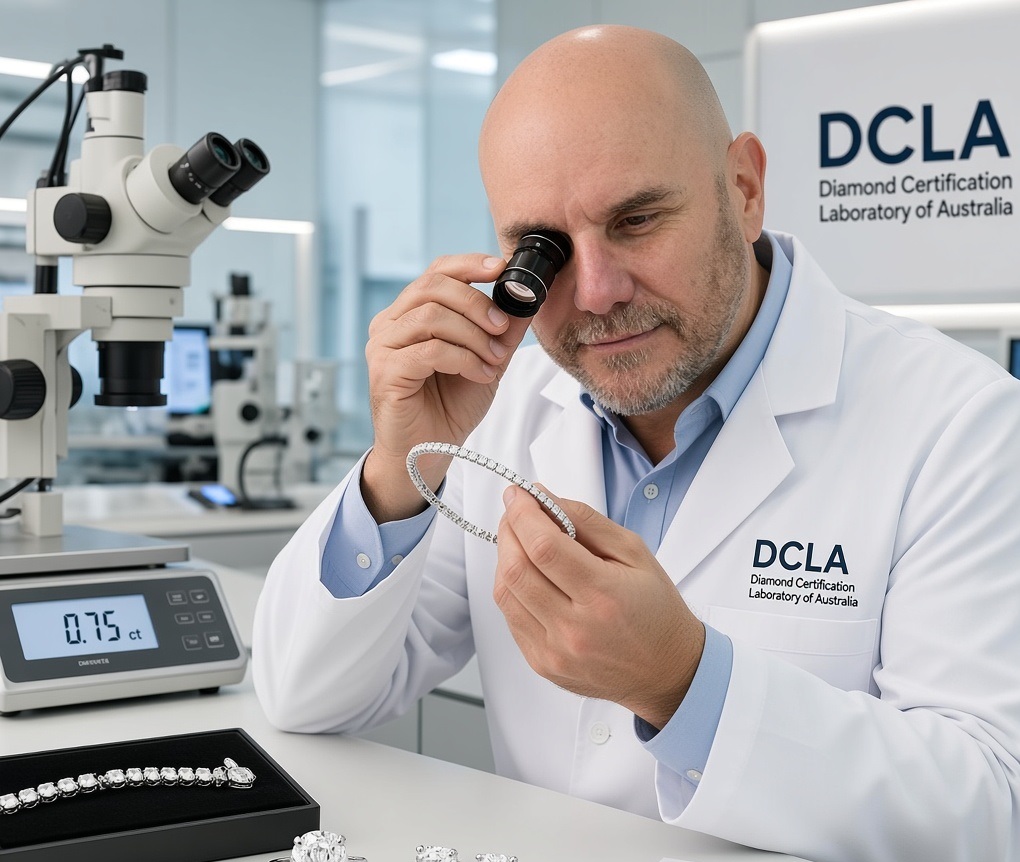
A professional assessment can help determine the precious metal content, gemstones, diamonds, workmanship and condition of a piece. In some cases, documentation or independent certification may also be appropriate.

Knowing what you have gives you a much stronger position when considering your options.

Understand the Difference Between Sentimental Value and Market Value

One of the most important things to understand is that sentimental value and market value are not necessarily the same thing.

A piece may be priceless to a family because of its history, yet have a relatively modest resale value. Conversely, an apparently simple piece of jewellery may contain a valuable diamond or gemstone that is not immediately obvious to the owner.

This is why professional assessment is so important.

A qualified expert can help identify the materials, gemstones and characteristics that contribute to value, allowing you to make a decision based on facts rather than assumptions.

Estate Jewellery Can Be Particularly Complicated

Dividing jewellery as part of an estate can be one of the most sensitive situations.

Family members may have different emotional connections to individual pieces, while disagreements can arise over whether an item should be retained, divided or sold.

Obtaining independent professional advice and appropriate documentation can help establish a clear basis for discussion.

Where required, professional jewellery and diamond documentation can provide an objective record of what a piece contains and its characteristics. This can be particularly useful when several beneficiaries are involved.

Divorce and Relationship Breakdowns

Jewellery can also become part of the financial and emotional complexities of a divorce or relationship separation.

In these circumstances, it is important to understand what the jewellery is, what documentation exists and what professional assessment may be required before making decisions about its disposal or division.

Taking the time to obtain reliable information can help reduce uncertainty and avoid making decisions based purely on emotion or pressure.

Upgrading Jewellery

Selling does not always mean walking away from sentimental pieces.

Many people choose to upgrade an existing diamond or jewellery item, using its value towards something more suitable for their current circumstances.

Before doing so, it is worth understanding the characteristics and value of the original piece and comparing the available options carefully.

A professional assessment can help you determine whether you are making a genuine upgrade and what you are actually receiving for the jewellery you are giving up.

Financial Reasons: Don’t Sell in a Hurry

Financial pressure can make people feel that they have to sell immediately.

However, rushing can lead to poor decisions.

If you need to sell jewellery for financial reasons, take the time to understand what you own, obtain professional advice and compare your options. Be particularly cautious of anyone who pressures you into making an immediate decision.

A reputable professional should be prepared to explain what they are buying, how the value has been determined and what documentation may be available.

Start With the Experts

The GoldCompany Group, of which the Diamond Certification Laboratory of Australia (DCLA) is a member, has built its reputation around professional service, technology and expertise across the jewellery, diamond and precious metals industries.

DCLA brings specialist diamond and jewellery knowledge to the process, helping consumers and members of the trade better understand the items they own.

With three generations of exceptional service to the trade and the public, DCLA has developed a reputation for professionalism and integrity that extends well beyond Australia.

The technology available today can provide far more information about diamonds, gemstones and precious metals than was possible in the past. This can be particularly valuable when dealing with high-value jewellery, estate jewellery or pieces where documentation is missing.

Get the Facts Before You Make the Decision

The decision to sell jewellery should be made after you understand what you have, not before.

If you are considering selling a piece because of divorce, an estate, financial circumstances, an upgrade or simply because it is no longer being worn, there is no need to make the decision in haste.

Take photographs and gather any existing receipts, valuations, certificates and other documentation. Then speak with experienced professionals who can help you understand the jewellery and the options available.

The best first step is not necessarily to sell. It is to understand.

Once you know exactly what you have and have received professional advice, you can decide whether selling, keeping, upgrading or passing the jewellery to another family member is the right choice.

When jewellery carries memories, making the right decision can be just as important as achieving the right financial outcome.

Wednesday, 12 August 2026

Selling a Diamond? Here’s the Paperwork You Need to Know About

 Selling a diamond is very different from selling an ordinary piece of jewellery. A diamond can be worth thousands, tens of thousands, or considerably more, but its value depends on characteristics that cannot simply be judged by looking at the stone.

Selling a diamond is very different from selling an ordinary piece of jewellery. A diamond can be worth thousands, tens of thousands, or considerably more, but its value depends on characteristics that cannot simply be judged by looking at the stone.

If you are thinking about selling a diamond, one of the most important questions you should ask is:

“Do I have an independent diamond grading report for my stone?”

If the answer is no, obtaining an independent report before you sell can be one of the smartest steps you take.

What paperwork do you need to sell a diamond?

There is no single piece of paperwork that every seller must have in every situation. However, the more information you can provide about a diamond, the easier it is for a potential buyer to establish exactly what they are purchasing.

Ideally, you should have:

  • An independent diamond grading report or certificate
  • Your original purchase invoice, if available
  • Any previous valuation or insurance documentation
  • Details of the jeweller or supplier from whom the diamond was purchased
  • Any previous laboratory report
  • Information about whether the diamond is natural or laboratory-grown
  • Any documentation relating to treatments or enhancements
  • The original jewellery purchase paperwork, if the diamond is still mounted

Not having these documents does not mean you cannot sell your diamond.

However, it can make the process more difficult.

A buyer may have to conduct their own examination and testing before being prepared to make an offer. Until the diamond’s identity and quality have been independently established, there may be uncertainty surrounding its value.

What if I don’t have a diamond certificate?

This is extremely common.

Many people inherit diamonds, purchase jewellery years ago, lose the original paperwork, or simply were never given an independent grading report when they bought the diamond.

You may have a valuation from an insurance company or jeweller, but it is important to understand that a valuation and a diamond grading report are not the same thing.

A valuation generally provides an estimated monetary value for a particular purpose and point in time.

A grading report describes the diamond itself.

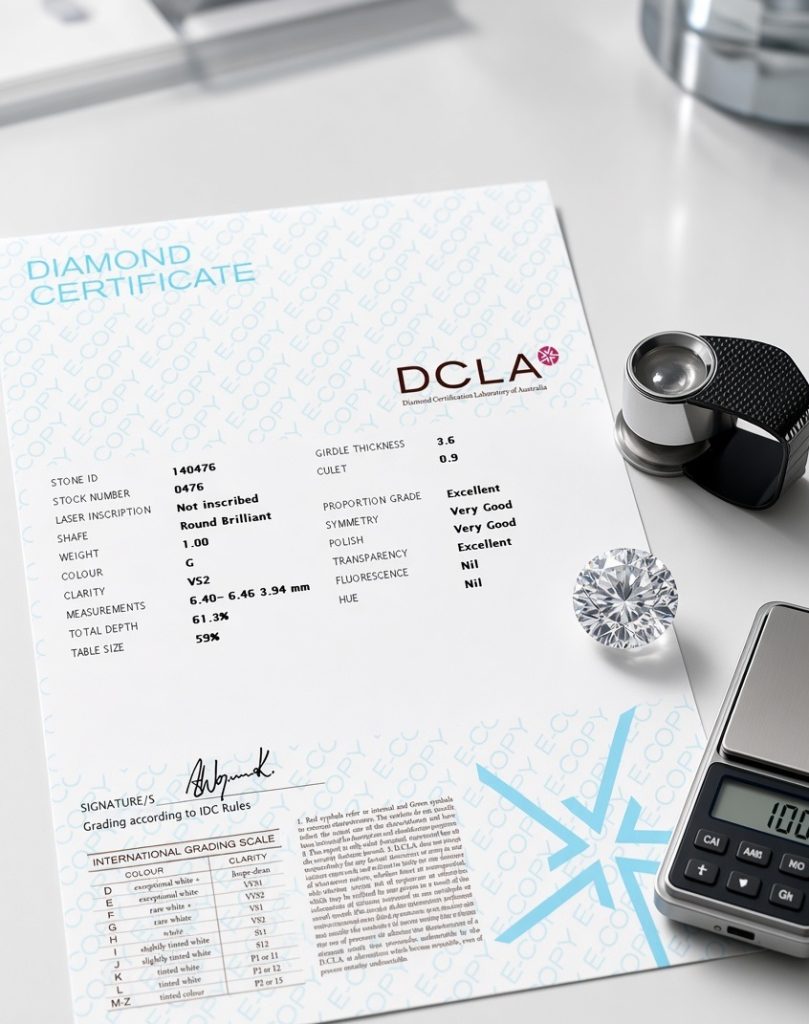
It can document characteristics such as carat weight, colour, clarity, measurements, cut, polish, symmetry, fluorescence and other identifying characteristics. DCLA also identifies whether a diamond is natural or laboratory-grown and records relevant treatments or enhancements.

That distinction becomes particularly important when you are trying to sell.

Why an independent diamond report matters

Imagine trying to sell a car without knowing its exact model, engine size, year or service history.

The buyer may still be interested, but they have less information and therefore more uncertainty.

Diamonds work in a similar way.

A reputable independent laboratory removes much of that uncertainty by providing an objective assessment of the stone.

Instead of telling a potential buyer:

“I was told this is a 1.50-carat G colour VS1 diamond.”

you can provide an independent laboratory report documenting the diamond’s characteristics.

That gives the buyer something they can examine, verify and compare.

DCLA reports include a unique certificate identification number, detailed diamond characteristics and are securely archived, with an online certificate verification service available.

Why certification can help you sell internationally

One of the biggest advantages of having a recognised independent laboratory report is that you are no longer relying solely on your own description of the diamond.

A properly documented diamond can be presented to jewellers, dealers, insurers and potential buyers in different markets with a much greater level of confidence.

This is particularly important if you are considering selling outside Australia.

DCLA is an internationally recognised Australian diamond grading laboratory, established in 2001 to provide certification in Australia according to International Diamond Council (IDC) standards. DCLA states that its reports are produced in accordance with IDC and CIBJO standards and that the laboratory is internationally accredited and recognised.

DCLA is also listed on RapNet and IDEX, giving its reports additional recognition within the international diamond trade.

The result is simple: a properly documented diamond is easier for a potential buyer to understand, verify and compare.

Why choose DCLA?

If you have a diamond without a report, having it independently graded by a recognised laboratory can give you a significant advantage when you eventually decide to sell.

DCLA has been operating since 2001 and was established specifically to bring internationally compliant diamond grading to the Australian market.

The laboratory grades diamonds according to International Diamond Council standards and uses advanced testing technology to identify natural and laboratory-grown diamonds, detect treatments and assess the diamond’s characteristics.

Just as importantly, DCLA operates independently.

The diamond is assigned a unique identification number when it enters the laboratory, with customer information removed from the grading process. This helps ensure that the grading assessment is independent and not influenced by the commercial interests of a buyer or seller.

Consistency is important when selling a diamond

Diamond grading is not simply about putting a number on a stone.

Small differences in colour, clarity, cut and other characteristics can have a significant effect on market value.

This is why consistency and recognised grading standards matter.

A report from an independent laboratory gives the market a common reference point.

Instead of different buyers relying on different descriptions, they can refer to the same documented characteristics.

That can be particularly valuable when a diamond is being offered to buyers outside your local market.

A certificate is not a valuation

There is one important point every diamond owner should understand.

A diamond grading report is not a valuation.

The report describes the diamond; it does not guarantee what somebody will pay for it.

The eventual selling price depends on many factors, including current market conditions, the diamond’s characteristics, demand, the buyer, and whether the stone is being sold privately, through the trade or as part of a jewellery piece.

However, knowing exactly what you have puts you in a much stronger position when discussing price.

What happens if the diamond is still in a ring?

If your diamond is mounted in a ring or other jewellery, the laboratory may need to examine the stone carefully and, depending on the setting, remove it to provide an accurate grading assessment.

DCLA notes that accurate grading of the diamond itself can require the stone to be loose. Simple claw settings may sometimes be removed in the laboratory, while more complex settings such as bezel settings may require additional consideration because removal can potentially affect the jewellery.

This is another reason to have the diamond assessed professionally before you begin the selling process.

Don’t rely on paperwork produced by the seller

An important principle when buying or selling diamonds is independence.

A document produced by a retailer, dealer or other party with a financial interest in the diamond is not the same as an independent laboratory grading report.

The purpose of an independent laboratory is to assess the diamond objectively rather than to sell it.

DCLA specifically recommends checking that a diamond report comes from an independent laboratory rather than from a merchant or retailer with a financial interest in the stone.

Your diamond may be worth more than you think — or less

One of the biggest mistakes diamond owners make is assuming that an old valuation or the price originally paid tells them what their diamond is worth today.

Neither necessarily reflects today’s market.

The diamond market changes, and the price originally paid for a piece of jewellery can include manufacturing, design, retail margins, branding, GST and other costs that may not be recoverable when the item is sold.

Before selling, it is therefore important to establish exactly what you own.

What is the diamond?

Is it natural or laboratory-grown?

What is its carat weight?

What are its colour and clarity grades?

How has it been cut?

Is it treated?

Does it have an identifiable laboratory report?

Once these questions have been answered, you can approach the selling process with considerably more information.

Have a diamond but no certificate?

Don’t assume you have a problem.

If you have inherited a diamond, lost the original paperwork, bought an older diamond without certification, or simply want to establish exactly what you own before selling, an independent DCLA grading report can provide the documentation you need.

With DCLA’s international recognition, IDC-based grading standards, secure report records and verification system, your diamond can have documentation that is meaningful beyond simply having a piece of paper in your hand.

Before you sell your diamond, know what you have.

A professional, independent diamond grading report can give you the confidence to approach the market with accurate information and can make it easier for potential buyers to assess your stone whether they are in Australia or looking at the diamond from an international market.

DCLA Independent Diamond Certification Since 2001

If your diamond does not have a current independent grading report, DCLA can assess and certify the stone, providing a detailed record of its characteristics and identity.

Don’t sell your diamond based on what you think it is worth.

Get the diamond independently assessed, documented and certified first.

Wednesday, 7 May 2025

US Watch and Jewelry Sales Steady Again in March

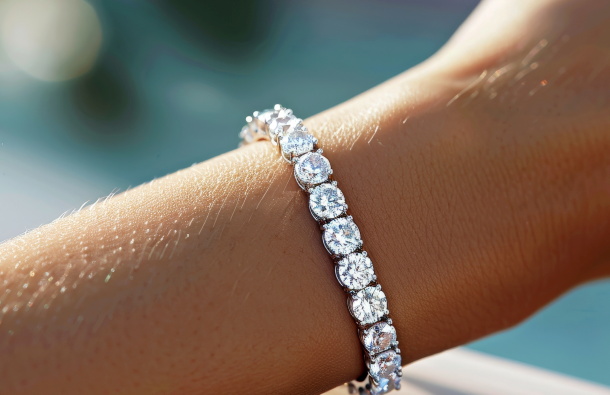
Diamond Bracelet

Watch and jewelry sales in the US remained steady in March, with a slight overall increase of 0.4 per cent, according to the latest US Department of Commerce figures.

Jewelry sales rose slightly, while watch sales dipped, as consumers opted for higher-priced items, but bought fewer of them.

In February overall sales increased by just 0.2 per cent and in January they fell by 1.0 per cent

The US government’s BEA (Bureau of Economic Analysis) reported a 0.7 per cent increase in consumer spending in March, the biggest increase for two years, but said it was largely driven by a rush to buy cars before US reciprocal tariffs forced prices up.

Watch and jewelry sales have been characterized by very modest increases in recent months, following on from a year of sustained growth – 10 per cent or more in some months – as shown below.

Reciprocal US tariffs – announced in April, then paused until July – will almost certainly hit sales, as producers forced to either absorb the costs or pass them on to consumers.

Source: DCLA

Tuesday, 29 April 2025

US Jewelry Sector Shrinks Again in Q1

The decline in the US jewelry sector continues, with yet another drop in the number of retail, wholesale and manufacturing businesses.

The decline in the US jewelry sector continues, with yet another drop in the number of retail, wholesale and manufacturing businesses.

The total number fell by 3.4 per cent – just under 800 businesses – to 22,330 year-on-year, according to the latest update from the Jewelers Board of Trade (JBT), which provides commercial credit information. The figures take account of both closures and new business openings.

The figure for the previous quarter, Q4 2024, was -3.2 per cent, and for Q3 2024 it was -3.3 per cent, indicating a steady rate of decline.

The biggest fall in Q1 2025 was among jewelry manufacturers, down 4.6 per cent to 2,119. The number of retailers fell 3.5 per cent, down to 16,959 and the number of wholesalers fell 2.5 per cent to 3,252.

JBT reported the opening of 68 new retail jewelers in the US during Q1.

Source: DCLA

Wednesday, 9 February 2022

Sell Platinum, Diamonds, Gold and Silver

We ensure you are always in the best position to #sell your #gold and #silver with our price advantage.


Visit our office in the Sydney CBD and meet with one of our trained gold buyer specialists.

Sell Gold Jewellery


We will be delighted to have a chat with you about the gold market and how you can use your old gold and silver to find a financial solution. 💰💰💰

Sell Gold and Silver


Call us for a price or appointment. 02 9020 5150

Website: GoldCompany

De Beers London launches Vibrations

  De Beers London presents Vibrations: a High Jewellery universe inspired by the quiet yet enduring power of inland water. The collection ce...