Showing posts with label Certified Diamond Jewellery Insurance. Show all posts

Tuesday, 13 October 2026

If You Lost Your Diamond Would You Be Adequately Insured

 Standalone jewellery insurance or specified items under your home and contents policy? Understanding the difference could make all the difference when it matters most.

Standalone jewellery insurance or specified items under your home and contents policy?

Understanding the difference could make all the difference when it matters most.

A diamond is often far more than a valuable possession. It may represent an engagement, a marriage, a family inheritance or a milestone that holds a lifetime of memories. Yet, despite the emotional and financial value attached to fine jewellery, many owners have never fully investigated what would happen if their diamond were lost, stolen or accidentally damaged.

The uncomfortable question is simple: if your diamond disappeared tomorrow, would your insurance cover the cost of replacing it with an equivalent stone?

For many jewellery owners, the answer may not be as straightforward as they expect.

The problem with assuming you are covered

Many Australians assume their home and contents insurance automatically provides adequate protection for their jewellery. In reality, coverage varies considerably between insurers and policies.

Standard home and contents policies may impose limits on jewellery claims, apply specific conditions to valuable items, or exclude certain circumstances. A diamond ring worth $20,000, for example, may not be fully covered under a general contents policy unless it has been properly declared and specified.

Even when jewellery is listed as a specified item, the owner should not assume every possible loss is covered. Accidental loss, mysterious disappearance, damage, theft outside the home and overseas travel may all be subject to different conditions.

The critical issue is not simply whether you have insurance. It is whether your policy covers the particular diamond, the circumstances of its loss and the amount required to replace it.

Standalone jewellery insurance versus specified items under home insurance

There are two common approaches to insuring valuable jewellery. Each has advantages, and neither is automatically the better choice for every owner.

Option 1: Standalone jewellery insurance

Standalone jewellery insurance is designed specifically for jewellery and other valuable personal items. Depending on the insurer and policy, it may offer broader protection for risks such as accidental loss, theft and accidental damage.

For someone who regularly wears an expensive diamond ring, travels frequently or owns several high-value pieces, a dedicated policy may provide a more tailored approach to cover.

Potential advantages include:

  • Specialist coverage: Policies designed around jewellery may address risks that general contents insurance does not cover in the same way.
  • Worldwide protection: Some policies cover jewellery while travelling internationally, subject to their terms and geographical limits.
  • Accidental loss protection: Certain policies cover losing a ring or diamond outside the home, although exclusions and conditions apply.
  • Specialist claims handling: Some insurers provide access to jewellers and specialists familiar with the replacement of fine jewellery.
  • Separate protection: Depending on the policy structure, a claim may be handled independently of the household contents policy.

However, standalone insurance is not automatically comprehensive. Premiums, excesses, exclusions, security requirements and replacement conditions still need to be examined carefully.

Option 2: Specifying your diamond under home and contents insurance

Another option is to list your diamond ring or other valuable jewellery as a specified item under your existing home and contents policy.

This can be a convenient and cost-effective approach, particularly when the insurer offers suitable coverage and the policy adequately addresses the risks associated with the item.

Potential advantages include:

  • Convenience: Your jewellery may be managed alongside your other insured possessions.
  • Potentially competitive premiums: Depending on the insurer, your existing policy and the item’s risk profile, specifying jewellery may be economical.
  • A declared sum insured: The item is individually identified with an agreed or declared value, depending on the policy structure.
  • Simplified administration: You may be able to manage your home, contents and specified valuables through one insurer.

The important distinction is that specifying a diamond does not automatically mean it is covered against every eventuality. Some policies may restrict cover to particular events, locations or circumstances.

Owners should also establish whether a claim will be settled in cash, through an approved jeweller, by replacement with an equivalent item or under another settlement arrangement.

The valuation question: What is your diamond actually worth?

One of the most important steps in protecting a valuable diamond is ensuring that its documentation is accurate and current.

A diamond’s value can depend on its carat weight, colour, clarity, cut quality, natural or laboratory-grown origin, and the characteristics of the finished jewellery. The mounting, precious metal and craftsmanship may also affect the replacement cost of a complete ring.

A purchase receipt from several years ago may not accurately reflect the current cost of replacing the same item. Equally, a valuation prepared for insurance purposes should not be confused with a guaranteed resale price.

This distinction matters because insurance replacement value, market value and resale value are not necessarily the same thing.

A diamond that originally cost $15,000 may require a different amount to replace today, depending on market conditions, the specification of the stone and the type of replacement required by the policy.

For this reason, jewellery owners should ask their insurer how frequently valuations should be updated and whether the policy automatically adjusts the sum insured for changes in replacement costs.

Why an independent diamond report matters

When insuring a significant diamond, reliable identification and documentation can be extremely important.

A professional diamond grading report records the characteristics of a stone and helps distinguish it from other diamonds. Depending on the report, this may include information about its carat weight, colour, clarity, cut characteristics and whether it is natural or laboratory-grown.

For a valuable natural diamond, an independent report can provide useful supporting evidence when arranging insurance or establishing the identity of the stone.

However, it is important to understand that a grading report is not the same as an insurance valuation. A grading report describes the diamond’s characteristics; a valuation estimates value for a stated purpose.

At DCLA, the Diamond Certification Laboratory of Australia, our work focuses on the identification, examination and grading of diamonds. Appropriate documentation can help owners and their insurers understand precisely which diamond is being insured.

Five questions every diamond owner should ask their insurer

Before deciding whether standalone jewellery insurance or specified cover under a household policy is more appropriate, ask these questions.

1. Am I covered if I simply lose my ring?

Determine whether accidental loss or disappearance is covered, including situations where you cannot establish exactly when or where the diamond was lost.

2. Am I covered outside my home and overseas?

Check geographical limits, travel conditions and any requirements for wearing, storing or securing your jewellery.

3. How will the insurer settle my claim?

Ask whether the insurer can require you to use an approved jeweller, whether it will replace the item with an equivalent diamond, and whether you can choose a cash settlement.

4. Is my insured value sufficient to replace the actual diamond?

Confirm how the sum insured was determined, whether it includes the complete ring and associated costs, and whether there are any limits or depreciation provisions.

5. What exclusions, excesses and conditions apply?

Read the policy wording carefully. Security requirements, unattended-property exclusions, maintenance conditions and other limitations can materially affect the protection provided.

So, which option is better?

There is no universal answer. A well-designed home and contents policy with specified jewellery cover may provide excellent protection. In other circumstances, standalone jewellery insurance may offer more suitable terms, particularly where accidental loss, travel or specialist replacement arrangements are important.

The best comparison is not simply the annual premium. It is the protection provided relative to the value of the diamond and the circumstances in which it might be lost or damaged.

Compare the actual policy wording, exclusions, excesses, geographical limits, settlement arrangements and replacement provisions. Ask the insurer to clarify anything that is unclear before relying on the cover.

Most importantly, do not assume that because your diamond is listed on a policy, you are necessarily covered for the loss you are most concerned about.

The bottom line: Know what you own and what protects it

Diamonds can be worn every day for decades, passed between generations and treasured long after their original purchase. Yet a moment of carelessness can result in a loss that cannot be reversed.

Insurance cannot replace the sentimental value of a family heirloom, but appropriate coverage may help protect its financial value.

Take the time to review your jewellery insurance, confirm that your diamond is correctly identified, and ensure that your documentation reflects the item you actually own.

Because the worst time to discover that your diamond was inadequately insured is the day you need to make a claim.

Important information: This article is intended for general educational purposes only and does not constitute insurance, financial or legal advice. Insurance coverage, exclusions and claims outcomes depend on the individual policy and insurer. DCLA provides diamond examination and reporting services; readers should consult their insurer or a suitably qualified insurance professional regarding their specific coverage.

Monday, 31 August 2026

Protect Your Jewellery, How to Check Your Jewellery Before You Lose It.

 A Few Minutes Could Save You Thousands

Fine jewellery is designed to be worn and enjoyed, but even the best-made piece will experience wear over time. The metal that holds your diamonds and gemstones is often the part that receives the most punishment, particularly when jewellery is worn every day.

A small amount of wear to a claw, bezel, link or clasp may seem insignificant, but it can eventually result in something much more serious: a lost diamond, gemstone or even the entire piece of jewellery.

Regular inspection and maintenance can help prevent that happening.

Start With the Stones

If your jewellery is claw set, take a close look at the claws holding each stone in place.

Claws can become worn, bent or damaged through everyday wear. They can also catch on clothing, bedding or other objects. A damaged or significantly worn claw may no longer provide the protection it was designed to give.

If you gently touch a stone and it appears to move, or you hear a slight clicking or rattling sound when the jewellery is carefully handled, stop wearing it and have it checked by a professional.

The Jewellers Association of Australia similarly recommends checking for loose gemstones and worn or damaged claws before a loss occurs.

What should you look for?

  • Are all the claws still present?
  • Do any claws look thinner or shorter than the others?
  • Is a claw bent or sitting differently?
  • Does the stone appear to have moved?
  • Does the stone feel loose?
  • Is the metal around the stone worn or damaged?
  • Is the stone sitting evenly in its setting?

These are small warning signs that should not be ignored.

Don’t Forget Bezel Settings

Claw settings are not the only settings that require attention.

A bezel setting holds the stone with a surrounding rim of metal. Over time, that rim can become worn, dented or damaged.

Because the metal is what physically holds the gemstone in position, excessive wear can eventually compromise the security of the stone.

A professional inspection can identify areas of wear that may not be obvious to the naked eye.

Check Your Chains, Bracelets and Clasps

It is easy to concentrate on the diamonds and forget about the rest of the jewellery.

Chains and bracelets can suffer considerable wear, particularly where individual links repeatedly rub against each other or against clasps and fittings.

Pay particular attention to:

Links: Look for stretched, thin or damaged links.

Clasps: Make sure the clasp closes securely and does not feel loose.

Jump rings: These small connecting rings can open or become worn.

Chain ends and connecting points: These can experience significant stress during everyday use.

Bracelet connections: Check for excessive movement or signs that the metal has become thin.

A weak link or worn clasp can result in losing the entire bracelet or necklace without you even realising it has happened.

Your Lifestyle Makes a Difference

There is no single maintenance schedule that suits everyone.

How often jewellery should be professionally inspected depends heavily on how often you wear it and what you do while wearing it.

Do you wear your engagement ring every day?

Do you wear your jewellery while working with your hands?

Do you wear your rings while exercising?

Do you work in an environment where your jewellery is regularly exposed to knocks, chemicals, tools or hard surfaces?

Do you sleep wearing your jewellery?

All of these factors can increase the amount of wear placed on your jewellery.

Someone who wears a diamond ring occasionally may require less frequent inspection than someone who wears the same ring every day and works with their hands.

Don’t Wait Until Something Goes Wrong

One of the biggest mistakes jewellery owners make is waiting until a stone falls out or a clasp breaks before having their jewellery checked.

By that stage, the damage has already occurred.

A professional inspection is about prevention. Identifying a worn claw, thinning link or damaged clasp early can allow the problem to be repaired before you lose something valuable or irreplaceable.

And remember, the value of jewellery isn’t always financial. A family heirloom, engagement ring or piece with sentimental significance may be impossible to replace.

How Often Should You Have Your Jewellery Checked?

For jewellery that is worn regularly, an annual professional inspection is a sensible starting point. However, this should be adjusted according to how heavily the jewellery is worn and the type of work or activities it is exposed to.

For jewellery worn every day or subjected to considerable wear, more frequent inspections may be appropriate.

And if you notice something unusual a loose stone, damaged claw, worn link, loose clasp or change in the way the jewellery feels — don’t wait for your next scheduled inspection. Have it checked immediately.

DCLA Can Check Your Jewellery

At the Diamond Certification Laboratory of Australia (DCLA), we understand that protecting your jewellery is about more than simply knowing what your diamonds are worth. It is also about making sure the stones and jewellery are properly maintained.

DCLA offers a jewellery checking service to help identify potential problems with settings, stones and jewellery components before they become costly or heartbreaking losses.

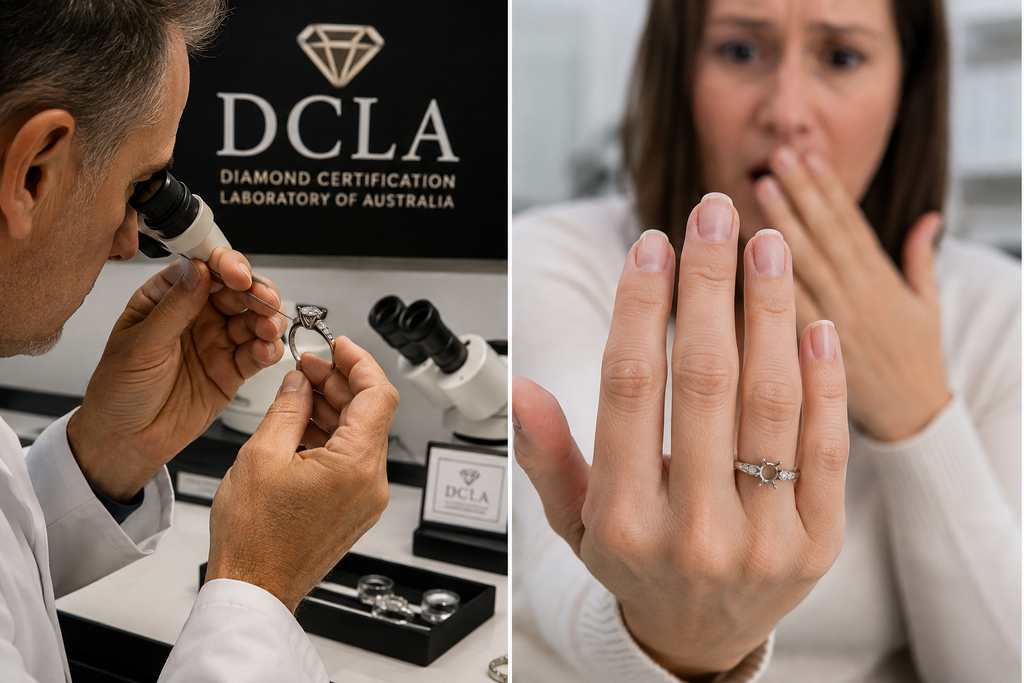
Our laboratory uses professional gemmological equipment, including high-precision microscopes, to examine diamonds and jewellery in detail.

A Few Minutes Could Save You Thousands

Your jewellery deserves regular care just like any other valuable possession.

Check your stones. Check the claws. Check the bezel. Check the links. Check the clasp.

Most importantly, don’t ignore small changes.

A little maintenance today could prevent the loss of a diamond tomorrow.

DCLA independent diamond expertise and professional jewellery services, helping you protect what matters. DCLA is Australia’s internationally accredited diamond certification laboratory, with independent gemmological assessment carried out in its Sydney laboratory.

For more information about having your jewellery checked, contact DCLA – Diamond Certification Laboratory of Australia.

Monday, 7 February 2022

Watch and Jewellery Valuations

If Require a watch or jewellery valuation for insurance.

AcuVal is the jewellery valuation App for you.


Simply download the Free App off the App store, and you are almost there.


A HD picture with your phone, and model and serial number is all the valuer will need to complete your valuation, all while your watch remains on your wrist.


No longer the need to leave you watch or jewellery with anyone.

AcuVal App for insurance valuations


The superior technology making your experience hassle free.


Free Download here: https://acuval.com.au

Friday, 21 February 2020

Bespoke certified diamond jewellery insurance

Unlike other insurers, we only insure certified diamond jewellery. As the      diamond experts, we appreciate the worth of your diamonds and guarantee to replace them like for like.

Bespoke certified diamond jewellery insurance

Unlike other insurers, we only insure certified diamond jewellery. As the      diamond experts, we appreciate the worth of your diamonds and guarantee to replace them like for like.

Thursday, 13 February 2020

Insuring Your Certified Diamonds Is A No-brainer


Your diamonds are possibly the most valuable item you own. Valuable not just in monetary terms, but because of their sentimental value. It might be your engagement ring, a wedding ring, a pendant gifted by a grandparent or even your favourite set of earrings. These items come with a strong emotional attachment and it can be devastating when they are lost, stolen or damaged.

So, you’d be amazed at the statistics – 40% of diamond owners don’t insure their pieces. They then get incredibly angry at themselves when it’s too late and they’ve lost their special piece for whatever reason. Within this group, one-third consider their engagement ring to be one of the most expensive items they own among other investments like their home and vehicle. Yet they insure their house and vehicle every year, but neglect to consider their diamonds.

The alarming part is how often people find themselves in situations where their diamonds are at risk. The statistics are an eye-opener and should serve as a reminder if you haven’t yet insured your diamonds properly.

In 2015, Australia had the fifth highest rate of burglaries in the world. In 2017, there were 225,900 recorded burglaries in Australia – one every three minutes. Add to this a 2010 study that showed jewellery was the third most common item stolen in a home burglary, behind laptops and cash – and you would have to agree it’s not worth the risk. Theft is more common than you think and no one is exempt from such bad luck.

It’s also important to remember that your diamonds are vulnerable and are susceptible to damage. There are three different classifications a gemologist uses when assessing stones to determine their durability:

Hardness
Toughness
Stability

Hardness is assessed by how easily the diamond can scratch. Toughness is judged by how well the diamond can stand up to breakage or chipping. Stability is measured according to how well the diamond can stand up to thermal changes. It’s worthwhile finding out how vulnerable your diamonds are, or at least keep in mind they’re not invincible.

And of course, there’s the risk that you could lose your special piece. Everyone assumes it will not happen to them, but that is optimistic and you can never be 100% sure of this – at home, or while you’re on holidays.

Some insurance gets murky when you’re out of the country and holidaying overseas. You believe you’re protected until you fly to Bali or Hawaii and suddenly you’ve been robbed or left something in the hotel room and your special piece isn’t covered.

With Certified Diamond Insurance, you can trust you are covered the moment you walk out of the jewellery shop. Just as importantly, you’re free to have your piece repaired or replaced at your chosen jeweller – and we guarantee your replacement will be the same if not better than the original piece. You’ll pay no excess if you ever need to claim, and you’re covered worldwide and at home. Which means whenever and wherever you need to travel, your diamonds are safe.

Don’t make the mistake of assuming it will never happen to you. Cover yourself, protect your diamonds properly, and relieve the stress should anything ever happen.

Wednesday, 12 February 2020

Gem experts offer cheaper insurance policies for diamond rings | 7NEWS

Gem experts offer cheaper insurance policies for diamond rings | VIDEO 7NEWS


Certified Diamond Insurance CDI combines superior knowledge in the insurance and diamond industries to create a market leading product that will provide you with the right cover at the right price.


Friday, 6 December 2019

Certified Diamond Jewellery Insurance

Bespoke certified diamond jewellery insurance


                                          divider  
   

Unlike other insurers, we only insure certified diamond jewellery.
As the diamond experts, we appreciate the worth of your diamonds and guarantee to replace them like for like if not better if they are ever lost or stolen.

Value Assurance

We combine superior knowledge in the diamond and insurance industries to create market-leading cover at the right price.
accurate-jewellery-insurance-claims

Accurate Claims

Your claim is overseen by diamond experts and vetted by a leading diamond laboratory, ensuring your replacement is of the same quality.
backed-by-lloyds-of-london

World-class Partners

Your insurance is backed by Lloyds, the most trusted name in insurance the world over.
diamond-identification-recovery

Identification Recovery

Since your diamond is certified, we’ll also register and ID your diamonds, increasing the possibility of recovering them.

Inherited Jewellery and Family Valuables, Why Expert Assessment Matters

  Inherited jewellery, diamonds, gold and family heirlooms can represent significant financial and sentimental value. Before dividing an est...