Showing posts with label rolex date-just. rolex day date. Show all posts

Wednesday, 9 September 2026

The Rise of the Luxury Watch: When Time Becomes an Investment

 There was a time when buying a high-end watch was simply about owning something beautifully made.

There was a time when buying a high-end watch was simply about owning something beautifully made. Today, for many collectors, a luxury watch is much more than a way of telling the time. It can be a statement of achievement, a piece of craftsmanship, a collector’s item and, when chosen carefully, a wearable asset.

From Rolex and Omega to Audemars Piguet, Vacheron Constantin and Patek Philippe, the world of fine watchmaking has developed into a global market where certain models can command extraordinary prices and maintain strong demand for years.

The names that define luxury watchmaking

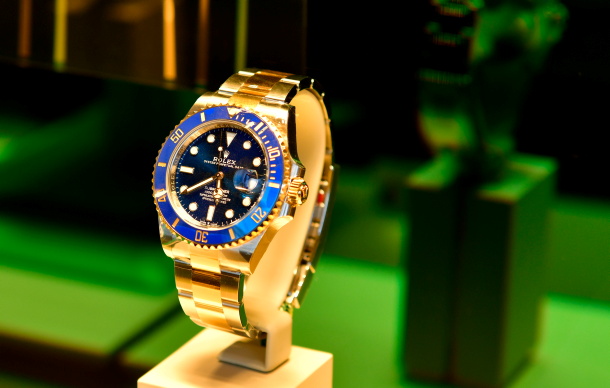
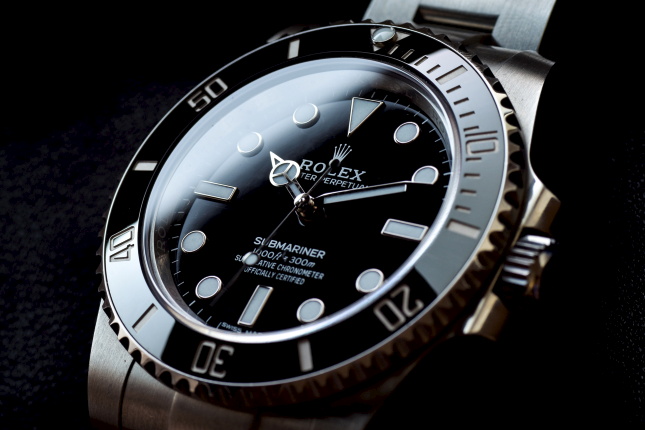
Few names carry the prestige of Rolex. Models such as the Submariner, Daytona, GMT-Master II and Day-Date have become icons, recognised well beyond the traditional watch-collecting community.

Audemars Piguet, particularly with the Royal Oak, occupies another level of luxury watchmaking. Its distinctive design and highly regarded mechanical movements have made it one of the world’s most recognisable collector watches.

Then there is Patek Philippe, a name synonymous with traditional Swiss watchmaking. Its philosophy has always been centred on craftsmanship, exclusivity and longevity. Patek Philippe itself distributes watches through its authorised network, with availability dependent on the individual retailer and model.

Vacheron Constantin, one of Switzerland’s great historic manufacturers, appeals strongly to collectors who appreciate exceptional finishing and watchmaking heritage.

And then there is Omega. From the Speedmaster’s association with NASA and the Moon landing to the Seamaster’s long-standing reputation as a professional dive watch, Omega combines history, engineering and everyday wearability.

Other names including Cartier, Jaeger-LeCoultre, IWC, Panerai, Breitling, Tudor, Blancpain and Zenith have also established important places in the luxury-watch market.

A watch you can actually wear

Perhaps the greatest attraction of a luxury watch is that, unlike many traditional investments, you can enjoy it every day.

A share certificate stays in your portfolio. A property remains on the balance sheet. A luxury watch can be on your wrist.

That makes the concept of a wearable investment particularly appealing.

Of course, there are no guarantees. Not every luxury watch increases in value, and buying a watch purely because you expect it to appreciate can be risky. Model, reference, condition, rarity, provenance, box and papers, servicing history and market demand can all influence future value.

But certain watches have demonstrated remarkable resilience because collectors continue to want them.

The current market also shows how strongly the high end of Swiss watchmaking continues to attract collectors. Recent industry analysis indicates that value growth has become increasingly concentrated in ultra-luxury and highly sought-after timepieces, while the broader market has been more mixed.

The authorised retailer: The traditional way to buy

For many buyers, purchasing directly through an authorised retailer remains the ultimate luxury experience.

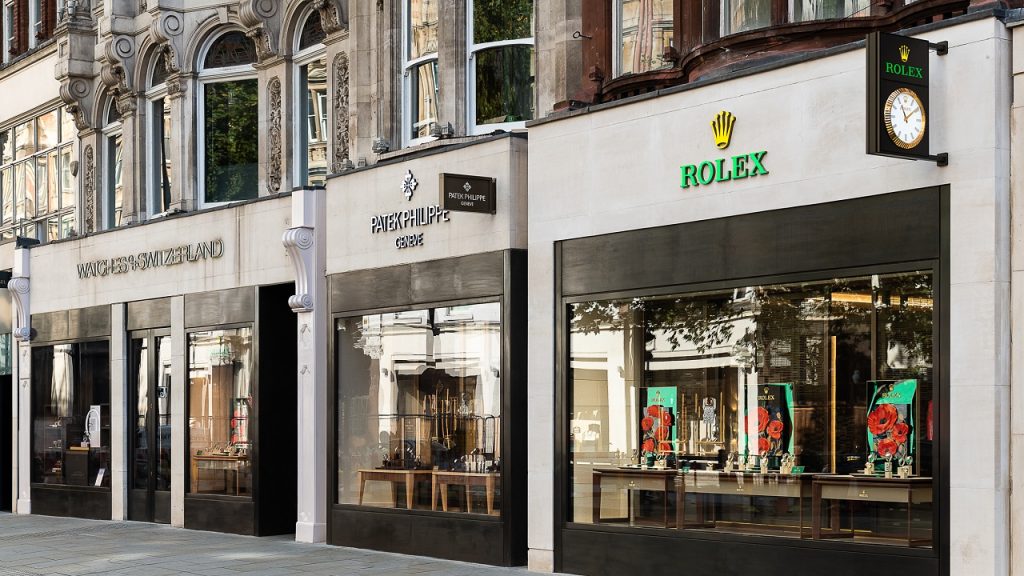
You get the brand environment, expert advice, manufacturer’s warranty and the knowledge that you are purchasing a genuine new timepiece through the manufacturer’s official distribution network. Rolex, for example, states that new genuine Rolex watches are sold exclusively through Official Rolex Retailers.

There is, however, one significant drawback.

You may have to wait.

For some of the most desirable models, availability can be extremely limited. The watch you want may not simply be sitting in a display cabinet waiting for the next customer.

You may register your interest, develop a relationship with the retailer and wait for the right allocation. Depending on the model and circumstances, that wait can be lengthy.

And that creates an interesting dilemma.

Do you wait years for the opportunity to buy the exact watch you want new?

Or do you find the watch now?

The rise of the specialist watch dealer

This is where the specialist secondary-market dealer has changed the way collectors buy luxury watches.

Rather than waiting indefinitely for a particular allocation, collectors can purchase an existing watch that has already entered the market.

One Sydney business that has embraced this model is The Watch Business, founded and operated by Dmitri.

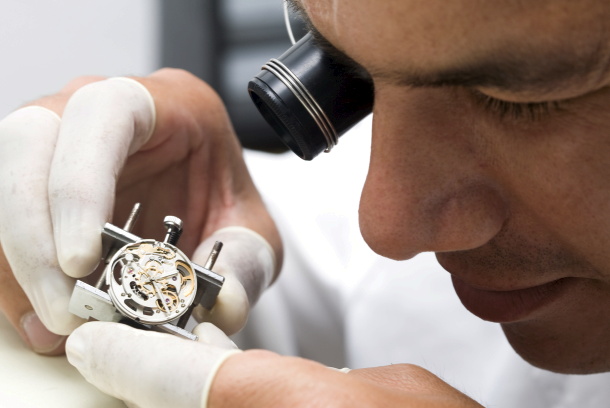
Based in the Sydney CBD, The Watch Business specialises in pre-owned luxury watches and deals in brands including Rolex, Omega, Audemars Piguet, Patek Philippe, Vacheron Constantin, Cartier and many others. The business operates by private appointment and says its watches are inspected and authenticated by a professional watchmaker before being offered for sale.

For the collector, the attraction is simple:

If the watch you want is available, you don’t necessarily have to wait years to own it.

And that has fundamentally changed the buying experience.

From new to pre-owned and from one watch to another

names that define luxury watchmaking


Perhaps the biggest evolution is not simply the ability to buy a watch. It is the ability to trade.

Collectors rarely stay with one watch forever.

You might start with an Omega Speedmaster. A few years later, you decide you want a Rolex Submariner. Eventually, you might aspire to an Audemars Piguet Royal Oak or a Patek Philippe.

Traditionally, moving between watches could mean selling your existing watch privately, negotiating with buyers, waiting for payment and then starting the search for the next piece.

A specialist dealer can simplify that process.

The Watch Business, for example, offers buying and trade-in services, allowing clients to use an existing watch as part-payment towards another timepiece.

That creates a completely different way of thinking about collecting.

Instead of asking, “How much will my next watch cost?”

The collector can ask:

“What is my current watch worth, and what does it cost me to move up to the next one?”

That difference is significant.

The great advantage of the specialist dealer

There is another important distinction between the traditional retail model and the specialist dealer.

A traditional authorised watch retailer’s primary business is selling the manufacturer’s watches. It is not necessarily a place where you can walk in with your existing Rolex, Omega or Patek Philippe and negotiate a trade against another brand or model.

A specialist dealer operates in a different ecosystem.

They buy watches.

They sell watches.

They trade watches.

They source watches.

And, importantly, they can provide a market for the watch you already own.

This is one of the major limitations of the traditional retail experience: the store where you purchased a new watch may not be the same place that will buy it back from you or trade it towards your next watch.

That is where specialist dealers have carved out an increasingly important role.

The collector’s choice

For someone who has the time and patience, buying from an authorised retailer can be a wonderful experience.

You get the new-watch presentation, manufacturer’s warranty and the satisfaction of being the original owner.

But if you have decided exactly which watch you want and you don’t want to wait potentially years for availability the specialist dealer offers another route.

You can inspect the watch, establish its condition and provenance, understand its market value and potentially walk away with the watch you have been searching for.

And when you eventually decide to upgrade, you can return to the same market and trade your existing piece towards something different.

That makes luxury-watch collecting increasingly fluid.

A changing definition of investment

The luxury watch market has changed dramatically.

The modern collector isn’t necessarily buying one watch and keeping it locked away in a safe.

They may buy a watch, wear it, enjoy it, trade it, upgrade it and eventually move into another piece.

That is what makes a great luxury watch so interesting.

It can be craftsmanship, jewellery, history, status and a potentially valuable asset all on your wrist.

For today’s discerning collector, the question is no longer simply:

“What watch should I buy?”

It is increasingly:

“What watch should I own next?”

And with specialist dealers such as The Watch Business changing the way Australians buy, sell and trade luxury timepieces, building a collection has never been more accessible.

For collectors who value experience, expertise and the ability to trade one exceptional timepiece for another, this has quickly become a compelling alternative to the traditional retail model.

Source: DCLA

Thursday, 23 April 2026

Mother’s Day Jewellery Demand Drives Record Consumer Spending


Mother’s Day Jewellery Demand

Jewellery is set to play a leading role in what is to be a record-breaking Mother’s Day for consumer spending in the United States, according to the latest survey released by the National Retail Federation (NRF).

Despite ongoing economic uncertainty, sentiment remains resilient. Consumers continue to prioritise meaningful gifting, with jewellery emerging as a key category driven by emotional value and lasting significance.

“Mother’s Day remains a priority for many Americans,” noted Mark Mathews, Chief Economist at the NRF. “Consumers are increasingly seeking unique, sentimental gifts that create enduring memories.”

Total spending for the holiday is projected to reach a record US$38 billion, surpassing last year’s US$34.1 billion and exceeding the previous high of US$35.7 billion set in 2023. Within this, jewellery alone is expected to account for US$7.5 billion, representing a 10% increase year-on-year and reinforcing its position as one of the most significant gifting categories.

On an individual level, consumers are forecast to spend an average of US$284, marking a continued upward trend in per-person expenditure.

Beyond jewellery, experiential gifting continues to gain traction, with special outings projected to generate US$6.4 billion in spending. Electronics are expected to reach US$4.4 billion, followed by flowers at US$3.2 billion and greeting cards at US$1.3 billion.

According to Phil Rist of Prosper Insights & Analytics, consumers are not only budgeting more but also diversifying their spending across multiple gift categories.

The survey further highlights that:

  • 54% of consumers plan to purchase gifts for their mother or stepmother
  • 22% will buy for a spouse
  • 13% intend to purchase gifts for daughters

Retail channels remain mixed, with 33% of shoppers favouring online and department stores, while 29% opt for specialty retailers a segment particularly relevant to the jewellery trade and 26% turning to discount outlets.

For the jewellery industry, the data underscores continued strength in consumer demand for pieces that combine emotional resonance with intrinsic value, reinforcing jewellery’s role as both a luxury purchase and a meaningful store of sentiment.


Swiss Watch Exports Ease as Key Markets Show Weakness

Swiss watch exports recorded a modest decline in March, reflecting softer demand across several key international markets, according to figures released by the Federation of the Swiss Watch Industry.

Total shipments fell 1% year-on-year to CHF 2.11 billion (US$2.71 billion), following a period of strong growth in February across major markets.

The United States, the largest export destination for Swiss watches, led the downturn with a 1.6% decline to CHF 398.9 million. More pronounced weakness was observed in Asia and Europe, with exports to Japan falling 13% and Germany declining 9%.

While some markets showed resilience exports to the United Kingdom rose 3.2%, and China posted a 4.2% increase these gains were insufficient to offset broader softness. France recorded a sharp 72% increase, although this was largely attributed to re-exports rather than underlying consumer demand.

The Middle East presented a mixed picture. Exports to the United Arab Emirates edged up 0.7%, indicating continued stability, while Saudi Arabia experienced a notable 17% contraction.

From a pricing perspective, the only segment to record growth was watches priced between CHF 200 and CHF 500, which rose 15%. All other categories declined:

  • Entry-level watches (below CHF 200): down 0.3%
  • Mid-range (CHF 500–CHF 3,000): down 3.7%
  • High-end (above CHF 3,000): down 0.5%

Despite the March slowdown, the first quarter as a whole remained positive, with exports increasing 1.4% to CHF 6.2 billion (US$7.95 billion).

The data suggests a market entering a phase of consolidation following periods of strong post-pandemic growth, with demand becoming increasingly uneven across regions and price segments.

Source: IDEX

Monday, 21 July 2025

Thousands of Swiss Watchmakers’ Jobs at Risk

Swiss Watchmakers

Thousands of Swiss watchmakers are facing an uncertain future from 1 August, when the state-funded furlough program comes to an end.

Employers will have to find a way to pay their salary, or let them go.

The furlough scheme, widely used during the Covid pandemic, was never intended to meet such long-term needs as the ongoing decline in demand for luxury watches.

The industry has been relying heavily on support from the government, which has until now covered 80 per cent of furloughed workers’ salaries.

But a decline in global demand since the second half of 2023 shows little sign of recovery.

Smaller and mid-market brands are feeling the squeeze more than large, high-end brands such as Rolex, Patek Philippe, and may be forced to lay off staff.

Watchmakers avoid permanent job losses wherever possible, because of the difficulties in recruiting skilled workers when demand picks up.

Many watchmaking companies have put workers on short-time working even if they have been able to avoid temporary retrenchments.

Swiss watch exports were down 2.8 per cent by value in 2024, according to the Federation of the Swiss Watch Industry, with sales in China down by almost 26 per cent.

Last September we reported that Girard-Perregaux and Ulysse Nardin, (sold off by the Kering Group), had put 15 per cent of their workforce on short-time working and that 40 companies – mostly tool, machinery or component suppliers – applied for permission to cut their workers’ hours in Jura, one of Switzerland’s 26 cantons.

Source: DCLA

Thursday, 10 October 2024

First Dedicated Rolex Store in China

China is to get its first dedicated Rolex store.

Shenyang,Liaoning,China

China is to get its first dedicated Rolex store.

The luxury Swiss watchmaker will sell direct to consumers at the HKRI Taikoo Hui mall, in Shanghai, according to Chinese media reports.

The store will be operated by Bucherer, the long-established watch retailer that was wholly acquired by Rolex last September, and will carry Bucherer branding. No date has been given for its opening

China is the second biggest market for Swiss watches after the US, accounting for $209m of exports in August.

But it is currently intensifying efforts to curb conspicuous extravagance, particularly through a crackdown on social media influencers who flaunt excessive wealth.

In addition overall sales of Swiss watches are suffering, according to the Federation of the Swiss Watch Industry, which describes the outlook for the rest of the year as negative.

Rolex dominates the Swiss watch market, with a share of more than 30 per cent. It has always relied on authorized dealers to manage its Chinese operations.

Source: DCLA

Tuesday, 6 August 2024

US Watch and Jewelry Sales in June: Biggest Monthly Increase for Two Years

 US Watch and Jewelry Sales in June: Biggest Monthly Increase for Two Years

Rolex Submeriner Date 41mm Oyster yellow gold
                Rolex Submeriner Date 41mm Oyster yellow gold

Watch and jewelry sales in the US picked up significantly in June, with their biggest single monthly increase in two years.
The year-on-year increase was 6.2 per cent, according to the latest figures published by the US Department of Commerce. The last time we saw such an increase was in July 2022 (also 6.25 per cent).
The trend for the last three months has been of continued growth, but at a slower rate (March 4.5 per cent; April 3.7 per cent; May 3.3 per cent). The rise in sales follows a year or so of almost relentless decline (October 2022 to October 2023).
Revisions to figures for April and May by the Bureau of Economic Analysis (BEA) at the US Department of Commerce show sales were higher than initially reported. The year-on-year increase for April was 3.7 per cent (revised up from 2.7 per cent based on actual transactions rather than estimates) and for May it was 3.3 per cent (revised up from 1.4 per cent).

Source: DCLA

Friday, 19 April 2024

Swiss Watch Exports Plunge Amid Halt in Asia Demand

Swiss Watch Exports Plunge Amid Halt in Asia Demand

Swiss watch exports recorded a steep decline in March as demand in China and Hong Kong dipped below that of four years ago, during the height of the pandemic.

Shipments of timepieces slid 16% to CHF 2 billion ($2.2 billion) for the month, the Federation of the Swiss Watch Industry reported Thursday. The downturn followed a 3.8% fall in February, the first drop in more than two years, as appetite began to falter in Asia.

“Swiss watch exports recorded a sharp decline in March,” the federation noted. “China and Hong Kong accounted for a particularly high proportion of the trend. China suffered a decline…dropping to a level below that of March 2020, when the sector practically came to a halt in the middle of the month because of the Covid-19 pandemic. Hong Kong…saw a similar change.”

Supply to the US fell 7% to CHF 340.5 million ($374.5 million). In China, the federation’s second-largest market, shipments plunged 42% to CHF 150.2 million ($165.2 million), and in Hong Kong they plummeted 44% to CHF 148.1 million ($162.9 million). In Japan exports saw a 3.5% drop, while they slipped 3.6% in the United Arab Emirates (UAE). Decreases of 15% in Singapore, 13% in the UK and Germany, and 12% in France were closer to the global average, the federation explained.

Timepieces at each price point noted decreases. Watches that cost less than CHF 200 ($220) fell 19%, as did those priced between CHF 200 and CHF 500 ($550). Watches valued at CHF 500 to CHF 3,000 ($3,300) slid 38%, while those worth over CHF 3,000 decreased 10%.

For the first quarter of the year, exports went down 6% to CHF 6.08 billion ($6.69 billion).

Source: DCLA

Wednesday, 13 March 2024

Rolex’s 30% Share of Swiss Watch Market

Rolex Submariner

Rolex Submariner

Rolex remains the king of Swiss watches, with more than a 30 per cent share of the market in 2023, according to new research by the investment bank Morgan Stanley and consultants LuxeConsult.

“No other luxury brand can claim such a dominant position in its respective sector,” they say in a new report.

Rolex’s market share is more than next five biggest brands combined: Cartier (8 per cent), Omega (7 per cent), Patek Philippe (6 per cent) Audemars Piguet (5 per cent) and Richard Mille (3 per cent).

Rolex’s revenue for the year are estimated at $11.43bn (CHF 10.1bn). It sold an estimated 1.24m watches last year, at an average cost of $13,832 (CHF 12,218). Second-placed Cartier sold 660,00 watches at an average cost of $6,467 (CHF 5,712).

Total sales of Swiss watches last year returned to pre-Covid levels, up 7.6 per cent year-on-year to $30.23bn (CHF 26.7bn).

Source: DCLA

Thursday, 7 September 2023

What the Rolex-Bucherer Deal Could Mean for the Watch Market


What the Rolex-Bucherer Deal Could Mean for the Watch Market

Rolex’s pending acquisition of watch and jewelry retailer Bucherer could fundamentally change the luxury watch industry, according to industry observers.

There’s concern and speculation throughout the industry regarding how the purchase will alter Bucherer’s relationship with its competitors, how it will affect “grey market” watch sales, and how it will influence Rolex’s relationships with its retailer network in the US, UK, and Europe.

In fact, the impact on Watches of Switzerland (WOS), Bucherer’s biggest competitor, was immediate, with its shares on the London Stock Exchange (LSE) plunging nearly 21% on the day after Rolex’s August 24 announcement.

WOS — which numbers more than 200 retail outlets, including 87 mono-brand boutiques — issued a statement on August 25 to reassure investors. Rolex will not have operational involvement in the Bucherer business, it will elect nonexecutive members to Bucherer’s board, and there will be no change to how Rolex allocates products, the retailer said.

Omega, Rolex’s closest competitor, issued a vaguely worded statement congratulating Rolex and Bucherer on the acquisition, pointing out that Omega generated nearly 40% of its sales from its own global network of stores.

“We do not have many points of sale within Bucherer’s stores, nor do we need many. There are also no current plans to increase that number,” the release read. “Naturally, we make regular adaptions and updates within our distribution network. However, our strategy is completely independent of other watch brands and is solely considered around Omega’s own planning.”

Bucherer operates more than 100 stores in Europe, the UK and the US. A total of 53 Bucherer stores distribute Rolex products and 48 offer the Tudor brand, Rolex’s sister company.

Rolex, in its brief statement about the acquisition, tried to assure the industry there would be no dramatic moves.

“Bucherer will keep its name and continue to independently run its business,” Rolex said. “The group’s management team will remain unchanged. The fruitful collaboration between Rolex and the other official retailers in its sales network will remain unchanged.”

Whether Rolex will manage to limit its influence is questionable, particularly in the long term, according to industry observers.

“Some people have faith the company can put up a firewall,” said Brendan Cunningham, professor of economics at Eastern Connecticut State University and founder of horolonomics.com, a website that specializes in the economics of the watch industry. “I don’t know how they are going to work that out. Over time there will be a temptation to do more through that relationship and leverage it a little more.”

“There is no reason Rolex will not push its watches into all 100 [Bucherer] stores,” added Alexander Linz of WatchAdvisor, a YouTube program about watches and the industry. “It won’t be tomorrow, but it will happen.”

In addition, this acquisition will likely allow Rolex to sell its most sought-after watches exclusively through Bucherer stores, Linz continued.

There’s also a belief that the move will affect online retailers of “grey market” watches — authentic goods that are sold through unauthorized sources — with Rolex having more control over its own distribution. Some authorized Rolex retailers give the most coveted Rolex timepieces to grey-market sellers, where they could get much more than the authorized price. Rolex wants to stop this practice.

“If the distribution process is in-house, they will have more tools to determine where their watches are going and to mete out consequences if people are doing what they are not supposed to be doing,” Cunningham observed. “It’s kind of a tough situation for Rolex because it can either cancel the distribution agreement or deal with the reputational impact when it happens. If something like that happens at Bucherer, you can do your own investigation and get rid of people responsible.”

Another area where the Rolex-Bucherer arrangement could provide leverage over other retailers is through used-watch sales. Bucherer was the first retailer to be approved for the Rolex Certified Pre-Owned (CPO) watch program, in which Rolex provides a certificate of authenticity, a two-year warranty and a wax seal tag for an approved pre-owned Rolex.

“The way it used to work is that Bucherer would send pre-owned watches for a once-over and service,” Cunningham explained. “They would charge Bucherer, and Bucherer would add it to the price. These transaction costs don’t have to happen anymore. That could make the Rolex CPO program at Bucherer a stronger competitor for the secondary market.”

One of the main unanswered questions is how this acquisition will affect the long-term relationships with its authorized dealer network. Rolex retailers include large luxury watch chains like WOS, German-based watch and jewelry retailer Wempe, and US luxury jewelry retailer Ben Bridge. However, the majority of its retail partners are independent retailers, many of whom depend on Rolex for a significant portion of their sales and as a way to attract people into their stores.

“I’m sure the authorized retailers are wondering, ‘What does this mean for us?’ I’m assuming those conversations, if they haven’t started already, are going to start soon,” Cunningham pointed out. “At a minimum, it puts folks on notice to have a ready alternative for distribution and maybe it will get some dealers to tighten up their businesses a little bit. Rolex is important to any retailer that has that dealer agreement. I’m sure having Rolex increases foot traffic.”

Source: DCLA

Friday, 9 April 2021

Rolex 2021 Collections Include An Out-Of-This-World Daytona, Two-Tone Explorer And Diamond Day-Date


Two new 36mm Explorers, one of them two-tone, headline Rolex’s 2021 introductions, released today. Other new models include a Daytona with a meteorite dial, a diamond-studded Day-Date with orange accents and a fully set Lady-Datejust

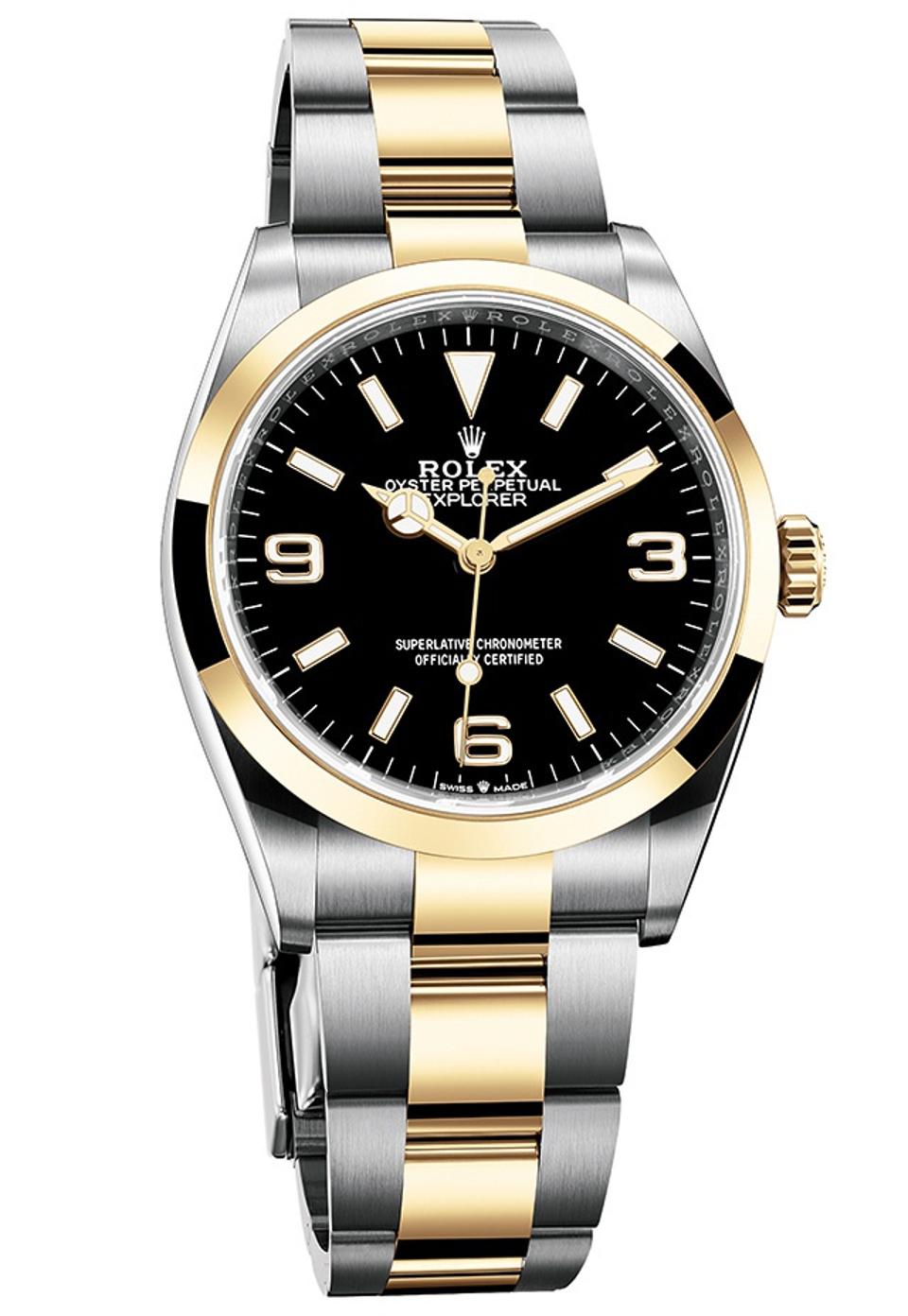
The Rolex Explorer two-tone in  18k yellow gold and Oystersteel.
The Rolex Explorer two-tone in 18k yellow gold and Oystersteel.

The Explorer is sized down a notch to 36mm from 39mm. But it’s really back to the beginning – the Explorer was 36mm when it was introduced in 1963, which also bore the iconic 3,6 and 9 numeral placement. The two-tone 18k yellow gold and Oystersteel combo is new. The dial is lacquered now, in keeping with its notch up the scale into gold territory. Inside is the caliber 3230, featuring Rolex’s signature Chronergy escapement and a blue Parachrom hairspring, with a power reserve of 70 hours. $10,800

Rolex Daytona with meteorite dial in 18k white gold.
Rolex Daytona with meteorite dial in 18k white gold

The second new stunner from Rolex is out of this world in more ways than one. Not only is it likely to be even more unattainable than the standard Daytona at retail, but it has a solid meteorite dial. The 18k white gold version is the same size, same movement, same ceramic bezel, same Oysterflex bracelet as the standard model, but the meteorite dial somehow changes everything. It is now more than a sports watch, more than an investment piece. It is a fashion statement! There are also yellow gold and Everose gold versions, but this dial is more than perfect on the white gold version, which is priced at $34,050.

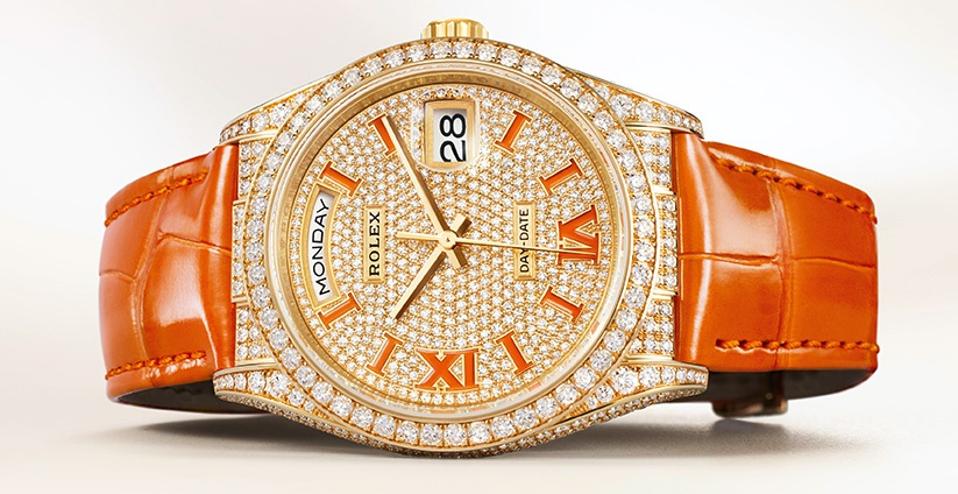
Diamond paved Rolex Day-Date 36 with coral enameled numerals and a coral alligator strap.
Diamond paved Rolex Day-Date 36 with coral enameled numerals and a coral alligator strap

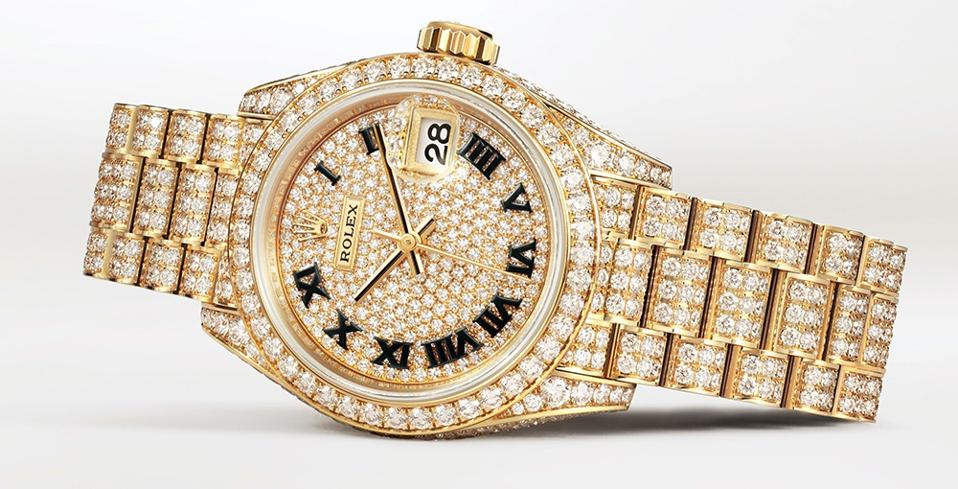
Rolex is also demonstrating its metiers and gemsetting prowess with two jeweled watches this year: a diamond paved Day-Date 36 with orange enameled numerals and an orange alligator strap to match; and a fully set Lady-Datejust set with more than 500 diamonds – there are also turquoise and burgundy editions. The numerals on the Day-Date shine with the unmistakable glow of enamel. On the Lady-Datejust, the numerals are made of gold with a black PVD coating. The Lady-Datejust is set with 1,089 diamonds.

The Rolex Lady-Datejust is set with 1,089 diamonds.
The Rolex Lady-Datejust is set with 1,089 diamonds


Source: DCLA

Rolex 2021 Collections Include An Out-Of-This-World Daytona, Two-Tone Explorer And Diamond Day-Date


Two new 36mm Explorers, one of them two-tone, headline Rolex’s 2021 introductions, released today. Other new models include a Daytona with a meteorite dial, a diamond-studded Day-Date with orange accents and a fully set Lady-Datejust

The Rolex Explorer two-tone in  18k yellow gold and Oystersteel.
The Rolex Explorer two-tone in 18k yellow gold and Oystersteel.

The Explorer is sized down a notch to 36mm from 39mm. But it’s really back to the beginning – the Explorer was 36mm when it was introduced in 1963, which also bore the iconic 3,6 and 9 numeral placement. The two-tone 18k yellow gold and Oystersteel combo is new. The dial is lacquered now, in keeping with its notch up the scale into gold territory. Inside is the caliber 3230, featuring Rolex’s signature Chronergy escapement and a blue Parachrom hairspring, with a power reserve of 70 hours. $10,800

Rolex Daytona with meteorite dial in 18k white gold.
Rolex Daytona with meteorite dial in 18k white gold

The second new stunner from Rolex is out of this world in more ways than one. Not only is it likely to be even more unattainable than the standard Daytona at retail, but it has a solid meteorite dial. The 18k white gold version is the same size, same movement, same ceramic bezel, same Oysterflex bracelet as the standard model, but the meteorite dial somehow changes everything. It is now more than a sports watch, more than an investment piece. It is a fashion statement! There are also yellow gold and Everose gold versions, but this dial is more than perfect on the white gold version, which is priced at $34,050.

Diamond paved Rolex Day-Date 36 with coral enameled numerals and a coral alligator strap.
Diamond paved Rolex Day-Date 36 with coral enameled numerals and a coral alligator strap

Rolex is also demonstrating its metiers and gemsetting prowess with two jeweled watches this year: a diamond paved Day-Date 36 with orange enameled numerals and an orange alligator strap to match; and a fully set Lady-Datejust set with more than 500 diamonds – there are also turquoise and burgundy editions. The numerals on the Day-Date shine with the unmistakable glow of enamel. On the Lady-Datejust, the numerals are made of gold with a black PVD coating. The Lady-Datejust is set with 1,089 diamonds.

The Rolex Lady-Datejust is set with 1,089 diamonds.
The Rolex Lady-Datejust is set with 1,089 diamonds


Source: DCLA

De Beers London launches Vibrations

  De Beers London presents Vibrations: a High Jewellery universe inspired by the quiet yet enduring power of inland water. The collection ce...