
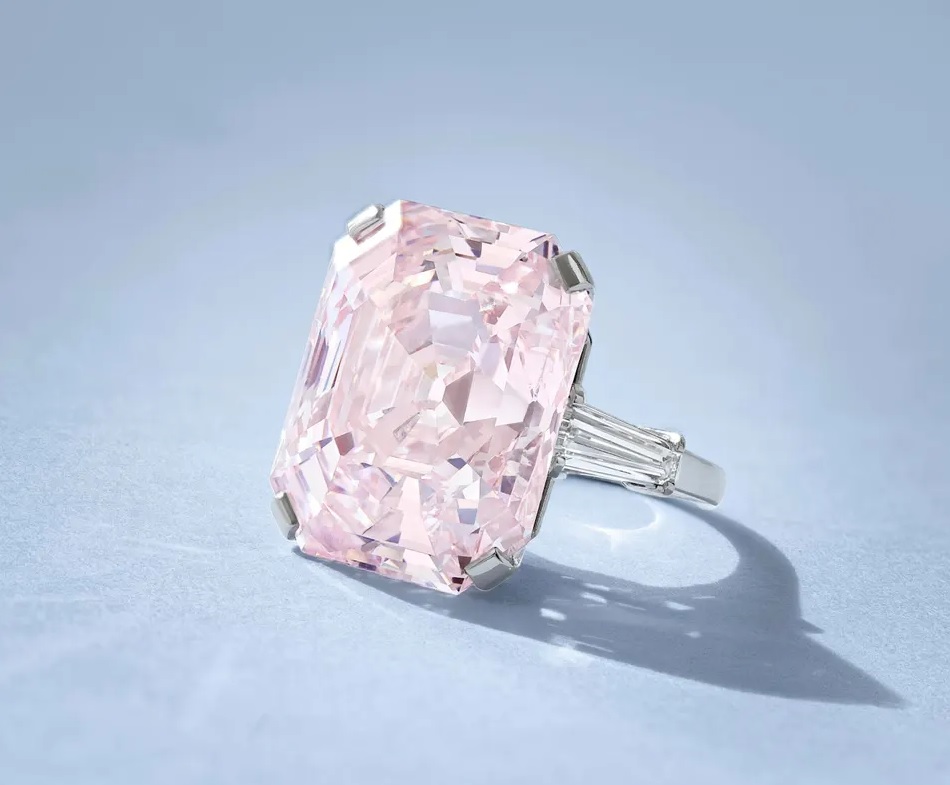
A rare natural pink diamond with an extraordinary history has once again demonstrated the enduring fascination and market appeal of exceptional coloured diamonds.
Known as The Bulgari Pink, the 24. Carat Fancy Intense Pink diamond ring achieved a sale price exceeding US$14.8 million at Christie’s Magnificent Jewels auction in Geneva on 10 November 2026. The result places the spotlight firmly on the rarity of natural pink diamonds and the importance of colour, provenance, clarity and craftsmanship in determining the significance of an exceptional gemstone.
The emerald-cut diamond, mounted by Italian luxury jeweller Bulgari during the 1950s, was presented publicly for the first time in more than 70 years. It sold within its pre-auction estimate of US$12 million to US$18 million.
For the diamond industry, this sale is particularly interesting because it illustrates something that is often misunderstood: two diamonds of similar weight can have vastly different values depending on their natural colour, rarity, characteristics and documented history.
What makes a natural pink diamond so valuable?
Unlike traditional colourless diamonds, fancy coloured diamonds are valued largely for the strength, distribution and rarity of their natural colour.
The Bulgari Pink received the Fancy Intense Pink colour classification, placing it in a highly sought-after category. Pink diamonds are particularly unusual because their colour is generally associated with distortions in the diamond’s crystal structure during formation deep within the Earth, rather than the presence of a conventional colouring element.
The intensity of the colour is crucial. A light pink diamond and a Fancy Intense Pink diamond may look similar in photographs, but their rarity and market values can be dramatically different.
DCLA has previously explored this subject in its article on Fancy Colour Diamonds – From Hollywood Statement to the Ultimate Collectable.
The significance of Type IIa diamonds
The Bulgari Pink is classified as a Type IIa diamond, a particularly uncommon diamond category representing fewer than 2% of gem-quality diamonds.
Type IIa diamonds contain no measurable nitrogen or boron impurities within the conventional classification system. They are often associated with exceptional transparency and optical purity.
However, Type IIa classification does not automatically mean a diamond is colourless, flawless or more valuable. Pink diamonds can also belong to this category, and their value depends on their individual characteristics.
The Bulgari Pink was reported as having VVS2 clarity. This means its inclusions are extremely difficult to see under standard 10x magnification, even for a trained grader.
Its emerald cut is also noteworthy. Unlike brilliant cuts, which use numerous facets to maximise sparkle, an emerald cut has broad, open facets that reveal the stone’s internal characteristics. This makes accurate clarity assessment particularly important.
Understanding the relationship between cut, colour, clarity and carat weight is essential when assessing any significant diamond. DCLA explains these fundamentals in its guide to the Four Cs of Diamond Grading.

A remarkable history: India, Bulgari and a European family
The diamond’s history is almost as compelling as its physical characteristics.
According to Christie’s, the stone was acquired in India during the 1950s by the consignor’s great-grandparents. It subsequently became part of a distinguished European family’s jewellery collection before being entrusted to Bulgari in Rome, where it was mounted into the ring.
Its possible connection to the historic Golconda diamond-producing region adds another dimension to its appeal.
Golconda, in southern India, is associated with some of history’s most celebrated diamonds. However, its precise origin has not been independently established in the information released by Christie’s, and it is important to distinguish historical provenance from confirmed geographical origin.
The diamond remained in private hands for more than seven decades before appearing at auction.
This illustrates why provenance can be so important in the international jewellery market. A documented history, association with a renowned jewellery house and connection to an important family collection can contribute significantly to a gemstone’s desirability.
The importance of independent diamond grading
An exceptional diamond requires more than an impressive appearance. Accurate identification and grading are essential, particularly when dealing with rare natural coloured diamonds.
The Bulgari Pink was graded by the Gemological Institute of America (GIA). Its reported characteristics include:
- Carat weight: 24.00 carats
- Colour: Fancy Intense Pink
- Clarity: VVS2
- Type: Type IIa
- Cut: Emerald cut
- Fluorescence: Strong orange, as reported in the auction coverage
- Setting: Bulgari platinum ring from the 1950s
The diamond’s fluorescence is another interesting characteristic. Fluorescence describes the visible reaction of a diamond when exposed to ultraviolet light. It is a separate grading characteristic and should not be confused with its colour grade.
For buyers, sellers and collectors, an independent laboratory report provides important information about a diamond’s identity and characteristics. This is particularly relevant when distinguishing natural diamonds from laboratory-grown diamonds and identifying treatments.
DCLA provides independent diamond examination and certification services. Find out more about DCLA diamond certification and grading and its approach to identifying and assessing diamonds.
Other exceptional gemstones at the Geneva auction
Although The Bulgari Pink attracted most of the attention, the sale also demonstrated continued international interest in exceptional coloured gemstones and signed jewellery.
Other notable results included:
- A 54.76-carat unheated Ceylon sapphire brooch, which achieved approximately US$1.9 million.
- A 23.72-carat unheated Kashmir sapphire ring, which sold for approximately US$1.7 million.
- A 5.01-carat Fancy Intense Bluish Green diamond ring, accompanied by two smaller pink diamonds, which achieved approximately US$1.3 million.
- A historic 1952 Van Cleef & Arpels Zip jewellery creation, which sold for approximately US$1.2 million.
- A 15.52-carat D-colour Type IIa Harry Winston diamond ring, which achieved approximately US$1.08 million.
The Geneva sale generated approximately US$50.1 million, highlighting the international market for exceptional diamonds, coloured gemstones and important pieces of jewellery. Rapaport+1
What does the Bulgari Pink sale tell us about the diamond market?
The sale reinforces an important distinction in the diamond trade: rarity and desirability are not determined by carat weight alone.
A 24-carat colourless diamond would already be an extraordinary gemstone. However, a natural 24-carat Fancy Intense Pink diamond belongs to an entirely different category of rarity.
Natural pink diamonds have attracted considerable attention from collectors, particularly following the closure of Australia’s Argyle mine in 2020, historically one of the world’s most important sources of pink diamonds.
The closure has added further significance to the supply of natural pink diamonds, particularly those with strong colour saturation and documented origins.
As discussed in DCLA’s article on coloured diamonds, colour intensity, natural origin and rarity all play an important role in determining the desirability of these exceptional stones.
For the jewellery industry, The Bulgari Pink is a reminder that truly exceptional natural diamonds occupy a market of their own. Their value is shaped not simply by size, but by a combination of geological rarity, gemmological characteristics, history, craftsmanship and international collector demand.
At DCLA, we believe understanding what makes a diamond exceptional starts with understanding the diamond itself. Whether buying, selling, inheriting or collecting, professional identification and independent grading are important steps in establishing exactly what you have.
Source: Christie’s official auction announcement, 10 November 2026, and subsequent auction reporting.
Disclaimer: Auction results reflect the particular circumstances of an individual sale and should not be interpreted as a valuation guide for other diamonds. Individual diamond values depend on their characteristics, grading, condition, provenance and prevailing market demand.


No comments:
Post a Comment