Showing posts with label Tiffany & Co. Show all posts

Thursday, 17 September 2026

Does a Famous Jewellery Brand Make a Better Diamond?

 The luxury of the name, the value of the stone, and what happens when you come to sell

The luxury of the name, the value of the stone, and what happens when you come to sell

Walking into a prestigious jewellery boutique is an experience.

The polished stone, the carefully designed interior, the champagne, the personal attention and the beautifully presented jewellery all contribute to a sense that you are purchasing something truly exceptional.

And sometimes you are.

But there is an important question that every sophisticated jewellery buyer should ask:

Are you paying for a better diamond or gemstone — or are you paying for the brand surrounding it?

The answer can be both.

The diamond does not know whose box it is in

A diamond’s physical properties do not change because it is mounted in a famous piece of jewellery.

Its colour, clarity, carat weight, cut, proportions, fluorescence and other gemmological characteristics remain the same whether the stone is set by a world-famous luxury maison or an independent jeweller.

A 1.50-carat diamond does not become a 1.60-carat diamond because it carries a prestigious name.

Likewise, a diamond graded as a particular colour and clarity does not automatically become a higher-quality stone because it was purchased from an internationally recognised brand.

This is where independent diamond knowledge becomes important.

DCLA’s Diamond Grading Report provides an independent description of a diamond’s characteristics, including its carat weight, colour, clarity and cut.

A luxury brand can provide extraordinary design, craftsmanship, provenance, service and heritage. But these are different attributes from the intrinsic gemmological characteristics of the diamond itself.

So why can branded jewellery cost so much more?

Because the jewellery is more than its raw materials.

When you purchase from a major luxury house, you may be buying:

  • The brand’s heritage and reputation
  • Original design
  • Highly skilled craftsmanship
  • Boutique and after-sales service
  • Marketing and global recognition
  • Packaging and presentation
  • Limited collections
  • Celebrity association
  • Provenance and collectability
  • The emotional experience of owning it

These elements can have real commercial value.

The important distinction is that commercial value and intrinsic gemmological value are not necessarily the same thing.

Does a famous brand make jewellery more valuable?

Not necessarily.

It can make a piece more desirable to a particular market, and in some circumstances that desirability can translate into a stronger resale price.

But that is not guaranteed.

The secondary market operates very differently from the luxury boutique.

When a customer buys a new piece of jewellery at retail, the price can include the brand, boutique experience, design, manufacturing, marketing, distribution and retail margins.

When the same piece is sold later, the next buyer may not place the same value on those elements.

This is why the original retail price should never automatically be treated as an indication of future resale value.

DCLA has also highlighted the distinction between the price originally paid for jewellery and its potential value when sold later. Retail prices can include manufacturing, design, branding, retail margins, GST and other costs that may not be recoverable in the secondary market.

The difference between retail value and resale value

This is one of the most misunderstood areas of jewellery ownership.

Imagine two rings containing diamonds with broadly comparable gemmological characteristics.

One is purchased from a famous international maison for $50,000.

The other is purchased from an independent jeweller for $25,000.

It would be incorrect to assume that the first ring will necessarily be worth twice as much when it is sold.

The resale market may place considerable importance on the brand — or it may focus primarily on the diamonds, precious metal, design, condition and current market demand.

The circumstances of the sale also matter.

A private sale, specialist auction, dealer purchase, insurance replacement valuation and immediate sale can all produce very different figures.

There is no single “value” for a piece of jewellery.

Where famous brands can make a difference

There are situations where the brand itself can become an important part of the value.

Certain historically significant pieces, rare collections, discontinued designs and jewellery with exceptional provenance can attract collectors.

At auction, the identity of the maker can be highly relevant.

A piece from a recognised maison with documented provenance, original paperwork and a desirable design may have a very different market than an otherwise similar piece from an unknown manufacturer.

But this is the crucial distinction:

The brand can create collectability. It does not automatically create gemmological quality.

What about the diamond itself?

This is where buyers should look beyond the name on the shopping bag.

When considering a significant diamond purchase, understand exactly what you are buying.

Look at:

Carat weight
The weight of the diamond, not simply the overall size of the jewellery.

Colour
For white diamonds, colour grading can have a significant influence on value.

Clarity
The nature, position and visibility of inclusions matter. DCLA’s Diamond Clarity guide explains how clarity is assessed and why it can influence a diamond’s appearance and value.

Cut and proportions
Two diamonds with identical carat weight, colour and clarity can look dramatically different because of their cut and proportions. DCLA explains the importance of diamond cut, proportions, symmetry and polish in determining light performance and appearance.

Natural or laboratory-grown
This distinction is fundamental and should be clearly established. DCLA discusses the differences between natural and laboratory-grown diamonds, including their different market characteristics.

Laboratory report
For significant diamonds, independent documentation can provide important information about the stone’s characteristics.

Provenance
For some exceptional diamonds, documented history can itself become an important part of the story and potentially the market appeal.

The boutique experience is real — and there is nothing wrong with paying for it

There is another side to this discussion.

Why do people buy luxury jewellery from famous boutiques?

Because jewellery is emotional.

People are not always trying to buy the cheapest diamond or achieve the lowest possible price per carat.

They may want to celebrate an anniversary.

They may want a particular design.

They may admire a maison’s history.

They may want the experience of walking into a beautiful boutique and being treated exceptionally well.

They may simply love the piece.

That experience has value to the person buying it.

There is nothing wrong with paying a premium for something you genuinely appreciate.

The mistake is assuming that the premium automatically represents an equivalent increase in the underlying value of the diamonds or gemstones.

Jewellery is not always an investment

This is perhaps the most important point.

A beautiful piece of jewellery can be a wonderful store of wealth, a family heirloom or an object that carries enormous emotional significance.

But buying jewellery primarily because you believe the retail price will automatically be recovered — or exceeded — when you eventually sell is a very different proposition.

Luxury jewellery should not be confused with a guaranteed investment.

Even exceptional jewellery can take time to sell, and the price achieved will depend upon market conditions, the buyer, the selling channel, the condition of the piece, documentation, desirability and many other factors.

So what are you really buying?

When purchasing high-end jewellery, it is useful to separate the purchase into three components:

1. The materials

The diamond, coloured gemstones and precious metals.

2. The craftsmanship and design

The skill involved in creating the piece and the originality or desirability of its design.

3. The brand and experience

The name, heritage, boutique experience, packaging, service, marketing and emotional connection.

All three can have value.

But they are not interchangeable.

A buyer who understands this can make a much more informed decision.

The DCLA perspective

At DCLA, our role is to examine the diamond and provide objective gemmological information about its characteristics.

A diamond does not become scientifically superior because it is sold from a particular boutique.

Equally, a famous brand should not automatically be dismissed as simply a premium for a name. Design, craftsmanship, provenance, rarity and collectability can all contribute to the market appeal of a piece.

The intelligent approach is to understand what portion of the price relates to the diamond, what relates to the jewellery itself, and what relates to the brand.

Then you can decide how much the complete experience is worth to you.

DCLA explains that a diamond grading report is not a valuation. A grading report documents the characteristics of the diamond, while a valuation estimates monetary value for a particular purpose and point in time.

Because ultimately, there is nothing wrong with buying the beautiful box, the boutique experience and the famous name.

Just make sure you also know exactly what is inside the box.

DCLA — Independent Diamond Expertise

When purchasing a significant diamond, independent gemmological assessment can help separate the diamond’s documented characteristics from the marketing and retail presentation surrounding it.

DCLA examines diamonds according to recognised gemmological standards and provides independent diamond reporting and certification services. Its grading process examines characteristics including colour, fluorescence, clarity, cut, proportions, polish, symmetry and transparency.

Know the diamond. Understand the jewellery. Then decide what the name is worth to you.

DCLA reports are gemmological documents and are not valuations. Market value can vary according to the circumstances of sale, market conditions, provenance, design, brand, condition and other factors.


Monday, 15 June 2026

Tiffany & Co Re-opens Stores after $6m Fine

 Tiffany & Co has been allowed to re-open three stores in Indonesia

Tiffany & Co has been allowed to re-open three stores in Indonesia, after paying a $6.1 million fine for alleged import violations.

They were closed in February by customs authorities pending checks on whether the company had paid levies on imported goods.

The Jakarta Customs and Excise Directorate General subsequently conducted an audit and issued a bill for Rp 97.49 billion (USD 6.1 million) for Tiffany & Co’s alleged customs violations, including administrative sanctions and unpaid taxes such as import duties, VAT, and income tax.  

Tiffany & Co, part of the LVMH conglomerate, paid the fine and agreed to comply with all applicable laws and regulations, but has made no admission of wrongdoing.

Indonesia’s finance minister Purbaya Yudhi Sadewa personally oversaw the removal of the customs seal at the Plaza Indonesia store on 8 June.

He has been at the forefront of a very public crackdown on undeclared high-value goods and his presence is seen as a clear warning to other luxury brands.

The Tiffany case is not isolated. Bening Luxury, a Jakarta-based diamond jewelry store, was closed at around the same time and remains closed, also over suspected customs.

We have reached out to Tiffany & Co for comment.

Source: IDEX

Tuesday, 31 March 2026

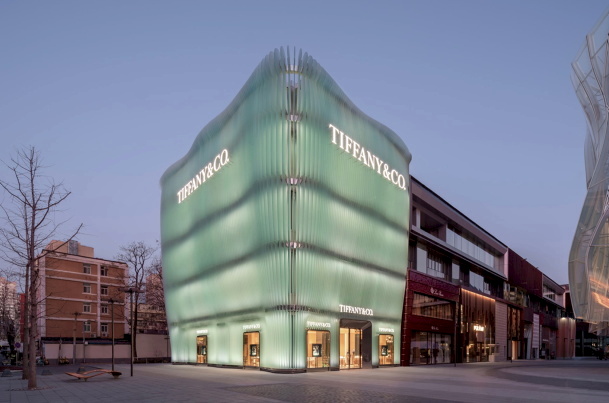
Tiffany's Flagship Beijing Store Honors Elsa Peretti

 Tiffany's Flagship Beijing Store

Tiffany & Co has officially opened its flagship store in Beijing – an imposing four-story building with a facade of translucent glass fins inspired by Elsa Peretti’s bone cuff jewelry designs.

It underscores Tiffany’s confidence in China as a long-term core diamond market. The New York-based jeweler opened its first retail outlet on the Chinese mainland in 2001 and now has over 40 stores there.

Tiffany held a grand opening ceremony on 14 March to mark the opening of its new store, at Taikoo Li Sanlitun, a high‑end shopping complex in Beijing’s Chaoyang District.

The 1,000m² store was designed by Dutch architects MVRDV, the fifth in a series of facades created for Tiffany. 

It honors Elsa Peretti, the Italian fashion model turned iconic jewelry designer who died in March 2021, aged 80.

She was probably best known for her signature bone cuff bracelet, and for making silver popular again during her long tenure at Tiffany.

Source: DCLA

Wednesday, 11 February 2026

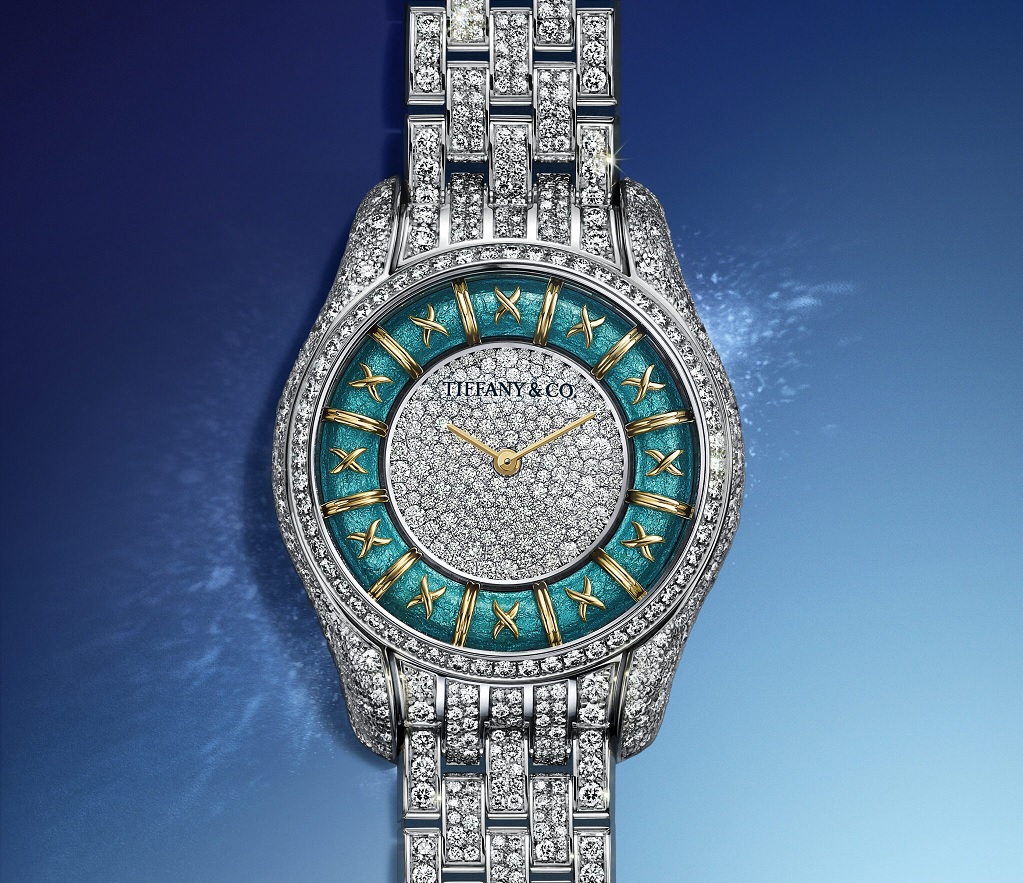
Tiffany & Co. Honours Jean Schlumberger’s Legacy with the Launch of the Enamel Watch

 Tiffany & Co. Honours Jean Schlumberger’s Legacy with the Launch of the Enamel Watch

At January’s LVMH Watch Week, Tiffany & Co. unveiled a striking new chapter in its modern horological journey with the launch of the Tiffany & Co. Enamel Watch—a jewellery-inspired timepiece that celebrates the enduring legacy of legendary designer Jean Schlumberger.

The presentation highlighted the renewed momentum behind Tiffany’s watchmaking since the 2021 appointments of Anthony Ledru, President and CEO, and Nicolas Beau, Vice President of Tiffany Horlogerie. Together, they bring decades of experience from esteemed maisons such as Chanel and Cartier, redefining Tiffany’s position at the intersection of high jewellery and fine watchmaking.

A Watch Rooted in Jewellery Heritage

Among the women’s timepieces presented—though, as Beau himself demonstrates, Tiffany watches transcend gender—the Enamel Watch stands apart for its direct lineage to Tiffany’s jewellery archives. The design draws inspiration from Schlumberger’s iconic Croisillon bangle, first introduced in the early 1960s and renowned for its bold use of colour, texture and visual rhythm.

Jean Schlumberger, who began designing for Tiffany & Co. in the 1950s, revolutionised modern jewellery by treating colour and surface decoration as expressive elements rather than embellishments. In 1962, he revived the rare paillonné enamel technique—a 19th-century craft involving the layering of hand-cut gold or silver leaf beneath translucent enamel. The result was jewellery that was unapologetically vibrant, designed to be stacked, seen and celebrated.

Tiffany & Co. Honours Jean Schlumberger’s Legacy Enamel Watch


Translating Paillonné Enamel into Watchmaking

The Enamel Watch translates this expressive jewellery language directly onto the wrist. Its dial is composed of two distinct elements: a fixed, diamond-set central disc and a rotating outer enamel ring that echoes the Croisillon bangle. The signature 12 cross-stitch motifs, rendered in yellow gold, are not static hour markers. Instead, they move freely with the wearer’s motion, introducing a subtle yet playful sense of visual disruption—an approach entirely in keeping with Schlumberger’s wit and design philosophy.

There is deep historical precedent for this craftsmanship. Tiffany & Co. has produced enamelled objects since the late 19th century, including watches, chatelaines and table clocks. Paillonné enamel, however, occupies an especially rarefied position within this tradition. Nearly lost by the mid-20th century, the technique is now practised by only a handful of specialists worldwide.

For the Enamel Watch, the enamel ring alone requires approximately 55 hours of meticulous hand decoration. Gold elements are added only after the enamel work is complete, with the piece undergoing multiple firings to achieve its remarkable depth of colour and luminosity.

Cultural Significance and Modern Execution

Schlumberger’s Croisillon bangles were more than decorative objects; they were cultural symbols. Worn by icons such as Jacqueline Kennedy Onassis, they helped cement Tiffany & Co.’s position at the crossroads of American elegance and European craftsmanship. This lineage is central to the Enamel Watch’s identity. Rather than borrowing decorative techniques from contemporary watchmaking, Tiffany places timekeeping firmly within a jewellery tradition that predates much of the modern luxury watch industry.

Mechanically, the watch employs a high-precision quartz movement, a deliberate and pragmatic choice aligned with the piece’s purpose. This is not a watch designed to showcase complications, but one that prioritises visual artistry through enamel, diamonds and gold. A discreet push-button time adjustment integrated into the caseback preserves the purity of the silhouette, while extensive diamond setting across the case, dial and clasp reflects Tiffany’s mastery of its core métiers.

A Distinct Voice within the LVMH Portfolio

The Tiffany & Co. Enamel Watch stands apart even among its LVMH stablemates. It is neither a technical showcase nor a volume-driven release. Instead, it serves as a reminder that Tiffany’s watchmaking heritage is rooted not in complications or manufacture status, but in the creation of objects designed to be worn, admired and remembered.

For collectors and connoisseurs alike, the Enamel Watch is a compelling expression of Tiffany & Co.’s unique ability to unite high jewellery craftsmanship with contemporary horology—while remaining unmistakably true to its historic identity.

Source: DCLA

Wednesday, 28 January 2026

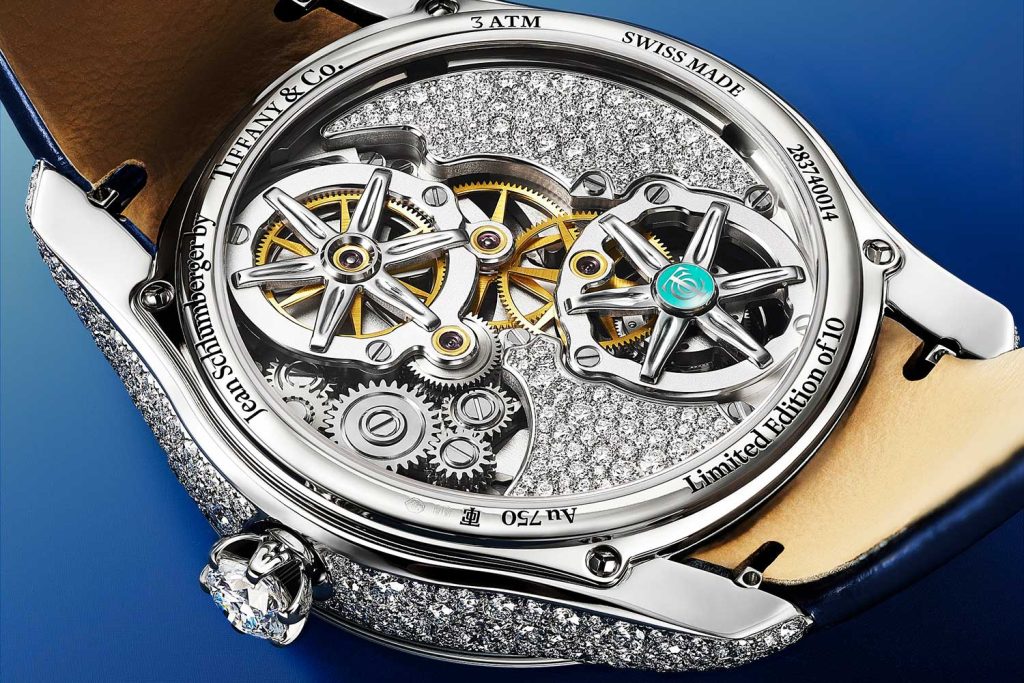
Tiffany & Co. Bird on a Flying Tourbillon – Azure Blossom: Where High Jewellery Meets Haute Horology

 Tiffany & Co. Bird on a Flying Tourbillon

When evaluating contenders for the high jewellery watch category, brilliance alone is never enough. True excellence lies in the seamless fusion of exceptional gem-setting and serious watchmaking, where artistry and mechanical innovation speak with one voice. As a watch-focused publication, the benchmark is uncompromising — and this year, Tiffany & Co. has met it with remarkable confidence.

The Tiffany & Co. Bird on a Flying Tourbillon – Azure Blossom stands as a masterclass in this rare union. At first glance, the eye is drawn to the diamond-set bird, poised delicately on the edge of a flying tourbillon and surrounded by a vivid garden of appliqué lacquered blossoms. While the watch builds upon Tiffany’s inaugural flying tourbillon introduced last year, this Azure Blossom interpretation elevates the concept into the realm of true high jewellery horology.

Tiffany & Co. Bird on a Flying Tourbillon – Azure Blossom


The timepiece is a showcase of the maison’s virtuosity across multiple crafts: champlevé enamelling, lacquer work, miniature gold sculpture and, most notably, diamond setting — an area in which Tiffany & Co. has long reigned supreme. In total, the watch is set with 771 diamonds in a variety of cuts and sizes, a process that demanded over 100 hours of meticulous hand-setting. Snow setting dominates the dial and case decoration, a technically exacting method that renders the metal nearly invisible, allowing the diamonds to appear as if floating on the surface.

What truly distinguishes the Bird on a Flying Tourbillon – Azure Blossom is its unwavering connection to Tiffany & Co.’s design heritage. The sculpted bird is a direct reference to the legendary Bird on a Rock brooch, created in 1965 by Jean Schlumberger. Handcrafted from 18K white and yellow gold, the bird is set with 70 diamonds, contributing to a total diamond weight of 3.8 carats across the piece.

While Schlumberger’s bird remains eternally poised, the mechanical theatre beneath it is anything but static. The flying tourbillon completes a full rotation every 60 seconds, capped by a wafer-thin sapphire dome that is faceted like a diamond and rotates in perfect synchrony. The result is a hypnotic display of motion, light and depth.

Powering the watch is the Artime Calibre AFT24T01, a movement finished entirely by hand to the highest standards of haute horology. Bevelled edges, satin-brushed surfaces and mirror-polished components are complemented by diamond-set decorative plates. Two high-polished star-shaped bridges — a subtle nod to Tiffany’s iconic six-prong diamond setting — anchor both the tourbillon and the hours-and-minutes display, reinforcing the maison’s visual identity at every level.

Ultimately, the Bird on a Flying Tourbillon – Azure Blossom triumphs not through spectacle alone, but through coherence. Every element — from gem-setting to movement architecture — speaks the same refined language, one deeply rooted in Tiffany & Co.’s heritage. In a category that demands both poetry and precision, this extraordinary timepiece delivers both with rare elegance.

Source: DCLA

Thursday, 16 October 2025

Growth in LVMH Watch and Jewelry Sales

LVMH Watch and Jewelry

LVMH’s watch and jewelry maisons saw organic growth of 2 per cent in Q3 2025, driven by Tiffany & Co. and Bulgari, the company said in an update published yesterday.

It follows two consecutive quarters of zero growth for the sector.

Overall, the French luxury conglomerate reported quarterly organic growth of 1 per cent (up to EUR 18.3bn) across its 75 maisons, led by fashion and leather goods. In Q1 it fell by 3 per cent and in Q2 by 4 per cent.

Total revenue for the watch and jewelry sector was EUR 2.3bn for the quarter, and EUR 7.4bn for the first nine months of 2025.

LVMH, which owns Bvlgari, Tiffany & Co., Chaumet, Fred, Repossi, TAG Heuer, Hublot and Zenith, does not provide figures on a brand-by-brand basis.

It said Tiffany & Co had “continued the successful enhancement of its iconic lines and the global rollout of its store concept inspired by The Landmark in New York”. And it reported high levels of traffic and revenue at its new stores in Milan and Tokyo.

LVMH said sales across all sectors were down year-on-year in Japan and stable in Europe and the US and up in Asia.

The conglomerate “showed good resilience and maintained its powerful innovative momentum despite a disrupted geopolitical and economic environment,” it said.

Source: DCLA

Thursday, 21 August 2025

Tiffany & Co. Brings Diamonds to Centre Court at the U.S. Open

Tiffany & Co. Brings Diamonds to Centre Court

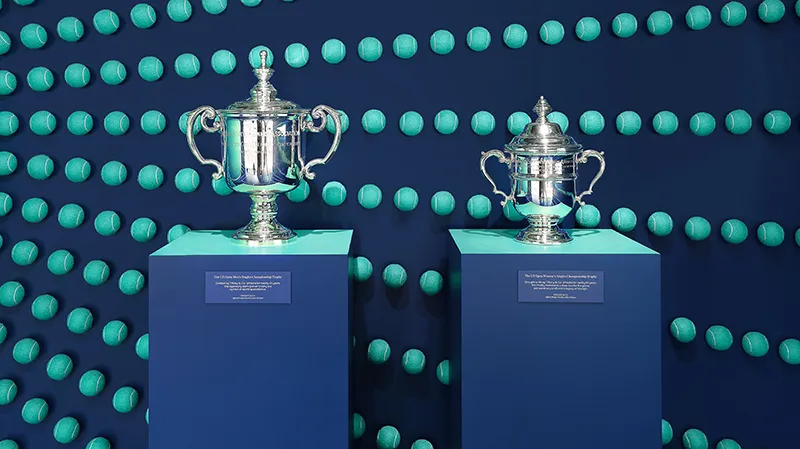
The U.S. Open may be best known for its high-intensity rallies and dramatic tiebreaks, but this year, Tiffany & Co. has ensured the spotlight also falls on sparkle. At the 2025 tournament, the jeweller unveiled an exclusive pop-up installation at the USTA Billie Jean King National Tennis Center, highlighted by a diamond-encrusted tennis racket.

Positioned at Fountain Plaza, the immersive Tiffany space is unmistakable, marked by a striking oversized Tiffany Blue tennis ball. Inside, visitors are met with the U.S. Open Championship Trophies—the Men’s and Women’s Singles Cups—each meticulously handcrafted in Tiffany’s Rhode Island workshop. These sterling silver pieces, produced by master silversmiths since 1987, require approximately six months of labour, with more than 60 hours dedicated to precision engraving and finishing.

The Diamond Showpiece

Tiffany & Co. Brings Diamonds to Centre Court

The centrepiece of this year’s display is the Tiffany HardWear tennis racket, adorned with nearly five carats of diamonds across its face. It is accompanied by a 24-karat gold vermeil tennis ball, embellished with a further seven carats of diamonds. While hardly designed for a match on Arthur Ashe Stadium, the pairing reflects Tiffany’s blend of craftsmanship, innovation, and luxury—an exercise in artistry rather than athletics.

Heritage Meets Modern Spectacle

Tiffany & Co.’s long-standing association with sporting excellence is well established. Beyond its near four-decade legacy of producing the U.S. Open trophies, the house also crafts other icons of American sport, including the NFL’s Vince Lombardi Trophy and the NBA Finals’ Larry O’Brien Championship Trophy.

Yet this year’s U.S. Open activation goes beyond tradition. In collaboration with Meta, Tiffany has introduced an AI-powered digital experience, allowing fans to virtually place themselves at centre court, holding a championship trophy for a keepsake “trophy selfie.”

Diamonds in the Spotlight

The Tiffany pop-up runs throughout the tournament until 7 September, giving both tennis enthusiasts and jewellery aficionados an opportunity to step into Tiffany’s world of diamonds and silverware. The installation serves as a reminder that while the U.S. Open celebrates grit and athletic achievement, glamour and craftsmanship continue to share the stage.

Source: DCLA

Monday, 30 June 2025

Diana’s Twin Nieces Stun in Over 150 Carats of Diamonds at Tiffany & Co. London Gala

Lady Amelia and Lady Eliza Spencer

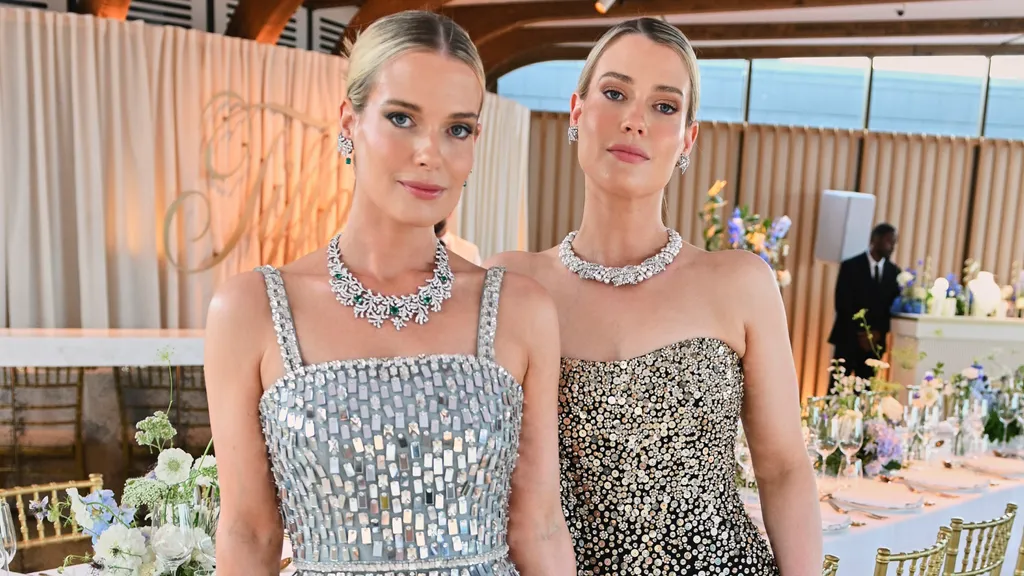
Twin models and aristocrats Lady Amelia and Lady Eliza Spencer, nieces of the late Princess Diana, brought dazzling sophistication to Tiffany & Co.’s exclusive Blue Book High Jewellery Collection showcase, held atop The Harrods Helideck. The glamorous event marked one of London’s most prestigious evenings on the fine jewellery calendar, attended by fashion royalty and social elites alike.

The Spencer sisters, daughters of Earl Spencer, embodied modern British elegance as they arrived in bespoke Jenny Packham gowns paired with more than 150 carats of Tiffany & Co.’s finest high jewellery pieces—masterworks of exceptional diamond craftsmanship.

High Jewellery Spotlight:
Eliza Spencer captivated in a silver mirror-embellished gown, perfectly complemented by the Ocean Flora necklace—an intricate platinum masterpiece featuring five unenhanced emeralds totalling over 10 carats, and a staggering 1,351 round brilliant diamonds totalling more than 44 carats. According to Tiffany & Co., this single piece took over 1,500 hours of artisan craftsmanship to complete, a testament to the meticulous design and precision that defines high jewellery.

Amelia Spencer wore a striking strapless black and gold sequinned gown and adorned herself with the same Tiffany necklace that supermodel Miranda Kerr wore to the 2025 Met Gala. The piece—a platinum and 18k gold choker set with Akoya pearls and diamonds—features more than 50 carats of gemstones, reflecting Tiffany’s modern reinterpretation of timeless elegance. Her ensemble was completed with diamond cluster earrings and a compact Aspinal of London Micro Hat Box bag.

Red Carpet Elegance Continues:
Just one day earlier, the Spencer twins turned heads at the Serpentine Gallery Summer Party, wearing custom crimson gowns by Anamika Khanna Couture and showcasing statement diamond pieces by legendary Swiss house, Chatila. The event came just days ahead of the 31st anniversary of Princess Diana’s iconic appearance at the same venue—an enduring moment in royal fashion history.

A Legacy of Diamonds and Royal Style:
The Spencer twins continue to honour their family’s legacy with graceful nods to their late aunt’s legendary style, but they are carving their own path in the fashion and jewellery world. Their presence at Tiffany’s high jewellery presentation not only highlighted the next generation of aristocratic style icons, but also reaffirmed the role of exceptional diamonds in telling modern luxury stories.


At DCLA, we celebrate the enduring art of fine diamond craftsmanship. For more on gemological excellence and rare diamond showcases, stay connected to DCLA News.

Source: DCLA

Monday, 17 March 2025

Job Losses at Tiffany Subsidiary in Antwerp

A subsidiary of Tiffany & Co plans to lay off 26 of its 42 staff in Antwerp amid the ongoing slump in demand.

A subsidiary of Tiffany & Co plans to lay off 26 of its 42 staff in Antwerp amid the ongoing slump in demand.

Laurelton Diamonds, a De Beers sightholder, was established in 2002 to procure rough diamonds, and to cut, polish and supply polished stones to its own jewelry manufacturers. It has operations in Belgium, Vietnam, Canada, Botswana, South Africa and beyond.

The company, wholly owned by Tiffany, blames the possible job losses on weak demand from China and the US, together with competition from lab growns.

“For the workforce the news came as a bolt out of the blue,’ said Yves Toutenel of the Christian ACV union ((Algemeen Christelijk Vakverbond), according to VRT, the Flemish public broadcaster.

“In 2018, the company closed its cutting plant in Antwerp. At that time, 20 staff were laid off. Laurelton now intends to make 18 blue-collar staff and eight white-collar workers redundant by the autumn.”

He said he feared Laurelton was making redundancies too quickly and said there were early signs that the diamond industry could be recovering.

Source: DCLA

De Beers London launches Vibrations

  De Beers London presents Vibrations: a High Jewellery universe inspired by the quiet yet enduring power of inland water. The collection ce...