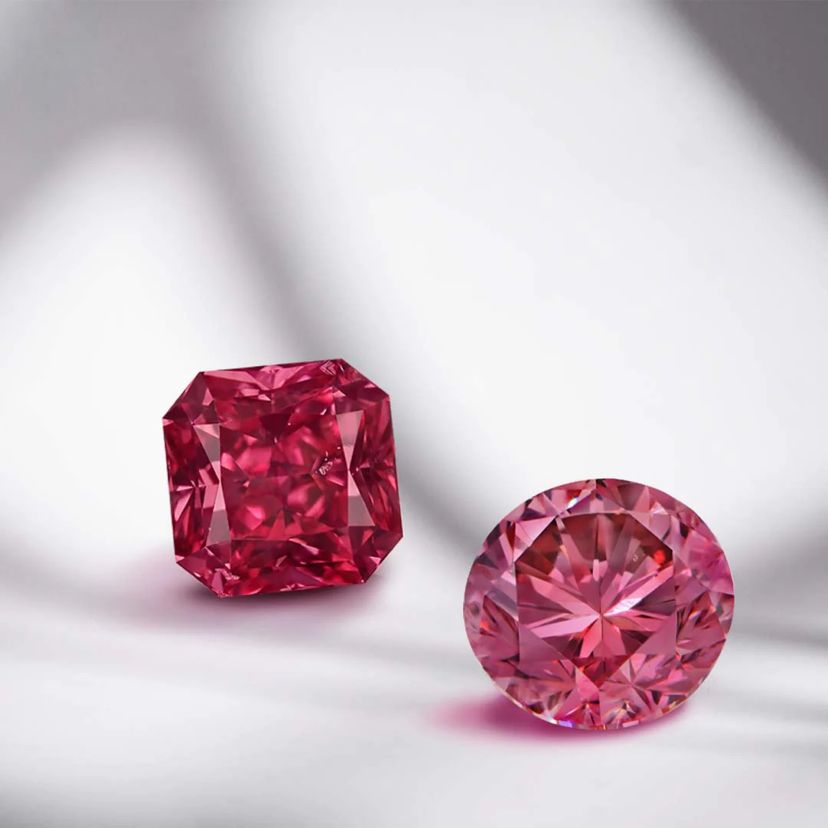
Showing posts with label Argyle Diamonds. Show all posts

Tuesday, 6 October 2026

Boodles Goes Pink with Major Argyle Diamond Acquisition

 British jeweller secures rare Argyle pink diamond inventory as the legacy of Australia’s legendary mine enters a new chapter

British jeweller secures rare Argyle pink diamond inventory as the legacy of Australia’s legendary mine enters a new chapter

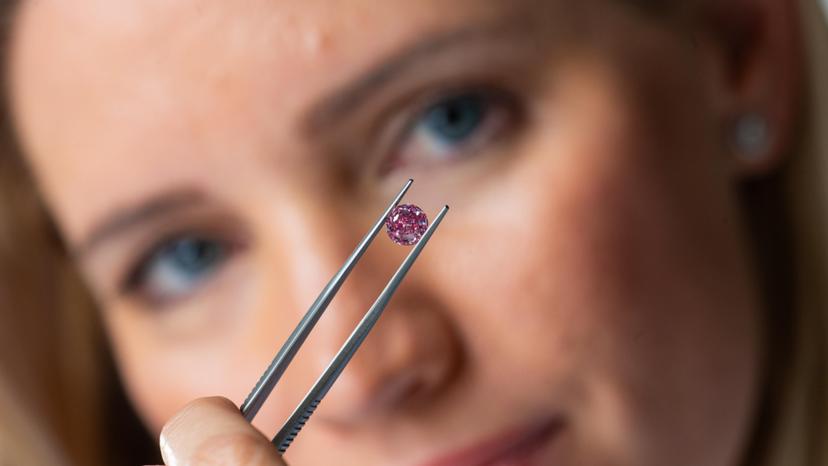
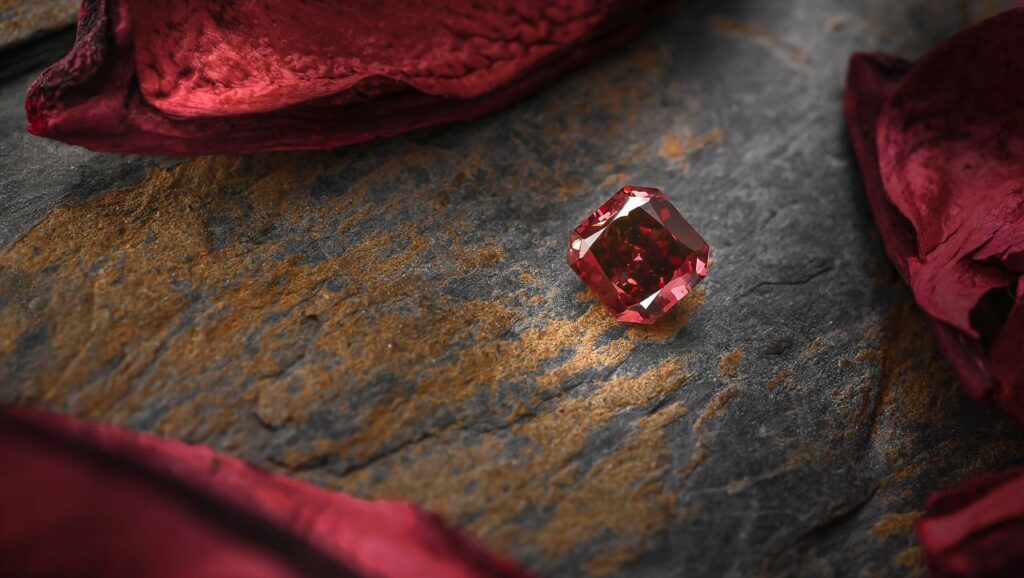
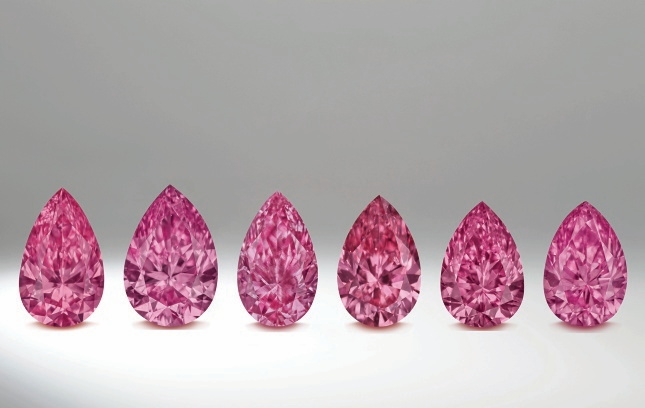
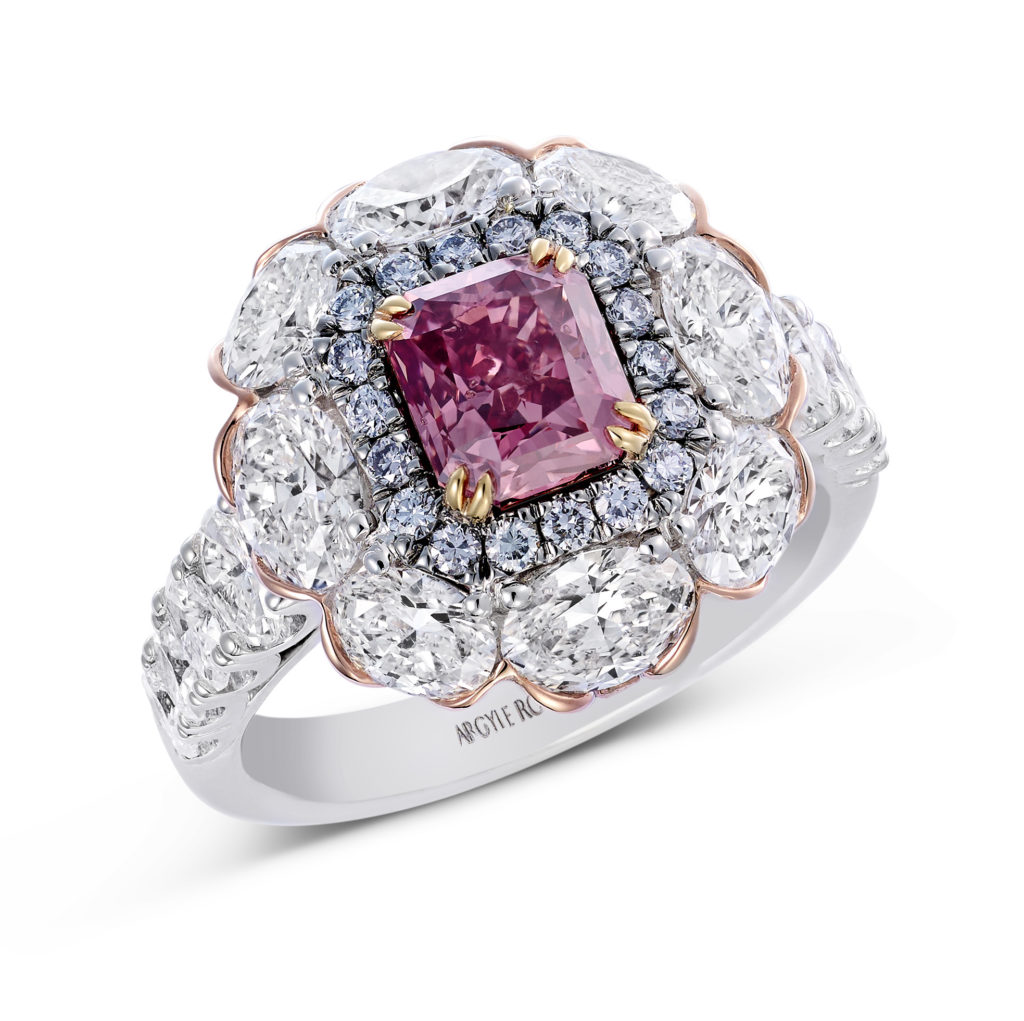
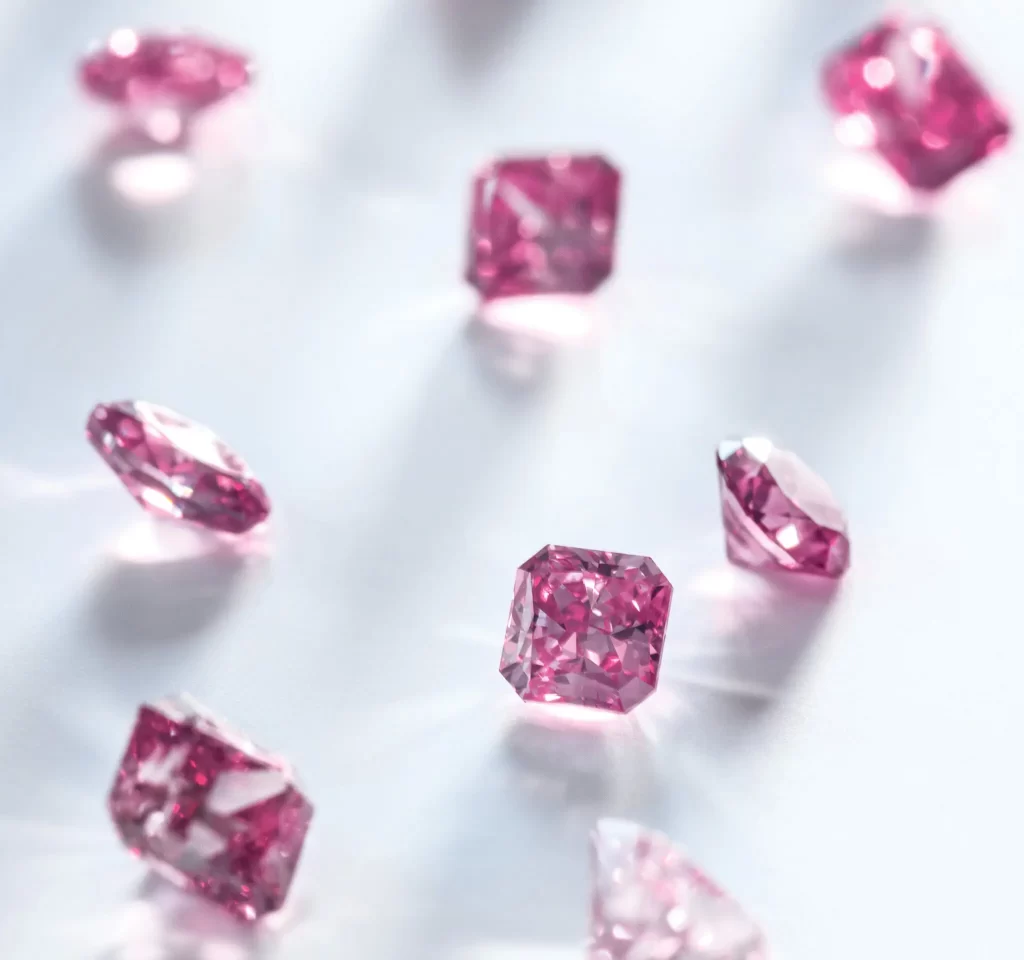
British luxury jeweller Boodles has strengthened its position in the highly exclusive world of fancy coloured diamonds after acquiring the remaining inventory of Argyle Pink Diamonds from Rio Tinto, together with ownership of the iconic Argyle Pink Diamonds brand.

The agreement gives Boodles control of the brand, associated trademarks, website and digital assets, as well as a collection of some of the exceptionally rare pink diamonds produced by the Argyle mine in Western Australia.

For Boodles, the transaction represents much more than the acquisition of a collection of diamonds. It is a long term investment in one of the most recognisable and historically significant coloured diamond brands in the world.

Jody Wainwright, joint managing director of Boodles, described the transaction as a significant, long term investment and said the company intends to release the diamonds gradually over approximately a decade.

“Each one is like a Picasso,” he said, reflecting the extraordinary rarity and individuality of the stones.

The Argyle legacy

The Argyle mine, located in Western Australia’s remote East Kimberley region, became synonymous with pink diamonds and, for decades, supplied more than 90 per cent of the world’s pink diamond production.

Mining ceased in November 2020 after the mine had produced approximately 865 million carats of rough diamonds. Yet only a tiny fraction of that enormous production was pink.

According to Rio Tinto, less than 0.1 per cent of Argyle’s total rough diamond production was pink, illustrating why these stones have become so highly prized.

DCLA has previously examined the extraordinary rarity of pink diamonds and the geological processes responsible for their colour in its article on Pink Diamonds.

The closure of Argyle permanently changed the supply equation for pink diamonds. Unlike white diamonds, where new production continues from mines around the world, there is no comparable source capable of replacing Argyle’s extraordinary output of pink diamonds.

This has transformed existing Argyle pink diamonds into a finite historical inventory.

Boodles has had a long relationship with Argyle pink diamonds. The jeweller purchased its first Argyle pink diamond in 1998 and later participated in the famous annual Argyle Pink Diamonds Tender, where some of the world’s finest stones were offered to a select group of international dealers, jewellers and collectors.

Pink diamonds are extraordinarily rare

Pink diamonds occupy a special position within the coloured diamond market.

Unlike blue diamonds, where the colour is generally associated with boron, or many yellow diamonds, where nitrogen plays an important role, the precise cause of the pink colour is associated with structural distortion within the diamond’s crystal lattice.

The geological forces required to create this distortion are exceptionally unusual.

DCLA’s Diamond Colour Authentication and Advanced Diamond Testing explains the importance of determining whether the colour of a fancy coloured diamond is natural or the result of treatment.

This distinction is critical because natural colour is one of the fundamental characteristics that determines the rarity and value of a fancy coloured diamond.

Pink diamonds from around the world

While Argyle became the world’s dominant source of pink diamonds, it was certainly not the only source of important pink stones.

Some of the most significant and celebrated pink diamonds in history have originated from South Africa, Lesotho, Russia, Canada and other African diamond producing nations.

South Africa has a particularly important place in coloured diamond history. The country’s historic diamond mines have produced exceptional pink and other fancy coloured stones, including some of the world’s most famous diamonds.

One of the most important examples is the extraordinary 59.60 carat CTF Pink Star, which was mined by De Beers in South Africa before being cut and polished into the famous Fancy Vivid Pink diamond. DCLA has previously documented the remarkable history of the Pink Star.

Lesotho has also emerged as an important source of exceptional pink diamonds. The Kao mine produced the 108.39 carat rough crystal from which the remarkable Kao Legend Collection was created, including the 20.49 carat Fancy Intense Purplish Pink Kao Legend.

Canada has produced notable coloured diamonds, while Russia’s Siberian diamond mines have also yielded rare pink stones.

The important point is that exceptional pink diamonds can occur in several geological environments. What made Argyle unique was the extraordinary frequency with which its geology produced pink diamonds and the sheer volume of rare coloured stones recovered during the mine’s lifetime.

Provenance matters

The story of Argyle also demonstrates why provenance has become increasingly important in the world of exceptional diamonds.

A diamond may display characteristics associated with a particular mine, but those characteristics do not necessarily constitute scientific proof of origin.

DCLA recently examined this issue in detail in Where Did My Diamond Come From?, explaining the distinction between a diamond displaying characteristics associated with a particular locality and scientifically establishing its geographic origin.

For Argyle diamonds, however, historical documentation, provenance and the established Argyle brand can add another dimension to a stone’s story.

A finite supply

The closure of Argyle has fundamentally altered the market.

The Fancy Color Research Foundation reported that pink diamond prices had increased by almost 390 per cent between 2005 and the second quarter of 2026.

With no new Argyle production coming to market, collectors and investors increasingly focus on provenance, colour intensity, size, quality and historical significance.

DCLA has followed this market closely, including recent coverage of major pink diamonds appearing at international auctions and the continuing demand for exceptional natural coloured diamonds.

The DCLA Pink Diamond archive provides an extensive history of major pink diamonds, auctions and developments in the market.

The world’s auction houses have repeatedly demonstrated the extraordinary prices that exceptional pink diamonds can command.

The CTF Pink Star, a 59.60 carat Fancy Vivid Pink diamond, remains one of the most famous gemstones ever offered at auction. It achieved HK$553 million, approximately US$71.2 million at the time, at Sotheby’s in Hong Kong in 2017.

However, size alone does not determine the value of a pink diamond. In the world of fancy coloured diamonds, colour saturation, hue, distribution, clarity, cut and provenance can have an enormous influence on value.

A small but intensely coloured pink diamond can therefore be considerably more valuable than a much larger stone with a weaker colour.

Boodles builds on a long association with pink diamonds

Pink diamonds already account for approximately 5 per cent of Boodles’ jewellery production by volume.

The company incorporates them into collections including Raindance, Play of Light and Be Boodles, as well as selected engagement rings.

Boodles is also planning a new high jewellery collection inspired by Australia, with Argyle pink diamonds expected to feature prominently.

The company has also incorporated the history of Argyle into its new London premises at 23 Old Bond Street, including an Argyle Lounge featuring jewellery, historical material and artefacts connected with the mine.

Among the items are examples of the original Argyle colour grading system and materials documenting the history of the mine and its remarkable contribution to the coloured diamond industry.

From mine to museum piece

The Boodles acquisition illustrates an important change taking place in the diamond market.

Argyle pink diamonds are no longer simply newly mined commodities. They are increasingly being viewed as pieces of geological and mining history.

Every Argyle pink diamond that has been recovered is now part of a finite population.

The mine is closed, the geological source cannot be replenished and the world’s remaining Argyle pink diamonds will progressively move from miners and dealers into the hands of jewellers, collectors and private owners.

This gives provenance an increasingly important role.

For the diamond industry, Argyle represents one of the clearest examples of how a mine can become a brand in its own right. The combination of geological rarity, Australian provenance, recognised colour grading and a finite supply has created an identity that extends well beyond the intrinsic characteristics of the individual diamond.

DCLA’s recent article on The World’s Most Valuable Coloured Diamonds explores this broader world of natural fancy coloured diamonds and explains why the rarest colours can command extraordinary values.

Boodles’ acquisition ensures that the Argyle Pink Diamonds name will continue to have a place in the luxury jewellery market.

It also highlights a fundamental truth about exceptional coloured diamonds:

When the source disappears, the diamonds already recovered become part of a finite piece of history.

For collectors, the appeal is therefore not simply owning a beautiful pink diamond. It is owning a small piece of the geological history of the Earth — from a mine that will never produce another Argyle pink diamond.

Friday, 24 April 2026

The Argyle Phoenix Sets Historic Benchmark as Antwerp Trade Rebounds


The Argyle Phoenix Redefines Rarity at Auction

The Argyle Phoenix Redefines Rarity at Auction

At the 2024 Phillips Geneva Auction, the extraordinary Argyle Phoenix Diamond achieved a landmark result, selling to renowned diamantaire Laurence Graff for CHF 3.8 million (approximately USD 4.2 million). This equates to an exceptional USD 2.7 million per carat more than double its pre-sale estimate.

The result established two significant auction records simultaneously: the highest price ever achieved for a fancy red diamond and the highest price per carat for any diamond of its kind at auction.

For Graff, whose career has been defined by acquiring the world’s most exceptional gemstones, the purchase is emblematic. Stones of this calibre particularly natural reds are not simply rare; they are effectively non-recurring assets in the global market.


The Rarest of the Rare: Natural Red Diamonds

To understand the significance of the Argyle Phoenix, one must place red diamonds within the broader hierarchy of gemstone rarity.

According to the Gemological Institute of America, fewer than 0.4% of all diamonds graded over the past two decades qualify as “fancy colour.” Within this already rare category, red diamonds stand alone at the pinnacle. Fewer than thirty true natural red diamonds are believed to exist worldwide not annually, but in total known supply.

Unlike other fancy colour diamonds, which derive their hues from trace elements, red diamonds owe their colour to a phenomenon known as crystal lattice distortion. Under extreme geological conditions, the atomic structure of the diamond is altered, affecting how light is absorbed and reflected. While similar processes produce pink diamonds, red diamonds represent the most intense and rare expression of this structural transformation.

The rarity is so profound that scientific study remains limited; nature produces these stones too infrequently for comprehensive analysis. As such, natural red diamonds remain among the least understood and most coveted gemological phenomena.


Antwerp Diamond Trade Shows Signs of Recovery

Meanwhile, the global diamond trade is demonstrating early signs of stabilisation, particularly in Antwerp, historically one of the world’s most important diamond centres.

Antwerp Diamond Trade Shows Signs of Recovery

Figures released by the Antwerp World Diamond Centre indicate that total diamond trading volume rose by nearly 20% in the first quarter of 2026 compared with the same period in 2025. This marks a continuation of the recovery that began cautiously in late 2025.

CEO Karen Rentmeesters attributes the improvement to a combination of structural reforms and shifting geopolitical dynamics. Measures such as streamlined visa processes for international traders and the formal recognition of diamond cutters and sorters as critical occupations have enhanced Antwerp’s competitiveness.

Additionally, increased cooperation between Belgian and broader European institutions has reinforced the trading hub’s stability and appeal.


Geopolitical Shifts Reshape Trade Flows

Global geopolitical tensions are also influencing the movement of diamond trade activity. Ongoing instability in the Middle East has made alternative centres, such as Antwerp, more attractive to international diamantaires seeking operational certainty.

This shift is further supported by notable supply-side developments, including large-scale auctions such as those conducted by Congolese producer SACIM, which recently sold over 288,000 carats of rough diamonds in Antwerp.


Market Pressures Persist

Despite improving trade volumes, pricing remains under significant pressure. Rough diamond prices declined by approximately 27% in the first quarter of 2026 compared with the previous year.

This downturn is primarily driven by subdued demand for polished diamonds, compounded by the growing market share of synthetic alternatives and residual inventory build-up following the 2022 market peak.


DCLA Perspective

From a DCLA standpoint, the divergence within the diamond market is becoming increasingly clear. At the very top end, ultra-rare natural diamonds such as the Argyle Phoenix continue to command record-breaking prices, driven by extreme scarcity and collector demand.

Conversely, the broader commercial market faces structural challenges, including shifting consumer preferences and increased competition from lab-grown diamonds.

This bifurcation underscores a critical trend: rarity, provenance, and natural origin are becoming more important than ever in defining long-term value within the global diamond industry.

Source: DCLA

Monday, 31 March 2025

Guilty: Deloitte Director Bought Pink Diamonds on Company Credit Card

A former director of the Deloitte auditing company in Australia has admitted claiming almost AUD 2.8m ($1.8m) in fraudulent work expenses to buy pink diamonds, high-end art and other luxuries.

Melbourne, Australia – County court building

A former director of the Deloitte auditing company in Australia has admitted claiming almost AUD 2.8m ($1.8m) in fraudulent work expenses to buy pink diamonds, high-end art and other luxuries.

Paul Quill, 45, used his corporate credit card to make the purchases from 2016 to 2022, passing some of them off as payments for stationary, postage, photocopying and court fees. He admitted two counts of obtaining financial advantage by deception.

The County Court of Victoria, in Melbourne, heard last Thursday (27 March) that among the sums stolen was AUD 682,587 ($429,000) from Joe Gutnick’s Merlin Diamonds, the mining company that was wound up in 2020 after a series of losses.

The court heard that Quill lost control after the breakdown of a relationship. He will be sentenced on 15 April.

He was dismissed in 2022 after his crime was revealed during a routine audit. Deloitte said at the time that it would make sure all clients were repaid in full.

Source: IDEX

Wednesday, 16 October 2024

Rio Tinto buys back famed Argyle pink and red diamonds for latest tender due to dwindling stockpile

Rio Tinto buys back famed Argyle pink and red diamonds

A select few with deep pockets are rolling into Perth to snap up the latest collection of Argyle diamonds, as unsold inventory of the ultra-rare gems whittles down to a “teaspoon”.

A top secret location in the CBD this week will host prospective buyers from Australia and overseas vying for 76 polished pink, red, and other coloured diamonds — predominantly unearthed at Rio Tinto’s shuttered Argyle mine in the east Kimberley region.

Argyle operated for 37 years up until 2020, and about 95 per cent of the world’s circulation of pink and red diamonds can be traced back to the mine.

Each carat of an Argyle pink or red can easily fetch a multi-million-dollar sum. Earlier this year a 1.56ct Argyle red sold for $US4.3 million ($6.4m) in Geneva, equating to $US2.7m a carat. One of the pinks in the latest collection weighs 2.63ct.

But not all of the famed gems sold are destined for an extravagant jewellery piece, with many opting to keep their purchase locked away in a vault as an investment.

“We have seen double digit price growth year on year for the past 20 years . . . and we seeing demand continue unabated for these stones,” Rio Tinto diamond sales and business development manager Michelle Sherring told The West Australian.

“The constrained supply means the value of pink diamonds has eclipsed any kind of comparable equity indices, like the Dow Jones and Hang Seng et cetera, over the years.”

Since mining ceased at Argyle Rio has touted each of its annual tenders for the diamonds as being one of the last.

“We now have a mere teaspoon (of unsold Argyle pinks and reds) remaining within our own inventory,” Ms Sherring said.

Stockpiles are now so low that for the first time ever the collection includes diamonds Rio has bought back from customers.

“Including the secondary market is a new concept for this year, we have very strong relationships with our long running customers,” Ms Sheering said.

“So I approached a handful of them at the beginning of the year in terms of the concept and we have over these years understood where some of the important diamonds sit and which safes they might be held in.

“It was a process of curation, and ultimately, what we have is a set of seven round diamonds which represent the real pinnacle of rarity.”

Of the 76 stones in the latest collection, 74 are from Argyle — the pink, red and blue diamonds — while the remaining two are a yellow and white diamond sourced from Rio’s Daivik mine in Canada.

Rio is displaying the collection — comprising 48 separate lots and weighing a combined 39.44 carats — on an invite-only basis in Perth, London, Singapore and Belgium. Bids for the tender will close on November 18.

Murray Rayner, who was previously the chief geologist for Argyle Diamonds, last year told The West that the existence of Argyle’s pink diamonds was due to a “fluke of nature” that will be extremely difficult to replicate.

Mr Rayner said the pink diamonds emerged around 1.8 billion years ago when the Kimberley collided into Australia, bringing pink diamonds closer to the Earth’s surface.

These pink diamonds were originally created at one point three billion years ago when our planet’s once-connected continents began to rip apart, with the intense pressure from this event causing the pink colouration in the diamonds.

“To find another deposit would be an extraordinarily rare event in its own right, we’ve looked over the last few decades without any success,” he said.

Source: DCLA

Friday, 9 August 2024

One of the Last Argyle Pinks Leads Online Auction

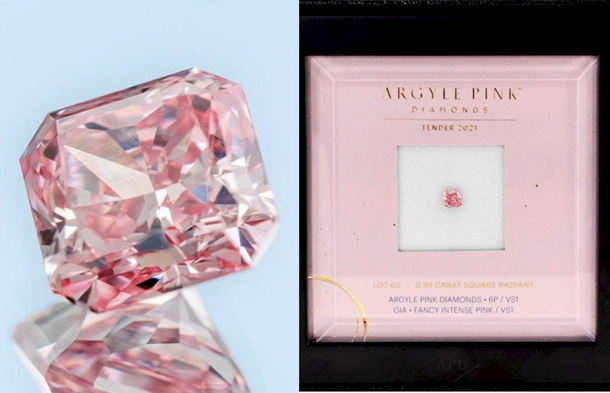
0.94 carat Argyle Pink

A loose 0.94 carat Argyle Pink – one of the last recovered from the iconic mine in Western Australia – is being sold at auction.

It is the highlight of a 416-lot online event (ending 11 August), featuring many items that belonged to Graham Jackson, former owner of Loloma Jewellers, located in Townsville, Australia, who died aged 92 in May.

The cushion cut fancy intense VS1 gem is designated as 6P – 6/10 for intensity of hue and P for pink as the dominant hue.

It was sold at the 2021 Argyle Pink Tender-Rio Tinto’s Final Collection, the last tender from the mine, which closed in November 2020 after 37 years, during which it produced 90 per cent of the world’s pink diamonds.

The stone is being sold by Sydney-based First State Auctions, with an estimate of AUD$700,000 to AUD$800,000 (US$455,000 to U$520,000).

Last January Tiffany & Co. has bought a parcel of 35 Argyle pinks – from 0.35 carats to 1.52 carats – for “select clients”.

Source: DCLA

Monday, 5 August 2024

Fancy Color Diamond Prices: First Drop in Almost Four Years

Fancy yellow diamond
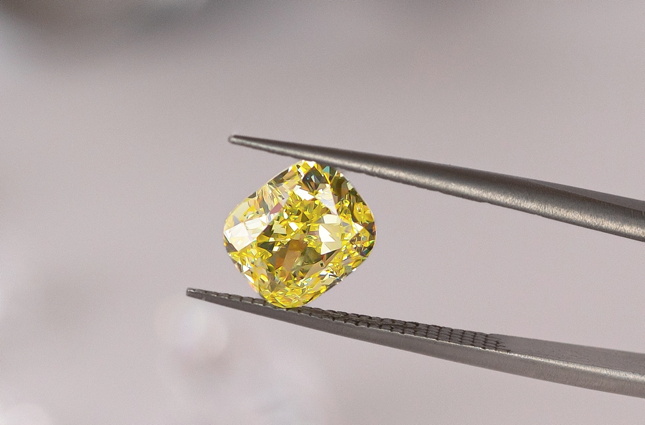
Fancy yellow cushion cut diamond

The Index tracking fancy color diamond prices fell during the last quarter, for the first time in almost four years.

The Fancy Color Diamond Index, which monitors pricing data for of all sizes and intensities of fancy color diamonds, fell by 0.7 per cent during Q2 2024, according to an update published yesterday (30 July) by the Fancy Color Research Foundation (FCRF).

The last recorded fall was back in Q3 2020 – in the depths of the Covid crisis – when the Index also fell by 0.7 per cent. That came after two quarters when sales were too slow for the FCRF to produce figures at all.

The trend over the last year or so has been of slower growth. The Index was up 1.3 per cent in Q1 2023, followed by +0.5 per cent (Q2); +0.4 per cent (Q3); +0.1 per cent (Q4) and +0.1 per cent (Q1 2024).

The New York-based FCRF played down the Q2 dip, describing it as “a minor fluctuation when compared to broader market movements”.

It said in a statement: “This stability is particularly evident relative to the sharper declines in the white diamond market and the Dow Jones index, which fell by 3.6 per cent and 1.7 per cent respectively during the same period.

Yellow diamonds (all sizes, all intensities) suffered the biggest drop, down 1.7 per cent. Pinks and blues were both down 0.3 per cent.

The FCRF said its Index had enjoyed an overall increase of 211 per cent since it began compiling data in 2005. During that time it said the price of yellow diamonds had risen by 56 per cent, pinks by 398 per cent and blues by 248 per cent.

Source: DCLA

Friday, 16 February 2024

A Colorful Life: Leibish Shares the Many Hues of His 40-Year Diamond Career

Leibish Polnauer

Behind his small and grandfatherly stature is a man who’s not afraid to say anything, and usually does. Leibish Polnauer has been in the diamond industry for over 40 years and runs an extremely successful business. But if not for a crazy fluke and a bit of luck, that business wouldn’t exist.

Polnauer — affectionately known in the trade as simply “Leibish” — welcomed Rapaport’s editorial team to his office in Israel’s diamond bourse to talk about how he got his start, the market for colored diamonds, what he thinks of lab-grown, and how the industry has changed over the years. We also got a sneak peek at some of the jewelry pieces his company is currently working on.

Leibish showing the Rapaport team fancy-colored yellow diamonds.

The train ride epiphany
Around 1980, after several years as a diamond polisher and the loss of his job at a factory that went out of business, Polnauer went to London to try to sell a parcel of diamonds. He didn’t manage to offload a single stone, but on the train, on the way back from his business meetings, he saw an advertisement in The Guardian for crown jeweler Garrard, featuring a pear-shaped, brown diamond. Using his abundance of “Israeli chutzpah,” he called the number and told them he had diamonds to sell. The managing director invited him to his office on Regent Street, where he told Polnauer he was making a tiara for a wedding and needed 106 pear-shaped diamonds in four weeks.

Despite his cheeky admission to our team that at the time he had never even heard of pear-shaped diamonds, Polnauer took on the challenge, flew to New York, and secured the stones needed for the piece. He brought them back to London, and Garrard, thrilled with the selection, cut him his first check for GBP 106,000, equivalent to about GBP 1 million ($1.3 million) today.

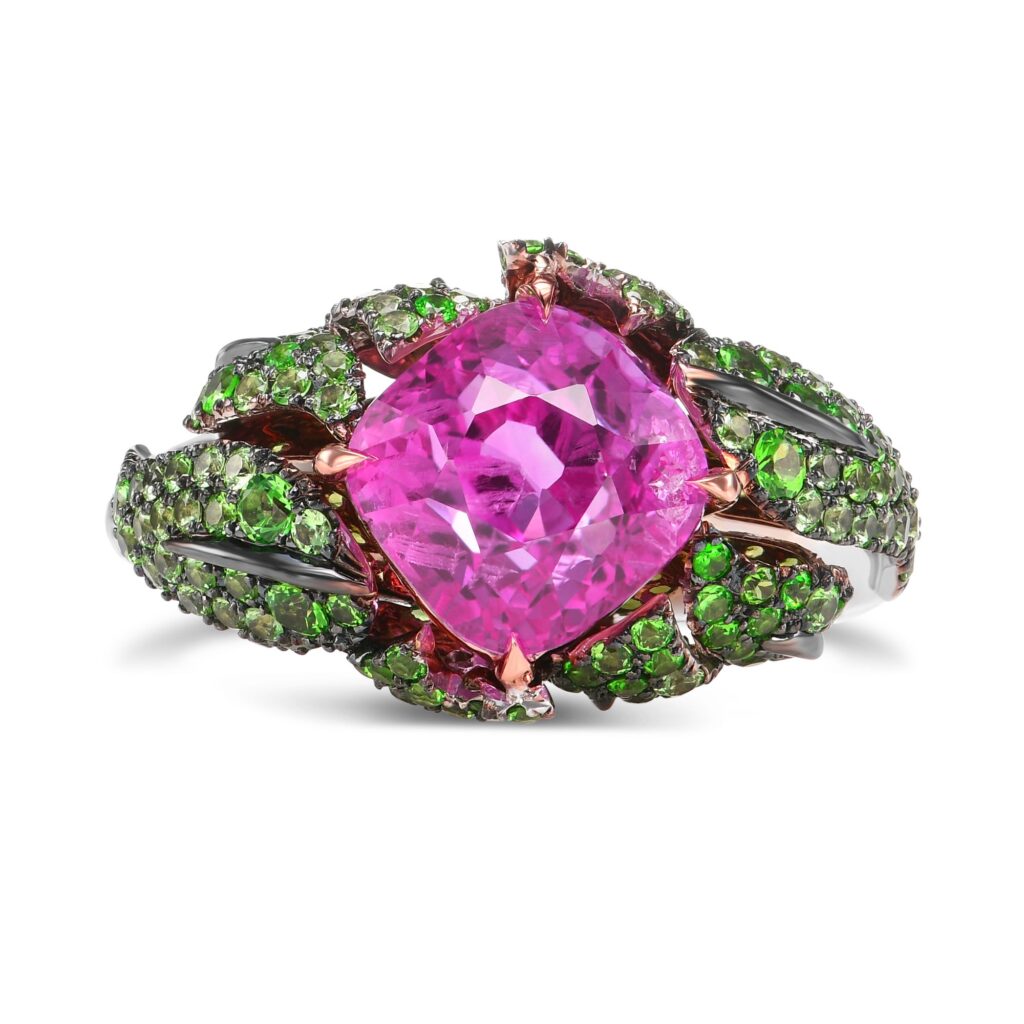
A Leibish custom made ring bearing a 5.43-carat Mogok vivid-pink sapphire and green tsavorite.

He used that experience to convince Graff to do business with him. At the time, the jewelry house worked with a sultan whose wife gifted every visitor to their palace with a diamond watch, and Graff was desperate for the pink and yellow diamonds needed to create 50 to 70 watches per year. And thus began Polnauer’s career in the colored-diamond business.

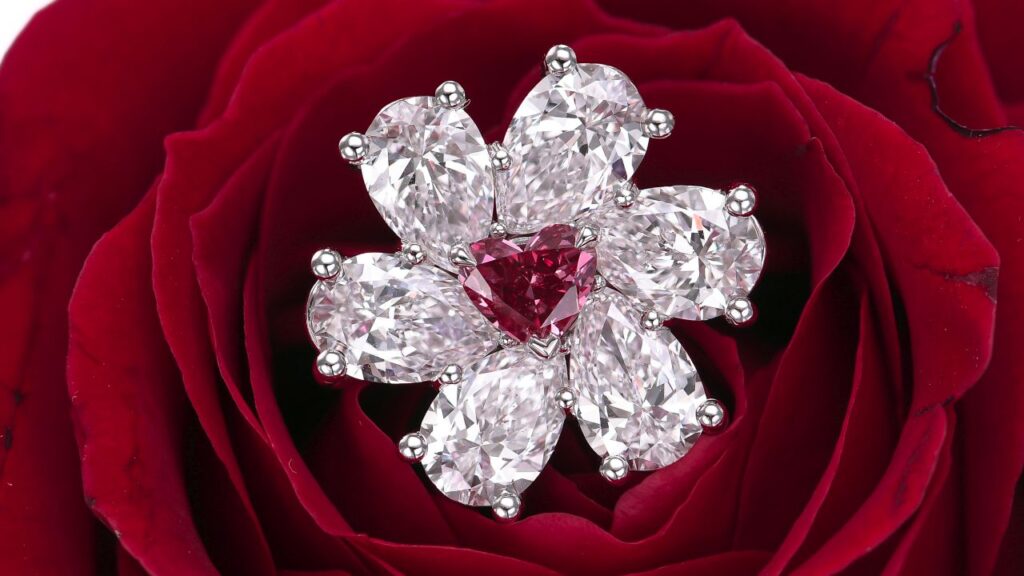
A Leibish custom made flower ring set with a heart-shaped, 0.29-carat, fancy-purplish-red Argyle diamond surrounded by pear-cut, D-color white diamonds

Changing with the times
Throughout the years, Polnauer has watched his business grow from diamond sourcing and manufacturing to include in-house designers that create custom pieces for clients whom they usually never meet face-to-face, but who nevertheless aren’t afraid to drop massive sums of money for a beautiful, original Leibish creation.

One of the most important lessons Polnauer has learned during his time in the colored-diamond industry is that people shop first by color, then by price tag. He has broadened his business to include colored gemstones, because if someone wants a blue diamond but can’t afford it, a sapphire or tanzanite can often present a compelling and cheaper alternative.

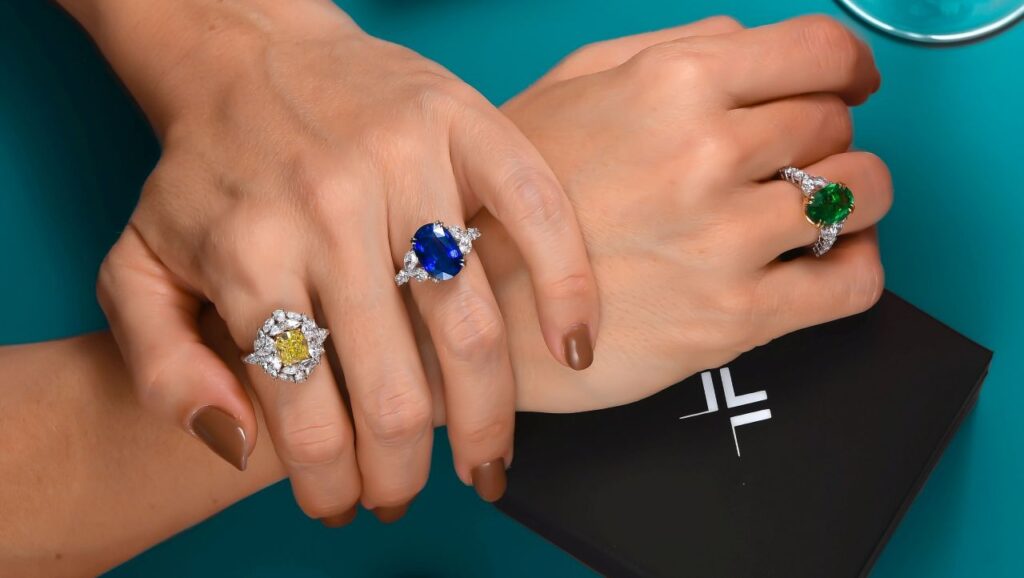
Three custom-made rings by Leibish featuring an oval, 8.51-carat, royal blue sapphire; an oval, 5.49-carat emerald; and a cushion-shaped, 3.74-carat, fancy-green-yellow diamond surrounded by white diamonds.

Most of the firm’s clients are wealthy 30- to 60-year-olds who have a penchant for color, because, as Polnauer notes, “color is excitement.” They purchase multiple pieces to match their clothing. One client in Texas bought 13 rings in a two-year period because she loved color. Meanwhile, another client ordered a ring for his wife, who then decided she needed earrings to match. When those were ready, she wanted a necklace to complete the set. Polnauer was more than happy to comply, and in a four-day time span, he saw his bank account padded with an additional $500,000.

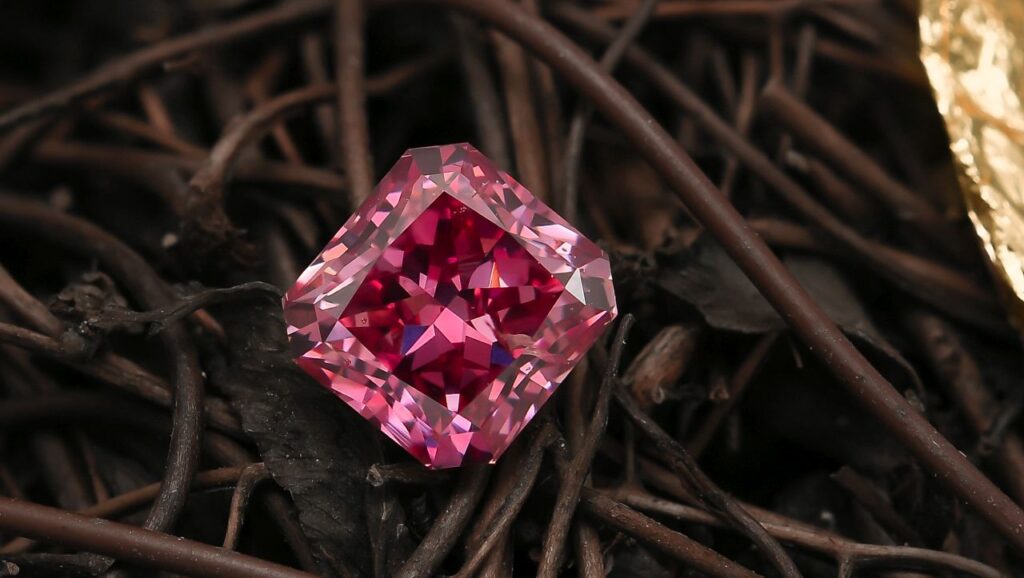
A radiant-cut, 1.03-carat, fancy-vivid-purplish-pink Argyle diamond.

But working in the colored-diamond industry isn’t always easy. Recently, the company was tasked with sourcing dozens of matching yellow diamonds to be used for a watch created by Jacob & Co. That search took the company on a two-year, international hunt before they finally filled the commission.

Other changes over his more than four-decade career have also been difficult. He has sadly watched as the Israeli diamond-manufacturing sector has diminished in importance with India’s growth, and learned the meaning of providing added value to customers.

A radiant-cut, 0.71-carat, fancy-red Argyle diamond.

“People used to just want to buy a stone, but now they want to buy a product,” he says. “You have to have an internet business; you have to manufacture jewelry. You also have to really be on point with your presentation. When business was face-to-face, if you screwed someone, he would just walk away upset. Now, with the internet, he doesn’t walk away. If he doesn’t like what he gets, he sends it back, and he writes a bad report about you on Google, and you have to pay for the return shipment, so presentation is crucial.”

No lab-grown zone
While many in the industry have welcomed the advent of lab-grown as a way to make money from clients who can’t always afford natural stones, Polnauer pulls no punches about his dislike of what he calls “fakes.”

He believes lab-grown to be detrimental to the natural-diamond industry, because the fall of synthetic prices “pulls down the price of real diamonds.”

He’s also not shy about making it known how damaging he thinks De Beers was with its marketing of lab-grown.

“De Beers made a tremendous self-destructive move by introducing a product which is undermining the basic product they sell,” he explains. “They cannibalized their own sales and did a tremendous disservice to the industry.”

However, Polnauer believes when it comes to lab-grown, there is a light at the end of the tunnel.

“Lab-grown is stealing the story from natural diamonds,” he says. “But there is a saying: ‘When the music stops, the dancing stops,’ so hopefully everything will work out for the best.”

Staying optimistic
His brazenness has seen Polnauer ride out many market ups and downs, the latest challenge being the Israel-Hamas war that started when the latter attacked the country on October 7. When asked if it’s affected his business, he says it has. While he notes that those who want to buy his products still will, and those who don’t never would have anyway, he believes the negative sentiment is “poison” for an industry based on “illusion and sentiment.”

Despite it all, he remains hopeful. When it comes to the future of the trade, he thinks “fancy-colored diamonds will flourish, gemstones will flourish and the jewelry market will flourish, because I’m an optimist, and if you put that positivity out there, everything will work out.”

Source: DCLA

Tuesday, 5 December 2023

Rio Tinto Delighted with Argyle and Diavik Tender

Rio Tinto Delighted with Argyle and Diavik Pink Diamond Tender

Rio Tinto said it was delighted with the results of its first Beyond Rare Tender of polished pink and red diamonds from Argyle, in Australia, and yellow stones from Diavik, Canada, though it declined to reveal any prices.

Sinead Kaufman, chief executive of Rio Tinto Minerals, said only that the results reflected the global demand for highly collectible natural colored diamonds.

The first in a series of sales featured a collection of 87 diamonds, weighing 29.96 carats in total. Successful bidders came from Australia, Europe, Japan, Hong Kong, Singapore, US and Israel.

Among the lots were seven Masterpiece sets of Argyle dink diamonds and yellow Diavik diamonds, 11 matched pairs of colored diamonds and 30 single diamonds, including one remarkable fancy red Argyle diamonds.

The iconic Argyle mine closed in November 2020 after 37 years. It produced 90 per cent of the world’s pink, red, blue and violet diamonds.

Source: DCLA

Thursday, 4 May 2023

 Rio Tinto unveils Argyle Rose heirloom piece

The Argyle Rose. Image from Rio Tinto.

Rio Tinto has unveiled the latest heirloom piece of Argyle Pink Diamonds jewellery, featuring one of the last diamonds to be mined from the iconic Argyle mine in the East Kimberley, Western Australia.

Mining ended at Argyle in November 2020, after 37 years of uninterrupted production, during which the mine became the source of about 90% of the world’s prized rose-to-magenta hued stones. The mine produced more than 865 million carats of rough diamonds.

Designed by Western Australian jeweller Solid Gold Diamonds, the Argyle Rose features a total of 3.25 carats of rare Argyle pink and blue diamonds encrusted in a rose motif, surrounded by white diamonds and hand-set in platinum and 18 karat gold.

The heart of this piece is an extremely rare 1.36 carat, Fancy Deep Pink radiant cut diamond. It is just one of twelve radiant cut diamonds over one carat with a colour grading, 1P, from the last 30 years of production from Argyle.

The surrounding petaled design of pink and blue Argyle Diamonds totals 1.89 carats, together with 2.80 carats of white diamonds. The Argyle Rose is for sale at Solid Gold Diamonds in Perth for A$2 million.

“I am delighted to launch the Argyle Rose. Encapsulating a rich history and an extraordinary provenance, it is both a contemporary treasure and an heirloom for tomorrow,” Sinead Kaufman, Chief Executive of Rio Tinto Minerals said in a statement.

“These rare and precious diamonds are one and a half billion years old, from one of the most beautiful places on earth, and the world is simply not producing them anymore.”

Source: DCLA

Monday, 23 January 2023

Tiffany Buys Some of a Legendary Diamond Mine’s Last Finds


 Argyle Diamonds
               Argyle Diamond Mine in Australia.

The new Tiffany Collection comprises 35 gems, including an unusual red stone, from the Argyle Diamond Mine in Australia.

About a year ago, a representative of the Argyle Diamond Mine — a site in Western Australia that was the pre-eminent source of pink diamonds until it closed in 2020 — approached Tiffany & Company’s chief gemologist with an unusual offer: the chance to purchase a collection of diamonds that were among the last stones taken from the mine.

The decision, Tiffany executives said, didn’t require much consideration.

“We had to do it,” Anthony Ledru, the brand’s president and chief executive, said in his bright office in New York’s Flatiron district. “It’s perfect with what we stand for.”

The purchase, which was finalized several months ago, involved 35 diamonds of various shades: pink, almost purple and even one red gem, an especially unusual color for a diamond. The gems, which had already been cut in various styles, “checked off all of those boxes: rarity, scarcity and beauty,” said Victoria Reynolds, Tiffany’s chief gemologist.

But the stones are small, ranging from 0.35 carats to 1.52 carats, considerably more petite than the statement-size gemstones frequently used in engagement rings and solitaire necklaces.

“These are small, there’s no doubt,” Ms. Reynolds said, “but for connoisseurs, collectors who understand how rare these are, it’s incredibly appealing.”

How much did the jeweler pay for what it now calls the Tiffany Collection? Mr. Ledru wouldn’t disclose the sum, but said it was “probably not enough compared to what it’s going to become in the next five, 10 years.” (He did note that it was Tiffany’s largest single purchase of 2022.)

Exactly how the diamonds will be used in jewelry hasn’t been decided, although Mr. Ledru said it was likely that they all would be used in one-of-a-kind designs. In the meantime, the diamonds are being shown to select clients in New York City and, next month, in Doha, the capital of Qatar.

The eventual prices are sure to be high. “You pay a premium for anything that says ‘Argyle pink diamond,’” said Renée Newman, an independent gemologist and author based in Los Angeles.

Source: DCLA

Tuesday, 7 June 2022

Rio Tinto Launches Business for Argyle Pinks

 Rio Tinto Launches Business for Argyle Pinks

Diamonds from Rio Tinto’s Argyle Pink Diamond Tender. 

Rio Tinto has debuted a new strategy that will enable it to “protect the provenance” of its Argyle pink diamonds, including a certification service and a concierge trading platform.

“This is the start of a new chapter for Argyle pink diamonds, to ensure they maintain their value and investment potential as a finite, unrepeatable natural resource and achieve the status of outstanding heritage diamonds,” Rio Tinto Minerals CEO Sinead Kaufman said last week.

The venture will also play host to a new Beyond Rare tender platform for special sales events, as well as several strategic collections and collaborations involving existing inventory and the secondary market.

One such venture, the Icon Partner program, will give jewelers licensing rights to use the Argyle Pink Diamonds brand for jewelry they create with any remaining inventory they previously purchased from the Argyle mine. The first two retailers Rio Tinto has authorized are John Calleija, the owner of Australian luxury-jewelry house Calleija, and Singapore-based Glajz THG, owned by John Glajz.

“The secondary market for Argyle pink diamonds comprises almost 40 years of rare, polished pink diamonds, together with heirloom pieces of jewelry, collectibles and objects,” the miner noted. “This market requires careful management to preserve the precious provenance of Argyle pink diamonds and continue the legacy of careful custody that underscores its rarity.

Source: DCLA

Friday, 29 October 2021

Final Argyle Pink Tender Sees Record Result

                            Argyle pink tender

Rio Tinto achieved record-breaking figures at its 2021 Argyle Pink Diamonds Tender, with prices strong amid dwindling supply from the mine.

                        Once in a Blue Moon 

The Australian miner offered 70 rare pink and red diamonds at the last-ever edition of the tender, which follows Argyle’s closure in November 2020. The “historical” collection, called The Journey Beyond, comprised the final diamonds mined during the Western Australian deposit’s last year of operation, Rio Tinto said Thursday.

“The 2021 Argyle Pink Diamonds Tender delivered a record-breaking price performance across individual diamonds and for the overall collection,” the company noted. “The diamonds were fiercely contested around the world in a series of virtual and face-to-face viewings.”

A total of 19 bidders from nine countries successfully acquired lots, with prices maintaining their upward trajectory, Rio Tinto explained. Australian jeweler Calleija bought several stones, including the Argyle Eclipse, a radiant-shaped, 3.47-carat, fancy-intense-pink diamond, and the Argyle Bohème, a radiant-shaped, 1.01-carat, fancy-red diamond.

A veteran bidder in Singapore took home both the Argyle Stella, a square radiant-shaped 1.79-carat, fancy-vivid-purplish-pink diamond, and the Argyle Solaris, a radiant-shaped, fancy-intense pink weighing 2.05 carats. Another, based in the US, won the Argyle Lumiere, a square radiant-shaped, 2.03-carat, fancy-deep-pink diamond.

Alongside the pink-diamond tender, Rio Tinto sold a record-breaking collection of 41 blue and violet diamonds from Argyle to a single buyer. Hong Kong fancy-color specialist Kunming Diamonds purchased the entire 24.88-carat lot in a “history-making global bid” at the separate Once in a Blue Moon tender, the miner said. The stones are the final blues to come from Argyle. Kunming also won nine pink lots.

“I don’t think it’s ever been so competitive, so mind-blowing in terms of how the prices have been, how much competition we faced, and there was a lot of emotional premium everyone added, as this was the ultimate tender,” Harsh Maheshwari, executive director of Kunming, told Rapaport News. “So I guess everyone felt that they would like to at least own a few tender stones while they had the opportunity.”

It’s rare for there to be so many successful bidders at the pink tender, Maheshwari noted. Usually, only half that number would take home diamonds.

“This basically shows how varied the prices must have been, and that these stones went to jewelers from all over the world,” Maheshwari added.  

Source: DCLA

The Diamond You Choose, Natural Rarity or Laboratory Grown Quality

  When the choice is yours, what matters most: rarity, size, beauty or simply the diamond you fall in love with? There was a time when choos...