Showing posts with label Antwerp World Diamond Centre (AWDC). Show all posts

Monday, 11 May 2026

WDC President Says “We Need To Finish The Job” On Conflict Diamonds As Debate Over Kimberley Process Expands

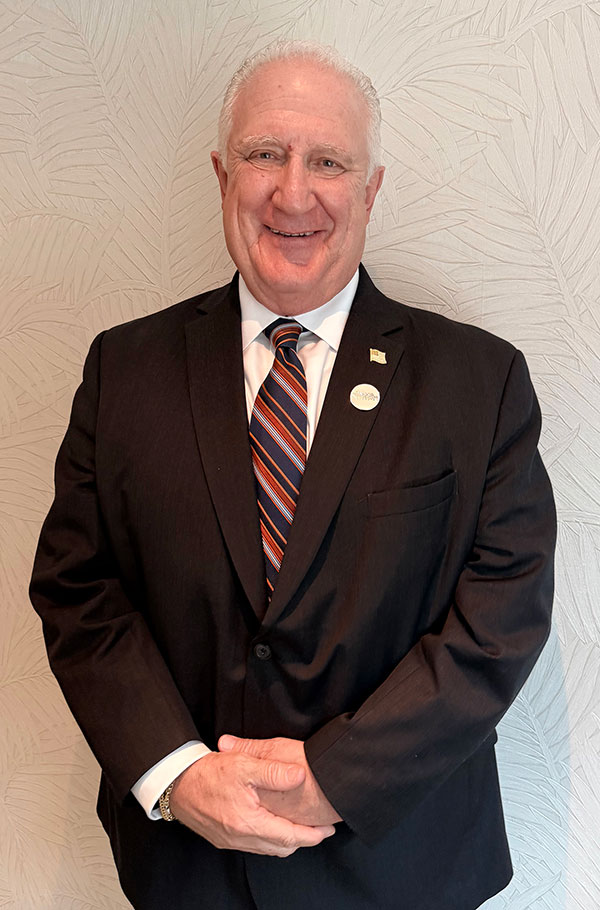
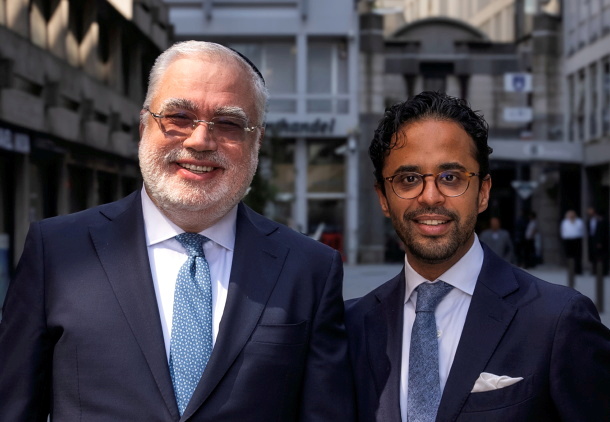
 Ronnie VanderLinden has succeeded Feriel Zerouki as World Diamond Council president.

At the latest World Diamond Council and Kimberley Process meeting in Mumbai, newly elected WDC president Ronnie VanderLinden called on the global jewellery industry to unite behind natural diamonds and push for an expanded definition of so called “conflict diamonds.”

The proposed changes would significantly widen the current Kimberley Process definition, which since 2003 has been limited to rough diamonds sold by rebel groups to finance wars against legitimate governments. Under the new proposal, violence connected to militias, mercenaries, criminal organisations, private military groups and potentially even state actors could all fall under the conflict diamond banner.

VanderLinden told delegates, “We came so close. Now we need to finish the job.”

But behind the moral language and calls for reform lies a far more uncomfortable question rarely discussed openly within the diamond trade.

How large was the actual conflict diamond trade in reality?

At the height of the African civil wars during the 1990s, estimates from the United Nations and industry bodies suggested conflict diamonds represented roughly 3 to 4 percent of global rough diamond production by value. Today, most estimates place that figure well below 1 percent.

In dollar terms, the genuine conflict diamond trade at its peak was estimated at several hundred million dollars annually within a global diamond industry worth tens of billions. While any violence linked to resource extraction is serious, the scale was often portrayed publicly as though the entire natural diamond industry was funding war and instability across Africa.

That narrative created enormous political momentum for the Kimberley Process, introduced in 2003 as an international certification scheme designed to stop rebel financed diamonds entering global markets.

However, critics inside and outside producing nations have long argued the system evolved into something far broader than simply preventing war financing.

Many believe the Kimberley Process became a mechanism that allowed major corporations, powerful producing nations and dominant trading centres to control supply chains, regulate market access and economically pressure smaller African producers attempting to sell diamonds independently into open markets.

Countries such as Sierra Leone, Liberia, Angola and the Democratic Republic of the Congo became heavily dependent on international approval systems dominated by larger political and commercial interests.

The irony is that diamonds themselves were never the root cause of these conflicts.

Civil wars in Africa were driven by poverty, corruption, political instability, foreign interference, weak governance and decades of exploitation dating back to colonial rule. Diamonds simply became a portable source of finance within conflicts that already existed.

In reality, many industries have financed wars throughout history including oil, rare earth minerals, timber, cobalt and even international banking systems. Yet diamonds alone became globally branded with a moral stigma powerful enough to reshape an entire industry.

Critics argue this was not accidental.

The conflict diamond campaign emerged during a period when multinational corporations and Western governments were seeking tighter control over commodity flows, sanctions enforcement and African resource markets. The emotional imagery used in campaigns helped justify increased oversight and certification structures that smaller producing nations often lacked the resources to comply with independently.

Some within the trade privately argue the Kimberley Process created barriers that favoured established corporate supply chains while limiting free market competition from smaller artisanal producers and emerging African exporters.

At the same time, the broader diamond industry has spent decades funding schools, hospitals, infrastructure and employment across producing nations such as Botswana and Namibia, where diamonds became critical pillars of national economic development.

This is part of what VanderLinden referenced when defending natural diamonds during his Mumbai address.

“We have to show what they do, the jobs they create, the communities they support, the countries they help build,” he said.

The timing is also significant.

The natural diamond industry is currently facing growing pressure from lab grown diamonds, weakening consumer demand in China, changing luxury spending patterns and increasing scrutiny over environmental and ethical claims.

Expanding the conflict diamond definition may help restore consumer confidence in natural diamonds, but it also risks reopening political debates about who controls certification systems and who ultimately benefits from them.

For many producing countries, the concern is not simply ethics but sovereignty.

The central issue remains whether international certification systems genuinely protect vulnerable populations or whether they increasingly function as economic gatekeeping tools controlled by powerful governments, NGOs and multinational interests.

The uncomfortable reality is that diamonds did not create Africa’s wars.

Human greed, political corruption, foreign interference and economic exploitation did.

And while the phrase “blood diamonds” became one of the most successful marketing narratives in modern history, the actual percentage of diamonds linked to rebel conflict was always relatively small compared with the enormous global trade in legitimate natural diamonds that continue to support millions of livelihoods around the world.


Thursday, 23 April 2026

The Argyle Phoenix Sets Historic Benchmark as Antwerp Trade Rebounds


The Argyle Phoenix Redefines Rarity at Auction

The Argyle Phoenix Redefines Rarity at Auction

At the 2024 Phillips Geneva Auction, the extraordinary Argyle Phoenix Diamond achieved a landmark result, selling to renowned diamantaire Laurence Graff for CHF 3.8 million (approximately USD 4.2 million). This equates to an exceptional USD 2.7 million per carat more than double its pre-sale estimate.

The result established two significant auction records simultaneously: the highest price ever achieved for a fancy red diamond and the highest price per carat for any diamond of its kind at auction.

For Graff, whose career has been defined by acquiring the world’s most exceptional gemstones, the purchase is emblematic. Stones of this calibre particularly natural reds are not simply rare; they are effectively non-recurring assets in the global market.


The Rarest of the Rare: Natural Red Diamonds

To understand the significance of the Argyle Phoenix, one must place red diamonds within the broader hierarchy of gemstone rarity.

According to the Gemological Institute of America, fewer than 0.4% of all diamonds graded over the past two decades qualify as “fancy colour.” Within this already rare category, red diamonds stand alone at the pinnacle. Fewer than thirty true natural red diamonds are believed to exist worldwide not annually, but in total known supply.

Unlike other fancy colour diamonds, which derive their hues from trace elements, red diamonds owe their colour to a phenomenon known as crystal lattice distortion. Under extreme geological conditions, the atomic structure of the diamond is altered, affecting how light is absorbed and reflected. While similar processes produce pink diamonds, red diamonds represent the most intense and rare expression of this structural transformation.

The rarity is so profound that scientific study remains limited; nature produces these stones too infrequently for comprehensive analysis. As such, natural red diamonds remain among the least understood and most coveted gemological phenomena.


Antwerp Diamond Trade Shows Signs of Recovery

Meanwhile, the global diamond trade is demonstrating early signs of stabilisation, particularly in Antwerp, historically one of the world’s most important diamond centres.

Antwerp Diamond Trade Shows Signs of Recovery

Figures released by the Antwerp World Diamond Centre indicate that total diamond trading volume rose by nearly 20% in the first quarter of 2026 compared with the same period in 2025. This marks a continuation of the recovery that began cautiously in late 2025.

CEO Karen Rentmeesters attributes the improvement to a combination of structural reforms and shifting geopolitical dynamics. Measures such as streamlined visa processes for international traders and the formal recognition of diamond cutters and sorters as critical occupations have enhanced Antwerp’s competitiveness.

Additionally, increased cooperation between Belgian and broader European institutions has reinforced the trading hub’s stability and appeal.


Geopolitical Shifts Reshape Trade Flows

Global geopolitical tensions are also influencing the movement of diamond trade activity. Ongoing instability in the Middle East has made alternative centres, such as Antwerp, more attractive to international diamantaires seeking operational certainty.

This shift is further supported by notable supply-side developments, including large-scale auctions such as those conducted by Congolese producer SACIM, which recently sold over 288,000 carats of rough diamonds in Antwerp.


Market Pressures Persist

Despite improving trade volumes, pricing remains under significant pressure. Rough diamond prices declined by approximately 27% in the first quarter of 2026 compared with the previous year.

This downturn is primarily driven by subdued demand for polished diamonds, compounded by the growing market share of synthetic alternatives and residual inventory build-up following the 2022 market peak.


DCLA Perspective

From a DCLA standpoint, the divergence within the diamond market is becoming increasingly clear. At the very top end, ultra-rare natural diamonds such as the Argyle Phoenix continue to command record-breaking prices, driven by extreme scarcity and collector demand.

Conversely, the broader commercial market faces structural challenges, including shifting consumer preferences and increased competition from lab-grown diamonds.

This bifurcation underscores a critical trend: rarity, provenance, and natural origin are becoming more important than ever in defining long-term value within the global diamond industry.

Source: DCLA

Monday, 20 October 2025

Antwerp’s Polished Trade Rebounds after Tariff Anxiety

brilliant cut diamonds

Antwerp’s polished diamond exports rebounded in September to a 2025 high, after tariff anxiety crushed foreign sales in August.

Gross exports for September were $795m, according to new figures published by AWDC (Antwerp World Diamond Centre).

That’s more than three times the previous month, with August exports at just $229m, and higher than the previous 2025 peak of $783m in February.

Figure for both months were still down on those of 2024: September $937m and August $288m.

Polished imports also increased, up from $310m in August 2025 to $828m in September, but were still below 2024 levels.

The US imposed a 15 per cent tariff on diamonds entering Belgium and all other European Union countries, as of 1 September.

It later agreed an exemption, zero-rating diamonds polished in the EU. Stones polished elsewhere are still subject to tariffs.

Antwerp’s rough exports also rebounded in September, up from $155m in August to $366m, but rough imports remained largely stable.

Source: DCLA

Thursday, 9 October 2025

Clock is Ticking on Luanda Accord, says AWDC

Antwerp World Diamond Centre (AWDC)

The Antwerp World Diamond Centre (AWDC) has publicly expressed frustration over the stalled $100m-plus global campaign to promote natural diamonds, agreed in Angola almost four months ago.

It says there is no time to waste in implementing the breakthrough Luanda Accord, in which African diamond producers pledged one per cent of their rough export sales to fund promotions by the Natural Diamond Council (NDC).

They call on producer nations, the NDC, and industry partners worldwide to take the next decisive step: to release the pledged funds, to activate the agreed framework, and to begin the campaign.

“Luanda was supposed to be the turning point,” say AWDC chairman Isi Morsel and vice chairman Ravi Bhansali (pictured) in a hard-hitting open letter published today (9 October). “It can still be – but only if we move from promises to action.

“The agreements are signed. The budgets are pledged. Yet implementation has stalled. The funds have not been transferred. The campaign has not begun. And the clock is ticking.”

The Luanda Accord, described as a potential turning point for the sector, aims to rebuild consumer trust and interest in natural diamonds over lab growns, by emphasizing their origin, authenticity, and community impact.

“We understand that bureaucratic processes take time,” say Morsel and Bhansali in their letter. “But time is exactly what we do not have. Every delay weakens the credibility of the commitment we all made together.

“Let us be clear: this is not about assigning blame. It is about living up to a collective commitment. We therefore urge all signatories to the Luanda Accord – producer nations, the Natural Diamond Council, and industry partners worldwide – to take the next decisive step: release the pledged funds, activate the agreed framework, and begin the campaign.”

Full text of the letter:

Luanda Was a Breakthrough. But Diamonds Can’t Wait Forever.

By Isi Morsel and Ravi Bhansali – Chairman and Vice Chairman, Antwerp World Diamond Centre (AWDC)

A few months ago in Luanda, something remarkable happened.

For the first time in decades, our industry stood united – producers, manufacturers, traders, and policymakers. Africa’s leading diamond nations. India’s powerful trade bodies. Belgium’s leadership. The UAE’s dynamic hub. We came together, and we signed.

The Luanda Accord was not just another declaration. It was a concrete commitment to act – to protect and promote the story of natural diamonds through a global, African led marketing initiative. Producer countries pledged to contribute 1% of their rough export revenues to a collective fund, exceeding $100 million, to be managed transparently by the Natural Diamond Council. The goal: to educate consumers, inspire the next generation, and clearly distinguish natural diamonds from synthetics.

That day in Luanda, there was real momentum. Real hope. For once, words were turning into action.

But today, four months later, that momentum is fading.

The agreements are signed. The budgets are pledged. Yet implementation has stalled.

The funds have not been transferred. The campaign has not begun. And the clock is ticking.

We are entering the most crucial season of the year – the global gifting season – when the world looks for symbols of love, authenticity, and permanence. If we don’t act now, we will miss this moment. And in our industry, missed moments don’t just mean lost sales – they mean lost livelihoods.

Because natural diamonds are not just luxury products. They are the economic backbone of producing nations. They build schools in Botswana, fund hospitals in Angola, feed families in Namibia, and provide opportunities for thousands of polishers and artisans from Surat to Johannesburg.

That is the real story of natural diamonds – a story of people, pride, and purpose. A story no laboratory can replicate.

But the world won’t hear that story unless we tell it.

While we hesitate, lab-grown diamonds are flooding the market with billions in advertising. Algorithms are replacing emotion with price. Influencers — often uninformed — are redefining the narrative in ways that undermine everything our industry stands for.

Luanda was supposed to be the turning point. It can still be – but only if we move from promises to action.

We understand that bureaucratic processes take time. But time is exactly what we do not have. Every delay weakens the credibility of the commitment we all made together.

Let us be clear: this is not about assigning blame.

It is about living up to a collective commitment.

We therefore urge all signatories to the Luanda Accord – producer nations, the Natural Diamond Council, and industry partners worldwide – to take the next decisive step: release the pledged funds, activate the agreed framework, and begin the campaign.

Luanda can still stand as a true milestone – the moment when our industry turned unity into action.

Because the diamond story is, above all, a human story. And the world needs to hear it – now.

Yours Sincerely,

Isidore Morsel

President AWDC

Ravi Bhansali

Vice President AWDC

Source: DCLA

India Hikes Gold Tariff from 6% to 15%

  India has more than doubled tariffs on gold and silver – up from 6% to 15% – in a move aimed at easing pressure on its foreign exchange re...