Showing posts with label Angola. Show all posts

Thursday, 9 October 2025

Clock is Ticking on Luanda Accord, says AWDC

Antwerp World Diamond Centre (AWDC)

The Antwerp World Diamond Centre (AWDC) has publicly expressed frustration over the stalled $100m-plus global campaign to promote natural diamonds, agreed in Angola almost four months ago.

It says there is no time to waste in implementing the breakthrough Luanda Accord, in which African diamond producers pledged one per cent of their rough export sales to fund promotions by the Natural Diamond Council (NDC).

They call on producer nations, the NDC, and industry partners worldwide to take the next decisive step: to release the pledged funds, to activate the agreed framework, and to begin the campaign.

“Luanda was supposed to be the turning point,” say AWDC chairman Isi Morsel and vice chairman Ravi Bhansali (pictured) in a hard-hitting open letter published today (9 October). “It can still be – but only if we move from promises to action.

“The agreements are signed. The budgets are pledged. Yet implementation has stalled. The funds have not been transferred. The campaign has not begun. And the clock is ticking.”

The Luanda Accord, described as a potential turning point for the sector, aims to rebuild consumer trust and interest in natural diamonds over lab growns, by emphasizing their origin, authenticity, and community impact.

“We understand that bureaucratic processes take time,” say Morsel and Bhansali in their letter. “But time is exactly what we do not have. Every delay weakens the credibility of the commitment we all made together.

“Let us be clear: this is not about assigning blame. It is about living up to a collective commitment. We therefore urge all signatories to the Luanda Accord – producer nations, the Natural Diamond Council, and industry partners worldwide – to take the next decisive step: release the pledged funds, activate the agreed framework, and begin the campaign.”

Full text of the letter:

Luanda Was a Breakthrough. But Diamonds Can’t Wait Forever.

By Isi Morsel and Ravi Bhansali – Chairman and Vice Chairman, Antwerp World Diamond Centre (AWDC)

A few months ago in Luanda, something remarkable happened.

For the first time in decades, our industry stood united – producers, manufacturers, traders, and policymakers. Africa’s leading diamond nations. India’s powerful trade bodies. Belgium’s leadership. The UAE’s dynamic hub. We came together, and we signed.

The Luanda Accord was not just another declaration. It was a concrete commitment to act – to protect and promote the story of natural diamonds through a global, African led marketing initiative. Producer countries pledged to contribute 1% of their rough export revenues to a collective fund, exceeding $100 million, to be managed transparently by the Natural Diamond Council. The goal: to educate consumers, inspire the next generation, and clearly distinguish natural diamonds from synthetics.

That day in Luanda, there was real momentum. Real hope. For once, words were turning into action.

But today, four months later, that momentum is fading.

The agreements are signed. The budgets are pledged. Yet implementation has stalled.

The funds have not been transferred. The campaign has not begun. And the clock is ticking.

We are entering the most crucial season of the year – the global gifting season – when the world looks for symbols of love, authenticity, and permanence. If we don’t act now, we will miss this moment. And in our industry, missed moments don’t just mean lost sales – they mean lost livelihoods.

Because natural diamonds are not just luxury products. They are the economic backbone of producing nations. They build schools in Botswana, fund hospitals in Angola, feed families in Namibia, and provide opportunities for thousands of polishers and artisans from Surat to Johannesburg.

That is the real story of natural diamonds – a story of people, pride, and purpose. A story no laboratory can replicate.

But the world won’t hear that story unless we tell it.

While we hesitate, lab-grown diamonds are flooding the market with billions in advertising. Algorithms are replacing emotion with price. Influencers — often uninformed — are redefining the narrative in ways that undermine everything our industry stands for.

Luanda was supposed to be the turning point. It can still be – but only if we move from promises to action.

We understand that bureaucratic processes take time. But time is exactly what we do not have. Every delay weakens the credibility of the commitment we all made together.

Let us be clear: this is not about assigning blame.

It is about living up to a collective commitment.

We therefore urge all signatories to the Luanda Accord – producer nations, the Natural Diamond Council, and industry partners worldwide – to take the next decisive step: release the pledged funds, activate the agreed framework, and begin the campaign.

Luanda can still stand as a true milestone – the moment when our industry turned unity into action.

Because the diamond story is, above all, a human story. And the world needs to hear it – now.

Yours Sincerely,

Isidore Morsel

President AWDC

Ravi Bhansali

Vice President AWDC

Source: DCLA

Thursday, 14 August 2025

Administration-led DOCA offers lifeline to Lucapa

DOCA offers lifeline to Lucapa diamonds

Lucapa Diamond Company, the Perth-based miner behind the Lulo alluvial mine in Angola and the Merlin project in Australia, has secured a potential lifeline through a planned Deed of Company Arrangement (DOCA) that promises full repayment to creditors and a partial return to shareholders.

Administrators Richard Tucker and Paul Pracilio of KordaMentha were appointed in May after Lucapa faced plummeting diamond markets and operational strains. They recently reached a binding term sheet with Dubai-based Gaston International, part of the broader Jemora Group, setting the stage for a restructuring that would transfer Lucapa’s shares to the proponent, subject to creditor and court approvals.

Under the proposed DOCA, creditors stand to receive 100c on the dollar, while shareholders may receive up to A$0.018 a share. That potential payout exceeds Lucapa’s last traded share price of around A$0.014 a share.

The company has struggled amid a downturn in diamond prices.

Gaston International invests heavily in mining globally, with a particular affinity for critical minerals and gemstones. Its interest in Lucapa could give the company access to high-value assets while securing its Angolan and Australian operations.

KordaMentha’s dual-track recapitalisation and sale process hinges on creditor approval at meetings scheduled for August 20, court clearance under a key provision of the Australian Corporations Act, and any regulatory consents. If successful, the DOCA would preserve Lucapa’s operations and deliver better outcomes than liquidation, the administrators stated.

Source: Miningweekly

Tuesday, 12 August 2025

South Africa Joins Luanda Accord to Promote Natural Diamonds

South Africa Joins Luanda Accord

South Africa is to sign up to the milestone Luanda Accord, which is funding a global campaign to promote natural diamonds.

It joined the governments of Angola, Botswana, Namibia, Sierra Leone and the Democratic Republic of the Congo, in June in pledging to contribute 1 per cent of the value of their rough sales annually.

But the move was only approved South Africa’s cabinet last week. Minister in the Presidency Khumbudzo Ntshavheni and confirmed the decision on 7 August, committing 1 per cent of the annual revenues generated from rough diamond sales to a global marketing fund led by the Natural Diamond Council (NDC).

South Africa, the world’s sixth biggest diamond producing nation by value, saw sales down by 21 per cent last year amid the global slowdown.

The country’s mining minister mining minister Gwede Mantashe was listed as a signatory to the Luanda Accord in an official communique after the agreement.

But a conflicting Reuters report said South Africa did not actually sign at the time and has only done so now.

The Luanda Accord is seen as a potential turning point for the sector, aiming to rebuild consumer trust and interest in natural diamonds over lab growns, by emphasizing their origin, authenticity, and community impact.

It will highlight the positive economic and social contributions of the natural diamond industry to producing nations and their communities.

Governments of the African diamond producing nations have been joined by the Antwerp World Diamond Centre (AWDC), African Diamond Producers Association, India’s Gem and Jewellery Export Promotion Council (GJEPC) and the Dubai Multi Commodities Centre (DMCC).

Source: DCLA

Sunday, 1 December 2024

Sanctioned Russia Sells Shares in Angolan Diamond Mines

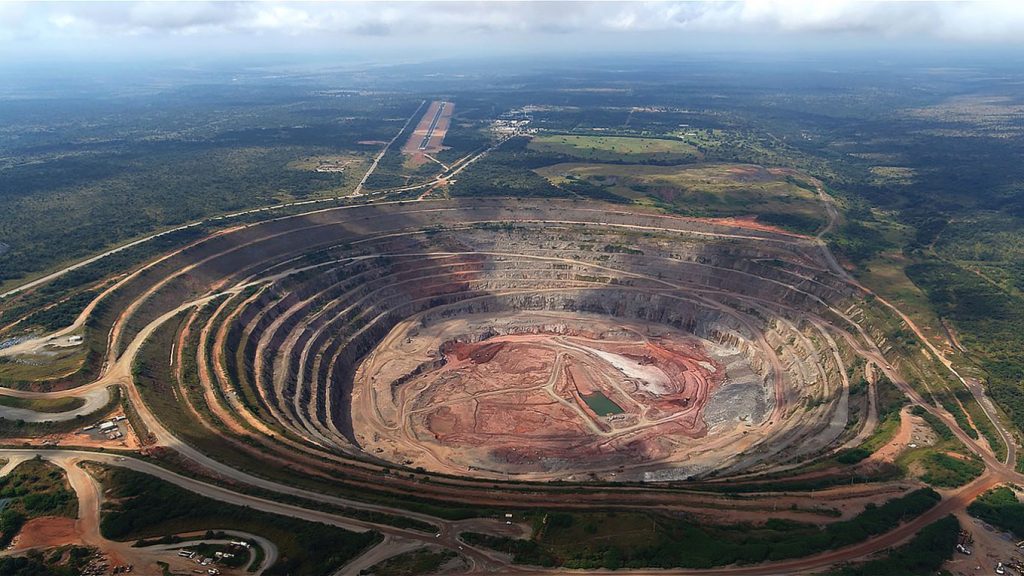
Angolan Diamond Mine

Angola has announced that Russian shares in two of its major diamond mines have been sold to an Omani-backed fund as a result of international sanctions, a government official said.

Russia’s diamond giant Alrosa was until now a joint owner of Angola’s Catcoa mine, the fourth-largest in the world, and Luele mine, in partnership with the southern African nation’s state-owned company Endiama.

The European Union imposed sanctions on Alrosa, also state-owned, and its CEO in January as part of a ban on diamond imports over the Ukraine war.

This led to “a block on the commercialization” of diamonds from Catcoa and Luele mines, Angola’s Minister of Mineral Resources and Petroleum Diamantino Azevedo said Thursday.

After “negotiations between the Angolan and Russian governments, as well as between Endiama and its partner,” Alrosa has now “officially ceased operating in Angola,” Azevedo said.

The company has been “replaced by Maden International Group, a subsidiary of the Sovereign Fund of the Sultanate of Oman,” the minister added.

He said the transition process was “already underway and should be conducted swiftly.”

The sale comes as the United States President Joe Biden was expected to travel to Angola on Dec. 2.

The visit, his first to Africa, underscores the strategic importance of the oil and mineral-rich country where a massive U.S.-led project is underway to export critical minerals.

Source: Themoscowtimes

Monday, 7 October 2024

Angola Seizes 710 Rough Diamonds from Three Guineans

710 Rough Diamonds from Three Guineans

The Criminal Investigative Service (SIC) in Angola seized 710 diamonds of different carats on Sunday in Lucapa, a municipality in the northeastern Lunda-Norte province of Angola.

According to Graciano Lumanhe, the SIC spokesperson in Lunda-Norte, three individuals from Guinea Conakry were found in possession of the diamonds.

Angola seized 710 diamonds of different carats

Angola Seizes 710 Diamond Stones From Three Guineans
In addition to the diamonds, the officers also discovered a diamond weighing scale, two calculating machines, magnifying glasses, a sieve, and $860 and 68,000 kwanzas in cash during the operation.

All the evidence has been submitted to the Office of the Public Prosecutor as part of the preparations for criminal proceedings against the three suspects.

Source: DCLA

Wednesday, 14 August 2024

Namibia bemoans popularity of lab-grown diamonds on global market

Namibian natural diamonds

Namibia is one of Africa’s top five diamond exporters, right behind Angola, Botswana, and South Africa. In 2022, the country exported more than $940 million worth of diamonds.

The world’s demand for natural diamonds has bounced back from a slump during the COVID-19 pandemic, with Namibia’s largest marine dining company, Debmarine, reporting a sales increase of 83% in 2022 from the previous year.

Still, Debmarine CEO Willy Mertens is worried about competition from synthetic diamonds, sector of the business that could cost many Namibians their jobs.

Though trained jewelers can tell the difference between lab-grown and natural diamonds, there’s nothing obvious to distinguish lab-grown diamonds from natural ones.

The Modern Mining publication recently said that in 2022, lab-grown diamond jewelry surpassed 10% of the market of global jewelry sales for the first time. The publication said artificial diamond sales are forecast to continue growing at an annual double-digit percentage rate in coming years.

Namibia, where workers extracted 2.1 million carats in diamonds in 2022, is embarking on a campaign to tout natural diamonds as environmentally sound and holding greater value for the money.

“We’ve seen in the past couple of years that lab-grown diamonds, or synthetics as you call them, have sort of infiltrated the natural diamond market,” said Mertens. ” … people were first marketing them as real diamonds and we’ve done a lot of work around trying to differentiate them.”

One of the challenges of marketing Namibian natural diamonds is the environmental impact that diamonds have on the landscape.

Mertens said Debmarine invests a significant amount of its profits into environmental rehabilitation and restoration of landscapes and the seabed damaged by mining.

“The restoration of the seabed actually happens naturally as the waves move,” Mertens said. “So what we are doing is that we are monitoring that, and what we do is we mine out a specific area and we leave an area next to it vacant, and over time we monitor how the area where we have recovered diamonds looks like compared to the one that was not touched and we’ve seen that it takes about three to 10 years maximum for that to completely restore. By completely restoring, mean about 70% of the organisms have returned to that place. On the land, it is sand that we are moving and what we do now is that we are using that same sand to keep the sea walls in tact.”

Mertens recently paid a courtesy call on Namibian President Nangolo Mbumba, to introduce the De Beers global ambassador for natural diamonds, Hollywood actor Lupita Nyong’o, and talk to the president about challenges facing Namibia’s diamond industry.

De Beers Natural Diamonds Global Ambassador Lupita Nyong’o, left, Namibia President Nangolo Mbumba, center, and Debmarine CEO Willy Mertens in Windhoek, Namibia, July 19, 2024. (Vitalio Angula/VOA)
President Mbumba lamented a proposal for the Kimberley process — the process meant to screen out so-called “conflict diamonds” from entering the international market — to begin certifying all diamonds in Antwerp, Belgium.

The Group of Seven largest economies said that is an effort to prevent Russian diamonds from being sold abroad.

Mbumba said the measure would hurt African diamond producers.

“Recently, the decision was made by the G7 countries to route all rough and polished diamonds destined for G7 countries via Belgium,” said Mbumba. “This decision poses a serious risk and threat to our economies, especially the economies of Angola, Botswana and Namibia by increasing the cost as well as curtailing freedom of trade for our countries’ products.”

Namibia’s president said he and his counterparts from Angola and Botswana have written a letter to the G7 to ask them to halt their plans.

Source: DCL

Tuesday, 5 March 2024

Lucapa Diamonds recovers two diamonds of over 100 ct

Lucapa Diamonds recovers two diamonds of over 100 ct

Lucapa Diamond Company and its partners Endiama and Rosas and Petalas, have recovered two diamonds of over 100 ct each from the terraces of Mining Block 46 at the Lulo mine, in Angola.

The miner plans to offer the first, a 162.42 carat, type IIa diamond, as part of its normal run-of-mine sales later this month, it said Tuesday. It will sell a 116.14 carat rough, which it discovered the next day, by tender at a future date, along with other high-value, type IIa diamonds the company unearthed from the deposit recently.

Both diamonds were recovered in February, with a 162 ct diamond recovered first, and a 116 ct diamond recovered the following day.

The 116 ct Type IIa diamond will be sold through a tender at a future date, along with other high-value Type IIa diamonds recovered recently, while the 162 ct diamond will be sold as part of normal run-of-mine sales later this month.

Lucapa has assets in Africa and Australia, with interests in the Lulo diamond mine and the Mothae diamond mine, in Lesotho.

Source: DCLA

Wednesday, 31 January 2024

Solid Performance as Lucapa Sells $102m Rough in 2023

Solid Performance as Lucapa Sells $102m Rough in 2023

Lucapa reported a slight increase in total rough sales for FY2023 in what it described as a solid performance.

The Australian miner announced revenues of $102.2m, up by 1 per cent on the previous year.

Q4 earnings from its two mines – Lulo in Angola and Mothae in Lesotho – slipped by 1 per cent to $40.8m.

During the year Lucapa sold 11 diamonds from Lulo that fetched a total of $32.7m at two Q4 tenders in Q4. It also recovered two Type IIa diamonds from Lulo, a 208-ct and a 235-ct, the second largest recovery since commercial operations started in 2015.

“Both mines delivered a solid performance against processing and production targets in Q4 and we are pleased with the full year results which saw group guidance achieved,” said managing director Nick Selby.

Mothae performed well despite experiencing a lower dollar per carat average in Q4, which impacted its overall diamond price for the year. Lulo had a good run which saw its high-value recoveries attract firm prices at tender.”

Lulo recovered fewer carats than forecast (30,585) but achieved an average $2,700 per carat, well up on the forecast of $2,300. Mothae recovered more carats that forecast but saw average price per carat down from guidance of $1,000 to an actual $775.

Lucapa said in its ASX announcement that the overall diamond price index began to trend upwards towards the end of 2023, because of India’s two-month moratorium and EU sanctions on Russian goods.
“Tightening economic conditions imposed by central banks and a surge in inflation continues to impact discretionary spending on items such as diamond jewellery,” it said.

“However according to media reports at the end of 2023, there are signs the US market is recovering, however the Chinese market remains slow.”

Lucapa holds a 40 per cent stake in Lulo. The remainder is owned by Angola’s national diamond company Endiama (32 per cent) and by private Angolan company Rosas & Petalas (28 per cent). Lucapa holds a 70 per cent stake in Mothae. The government of Lesotho holds the remaining 30 per cent.

Source: DCLA

Tuesday, 1 August 2023

Anglo announces latest De Beers’ rough diamond sales value


Anglo announces latest De Beers’ rough diamond sales value

Anglo American plc announces the value of rough diamond sales (Global Sightholder Sales and Auctions) for De Beers’ sixth sales cycle of 2023, amounting to US$410 million.

The provisional rough diamond sales figure quoted for Cycle 6 represents the expected sales value for the period 10 and 25 July and remains subject to adjustment based on final completed sales.

Al Cook, CEO of De Beers, said: “In line with seasonal trends, rough diamond sales continued at a lower level during the sixth sales cycle of the year. Participants in the diamond industry’s midstream sector continue to take a cautious approach to purchases in light of ongoing macroeconomic challenges.”

Source: DCLA

Sunday, 12 February 2023

Angola considers dual listing for diamond mining firm Endiama

          Angola diamond mining

                        Angola diamond mining

Angola is aiming for a dual listing for state-owned diamond miner Endiama, reported Reuters citing Angola Mines Minister.

The country initially plans an initial public offering for a stake between 5% and 10% in the company on the Angolan stock exchange, following which it will seek a secondary foreign listing.

This move forms part of the OPEC member country’s efforts to reform and privatise the economy, including a partial listing of national oil company Sonangol.

Russian diamond mining company Alrosa has a joint venture with Endiama in Angola.

Following Russia’s invasion of Ukraine last year, sanctions were imposed by Western nations on several companies, including Alrosa, subsequently impacting Endiama’s operations.

Angola Minister of Mineral Resources, Oil and Gas Diamantino Azevedo told the news agency on the sidelines of a mining conference in Cape Town: “Sanctions are there and there is some impact.”

Azevedo said the government is considering measures required to avoid impacts on diamond production.

The minister noted that the government, however, could go ahead with an initial public offering for Endiama following its restructuring.

Azevedo said: “Our goal is (to list) till 30% but will start maybe with five or 10%.”

According to Endiama’s document at the mining conference, the firm’s production was about 8.75 million carats for 2022.

Between 2022 and 2027, Endiama intends to more than double its diamond production to 17.5 million carats.

In September 2022, Bloomberg News reported that Angola was looking to sell its 30% stake in Sonangol within the next five years.

SOurce: mining-technology

Wednesday, 27 July 2022

Lucapa Unearths 170ct. Pink from Lulo

 Lucapa Unearths 170ct. Pink from Lulo

The 170-carat pink diamond.


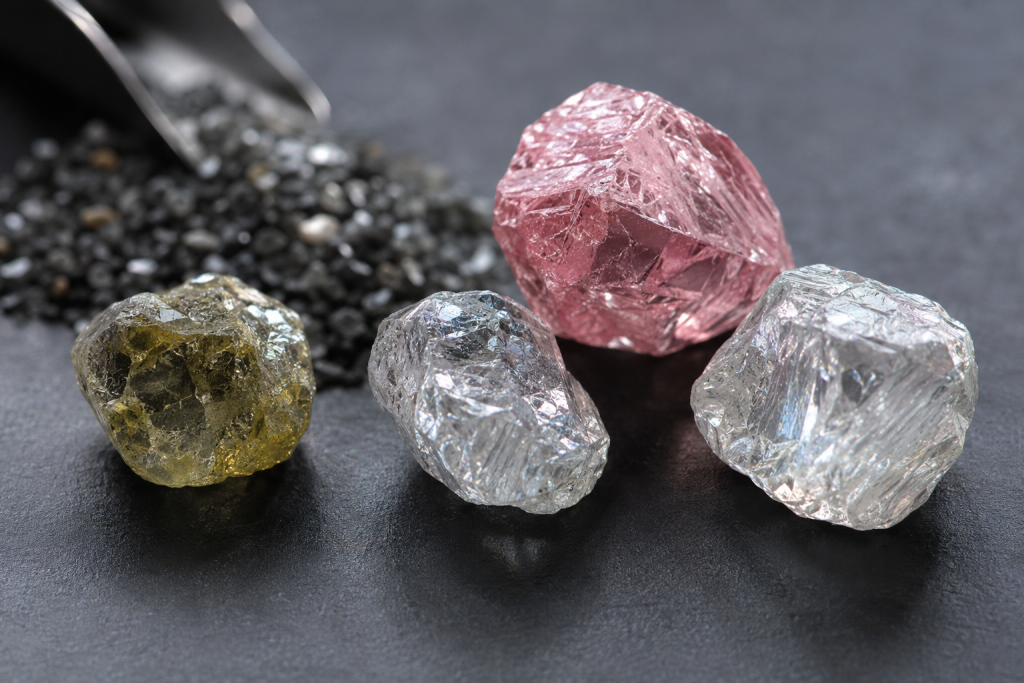
Lucapa Diamond Company has recovered one of the largest pink diamonds in history: a 170-carat stone from the Lulo mine in Angola.

The type IIa rough, named the Lulo Rose, is “believed to be the largest pink diamond recovered in the last 300 years,” Lucapa said Wednesday. It is also the fifth-largest diamond from Lulo, and the deposit’s 27th over 100 carats since commercial production began in 2015. Lucapa plans to sell the diamond through an international tender conducted by Angolan state diamond-marketing company Sodiam, it noted.

“The record-breaking Lulo diamond field has again delivered a precious and large gemstone, this time an extremely rare and beautiful pink diamond,” said José Manuel Ganga Júnior, chairman of the board of state-owned Endiama, one of Lucapa’s partners in the deposit. “It is a significant day for the Angolan diamond industry.”

In addition to the pink, Lulo is also the source of Angola’s largest diamond, a 404-carat rough named the 4th February Stone.

Lucapa has begun bulk sampling at “priority kimberlites” as it searches for the primary source of Lulo’s diamonds, managing director Stephen Wetherall added.

Source: DCLA

Monday, 29 March 2021

Three +100 carat diamonds recovered at Lucapa’s Lulo mine


Lucapa Diamond Company and its partners Endiama and Rosas & Petalas have announced the recovery of three +100 carat diamonds by Sociedade Mineira Do Lulo from the Lulo alluvial diamond mine in Angola.

The 131-carat is a Type IIa D-colour diamond, the 118-carat is a brown diamond and the 133-carat stone is a lower-quality grey diamond.

Six +100 carat diamonds have been recovered from Mining Block 46 (MB46) in the last three months, reaffirming its recent elevation to the Lulo mining block with the best +100 carat diamond occurrence rate – one +100 carat diamond for every ~20,000 bcm’s of gravel.

The Canguige catchment and adjacent priority kimberlites are already the focus of the Project Lulo JV kimberlite exploration program, and the frequent recovery of large high-value diamonds underpins the prospectivity of this area.

Source: DCLA

Three +100 carat diamonds recovered at Lucapa’s Lulo mine


Lucapa Diamond Company and its partners Endiama and Rosas & Petalas have announced the recovery of three +100 carat diamonds by Sociedade Mineira Do Lulo from the Lulo alluvial diamond mine in Angola.

The 131-carat is a Type IIa D-colour diamond, the 118-carat is a brown diamond and the 133-carat stone is a lower-quality grey diamond.

Six +100 carat diamonds have been recovered from Mining Block 46 (MB46) in the last three months, reaffirming its recent elevation to the Lulo mining block with the best +100 carat diamond occurrence rate – one +100 carat diamond for every ~20,000 bcm’s of gravel.

The Canguige catchment and adjacent priority kimberlites are already the focus of the Project Lulo JV kimberlite exploration program, and the frequent recovery of large high-value diamonds underpins the prospectivity of this area.

Source: DCLA

Sunday, 28 March 2021

Two diamonds weigh over 100 carats each found in eastern Angola’s mine


Dundo, Angola. Two diamonds, one 131-carat and the other 133-carat, were found in Angola’s Lulo mine in eastern Lunda Norte province, national diamond company Endiama announced here Friday.

The white colored gems were found in block 46 and 21 with more than 100 carats discovered in that mine, according to a note from Endiama.

Since the beginning of its exploration in 2010, the Lulo mine is known for its rare and high quality diamonds.

The mine’s blocks 6 and 8 are responsible for the production of 13 of the 15 stones with over 100 carats from Lulo mine, including the largest diamond ever found in Angola in 2016, with 404.2 carats.

The Lulo project, with a concession area of 3,000 square km, is operated within the scope of a partnership in which Endiama holds 32 percent, Lucapa Diamond Company Limited 40 percent, and the operator Rosas & Petalas 28 percent.

Source: DCLA

Two diamonds weigh over 100 carats each found in eastern Angola’s mine


Dundo, Angola. Two diamonds, one 131-carat and the other 133-carat, were found in Angola’s Lulo mine in eastern Lunda Norte province, national diamond company Endiama announced here Friday.

The white colored gems were found in block 46 and 21 with more than 100 carats discovered in that mine, according to a note from Endiama.

Since the beginning of its exploration in 2010, the Lulo mine is known for its rare and high quality diamonds.

The mine’s blocks 6 and 8 are responsible for the production of 13 of the 15 stones with over 100 carats from Lulo mine, including the largest diamond ever found in Angola in 2016, with 404.2 carats.

The Lulo project, with a concession area of 3,000 square km, is operated within the scope of a partnership in which Endiama holds 32 percent, Lucapa Diamond Company Limited 40 percent, and the operator Rosas & Petalas 28 percent.

Source: DCLA

Tuesday, 1 December 2020

Lucapa Diamond Company sells Angola diamonds for $9M


Lucapa Diamond Company has pocketed a neat $9 million from the latest diamond sales from its Lulo alluvial mine in Angola.

The diamonds were sold through Lucapa’s partners, Empresa Nacional de Diamantes and Rosas & Petalas, for an average US$1550 per carat.

With 4269 carats sold, this brings the total proceeds from the sale to US$6.6 million.

Importantly, this sale price is higher than the year-to-date average of US$1371 per carat.

So far, Lucapa has sold just under 20,400 diamond carats over the 2020 calendar year for US$28 million.

Angola and Lesotho diamond exploration
Lucapa produces diamonds from both the Lulo mine in Angola and the Mothae kimberlite mine in Lesotho a small kingdom completely landlocked by South Africa.

The company faced some turmoil earlier this year when COVID-19 restrictions in Angola and South Africa dealt a blow to Lucapa’s operations.

Nevertheless, operations were back up and running at both mines soon after the end of the September quarter.

So far, Lucapa’s Lulo mine has produced 15 100 carat plus diamonds making it one of the highest dollar-per-carat alluvial diamond producers in the world.

At Mothae, Lucapa has produced over 30,000 carats of diamonds in just one year of production, with three diamonds at over 100 carats each.

Source: DCLA

Lucapa Diamond Company sells Angola diamonds for $9M


Lucapa Diamond Company has pocketed a neat $9 million from the latest diamond sales from its Lulo alluvial mine in Angola.

The diamonds were sold through Lucapa’s partners, Empresa Nacional de Diamantes and Rosas & Petalas, for an average US$1550 per carat.

With 4269 carats sold, this brings the total proceeds from the sale to US$6.6 million.

Importantly, this sale price is higher than the year-to-date average of US$1371 per carat.

So far, Lucapa has sold just under 20,400 diamond carats over the 2020 calendar year for US$28 million.

Angola and Lesotho diamond exploration
Lucapa produces diamonds from both the Lulo mine in Angola and the Mothae kimberlite mine in Lesotho a small kingdom completely landlocked by South Africa.

The company faced some turmoil earlier this year when COVID-19 restrictions in Angola and South Africa dealt a blow to Lucapa’s operations.

Nevertheless, operations were back up and running at both mines soon after the end of the September quarter.

So far, Lucapa’s Lulo mine has produced 15 100 carat plus diamonds making it one of the highest dollar-per-carat alluvial diamond producers in the world.

At Mothae, Lucapa has produced over 30,000 carats of diamonds in just one year of production, with three diamonds at over 100 carats each.

Source: DCLA

Wednesday, 4 March 2020

Population denounces illegal extraction of diamonds in Angola


Luanda, Mar 4 (Prensa Latina) Popular claims in southern Angola warned of the illegal extraction of diamonds and other natural resources in localities of Cuando Cubango, local press reported on Wednesday.
According to the Jornal de Angola daily, the warnings came from the municipality of Mavinga, where the population observed a group of foreigners in clandestine mining activities.
Cited by the newspaper, the province’s governor Julio Bessa said he knew the claims of the population and promised that personnel from the Ministries of Mineral and Petroleum Resources, and Interior will carry out the relevant investigations to adopt measures.
From the Caiundo commune, 135 kilometers from the city of Menongue, reports also arrived on the extraction of various mineral resources, including mercury, confirmed the governor, who assured he was not in doubts about the complaints’ veracity.
As he acknowledged, another similar concern is the uncontrolled exploitation of forest resources in the province, rich in biodiversity, wood, diamonds, copper, gold, bronze, quartz and iron.
The aforementioned irregularities are a concern of the national authorities, which launched Operation Transparency in September 2018, focused primarily on preventing and punishing crimes related to diamond trafficking and immigration.
As a result of the plan, in September 2019 the executive reported on the seizure of about 35,000 carats in one year.
Source: DCLA

Population denounces illegal extraction of diamonds in Angola


Luanda, Mar 4 (Prensa Latina) Popular claims in southern Angola warned of the illegal extraction of diamonds and other natural resources in localities of Cuando Cubango, local press reported on Wednesday.
According to the Jornal de Angola daily, the warnings came from the municipality of Mavinga, where the population observed a group of foreigners in clandestine mining activities.
Cited by the newspaper, the province’s governor Julio Bessa said he knew the claims of the population and promised that personnel from the Ministries of Mineral and Petroleum Resources, and Interior will carry out the relevant investigations to adopt measures.
From the Caiundo commune, 135 kilometers from the city of Menongue, reports also arrived on the extraction of various mineral resources, including mercury, confirmed the governor, who assured he was not in doubts about the complaints’ veracity.
As he acknowledged, another similar concern is the uncontrolled exploitation of forest resources in the province, rich in biodiversity, wood, diamonds, copper, gold, bronze, quartz and iron.
The aforementioned irregularities are a concern of the national authorities, which launched Operation Transparency in September 2018, focused primarily on preventing and punishing crimes related to diamond trafficking and immigration.
As a result of the plan, in September 2019 the executive reported on the seizure of about 35,000 carats in one year.
Source: DCLA

Sunday, 16 February 2020

Angola’s Rough-Diamond Revenue Rises in 2019


Revenue from Angola’s national diamond-trading company, Sodiam, rose 6% in 2019 as the company sold a higher volume of rough goods.
Proceeds for the year came to $1.3 billion from the sale of 9 million carats of rough diamonds, compared with 8.4 million carats in 2018, the government said in a Facebook post last week.  That offset a 10% drop in the average price to $137 per carat for the year. 
The increase came despite weakness in the rough-diamond market in 2019, with many miners, including De Beers and Alrosa, reporting a decrease in sales.
Angola implemented a new, more competitive diamond-trading policy that allows miners to offer 60% of their production to clients of their choice rather than selling through the state trading company.
In the fourth quarter, Sodiam sold 3 million carats of rough for $409 million, at an average price of $136 per carat.
Source: DCLA

How Efforts to Control the Diamond Trade Are Hurting the Very Communities They Were Supposed to Protect

For more than two decades, global policies aimed at restricting the flow of diamonds from conflict zones most notably through the “blood dia...