
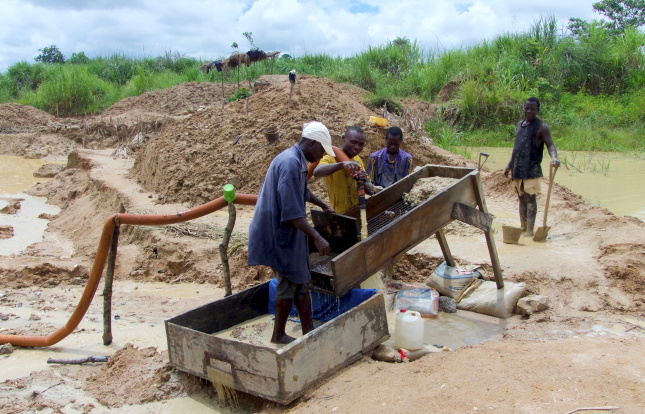
Competition for scarce natural resources such as oil, gas, uranium, and critical minerals has historically played a role in geopolitical tensions and conflict. Diamonds have also been implicated in violent conflicts, particularly in parts of Africa where the trade in rough diamonds once helped finance armed insurgencies and civil wars. These events underscored the need for a global system that promotes ethical sourcing and ensures transparency in the international diamond trade.
In response, the Kimberley Process (KP) was launched in May 2000 as a multilateral initiative aimed at preventing the trade in so-called “conflict diamonds.” The process established an international certification framework designed to ensure that rough diamonds entering the global market are not used to finance armed conflict.
Understanding Conflict Diamonds
“Conflict diamonds,” often referred to as “blood diamonds,” are rough diamonds mined in areas controlled by rebel movements or their allies and sold to finance military activities against legitimate governments. The issue came to global attention during the 1990s, when conflicts in countries such as Angola, Sierra Leone, Rwanda, and Liberia were linked to diamond revenues that funded armed groups.
Because many of these diamonds were mined from easily accessible alluvial deposits and traded through informal networks, they could easily enter legitimate international supply chains. Reports published in 2000, including investigations by Partnership Africa Canada and the United Nations, highlighted how illicit diamond trading contributed to prolonged conflicts and humanitarian crises.
In response, the United Nations General Assembly adopted a resolution in December 2000 addressing the role of diamonds in financing armed conflict. The resolution defined conflict diamonds as stones originating from areas controlled by forces opposing legitimate governments and used to fund military activities against them.
The Kimberley Process Certification Scheme
To address the issue, the government of South Africa convened a meeting in the city of Kimberley in 2000, bringing together governments, the World Diamond Council, industry stakeholders, and civil society organisations.
Following two years of negotiations, the Kimberley Process Certification Scheme (KPCS) was formally established in 2003. The scheme introduced a set of minimum standards that participating countries must implement to certify that shipments of rough diamonds are conflict-free.
Under the system:
- Every shipment of rough diamonds between participating countries must be accompanied by a Kimberley Process certificate confirming that the stones are conflict-free.
- Participating governments are required to implement national legislation and internal controls.
- Annual statistics on rough diamond trade must be published to enhance transparency.
Today, the Kimberley Process includes 60 participants, with the European Union and its member states counted collectively as a single participant. Together, KP participants account for more than 99% of global rough diamond trade, while trade with non-participants is prohibited.
India’s Role in the Global Diamond Supply Chain
India occupies a central position in the global diamond industry. It is the world’s largest hub for diamond cutting and polishing and a major importer of rough diamonds. As the leading exporter of cut and polished diamonds, India’s exports reached approximately US$13.3 billion in 2024–2025, and the country remains one of the largest consumer markets for diamonds, second only to the United States.
India has been a participant in the Kimberley Process since its inception in 2003. Implementation of the certification system is overseen by the Gem and Jewellery Export Promotion Council (GJEPC), which operates under the supervision of the Department of Commerce within the Ministry of Commerce and Industry.
In 2026, India assumed the chairmanship of the Kimberley Process for the third time, having previously chaired the initiative in 2008 and 2019. The chairmanship carries both symbolic and strategic importance, providing India with an opportunity to strengthen the credibility of global diamond governance while reinforcing confidence in the international diamond supply chain.
Opportunities for Reform
India’s leadership comes at a time when discussions around reforming the Kimberley Process are gaining momentum. One of the key areas under review is the definition of “conflict diamonds,” which currently focuses primarily on stones used to finance rebel movements against legitimate governments.
Many stakeholders argue that the definition should be expanded to address broader concerns, including:
- Child labour
- Environmental damage
- Human rights violations linked to diamond mining
Another priority is improving traceability and transparency across the global diamond supply chain, ensuring that diamonds can be reliably tracked from mine to market.
In addition, strengthening capacity-building and technical support for countries with limited institutional resources could enhance the effectiveness of the certification framework and ensure more consistent implementation of standards worldwide.
Strengthening Confidence in the Diamond Market
As one of the most influential players in the global diamond trade, India has a strong incentive to ensure that the Kimberley Process remains credible, transparent, and trusted by consumers. By supporting meaningful reforms and strengthening compliance mechanisms, the chairmanship offers India an opportunity to reinforce ethical standards across the international diamond industry.
For the global diamond sector, maintaining strong governance frameworks is essential to preserving consumer confidence and ensuring that diamonds remain symbols of beauty, rarity, and integrity.
Source: DCLA




No comments:
Post a Comment