Showing posts with label India’s diamond industry. Show all posts

Wednesday, 11 March 2026

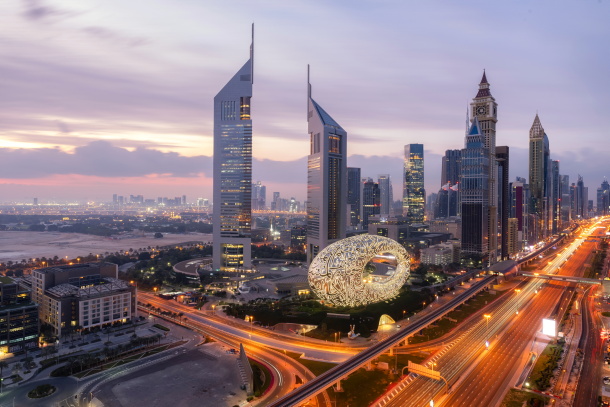
Iran War Halts Shipments Between India and Dubai

The war in Iran has halted diamond shipments between India and Dubai.

The war in Iran has halted diamond shipments between India and Dubai.

Iran has launched well over 1,000 drones and ballistic missiles at the UAE since 28 February in retaliation for US and Israeli strikes.

The UAE supplies over two-thirds of India’s rough diamond imports and India supplies over 90% of UAE’s polished imports.

Almost all flights between the two countries have been cancelled, except for a limited number of repatriation services for passengers.

None of the diamond export parcels – usually 400 to 500 a day – are getting through.

“Exports and imports from the Middle East â€‹have come to a standstill, and there are no logistics â in place to move goods,” Vipul Shah, managing director of diamond exporter Asian Star told Reuters.

Koin and TAGS have both delayed rough tenders that were due to take place last week and have yet to announce new dates.

The conflict has also disrupted operations at the Dubai Multi Commodities Centre (DMCC), home to the Dubai Diamond Exchange. DMCC declined to comment.

Source: DCLA

Monday, 9 March 2026

India Seeks to Strengthen Global Diamond Governance

 conflict diamonds

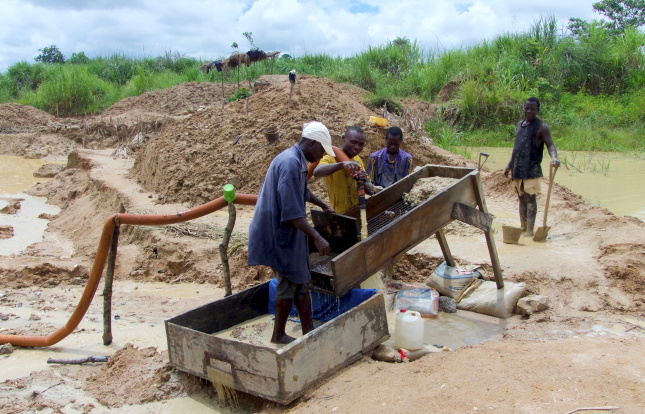
Competition for scarce natural resources such as oil, gas, uranium, and critical minerals has historically played a role in geopolitical tensions and conflict. Diamonds have also been implicated in violent conflicts, particularly in parts of Africa where the trade in rough diamonds once helped finance armed insurgencies and civil wars. These events underscored the need for a global system that promotes ethical sourcing and ensures transparency in the international diamond trade.

In response, the Kimberley Process (KP) was launched in May 2000 as a multilateral initiative aimed at preventing the trade in so-called “conflict diamonds.” The process established an international certification framework designed to ensure that rough diamonds entering the global market are not used to finance armed conflict.

Understanding Conflict Diamonds

“Conflict diamonds,” often referred to as “blood diamonds,” are rough diamonds mined in areas controlled by rebel movements or their allies and sold to finance military activities against legitimate governments. The issue came to global attention during the 1990s, when conflicts in countries such as AngolaSierra LeoneRwanda, and Liberia were linked to diamond revenues that funded armed groups.

Because many of these diamonds were mined from easily accessible alluvial deposits and traded through informal networks, they could easily enter legitimate international supply chains. Reports published in 2000, including investigations by Partnership Africa Canada and the United Nations, highlighted how illicit diamond trading contributed to prolonged conflicts and humanitarian crises.

In response, the United Nations General Assembly adopted a resolution in December 2000 addressing the role of diamonds in financing armed conflict. The resolution defined conflict diamonds as stones originating from areas controlled by forces opposing legitimate governments and used to fund military activities against them.

The Kimberley Process Certification Scheme

To address the issue, the government of South Africa convened a meeting in the city of Kimberley in 2000, bringing together governments, the World Diamond Council, industry stakeholders, and civil society organisations.

Following two years of negotiations, the Kimberley Process Certification Scheme (KPCS) was formally established in 2003. The scheme introduced a set of minimum standards that participating countries must implement to certify that shipments of rough diamonds are conflict-free.

Under the system:

  • Every shipment of rough diamonds between participating countries must be accompanied by a Kimberley Process certificate confirming that the stones are conflict-free.
  • Participating governments are required to implement national legislation and internal controls.
  • Annual statistics on rough diamond trade must be published to enhance transparency.

Today, the Kimberley Process includes 60 participants, with the European Union and its member states counted collectively as a single participant. Together, KP participants account for more than 99% of global rough diamond trade, while trade with non-participants is prohibited.

India’s Role in the Global Diamond Supply Chain

India occupies a central position in the global diamond industry. It is the world’s largest hub for diamond cutting and polishing and a major importer of rough diamonds. As the leading exporter of cut and polished diamonds, India’s exports reached approximately US$13.3 billion in 2024–2025, and the country remains one of the largest consumer markets for diamonds, second only to the United States.

India has been a participant in the Kimberley Process since its inception in 2003. Implementation of the certification system is overseen by the Gem and Jewellery Export Promotion Council (GJEPC), which operates under the supervision of the Department of Commerce within the Ministry of Commerce and Industry.

In 2026, India assumed the chairmanship of the Kimberley Process for the third time, having previously chaired the initiative in 2008 and 2019. The chairmanship carries both symbolic and strategic importance, providing India with an opportunity to strengthen the credibility of global diamond governance while reinforcing confidence in the international diamond supply chain.

Opportunities for Reform

India’s leadership comes at a time when discussions around reforming the Kimberley Process are gaining momentum. One of the key areas under review is the definition of “conflict diamonds,” which currently focuses primarily on stones used to finance rebel movements against legitimate governments.

Many stakeholders argue that the definition should be expanded to address broader concerns, including:

  • Child labour
  • Environmental damage
  • Human rights violations linked to diamond mining

Another priority is improving traceability and transparency across the global diamond supply chain, ensuring that diamonds can be reliably tracked from mine to market.

In addition, strengthening capacity-building and technical support for countries with limited institutional resources could enhance the effectiveness of the certification framework and ensure more consistent implementation of standards worldwide.

Strengthening Confidence in the Diamond Market

As one of the most influential players in the global diamond trade, India has a strong incentive to ensure that the Kimberley Process remains credible, transparent, and trusted by consumers. By supporting meaningful reforms and strengthening compliance mechanisms, the chairmanship offers India an opportunity to reinforce ethical standards across the international diamond industry.

For the global diamond sector, maintaining strong governance frameworks is essential to preserving consumer confidence and ensuring that diamonds remain symbols of beauty, rarity, and integrity.

Source: DCLA

Thursday, 5 March 2026

India’s Jewellery Exports and Diamond Imports Disrupted as Middle East Conflict Escalates

 India’s Jewellery Exports and Diamond Imports

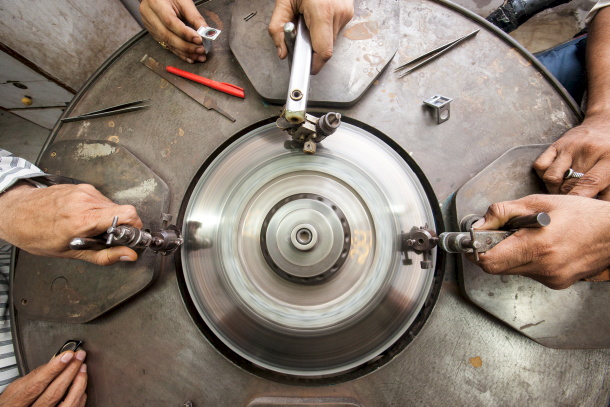
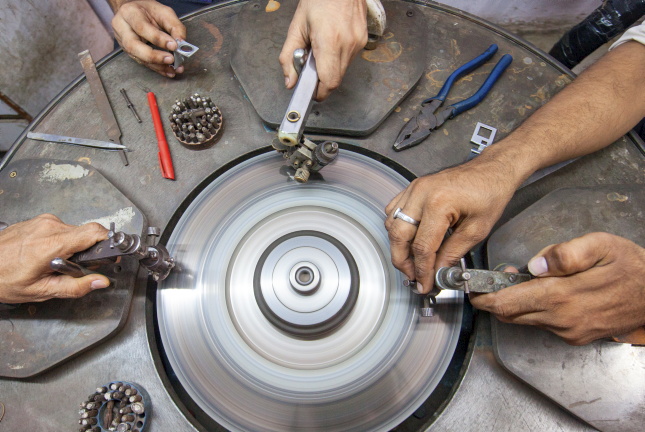
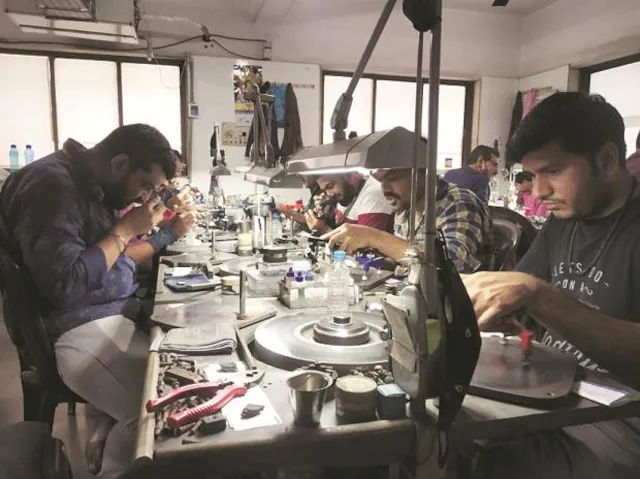
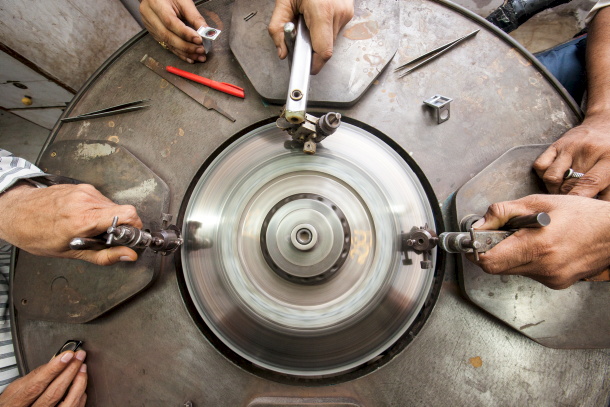
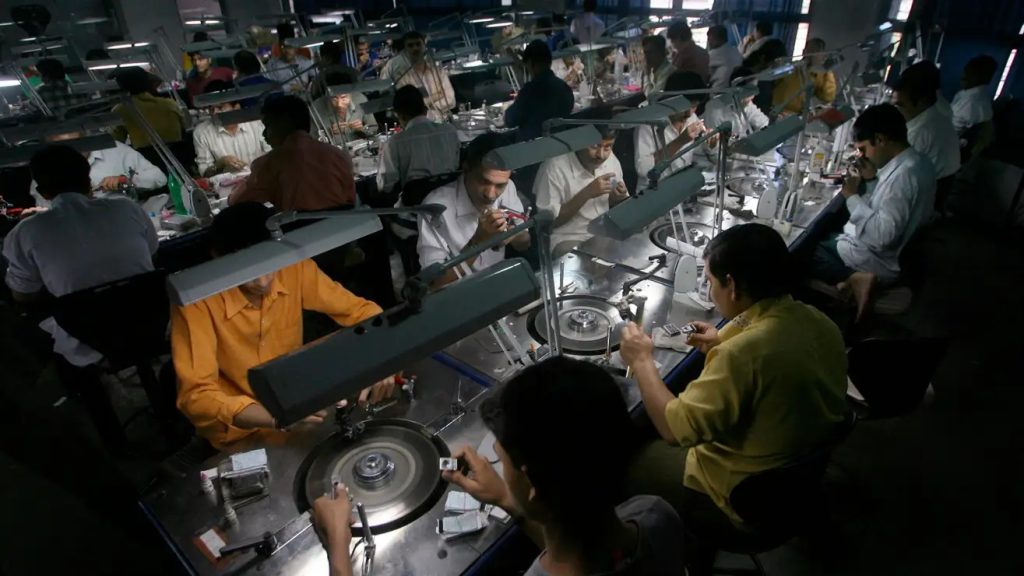
Surat, Gujarat, India Group of Diamond workers cutting & polishing the diamonds

India’s gems and jewellery trade is facing significant disruption as the escalating conflict in the Middle East interrupts both exports of finished jewellery and imports of rough diamonds. Widespread flight cancellations and the closure of key airspace corridors have severely impacted logistics between India and the region.

Dubai, one of the world’s most important trading hubs for polished diamonds, rough diamonds, and bullion, has suspended numerous cargo and passenger flights. The resulting logistical bottleneck has effectively halted shipments of both finished jewellery and the raw materials essential to India’s diamond manufacturing industry.

Industry leaders have confirmed that trade flows have stalled. Vipul Shah, Managing Director of Asian Star, one of India’s leading diamond exporters, stated that exports and imports involving the Middle East have effectively come to a standstill due to the absence of functioning logistics channels.

The Middle East plays a critical role in India’s jewellery sector, accounting for nearly a quarter of the country’s annual gems and jewellery exports, which are valued at approximately US$30 billion. The United Arab Emirates is also a vital supplier of rough diamonds, providing more than two-thirds of India’s imports of uncut stones.

India remains the world’s dominant diamond manufacturing centre, processing approximately 90% of the global diamond supply through its extensive cutting and polishing industry.

According to Shaunak Parikh, Vice Chairman of the Gem and Jewellery Export Promotion Council (GJEPC), exports are expected to decline in March due to the disruption in Dubai. Beyond being a key consumer market, Dubai also acts as a major intermediary hub connecting diamond-producing countries with international consumer markets. Should the conflict continue, the resulting uncertainty could begin to weigh on demand.

India’s jewellery sector had already become increasingly dependent on Middle Eastern demand following the imposition of tariffs by the United States on Indian goods last year, which reduced American purchases.

Market volatility has further complicated the situation. Overseas buyers are becoming cautious about placing new orders amid fluctuations in the rupee–U.S. dollar exchange rate and ongoing logistical constraints, according to Colin Shah, Managing Director of Kama Jewelry.

The Indian rupee recently weakened to a record low of 92.3025 against the U.S. dollar, adding another layer of uncertainty for exporters.

For now, many transactions are being postponed. According to a Mumbai-based diamond exporter, both buyers and sellers recognise that the conflict has disrupted trade routes, and as a result, shipments are increasingly being delayed until logistics stabilise.

For the global diamond industry, the disruption highlights the vulnerability of the supply chain to geopolitical instability, particularly when critical trading hubs and transport corridors are affected.

Source: DCLA

Thursday, 19 February 2026

Slight Slip for India's Polished Exports

 India's polished diamond exports dipped by 3.6 per cent year-on-year in January, following on from modest growth (+2.7 per cent) in December 2025, and a 38 per cent surge in November.The slight dip in January reflects the usual post-holiday pause in demand from US retailers, but that is set against an overall trend towards increased exports.Total foreign sales for January were $979m, according to the latest figures from GJEPC (India's Gem and Jewellery Export Promotion Council), down from $1.01bn in January 2025.The impact of President Trump's 50 per cent tariff on Indian exports appears to have been softened somewhat by manufacturers switching to other markets - notably UAE, Hong Kong, Thailand and Europe.In addition, exporters have benefitted from far fewer return consignments (down from as high as 30 per cent to just 10 per cent), reflecting smarter supply chain tactics.And an easing of US tariffs is likely to improve matters. On 6 February the US scrapped the 25 per cent punitive element of tariffs on India, with immediate effect.It also pledged to bring down the reciprocal tariff to 18 per cent, as part of an Interim Trade Agreement, though this has yet to happen.The GJEPC figures show that India's gross exports of gems and jewelry fell by 5.8 per cent in January, down to $2.2bn.

India’s polished diamond exports dipped by 3.6 per cent year-on-year in January, following on from modest growth (+2.7 per cent) in December 2025, and a 38 per cent surge in November.

The slight dip in January reflects the usual post-holiday pause in demand from US retailers, but that is set against an overall trend towards increased exports.

Total foreign sales for January were $979m, according to the latest figures from GJEPC (India’s Gem and Jewellery Export Promotion Council), down from $1.01bn in January 2025.

The impact of President Trump’s 50 per cent tariff on Indian exports appears to have been softened somewhat by manufacturers switching to other markets – notably UAE, Hong Kong, Thailand and Europe.

In addition, exporters have benefitted from far fewer return consignments (down from as high as 30 per cent to just 10 per cent), reflecting smarter supply chain tactics.

And an easing of US tariffs is likely to improve matters. On 6 February the US scrapped the 25 per cent punitive element of tariffs on India, with immediate effect.

It also pledged to bring down the reciprocal tariff to 18 per cent, as part of an Interim Trade Agreement, though this has yet to happen.

The GJEPC figures show that India’s gross exports of gems and jewelry fell by 5.8 per cent in January, down to $2.2bn.

Source: DCLA

Tuesday, 3 February 2026

Gems set to retain sheen, view cloudy for diamonds after US tariff cut

 polished diamonds and coloured gemstones

Washington’s reciprocal tariff reduction is expected to help India’s gems and jewellery exporters regain lost ground in the US market, after shipments fell 44% during April-December this fiscal.

However, diamond exporters are awaiting clarity on whether shipments of the precious stone will be covered under Annexure III of the US reciprocal tariff list, which could allow zero duty.

Duties on polished diamonds and coloured gemstones had surged from 0% to 10% in April, then to 50% by August.

The key categories that have been hard hit are exports of cut and polished diamonds, which fell by 60% to $1.4 billion, studded gold jewellery by 24.54% to $1.5 billion and plain gold jewellery by 29% to $183.84 million.

Lab-grown diamond (LGD) trade is also hopeful of garnering a higher share of the US market. “The decision to reduce tariff is a timely positive for the LGD ecosystem, as the US is the largest gem and jewellery market globally,,” said Namita Kothari, founder of Akoirah by Augmont.

Source: DCLA


Sunday, 18 January 2026

The Farnese Blue Diamond: Three Centuries Through Europe’s Royal Courts

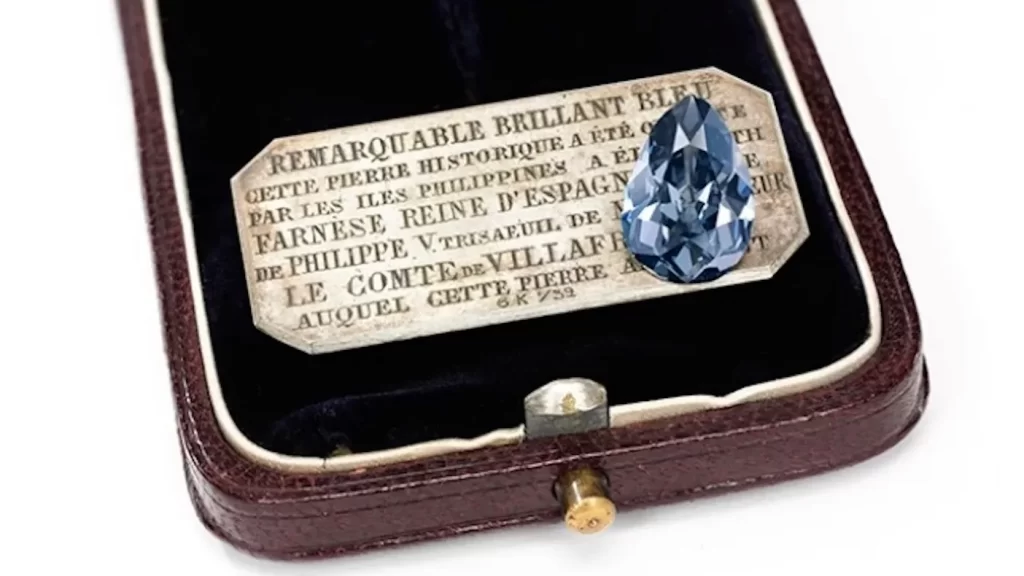
 The Farnese Blue Diamond

The Farnese Blue occupies a rare position among historic natural diamonds. It is not merely a gemstone with provenance, but a silent participant in more than three centuries of European political power, dynastic ambition, revolution, and exile. For most of its existence, it remained known only to a small circle of royal descendants, absent from public record and scholarly examination.

That secrecy ended in 2018 when the 6.16-carat pear-shaped natural Fancy Dark Gray-Blue diamond appeared unexpectedly at Sotheby’s Geneva. Its emergence stunned historians and gem specialists alike. Offered publicly for the first time in its recorded history, the Farnese Blue achieved USD $6.7 million—well above estimate—before being acquired by an anonymous buyer. With that sale, one of Europe’s most historically significant diamonds passed from royal custody into the modern market.


A Golconda Diamond of Exceptional Origin

The Farnese Blue originated in the legendary Golconda mines of India, the world’s most important diamond source for over a millennium. Long before Brazil or South Africa entered the diamond trade, Golconda supplied every known diamond in existence. The Hope Diamond, the Koh-i-Noor, the Regent, and the Wittelsbach-Graff all share this same geographic origin near present-day Hyderabad.

Golconda diamonds travelled ancient trade routes linking Asia and Europe, where merchants competed for stones prized for their exceptional clarity, colour, and crystalline structure. Their rarity and value ensured they were acquired almost exclusively by royalty and the most powerful figures of their time. The Farnese Blue belongs firmly within this elite lineage.


A Queen Without a Dowry: Entry Into Spanish Royal History

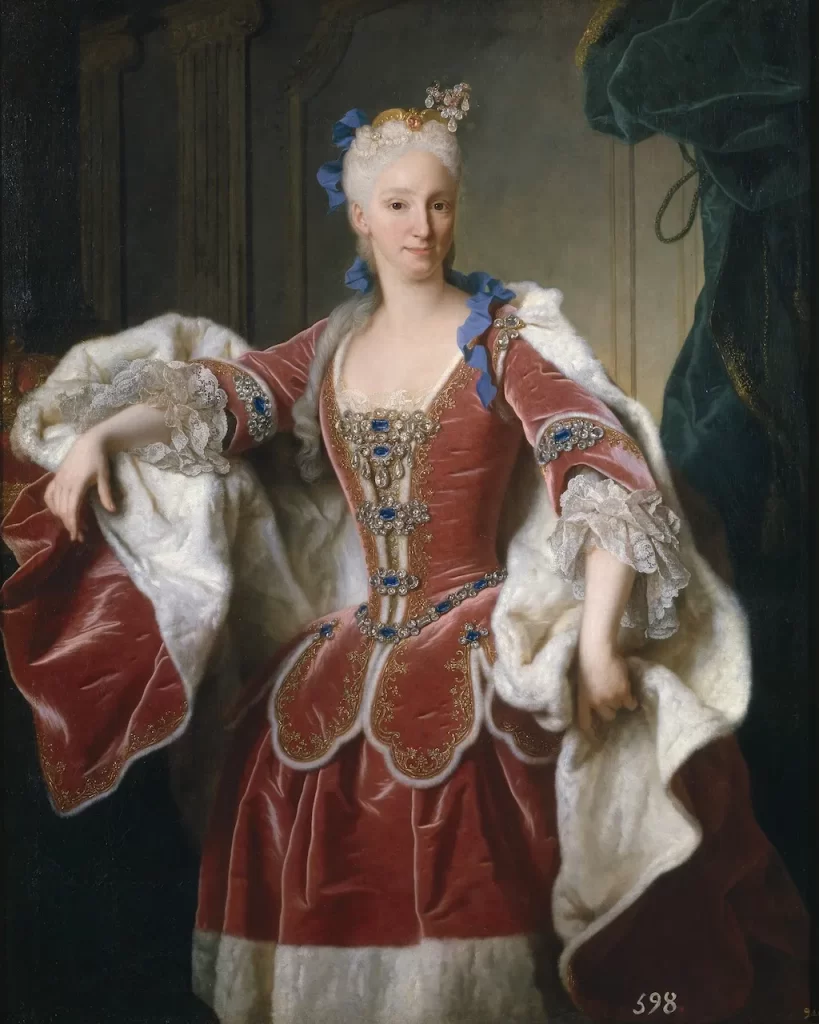
Elisabeth Farnese, Queen consort of Spain. In 1715, King Philip V of Spain

The Farnese Blue first entered recorded European history through Elisabeth Farnese, Queen consort of Spain. In 1715, King Philip V of Spain grandson of Louis XIV required a new queen. The political climate demanded a bride of royal blood, but without excessive dynastic influence.

Elisabeth, a princess of the Duchy of Parma and a descendant of Pope Paul III, met these requirements precisely. However, Spain’s finances had been devastated by the War of the Spanish Succession, and her father was unable to provide a traditional royal dowry.

To compensate, Spain turned to its global colonies. In August 1715, the so-called “Golden Fleet” departed Cuba carrying gold bullion and precious gemstones gathered for the royal wedding. A hurricane in the Gulf of Florida destroyed nearly the entire fleet, consigning its riches to the sea.

One extraordinary diamond survived.

The governor of the Philippine Islands presented a pear-shaped blue diamond to the new queen. That stone would become known as the Farnese Blue.


Three Centuries in Royal Exile

From that moment onward, the Farnese Blue passed quietly through Europe’s most powerful royal houses. Elisabeth Farnese bore seven children and worked tirelessly to secure dynastic influence across the continent. The diamond was likely entrusted to her son Philip, founder of the House of Bourbon-Parma.

It subsequently passed through successive generations: to Ferdinand, to King Louis of Etruria, and then to Charles Louis (King Louis II), who mounted the diamond as a tie pin. Political upheaval forced him into exile under the title Comte de Villafranca, yet he retained the diamond throughout his life.

Upon his death in 1883, the Farnese Blue passed to his grandson Robert, the last ruling Duke of Parma. After losing his throne, Robert sought refuge with his cousin, Emperor Franz Joseph of Austria, taking the diamond with him.

The stone later passed to Prince Elia and his wife, Archduchess Maria Anna of Austria. Her meticulous jewellery inventories proved invaluable to history, preserving the diamond’s provenance with remarkable clarity. Among her collection was a tiara containing diamonds once owned by Marie Antoinette. She incorporated the Farnese Blue still set as a tie pin into that tiara and wore it frequently.


Reemergence at Sotheby’s: From Royal Secrecy to Public Record

Following the collapse of the Austrian Empire in 1918, the Farnese Blue disappeared once again from public view. For decades, it remained absent from scholarship and gemological examination.

Its reappearance in 2018 marked a pivotal moment. Now mounted within a colourless diamond halo on a detachable pin, the Farnese Blue was examined and graded by the Gemological Institute of America for the first time. It received an official classification as a natural Fancy Dark Gray-Blue diamond with SI1 clarity.

That same year, Sotheby’s offered the stone at auction for the first time in its three-hundred-year history. The result confirmed what experts already understood: a natural diamond of exceptional rarity, when paired with uninterrupted, well-documented royal provenance, transcends its material value.

The Farnese Blue stands today as one of the most extraordinary surviving diamonds of European royal history an enduring witness to the rise and fall of empires, preserved through centuries by those who understood its significance long before the modern world was permitted to see it.

Wednesday, 17 December 2025

Childhood Friends Unearth $55,000 Natural Diamond in India

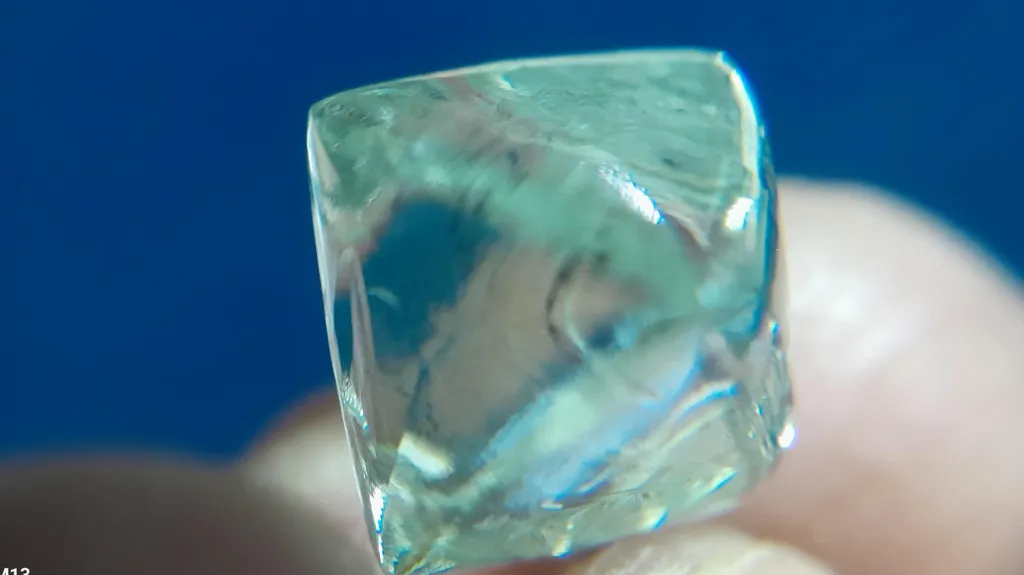
15.34-carat gem-quality natural diamond

On a crisp winter morning in Panna, a historic diamond-mining region in central India, two childhood friends made a discovery they believe will transform their lives.

Satish Khatik and Sajid Mohammed were working a small plot of land they had leased only weeks earlier when they came across a large, shimmering stone. Their instincts proved right. An official evaluation confirmed the find as a 15.34-carat gem-quality natural diamond, one of the finest varieties of diamond found in nature.

According to Anupam Singh, Panna’s authorised diamond evaluator, the stone is valued at approximately five to six million rupees (USD $55,000–$66,000) and will be sold at an upcoming government auction.
“Final prices depend on the US dollar exchange rate and benchmarks set by the Rapaport Report,” Singh said, referencing the globally recognised diamond pricing authority.

India’s government conducts quarterly diamond auctions in Panna, attracting buyers from across the country and overseas.

For the two young men, the discovery is deeply personal.
“We can finally get our sisters married,” they said, describing the moment as life-changing.

Mr Khatik, 24, runs a small meat shop, while Mr Mohammed, 23, sells fruit. Both come from modest backgrounds and are the youngest sons in their families. Like many residents of Panna, their families have searched for diamonds for generations.

Satish Khatik and Sajid Mohammed

Located in Madhya Pradesh, Panna is one of India’s least developed districts, facing ongoing challenges such as poverty, water shortages and unemployment. Yet it remains home to the country’s most significant diamond reserves, drawing hopeful locals to its fields year after year.

While most diamond mines are government-operated, small plots are leased annually to residents at nominal fees. With limited employment opportunities, many locals pin their hopes on a rare discovery—though most searches yield little more than dust and quartz.

Mr Mohammed recalls that his father and grandfather spent decades digging without success. His father, Nafees, says this find feels like long-awaited reward.
“The gods have finally honoured their hard work and patience,” he said.

Driven by rising living costs and the pressure of family responsibilities, the friends leased the plot out of necessity. After long days at work, they spent evenings digging by hand—hauling soil, washing gravel through sieves and painstakingly examining thousands of stones.

Panna’s district mining officer, Ravi Patel, described the discovery as exceptional.
“They leased the plot on 19 November. Finding a gem-quality diamond within weeks is extraordinary luck,” he said.

Although the auction proceeds are still to come, the two friends remain grounded.
“We’re not thinking about buying land or expanding our businesses just yet,” they said. “Our first priority is our families.”

Source: DCLA

Wednesday, 19 November 2025

India’s Polished Exports Fall Sharply in October

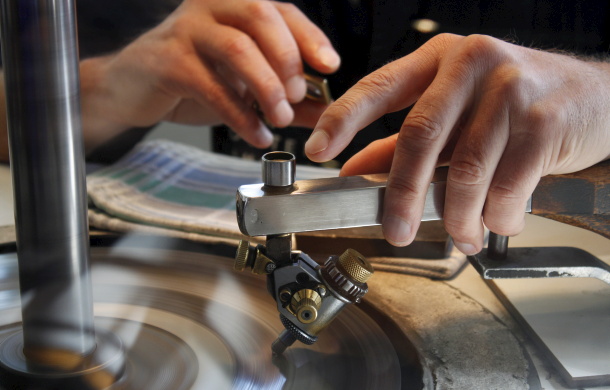
Diamond Polishing

India’s cut and polished exports fell sharply in October to $1.026bn, down 27 per cent year-on-year and down 25 per cent on the previous month, according to new figures from GJEPC (Gems and Jewellery Export Promotion Council).

Exports peaked in September at $1.368bn, as manufacturers raced to beat US deadlines. They then fell back in October to around where they were in July and August.

The US imposed a 25 per cent tariff on 7 August, rising to 50 per cent on 27 August. The grace period (25 rather than 50 per cent) for goods in transit before August 27, ended on 17 September.

“The decline in overall exports in October was mainly due to demand being pushed forward before the US tariff was implemented,” GJEPC chairman Kirit Bhansali told the PTI news agency.

“Most of the stocking up for the festivals took place before August 27, therefore, in October the demand was down.”

Overall gross exports of all gems and jewelry fell by 30.6 per cent year-on-year to $2.168bn, that’s a drop of 25.6 per cent compared with the previous month.

Source: DCLA

Monday, 13 October 2025

Two Arrested over $540,000 Online Diamond Fraud

Online Diamond Fraud

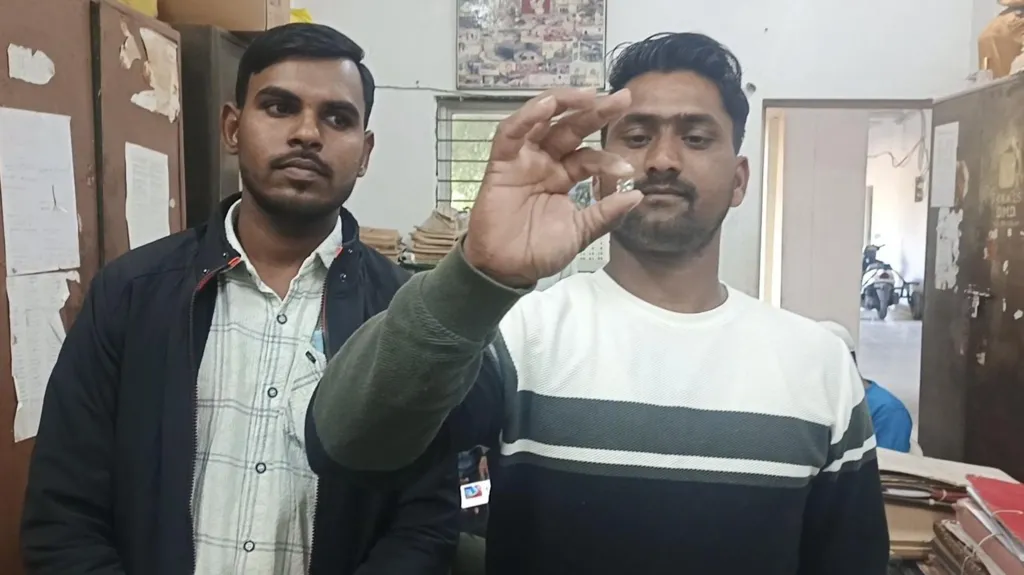
Two men have been arrested in India, accused of a sophisticated online fraud in which they obtained diamonds worth $542,000.

They and their accomplices allegedly posed as genuine US-based buyers on the RapNet trading platform.

They negotiated the purchase of diamonds from six traders in Surat, had the stones shipped, then disappeared without paying.

Police in Surat say they have arrested two men from the city – named as Nikunj Ambaliya and Mitul Goti – and are pursuing eight other suspects.

Officers were first alerted by trader Sanjay Goti, who sold a $90,000 diamond to man who identified himself as Arson Isaco.

Payment was due within seven days. But Goti became concerned when “Arson Isaco” made excuses, then switched off his phone and failed to pay.

Five other traders subsequently came forward with similar accounts, relating to six diamonds.

Goti said he’d contacted a number of diamond firms in Surat and had confirmed that a buyer of that name existed.

The accused men posed as employees of US diamond firms and took delivery of the diamonds in Dubai, Hong Kong, and Bangkok, said Karanraj Vaghela, of Surat police.

“After investigations, we arrested Nikunj Ambaliya and Mitul Goti, and identified Chetan Suthar and Anuj Shah as co-accused. These four, along with six others, conspired to cheat reputed diamond traders in an international diamond fraud.”

Source: DCLA

Monday, 25 August 2025

Global Diamond Market Turmoil: Botswana Declares Health Emergency, India Faces Tariff Shock, Zimbabwe Strengthens Ties with India

India Faces Tariff Shock, Zimbabwe Strengthens Ties with India

The volatility in the global diamond industry is beginning to have severe humanitarian and economic consequences across producer and manufacturing nations. Recent developments highlight the fragility of economies that rely heavily on diamonds, and the urgent need for market stability.

Botswana: Diamond Slump Triggers Public Health Emergency

Botswana, the world’s leading diamond producer by value, has declared a public health emergency after revenues from diamond sales halved in 2024. Production is expected to fall by at least 25 per cent this year, leaving the government with severe financial shortfalls.

Earlier today (25 August), President Duma Boko announced the emergency, citing a critical shortage of essential medicines. To address the crisis, 5 billion pula (USD 348m) has been reallocated from other government funds, while the state-owned Botswana Development Corporation has pledged 100 million pula (USD 7.3m). The president has also appealed to pension and insurance funds for support.

The military has been mobilised to distribute urgently needed medical supplies to rural areas. The Ministry of Health has identified shortages in medicines for hypertension, cancers, diabetes, asthma, eye conditions, tuberculosis, sexual and reproductive health, and mental health.

Although President Boko has referred to “market challenges” in official statements, local and international media have directly linked the crisis to collapsing diamond revenues, underlining the nation’s heavy dependence on the industry.

India: Tariffs Threaten 150,000 Diamond Jobs

In India, which processes the vast majority of the world’s diamonds, the industry faces a fresh crisis as the United States prepares to double tariffs on polished stones from 25 per cent to 50 per cent on 27 August.

The Diamond Workers Union Gujarat (DWUG), which represents a large section of Surat’s workforce, has warned Prime Minister Narendra Modi that the tariff hike could wipe out 150,000 to 200,000 jobs – nearly a fifth of India’s diamond workforce.

DWUG is urging the government to revive the Ratnadeep Scheme, originally introduced in 2008–09 during the global financial crisis. The scheme provided retraining opportunities and a daily stipend for unemployed diamond workers.

The union has also raised alarm over rising distress among workers, noting that at least 80 unemployed diamantaires have taken their lives in the last two years.

Zimbabwe: Building Closer Trade Links with India

While Botswana and India face mounting pressures, Zimbabwe is positioning itself to deepen diamond trade relations with India.

Vice President Constantino Chiwenga recently visited Surat to explore direct trade agreements that would bypass intermediaries. He also invited Indian investors to consider joint ventures in Zimbabwe’s mineral processing and industrial sectors.

With US tariffs on Zimbabwean diamonds set at 15 per cent – compared to India’s new 50 per cent rate – Zimbabwe sees an opportunity to attract Indian buyers and investors.

During the visit, Chiwenga met with leaders of Hari Krishna Exports to discuss partnerships aimed at moving Zimbabwe further up the value chain, from rough exports to local cutting, polishing, and manufacturing. Such developments could create significant employment opportunities, build local expertise, and reduce poverty in diamond-producing communities.

The Bigger Picture

These three stories highlight the immense global impact of diamond market fluctuations. For producer nations like Botswana and Zimbabwe, as well as manufacturing hubs like India, the stakes are not merely financial – they are deeply social and humanitarian.

The current instability underscores the importance of transparent, sustainable, and diversified diamond economies, alongside stronger international collaboration, to secure both industry resilience and the livelihoods of millions who depend on it.

Sunday, 17 August 2025

India’s Polished Exports Rise in Rush to Beat US Tariffs

India's Polished Exports Rise

India’s gross monthly exports of polished diamonds jumped 17.8 per cent in July, as manufacturers rushed to get their goods into the US before the 50 per cent tariffs took effect.

It was the first year-on-year increase since last October, when the markets showed some small signs of a possible recovery. Since then exports have declined every month.

Foreign sales were $1.07bn, according to the latest data from the Gems and Jewellery Export Promotion Council (GJEPC), following on from India suffered a 23 per cent dip in June, with total exports of $779m.

US tariffs on Indian exports were first announced in April, but didn’t take effect until August. The initial 25 per cent tariff was imposed on 7 August, prompting a rush to export, and an additional 25 per cent tariff – what President Donald Trump describes as a punishment for India buying Russian oil – comes in on 27 August. This could lead to another monthly increase in August, as manufacturers try to beat the next tariff deadline.

Meanwhile, imports of rough diamonds for April to July grew slightly, up 1.5 per cent to $4.37bn.

Overall gross exports of gems and jewelry also rose on tariff worries, up 17 per cent to $2.18bn.

Kirit Bhansali, GJEPC chairman, said: “The July export figures, a successful IIJS Premiere with strong order bookings, and the revival of the Hong Kong market are encouraging signs for our industry, especially amid global challenges such as the impact of US tariffs.”

Source: DCLA

Wednesday, 13 August 2025

Will US Tariffs Threaten the World’s Largest Diamond Cutting Hub?

The World’s Largest Diamond Cutting Hub

In Surat, India’s famed “Diamond City”, where 14 out of every 15 natural diamonds are cut and polished, a deepening crisis is unfolding.

For Kalpesh Patel, a 35-year-old owner of a small diamond cutting and polishing unit, this year’s Diwali could mark more than just a festival of lights — it may signal the lights going out on his eight-year-old business. Patel employs 40 workers transforming rough stones into polished gems destined primarily for the United States. But with the recent announcement by US President Donald Trump of a 50% tariff on imports from India — taking the total duty on cut and polished diamonds to 52.1% — the industry’s already fragile state may tip into collapse.

The US is India’s largest export market for diamonds, accounting for over one-third of total shipments. In the 2024–25 financial year, India exported $4.8 billion worth of cut and polished diamonds to the US, out of a total $13.2 billion worldwide. For many small and medium-sized manufacturers in Surat, Ahmedabad, and Rajkot — employing more than two million people — this trade lifeline is now under severe threat.

An Industry Already Under Pressure

The tariffs arrive on top of multiple recent challenges. The COVID-19 pandemic slowed global luxury demand, the Russia-Ukraine conflict restricted access to rough diamonds, and the G7 ban on Russian stones further strained supply chains. Salaries for many diamond workers in Gujarat have already been halved in recent years, with some forced into poverty-level incomes. Tragically, industry unions report dozens of suicides linked to the ongoing downturn.

Lab-grown diamonds have added to the pressure, offering consumers a lower-priced alternative — often just 10% of the cost of natural diamonds — and proving difficult to distinguish without professional laboratory testing, such as that provided by DCLA. This shift in consumer preference is eating into the market for natural stones, further squeezing margins for cutters and polishers.

Declining Trade Figures

According to the Gem and Jewellery Export Promotion Council (GJEPC), India imported $10.8 billion worth of rough diamonds in 2024–25, a 24% drop from the previous year. Exports of cut and polished natural diamonds fell nearly 17% year-on-year.

Industry leaders warn that if the new US tariffs remain in place, as many as 200,000 workers could lose their jobs in Gujarat alone.

Ripple Effects Beyond India

The impact will not be confined to India. US jewellers — around 70,000 businesses — will also feel the pressure as higher prices could dampen consumer demand. This could disrupt supply chains, delay deliveries, and push customers towards alternative products.

Finding a Way Forward

Some in the industry see an opportunity to strengthen domestic demand and diversify exports towards Latin America, the Middle East, and other emerging markets. India’s domestic gems and jewellery market is projected to grow from $85 billion to $130 billion within two years, offering a potential buffer.

For now, though, the threat is real and urgent. Without relief on tariffs, support for natural diamond certification, and a coordinated strategy to protect jobs, the world’s biggest cutting and polishing centre risks losing its global dominance — and with it, a key part of the natural diamond supply chain.

As Patel puts it, “Without help, the business will lose its shine forever.”

Source: DCLA

Thursday, 7 August 2025

Tanishq Offers “First” In-Store Diamond Evaluation

Tanishq Showroom in Iselin, New Jersey

Indian jewelry retailer Tanishq is introducing in-store diamond evaluation some of its 500-plus outlets, as part of an ongoing partnership with de Beers.

Customers will be able to see proof that the diamond they’re buying is natural rather than lab grown, thanks to the De Beers SynthDetect machine, which works with loose and mounted stones.

They can also have diamonds tested with Lightscope, which measures light performance, and with other equipment for performance, inclusions, and laser markings.

Tanishq, part of the Titan group, says the launch of its Diamonds Expertise Centres is designed to give customers greater peace of mind by presenting complex gemological data as simple, visual insights. It says the centers are a “first of a kind initiative”.

The first three are in Bengaluru, but the company plans to expand them to 200 stores this year and eventually to all its outlets.

Ajoy Chawla, CEO at Tanishq, said: “Our aim is to set a new standard in natural diamond retail — one that goes beyond traditional display and transforms the buying journey into a transparent, educational, and truly immersive experience.”

Last August Tanishq and De Beers jointly announced that they’d be working together to promote natural diamonds in India, now the world’s second biggest diamond market.

The partnership leverages Tanishq’s retail presence and De Beers’ expertise and proprietary diamond verification technology.

Source: DCLA

Wednesday, 6 August 2025

Double Whammy: Trump Hikes India Tariff to 50%

Trump Hikes India Tariff to 50%

US President Donald Trump today (6 August) doubled the tariff on all imports from India to 50 per cent, as a punishment for its oil purchases from Russia.

India’s diamond industry, already reeling from confirmation last week of a 25 per cent reciprocal tariff, is in shock that their goods will be subject to a second 25 per cent surcharge.

“I find that the Government of India is currently directly or indirectly importing Russian Federation oil,” Trump said in an executive order.

“Accordingly, and as consistent with applicable law, articles of India imported into the customs territory of the United States shall be subject to an additional ad valorem rate of duty of 25 per cent.”

The first 25 per cent tariff comes into force tomorrow (Thursday 7 August) and the new, punitive tariff is applicable three weeks from now, on 27 August.

The US is the single largest destination for Indian diamonds and gems, accounting for nearly $10bn or about 30 per cent of India’s annual gems and jewelry exports.

Industry leaders were already warning of the dire consequences of a 25 per cent tariff. Now they are facing an unprecedented body blow with the introduction of a 50 per cent double-tariff.

India’s Ministry of External Affairs said in a statement today that the tariffs were “unfair, unjustified and unreasonable”.

It defended its Russian oil purchases, saying they were “based on market factors and done with the overall objective of ensuring the energy security of 1.4 billion people of India”.

The US imposition of an extra tariff was, it said, “extremely unfortunate”.

Source: DCLA

26.36 Carat White Diamond Expected to Exceed $1 Million at London Jewellery Auction

  A rare  26.36 carat round brilliant-cut white diamond  is set to headline a major jewellery auction in London, where it is expected to sel...