Showing posts with label Zimbabwe President Emmerson Mnangagwa. Show all posts

Wednesday, 17 September 2025

After 15 Years, Disputed Diamonds Finally being Sold

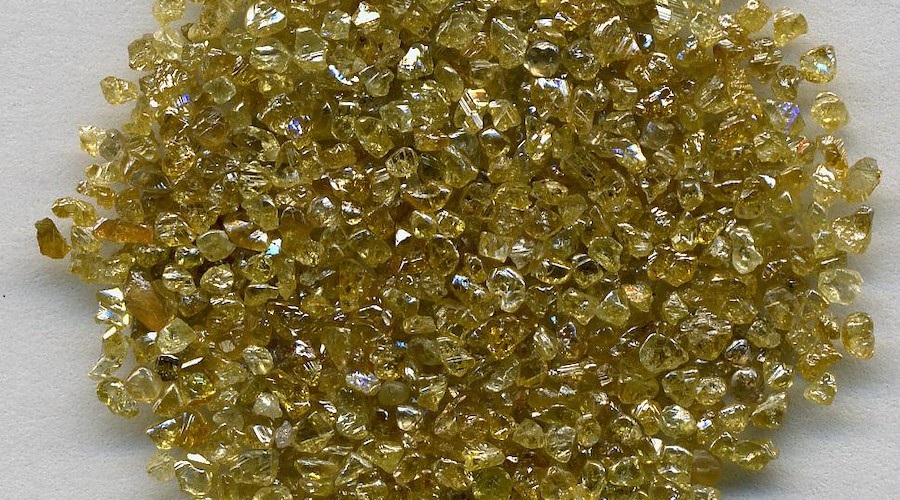
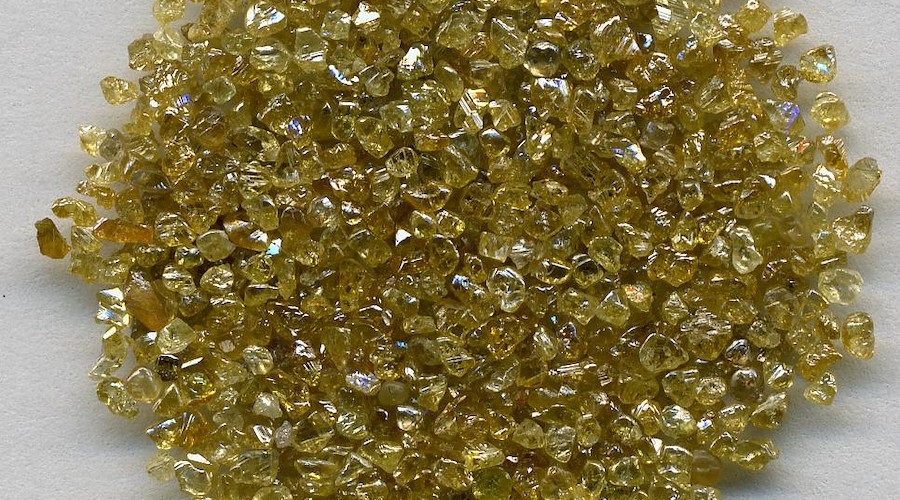
Zimbabwe Rough diamonds

Rough diamonds that were locked in a 15-year legal dispute in Zimbabwe are finally being sold.

The UK miner Vast Resources is offering parcels totaling 135,000 carats at a series of public and private tenders from now until the end of October.

Vast surrendered the gems in 2010 amid allegations it had exploited diamonds on mining claims previously owned by De Beers, which withdrew from Marange in 2006, saying it had failed to find viable reserves.

Vast Resources (then known as African Consolidated Resources) subsequently discovered massive alluvial diamond deposits there, which prompted the Zimbabwe government to revoke its mining licenses within months, and evict it.

The diamonds, held at Zimbabwe’s central bank since 2009, were finally handed back to Vast in April of this year.

They have undergone an extensive cleaning process in Dubai to remove multiple layers of metallic silicates and mineral coatings. As a result, around 6,000 carats initially classified only as industrial diamonds have been upgraded to gem quality.

In an update (on 15 September) Vast spoke of “a unique opportunity to most effectively realize value from the long-awaited parcels from the historic settlement and could open further opportunities for the company in the future”.

Source: DCLA

Monday, 25 August 2025

Global Diamond Market Turmoil: Botswana Declares Health Emergency, India Faces Tariff Shock, Zimbabwe Strengthens Ties with India

India Faces Tariff Shock, Zimbabwe Strengthens Ties with India

The volatility in the global diamond industry is beginning to have severe humanitarian and economic consequences across producer and manufacturing nations. Recent developments highlight the fragility of economies that rely heavily on diamonds, and the urgent need for market stability.

Botswana: Diamond Slump Triggers Public Health Emergency

Botswana, the world’s leading diamond producer by value, has declared a public health emergency after revenues from diamond sales halved in 2024. Production is expected to fall by at least 25 per cent this year, leaving the government with severe financial shortfalls.

Earlier today (25 August), President Duma Boko announced the emergency, citing a critical shortage of essential medicines. To address the crisis, 5 billion pula (USD 348m) has been reallocated from other government funds, while the state-owned Botswana Development Corporation has pledged 100 million pula (USD 7.3m). The president has also appealed to pension and insurance funds for support.

The military has been mobilised to distribute urgently needed medical supplies to rural areas. The Ministry of Health has identified shortages in medicines for hypertension, cancers, diabetes, asthma, eye conditions, tuberculosis, sexual and reproductive health, and mental health.

Although President Boko has referred to “market challenges” in official statements, local and international media have directly linked the crisis to collapsing diamond revenues, underlining the nation’s heavy dependence on the industry.

India: Tariffs Threaten 150,000 Diamond Jobs

In India, which processes the vast majority of the world’s diamonds, the industry faces a fresh crisis as the United States prepares to double tariffs on polished stones from 25 per cent to 50 per cent on 27 August.

The Diamond Workers Union Gujarat (DWUG), which represents a large section of Surat’s workforce, has warned Prime Minister Narendra Modi that the tariff hike could wipe out 150,000 to 200,000 jobs – nearly a fifth of India’s diamond workforce.

DWUG is urging the government to revive the Ratnadeep Scheme, originally introduced in 2008–09 during the global financial crisis. The scheme provided retraining opportunities and a daily stipend for unemployed diamond workers.

The union has also raised alarm over rising distress among workers, noting that at least 80 unemployed diamantaires have taken their lives in the last two years.

Zimbabwe: Building Closer Trade Links with India

While Botswana and India face mounting pressures, Zimbabwe is positioning itself to deepen diamond trade relations with India.

Vice President Constantino Chiwenga recently visited Surat to explore direct trade agreements that would bypass intermediaries. He also invited Indian investors to consider joint ventures in Zimbabwe’s mineral processing and industrial sectors.

With US tariffs on Zimbabwean diamonds set at 15 per cent – compared to India’s new 50 per cent rate – Zimbabwe sees an opportunity to attract Indian buyers and investors.

During the visit, Chiwenga met with leaders of Hari Krishna Exports to discuss partnerships aimed at moving Zimbabwe further up the value chain, from rough exports to local cutting, polishing, and manufacturing. Such developments could create significant employment opportunities, build local expertise, and reduce poverty in diamond-producing communities.

The Bigger Picture

These three stories highlight the immense global impact of diamond market fluctuations. For producer nations like Botswana and Zimbabwe, as well as manufacturing hubs like India, the stakes are not merely financial – they are deeply social and humanitarian.

The current instability underscores the importance of transparent, sustainable, and diversified diamond economies, alongside stronger international collaboration, to secure both industry resilience and the livelihoods of millions who depend on it.

Wednesday, 23 October 2024

UK miner Vast Resources appears to have finally secured the release of a parcel

UK miner Vast Resources appears to have finally secured the release of a parcel

The UK miner Vast Resources appears to have finally secured the release of a parcel of 129,400 carats of rough diamonds that have been held at Zimbabwe’s central bank since 2009.

“The Attorney-General’s Office has approved the terms of a settlement agreement relating to the historic claim and has recommended this to the relevant governmental institution for signature in order to resolve this longstanding matter,” it said in a corporate update on 10 October.

“Accordingly, the fully executed settlement agreement is currently awaited to enable the company to complete the process of recovery.”
It did, however, caution that settlement of the long and complex legal wrangle over the diamonds had yet to be signed.

“Shareholders will be advised of further developments,” it said, “but shareholders are also reminded that whilst the board remains confident, there can be no guarantee of a successful outcome.”

The diamonds were “surrendered as evidence that the mining firm had exploited diamonds on claims previously owned by De Beers,” according to the business weekly Zimbabwe Independent.

De Beers left the Marange diamond fields in 2006, claiming it had failed to find viable reserves, after a decade of exploration.

Vast Resources (then known as African Consolidated Resources) subsequently discovered massive alluvial diamond deposits there, which prompted the Zimbabwe government to revoke its mining licenses within months, and evict it.

Source: DCLA

Tuesday, 3 September 2024

Zimbabwe Ramps up Diamond Production

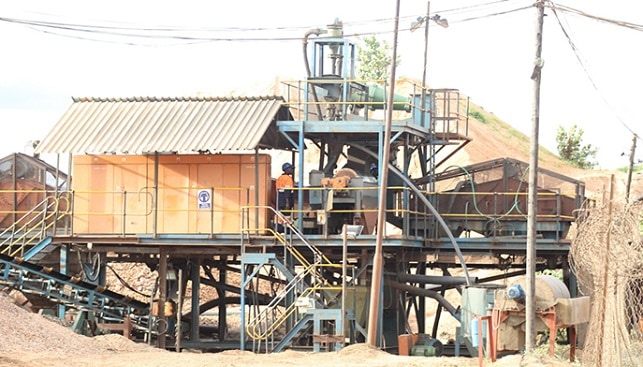
The Zimbabwe Consolidated Diamond Company (ZCDC)

Zimbabwe’s state-owned diamond company is forecasting a 16 per cent increase this year.

The Zimbabwe Consolidated Diamond Company (ZCDC) said it was ramping up production to 5.7m carats in 2024 and would aim to increase that figure to 10m carats next year.

Munashe Shava, ZCDC board chairman, said: “Commodity prices are depressed on the global market and we have come up with various initiatives to offset this worrisome development.

The Chronicle newspaper reported him as saying: “We have ramped up production and this year we have set a target of 5.7m carats and we see this target nearly doubling to 20m carats in the coming year.”

Zimbabwe, the world’s seventh biggest diamond producing nation, recorded an output of 4.9m carats, according to Kimberley Process data, valued at $303m. It exported 5.6m carats valued at $297m.

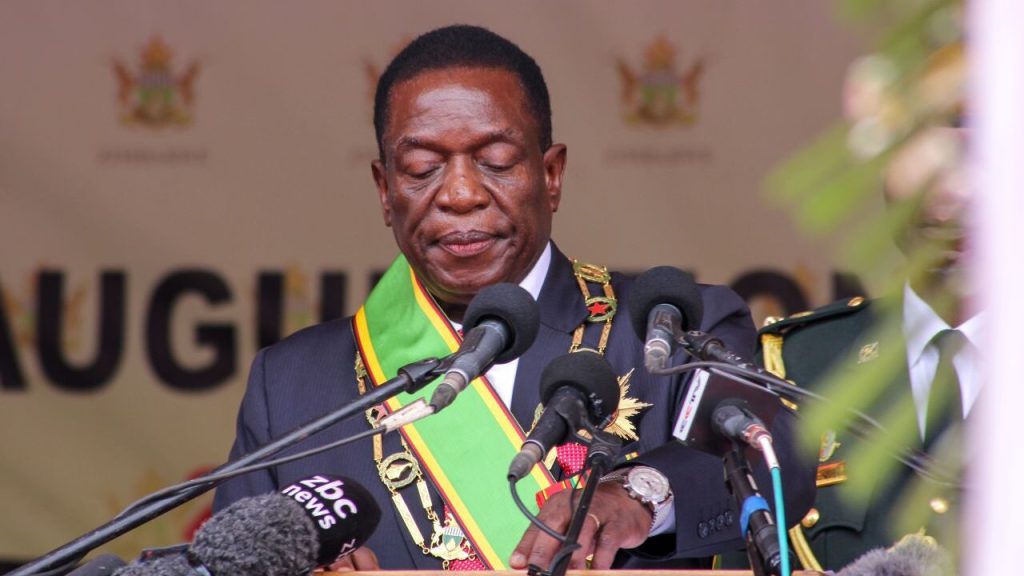
Earlier this year the US sanctioned Zimbabwe’s President Emmerson Mnangagwa for human rights abuses, corruption and smuggling gold and diamonds.

Mnangagwa, 81, who has held office since 2017, insists the claims against him are “defamatory” and “malicious”.

Source: DCLA

Monday, 15 July 2024

Zimbabwe’s $20bn of “Disappeared” Diamonds

Zimbabwe Diamonds

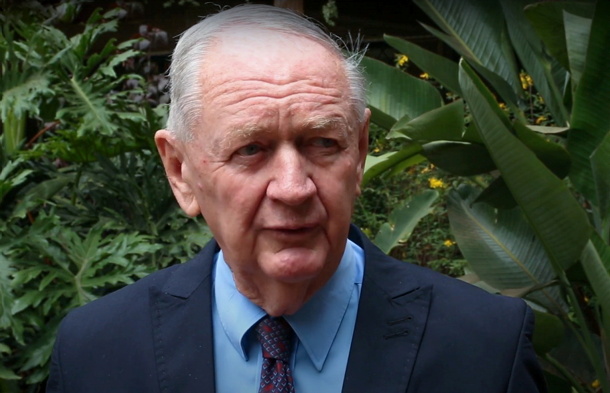
Corruption in Zimbabwe has cost the country at least $20bn in “disappeared” rough diamonds, according to veteran economist and former member of parliament Eddie Cross.

He accuses the late Robert Mugabe, who served as prime minister from 1980 to 1987, of personally helping himself to $1.3bn of diamonds.

“We still suffer from massive leakages of economic output and income,” Cross, 84 (pictured), writes on his website, in a blog entry that pulls no punches and which has been widely reported in Zimbabwe’s media.

“When I was in parliament in 2012, I raised the wholesale theft of diamonds from the newly discovered Marange diamond fields,” he says.

“These covered nearly 100,000 hectares and in that year I estimated that we produced more carats than Botswana.”

Production from the Marange alluvial deposit started in 2006, after De Beers discovered diamond reserves, and continues today.

“It was taken over illegally by the Ministry of Mines and then exploited by six companies, all linked to powerful elements in the government, including the state president,” he writes.

“My personal estimate is that Marange has produced nearly $30bn in raw diamonds since then. A third was probably absorbed in costs but the rest has disappeared.

“Mr Mugabe famously asked where US$15bn had gone since mining had started. He knew the answer to that as I think he personally took $1.3bn.”

He alleges widespread corruption in every sector of government activity.

“It is well known that in certain ministries if you want a decision of any sort, you have to pay for it. I was approached by a senior civil servant for a bribe to sign a letter, I said but surely that is your job.

“I was told ‘do you think we do this sort of thing for nothing?’ I did not pay the bribe and did not get the letter.

He goes on to say: “This scrouge soon also infects the private sector. The statement by the Dubai Gold Exchange that in 2023 they bought nearly 450 tonnes of gold from informal origins in Africa. That is $32bn worth, a third from Zimbabwe. No wonder we are awash in US dollars in cash.”

Source: DCLA

Sunday, 10 March 2024

US Sanctions Zimbabwe President for Diamond Smuggling

US Sanctions Zimbabwe President for Diamond Smuggling

The US has sanctioned Zimbabwe President Emmerson Mnangagwa for corruption in connection with gold and diamond smuggling, as well as human-rights abuses.

The Treasury Department’s Office of Foreign Assets Control (OFAC) accused Mnangagwa of “providing a protective shield” to gold- and diamond-smuggling networks that operate in Zimbabwe, it said last week. He is also accused of directing Zimbabwean officials to “facilitate the sale of gold and diamonds in illicit markets” and taking “bribes in exchange for his services.”

The US has also restricted Mnangagwa for being a leader or official of entity, including any government entity, that has “engaged in, or whose members have engaged in, serious human-rights abuses,” OFAC explained.

“The Zimbabwe president is a foreign person who is a current or former government official, or a person acting for or on behalf of such an official, who is responsible for or complicit in, or has directly or indirectly engaged in, corruption, including the misappropriation of state assets, the expropriation of private assets for personal gain, corruption related to government contracts or the extraction of natural resources, or bribery,” OFAC stated.

OFAC issued the new sanctions after US President Joe Biden signed an executive order that terminated Zimbabwe’s national emergency and revoked sanctions on the entire country, so as not to target its citizens.

“The US remains deeply concerned about democratic backsliding, human-rights abuses, and government corruption in Zimbabwe,” said Wally Adeyemo, deputy secretary of the treasury. “The changes we are making today are intended to make clear what has always been true: Our sanctions are not intended to target the people of Zimbabwe. Today we are refocusing our sanctions on clear and specific targets.”

Source: DCLA

How Efforts to Control the Diamond Trade Are Hurting the Very Communities They Were Supposed to Protect

For more than two decades, global policies aimed at restricting the flow of diamonds from conflict zones most notably through the “blood dia...