Showing posts with label Kimberley Process Certification Scheme. Show all posts

Monday, 24 November 2025

Conflict Diamonds: Nations that Vetoed New Definition

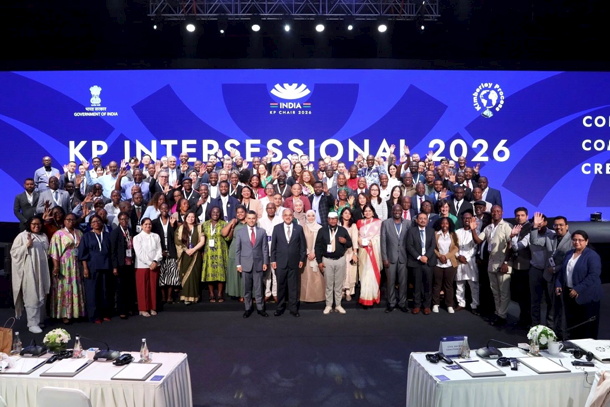
A proposal to broaden the term at the KP plenary in Dubai last week was rejected by Australia, Canada, the EU (representing 27 member countries), Switzerland, Ukraine and the UK, according to the African Diamond Producers Association (ADPA). That's a total of 32 countries.

The Kimberley Process (KP) has again failed to reach agreement on a new definition of conflict diamonds.

A proposal to broaden the term at the KP plenary in Dubai last week was rejected by Australia, Canada, the EU (representing 27 member countries), Switzerland, Ukraine and the UK, according to the African Diamond Producers Association (ADPA). That’s a total of 32 countries.

Updating the current definition – diamonds used by rebel groups to finance armed conflict against legitimate governments – would have required a unanimous vote. There have been repeated attempts to broaden the definition since it was first adopted in 2000.

The World Diamond Council (WDC) spoke of its “profound regret” that a small number of participants had blocked consensus on long-awaited reforms designed to strengthen protections for Africa’s diamond-mining communities.

In a statement issued at the end of the plenary it did not identify those who had vetoed the new definition. But ADPA did.

ADPA said: “Six participants – Australia, Canada, the European Union, Switzerland, Ukraine, the United Kingdom and one observer, Civil Society Coalition, refused to support the expanded definition.”

It said its proposed definition “aimed to provide a Pan-African solution to today’s evolving nature of diamond conflicts and the realities on the ground”.

The ADPA’s broader definition would have included “armed groups, non-state armed groups, UN Security Council-sanctioned individuals and entities and their allies, as well as to cover actions aimed at financing armed conflict and other operations, including attempts at undermining legitimate governments, and the well-being of diamond communities”.

It singled out the EU for harsh criticism, claiming it had in recent years “purposefully blurred and made several attempts to bypass the work of the KP.

The World Diamond Council (WDC) said progress had been killed in pursuit of the impossible.

“Today’s outcome is not a failure of the KP,” said WDC president Feriel Zerouki (pictured), as the five-day plenary concluded.

“Most participants stood firmly behind Africa. The setback came from a few, not from the Process itself. And while they halted progress today, they cannot halt the direction of travel.”

Jaff Bamenjo coordinator of the KP Civil Society Coalition, an observer group that represents communities affected by diamond mining and trade, said KP remains detached from reality at a time when challenges are overwhelming and the KP refuses to take responsibility.

“Its scope remains a needle in a haystack,” he said. “Communities affected by diamond mining are left wondering how this scheme can possibly be relevant to the many problems they face.”

Source: IDEX

The Kimberley Process: Control of the Diamond Pipeline, Not the Use of Revenue

When the Kimberley Process Certification Scheme (KPCS) was launched in 2003, it was marketed as a global solution to stop “conflict diamonds” from funding civil wars and human rights abuses. However, more than two decades later, the realities of the initiative paint a very different picture. The Kimberley Process has evolved not into a tool of humanitarian oversight, but into a mechanism that controls the flow of rough diamonds—who mines them, who sells them, who profits—and with little concern for how those profits are ultimately used.

A System Focused on Legitimising Trade, Not Regulating Impact

The entire structure of the Kimberley Process revolves around documentation and export control. Diamonds are certified to ensure that they originate from “legitimate” channels, which mostly means from governments and recognised mining concessions. Once that documentation exists, the diamonds are cleared for international trade.

What the system does not do is monitor or regulate what happens next.

Once revenue enters official state budgets or company accounts, the Kimberley Process has no authority, no mandate, and no interest in determining whether diamond income:

  • Improves living standards in mining communities
  • Funds infrastructure, healthcare, or education
  • Supports social development
  • Or, conversely, fuels corruption, political patronage, or state violence

In many diamond-producing nations, government control of the resource is absolute, while accountability for the use of diamond wealth remains minimal.

Legitimacy Through the Stamp, Not Through the Outcome

A diamond certified under the Kimberley Process is considered “clean” simply because it does not fund a rebel movement. Yet the humanitarian reality is far more complex. In several countries, diamond mining takes place alongside:

  • Widespread corruption
  • Poverty in mining regions
  • Environmental degradation
  • Labour exploitation
  • Lack of reinvestment into the communities that generate the wealth

The certification system provides political legitimacy to the diamond trade while ignoring the social conditions behind it. In other words, the Kimberley Process ensures diamonds are “legitimate to sell,” not that the proceeds are “responsibly used.”

Who Really Controls the Diamond Narrative?

From the beginning, the Kimberley Process was structured by governments and major industry stakeholders, including those with the most to gain from a controlled and regulated supply chain. Control over certification effectively means control over access to export markets—an immense economic advantage.

This has allowed:

  • States to assert exclusive ownership over the resource
  • Major mining companies to maintain their dominant global trading roles
  • Smaller or informal miners to be excluded from legal markets
  • The narrative of “ethical diamonds” to remain tightly managed

In this sense, the Kimberley Process serves more as a trade gatekeeper than a humanitarian framework. It decides who may sell diamonds, where they may be shipped, and under what conditions—while staying silent on whether diamond-rich nations or their citizens truly benefit from the wealth beneath their soil.

A System Out of Step with Modern Expectations

In 2025, consumer expectations have changed dramatically. Jewellery buyers increasingly want:

  • Transparency
  • Ethical assurance
  • Positive social and environmental impact
  • Evidence of fair value distribution

Yet the Kimberley Process remains rooted in a narrow 20-year-old definition of conflict that does not consider:

  • Government-sponsored abuse
  • Corruption
  • Human rights violations
  • Economic exploitation
  • Lack of benefit to local communities

For modern ethical standards, this is an outdated and insufficient framework.

Conclusion

The uncomfortable truth is this: the Kimberley Process is primarily a system for controlling the supply and movement of diamonds, not for ensuring that the immense wealth generated improves lives or supports sustainable development.

It decides who is allowed to trade diamonds, not how diamond money is used. Until the initiative expands beyond its limited mandate and confronts the broader social realities of the diamond industry, the Kimberley Process will remain a trade tool—not a humanitarian safeguard.

Source: DCLA

Sunday, 19 September 2021

Kimberley Process to Hold Hybrid Plenary Meeting


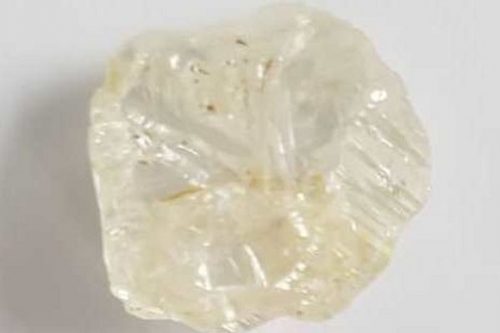
Kimberley Process Rough diamonds. 

The annual Kimberley Process (KP) plenary will take place online and in person from November 8 to 12, with the digitization of certificates featuring at the top of the agenda.

The hybrid format enables the KP to continue its activities despite the restrictions resulting from the coronavirus pandemic, Russia’s Finance Ministry, which is chairing the organization this year, said last week. Those eligible to visit Moscow under Covid-19 rules will be able to attend the physical event.

The meeting will focus on modernizing the KP export and import documents for rough diamonds. The ministry is currently finalizing a pilot program involving an information exchange with one of Russia’s key trading partners and plans to present its findings soon, it said.

The KP will also consider the applications of new countries wishing to join the group, having paused this due to travel difficulties. Since the easing of the situation, the KP has organized missions to Qatar and Kyrgyz Republic, and plans to do the same in Mozambique. The chairmanship and the committee that handles applications for participation in the KP will consider the reports emanating from those visits.

The Central African Republic (CAR) will also be on the agenda, with the KP planning to send an expert mission to the country to evaluate its compliance with rules aimed at preventing the export of conflict diamonds. In addition, the KP will select a new vice chair for 2022, with that country taking over as chair in 2023 from Botswana, which is slated to take the helm next year.

Meanwhile, Russia will work with KP partners to reach a consensus on the location of a future permanent KP secretariat to help streamline the organization’s work.

The KP canceled the 2020 plenary and intersessional meetings because of the pandemic. However, the 2021 intersessional took place in June, focusing on topics including digitization and human rights.

Source: DCLA

Kimberley Process to Hold Hybrid Plenary Meeting


Kimberley Process Rough diamonds. 

The annual Kimberley Process (KP) plenary will take place online and in person from November 8 to 12, with the digitization of certificates featuring at the top of the agenda.

The hybrid format enables the KP to continue its activities despite the restrictions resulting from the coronavirus pandemic, Russia’s Finance Ministry, which is chairing the organization this year, said last week. Those eligible to visit Moscow under Covid-19 rules will be able to attend the physical event.

The meeting will focus on modernizing the KP export and import documents for rough diamonds. The ministry is currently finalizing a pilot program involving an information exchange with one of Russia’s key trading partners and plans to present its findings soon, it said.

The KP will also consider the applications of new countries wishing to join the group, having paused this due to travel difficulties. Since the easing of the situation, the KP has organized missions to Qatar and Kyrgyz Republic, and plans to do the same in Mozambique. The chairmanship and the committee that handles applications for participation in the KP will consider the reports emanating from those visits.

The Central African Republic (CAR) will also be on the agenda, with the KP planning to send an expert mission to the country to evaluate its compliance with rules aimed at preventing the export of conflict diamonds. In addition, the KP will select a new vice chair for 2022, with that country taking over as chair in 2023 from Botswana, which is slated to take the helm next year.

Meanwhile, Russia will work with KP partners to reach a consensus on the location of a future permanent KP secretariat to help streamline the organization’s work.

The KP canceled the 2020 plenary and intersessional meetings because of the pandemic. However, the 2021 intersessional took place in June, focusing on topics including digitization and human rights.

Source: DCLA

Wednesday, 4 July 2018

Sierra Leone Recovers 144 Carat Rough Diamond


A company in Sierra Leone has obtained and exported a 144.12 carat rough diamond worth at least $600,000, authorities in the west African nation said Tuesday.

The NMA carried out a valuation process based on estimates from three parties, in line with the Kimberley Process Certification Scheme.

The NMA valued the stone at $648,540, while the diamond’s owner said it was worth $601,701. A third, independent appraiser put the price at $659,925, the NMA said.

A licensed diamond exporter brought the stone to the precious minerals trading department of the National Minerals Agency last week for valuation, the and the Ministry of Mines and Mineral Resources reported.

The NMA uses the highest of the three figures to calculate the taxes and 15% royalty due to the government, meaning the exporter paid $98,989 as royalty, the agency said. The company then received the Kimberley Process certificate to export the stone. The government did not provide details on where or how the diamond was recovered.

Source: DCLA

Sierra Leone Recovers 144 Carat Rough Diamond


A company in Sierra Leone has obtained and exported a 144.12 carat rough diamond worth at least $600,000, authorities in the west African nation said Tuesday.

The NMA carried out a valuation process based on estimates from three parties, in line with the Kimberley Process Certification Scheme.

The NMA valued the stone at $648,540, while the diamond’s owner said it was worth $601,701. A third, independent appraiser put the price at $659,925, the NMA said.

A licensed diamond exporter brought the stone to the precious minerals trading department of the National Minerals Agency last week for valuation, the and the Ministry of Mines and Mineral Resources reported.

The NMA uses the highest of the three figures to calculate the taxes and 15% royalty due to the government, meaning the exporter paid $98,989 as royalty, the agency said. The company then received the Kimberley Process certificate to export the stone. The government did not provide details on where or how the diamond was recovered.

Source: DCLA

How Efforts to Control the Diamond Trade Are Hurting the Very Communities They Were Supposed to Protect

For more than two decades, global policies aimed at restricting the flow of diamonds from conflict zones most notably through the “blood dia...