Showing posts with label Kimberley Process. Show all posts

Monday, 9 March 2026

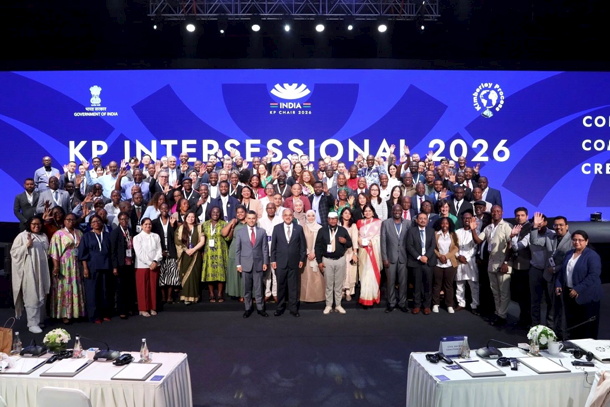
India Seeks to Strengthen Global Diamond Governance

 conflict diamonds

Competition for scarce natural resources such as oil, gas, uranium, and critical minerals has historically played a role in geopolitical tensions and conflict. Diamonds have also been implicated in violent conflicts, particularly in parts of Africa where the trade in rough diamonds once helped finance armed insurgencies and civil wars. These events underscored the need for a global system that promotes ethical sourcing and ensures transparency in the international diamond trade.

In response, the Kimberley Process (KP) was launched in May 2000 as a multilateral initiative aimed at preventing the trade in so-called “conflict diamonds.” The process established an international certification framework designed to ensure that rough diamonds entering the global market are not used to finance armed conflict.

Understanding Conflict Diamonds

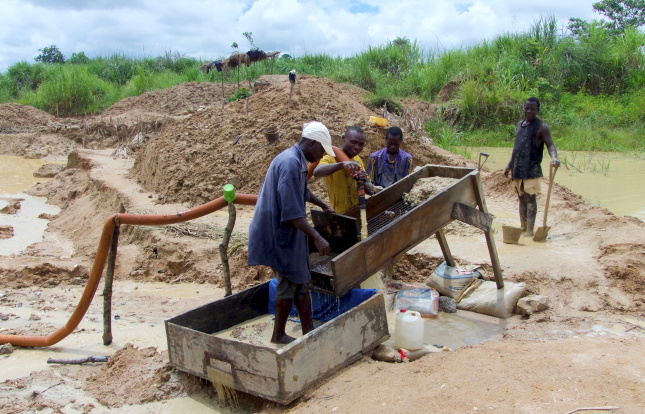
“Conflict diamonds,” often referred to as “blood diamonds,” are rough diamonds mined in areas controlled by rebel movements or their allies and sold to finance military activities against legitimate governments. The issue came to global attention during the 1990s, when conflicts in countries such as AngolaSierra LeoneRwanda, and Liberia were linked to diamond revenues that funded armed groups.

Because many of these diamonds were mined from easily accessible alluvial deposits and traded through informal networks, they could easily enter legitimate international supply chains. Reports published in 2000, including investigations by Partnership Africa Canada and the United Nations, highlighted how illicit diamond trading contributed to prolonged conflicts and humanitarian crises.

In response, the United Nations General Assembly adopted a resolution in December 2000 addressing the role of diamonds in financing armed conflict. The resolution defined conflict diamonds as stones originating from areas controlled by forces opposing legitimate governments and used to fund military activities against them.

The Kimberley Process Certification Scheme

To address the issue, the government of South Africa convened a meeting in the city of Kimberley in 2000, bringing together governments, the World Diamond Council, industry stakeholders, and civil society organisations.

Following two years of negotiations, the Kimberley Process Certification Scheme (KPCS) was formally established in 2003. The scheme introduced a set of minimum standards that participating countries must implement to certify that shipments of rough diamonds are conflict-free.

Under the system:

  • Every shipment of rough diamonds between participating countries must be accompanied by a Kimberley Process certificate confirming that the stones are conflict-free.
  • Participating governments are required to implement national legislation and internal controls.
  • Annual statistics on rough diamond trade must be published to enhance transparency.

Today, the Kimberley Process includes 60 participants, with the European Union and its member states counted collectively as a single participant. Together, KP participants account for more than 99% of global rough diamond trade, while trade with non-participants is prohibited.

India’s Role in the Global Diamond Supply Chain

India occupies a central position in the global diamond industry. It is the world’s largest hub for diamond cutting and polishing and a major importer of rough diamonds. As the leading exporter of cut and polished diamonds, India’s exports reached approximately US$13.3 billion in 2024–2025, and the country remains one of the largest consumer markets for diamonds, second only to the United States.

India has been a participant in the Kimberley Process since its inception in 2003. Implementation of the certification system is overseen by the Gem and Jewellery Export Promotion Council (GJEPC), which operates under the supervision of the Department of Commerce within the Ministry of Commerce and Industry.

In 2026, India assumed the chairmanship of the Kimberley Process for the third time, having previously chaired the initiative in 2008 and 2019. The chairmanship carries both symbolic and strategic importance, providing India with an opportunity to strengthen the credibility of global diamond governance while reinforcing confidence in the international diamond supply chain.

Opportunities for Reform

India’s leadership comes at a time when discussions around reforming the Kimberley Process are gaining momentum. One of the key areas under review is the definition of “conflict diamonds,” which currently focuses primarily on stones used to finance rebel movements against legitimate governments.

Many stakeholders argue that the definition should be expanded to address broader concerns, including:

  • Child labour
  • Environmental damage
  • Human rights violations linked to diamond mining

Another priority is improving traceability and transparency across the global diamond supply chain, ensuring that diamonds can be reliably tracked from mine to market.

In addition, strengthening capacity-building and technical support for countries with limited institutional resources could enhance the effectiveness of the certification framework and ensure more consistent implementation of standards worldwide.

Strengthening Confidence in the Diamond Market

As one of the most influential players in the global diamond trade, India has a strong incentive to ensure that the Kimberley Process remains credible, transparent, and trusted by consumers. By supporting meaningful reforms and strengthening compliance mechanisms, the chairmanship offers India an opportunity to reinforce ethical standards across the international diamond industry.

For the global diamond sector, maintaining strong governance frameworks is essential to preserving consumer confidence and ensuring that diamonds remain symbols of beauty, rarity, and integrity.

Source: DCLA

Monday, 24 November 2025

Conflict Diamonds: Nations that Vetoed New Definition

A proposal to broaden the term at the KP plenary in Dubai last week was rejected by Australia, Canada, the EU (representing 27 member countries), Switzerland, Ukraine and the UK, according to the African Diamond Producers Association (ADPA). That's a total of 32 countries.

The Kimberley Process (KP) has again failed to reach agreement on a new definition of conflict diamonds.

A proposal to broaden the term at the KP plenary in Dubai last week was rejected by Australia, Canada, the EU (representing 27 member countries), Switzerland, Ukraine and the UK, according to the African Diamond Producers Association (ADPA). That’s a total of 32 countries.

Updating the current definition – diamonds used by rebel groups to finance armed conflict against legitimate governments – would have required a unanimous vote. There have been repeated attempts to broaden the definition since it was first adopted in 2000.

The World Diamond Council (WDC) spoke of its “profound regret” that a small number of participants had blocked consensus on long-awaited reforms designed to strengthen protections for Africa’s diamond-mining communities.

In a statement issued at the end of the plenary it did not identify those who had vetoed the new definition. But ADPA did.

ADPA said: “Six participants – Australia, Canada, the European Union, Switzerland, Ukraine, the United Kingdom and one observer, Civil Society Coalition, refused to support the expanded definition.”

It said its proposed definition “aimed to provide a Pan-African solution to today’s evolving nature of diamond conflicts and the realities on the ground”.

The ADPA’s broader definition would have included “armed groups, non-state armed groups, UN Security Council-sanctioned individuals and entities and their allies, as well as to cover actions aimed at financing armed conflict and other operations, including attempts at undermining legitimate governments, and the well-being of diamond communities”.

It singled out the EU for harsh criticism, claiming it had in recent years “purposefully blurred and made several attempts to bypass the work of the KP.

The World Diamond Council (WDC) said progress had been killed in pursuit of the impossible.

“Today’s outcome is not a failure of the KP,” said WDC president Feriel Zerouki (pictured), as the five-day plenary concluded.

“Most participants stood firmly behind Africa. The setback came from a few, not from the Process itself. And while they halted progress today, they cannot halt the direction of travel.”

Jaff Bamenjo coordinator of the KP Civil Society Coalition, an observer group that represents communities affected by diamond mining and trade, said KP remains detached from reality at a time when challenges are overwhelming and the KP refuses to take responsibility.

“Its scope remains a needle in a haystack,” he said. “Communities affected by diamond mining are left wondering how this scheme can possibly be relevant to the many problems they face.”

Source: IDEX

The Kimberley Process: Control of the Diamond Pipeline, Not the Use of Revenue

When the Kimberley Process Certification Scheme (KPCS) was launched in 2003, it was marketed as a global solution to stop “conflict diamonds” from funding civil wars and human rights abuses. However, more than two decades later, the realities of the initiative paint a very different picture. The Kimberley Process has evolved not into a tool of humanitarian oversight, but into a mechanism that controls the flow of rough diamonds—who mines them, who sells them, who profits—and with little concern for how those profits are ultimately used.

A System Focused on Legitimising Trade, Not Regulating Impact

The entire structure of the Kimberley Process revolves around documentation and export control. Diamonds are certified to ensure that they originate from “legitimate” channels, which mostly means from governments and recognised mining concessions. Once that documentation exists, the diamonds are cleared for international trade.

What the system does not do is monitor or regulate what happens next.

Once revenue enters official state budgets or company accounts, the Kimberley Process has no authority, no mandate, and no interest in determining whether diamond income:

  • Improves living standards in mining communities
  • Funds infrastructure, healthcare, or education
  • Supports social development
  • Or, conversely, fuels corruption, political patronage, or state violence

In many diamond-producing nations, government control of the resource is absolute, while accountability for the use of diamond wealth remains minimal.

Legitimacy Through the Stamp, Not Through the Outcome

A diamond certified under the Kimberley Process is considered “clean” simply because it does not fund a rebel movement. Yet the humanitarian reality is far more complex. In several countries, diamond mining takes place alongside:

  • Widespread corruption
  • Poverty in mining regions
  • Environmental degradation
  • Labour exploitation
  • Lack of reinvestment into the communities that generate the wealth

The certification system provides political legitimacy to the diamond trade while ignoring the social conditions behind it. In other words, the Kimberley Process ensures diamonds are “legitimate to sell,” not that the proceeds are “responsibly used.”

Who Really Controls the Diamond Narrative?

From the beginning, the Kimberley Process was structured by governments and major industry stakeholders, including those with the most to gain from a controlled and regulated supply chain. Control over certification effectively means control over access to export markets—an immense economic advantage.

This has allowed:

  • States to assert exclusive ownership over the resource
  • Major mining companies to maintain their dominant global trading roles
  • Smaller or informal miners to be excluded from legal markets
  • The narrative of “ethical diamonds” to remain tightly managed

In this sense, the Kimberley Process serves more as a trade gatekeeper than a humanitarian framework. It decides who may sell diamonds, where they may be shipped, and under what conditions—while staying silent on whether diamond-rich nations or their citizens truly benefit from the wealth beneath their soil.

A System Out of Step with Modern Expectations

In 2025, consumer expectations have changed dramatically. Jewellery buyers increasingly want:

  • Transparency
  • Ethical assurance
  • Positive social and environmental impact
  • Evidence of fair value distribution

Yet the Kimberley Process remains rooted in a narrow 20-year-old definition of conflict that does not consider:

  • Government-sponsored abuse
  • Corruption
  • Human rights violations
  • Economic exploitation
  • Lack of benefit to local communities

For modern ethical standards, this is an outdated and insufficient framework.

Conclusion

The uncomfortable truth is this: the Kimberley Process is primarily a system for controlling the supply and movement of diamonds, not for ensuring that the immense wealth generated improves lives or supports sustainable development.

It decides who is allowed to trade diamonds, not how diamond money is used. Until the initiative expands beyond its limited mandate and confronts the broader social realities of the diamond industry, the Kimberley Process will remain a trade tool—not a humanitarian safeguard.

Source: DCLA

Monday, 18 November 2024

KP Votes to End Ban on CAR Diamonds

The Kimberley Process voted to allow rough diamond exports from the Central African Republic (CAR) after imposing a ban in 2013 as a civil war raged.

The Kimberley Process voted to allow rough diamond exports from the Central African Republic (CAR) after imposing a ban in 2013 as a civil war raged.

The Seleka, a coalition of predominantly Muslim rebel groups, toppled the government in a conflict, reportedly funded by conflict diamonds, that saw widespread killings, rapes, and destruction of villages.

The country – one of the world’s poorest – still faces significant challenges in establishing lasting peace and stability, although the government and its Russian mercenary allies have since pushed rebel groups out of major towns.

The KP, at its plenary in the UAE last Friday (15 November), voted to re-admit CAR as a full member, in light of what it described as “an improving security situation”.

Diamond exports have, until now, been outlawed from the so-called red zones – representing two thirds of his country’s diamond mining areas. They will now be allowed. 

Legal exports, from CAR’s green zones, totaled just under $8m in 2020, the latest year for which KP has figures – 50,433 carats for an average $142 per carat.

Rufin Benam-Beltoungou, CAR’s minister of mines and geology spoke of his “joy and satisfaction” over the full lifting of the rough export ban.

UAE’s Kimberley Process chair, Ahmed Bin Sulayem, travelled to CAR and had pushed extensively for the KP to initiate a review mission to fast-track the country’s reintegration.

Source: DCLA

PS: Plain to see that the Kimberley Process is a political tool and not a safegaurd for the diamond industry.

South Africa's New Guidelines to Boost Domestic Polishing

  South Africa has introduced new guidelines to retain more economic value from its rough diamonds by promoting local cutting and polishing,...