Showing posts with label diamonds israel dubai diamond exchange. Show all posts

Tuesday, 19 August 2025

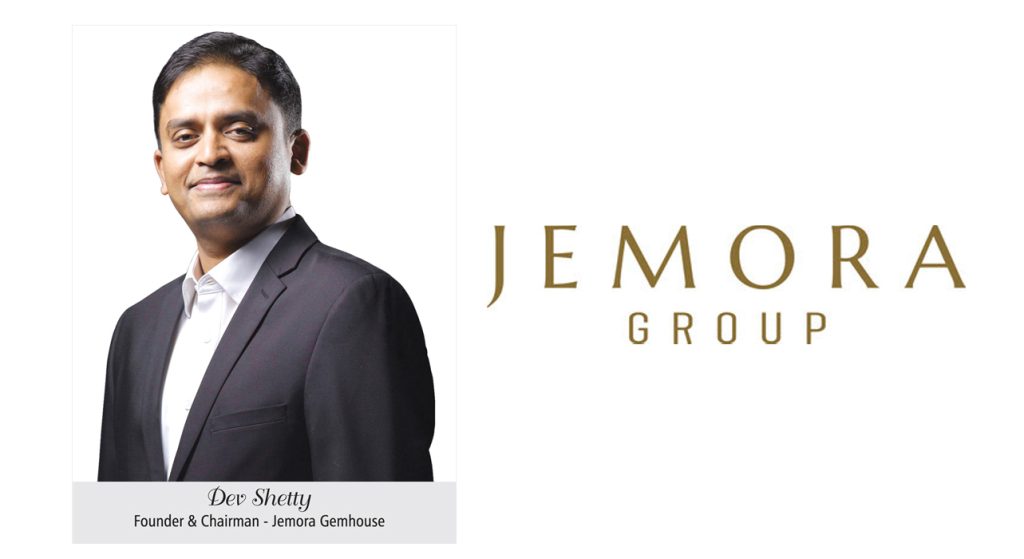
Dubai’s Jemora Group Acquires Lucapa Diamond Company and Its Global Mining Interests

Dubai’s Jemora Group Acquires Lucapa Diamond Company

Dubai, UAE – Gaston International, part of Dubai’s Jemora Group, has finalised an agreement to acquire Lucapa Diamond Company Ltd., securing control of its mining and exploration assets across Angola and Australia. The deal, valued at approximately USD $10 million, marks a significant shift in ownership for one of the sector’s most recognised niche producers of large, high-value diamonds.


Lucapa, previously listed on the ASX, entered voluntary administration in May 2025. Administrators Richard Tucker and Paul Pracilio of KordaMentha Restructuring oversaw the sale process after assessing the company’s financial position and operational assets.


Strategic Assets in Angola and Lesotho

Lucapa’s flagship holding is its 40% stake in the Lulo alluvial diamond mine in Angola, widely regarded as the highest dollar-per-carat mine in the world, achieving an average of USD $2,806 per carat in 2021. The balance of ownership is held by Angola’s state-owned Endiama and private partner Rosas & Petalas.


Since mining began in 2015, Lulo has yielded an extraordinary run of large and rare stones, including 48 Type IIa diamonds exceeding 100 carats. Among them are Angola’s largest ever recorded diamond—the 404-carat “4 de Fevereiro”—and the 170-carat “Lulo Rose”, a rare pink diamond discovered in 2022. Current estimates suggest Lulo still contains 249,000 carats of recoverable diamonds.


Supporting this production are two modern processing plants capable of handling 600,000 cubic metres of gravel annually, equipped with advanced recovery technology specifically designed to maximise recovery of large diamonds.


In addition, Lucapa retains a 39% interest in the Lulo Kimberlite Exploration Project, with Endiama (51%) and Rosas & Petalas (10%). More than 100 kimberlite pipes have been identified within the concession, several containing Type IIa diamonds—strongly suggesting the primary source of Lulo’s exceptional large stones lies within this exploration area.


Lucapa had previously held a majority stake in the Mothae mine in Lesotho, but divested its interest in 2024 as part of a portfolio streamlining initiative.


Expansion into Australia

The acquisition also includes Lucapa’s Australian assets, headlined by the Merlin Diamond Mine in the Northern Territory. Merlin is renowned for producing Australia’s largest diamond and is notable for its gem-quality output—historically, 75% of its recovered diamonds have been classified as gem or near-gem quality, including rare coloured diamonds in yellow, pink, and blue hues.


In addition, Gaston inherits Lucapa’s 80% interest in the Brooking Diamond Project in Western Australia, a promising package of exploration tenements, as well as a base metals project tied to Merlin.


Gaston’s Strategic Outlook

Gaston International stated it intends to work closely with Lucapa’s existing partners and management to maximise the long-term value of these assets. The company views both the operational production at Lulo and the exploration potential of its kimberlite concessions as major growth drivers.


The transaction remains subject to regulatory and court approvals, as well as creditor consent, before share transfers can be completed.


With this acquisition, Jemora Group expands its footprint in the natural diamond sector, positioning itself among the few entities with a diversified portfolio spanning Africa’s premier diamond deposits and Australia’s most significant gem-quality mine.

Source: DCLA

Thursday, 24 July 2025

Dubai’s Polished Diamonds – an Industry Hanging in the Balance

Peter Meeus is former managing director of Antwerp Diamond Bourse and HRD

Dubai’s ascent in the global diamond trade is undeniable, yet its polished diamond business now confronts a critical threat. Opaque regulations, punitive taxes, and mounting costs are pushing diamantaires, particularly from key markets, to look elsewhere – a stark reminder of past industry shifts that demand urgent, decisive action to preserve its hard-won leadership.

A century ago, Dubai stood as the undisputed pearling capital of the world, yet the advent of cultured pearls ushered in an overnight shift that shattered that dominance, forcing the emirate to adapt, pivot, and ultimately thrive through oil, trade, and tourism. History, however, whispers a stark warning: once a hub loses its competitive edge, recovery often remains out of reach. Today, as Dubai asserts its pre-eminence in the global diamond sector, particularly as the world’s leading hub for rough diamonds since 2021 and a top-three global centre overall, its polished diamond business stands at a similar precipice. Mounting tax ambiguities, punitive regulations, and soaring operational costs threaten to drive traders away, risking a mass exodus that could see its hard-won sparkle fade for good.

Firstly, it is important to acknowledge that Dubai’s journey to becoming a global trading powerhouse is truly exceptional. Dubai’s rise to eminence did not come easy. I have had the honour to work for over 12 years with Ahmed Bin Sulayem, Executive Chairman and CEO at Dubai Multi Commodities Centre (DMCC). Under his outstanding leadership, Dubai’s diamond sector had to sail through difficult weather, often culminating in storms instigated by NGOs who on their turn often were pushed against Dubai by competing entities.

However, bearing in mind the Ruler of Dubai, HRH Sheikh Mohammed bin Rashid Al Maktoum’s mantra: “In the race to excellence there is no finish line,” Dubai meticulously cultivated an ecosystem of world-class infrastructure, unmatched connectivity, and a business-friendly environment.

This soon propelled Dubai to the forefront of the gold and rough diamond trade. In 2024, its polished diamond trade alone surged past USD 13.1 billion, contributing to a remarkable cumulative total (rough and polished) of USD 57.5 billion over the past five years. Growing by a staggering 32 per cent to USD 16.9bn in 2023, polished diamonds represent nearly 50 per cent of the UAE’s total diamond trade, underscoring their pivotal role in its strategic expansion.

In the same spirit, any business, company and government entity – no matter how successful it becomes – has to keep a deep sense of self-criticism and always check for weaknesses and threats. Indeed, despite these impressive figures and inherent advantages, a significant share of the global polished diamond trade, particularly from key players in Israel, continue to bypass the UAE in favour of direct routes to established markets such as the United States, Antwerp, and Hong Kong. Through a combination of predictable regulatory landscapes, deep pools of experienced professionals, and often, more favourable tax treatments for polished diamonds, each of these centres have instilled greater business confidence, and all this despite the recently enacted U.S. trade tariffs. For Dubai to truly hold on to, and leverage opportunities presented by agreements like the Abraham Accords in boosting the UAE-Israel polished diamond trade, the UAE must urgently address its existing and forthcoming structural barriers.

One of the most critical obstacles is the existing VAT framework. While the UAE applies a reverse-charge VAT mechanism to rough diamonds, this crucial benefit does not consistently extend to polished diamonds, thereby diminishing Dubai’s global competitiveness. Although Cabinet Decision No. 127 in January 2025 aimed to extend the VAT reverse-charge mechanism to polished diamonds and a broader range of precious stones, for many, this feels like too little, too late. This inconsistency, coupled with high corporate tax rates directly undermines the UAE’s ability to attract high-value polished diamond activity and compete effectively. As an example, in Belgium and the U.S., inter-company diamond trades are entirely VAT exempt.

As an additional issue, albeit one for another day, the culpability of highly-paid consultants in this evolving crisis, cannot be overstated. Global advisory firms like PwC find themselves in a glaring conflict of interest, reportedly advising the UAE Ministry of Finance on imposing these very taxes, while simultaneously counselling entities like the Dubai Multi Commodities Centre (DMCC) on mitigating them. This duality has only amplified uncertainty, leaving traders in a state of paralysis. One must question what advice these consultants offer their clients in competitive markets, and how they are delivering tangible growth.

Beyond VAT, the additional spectre of B2B taxation and opaque regulation has also made Dubai less competitive. Anecdotal statements from industry stakeholders include fines being issued for unclear reasons, with practically no recourse for contestation due to the absence of any industry ombudsman, while significant taxes and fees are actively pricing out SMEs from the market.

While praise should be given to the UAE government for its equally giant leaps in combatting anti-money laundering and counter terrorism financing, AML regulations have now become more stringent than in any other major centres. Diamantaires in Dubai are effectively being treated like banks, with every transaction above AED 55,000 (USD 15,000) requiring full disclosure. Even an elementary cost comparison with other key markets reveals some startling comparisons. For instance, Belgium has a special corporate incomes tax regime for diamond traders which is reportedly substantially cheaper than Dubai, while any large companies in the emirate paying amounts over USD 3 million in interest (or 30 per cent of EBITDA, whichever is higher) are not eligible for tax deductions, even if paid to banks. Operating expenses in Dubai are also notorious, running an estimated 35 per cent higher than its competitors, while shipment and customs charges are 45 per cent steeper than in Belgium or the U.S. As a result, Dubai has already seen some lab-grown diamond businesses move their operations to Belgium as a direct consequence of these mounting pressures.

This situation echoes the stark warning from Dubai’s pearling legacy, which didn’t vanish due to competition, but inaction in the face of disruptive change. The diamond sector, now a cornerstone of its economic diversification, faces a similar fate. Traders are already voting with their feet, convinced the environment is becoming less hospitable, and once they depart, reclaiming their business will be an insurmountable challenge.

All this being said, this isn’t the first time the UAE has found itself in a similar situation. In the face of mounting pressure on gold and rough diamonds, the UAE Cabinet recognised the imperative for swift action, and on 1st May 2018, decisively reversed the tax on both commodities. This pivotal and wise decision was taken based on a DMCC in-depth analysis of Dubai’s competitive position in the rough diamond trade and not only saved both industries from decline but allowed them to flourish, cementing Dubai’s position as a top global destination.

The same decisive intervention is now urgently required for Dubai’s polished diamond sector. By extending the VAT reverse-charge mechanism consistently to polished diamonds, enhancing corporate tax incentives, easing the administrative burden of AML for legitimate trades, and ensuring regulatory clarity ahead of the corporate tax filing deadline on 30th September 2025, the emirate still has time to avoid both the legal and compliance ambiguities that lead to costly retrospective adjustments. Additionally, this proactive approach will attract high-value polished diamond activity, enabling the emirate to fully leverage its underutilised bonded free zones, while highlighting Dubai’s strategic advantages and robust infrastructure.

Global market volatility and shifting tariff regimes present a timely opportunity for the UAE to assert and uphold itself as a world leader in polished diamonds. Policy enhancements, particularly around taxation and regulation, could yield substantial gains in trade flows, investment, and economic diversification, while unequivocally elevating the UAE’s prestige within the international gemstone sector. Dubai’s diamond empire stands at a crossroads where a sobering assessment of its competitiveness and decisive action will undoubtedly dictate its ongoing success or untimely demise. As there is no finishing line in the search for excellence, the time to act is NOW.

Source: DCLA

Wednesday, 26 February 2025

Cost-Cutting Helps Sarine Return to Profit

Sarine

Sarine says cost reductions and efficiency improvements allowed it to reverse a $2.8m loss in 2023 into a $1.1m profit in 2024.

But the Israel-based diamond tech company said revenue dipped 8 per cent to $39.2m amid ongoing difficult market conditions – primarily weak demand in China and “continuing disruption from lab-grown diamonds”.

Sarine said it was recouping some of the costs invested in adapting its rough planning technologies for lab growns, and had also benefitted from opening a GCAL by Sarine lab in India, largely grading lab growns.

As party of its “aggressive business streamlining and cost cutting”, the company plans to relocate its manufacturing activities to India, its main market.

Looking to the future, it said demand for natural diamonds is likely to remain “constrained” throughout 2025, although markets for both natural and lab grown would become more distinct.

“It is our belief that diamond jewellery retailing will settle on a new equilibrium in the near term, with natural diamonds trending towards a significant market share especially in the bridal segment and LGD dominating the fashion jewellery segment.”

Source: DCLA

Thursday, 22 June 2023

Dubai-Israel Diamond Trade Hits $1.75bn in 2022

 Dubai-Israel Diamond Trade Hits $1.75bn in 2022

UAE and Israel

The volume of trade exchange between UAE and Israel, in the diamond trade, increased to $1.75 billion in 2022, an annual increase of 163%, according to the Dubai Multi Commodities Center (DMCC), a leading global free zone and government body concerned with the trade of goods and projects.

The ties between the diamond industries of both countries developed rapidly after ‘Abraham Accords’. On September 17, 2020, just two days after the signing of ‘Abraham Accords’ in Washington and the establishment of diplomatic relations between Israel and UAE, Israel Diamond Exchange (IDE) and Dubai Diamond Exchange (DDE) signed a cooperation agreement.

In 2022, the Israel Diamond Exchange opened an office in Dubai, and the Dubai Diamond Exchange opened in Ramat Gan, Israel’s diamond capital.

In May 2020, Israel and UAE signed Comprehensive Economic Partnership Agreement, eliminating tariffs on diamonds and precious stones.

Ahmed Bin Sulayem, executive chairman and CEO of DMCC, said: “Over the past two years we have witnessed strong growth in Israeli companies setting up in our free zone, as they take full advantage of growing their businesses globally and the vertical integration we bring to the category.”

“As the trade relationship grows and matures between Israel and the UAE, we look forward to welcoming more business from Israel in diamonds as well as other key sectors,” he added.

The UAE has witnessed soaring growth in the sector over the past three years, with the rough diamond trade rising by 72% and polished by 50%. Bin Sulayem noted this success, adding that Israel has played a significant part in its accomplishment.

“Dubai, via our Dubai Diamond Exchange, has become the global leader in the diamond trade. This is reflected in the diamond trade numbers with Israel, with $ 1.75 billion traded last year,” he said.

Dubai provides Tel Aviv with greater opportunities for trading in the global market due to its position as a prominent regional trading center, and its proximity to Asian centers for the production of precious stones, in addition to the preference given to Israeli occupation companies to trade without additional costs or taxes, as stipulated in the free trade agreement between UAE and Israel.

The DDE, which was established in 2002 under the umbrella of the Dubai Multi Commodities Centre (DMCC), has over 1,100 licensed companies. It now handles some $25bn in total trade, double that of Israel’s IDE.

Source: DCLA

Thursday, 17 September 2020

Israel, Dubai diamond exchanges begin strategic collaboration


The Israel and Dubai diamond exchanges have signed an agreement to promote cooperation in a deal certain to boost direct trade between the Middle East’s main diamond hubs.

The agreement was announced on Thursday two days after Israel and the United Arab Emirates signed an historic agreement to normalize ties and marks a further development in economic collaboration.

The diamond deal, finalised in a video conference ceremony, was welcome news for an industry hit hard by the coronavirus pandemic and overall weaker global demand.

As part of the agreement, the Israel Diamond Exchange (IDE) will open an office in Dubai and the Dubai Multi Commodities Centre (DMCC) will open one in Ramat Gan, home to the Israeli exchange.

The two parties said they will share experience and knowledge, work to promote bilateral trade and collaborate on exhibitions, visits and conferences. They also agreed to arrange an Israeli-Dubai diamond fair to be held in Dubai and Ramat Gan and to promote electronic trade.

Israel is one of the leading exporters of polished diamonds. IDE President Yoram Dvash said that Dubai, with its free zone and convenient business conditions, has become one of the most important diamond centers in the world.

The Dubai Diamond Exchange is part of the government-owned DMCC. The total value of rough and polished diamonds traded in Dubai last year exceeded $23 billion, the DMCC said.

“This agreement will attract businesses to the emirate as well as boost the regional and international trade of this precious stone,” said Ahmed Bin Sulayem, executive chairman of the DMCC and chairman of the Dubai Diamond Exchange.

Israel’s diamond exports fell 28% in 2019 to $4.9 billion.

Source: DCLA

Israel, Dubai diamond exchanges begin strategic collaboration


The Israel and Dubai diamond exchanges have signed an agreement to promote cooperation in a deal certain to boost direct trade between the Middle East’s main diamond hubs.

The agreement was announced on Thursday two days after Israel and the United Arab Emirates signed an historic agreement to normalize ties and marks a further development in economic collaboration.

The diamond deal, finalised in a video conference ceremony, was welcome news for an industry hit hard by the coronavirus pandemic and overall weaker global demand.

As part of the agreement, the Israel Diamond Exchange (IDE) will open an office in Dubai and the Dubai Multi Commodities Centre (DMCC) will open one in Ramat Gan, home to the Israeli exchange.

The two parties said they will share experience and knowledge, work to promote bilateral trade and collaborate on exhibitions, visits and conferences. They also agreed to arrange an Israeli-Dubai diamond fair to be held in Dubai and Ramat Gan and to promote electronic trade.

Israel is one of the leading exporters of polished diamonds. IDE President Yoram Dvash said that Dubai, with its free zone and convenient business conditions, has become one of the most important diamond centers in the world.

The Dubai Diamond Exchange is part of the government-owned DMCC. The total value of rough and polished diamonds traded in Dubai last year exceeded $23 billion, the DMCC said.

“This agreement will attract businesses to the emirate as well as boost the regional and international trade of this precious stone,” said Ahmed Bin Sulayem, executive chairman of the DMCC and chairman of the Dubai Diamond Exchange.

Israel’s diamond exports fell 28% in 2019 to $4.9 billion.

Source: DCLA

How Efforts to Control the Diamond Trade Are Hurting the Very Communities They Were Supposed to Protect

For more than two decades, global policies aimed at restricting the flow of diamonds from conflict zones most notably through the “blood dia...