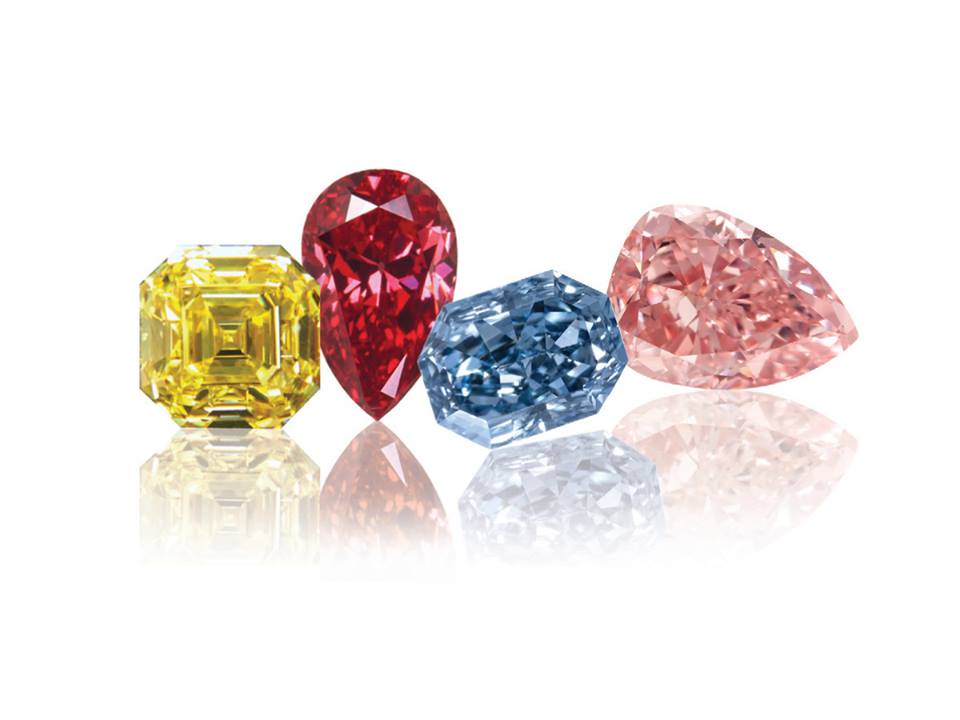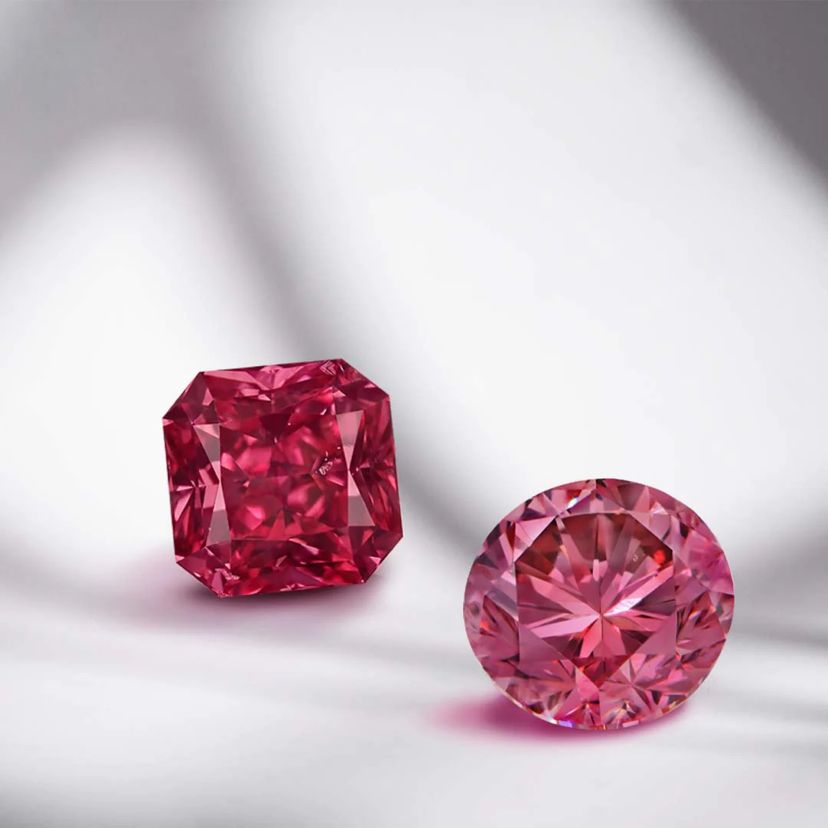
Showing posts with label Argyle Pink Diamonds. Show all posts

Tuesday, 6 October 2026

Boodles Goes Pink with Major Argyle Diamond Acquisition

 British jeweller secures rare Argyle pink diamond inventory as the legacy of Australia’s legendary mine enters a new chapter

British jeweller secures rare Argyle pink diamond inventory as the legacy of Australia’s legendary mine enters a new chapter

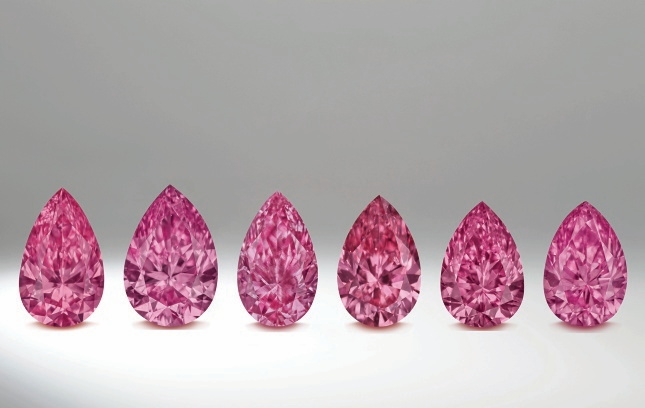
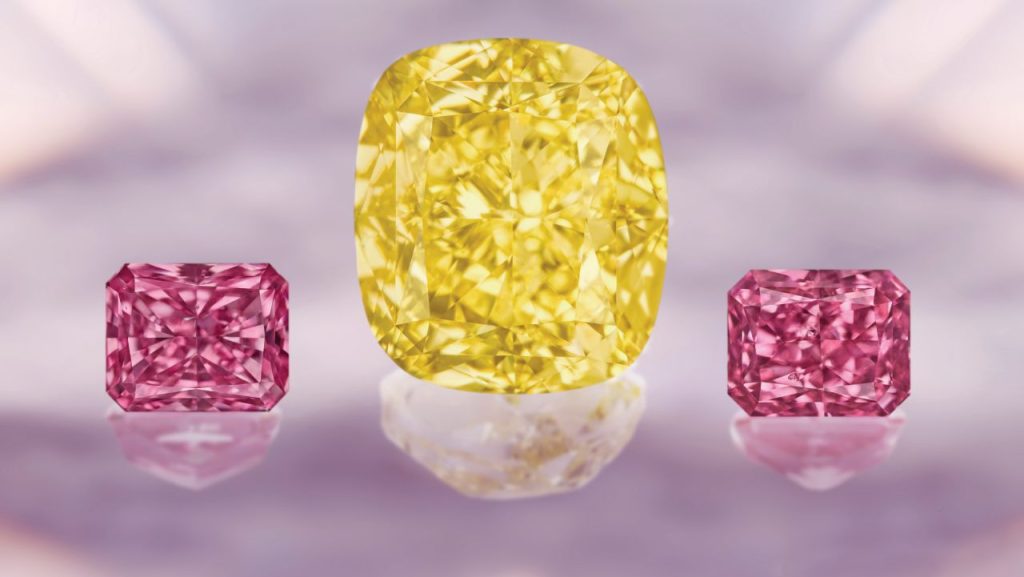
British luxury jeweller Boodles has strengthened its position in the highly exclusive world of fancy coloured diamonds after acquiring the remaining inventory of Argyle Pink Diamonds from Rio Tinto, together with ownership of the iconic Argyle Pink Diamonds brand.

The agreement gives Boodles control of the brand, associated trademarks, website and digital assets, as well as a collection of some of the exceptionally rare pink diamonds produced by the Argyle mine in Western Australia.

For Boodles, the transaction represents much more than the acquisition of a collection of diamonds. It is a long term investment in one of the most recognisable and historically significant coloured diamond brands in the world.

Jody Wainwright, joint managing director of Boodles, described the transaction as a significant, long term investment and said the company intends to release the diamonds gradually over approximately a decade.

“Each one is like a Picasso,” he said, reflecting the extraordinary rarity and individuality of the stones.

The Argyle legacy

The Argyle mine, located in Western Australia’s remote East Kimberley region, became synonymous with pink diamonds and, for decades, supplied more than 90 per cent of the world’s pink diamond production.

Mining ceased in November 2020 after the mine had produced approximately 865 million carats of rough diamonds. Yet only a tiny fraction of that enormous production was pink.

According to Rio Tinto, less than 0.1 per cent of Argyle’s total rough diamond production was pink, illustrating why these stones have become so highly prized.

DCLA has previously examined the extraordinary rarity of pink diamonds and the geological processes responsible for their colour in its article on Pink Diamonds.

The closure of Argyle permanently changed the supply equation for pink diamonds. Unlike white diamonds, where new production continues from mines around the world, there is no comparable source capable of replacing Argyle’s extraordinary output of pink diamonds.

This has transformed existing Argyle pink diamonds into a finite historical inventory.

Boodles has had a long relationship with Argyle pink diamonds. The jeweller purchased its first Argyle pink diamond in 1998 and later participated in the famous annual Argyle Pink Diamonds Tender, where some of the world’s finest stones were offered to a select group of international dealers, jewellers and collectors.

Pink diamonds are extraordinarily rare

Pink diamonds occupy a special position within the coloured diamond market.

Unlike blue diamonds, where the colour is generally associated with boron, or many yellow diamonds, where nitrogen plays an important role, the precise cause of the pink colour is associated with structural distortion within the diamond’s crystal lattice.

The geological forces required to create this distortion are exceptionally unusual.

DCLA’s Diamond Colour Authentication and Advanced Diamond Testing explains the importance of determining whether the colour of a fancy coloured diamond is natural or the result of treatment.

This distinction is critical because natural colour is one of the fundamental characteristics that determines the rarity and value of a fancy coloured diamond.

Pink diamonds from around the world

While Argyle became the world’s dominant source of pink diamonds, it was certainly not the only source of important pink stones.

Some of the most significant and celebrated pink diamonds in history have originated from South Africa, Lesotho, Russia, Canada and other African diamond producing nations.

South Africa has a particularly important place in coloured diamond history. The country’s historic diamond mines have produced exceptional pink and other fancy coloured stones, including some of the world’s most famous diamonds.

One of the most important examples is the extraordinary 59.60 carat CTF Pink Star, which was mined by De Beers in South Africa before being cut and polished into the famous Fancy Vivid Pink diamond. DCLA has previously documented the remarkable history of the Pink Star.

Lesotho has also emerged as an important source of exceptional pink diamonds. The Kao mine produced the 108.39 carat rough crystal from which the remarkable Kao Legend Collection was created, including the 20.49 carat Fancy Intense Purplish Pink Kao Legend.

Canada has produced notable coloured diamonds, while Russia’s Siberian diamond mines have also yielded rare pink stones.

The important point is that exceptional pink diamonds can occur in several geological environments. What made Argyle unique was the extraordinary frequency with which its geology produced pink diamonds and the sheer volume of rare coloured stones recovered during the mine’s lifetime.

Provenance matters

The story of Argyle also demonstrates why provenance has become increasingly important in the world of exceptional diamonds.

A diamond may display characteristics associated with a particular mine, but those characteristics do not necessarily constitute scientific proof of origin.

DCLA recently examined this issue in detail in Where Did My Diamond Come From?, explaining the distinction between a diamond displaying characteristics associated with a particular locality and scientifically establishing its geographic origin.

For Argyle diamonds, however, historical documentation, provenance and the established Argyle brand can add another dimension to a stone’s story.

A finite supply

The closure of Argyle has fundamentally altered the market.

The Fancy Color Research Foundation reported that pink diamond prices had increased by almost 390 per cent between 2005 and the second quarter of 2026.

With no new Argyle production coming to market, collectors and investors increasingly focus on provenance, colour intensity, size, quality and historical significance.

DCLA has followed this market closely, including recent coverage of major pink diamonds appearing at international auctions and the continuing demand for exceptional natural coloured diamonds.

The DCLA Pink Diamond archive provides an extensive history of major pink diamonds, auctions and developments in the market.

The world’s auction houses have repeatedly demonstrated the extraordinary prices that exceptional pink diamonds can command.

The CTF Pink Star, a 59.60 carat Fancy Vivid Pink diamond, remains one of the most famous gemstones ever offered at auction. It achieved HK$553 million, approximately US$71.2 million at the time, at Sotheby’s in Hong Kong in 2017.

However, size alone does not determine the value of a pink diamond. In the world of fancy coloured diamonds, colour saturation, hue, distribution, clarity, cut and provenance can have an enormous influence on value.

A small but intensely coloured pink diamond can therefore be considerably more valuable than a much larger stone with a weaker colour.

Boodles builds on a long association with pink diamonds

Pink diamonds already account for approximately 5 per cent of Boodles’ jewellery production by volume.

The company incorporates them into collections including Raindance, Play of Light and Be Boodles, as well as selected engagement rings.

Boodles is also planning a new high jewellery collection inspired by Australia, with Argyle pink diamonds expected to feature prominently.

The company has also incorporated the history of Argyle into its new London premises at 23 Old Bond Street, including an Argyle Lounge featuring jewellery, historical material and artefacts connected with the mine.

Among the items are examples of the original Argyle colour grading system and materials documenting the history of the mine and its remarkable contribution to the coloured diamond industry.

From mine to museum piece

The Boodles acquisition illustrates an important change taking place in the diamond market.

Argyle pink diamonds are no longer simply newly mined commodities. They are increasingly being viewed as pieces of geological and mining history.

Every Argyle pink diamond that has been recovered is now part of a finite population.

The mine is closed, the geological source cannot be replenished and the world’s remaining Argyle pink diamonds will progressively move from miners and dealers into the hands of jewellers, collectors and private owners.

This gives provenance an increasingly important role.

For the diamond industry, Argyle represents one of the clearest examples of how a mine can become a brand in its own right. The combination of geological rarity, Australian provenance, recognised colour grading and a finite supply has created an identity that extends well beyond the intrinsic characteristics of the individual diamond.

DCLA’s recent article on The World’s Most Valuable Coloured Diamonds explores this broader world of natural fancy coloured diamonds and explains why the rarest colours can command extraordinary values.

Boodles’ acquisition ensures that the Argyle Pink Diamonds name will continue to have a place in the luxury jewellery market.

It also highlights a fundamental truth about exceptional coloured diamonds:

When the source disappears, the diamonds already recovered become part of a finite piece of history.

For collectors, the appeal is therefore not simply owning a beautiful pink diamond. It is owning a small piece of the geological history of the Earth — from a mine that will never produce another Argyle pink diamond.


Monday, 31 March 2025

Guilty: Deloitte Director Bought Pink Diamonds on Company Credit Card

A former director of the Deloitte auditing company in Australia has admitted claiming almost AUD 2.8m ($1.8m) in fraudulent work expenses to buy pink diamonds, high-end art and other luxuries.

Melbourne, Australia – County court building

A former director of the Deloitte auditing company in Australia has admitted claiming almost AUD 2.8m ($1.8m) in fraudulent work expenses to buy pink diamonds, high-end art and other luxuries.

Paul Quill, 45, used his corporate credit card to make the purchases from 2016 to 2022, passing some of them off as payments for stationary, postage, photocopying and court fees. He admitted two counts of obtaining financial advantage by deception.

The County Court of Victoria, in Melbourne, heard last Thursday (27 March) that among the sums stolen was AUD 682,587 ($429,000) from Joe Gutnick’s Merlin Diamonds, the mining company that was wound up in 2020 after a series of losses.

The court heard that Quill lost control after the breakdown of a relationship. He will be sentenced on 15 April.

He was dismissed in 2022 after his crime was revealed during a routine audit. Deloitte said at the time that it would make sure all clients were repaid in full.

Source: IDEX

Wednesday, 16 October 2024

Rio Tinto buys back famed Argyle pink and red diamonds for latest tender due to dwindling stockpile

Rio Tinto buys back famed Argyle pink and red diamonds

A select few with deep pockets are rolling into Perth to snap up the latest collection of Argyle diamonds, as unsold inventory of the ultra-rare gems whittles down to a “teaspoon”.

A top secret location in the CBD this week will host prospective buyers from Australia and overseas vying for 76 polished pink, red, and other coloured diamonds — predominantly unearthed at Rio Tinto’s shuttered Argyle mine in the east Kimberley region.

Argyle operated for 37 years up until 2020, and about 95 per cent of the world’s circulation of pink and red diamonds can be traced back to the mine.

Each carat of an Argyle pink or red can easily fetch a multi-million-dollar sum. Earlier this year a 1.56ct Argyle red sold for $US4.3 million ($6.4m) in Geneva, equating to $US2.7m a carat. One of the pinks in the latest collection weighs 2.63ct.

But not all of the famed gems sold are destined for an extravagant jewellery piece, with many opting to keep their purchase locked away in a vault as an investment.

“We have seen double digit price growth year on year for the past 20 years . . . and we seeing demand continue unabated for these stones,” Rio Tinto diamond sales and business development manager Michelle Sherring told The West Australian.

“The constrained supply means the value of pink diamonds has eclipsed any kind of comparable equity indices, like the Dow Jones and Hang Seng et cetera, over the years.”

Since mining ceased at Argyle Rio has touted each of its annual tenders for the diamonds as being one of the last.

“We now have a mere teaspoon (of unsold Argyle pinks and reds) remaining within our own inventory,” Ms Sherring said.

Stockpiles are now so low that for the first time ever the collection includes diamonds Rio has bought back from customers.

“Including the secondary market is a new concept for this year, we have very strong relationships with our long running customers,” Ms Sheering said.

“So I approached a handful of them at the beginning of the year in terms of the concept and we have over these years understood where some of the important diamonds sit and which safes they might be held in.

“It was a process of curation, and ultimately, what we have is a set of seven round diamonds which represent the real pinnacle of rarity.”

Of the 76 stones in the latest collection, 74 are from Argyle — the pink, red and blue diamonds — while the remaining two are a yellow and white diamond sourced from Rio’s Daivik mine in Canada.

Rio is displaying the collection — comprising 48 separate lots and weighing a combined 39.44 carats — on an invite-only basis in Perth, London, Singapore and Belgium. Bids for the tender will close on November 18.

Murray Rayner, who was previously the chief geologist for Argyle Diamonds, last year told The West that the existence of Argyle’s pink diamonds was due to a “fluke of nature” that will be extremely difficult to replicate.

Mr Rayner said the pink diamonds emerged around 1.8 billion years ago when the Kimberley collided into Australia, bringing pink diamonds closer to the Earth’s surface.

These pink diamonds were originally created at one point three billion years ago when our planet’s once-connected continents began to rip apart, with the intense pressure from this event causing the pink colouration in the diamonds.

“To find another deposit would be an extraordinarily rare event in its own right, we’ve looked over the last few decades without any success,” he said.

Source: DCLA

Thursday, 5 September 2024

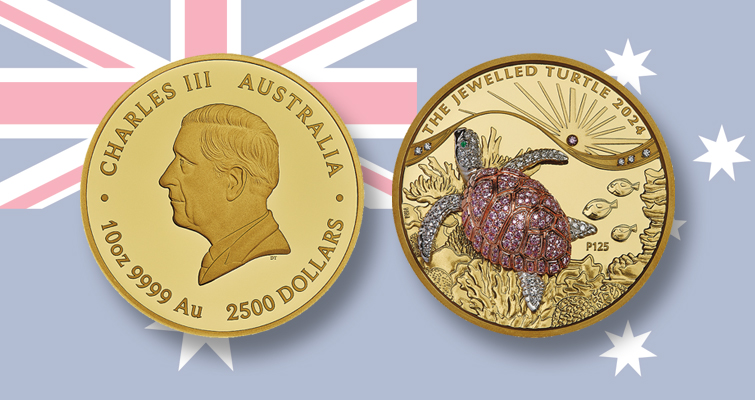
Perth Mint continues luxury diamond coin series with turtle

Each Jewelled Turtle coin is a Proof 10 ounce .9999 fine gold $2,500 denominated coin

The Perth Mint continues its Jewelled series of coins with a 10 ounce gold Jewelled Turtle coin with a mintage of eight coins.

And it comes with a price tag of $269,000 Australian ($182,229 U.S.).

This is the seventh release in the Jewelled series. It features a handset rare trademarked Argyle Pink Diamond and lustrous white diamonds that form the head and limbs of the three dimensional 18 karat gold turtle.

Each Jewelled Turtle coin is a Proof 10 ounce .9999 fine gold $2,500 denominated coin, with the centerpiece the 18-karat gold sea turtle surrounded by depictions of coral and dory fish.

The turtle’s head and limbs are embellished with 52 white diamonds, and two emeralds for its eyes. Additional white diamonds are set in a ribbon shaped line symbolizing the sea surface, with an Argyle Pink Diamond set at the heart of a stylized sun.

The Jewelled Series is developed each year in association with John Glajz, a Singapore based Argyle Pink Diamonds Icon Partner.

Each Jewelled Turtle coin is presented in a luxury display case adorned with 18 karat gold furnishings and inset with two Argyle Pink Diamond.

For the first time in the series, the coin bears the Dan Thorne effigy of King Charles III, as well as the P125 privy mark for the Perth Mint’s 125th anniversary.

Source: Coinworld

Friday, 9 August 2024

One of the Last Argyle Pinks Leads Online Auction

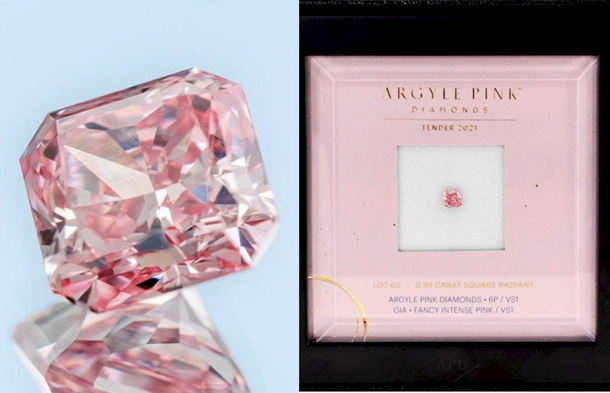
0.94 carat Argyle Pink

A loose 0.94 carat Argyle Pink – one of the last recovered from the iconic mine in Western Australia – is being sold at auction.

It is the highlight of a 416-lot online event (ending 11 August), featuring many items that belonged to Graham Jackson, former owner of Loloma Jewellers, located in Townsville, Australia, who died aged 92 in May.

The cushion cut fancy intense VS1 gem is designated as 6P – 6/10 for intensity of hue and P for pink as the dominant hue.

It was sold at the 2021 Argyle Pink Tender-Rio Tinto’s Final Collection, the last tender from the mine, which closed in November 2020 after 37 years, during which it produced 90 per cent of the world’s pink diamonds.

The stone is being sold by Sydney-based First State Auctions, with an estimate of AUD$700,000 to AUD$800,000 (US$455,000 to U$520,000).

Last January Tiffany & Co. has bought a parcel of 35 Argyle pinks – from 0.35 carats to 1.52 carats – for “select clients”.

Source: DCLA

Monday, 5 August 2024

Fancy Color Diamond Prices: First Drop in Almost Four Years

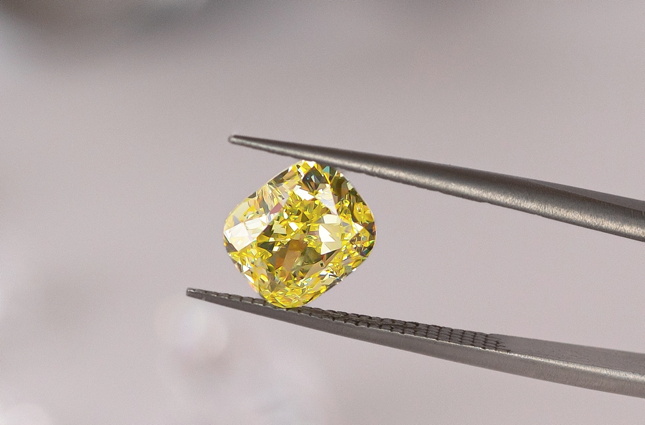
Fancy yellow diamond
Fancy yellow cushion cut diamond

The Index tracking fancy color diamond prices fell during the last quarter, for the first time in almost four years.

The Fancy Color Diamond Index, which monitors pricing data for of all sizes and intensities of fancy color diamonds, fell by 0.7 per cent during Q2 2024, according to an update published yesterday (30 July) by the Fancy Color Research Foundation (FCRF).

The last recorded fall was back in Q3 2020 – in the depths of the Covid crisis – when the Index also fell by 0.7 per cent. That came after two quarters when sales were too slow for the FCRF to produce figures at all.

The trend over the last year or so has been of slower growth. The Index was up 1.3 per cent in Q1 2023, followed by +0.5 per cent (Q2); +0.4 per cent (Q3); +0.1 per cent (Q4) and +0.1 per cent (Q1 2024).

The New York-based FCRF played down the Q2 dip, describing it as “a minor fluctuation when compared to broader market movements”.

It said in a statement: “This stability is particularly evident relative to the sharper declines in the white diamond market and the Dow Jones index, which fell by 3.6 per cent and 1.7 per cent respectively during the same period.

Yellow diamonds (all sizes, all intensities) suffered the biggest drop, down 1.7 per cent. Pinks and blues were both down 0.3 per cent.

The FCRF said its Index had enjoyed an overall increase of 211 per cent since it began compiling data in 2005. During that time it said the price of yellow diamonds had risen by 56 per cent, pinks by 398 per cent and blues by 248 per cent.

Source: DCLA

Tuesday, 5 December 2023

Rio Tinto Delighted with Argyle and Diavik Tender

Rio Tinto Delighted with Argyle and Diavik Pink Diamond Tender

Rio Tinto said it was delighted with the results of its first Beyond Rare Tender of polished pink and red diamonds from Argyle, in Australia, and yellow stones from Diavik, Canada, though it declined to reveal any prices.

Sinead Kaufman, chief executive of Rio Tinto Minerals, said only that the results reflected the global demand for highly collectible natural colored diamonds.

The first in a series of sales featured a collection of 87 diamonds, weighing 29.96 carats in total. Successful bidders came from Australia, Europe, Japan, Hong Kong, Singapore, US and Israel.

Among the lots were seven Masterpiece sets of Argyle dink diamonds and yellow Diavik diamonds, 11 matched pairs of colored diamonds and 30 single diamonds, including one remarkable fancy red Argyle diamonds.

The iconic Argyle mine closed in November 2020 after 37 years. It produced 90 per cent of the world’s pink, red, blue and violet diamonds.

Source: DCLA

Monday, 23 October 2023

Rio Tinto to Hold Tender of 87 Fancy-Colored Diamonds


Rio Tinto to Hold Tender of 87 Fancy-Colored Diamonds

Rio Tinto has launched the Beyond Rare Tender, an inaugural collection of 48 lots of polished fancy-colored diamonds.

The miner will offer 87 diamonds in total, including its legacy inventory of pink and red stones from the shuttered Argyle diamond mine in Australia and yellow diamonds from its Diavik site in Canada, it said on Tuesday.

The new collection is “a testimony to the ongoing demand for highly collectible natural diamonds,” said Sinead Kaufman, chief executive of Rio Tinto Minerals. “This carefully curated collection of rare jewels will be in strong demand by the world’s finest jewelers, collectors and diamond connoisseurs.”

Titled The Art Series, the invitation-only tender is inspired by the art world, the company said. The combined weight of the diamonds is 29.96 carats.

They include the following:

  • Seven diamonds consisting of Argyle pink stones and yellow Diavik ones, which the company says will be accompanied by bespoke artwork.
  • An offering of 11 matched pairs of colored diamonds.
  • Thirty single diamonds, including one distinctive fancy-red Argyle diamond.

The closure of the Argyle mine in Australia and the continued strong demand for exceptional fancy pink and red diamonds means the market for Argyle pink and red diamonds “have never been stronger,” said Patrick Coppens, general manager of sales and marketing for Rio Tinto’s diamonds business.

The 48 lots will be shown in Australia, Switzerland and Belgium, with bids closing on November 20.

Source: DCLA

Thursday, 4 May 2023

 Rio Tinto unveils Argyle Rose heirloom piece

The Argyle Rose. Image from Rio Tinto.

Rio Tinto has unveiled the latest heirloom piece of Argyle Pink Diamonds jewellery, featuring one of the last diamonds to be mined from the iconic Argyle mine in the East Kimberley, Western Australia.

Mining ended at Argyle in November 2020, after 37 years of uninterrupted production, during which the mine became the source of about 90% of the world’s prized rose-to-magenta hued stones. The mine produced more than 865 million carats of rough diamonds.

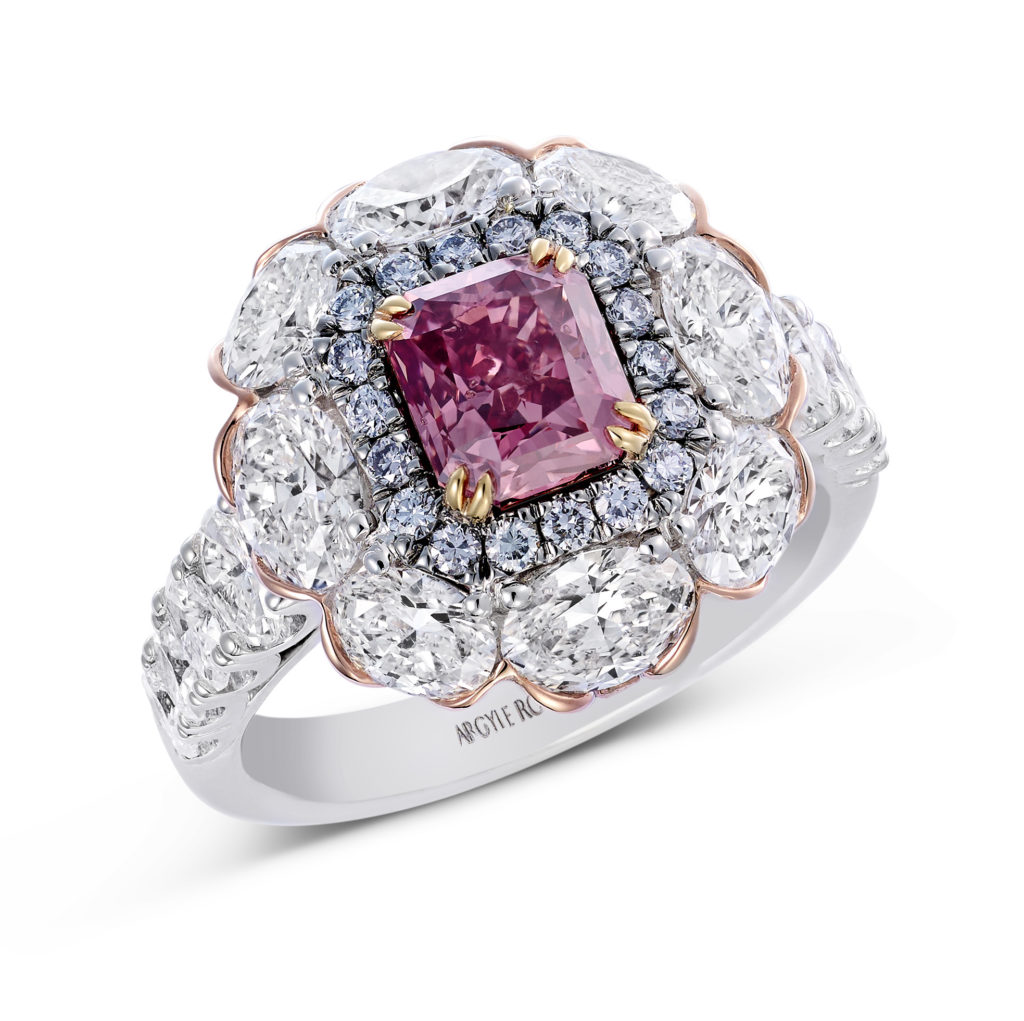
Designed by Western Australian jeweller Solid Gold Diamonds, the Argyle Rose features a total of 3.25 carats of rare Argyle pink and blue diamonds encrusted in a rose motif, surrounded by white diamonds and hand-set in platinum and 18 karat gold.

The heart of this piece is an extremely rare 1.36 carat, Fancy Deep Pink radiant cut diamond. It is just one of twelve radiant cut diamonds over one carat with a colour grading, 1P, from the last 30 years of production from Argyle.

The surrounding petaled design of pink and blue Argyle Diamonds totals 1.89 carats, together with 2.80 carats of white diamonds. The Argyle Rose is for sale at Solid Gold Diamonds in Perth for A$2 million.

“I am delighted to launch the Argyle Rose. Encapsulating a rich history and an extraordinary provenance, it is both a contemporary treasure and an heirloom for tomorrow,” Sinead Kaufman, Chief Executive of Rio Tinto Minerals said in a statement.

“These rare and precious diamonds are one and a half billion years old, from one of the most beautiful places on earth, and the world is simply not producing them anymore.”

Source: DCLA

Tuesday, 4 April 2023

The $7m Pair of Pink Diamond Earrings


Pair of Pink Diamond Earrings

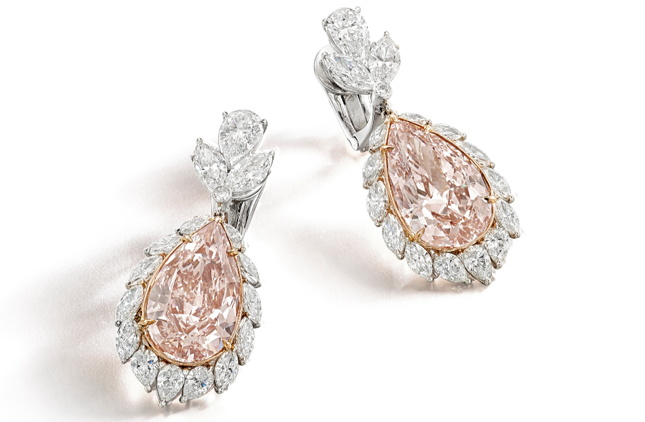
A pair of pear-shaped fancy pink pendant diamond earrings, weighing 11.17 carats and 10.85 carats, are to be sold at Sotheby’s Hong Kong.

The estimate is $5.48m to $7.01m. Both diamonds are GIA-certified as Fancy Pink, Natural Color, VVS1 Clarity.

The pink diamonds are set in platinum and yellow gold suspended from a pear, marquise-shaped and brilliant-cut diamond surmount weighing a total of approximately 6.5-7.5cts, mostly F-H color, average VS-SI clarity.

The lead tomorrow’s Magnificent Jewels I. The sale also includes a Harry Winston diamond fringe necklace with nine pear-shaped diamonds weighing 14.93 to 2.04 carats (estimate $4.46m to $6.37m) and a 5.49-carat fancy intense blue diamond ring (estimate $4.84m to $6.37m).

Source: IDEX

Thursday, 23 February 2023

How rare are fancy coloured diamonds and will the price increase


fancy coloured diamonds

Argyle pink diamonds are extremely rare and highly sought-after, making them some of the most valuable diamonds in the world. The Argyle diamond mine in Western Australia is the primary source of pink diamonds, and it is estimated that only 0.01% of the diamonds recovered from the mine are pink in colour, with an even smaller percentage being of the highest quality.


The Argyle mine ceased operations in 2020, which has led to speculation that the prices of pink diamonds, including argyle pink diamonds, may increase in the coming years. With the mine no longer producing new stones, the limited supply of these rare diamonds is expected to drive up demand and prices. However, like any investment, it’s important to carefully consider market trends and consult with a qualified professional before making any decisions.


The largest pink argyle diamond found to date is the Argyle Pink Jubilee, which was discovered at the Argyle mine in Western Australia in 2011. The diamond weighs 12.76 carats and is a vivid pink colour, making it one of the largest and most valuable pink diamonds ever found. The Pink Jubilee was cut and polished over a period of ten months, during which time the rough diamond was studied and analyzed extensively to determine the best way to bring out its natural beauty and maximize its value. The diamond was sold at auction in 2013 for an undisclosed sum, but it is believed to have fetched a record-breaking price per carat for a pink diamond.


Red diamonds are extremely rare, even more so than pink diamonds. It is estimated that only a handful of natural red diamonds are found each year, and most of them are less than half a carat in size. Red diamonds are so rare that many jewelers and gemologists may go their entire careers without ever seeing one.


The red colour in diamonds is caused by the presence of a rare mineral which causes “graining,”, This occurs when the crystal structure of the diamond is distorted during its formation. The graining causes the diamond to absorb green light and reflect red light, resulting in a beautiful and distinctive red hue.
Because of their rarity, red diamonds are among the most valuable and expensive gemstones in the world. They are highly sought-after by collectors and investors, and prices for top-quality stones can reach millions of dollars per carat at auction.


Blue diamonds are also quite rare, but not as rare as pink or red diamonds. Blue diamonds account for only about 0.02% of all diamonds mined worldwide. The blue colour in diamonds is caused by the presence of trace amounts of boron during their formation, which causes the diamond to absorb red, yellow, and green light, resulting in a blue hue.


Blue diamonds are highly prized for their unique colour and rarity, and they can command very high prices at auction. The value of a blue diamond depends on a variety of factors, including its size, colour intensity, clarity, and overall quality. Blue diamonds range in colour from pale blue to vivid blue, with the most valuable stones being those with a deep, rich blue colour.


One of the most famous blue diamonds is the Hope Diamond, which is a 45.52-carat blue diamond that is part of the Smithsonian Institution’s collection of natural history specimens.


The most expensive diamond ever sold is the Pink Star, a 59.60-carat oval-cut pink diamond that was sold for $71.2 million at a Sotheby’s auction in Hong Kong in 2017. The diamond, which is the largest internally flawless fancy vivid pink diamond ever graded by the Gemological Institute of America (GIA), was mined in Africa in 1999 and took two years to cut and polish.


The Pink Star was originally sold at auction in 2013 for a record-breaking $83 million, but the sale was later cancelled after the buyer defaulted on the payment. The diamond was put back up for auction in 2017 and sold to a jewelry retailer in Hong Kong for $71.2 million, setting a new world record for the most expensive diamond ever sold at auction.


Yellow diamonds are not as rare as pink, red, or blue diamonds, but they are still considered rare and highly prized. Yellow diamonds are formed when nitrogen atoms are trapped in the crystal lattice structure of the diamond during its formation, causing it to absorb blue light and reflect yellow light.


The intensity of the yellow colour in a diamond can vary widely, ranging from a pale yellow or light lemon colour to a deep, intense yellow. The most valuable yellow diamonds are those with a deep, rich colour that is evenly distributed throughout the stone.


Yellow diamonds are mined in various parts of the world, including South Africa, Australia, and Canada. While yellow diamonds are not as rare as some other coloured diamonds, high-quality yellow diamonds can still command very high prices at auction, especially those with a large carat weight and intense colour.


Orange diamonds are considered rare and highly valuable. The orange colour in diamonds is caused by the presence of nitrogen and other impurities in the crystal lattice structure of the diamond, which absorb blue and green light, resulting in an orange hue.


Orange diamonds can range in colour from pale orange to a deep, vivid orange, with the most valuable stones being those with a pure and intense colour. Orange diamonds are not as commonly found as white or yellow diamonds and are considered much rarer than brown or gray diamonds.


The most famous orange diamond is the Pumpkin Diamond, a 5.54-carat fancy vivid orange diamond that was mined in South Africa. The Pumpkin Diamond was sold at auction in 1997 for over $1.3 million, and it is now part of the collection at the Smithsonian Institution’s National Museum of Natural History in Washington, D.C.

Source: Michael Cohen DCLA

Tuesday, 14 February 2023

Investor uncertainty in challenging market

 It’s hard to believe that COVID first hit just over three years ago.


After the original shock that the pandemic caused, especially when lockdowns were put in place in large parts of the world in early 2020, markets, rather than continuing to crash, instead surged higher.

Stimulus programs from both central banks and central governments, which were enormous in scope, were the primary cause of this surge, with the vast quantity of dollars fed into the system leading to one of the biggest rallies in the share market, cryptocurrencies, and even real estate on record.

Since late 2021 it’s been tough going though, with the last twelve or so months particularly challenging for most investors.

Many seemingly don’t know what to do, with survey data suggesting many are stuck in terms of ideas, a subject we discuss below.

There are however always a select group of investors who do get ahead of the curve, recognise changing patterns for what they are, and act accordingly.

We think pink diamond investors fit that mould, and despite the current economic climate and investor hesitance, we’ve seen a continued appetite for pink diamonds first hand.

This is something we expect to see continue across the course of this year, as more and more investors seek exposure to this niche asset class, which has proved quite lucrative for many.

Investor uncertainty in challenging market

In early February, we read an interesting report containing six insights into the way Australians invested their money in 2022.

As we alluded to in the introduction to this week’s update, last year was very challenging for investors, with stock markets plunging quite rapidly at one point (on this note, while the Australian market fell, it fared better than most), cryptocurrencies falling by more than 50% in most cases, and even real estate turning south, with the Australian property market now on track to see its biggest decline in decades.

We also saw the return of inflation, which soared beyond 5%, and in some developed countries beyond 10%, in the fastest pace of consumer price rises seen in decades.

What did investors do in response?

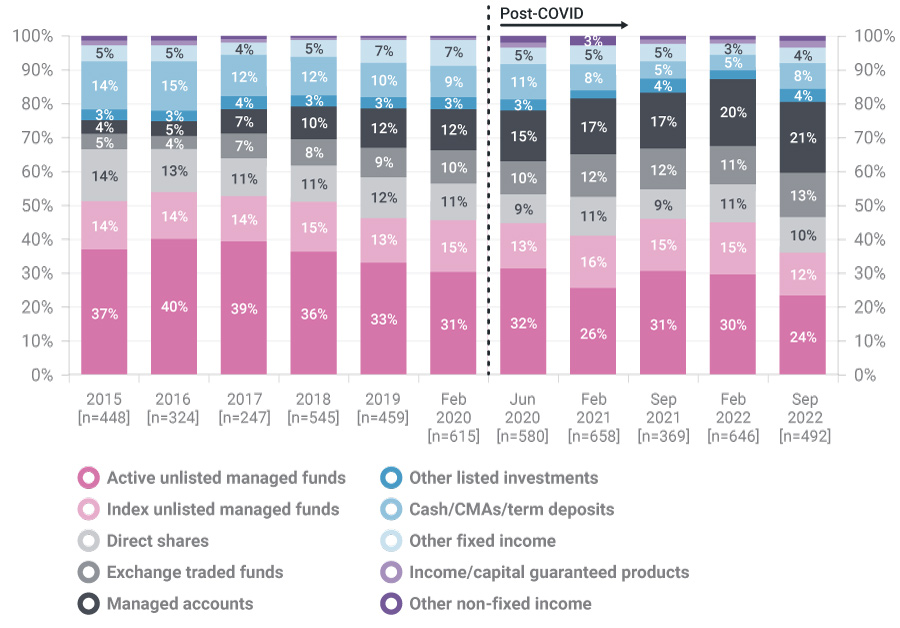
Turns out much of the same, with the following chart showing that despite a few tweaks, they kept investing money in pretty much the same way they always have.

Trend: Allocation of new client inflows

In the last year, roughly what proportion of the new client inflows you advised on went into each category? Averages among financial advisers.

A chart titled "Trend: Allocation of new client inflows" with in formation in response to the following question: "In the last year, roughly what proportion of the new client inflows you advised on went into each category? Averages among financial advisers".

Source: Investment Trends 2022 Managed Accounts Report – Investment Trends.

The only notable change looking at this, and other data in the article was an influx of money into fixed income and cash ETFs, presumably due to the higher interest rates that started to flow through across 2022.

While that’s understandable, given rising inflation, those cash and fixed income assets also lost value last year, failing to act as a safe haven in any meaningful way.

The only investors that thrived last year were those who looked through the conventional wisdom on how to invest (i.e. keep nearly all your money in stocks, bonds and real estate), and instead sought out alternative assets, which can continue to thrive in more difficult environments.

Pink diamonds were obviously one such asset, with prices continuing their steady performance all of last year, helped by the continued focus that this asset class has generated since the closure of the Argyle mine in late 2020.

With prices up more than 50% in the last two years, they are one of the few assets that have prospered throughout the entire COVID era and its aftermath, with strong supply/demand fundamentals set to support pink diamond prices, in 2023 and beyond.

Interest rates continue to climb

The Reserve Bank of Australia (RBA) met for the first time earlier this week, and as most analysts expected, they raised interest rates by 0.25%.

The increase, which marks the ninth meeting in a row that they’ve increased rates, with the official cash rate now sitting at 3.35%.

They likely have a way to go too, with the RBA at pains to point out that higher rates will likely be required to contain inflation rates which continue to surprise to the upside.

Indeed, some commentators now think that the RBA will continue to hike for most of the year, with the cash rate likely to climb beyond 4% before peaking, which will only exacerbate the pain felt by a lot of mortgage holders sitting on large debt piles.

This pain is beginning to show up in both soft and hard economic data, with retail sales now falling, while consumer confidence in Australia is plunging.

It’s also worth noting that given current inflation levels, even if the RBA does hike rates to 4%, the ‘real’ return (i.e. the rate one earns after inflation) on cash is likely to remain negative, for the foreseeable future at least.

This should help be bullish for investment demand for alternative assets, especially with home prices falling, and the share-market struggling.

Pink diamonds are set to be a particular beneficiary of this trend, as indeed they have been for some time, given their extremely limited supply, their strong performance track record, and their inflation hedging qualities, with all of these factors regularly coming up in the conversations that the team at Australian Diamond Portfolio have with our wonderful client base on an ongoing basis.

As always, we hope you’ve enjoyed this week’s edition of “In the Loupe” and we look forward to any questions or comments you may have.

Source: DiamondPortfolio 

Thursday, 1 December 2022

Rio Tinto's Unique $1.24m Midnight Sun Diamond Ring

 Rio Tinto’s Unique $1.24m Midnight Sun Diamond Ring

Midnight Sun Diamond Ring
                Midnight Sun Diamond Ring

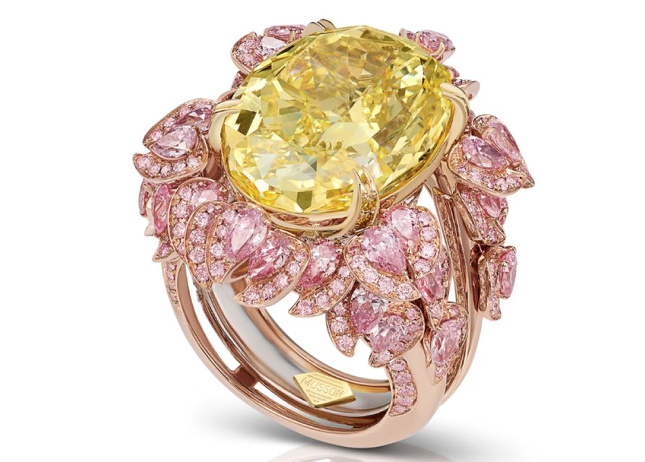
Pink and yellow diamonds from two iconic Rio Tinto mines – Argyle and Diavik – have been brought together to create a unique ring.

It’s called Diavik Midnight Sun and has been valued at $1.24m.

An 18.08 carat fancy intense yellow oval diamond from Diavik, in sub-Arctic Canada, contrasts with an intricate setting of rare Argyle pink diamonds, from the now-closed mine in in the remote East Kimberley region of Western Australia, weighing 4.09 carats in total.

The yellow diamond was cut from a 36.75-ct rough gem, described as one of the finest large yellow diamonds uncovered at Diavik.

Rio Tinto’s general manager of sales and marketing for its diamonds business, Patrick Coppens said “This combination of a rare yellow Diavik diamond and Argyle Pink Diamonds, the rarest diamonds in the world, is a special moment in the history of Rio Tinto’s unique place in the natural fancy coloured diamond industry.

He paid tribute to luxury jeweler Musson for creating the ring. The Diavik Midnight Sun takes its inspiration from the exquisite natural phenomenon that occurs when the sun is seen at midnight in the Arctic, exhibiting beautiful golden and pink hues.

Source: DCLA

Tuesday, 7 June 2022

Rio Tinto Launches Business for Argyle Pinks

 Rio Tinto Launches Business for Argyle Pinks

Diamonds from Rio Tinto’s Argyle Pink Diamond Tender. 

Rio Tinto has debuted a new strategy that will enable it to “protect the provenance” of its Argyle pink diamonds, including a certification service and a concierge trading platform.

“This is the start of a new chapter for Argyle pink diamonds, to ensure they maintain their value and investment potential as a finite, unrepeatable natural resource and achieve the status of outstanding heritage diamonds,” Rio Tinto Minerals CEO Sinead Kaufman said last week.

The venture will also play host to a new Beyond Rare tender platform for special sales events, as well as several strategic collections and collaborations involving existing inventory and the secondary market.

One such venture, the Icon Partner program, will give jewelers licensing rights to use the Argyle Pink Diamonds brand for jewelry they create with any remaining inventory they previously purchased from the Argyle mine. The first two retailers Rio Tinto has authorized are John Calleija, the owner of Australian luxury-jewelry house Calleija, and Singapore-based Glajz THG, owned by John Glajz.

“The secondary market for Argyle pink diamonds comprises almost 40 years of rare, polished pink diamonds, together with heirloom pieces of jewelry, collectibles and objects,” the miner noted. “This market requires careful management to preserve the precious provenance of Argyle pink diamonds and continue the legacy of careful custody that underscores its rarity.

Source: DCLA

The Diamond You Choose, Natural Rarity or Laboratory Grown Quality

  When the choice is yours, what matters most: rarity, size, beauty or simply the diamond you fall in love with? There was a time when choos...