Showing posts with label fancy yellow. Show all posts

Friday, 28 August 2026

Fancy Colour Diamonds, From Hollywood Statement to the Ultimate Collectable

natural fancy colour diamonds


For generations, the traditional diamond engagement ring has been dominated by the classic colourless stone. But the world of exceptional diamonds is changing. Increasingly, collectors, celebrities and high jewellery connoisseurs are turning towards something far rarer and far more individual: natural fancy colour diamonds.

From vivid pinks and intense blues to extraordinary greens, yellows and the exceptionally rare reds, these diamonds are no longer simply an alternative to the traditional white diamond. They are becoming recognised as some of the most desirable and collectible gems in the world.

Jennifer Lopez Put Green Diamonds in the Spotlight

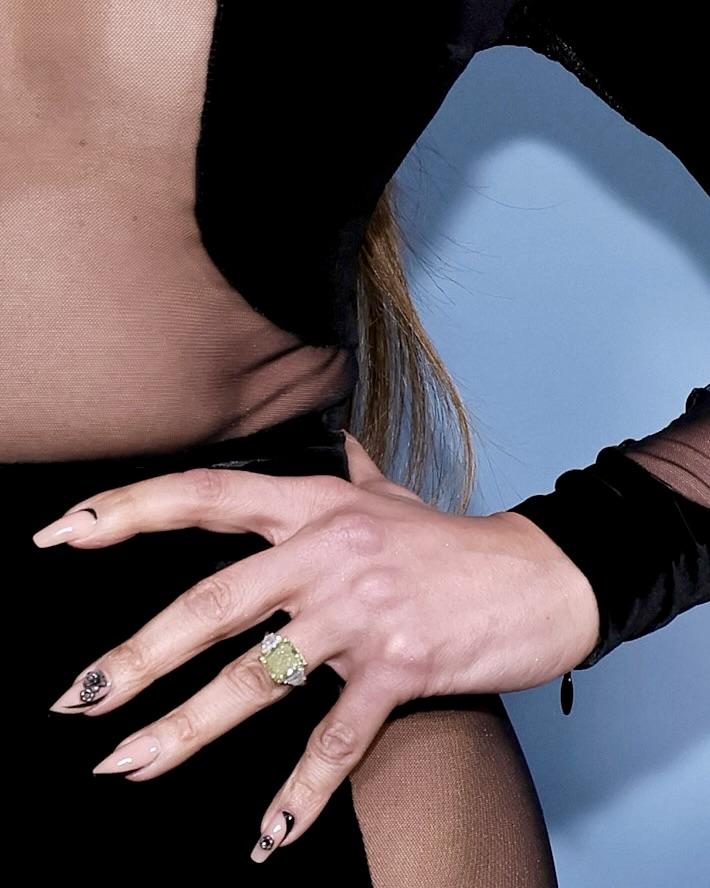
One of the most talked-about examples came in 2022, when Ben Affleck proposed to Jennifer Lopez with an extraordinary natural green diamond.

The choice was particularly appropriate for Lopez, who has long associated the colour green with good fortune and famously wore the iconic green Versace dress at the 2000 Grammy Awards.

But the ring represented more than a celebrity engagement.

It introduced millions of people to a diamond category that had traditionally been the domain of specialist collectors and serious diamond enthusiasts.

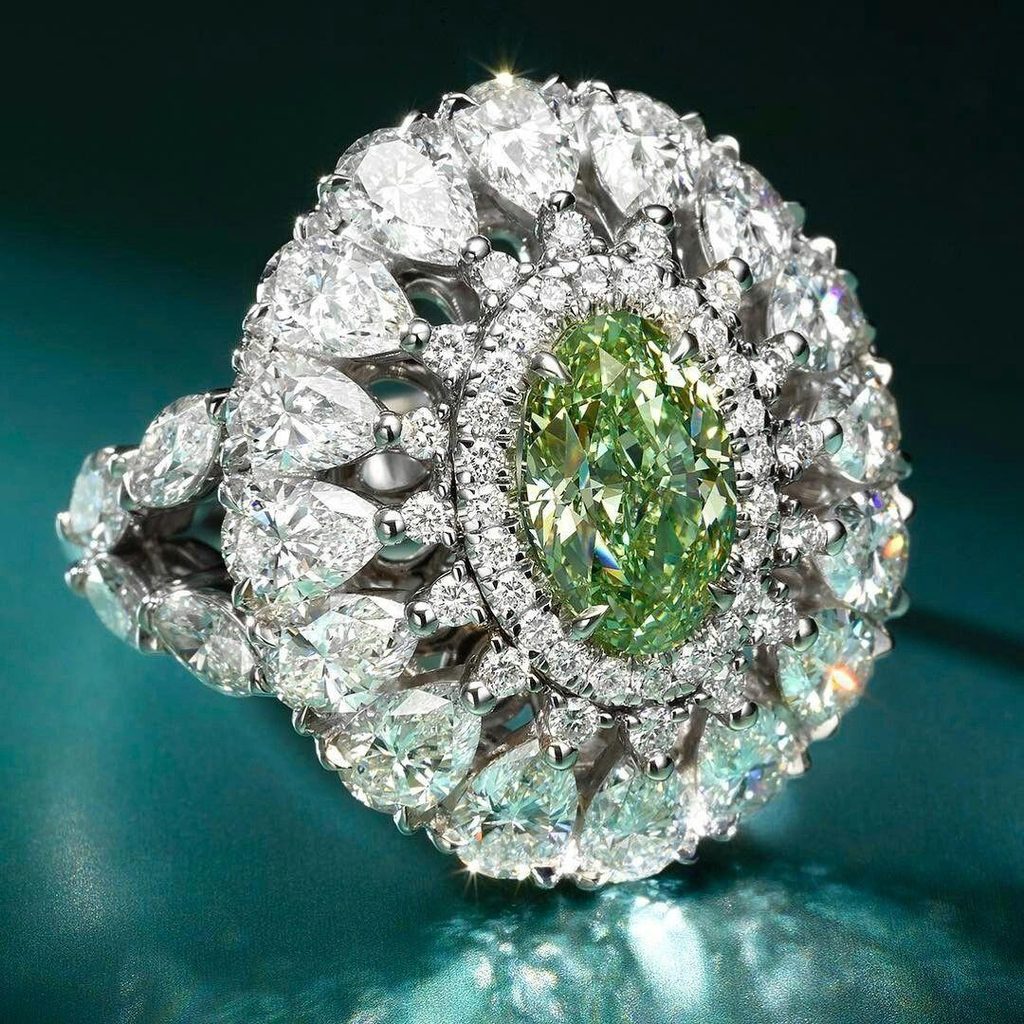
Green diamonds are exceptionally unusual. Unlike many other coloured diamonds, their colour is generally associated with natural radiation occurring over geological time. Importantly, green colour can be concentrated near the surface of the diamond, making the cutting and preservation of the stone particularly challenging.

The result is a diamond where colour, rarity, provenance and individuality can all become major components of its value.

According to GIA, natural fancy colour diamonds are among the rarest gemstones, with red, green, purple and orange among the rarest colours.

What Makes a Fancy Colour Diamond So Special?

With a conventional D-to-Z diamond, the absence of colour is generally desirable.

Fancy colour diamonds work differently.

Their value can increase with the strength, purity and quality of the colour. GIA’s grading system assesses factors including hue, tone and saturation, with descriptions such as Fancy, Fancy Intense, Fancy Vivid and Fancy Deep.

This creates a fascinating situation in the diamond market.

Two diamonds of exactly the same weight can have dramatically different values because their colours are different.

A small variation in hue or saturation can transform a beautiful diamond into an exceptional one.

And when the colour is extremely rare, the difference can be enormous.

The most coveted colours include:

Red – among the rarest of all natural diamond colours.

Pink – historically one of the most sought-after colours among collectors.

Blue – exceptionally rare, with its colour generally associated with boron.

Green – extraordinarily unusual and often associated with natural radiation.

Orange – rare and highly prized when the colour is strong and pure.

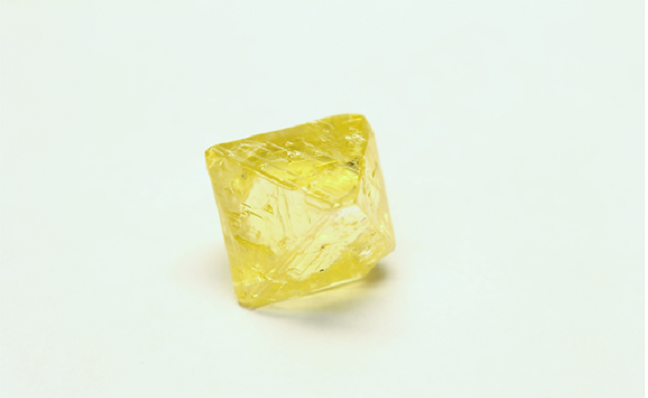
Yellow – more commonly encountered than green, blue or red, but spectacular vivid yellow diamonds can be exceptionally valuable.

GIA notes that saturated pinks, blues and greens are among the rarest and most valuable fancy colour diamonds.

Celebrities Are Changing the Conversation

Fancy colour diamonds have a long relationship with Hollywood and international celebrity culture.

The legendary Tiffany Yellow Diamond, weighing 128.54 carats, is one of the world’s most famous yellow diamonds. It has been associated with Audrey Hepburn, Lady Gaga and BeyoncĂ©, helping demonstrate how a coloured diamond can become part of popular culture rather than simply a gemological curiosity.

Other celebrities including Beyoncé, Paris Hilton, Miley Cyrus, Angelina Jolie and Heidi Klum have also worn fancy colour diamonds on major occasions.

And the trend is very much alive today.
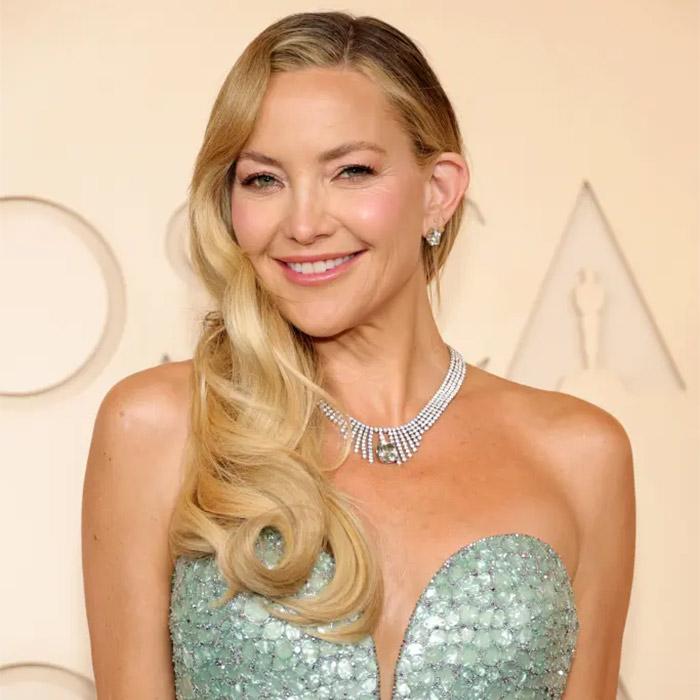
At the 2026 Oscars, Kate Hudson made headlines wearing more than 41 carats of rare green diamonds by Milan-based Garatti.

At the 2026 Oscars, Kate Hudson made headlines wearing more than 41 carats of rare green diamonds by Milan-based Garatti. Her spectacular jewellery included a 16-carat fancy green diamond necklace, a 15-carat Fancy Deep green diamond ring and matching green diamond earrings. The collection was reported at approximately US$35 million.

Lupita Nyong’o also brought green diamonds to the red carpet in 2026, wearing Garatti earrings incorporating Fancy Intense Green diamonds at The Odyssey world premiere in London.

At the 2026 Golden Globes, Kate Hudson again wore green diamonds, including a 5-carat pear-shaped Fancy green diamond and a 3.19-carat Fancy Deep green diamond combined with pink and white diamonds.

These appearances are important because they expose a much wider audience to a category of diamond that was once largely understood only by specialists.

The Rise of the Collector’s Diamond
Green Diamonds Require Specialist Knowledge

The greatest appeal of a natural fancy colour diamond is that it can be much more than jewellery.

It can become a collectable gemstone.

Unlike mass-market jewellery, exceptional natural colour diamonds are finite. There is no guarantee that another stone with exactly the same combination of colour, saturation, size, clarity, shape and provenance will ever appear.

That individuality is fundamental to their attraction.

A collector may therefore look at a fancy colour diamond in much the same way an art collector looks at a unique painting.

The question isn’t simply:

“How much does it cost?”

It becomes:

“How rare is it, how exceptional is it, and will another one like it ever come onto the market?”

Green Diamonds Require Specialist Knowledge

Green diamonds are particularly fascinating because their colour formation and appearance can be complex.

GIA explains that the green colour in many natural green diamonds is concentrated near the surface of the stone, which means cutters often attempt to preserve natural rough material around the girdle.

This makes identification and grading particularly important.

A purchaser should never rely simply on the description “green diamond”.

The exact grading terminology matters.

Natural or laboratory-grown?

What is the origin of the colour?

What is the strength and distribution of the colour?

What laboratory has graded the stone?

What does the certificate actually say?

For a significant fancy colour diamond, independent laboratory documentation is essential.

Fancy Colour Diamonds Are Not Just a Fashion
What Makes a Fancy Colour Diamond So Special

Celebrity attention can create trends, but the fascination with fancy colour diamonds goes much deeper.

Their rarity is geological.

Their beauty is natural.

Their individuality is impossible to reproduce precisely.

And the finest examples can occupy a completely different level of the diamond market from ordinary jewellery diamonds.

This is why the current interest in green diamonds should not simply be dismissed as another celebrity fashion.

Jennifer Lopez may have helped introduce green diamonds to a global audience, but the stones themselves have been extraordinary for millions of years.

Today, collectors are beginning to appreciate what specialist diamond dealers and gemmologists have known for decades:

the world’s rarest diamonds are not necessarily the whitest.

Sometimes, the colour is the most valuable thing of all.

DCLA: Knowledge Matters

For anyone considering the purchase of a significant fancy colour diamond, independent expertise is critical.

At the Diamond Certification Laboratory of Australia (DCLA), the assessment of a diamond goes beyond simply looking at whether a stone appears attractive.

Fancy colour diamonds require specialist knowledge and careful assessment because subtle differences in colour can have a substantial effect on rarity, classification and value.

A beautiful coloured diamond is an exciting purchase.

An authenticated, professionally graded natural fancy colour diamond can be something much more significant: a rare gemstone with the potential to become a family heirloom and a serious collector’s asset.

DCLA — where diamond knowledge, science and independent assessment come together.

Sources

Fancy Color Diamond Quality Factors

The Magic of Colored Diamonds

Colored Diamonds Buyer’s Guide

Tiffany Yellow Diamond history

Natural Diamonds — Oscars 2026

Natural Diamonds — The Odyssey 2026

People — Kate Hudson’s 2026 Oscars green diamond jewellery

Tuesday, 28 July 2026

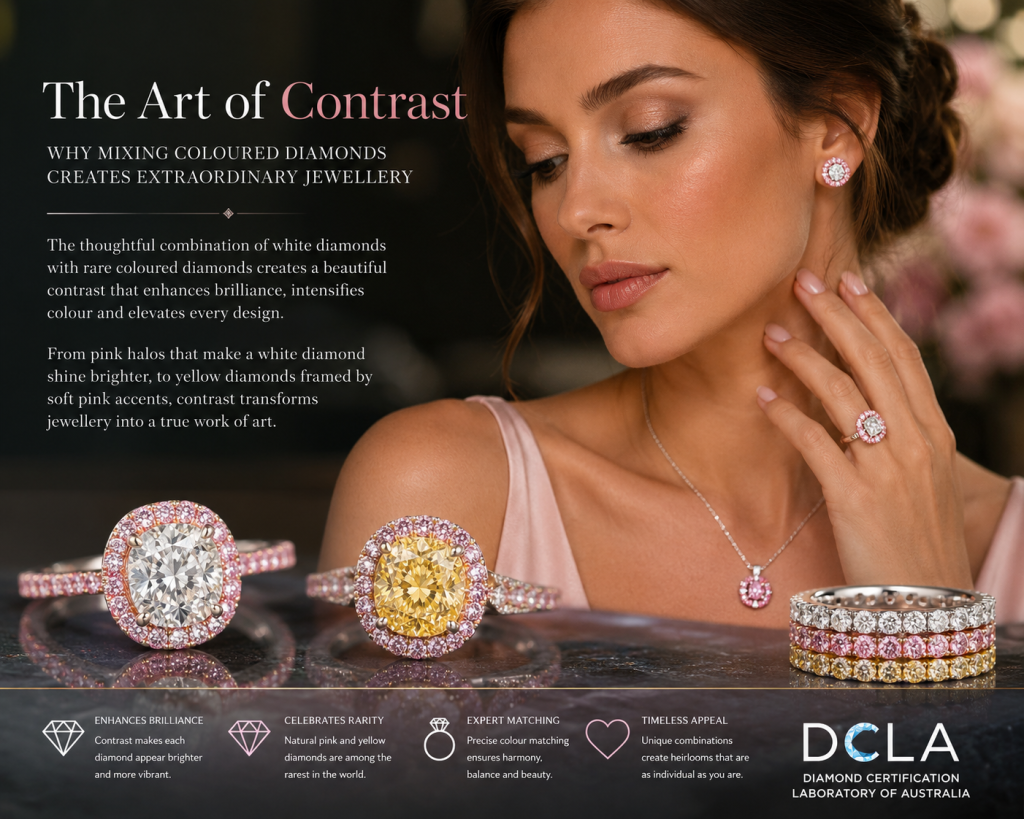
The Art of Contrast: Why Mixing Coloured Diamonds Creates Extraordinary Jewellery

 The Importance of Colour Matching

For centuries, white diamonds have been regarded as the ultimate symbol of elegance and timeless beauty. Today, however, the world’s leading jewellery designers are embracing a more artistic approach combining white diamonds with rare coloured diamonds to create striking pieces that are as unique as they are valuable.

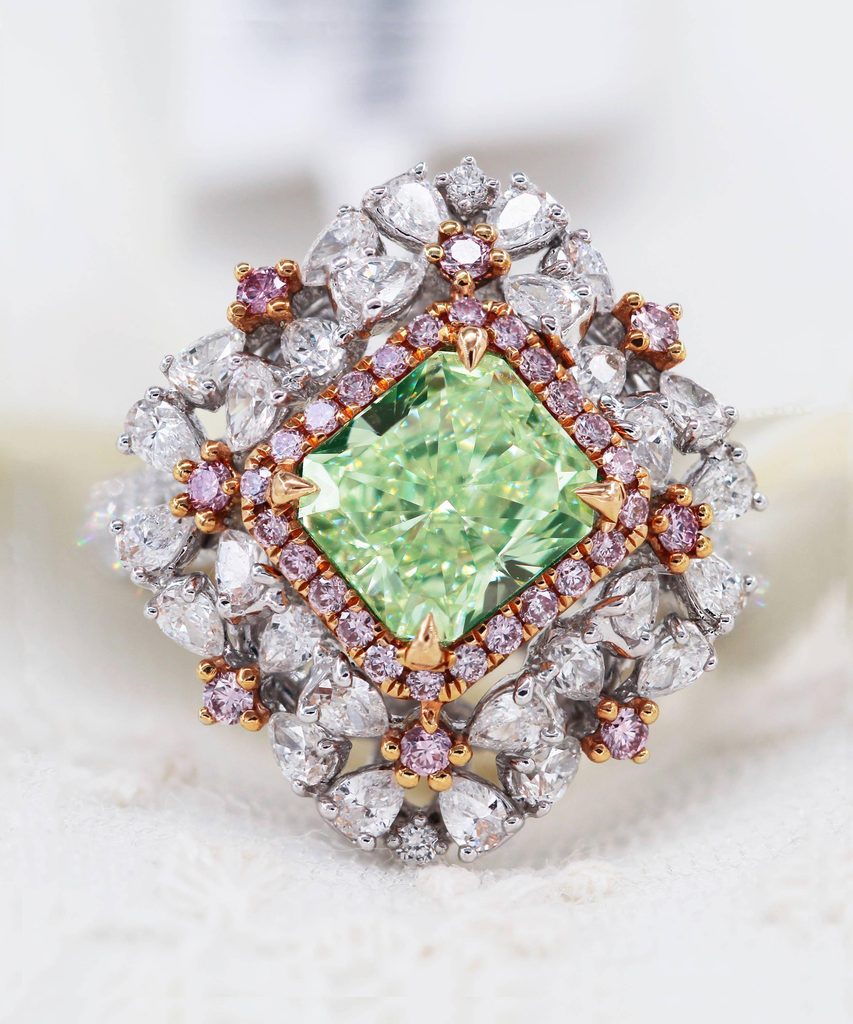
From delicate pink diamond halos surrounding a brilliant white centre stone to vivid yellow diamonds framed by soft pink accents, the thoughtful use of contrasting colours can transform an already beautiful diamond into an exceptional work of art.

The result is jewellery that is not only visually captivating but often far more distinctive than traditional all-white diamond designs.

Colour Creates Emotion

The human eye is naturally drawn to contrast.

Artists have understood this for centuries, using complementary colours to create depth, balance and visual impact. Jewellery designers apply the same principles when working with diamonds.

A perfectly colourless diamond surrounded by a halo of natural pink diamonds immediately appears brighter and more vibrant. The soft blush tones create warmth around the crisp white centre stone, producing a romantic and luxurious appearance that cannot be achieved with white diamonds alone.

Similarly, a rich yellow diamond surrounded by pink diamonds creates a dramatic contrast. The warmth of the yellow is enhanced by the cool undertones of the pink, allowing each colour to appear richer and more saturated.

Rather than competing with one another, the colours work together to produce greater visual intensity.

The Rise of Coloured Diamond Combinations

While coloured diamonds have always been prized by collectors, improvements in jewellery design and precision manufacturing have encouraged designers to use them in increasingly creative ways.

Some of today’s most sought-after combinations include:

  • A colourless diamond framed by a halo of natural pink diamonds.
  • Fancy Yellow diamonds surrounded by Argyle pink diamonds.
  • Fancy Intense Yellow centre stones with white diamond halos.
  • White diamonds accented with blue or champagne diamonds.
  • Pink diamonds paired with white pavĂ© settings.
  • Three-stone rings featuring contrasting diamond colours.
  • Alternating white and coloured diamonds in eternity bands.

Each combination creates its own personality, allowing jewellery to become an expression of individual style rather than simply following tradition.

Pink Diamonds: Small Stones with Extraordinary Impact

Natural pink diamonds occupy a unique position within the diamond world.

Even very small pink diamonds possess remarkable rarity, particularly those originating from Australia’s now-closed Argyle Mine. Their limited availability has made them highly desirable among collectors and designers alike.

A halo of pink diamonds surrounding a larger white diamond allows jewellers to showcase this rarity without requiring a large pink centre stone.

The effect is remarkable.

The pink diamonds add warmth and sophistication while visually enhancing the brilliance of the colourless centre diamond.

Because the halo consists of numerous carefully matched stones, the overall impression is one of richness and refinement.

Yellow Diamonds Come Alive with Contrast

More Than Beauty, A Celebration of Rarity


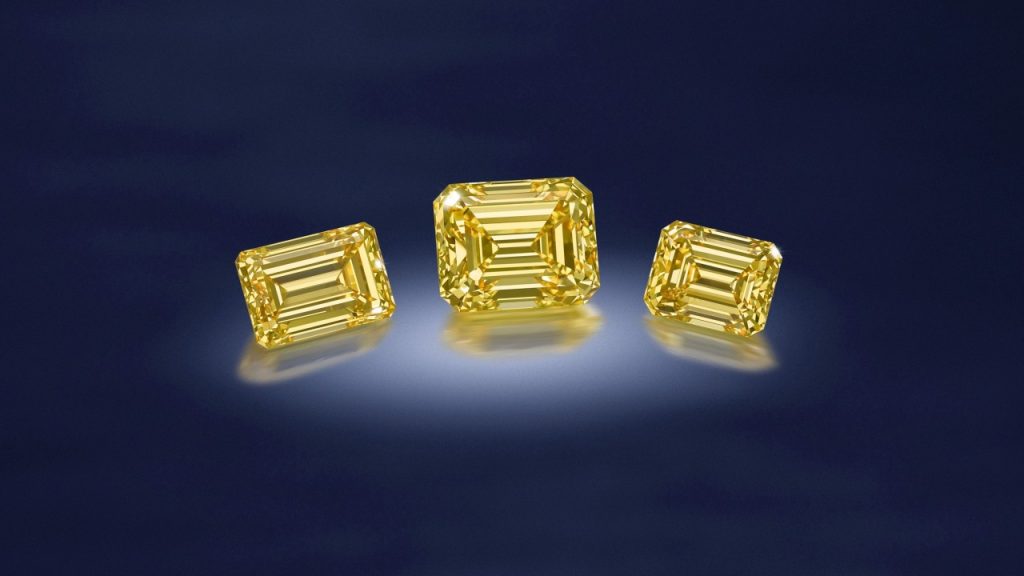
Yellow diamonds are among the most popular naturally coloured diamonds available today.

When used as the centrepiece of a ring, they radiate warmth and vibrancy. However, surrounding a yellow diamond with carefully selected pink diamonds introduces an entirely new dimension.

The soft pink tones gently frame the yellow centre, making its colour appear deeper and more saturated. At the same time, the yellow diamond provides a striking focal point against the delicate pink border.

Many luxury jewellery houses have embraced this combination because it creates an appearance that is simultaneously elegant, modern and unmistakably distinctive.

More Than Beauty, A Celebration of Rarity

Combining different coloured diamonds is not simply a design trend.

It is often a celebration of rarity.

Natural fancy coloured diamonds account for only a very small percentage of all diamonds recovered worldwide. Finding matching stones with similar colour intensity, clarity and size requires exceptional expertise.

Every carefully matched halo represents countless hours of diamond selection.

The more precisely the colours complement one another, the more harmonious and valuable the finished piece becomes.

The Importance of Colour Matching

Creating a successful coloured diamond design involves far more than selecting attractive stones.

Professional jewellers carefully consider:

  • Colour hue
  • Colour intensity
  • Tone
  • Saturation
  • Diamond size
  • Cut precision
  • Overall symmetry

Even slight variations between pink diamonds can affect the appearance of a halo.

Likewise, white accent diamonds must be matched for colour and brilliance to ensure they enhance rather than distract from the centre stone.

This meticulous attention to detail is what separates exceptional jewellery from ordinary jewellery.

Precious Metals Complete the Design

The choice of metal plays an equally important role.

Platinum and white gold enhance the brilliance of colourless diamonds and provide a contemporary appearance.

Yellow gold intensifies the warmth of yellow diamonds while offering a classic, timeless aesthetic.

Rose gold has become increasingly popular for pink diamond jewellery, complementing the delicate blush tones and creating a seamless flow of colour throughout the design.

Some of the most sophisticated creations combine multiple precious metals, allowing each section of the ring to highlight a different coloured diamond.

A New Era of Personal Expression

Today’s clients are increasingly seeking jewellery that reflects their individuality.

Mixing coloured diamonds allows designers to create bespoke pieces that cannot be replicated simply by increasing diamond size or carat weight.

Whether choosing a white diamond embraced by a halo of rare pink diamonds or a radiant yellow diamond accented with white and pink stones, these combinations create jewellery that tells a story through colour, contrast and craftsmanship.

Beauty Enhanced by Contrast

The finest jewellery is rarely about excess it is about balance.

The careful pairing of white, pink and yellow diamonds demonstrates how contrast can enhance brilliance, intensify colour and elevate an already beautiful design into something truly extraordinary.

As coloured diamonds continue to capture the imagination of collectors and jewellery lovers around the world, their thoughtful combination with traditional white diamonds is redefining modern luxury.

When selected with care and expertly matched, contrasting diamond colours do more than create visual impact they create timeless pieces whose beauty lies not only in the rarity of the individual diamonds, but in the harmony they achieve together.

Source: DCLA

Thursday, 25 June 2026

Why Fancy Colour Diamonds Are Becoming the New Frontier of Natural Diamond Luxury


The Rarity Behind Fancy Colour Diamonds

For decades, the diamond industry has been built around the traditional colourless diamond market, where stones are graded, traded and priced against established benchmarks such as the Rapaport Price List. However, a growing number of dealers and retailers are turning their attention to a segment of the market where rarity, beauty and individuality matter more than a standard price formula: natural fancy colour diamonds.

In 2016, diamond dealer and former banker Chopra received advice that would shape her future direction. A mentor encouraged her to look beyond the diamonds that could be easily compared on a price list.

“Don’t focus on the diamonds that are on the list. Focus on the diamonds you can’t find on a list. That’s where the magic happens.”

That philosophy became the foundation of Khepri Jewels, a company founded in 2023 specialising in natural fancy colour diamonds in unique shapes and exceptional qualities.

Unlike colourless diamonds, where value is largely determined by the traditional 4Cs of colour, clarity, cut and carat weight, fancy colour diamonds are valued through a combination of rarity, intensity of colour, origin, size, and market demand. Each stone is unique, and many cannot be directly compared with another diamond.

This rarity is what makes fancy colour diamonds some of the most desirable gems in the world.

The Rarity Behind Fancy Colour Diamonds

Natural diamonds receive their colours through extraordinary geological events that occur deep within the Earth over billions of years. Trace elements and structural changes within the diamond crystal create colours ranging from subtle champagne and cognac shades to highly prized pinks, blues, greens and reds.

Only a tiny percentage of all diamonds mined display natural colour strong enough to be classified as fancy colour diamonds. Among these, the most intense and vivid colours are exceptionally rare.

For example:

Pink Diamonds
Natural pink diamonds are among the rarest gemstones on Earth. Their colour is not caused by trace elements but is believed to come from changes in the diamond’s crystal structure. The closure of the historic Argyle Diamond Mine in 2020 removed the world’s largest source of rare pink diamonds, increasing their scarcity.

Exceptional examples include the Pink Star diamond, one of the most famous diamonds ever sold, and the Williamson Pink Diamond, gifted to Queen Elizabeth II.

Blue Diamonds
Blue diamonds are extraordinarily rare and derive their colour from the presence of boron within the diamond crystal. Famous examples include the Hope Diamond, one of the most recognised gemstones in history, and the Oppenheimer Blue, which achieved one of the highest prices ever recorded for a diamond at auction.

Red Diamonds
Red diamonds are considered the rarest of all fancy colours. True red diamonds are incredibly scarce, with only a handful of significant examples known worldwide. The famous Moussaieff Red Diamond is regarded as one of the finest examples.

Green Diamonds
Natural green diamonds are created through exposure to natural radiation over millions of years. Their rarity and unusual colour make them highly collectible, with the Dresden Green Diamond being one of the most famous green diamonds in existence.

Why Retailers Are Looking Beyond Traditional Diamonds

The rise of laboratory grown diamonds has created increasing competition in the traditional colourless diamond market. Many retailers are finding it more challenging to explain the difference in value between a natural white diamond and a lab grown diamond to consumers who are primarily focused on price.

Fancy colour diamonds offer a different proposition.

They are not simply a diamond purchase. They are rare natural treasures with geological stories that cannot be replicated. Their value is linked to scarcity, collectability and emotional connection.

At luxury jewellery events, dealers specialising in fancy colour diamonds are seeing increased interest from retailers looking for something distinctive, something that cannot be easily compared online or reproduced in a laboratory.

The future of natural diamond luxury may increasingly move away from mass comparison and towards individuality, rarity and provenance.

As Chopra’s mentor recognised years ago, the greatest opportunities often exist in the diamonds that cannot be placed on a simple price list.

The diamonds without a formula may ultimately become the diamonds with the greatest story.

Source: DCLA

Friday, 16 January 2026

Diamond Industry Pioneer Louis Glick Passes Away at 102

 Louis “Louie” Glick

Louis “Louie” Glick, one of New York’s most respected diamond dealers and a pioneering force behind the rise of yellow diamonds, passed away on 10 January at the age of 102.

Born in 1924, Glick entered the diamond trade at just 21 years old, founding the diamond company that would later bear his name. His firm went on to become a De Beers sightholder in 1976, cementing his position among the industry’s elite.

Glick was widely recognised for his visionary role in advancing yellow diamonds into the mainstream market. Together with his business partner Stanley Doppelt, he co-created the StarBurst cut — a modified radiant cut designed specifically to enhance yellow diamond colour. The innovation played a crucial role in increasing demand for fancy yellow diamonds, as documented in GIA’s Gems & Gemology.

Don Spak, who previously worked under Glick, credited him with reshaping industry attitudes toward coloured diamonds.

“Mr Glick believed in the yellow diamond market and helped develop it,” Spak wrote on LinkedIn. “Today, there is not a designer, manufacturer, or retailer who does not carry yellow diamonds in their collections or inventory. The place of yellow diamonds will forever be part of the industry thanks to people like Louis Glick.”

Among his many achievements, Glick was also part owner of one of the world’s most famous yellow diamonds — the extraordinary 407-carat Incomparable.

Former Stuller vice president Stanley Zale reflected fondly on his time working with Glick, describing him as both a brilliant businessman and a deeply principled individual.

“The word mensch doesn’t even begin to do justice to who he was,” Zale. “He was the smartest businessperson I’ve ever known. If you wanted to learn the diamond business, he was the person to learn it from. He led with humility, kindness and respect. It was an honour to have known and worked for him.”

Glick’s influence extended well beyond his own success. His nephew, diamond dealer Daniel Sklarin, noted that Glick’s greatest legacy was the people he helped along the way.

“He was a giant in the diamond business, and at his height there was no one even close,” Sklarin said. “His greatest successes were the many individuals he helped establish their own paths in the diamond trade.”

Louis Glick is survived by his son, Simon Glick, and his daughter, Esther Pluchenik. His legacy as a visionary, mentor and true gentleman of the diamond industry will endure for generations.

Source: DCLA

Friday, 2 May 2025

Rethink Yellow Diamond Jewels: How Yellow Diamonds Get Their Colour

Designers Are Embracing Yellow Diamonds

Yellow diamonds are making a stylish comeback. Whether offering a warm, earthy glow or a vibrant pop of colour, these fancy-coloured stones bring a fresh, contemporary edge to fine jewellery. They can be worn as neutrals, used as centrepieces, or layered for subtle impact—making them as versatile as they are striking.

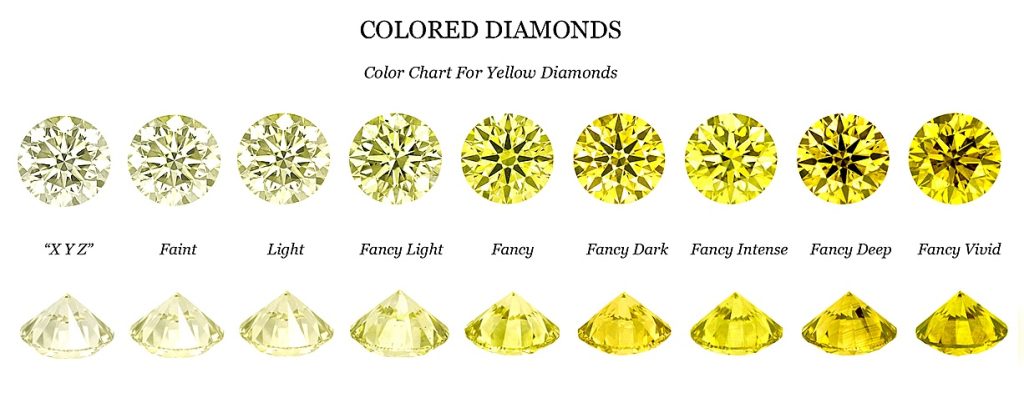
The colour in yellow diamonds is the result of nitrogen atoms bonding with carbon within the diamond’s crystal lattice. This bond subtly alters the diamond’s atomic structure, changing the way it interacts with light. Specifically, it absorbs the blue part of the visible spectrum, allowing yellow tones to dominate. The Diamond Certification Laboratory of Australia (DCLA) grades yellow diamonds based on their colour intensity, classifying them as light, intense or vivid. The deeper and more saturated the yellow, the rarer and more valuable the diamond. Curiously, the lighter tones are often more affordable than white diamonds, making them an attractive alternative for those seeking something both elegant and unique.

Why Designers Are Embracing Yellow Diamonds

Wear Yellow Diamonds

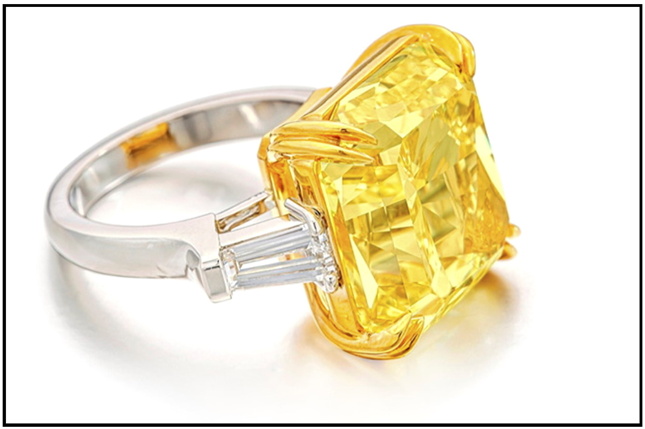
Jewellery designers are increasingly drawn to yellow diamonds for their warmth, individuality, and unexpected elegance. These stones challenge the norm, offering something joyful and radiant while still being refined. As the jewellery world moves beyond the conventional, yellow diamonds are gaining traction as centrepieces with personality.

How to Wear Yellow Diamonds

Once your collection includes the classics such as white diamond hoop earrings, tennis bracelets, stacking rings or a line necklace it’s easy to introduce a splash of colour. Yellow diamonds pair beautifully with white or rose gold and work well layered with other tones. Go bold with vibrant yellow bangles and cocktail rings, or opt for a more understated approach with a mix of pale-yellow and Champagne diamonds, as seen in Sethi’s neutral-toned confetti styles.

Yellow Diamonds: The Emerging Trend in Engagement Rings

Yellow Diamonds

More couples are seeking engagement rings that reflect their personal style rather than adhering to tradition. Yellow diamonds especially those in softer or more earthy tones offer a refined, alternative aesthetic that still feels timeless and romantic.

One designer, Root, recalled a client who brought him a family heirloom: a pear-shaped yellow diamond. He combined it with a matching white diamond to form a heart-shaped engagement ring. Initially, clients were hesitant about yellow diamonds, unsure whether they carried the same prestige. That perception is changing rapidly.

Designer Lau echoes this sentiment. “As our view of what defines a high-quality diamond evolves, I find myself drawn to warmer tones and even imperfect shapes, they feel authentic and special,” she explains. Yellow diamonds are increasingly favoured for their character, individuality, and natural charm.

Why Yellow Diamonds Are Here to Stay

Yellow Diamonds Are Here to Stay

There’s an undeniable joy and brightness that yellow diamonds bring. Whether in soft pastel shades or vivid canary tones, they evoke a feeling of sunshine and optimism, something many people are seeking in their jewellery today.

As the desire for unique and meaningful designs continues to grow, yellow diamond engagement rings are well-positioned to become the next generation’s classic. After all, who can resist a jewel that radiates light, joy, and a touch of the unexpected?

Discover the magic of yellow diamonds, your perfect piece may be one sunny sparkle away.

Source: DCLA

Fancy Colour Diamonds, From Hollywood Statement to the Ultimate Collectable

  For generations, the traditional diamond engagement ring has been dominated by the classic colourless stone. But the world of exceptional ...