Showing posts with label Botswana De Beers acquisition. Show all posts

Thursday, 8 January 2026

FOREVERMARK DIAMOND JEWELLERY CELEBRATES THE GRAND OPENING OF DE BEERS GROUP’S LARGEST FLAGSHIP STORE IN MUMBAI

 FOREVERMARK DIAMOND JEWELLERY STORE IN MUMBAI

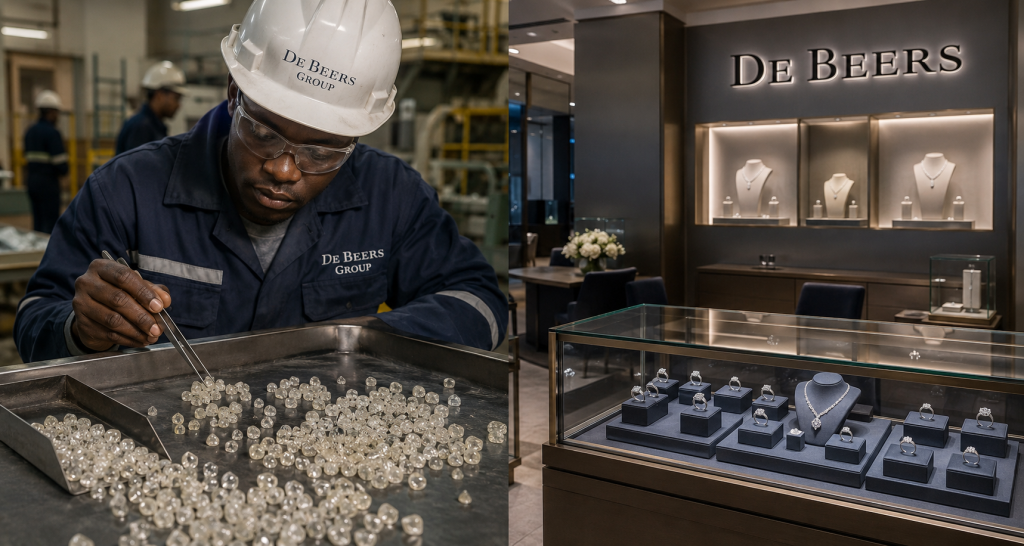
Mumbai, 8th January 2026: Forevermark Diamond Jewellery marked a defining milestone in its India journey with the grand opening of the world’s largest flagship store by De Beers Group in Mumbai. Located at Crest Link, Khar West, at the heart of Linking Road, the nearly 5,000 sq. ft. store reflects the brand’s long-term commitment to Indian consumers seeking meaningful, design-led luxury.

The marquee launch was celebrated with an exclusive evening that brought together Mumbai’s most influential tastemakers, jewellery connoisseurs, creative voices, socialites, celebrities, and leading creators. Hosted within the flagship itself, the event offered guests a first glimpse into the brand’s stunning universe, featuring a fashion showcase and immersive experiences that seamlessly blended craftsmanship with contemporary style.

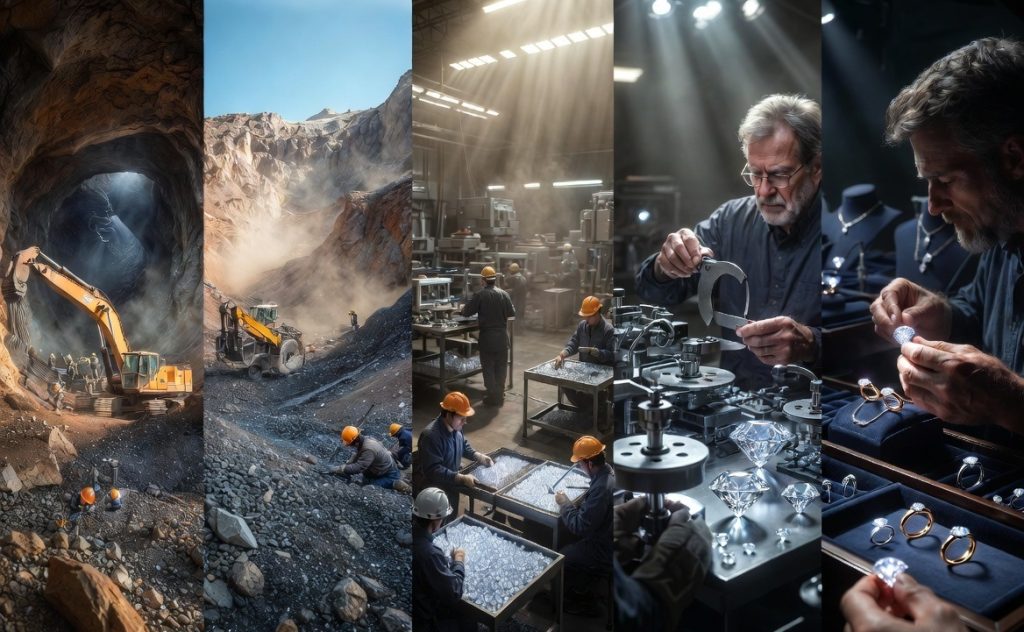
The evening unfolded with enthralling performances including live music and a spectacular fashion showcase, complemented by interactive installations and AI integrations around the Mine to Finger journey, branded photo moments, innovative tarot readings and displays of the new collection, creating an atmosphere of modern luxury and timeless elegance. Guests explored the store’s full portfolio, from refined everyday diamond jewellery to statement and high jewellery pieces, all designed to celebrate life’s most meaningful moments.

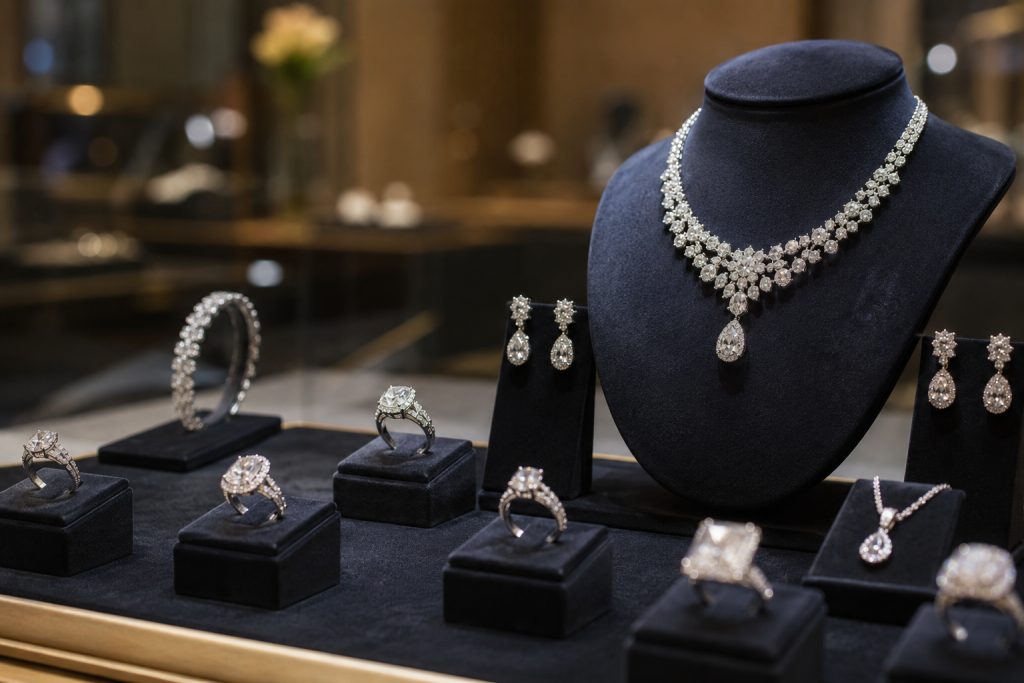
Every Forevermark Diamond Jewellery piece is crafted from some of the world’s most beautiful, rare, and responsibly sourced diamonds, each bearing a unique inscription, a promise of authenticity, integrity, and exceptional quality. This philosophy comes to life with the launch of the all-new Forevermark Icon Collection, inspired by the North Star as a symbol of clarity, direction, and confidence. It features versatile everyday diamond jewellery styles, striking statement pieces, and iconic designs across rings, earrings, necklaces, and bracelets.

This collection launch is also accompanied by the brand’s new campaign titled ‘My Guiding Light’ that celebrates four iconic women who represent modern Indian excellence across diverse fields. Manu Bhaker, professional shooter and double Olympic medallist; Diana Penty, actor; Masaba Gupta, designer, actor, and entrepreneur; and Princess Gauravi Kumari of Jaipur, social entrepreneur, each embody individuality, strength, and purpose, sharing their personal stories and perspectives through mini digital videos on Instagram. Together, they reflect the belief that confidence and direction come from within, perfectly aligning with the spirit of the Icon Collection.

All four of them were also in attendance at the event, bringing glamour and gravitas to the evening and reinforcing the store’s position as a landmark destination in Mumbai’s luxury retail landscape. The evening was further elevated by the presence of Mumbai Indian Cricketers Amelia Kerr, Milly Illingworth and Sajeevan Sajana, whose stories of resilience, precision and perseverance echo the enduring strength of natural diamonds.

Commenting on the launch, Sandrine Conseiller, CEO, Brands & Diamond Desirability, De Beers Group, said: “India is central to the future of the natural diamond category. The opening of our largest Forevermark store in Mumbai reflects both the strength of consumer response we are seeing and our long-term confidence in the market. As luxury consumption in India becomes more considered and value-driven, Forevermark is well positioned to build relevance through trust, craftsmanship, and enduring desirability.”

Shweta Harit, Senior Vice President, De Beers Group and CEO, Forevermark, added: “Mumbai marks an important next chapter in Forevermark’s India story. Following the encouraging response to our New Delhi store, this flagship reflects the scale of opportunity ahead. As our largest store globally, it brings together our brand vision, retail ambition, and commitment to the Indian consumer. This opening is also a key step toward our longer-term plan of building a network of 100 Forevermark stores in India by 2030.”

The new Mumbai flagship blends Forevermark’s contemporary international design with local sensibilities. The spacious store offers an immersive experience, showcasing everyday diamond jewellery, statement and high jewellery pieces, and iconic designs in a setting that reflects the brand’s commitment to thoughtful, experience-led luxury.

About Forevermark Diamond Jewellery

Forevermark Diamond Jewellery is the signature diamond jewellery brand from De Beers Group, the world’s leading diamond company, a name synonymous with more than 135 years of expertise and heritage in the world of diamonds. Every Forevermark Diamond Jewellery creation celebrates life’s most meaningful moments, featuring natural diamonds that are beautiful, rare and responsibly sourced. Every Forevermark diamond bears a unique inscription, ensuring authenticity and making each piece deeply personal.

Formed over billions of years deep within the Earth, Forevermark diamonds are hand-selected for their exceptional quality, graded beyond the 4Cs in the pursuit of absolute beauty. Responsibly sourced and carefully cared for along their journey, they reflect the brand’s commitment to creating a positive impact on the people and places its diamonds come from. Expertly crafted by master designers, Forevermark Diamond Jewellery combines modern artistry with timeless elegance. Each piece elevates the brilliance of its diamond while embodying the brand’s enduring values of beauty, rarity, and responsibility.

Thursday, 27 November 2025

BHP Walks Away from Last-Ditch Bid for Anglo American

Perth, Australia Brookfield Place office tower with BHP offices

Mining giant BHP has walked away from a last-ditch attempt takeover bid for Anglo American, parent company of De Beers.

It announced on Sunday (23 November) that it was “no longer considering a combination of the two companies”.

Melbourne-based BHP made hostile bids for Anglo in April and May 2024, both of which failed.

The move prompted loss-making Anglo to start streamlining its operations, to divest some unprofitable activities, including its diamond division, De Beers and to focus on copper and other money-making assets.

Anglo had hoped to complete the sale of De Beers by the end of this year, but despite intense interest, from the Botswana government among others, that has yet to happen.

BHP renewed its bid primarily to disrupt Anglo American’s planned $53 billion merger with Canadian miner Teck Resources, which is expected to go ahead on 9 December

Source: dcla

Monday, 17 November 2025

Angola Makes a Bid for De Beers, Reshaping the Global Diamond Landscape

De Beers Global Sightholder Sorting a parcel of rough diamonds

De Beers Global Sightholder Sorting a parcel of rough diamonds over a light box using a hand loupe.

Angola has signalled its intention to buy back the 85% stake in De Beers currently held by Anglo American, in a move that has immediately captured global industry attention. The proposal, made through Angola’s state-owned diamond company Endiama, comes at a time when the diamond sector has struggled to regain momentum after the downturn that began in 2022.

The announcement positions Angola decisively on the world stage. The country produced 10.7 million carats in the first nine months of the year and is targeting a record 14.8 million carats by 2025. According to the Kimberley Process, Angola’s expected 14 million carats in 2024 place it above Botswana in rough-diamond output for the first time in two decades. This surge, driven by the vast Catoca open-pit mine and other major deposits, underscores Angola’s long-term strategy of advancing local beneficiation and resource industrialisation.

Against this backdrop, Endiama has formally expressed interest in acquiring Anglo American’s controlling stake as the parent company restructures and divests assets following its 2024 strategic review. Should the transaction proceed, it would mark one of the most consequential ownership shifts in the diamond industry’s modern history.

Complicating the landscape is Botswana’s position. The country currently holds the remaining 15% stake in De Beers and announced in September its intention to increase its shareholding to more than 50%. Botswana relies heavily on diamonds, which account for roughly one-third of government revenue and 80% of exports, while Angola is seeking to reduce dependence on oil through expansion of its mining sector.

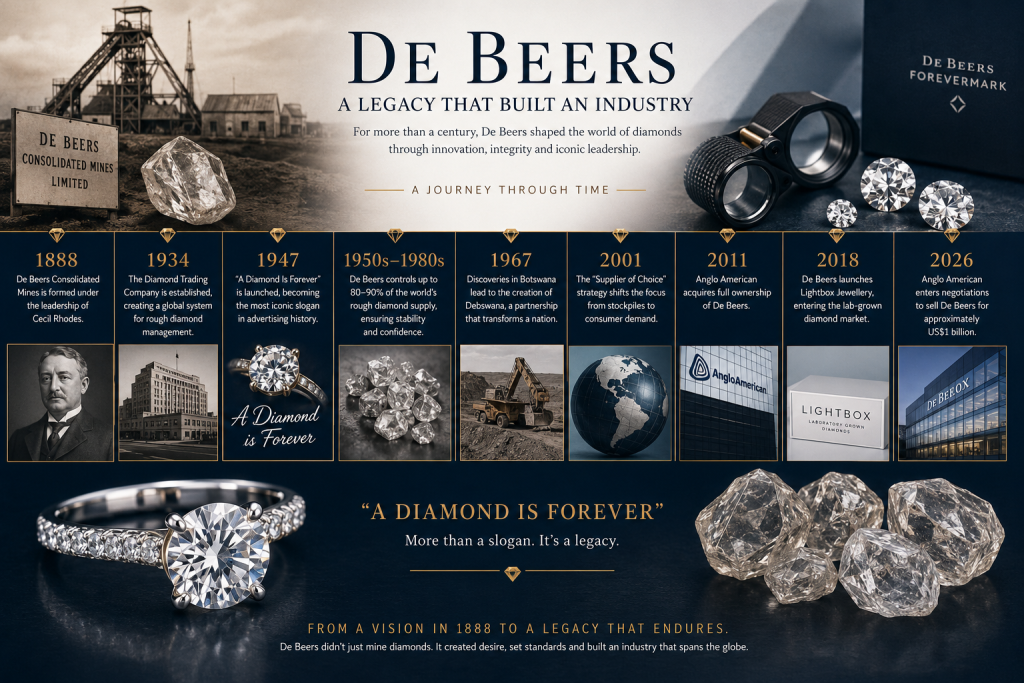
The implications of an Angolan takeover are far-reaching. De Beers remains one of the world’s most influential suppliers of rough diamonds, with 2024 revenues of US$2.7 billion and a valuation near US$4.9 billion. Its sales cycles, production planning, and market guidance shape between one-quarter and one-third of global rough supply, giving the company significant influence over pricing, availability, and the high-end jewellery pipeline.

A shift in control could potentially redirect more value-added processes to Africa, including sorting, cutting, and polishing — areas historically dominated by centres outside the continent. Increased localisation could boost employment, strengthen regional economies, and reshape supply-chain dynamics at a time when Botswana has reduced output and seen fiscal pressure rise, while Angola’s production profile continues to accelerate.

However, questions remain. Angola has stated that the acquisition would not be funded through its national budget, leaving the structure and financing mechanism yet to be clarified. Diplomatic tension with Botswana is another risk factor, particularly if competing bids emerge or national interests collide.

On a global scale, the outcome could introduce both opportunity and volatility. Greater African control over rough supply may support local markets, but the broader diamond industry continues to face challenges, including subdued demand, geopolitical instability, and mounting competition from lab-grown diamonds, which have disrupted consumer expectations and pricing patterns.

If Angola’s bid succeeds, it would mark a historic realignment of influence within the natural-diamond sector — one with the potential to reshape trade flows, pricing dynamics, and the strategic balance of power for years to come.

Source: DCLA

Monday, 10 November 2025

Botswana’s Strategic De Beers Takeover Could Redefine Global Diamond Industry

Sorting rough diamonds over a light box using a hand loupe.De Beers Global Sightholder Sales, Gaborone, Botswana.

Gaborone, Botswana — November 2025:
Botswana’s move to secure majority control of De Beers, the world’s most iconic diamond company, marks a turning point in both African resource ownership and the global diamond market. The initiative, driven by President Duma Boko, represents one of the most significant sovereignty shifts in modern mining history, with potential to reshape how nations manage their natural wealth.

Why Botswana’s De Beers Acquisition Matters

Diamonds remain the cornerstone of Botswana’s economy — contributing nearly 30% to GDP and 80% of export earnings. Through its long-standing Debswana partnership with De Beers, the country has benefited from steady revenues but limited control over the strategic direction of its most vital industry.

Now, Botswana aims to change that. By pursuing a majority stake, the government seeks greater influence over production, marketing, and profit allocation — a shift that could transform the balance of power in the global diamond trade.

Current Ownership and Partnership Structure

Currently, Anglo American holds 85% of De Beers, while Botswana owns 15% through Debswana. Though this structure has delivered stability and growth, it also leaves Botswana as a minority player in decisions that directly affect its economy.

With Anglo American now restructuring its portfolio and considering divestment, Botswana has seized a rare opportunity to negotiate for majority control — aligning national interest with long-term sustainability and independence.

Economic Impact and Strategic Motivation

Diamonds have built Botswana’s success story, funding education, infrastructure, and healthcare. Yet, with rising competition from lab-grown diamonds and volatile global demand, the government recognises the need to safeguard revenue and ensure future resilience.

Majority control would allow Botswana to:

  • Align De Beers’ strategy with national priorities
  • Increase direct revenue and value capture
  • Enhance job creation through local beneficiation
  • Strengthen resilience against external market shocks

Understanding the De Beers Restructuring Opportunity

Anglo American’s decision to offload assets amid global portfolio optimisation has opened the door for Botswana’s historic bid. Market analysts suggest that De Beers’ valuation — affected by softer diamond demand — may now be more accessible, creating a once-in-a-generation acquisition opportunity for Botswana.

International sovereign wealth funds, including potential partners from Oman, have expressed interest in co-financing the acquisition, signalling global confidence in Botswana’s governance and the enduring value of natural diamonds.

Regional Competition and Cooperation

Botswana’s bid faces competition from Angola’s Endiama EP, which has also expressed interest in acquiring Anglo American’s stake. However, diplomatic discussions between Botswana and Angola hint at possible collaboration, with joint African ownership of De Beers emerging as a strategic alternative that could reinforce continental resource sovereignty.

Global Diamond Market Implications

If successful, Botswana’s acquisition would mark a paradigm shift:

  • African Resource Sovereignty: Establishing Botswana as a model for other resource-rich nations pursuing local ownership.
  • Supply Chain Control: Enhancing Africa’s ability to influence global pricing, production, and distribution strategies.
  • Market Stability: Strengthening natural diamond positioning against synthetic competitors through unified African leadership.

With potential to contribute over 35% to Botswana’s GDP and maintain its dominance in global exports, majority ownership could significantly enhance the nation’s economic resilience and international influence.

Challenges and Market Outlook

The acquisition faces hurdles, including valuation complexities, competitive bidding, and global demand fluctuations. Moreover, the diamond industry continues to navigate pressures from lab-grown alternatives, changing consumer preferences, and macroeconomic uncertainties.

Nevertheless, Botswana’s strategy demonstrates forward-thinking leadership — leveraging its expertise, governance stability, and long-term vision to secure sustainable control over its most valuable resource.

President Duma Boko’s Vision

“Government will leverage a majority stake. Concrete steps are under way towards the acquisition of Anglo American shares in De Beers,”
— President Duma Boko, addressing Parliament, November 2025

His statement underscores Botswana’s commitment to advancing economic independence while setting a precedent for African nations reclaiming control of their mineral wealth.

What This Means for the Future

Should Botswana succeed, it will become the first African nation to hold majority ownership of the world’s largest diamond company — a move that could redefine the global diamond landscape for decades to come.

Beyond national pride, this transition represents a strategic realignment of power, giving Botswana direct control over pricing, marketing, and supply chain dynamics in the international diamond market.


Frequently Asked Questions

When will the Botswana De Beers deal be finalised?
Negotiations are ongoing through late 2025. Completion depends on final agreements with Anglo American and potential co-investors.

How much will Botswana pay for majority control?
Financial details remain confidential, with valuations influenced by current market conditions and strategic negotiations.

Will this affect global diamond prices?
Yes — greater African control over supply could strengthen natural diamond pricing and reinforce consumer confidence in ethically sourced stones.


About DCLA

The Diamond Certification Laboratory of Australia (DCLA) is Australia’s official CIBJO-recognised laboratory, providing independent grading, authentication, and certification of natural diamonds. DCLA continues to report on global developments shaping the natural diamond industry, ensuring transparency and consumer confidence worldwide.

Disclaimer: This article is intended for informational and educational purposes only. The views and interpretations expressed do not necessarily reflect those of the Diamond Certification Laboratory of Australia (DCLA). All information is based on publicly available data and current market reports at the time of publication. DCLA does not provide financial, investment, or legal advice. Readers are encouraged to conduct their own research or consult with qualified professionals before making decisions related to diamond investment, trading, or acquisition.

Global Diamond Industry Shows Signs of Recovery: What Is Driving the Rebound?

  After three challenging years marked by geopolitical disruption, shifting trade routes, and weakened consumer confidence, the global diamo...