Showing posts with label De Beers ownership. Show all posts

Sunday, 22 February 2026

De Beers Reports $511 Million Loss as Global Diamond Crisis Deepens

 The global diamond industry is facing its most severe downturn in decades, with De Beers posting a staggering $511 million EBITDA loss for 2025

The global diamond industry is facing its most severe downturn in decades, with De Beers posting a staggering $511 million EBITDA loss for 2025 — a dramatic collapse that underscores mounting structural pressures across the natural diamond market.

Despite generating approximately $3.5 billion in revenue, profitability deteriorated sharply, highlighting a widening disconnect between stable turnover and collapsing margins. The downturn reflects a perfect storm of falling realised prices, swelling inventories, rising operational costs and intensifying competition from laboratory-grown alternatives.

This historic loss signals more than a cyclical slowdown — it marks a structural turning point for the global diamond sector.


Why Did De Beers Record a $511 Million Loss?

The scale of the financial decline is unprecedented. The company’s EBITDA performance deteriorated nearly 2,000% year-on-year, shifting from manageable losses into industry-defining deficits.

Key Drivers Behind the Collapse:

  • Lower realised rough diamond prices
  • Inventory accumulation throughout the midstream
  • Production cuts impacting fixed-cost absorption
  • Asset impairment charges reflecting weaker long-term pricing assumptions

While revenues remained broadly stable, margins compressed dramatically — revealing that demand weakness is affecting pricing power rather than transaction volume alone.


Production Cut by 12% as Supply Is Calibrated

In response to deteriorating market conditions, rough diamond production was reduced by 12% to 21.7 million carats in 2025.

Unlike gold or oil markets where production cuts can rapidly rebalance supply, the diamond sector operates through a complex value chain involving mining, cutting, polishing and retail distribution. Inventory build-ups in 2025 forced disciplined output reductions designed to:

  • Preserve cash flow
  • Prevent further price collapse
  • Protect long-term reserve value
  • Stabilise global supply

However, elevated stockpiles remain a major overhang for 2026.


Lab-Grown Diamonds Accelerate Structural Disruption

Laboratory-grown diamonds continue gaining market share, particularly in engagement rings — historically the most valuable segment of natural diamond demand.

These synthetics are chemically identical but typically sell for 60–80% less than natural stones.

Competitive Advantages of Lab-Grown Diamonds:

  • Lower retail prices
  • Ethical and environmental positioning
  • Consistent quality
  • Rapid scalable production

Millennial and Gen Z buyers are demonstrating increased price sensitivity and different value priorities compared with previous generations — a demographic shift that is reshaping long-term demand dynamics.


China’s Luxury Slowdown Hits Diamond Demand

China, once a powerful growth engine for premium diamond jewellery, is experiencing reduced luxury consumption.

Key contributing factors include:

  • Slower GDP growth
  • Property market weakness
  • Lower consumer confidence
  • Currency sensitivity to imports

With Chinese buyers representing a significant share of high-end global diamond demand, the slowdown is having a disproportionate impact on producers.


US Tariffs Disrupt Indian Diamond Processing Hub

Trade policy has compounded the crisis. India processes roughly 80% of the world’s rough diamonds, and new US tariffs on Indian polished stones have created additional cost pressures and uncertainty.

The impact includes:

  • Higher landed costs for US-bound diamonds
  • Supply chain bottlenecks
  • Planning uncertainty
  • Competitive distortions

Even if tariff relief emerges later in 2026, industry participants remain cautious about near-term recovery.


Anglo American Takes $2.3 Billion Impairment

Parent company Anglo American recognised a $2.3 billion impairment related to its diamond division, reflecting revised long-term price expectations.

This writedown signals a structural reassessment of the sector rather than a temporary cyclical dip.


African Economies Feel the Pressure

Diamond-producing nations such as Botswana face heightened economic vulnerability. Diamond revenues contribute substantially to:

  • Government income
  • Foreign exchange earnings
  • Employment
  • GDP

Production discipline across Southern Africa reflects both market necessity and economic sensitivity.


What Happens Next? Recovery Scenarios for 2026–2028

Industry forecasts suggest cautious optimisation in 2026, with gradual recovery potentially emerging through 2027–2028.

Key variables include:

  • Inventory normalisation
  • Stabilisation of Chinese demand
  • Trade policy resolution
  • Lab-grown market share plateau

However, structural competition from synthetic diamonds is likely permanent, meaning natural diamond producers must reposition strategically.


What This Crisis Reveals About Luxury Commodity Markets

The diamond downturn highlights broader lessons for luxury commodities:

  • High income elasticity creates sharp downturn risk
  • Supply chains concentrated in single regions amplify vulnerability
  • Technological disruption can permanently reshape pricing structures
  • Inventory cycles in opaque markets create extended recovery timelines

Unlike transparent commodities such as gold, diamond pricing lacks a centralised exchange — increasing volatility during stress periods.


Investment Perspective

For long-term investors, sector distress can present contrarian opportunities — but risks remain elevated.

Favourable characteristics may include:

  • Low-cost producers
  • High-grade deposits
  • Strong balance sheets
  • Vertical integration

Nevertheless, structural shifts in consumer preference require careful risk-adjusted evaluation.


Disclaimer: This article is for informational purposes only and does not constitute financial advice. Commodity investments carry substantial risk, including potential loss of capital. Readers should conduct independent research and consult qualified financial professionals before making investment decisions.


DCLA News will continue monitoring developments in the global diamond sector as the industry navigates one of the most challenging periods in modern history.

Thursday, 5 February 2026

Anglo flags third De Beers writedown as Teck merger looms

 Anglo flags third De Beers writedown

Anglo American is weighing a third writedown of De Beers in as many years as weak diamond prices persist and the miner advances asset sales ahead of its merger with Canada’s Teck Resources.

The century-old group said on Thursday it was reviewing the carrying value of its diamond business after average realized prices fell in 2025, warning the unit is likely to be lossmaking again.

The potential impairment comes as Anglo moves to finalize the sale of non-core assets, including De Beers. At the same time, the miner is preparing to merge with Teck in a transaction approved by shareholders and regulators late last year, creating Anglo Teck (official named confirmed).

The company booked a $2.9 billion impairment on De Beers in February last year, following a $1.6 billion writedown in 2024. Anglo, which owns 85% of the diamond company, offered few details on a sale process, saying only that it was “progressing.”

In a fourth-quarter production update, Anglo said diamond trading conditions “continued to be challenging” amid industry weakness, geopolitical tensions and tariff uncertainty. It said lower prices and market conditions could lead to an impairment when full-year results are released.

Diamond prices have come under pressure from weaker consumer demand in China and competition from cheaper, lab-grown stones. De Beers’ average realized price fell 7% to $142 per carat in 2025, driven by a 12% drop in the average rough price index.

Anglo said the decline was exacerbated by selling inventory below cost, largely lower-value goods. Adjusted for that mix, the equivalent price index reduction would have been 25% year on year, suggesting some underlying resilience in the market.

De Beers sold 5.9 million carats in the fourth quarter, up from 4.6 million a year earlier, lifting revenue to $571m from $543m. Even so, Anglo said it was undertaking an impairment review that could result in another writedown.

Exit hurdles
The prolonged slump complicates Anglo’s efforts to exit De Beers. Chief executive Duncan Wanblad said only that the sale was moving forward. A consortium led by former De Beers managing director Gareth Penny is seen as a frontrunner, though Botswana, which owns 15% of the company, has said it wants to take control.

Namibia has also expressed interest, and former chief executives Bruce Cleaver and Penny have been mentioned as potential buyers.

The De Beers sale forms part of a restructuring unveiled in 2024. Anglo demerged its platinum arm, Amplats (now Valterra), in June 2025, while the planned sale of its Australian metallurgical coal mines stalled after Peabody Energy (NYSE: BTU) walked away following a fire at Moranbah North.

Wanblad said on Thursday that the formal sale process for steelmaking coal was “progressing well,” without naming alternative buyers or addressing potential compensation from the US firm.

Copper reality check
Copper remains central to the Anglo-Teck investment case, but near-term output expectations have softened. Anglo cut its 2026 copper guidance to 700,000 to 760,000 tonnes from 760,000 to 820,000 tonnes, citing lower grades at several operations.

It also trimmed 2027 guidance to 750,000 to 810,000 tonnes, including at Collahuasi in Chile, which Anglo and Teck plan to integrate with Teck’s neighbouring Quebrada Blanca mine. For the longer term, the group added new guidance for 2028 of 790,000 to 850,000 tonnes.

A 15-km (9.3-mile) conveyor would be built to feed Collahuasi’s high-quality ore into QB’s new processing plants. (Click on map to enlarge)
Copper production in 2025 was 695,000 tonnes, roughly flat year on year and at the lower end of guidance. Goldman Sachs said output missed its estimate by 5%, with Anglo’s Quellaveco mine in Peru falling short by 10% on lower-than-expected grades. Collahuasi’s underperformance was already known, while Los Bronces in Chile ended the year strongly.

Adjusting for Collahuasi, the underlying miss narrows to about 2%, which Goldman said better reflects what the market had already priced in.

A sharp rise in copper prices in recent months has renewed interest in the metal and helped spur merger talks between rivals, including the once again abandoned merger between Rio Tinto (ASX, LON: RIO) and Glencore (LON: GLEN).

With ageing mines delivering lower grades and new projects costly and slow to develop, copper dealmaking has become more attractive as supply constraints tighten across the sector.

Source: DCLA

Monday, 17 November 2025

Angola Makes a Bid for De Beers, Reshaping the Global Diamond Landscape

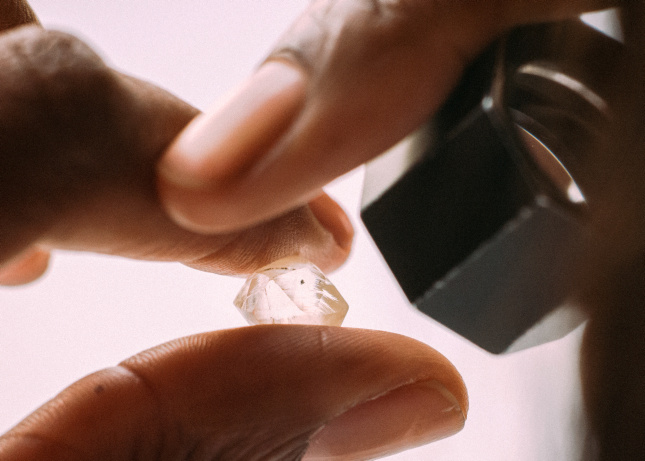
De Beers Global Sightholder Sorting a parcel of rough diamonds

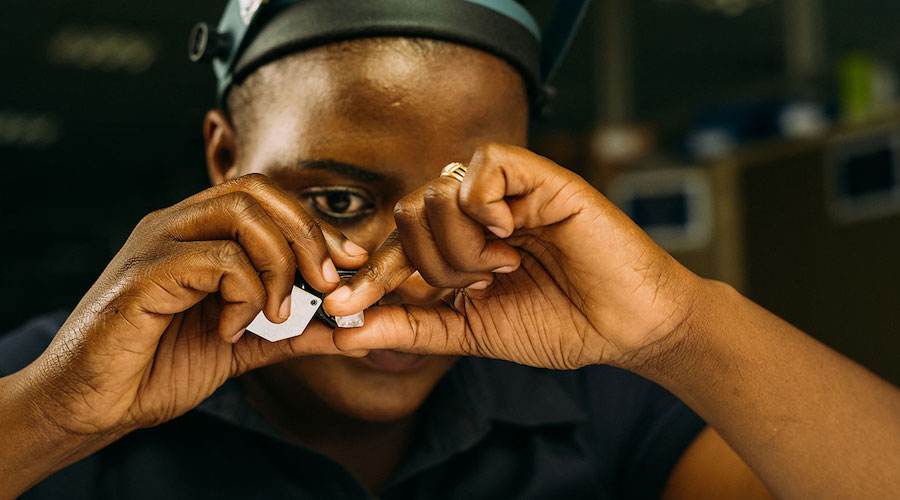
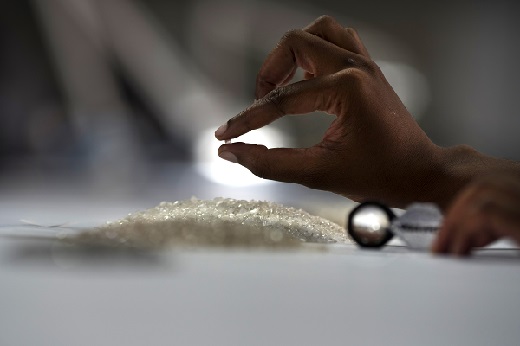
De Beers Global Sightholder Sorting a parcel of rough diamonds over a light box using a hand loupe.

Angola has signalled its intention to buy back the 85% stake in De Beers currently held by Anglo American, in a move that has immediately captured global industry attention. The proposal, made through Angola’s state-owned diamond company Endiama, comes at a time when the diamond sector has struggled to regain momentum after the downturn that began in 2022.

The announcement positions Angola decisively on the world stage. The country produced 10.7 million carats in the first nine months of the year and is targeting a record 14.8 million carats by 2025. According to the Kimberley Process, Angola’s expected 14 million carats in 2024 place it above Botswana in rough-diamond output for the first time in two decades. This surge, driven by the vast Catoca open-pit mine and other major deposits, underscores Angola’s long-term strategy of advancing local beneficiation and resource industrialisation.

Against this backdrop, Endiama has formally expressed interest in acquiring Anglo American’s controlling stake as the parent company restructures and divests assets following its 2024 strategic review. Should the transaction proceed, it would mark one of the most consequential ownership shifts in the diamond industry’s modern history.

Complicating the landscape is Botswana’s position. The country currently holds the remaining 15% stake in De Beers and announced in September its intention to increase its shareholding to more than 50%. Botswana relies heavily on diamonds, which account for roughly one-third of government revenue and 80% of exports, while Angola is seeking to reduce dependence on oil through expansion of its mining sector.

The implications of an Angolan takeover are far-reaching. De Beers remains one of the world’s most influential suppliers of rough diamonds, with 2024 revenues of US$2.7 billion and a valuation near US$4.9 billion. Its sales cycles, production planning, and market guidance shape between one-quarter and one-third of global rough supply, giving the company significant influence over pricing, availability, and the high-end jewellery pipeline.

A shift in control could potentially redirect more value-added processes to Africa, including sorting, cutting, and polishing — areas historically dominated by centres outside the continent. Increased localisation could boost employment, strengthen regional economies, and reshape supply-chain dynamics at a time when Botswana has reduced output and seen fiscal pressure rise, while Angola’s production profile continues to accelerate.

However, questions remain. Angola has stated that the acquisition would not be funded through its national budget, leaving the structure and financing mechanism yet to be clarified. Diplomatic tension with Botswana is another risk factor, particularly if competing bids emerge or national interests collide.

On a global scale, the outcome could introduce both opportunity and volatility. Greater African control over rough supply may support local markets, but the broader diamond industry continues to face challenges, including subdued demand, geopolitical instability, and mounting competition from lab-grown diamonds, which have disrupted consumer expectations and pricing patterns.

If Angola’s bid succeeds, it would mark a historic realignment of influence within the natural-diamond sector — one with the potential to reshape trade flows, pricing dynamics, and the strategic balance of power for years to come.

Source: DCLA

Monday, 10 November 2025

Botswana’s Strategic De Beers Takeover Could Redefine Global Diamond Industry

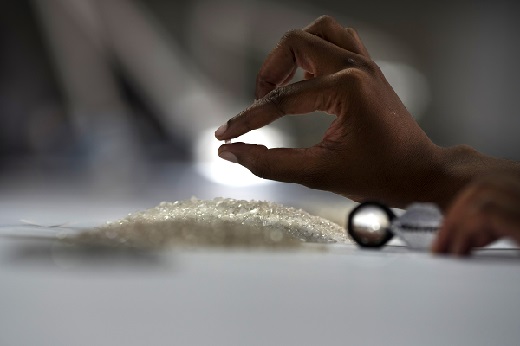
Sorting rough diamonds over a light box using a hand loupe.De Beers Global Sightholder Sales, Gaborone, Botswana.

Gaborone, Botswana — November 2025:
Botswana’s move to secure majority control of De Beers, the world’s most iconic diamond company, marks a turning point in both African resource ownership and the global diamond market. The initiative, driven by President Duma Boko, represents one of the most significant sovereignty shifts in modern mining history, with potential to reshape how nations manage their natural wealth.

Why Botswana’s De Beers Acquisition Matters

Diamonds remain the cornerstone of Botswana’s economy — contributing nearly 30% to GDP and 80% of export earnings. Through its long-standing Debswana partnership with De Beers, the country has benefited from steady revenues but limited control over the strategic direction of its most vital industry.

Now, Botswana aims to change that. By pursuing a majority stake, the government seeks greater influence over production, marketing, and profit allocation — a shift that could transform the balance of power in the global diamond trade.

Current Ownership and Partnership Structure

Currently, Anglo American holds 85% of De Beers, while Botswana owns 15% through Debswana. Though this structure has delivered stability and growth, it also leaves Botswana as a minority player in decisions that directly affect its economy.

With Anglo American now restructuring its portfolio and considering divestment, Botswana has seized a rare opportunity to negotiate for majority control — aligning national interest with long-term sustainability and independence.

Economic Impact and Strategic Motivation

Diamonds have built Botswana’s success story, funding education, infrastructure, and healthcare. Yet, with rising competition from lab-grown diamonds and volatile global demand, the government recognises the need to safeguard revenue and ensure future resilience.

Majority control would allow Botswana to:

  • Align De Beers’ strategy with national priorities
  • Increase direct revenue and value capture
  • Enhance job creation through local beneficiation
  • Strengthen resilience against external market shocks

Understanding the De Beers Restructuring Opportunity

Anglo American’s decision to offload assets amid global portfolio optimisation has opened the door for Botswana’s historic bid. Market analysts suggest that De Beers’ valuation — affected by softer diamond demand — may now be more accessible, creating a once-in-a-generation acquisition opportunity for Botswana.

International sovereign wealth funds, including potential partners from Oman, have expressed interest in co-financing the acquisition, signalling global confidence in Botswana’s governance and the enduring value of natural diamonds.

Regional Competition and Cooperation

Botswana’s bid faces competition from Angola’s Endiama EP, which has also expressed interest in acquiring Anglo American’s stake. However, diplomatic discussions between Botswana and Angola hint at possible collaboration, with joint African ownership of De Beers emerging as a strategic alternative that could reinforce continental resource sovereignty.

Global Diamond Market Implications

If successful, Botswana’s acquisition would mark a paradigm shift:

  • African Resource Sovereignty: Establishing Botswana as a model for other resource-rich nations pursuing local ownership.
  • Supply Chain Control: Enhancing Africa’s ability to influence global pricing, production, and distribution strategies.
  • Market Stability: Strengthening natural diamond positioning against synthetic competitors through unified African leadership.

With potential to contribute over 35% to Botswana’s GDP and maintain its dominance in global exports, majority ownership could significantly enhance the nation’s economic resilience and international influence.

Challenges and Market Outlook

The acquisition faces hurdles, including valuation complexities, competitive bidding, and global demand fluctuations. Moreover, the diamond industry continues to navigate pressures from lab-grown alternatives, changing consumer preferences, and macroeconomic uncertainties.

Nevertheless, Botswana’s strategy demonstrates forward-thinking leadership — leveraging its expertise, governance stability, and long-term vision to secure sustainable control over its most valuable resource.

President Duma Boko’s Vision

“Government will leverage a majority stake. Concrete steps are under way towards the acquisition of Anglo American shares in De Beers,”
— President Duma Boko, addressing Parliament, November 2025

His statement underscores Botswana’s commitment to advancing economic independence while setting a precedent for African nations reclaiming control of their mineral wealth.

What This Means for the Future

Should Botswana succeed, it will become the first African nation to hold majority ownership of the world’s largest diamond company — a move that could redefine the global diamond landscape for decades to come.

Beyond national pride, this transition represents a strategic realignment of power, giving Botswana direct control over pricing, marketing, and supply chain dynamics in the international diamond market.


Frequently Asked Questions

When will the Botswana De Beers deal be finalised?
Negotiations are ongoing through late 2025. Completion depends on final agreements with Anglo American and potential co-investors.

How much will Botswana pay for majority control?
Financial details remain confidential, with valuations influenced by current market conditions and strategic negotiations.

Will this affect global diamond prices?
Yes — greater African control over supply could strengthen natural diamond pricing and reinforce consumer confidence in ethically sourced stones.


About DCLA

The Diamond Certification Laboratory of Australia (DCLA) is Australia’s official CIBJO-recognised laboratory, providing independent grading, authentication, and certification of natural diamonds. DCLA continues to report on global developments shaping the natural diamond industry, ensuring transparency and consumer confidence worldwide.

Disclaimer: This article is intended for informational and educational purposes only. The views and interpretations expressed do not necessarily reflect those of the Diamond Certification Laboratory of Australia (DCLA). All information is based on publicly available data and current market reports at the time of publication. DCLA does not provide financial, investment, or legal advice. Readers are encouraged to conduct their own research or consult with qualified professionals before making decisions related to diamond investment, trading, or acquisition.

What Is Lab-Grown Gold? (And What It Really Means for Jewelry)

  industrial gold waste from electronic components Lab-grown gold is often used as a marketing term to simply refer to recycled or recovered...