Showing posts with label global diamond market. Show all posts

Monday, 24 August 2026

The Diamond Market Has Changed, Could This Be the Time to Buy?

 Could now be the time to buy the diamond you have always wanted?

The diamond market is going through one of the most significant periods of change in recent decades. A combination of economic pressures, changing consumer behaviour, increased competition from laboratory-grown diamonds and a prolonged correction in diamond prices has created opportunities for buyers that would have been difficult to imagine only a few years ago.

For consumers, this raises an important question:

Could now be the time to buy the diamond you have always wanted?

The answer depends on what you are buying, but there is no question that today’s market offers buyers an opportunity to access diamonds at substantially different price levels from the past.

Economic Conditions Have Changed the Diamond Market

Diamonds are not immune to the broader economy.

Higher interest rates, increased living costs, weaker consumer confidence and pressure on household budgets have all affected discretionary spending, including luxury jewellery. At the same time, retailers and dealers have had to manage inventory more carefully as demand has changed.

But the diamond market is facing another major structural change: the rapid growth of laboratory-grown diamonds.

Laboratory-grown diamonds have the same basic chemical and physical characteristics as natural diamonds, but they can be produced at scale. The resulting price competition has dramatically changed consumer expectations.

Recent market reporting highlights just how far laboratory-grown diamond prices have fallen, with wholesale prices in some segments reaching around US$100 per carat.

Natural diamonds have also experienced significant price pressure. Rough diamond prices have fallen sharply, with Anglo American’s CEO recently acknowledging that the industry underestimated the competitive threat posed by laboratory-grown diamonds.

This does not mean every diamond has fallen by the same amount. Diamonds are not commodities where one price applies to every stone. Shape, carat weight, colour, clarity, cut, fluorescence, proportions, provenance, certification and overall appearance can make enormous differences to value.

That is precisely why expert advice matters.

Falling Prices Can Create Opportunity

For someone who has been considering purchasing a diamond, a falling market can be an opportunity rather than a reason to stay away.

When prices are under pressure, buyers can sometimes find exceptional diamonds at considerably more attractive prices than they could previously.

But there is an important distinction:

A cheap diamond is not necessarily a bargain.

The real opportunity is finding a high-quality diamond at a price that represents genuine value.

This is where diamond knowledge becomes critical.

A stone that appears inexpensive may have compromises in cut, proportions, clarity, colour, fluorescence or other characteristics that affect its beauty and value. Two diamonds with apparently similar specifications can look very different and have very different market values.

The challenge for consumers is therefore not simply finding the lowest price.

It is finding the right diamond at the right price.

Natural or Laboratory-Grown, Know What You Are Buying

Today’s consumer has more choice than ever.

A natural diamond represents a geological creation that formed deep within the earth over millions or even billions of years. A laboratory-grown diamond is created using advanced technology and has essentially the same chemical composition and crystal structure as a natural diamond.

Neither choice should be made simply because one is cheaper.

The right choice depends on what the diamond means to you, your budget, your priorities and what you expect from the purchase.

And with laboratory-grown diamond prices falling so dramatically, consumers need particularly good advice about pricing and long-term value.

Understanding what you are buying is more important than ever.

This Is Where the DCLA Diamond Exchange Can Help

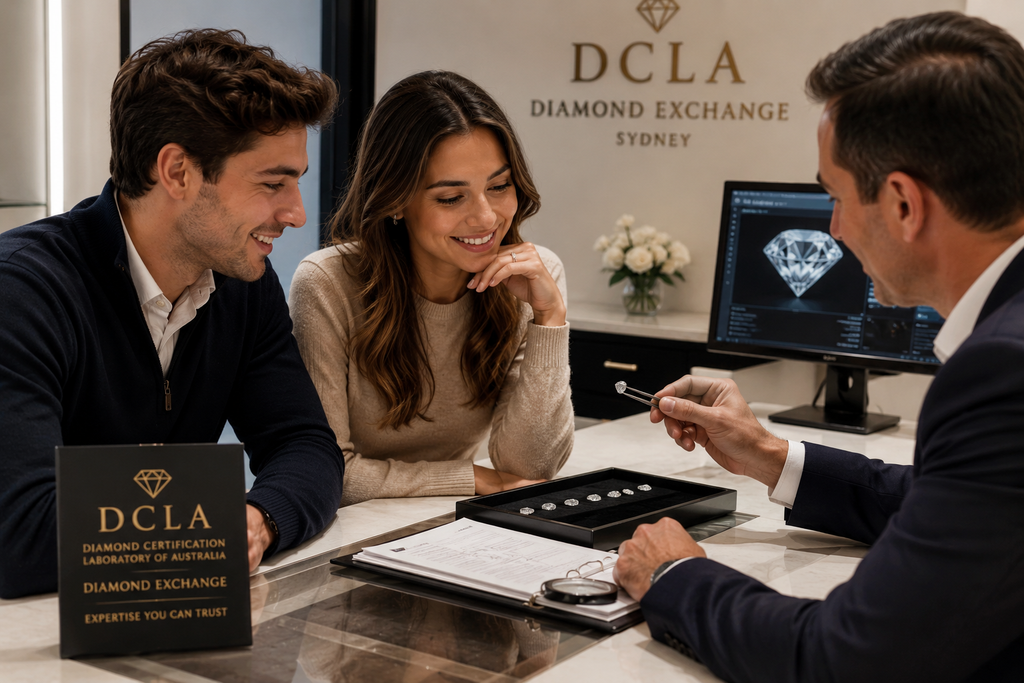
For anyone considering buying, selling, upgrading or trading a diamond, the Diamond Certification Laboratory of Australia (DCLA) in Sydney provides access to an extraordinary depth of diamond expertise.

DCLA is Australia’s internationally accredited diamond grading laboratory and provides independent certification for both natural and laboratory-grown diamonds. Its Sydney laboratory works with buyers, sellers, jewellers, insurers and the wider diamond trade.

The DCLA’s expertise extends far beyond simply looking at a certificate.

Its founders and team have experience across the diamond industry, including rough diamonds, cutting and polishing, trading, grading, certification and jewellery. That industry knowledge provides an important perspective when assessing a diamond’s characteristics and market position.

More Than a Certificate

A diamond certificate tells you what a diamond is. Expertise helps you understand what that information means.

The DCLA can help consumers understand the differences between diamonds and identify the characteristics that can make one stone a better purchase than another.

Its diamond search service allows buyers to consider diamonds by shape, carat, colour, clarity, cut, fluorescence, laboratory certification and budget helping turn what can otherwise be an overwhelming purchase into an informed decision.

And for the diamond trade, DCLA has become a trusted resource when jewellers and dealers need independent grading, verification, valuation or professional assistance.

The Go-To Resource for Diamond Knowledge

The diamond industry is changing rapidly.

Natural diamond prices have been under pressure. Laboratory-grown diamonds have transformed the market. Consumers have more choices, more information and potentially greater buying power than they have had for many years.

But greater choice also creates greater complexity.

This is not necessarily the time to buy the cheapest diamond. It may be the time to buy the best diamond you can find at the right price.

That requires knowledge.

From mining and rough diamonds through to cutting and polishing, grading, certification and jewellery, the DCLA brings together decades of industry experience under one roof.

For consumers looking for a diamond, jewellers sourcing stones, or members of the trade who need professional advice, the DCLA Diamond Exchange in Sydney is a place where knowledge, experience and independent expertise can make a genuine difference.

In a changing diamond market, having an expert on your side could be the most valuable part of the purchase.

Visit the DCLA Diamond Certification Laboratory of Australia

Diamond prices vary significantly according to individual characteristics, market conditions and certification. A fall in general market prices does not mean every diamond has fallen by the same percentage. Professional assessment is recommended before purchasing or selling a diamond.

Tuesday, 11 November 2025

Botswana’s Strategic De Beers Takeover Could Redefine Global Diamond Industry

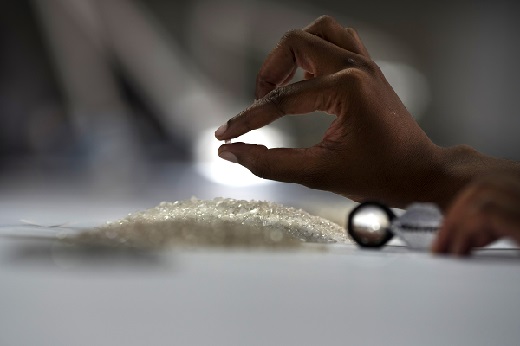
Sorting rough diamonds over a light box using a hand loupe.De Beers Global Sightholder Sales, Gaborone, Botswana.

Gaborone, Botswana — November 2025:
Botswana’s move to secure majority control of De Beers, the world’s most iconic diamond company, marks a turning point in both African resource ownership and the global diamond market. The initiative, driven by President Duma Boko, represents one of the most significant sovereignty shifts in modern mining history, with potential to reshape how nations manage their natural wealth.

Why Botswana’s De Beers Acquisition Matters

Diamonds remain the cornerstone of Botswana’s economy — contributing nearly 30% to GDP and 80% of export earnings. Through its long-standing Debswana partnership with De Beers, the country has benefited from steady revenues but limited control over the strategic direction of its most vital industry.

Now, Botswana aims to change that. By pursuing a majority stake, the government seeks greater influence over production, marketing, and profit allocation — a shift that could transform the balance of power in the global diamond trade.

Current Ownership and Partnership Structure

Currently, Anglo American holds 85% of De Beers, while Botswana owns 15% through Debswana. Though this structure has delivered stability and growth, it also leaves Botswana as a minority player in decisions that directly affect its economy.

With Anglo American now restructuring its portfolio and considering divestment, Botswana has seized a rare opportunity to negotiate for majority control — aligning national interest with long-term sustainability and independence.

Economic Impact and Strategic Motivation

Diamonds have built Botswana’s success story, funding education, infrastructure, and healthcare. Yet, with rising competition from lab-grown diamonds and volatile global demand, the government recognises the need to safeguard revenue and ensure future resilience.

Majority control would allow Botswana to:

  • Align De Beers’ strategy with national priorities
  • Increase direct revenue and value capture
  • Enhance job creation through local beneficiation
  • Strengthen resilience against external market shocks

Understanding the De Beers Restructuring Opportunity

Anglo American’s decision to offload assets amid global portfolio optimisation has opened the door for Botswana’s historic bid. Market analysts suggest that De Beers’ valuation — affected by softer diamond demand — may now be more accessible, creating a once-in-a-generation acquisition opportunity for Botswana.

International sovereign wealth funds, including potential partners from Oman, have expressed interest in co-financing the acquisition, signalling global confidence in Botswana’s governance and the enduring value of natural diamonds.

Regional Competition and Cooperation

Botswana’s bid faces competition from Angola’s Endiama EP, which has also expressed interest in acquiring Anglo American’s stake. However, diplomatic discussions between Botswana and Angola hint at possible collaboration, with joint African ownership of De Beers emerging as a strategic alternative that could reinforce continental resource sovereignty.

Global Diamond Market Implications

If successful, Botswana’s acquisition would mark a paradigm shift:

  • African Resource Sovereignty: Establishing Botswana as a model for other resource-rich nations pursuing local ownership.
  • Supply Chain Control: Enhancing Africa’s ability to influence global pricing, production, and distribution strategies.
  • Market Stability: Strengthening natural diamond positioning against synthetic competitors through unified African leadership.

With potential to contribute over 35% to Botswana’s GDP and maintain its dominance in global exports, majority ownership could significantly enhance the nation’s economic resilience and international influence.

Challenges and Market Outlook

The acquisition faces hurdles, including valuation complexities, competitive bidding, and global demand fluctuations. Moreover, the diamond industry continues to navigate pressures from lab-grown alternatives, changing consumer preferences, and macroeconomic uncertainties.

Nevertheless, Botswana’s strategy demonstrates forward-thinking leadership — leveraging its expertise, governance stability, and long-term vision to secure sustainable control over its most valuable resource.

President Duma Boko’s Vision

“Government will leverage a majority stake. Concrete steps are under way towards the acquisition of Anglo American shares in De Beers,”
— President Duma Boko, addressing Parliament, November 2025

His statement underscores Botswana’s commitment to advancing economic independence while setting a precedent for African nations reclaiming control of their mineral wealth.

What This Means for the Future

Should Botswana succeed, it will become the first African nation to hold majority ownership of the world’s largest diamond company — a move that could redefine the global diamond landscape for decades to come.

Beyond national pride, this transition represents a strategic realignment of power, giving Botswana direct control over pricing, marketing, and supply chain dynamics in the international diamond market.


Frequently Asked Questions

When will the Botswana De Beers deal be finalised?
Negotiations are ongoing through late 2025. Completion depends on final agreements with Anglo American and potential co-investors.

How much will Botswana pay for majority control?
Financial details remain confidential, with valuations influenced by current market conditions and strategic negotiations.

Will this affect global diamond prices?
Yes — greater African control over supply could strengthen natural diamond pricing and reinforce consumer confidence in ethically sourced stones.


About DCLA

The Diamond Certification Laboratory of Australia (DCLA) is Australia’s official CIBJO-recognised laboratory, providing independent grading, authentication, and certification of natural diamonds. DCLA continues to report on global developments shaping the natural diamond industry, ensuring transparency and consumer confidence worldwide.

Disclaimer: This article is intended for informational and educational purposes only. The views and interpretations expressed do not necessarily reflect those of the Diamond Certification Laboratory of Australia (DCLA). All information is based on publicly available data and current market reports at the time of publication. DCLA does not provide financial, investment, or legal advice. Readers are encouraged to conduct their own research or consult with qualified professionals before making decisions related to diamond investment, trading, or acquisition.

Protect Your Jewellery, How to Check Your Jewellery Before You Lose It.

  Fine jewellery is designed to be worn and enjoyed, but even the best-made piece will experience wear over time. The metal that holds your ...