Showing posts with label Rough Diamond Prices. Show all posts

Monday, 13 April 2026

Diamond Prices Crash to Lowest Level This Century: Structural Reset Shakes Global Market


Diamond Prices Crash to Lowest Level This Century

The global diamond market is undergoing one of its most severe contractions in modern history, with prices falling to their lowest levels this century. What began as a cyclical downturn has now evolved into a structural correction, driven by shifting consumer behaviour, rising synthetic supply, and a recalibration of global luxury demand.

Industry participants are describing the current environment not simply as a “dip”, but as a full repricing of diamonds across multiple categories from small melee stones through to larger certified gems.


A Century Low in Real Terms

While diamond markets have experienced volatility before, the current decline is being widely characterised as unprecedented in scale when adjusted for inflation and long-term price baselines.

Polished diamond prices have fallen sharply across most categories, with mid-range stones seeing the steepest erosion. Even traditionally resilient segments such as one-carat GIA certified stones have not been immune.

Market dealers report that in many trading hubs, prices are now comparable to or below levels seen in the early phases of modern global diamond trading, effectively erasing years of price appreciation built during the 2000s and early 2010s.


Key Drivers Behind the Collapse

1. Expansion of Lab-Grown Diamonds

The most significant structural pressure continues to come from lab-grown diamonds. Once positioned as a niche alternative, synthetic stones now represent a mainstream supply channel in both retail and wholesale markets.

Retailers have rapidly expanded lab-grown offerings due to:

  • Lower procurement costs
  • Higher margins
  • Consumer acceptance in fashion jewellery segments
  • Faster inventory turnover

As a result, natural diamonds particularly in commercial grades are facing sustained downward price pressure.


2. Weakening Global Luxury Demand

Global luxury demand has softened amid persistent macroeconomic uncertainty. Inflationary pressures, higher interest rates, and reduced discretionary spending have all contributed to weaker jewellery sales across key markets, including the United States, China, and Europe.

Engagement-related jewellery demand, traditionally a cornerstone of diamond consumption, has also shifted. Younger consumers are increasingly price-sensitive and open to alternative gemstones or synthetic options.


3. Inventory Overhang Across the Supply Chain

One of the most critical factors in the current crash is excess inventory.

Cutters, polishers, wholesalers, and retailers are all holding elevated stock levels accumulated during previous supply cycles. As liquidity tightens, many are forced to sell at reduced margins or accept losses to maintain cash flow.

This cascading effect has accelerated downward price momentum across all tiers of the supply chain.


4. Strategic Output Adjustments from Producers

Major producers have responded with production cuts and supply discipline measures. However, these efforts have so far been insufficient to offset declining demand and secondary market liquidation.

Even with reduced output, global supply remains adequate relative to current demand levels, reinforcing downward price pressure.


Market Sentiment: A Shift in Perception

Perhaps the most important change is psychological rather than purely economic.

Diamonds have long been perceived as a store of value and a symbol of price stability. That perception is now being challenged.

Dealers report that buyers are increasingly reluctant to treat diamonds as appreciating assets, instead viewing them as discretionary luxury goods with fluctuating resale value.

This shift in sentiment is contributing to reduced speculative buying and lower wholesale demand.


Impact on the Industry

Retail Sector

Jewellery retailers are adapting by:

  • Increasing promotion of lab-grown alternatives
  • Reducing natural diamond inventory exposure
  • Offering deeper discounts on slow-moving stock

Wholesale Market

Trading activity has slowed significantly, with many wholesalers prioritising liquidity over margin preservation.

Bid-ask spreads have widened, reflecting uncertainty around true market clearing prices.

Mining Sector

Mining companies are under pressure to reassess long-term capital expenditure plans. Some have already delayed expansion projects or revised output forecasts.


Is This the Bottom?

While the market is clearly under severe stress, analysts remain divided on whether prices have reached a true floor.

Bullish perspectives argue that:

  • Supply cuts will eventually stabilise pricing
  • Natural diamonds will retain premium positioning
  • Emotional and cultural demand remains intact

Bearish perspectives counter that:

  • Lab-grown diamonds permanently reset price ceilings
  • Consumer preferences have structurally changed
  • Inventory overhang will take years to clear

What is increasingly clear is that the market is no longer operating under the assumptions of the previous decade.


A Repricing Era

The diamond industry appears to be entering a long-term repricing phase rather than a short-term correction. Value will likely become more tightly linked to rarity, certification quality, and provenance, while commercial-grade stones may remain under sustained pressure.

For investors, traders, and retailers alike, the current environment demands caution, discipline, and a reassessment of traditional valuation models.

The era of predictable diamond price appreciation has, at least for now, come to an end.

Source: DCLA

Thursday, 19 March 2026

South Africa's New Guidelines to Boost Domestic Polishing

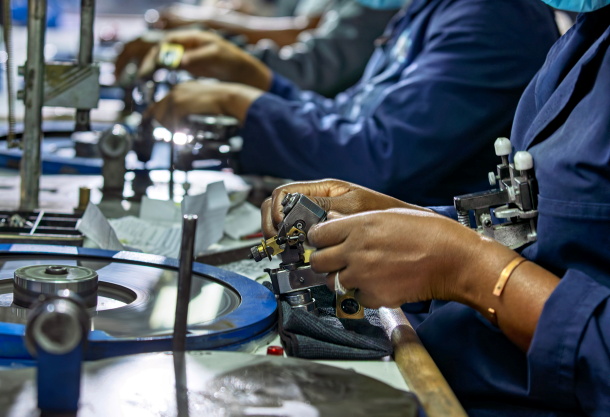
 South african workers, diamond polisher at work, using a polishing wheel to shape and refine a rough diamond, brillianteering

South Africa has introduced new guidelines to retain more economic value from its rough diamonds by promoting local cutting and polishing, rather than exporting goods unprocessed.

Around 90% of its rough diamond production is currently sold abroad. The South African Diamond and Precious Metals Regulator (SADPMR) is tackling this by requiring genuine offers of certain rough to local buyers first – at reasonable prices and practical assortments.

Producers are currently required to allocate 10% of run-of-mine (ROM) rough -total unsorted output straight from the mine – to the State Diamond Trader (SDT), a government entity that resells it to local beneficiators (licensed cutters and polishers).​

The remaining 90% (known as non-SDT rough) has, until now, been exported by sellers who have deliberately deterred local buyers with high prices and poor bundles, favoring tenders in Antwerp and Dubai.​

SADPMR now mandates that they make genuine rather than sham offers to sell this non-SDT rough to domestic cutters and polishers.

It must be displayed for at least four days at the Diamond Exchange and Export Centre (DEEC) in Johannesburg before export approval. There is no quota change, just stricter enforcement to boost local uptake.

Souurce: DCLA

Monday, 19 January 2026

De Beers Confirms 2026 Sight Dates and Cuts Rough Diamond Prices as Global Market Pressures Intensify

 De Beers Confirms 2026 Sight Dates and Cuts Rough Diamond Prices

De Beers has released its 2026 sight schedule, confirming it will maintain its traditional 10 rough diamond sales over the 12-month period, providing a degree of operational continuity amid prolonged uncertainty across the global diamond industry.

The miner sells approximately 90% of its rough diamond output to approved sightholders, who commit to purchasing set volumes of rough diamonds in exchange for consistent and predictable supply. In line with this strategy, De Beers has confirmed it will extend its current sightholder agreement through 30 June 2026, ensuring stability within its sight system during a challenging market environment.

The extended contract continues to regulate De Beers’ rough diamond sales, which are sourced from its wholly owned and joint-venture mining operations in Botswana, Namibia and South Africa. Sales will continue to be conducted in these producing countries.

In a minor operational adjustment, De Beers announced that the April and September 2026 sights will be shortened to four days, compared with the traditional five-day format.

De Beers 2026 Sight Dates

  • Sight 1: 19–23 January
  • Sight 2: 23–27 February
  • Sight 3: 23–27 March
  • Sight 4: 27–30 April
  • Sight 5: 25–29 May
  • Sight 6: 6–10 July
  • Sight 7: 17–21 August
  • Sight 8: 22–25 September
  • Sight 9: 26–30 October
  • Sight 10: 30 November–4 December

De Beers Cuts Rough Diamond Prices Amid Weak Demand

Alongside the announcement of its 2026 sight calendar, De Beers has reportedly cut rough diamond prices, reflecting mounting pressure from weak demand, surging lab-grown diamond supply and ongoing trade disruptions.

The January reduction marked the company’s first official price cut since December 2024, following months of quietly offering discounts while maintaining official list prices above prevailing market levels. At the first regular sight of the year, De Beers implemented price reductions on rough stones larger than three-quarters of a carat, according to industry sources.

The exact scale of the price cuts remains unclear, as De Beers has adjusted its billing structure and altered the composition of its diamond boxes, making direct comparisons difficult. Under the sight system, De Beers sets prices and indicates expected purchase volumes for sightholders, a structure that continues to give the miner significant influence over the rough diamond market, despite buyers retaining the technical right to refuse goods.

Industry Downturn and Structural Challenges

The global diamond industry is experiencing one of its deepest downturns in decades, with demand and prices for natural diamonds declining sharply from 2023 through 2025. Miners have been forced to scale back production and reassess long-term strategies as market conditions deteriorate.

A major structural challenge has been the rapid rise of lab-grown diamonds, whose prices have collapsed in recent years. This has enabled lab-grown stones to capture increasing market share, particularly in the bridal jewellery segment, undercutting natural diamonds across key consumer categories.

China, once a vital growth engine for diamond jewellery, has become a significant drag on demand due to a slowing economy and declining marriage rates. At the same time, geopolitical pressures, including tighter sanctions on Russian diamonds, ongoing tariff threats and global trade frictions, continue to disrupt the diamond supply chain.

Trade Tensions Add Pressure to India’s Diamond Sector

Further uncertainty has emerged from US–India trade tensions, which have weighed heavily on India’s diamond industry. Under President Trump, US tariffs on a range of Indian imports — including gems and jewellery — were raised to as high as 50%, creating additional headwinds for global diamond flows.

The impact has been particularly acute given India’s central role in the industry. The country cuts and polishes around 90% of the world’s diamonds by volume, while the United States remains its largest export market, accounting for approximately one-third to nearly half of India’s diamond and jewellery exports.

As the official CIBJO laboratory for Australia, DCLA continues to closely monitor developments in rough supply, pricing dynamics and certification standards, as the natural diamond sector navigates a period of profound structural change.

Source: DCLA

Geneva Set to Dazzle as Rare Blue Diamonds Headline May Auctions

  The global diamond market will turn its attention to Sotheby’s and Christie’s this May, as two exceptional blue diamonds each representing...