Showing posts with label diamond prices. Show all posts

Monday, 13 April 2026

Diamond Prices Crash to Lowest Level This Century: Structural Reset Shakes Global Market


Diamond Prices Crash to Lowest Level This Century

The global diamond market is undergoing one of its most severe contractions in modern history, with prices falling to their lowest levels this century. What began as a cyclical downturn has now evolved into a structural correction, driven by shifting consumer behaviour, rising synthetic supply, and a recalibration of global luxury demand.

Industry participants are describing the current environment not simply as a “dip”, but as a full repricing of diamonds across multiple categories from small melee stones through to larger certified gems.


A Century Low in Real Terms

While diamond markets have experienced volatility before, the current decline is being widely characterised as unprecedented in scale when adjusted for inflation and long-term price baselines.

Polished diamond prices have fallen sharply across most categories, with mid-range stones seeing the steepest erosion. Even traditionally resilient segments such as one-carat GIA certified stones have not been immune.

Market dealers report that in many trading hubs, prices are now comparable to or below levels seen in the early phases of modern global diamond trading, effectively erasing years of price appreciation built during the 2000s and early 2010s.


Key Drivers Behind the Collapse

1. Expansion of Lab-Grown Diamonds

The most significant structural pressure continues to come from lab-grown diamonds. Once positioned as a niche alternative, synthetic stones now represent a mainstream supply channel in both retail and wholesale markets.

Retailers have rapidly expanded lab-grown offerings due to:

  • Lower procurement costs
  • Higher margins
  • Consumer acceptance in fashion jewellery segments
  • Faster inventory turnover

As a result, natural diamonds particularly in commercial grades are facing sustained downward price pressure.


2. Weakening Global Luxury Demand

Global luxury demand has softened amid persistent macroeconomic uncertainty. Inflationary pressures, higher interest rates, and reduced discretionary spending have all contributed to weaker jewellery sales across key markets, including the United States, China, and Europe.

Engagement-related jewellery demand, traditionally a cornerstone of diamond consumption, has also shifted. Younger consumers are increasingly price-sensitive and open to alternative gemstones or synthetic options.


3. Inventory Overhang Across the Supply Chain

One of the most critical factors in the current crash is excess inventory.

Cutters, polishers, wholesalers, and retailers are all holding elevated stock levels accumulated during previous supply cycles. As liquidity tightens, many are forced to sell at reduced margins or accept losses to maintain cash flow.

This cascading effect has accelerated downward price momentum across all tiers of the supply chain.


4. Strategic Output Adjustments from Producers

Major producers have responded with production cuts and supply discipline measures. However, these efforts have so far been insufficient to offset declining demand and secondary market liquidation.

Even with reduced output, global supply remains adequate relative to current demand levels, reinforcing downward price pressure.


Market Sentiment: A Shift in Perception

Perhaps the most important change is psychological rather than purely economic.

Diamonds have long been perceived as a store of value and a symbol of price stability. That perception is now being challenged.

Dealers report that buyers are increasingly reluctant to treat diamonds as appreciating assets, instead viewing them as discretionary luxury goods with fluctuating resale value.

This shift in sentiment is contributing to reduced speculative buying and lower wholesale demand.


Impact on the Industry

Retail Sector

Jewellery retailers are adapting by:

  • Increasing promotion of lab-grown alternatives
  • Reducing natural diamond inventory exposure
  • Offering deeper discounts on slow-moving stock

Wholesale Market

Trading activity has slowed significantly, with many wholesalers prioritising liquidity over margin preservation.

Bid-ask spreads have widened, reflecting uncertainty around true market clearing prices.

Mining Sector

Mining companies are under pressure to reassess long-term capital expenditure plans. Some have already delayed expansion projects or revised output forecasts.


Is This the Bottom?

While the market is clearly under severe stress, analysts remain divided on whether prices have reached a true floor.

Bullish perspectives argue that:

  • Supply cuts will eventually stabilise pricing
  • Natural diamonds will retain premium positioning
  • Emotional and cultural demand remains intact

Bearish perspectives counter that:

  • Lab-grown diamonds permanently reset price ceilings
  • Consumer preferences have structurally changed
  • Inventory overhang will take years to clear

What is increasingly clear is that the market is no longer operating under the assumptions of the previous decade.


A Repricing Era

The diamond industry appears to be entering a long-term repricing phase rather than a short-term correction. Value will likely become more tightly linked to rarity, certification quality, and provenance, while commercial-grade stones may remain under sustained pressure.

For investors, traders, and retailers alike, the current environment demands caution, discipline, and a reassessment of traditional valuation models.

The era of predictable diamond price appreciation has, at least for now, come to an end.

Source: DCLA

Wednesday, 4 February 2026

IDEX Price Report: Further Drops for Rounds and Fancies

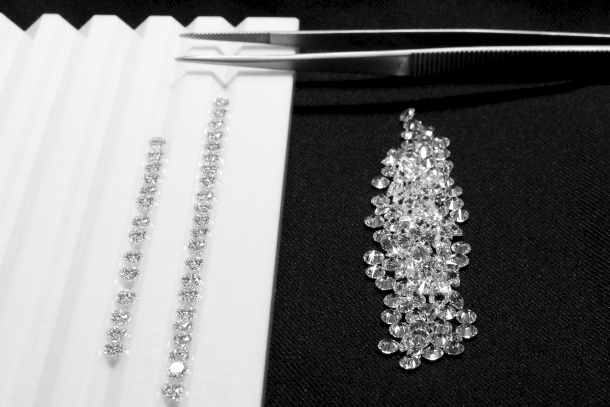
 Diamonds and Tweezers diamond on black background

Price drops dominated yet again both for rounds and fancies during January, as US tariffs on India and the continuing rise of lab growns took their toll.

Rounds

Among 1.00-cts to 1.24-cts, the price of almost all G+ and VVS2+ goods fell. 0.80-cts to 0.89-cts also saw price drops in most G+ and VVS1+ goods.

There were many more drops in goods 1.25-cts to 5.99-cts, albeit with some clusters of increase in 3.00-cts to 4.99-cts. Very limited activity in goods under 0.79-cts.

Fancies

Price drops more pronounced than among rounds in 2.00-cts to 3.99-cts, but less so in 4.00-cts to 5.99-cts. Overall, still a month of significant decline.

There was a large cluster of price drops among 1.50-cts to 1.99-cts, notably in I+ and SI1+ goods. Little significant activity in fancies under 0.69-cts.

Highlighted changes

Rounds

0.80-0.89 ct. D-E / IF-VS1 -1.5-5.0%

1.00-1.24 ct. D-G / IF-VVS1 -1.0-3.0%

2.00-2.99 ct. G-J / VS1-2 -1.0-3.0%

Fancies

0.70-0.79 ct. D-E / IF-VS -1.5-6.0%

1.25-1.49 ct. D-H / IF-VVS1 -1.0-5.5%

4.00-4.99 ct. K-M / VVS2-VS2 +1.0-2.0%

Source: DCLA

Tuesday, 5 January 2021

Diamond Prices Firm After Supply Declines


Diamond trading was seasonally slow in December as the industry’s focus shifted to retail and as diamantaires took their end-of-year break. Sentiment received a boost from strong holiday e-commerce sales, the distribution of Covid-19 vaccines, and the US approval of a $900 billion coronavirus stimulus package.

Polished prices firmed as supply declined due to limitations on diamond manufacturing during India’s lockdowns. The RapNet Diamond Index (RAPI™) for 1-carat diamonds rose 2.3% in December and 5.8% for the full year.

RapNet Diamond Index (RAPI™)
December4Q 2020FY 2020
RAPI 0.30 ct.0.4%-4.7%0.2%
RAPI 0.50 ct.0.8%-2.3%12.1%
RAPI 1 ct.2.3%3.8%5.8%
RAPI 3 ct.2.5%7.0%3.7%

© Copyright 2021, Rapaport USA Inc.

The industry began 2021 with a healthier supply-demand balance than it had at any stage in the past five years.

The volume of 1-carat diamonds on RapNet in the D-H, IF-VS range — the categories the RAPI measures — declined 24% in the second half of 2020. The top 10% of diamonds in that category were selling at an average of 32% below the Rapaport Price List on January 1, 2021, compared to 37% below on July 1, 2020. The lower discount suggests that demand is stronger relative to the available supply.

Manufacturers are raising polished production in anticipation of steady first-quarter orders as jewelers and dealers seek to replace inventory they’ve sold during the holiday period.

Jewelers with solid e-commerce programs had a good season. Many off-mall independents also did well, as consumers felt safer visiting stand-alone stores than crowded malls and were driven to support local community businesses following the Covid-19 lockdowns. Independents without an effective online presence struggled.

US jewelry sales for October 11 to December 24 fell 4.3% year on year, according to Mastercard SpendingPulse. Online jewelry sales grew 45%.

There is some optimism for the year ahead even as Covid-19 continues to disrupt business activity. To ensure growth, the trade must intensify its efforts to engage with consumers via storytelling and improved omni-channel platforms while keeping supply in sync with prevailing levels of demand.

Source: DCLA

Diamond Prices Firm After Supply Declines


Diamond trading was seasonally slow in December as the industry’s focus shifted to retail and as diamantaires took their end-of-year break. Sentiment received a boost from strong holiday e-commerce sales, the distribution of Covid-19 vaccines, and the US approval of a $900 billion coronavirus stimulus package.

Polished prices firmed as supply declined due to limitations on diamond manufacturing during India’s lockdowns. The RapNet Diamond Index (RAPI™) for 1-carat diamonds rose 2.3% in December and 5.8% for the full year.

RapNet Diamond Index (RAPI™)
December4Q 2020FY 2020
RAPI 0.30 ct.0.4%-4.7%0.2%
RAPI 0.50 ct.0.8%-2.3%12.1%
RAPI 1 ct.2.3%3.8%5.8%
RAPI 3 ct.2.5%7.0%3.7%

© Copyright 2021, Rapaport USA Inc.

The industry began 2021 with a healthier supply-demand balance than it had at any stage in the past five years.

The volume of 1-carat diamonds on RapNet in the D-H, IF-VS range — the categories the RAPI measures — declined 24% in the second half of 2020. The top 10% of diamonds in that category were selling at an average of 32% below the Rapaport Price List on January 1, 2021, compared to 37% below on July 1, 2020. The lower discount suggests that demand is stronger relative to the available supply.

Manufacturers are raising polished production in anticipation of steady first-quarter orders as jewelers and dealers seek to replace inventory they’ve sold during the holiday period.

Jewelers with solid e-commerce programs had a good season. Many off-mall independents also did well, as consumers felt safer visiting stand-alone stores than crowded malls and were driven to support local community businesses following the Covid-19 lockdowns. Independents without an effective online presence struggled.

US jewelry sales for October 11 to December 24 fell 4.3% year on year, according to Mastercard SpendingPulse. Online jewelry sales grew 45%.

There is some optimism for the year ahead even as Covid-19 continues to disrupt business activity. To ensure growth, the trade must intensify its efforts to engage with consumers via storytelling and improved omni-channel platforms while keeping supply in sync with prevailing levels of demand.

Source: DCLA

Sotheby’s Hong Kong Jewellery Sale Achieves HKD 58.3 Million ($7.4 Million)

  A striking black diamond ring emerged as one of the standout performers at Sotheby’s recent Fine Jewellery auction in Hong Kong, highlight...