Showing posts with label diamond exchange. Show all posts

Thursday, 19 March 2026

South Africa's New Guidelines to Boost Domestic Polishing

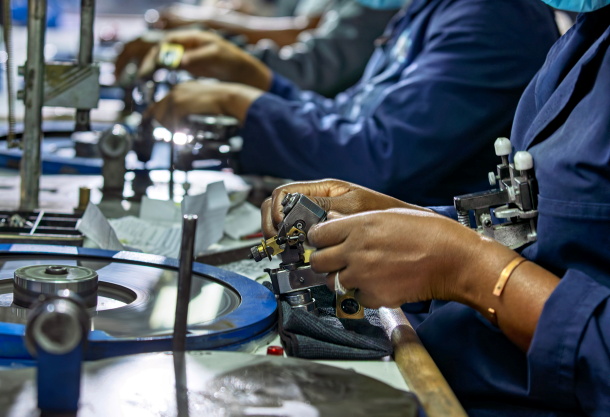
 South african workers, diamond polisher at work, using a polishing wheel to shape and refine a rough diamond, brillianteering

South Africa has introduced new guidelines to retain more economic value from its rough diamonds by promoting local cutting and polishing, rather than exporting goods unprocessed.

Around 90% of its rough diamond production is currently sold abroad. The South African Diamond and Precious Metals Regulator (SADPMR) is tackling this by requiring genuine offers of certain rough to local buyers first – at reasonable prices and practical assortments.

Producers are currently required to allocate 10% of run-of-mine (ROM) rough -total unsorted output straight from the mine – to the State Diamond Trader (SDT), a government entity that resells it to local beneficiators (licensed cutters and polishers).​

The remaining 90% (known as non-SDT rough) has, until now, been exported by sellers who have deliberately deterred local buyers with high prices and poor bundles, favoring tenders in Antwerp and Dubai.​

SADPMR now mandates that they make genuine rather than sham offers to sell this non-SDT rough to domestic cutters and polishers.

It must be displayed for at least four days at the Diamond Exchange and Export Centre (DEEC) in Johannesburg before export approval. There is no quota change, just stricter enforcement to boost local uptake.

Souurce: DCLA

Sunday, 18 April 2021

The Four Ex Diamond


Sourcing a diamond is easy with the help and guidance of the DCLA diamond exchange.

Proportion is graded alongside Symmetry, polish and importantly the Transparency.

This is why the Diamond Exchange are the most sought after for those who want the finest diamonds available.

To ensure the highest quality, the Diamond Exchange works with the finest rough diamond producers based in South Africa, Antwerp, Israel and India.

Each diamond is then meticulously analysed by our Laboratory diamond gemologists.

Using sophisticated laboratory equipment every aspect of the individual stone is checked, including the all-important proportions that will produce the most brilliance.

Proportions

Proportions affect how light travels within the diamond.

Diamonds that are cut too shallow and wide, or too deep and narrow lose light out the sides or bottom, causing the diamond to lose brilliance.

A select Diamond exchange Diamond are cut to ideal diamond proportions, creating a superior diamond to reflecting the maximum amount of light back to the eye.

Symmetry

The alignment of a diamond’s facets in relation to each other or opposing facets affects the diamond’s light performance.

Facets which are symmetrical and aligned, reflect light directly back to your eye.

Symmetry grading to Hearts and Arrows standards ensure its brilliance and fire is emitted evenly.

Certification

All Diamond Exchange diamonds are certified by recognised international accredited laboratories.

This provides you an authoritative analysis of your diamond.

Diamond Exchange also verifies that your diamond meets all the specific quality requirements and checks the diamond is cold laser inscribed.

Transparency

Transparency, also called pellucidity, is the material property of allowing light to pass through. In mineralogy, another term for this property is diaphaneity.

Developed by the DCLA , the Transparency Grade is the degree to which a diamond transmits light, directly relevant to its ‘cloudiness’ or ‘haziness.

In other words, it is a comprehensive assessment of light performance based on the quality of the diamond crystal itself.

The Four Ex Diamond


Sourcing a diamond is easy with the help and guidance of the DCLA diamond exchange.

Proportion is graded alongside Symmetry, polish and importantly the Transparency.

This is why the Diamond Exchange are the most sought after for those who want the finest diamonds available.

To ensure the highest quality, the Diamond Exchange works with the finest rough diamond producers based in South Africa, Antwerp, Israel and India.

Each diamond is then meticulously analysed by our Laboratory diamond gemologists.

Using sophisticated laboratory equipment every aspect of the individual stone is checked, including the all-important proportions that will produce the most brilliance.

Proportions

Proportions affect how light travels within the diamond.

Diamonds that are cut too shallow and wide, or too deep and narrow lose light out the sides or bottom, causing the diamond to lose brilliance.

A select Diamond exchange Diamond are cut to ideal diamond proportions, creating a superior diamond to reflecting the maximum amount of light back to the eye.

Symmetry

The alignment of a diamond’s facets in relation to each other or opposing facets affects the diamond’s light performance.

Facets which are symmetrical and aligned, reflect light directly back to your eye.

Symmetry grading to Hearts and Arrows standards ensure its brilliance and fire is emitted evenly.

Certification

All Diamond Exchange diamonds are certified by recognised international accredited laboratories.

This provides you an authoritative analysis of your diamond.

Diamond Exchange also verifies that your diamond meets all the specific quality requirements and checks the diamond is cold laser inscribed.

Transparency

Transparency, also called pellucidity, is the material property of allowing light to pass through. In mineralogy, another term for this property is diaphaneity.

Developed by the DCLA , the Transparency Grade is the degree to which a diamond transmits light, directly relevant to its ‘cloudiness’ or ‘haziness.

In other words, it is a comprehensive assessment of light performance based on the quality of the diamond crystal itself.

South Africa's New Guidelines to Boost Domestic Polishing

  South Africa has introduced new guidelines to retain more economic value from its rough diamonds by promoting local cutting and polishing,...