

Why Gold Purity, Colour and Craftsmanship Matter
When purchasing a fine diamond, most buyers focus on the stone itself its cut, colour, clarity and carat weight. While these characteristics determine a diamond’s beauty and rarity, the precious metal and the method used to manufacture the jewellery are equally important in creating a piece that will last for generations.
At the Diamond Certification Laboratory of Australia (DCLA), we believe that exceptional diamonds deserve exceptional craftsmanship. Understanding the differences between gold purity, precious metal colours, platinum alloys, and manufacturing techniques allows buyers to make informed decisions when investing in fine jewellery.
Understanding Gold Karats
Pure gold is 24 karat (24K), meaning it contains 99.9% gold. Although pure gold is highly valuable, it is also extremely soft, making it unsuitable for most jewellery designed to be worn every day.
Gold is therefore alloyed with other precious metals to improve its hardness, durability and colour.
24 Karat Gold (99.9% Pure)
- Bright, rich yellow colour.
- Extremely soft and easily scratched.
- Rarely used for diamond engagement rings.
- Commonly used for bullion and investment products.
18 Karat Gold (75% Pure Gold)
18K gold contains 75% pure gold and 25% carefully selected alloy metals.
This has long been regarded as the premium standard for fine jewellery because it offers the ideal balance between purity, strength and luxury.
Advantages include:
- Rich, warm colour.
- Excellent corrosion resistance.
- Superior long-term value.
- Strong enough to securely hold valuable diamonds.
- Preferred by leading luxury jewellery houses worldwide.
For high-quality natural diamonds, 18K gold provides the perfect combination of beauty and structural integrity.
14 Karat Gold (58.5% Pure Gold)
14K gold contains a greater proportion of alloy metals, making it:
- Harder than 18K.
- More resistant to scratching.
- Less expensive.
- Slightly paler in colour.
While popular for commercial jewellery, it lacks the richness and prestige associated with premium diamond pieces.
9 Karat Gold (37.5% Pure Gold)
Commonly found in mass-produced jewellery, 9K gold is:
- The most affordable.
- Significantly harder due to higher alloy content.
- Less resistant to tarnishing.
- Lower in intrinsic gold value.
Although perfectly suitable for everyday jewellery, it is generally not considered the ideal choice for exceptional diamonds or heirloom-quality pieces.
Gold Colours
Many people are surprised to learn that all coloured gold begins as naturally yellow gold. Different alloy metals create the various colours available today.
Yellow Gold
Traditional yellow gold is produced using silver and copper alloys while maintaining the natural warmth associated with pure gold.
It complements:
- White diamonds
- Yellow diamonds
- Champagne diamonds
- Vintage-inspired jewellery
White Gold
White gold is created by alloying gold with metals such as palladium or nickel before being finished with a rhodium plating.
Its bright white appearance enhances colourless diamonds by providing a clean, contemporary look.
Because rhodium naturally wears over time, white gold jewellery may require replating every few years to maintain its brilliant finish.
Rose Gold
Rose gold obtains its distinctive blush colour from a higher copper content.
Its popularity continues to grow because it:
- Flatters most skin tones.
- Provides a romantic appearance.
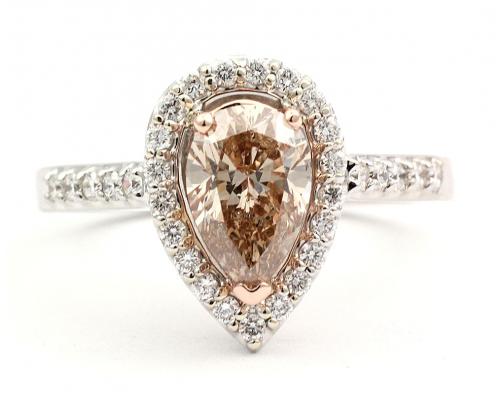
- Beautifully complements pink diamonds and champagne diamonds.
Why Premium Diamonds Deserve 18K Gold or 950 Platinum
The finest diamonds represent extraordinary rarity and value. Their setting should offer equal levels of quality and longevity.
Professional jewellers generally recommend either 18K gold or 950 platinum for important diamond jewellery.
18 Karat Gold
18K gold provides:
- Excellent strength.
- High precious metal content.
- Beautiful colour.
- Long-term durability.
- Greater prestige.
950 Platinum
Platinum is considered the ultimate jewellery metal.
950 platinum contains 95% pure platinum, making it one of the purest precious metals used in jewellery.
Its advantages include:
- Naturally white colour that never requires rhodium plating.
- Exceptional durability.
- Outstanding resistance to corrosion.
- Excellent security for diamond settings.
- Hypoallergenic properties.
- Greater density, providing substantial weight and a luxurious feel.
Unlike gold, platinum displaces rather than loses metal when scratched, allowing it to retain its integrity over many decades.
For important engagement rings and investment-quality diamonds, 950 platinum remains the benchmark for premium jewellery.
Handmade Jewellery versus Cast Jewellery
The manufacturing process also plays a significant role in the quality and longevity of a finished piece.
Handmade Jewellery
Handmade jewellery is individually crafted by highly skilled jewellers using traditional techniques.
Each component is fabricated, shaped and assembled by hand.
Advantages include:
- Superior structural strength.
- Greater attention to detail.
- Better stone positioning.
- Exceptional finishing.
- Easier future repairs and restoration.
- Greater individuality.
Because the metal is worked and compressed during fabrication, handmade pieces often possess greater density and durability than cast jewellery.
These techniques require years of experience and many hours of labour, making handmade jewellery the pinnacle of fine craftsmanship.
Cast Jewellery
Most modern jewellery is manufactured using lost-wax casting.
A wax model is produced, surrounded by investment material, and molten precious metal is poured into the mould.
Advantages include:
- Excellent consistency.
- Intricate design possibilities.
- Faster production.
- Lower manufacturing costs.
- Ideal for producing matching collections.
Modern casting technology has advanced enormously and, when performed to high standards, produces beautiful jewellery suitable for everyday wear.
However, cast jewellery can occasionally contain microscopic porosity within the metal and generally lacks the density achieved through traditional hand fabrication.
The Importance of Matching Quality with Quality
An exceptional diamond deserves a setting that reflects its rarity.
There is little logic in placing a rare, perfectly cut diamond into a lower-purity metal or a poorly manufactured setting. Likewise, even the finest handcrafted ring cannot compensate for an inferior diamond.
The finest jewellery achieves harmony between all components:
- A beautifully cut natural diamond.
- High-purity 18K gold or 950 platinum.
- Expert setting techniques.
- Precision craftsmanship.
- Thoughtful design.
- Long-term durability.
When these elements come together, the result is more than jewellery it becomes an heirloom capable of being worn, admired and passed from one generation to the next.
At the DCLA, we encourage consumers to evaluate not only the quality of the diamond, but also the precious metal, craftsmanship and manufacturing methods used to create the finished piece. These factors collectively determine the beauty, security and longevity of jewellery that may be treasured for a lifetime.
Source: DCLA



No comments:
Post a Comment