
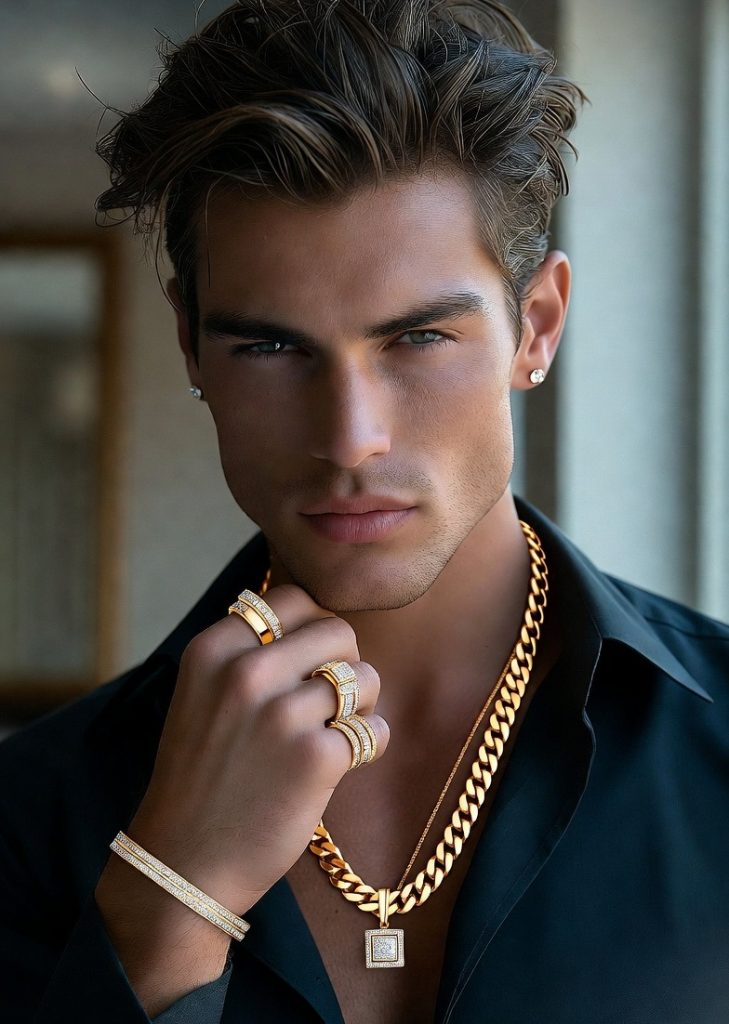
Why More Men Are Buying Fine Jewellery Than Ever Before
For generations, the jewellery industry has primarily marketed fine jewellery to women, while men were viewed as purchasers rather than wearers. Outside wedding bands, signet rings and luxury watches, men’s jewellery occupied only a small corner of the market. That perception is changing rapidly.
Today, one of the most significant shifts in the global jewellery industry is the rise of the male jewellery consumer. Men are not only buying more jewellery, they are purchasing it for themselves, embracing precious metals, diamonds and coloured gemstones as an extension of their personal style. The traditional boundaries between men’s and women’s jewellery are becoming increasingly blurred, creating exciting opportunities for jewellers, designers and gem laboratories alike.
A New Generation of Male Jewellery Buyers
Luxury retailers and designers report that male clients have increased significantly over recent years. More importantly, today’s buyers are becoming increasingly adventurous.
Rather than limiting themselves to simple chains or traditional signet rings, men are exploring diamond bracelets, gemstone rings, layered necklaces, earrings, brooches and personalised jewellery. Many purchases are driven by self expression rather than special occasions or gifting.
This evolution represents a cultural shift rather than a passing fashion trend.
Celebrity Influence Has Changed Everything
The modern acceptance of men’s jewellery has been accelerated by celebrities, athletes and musicians who confidently wear fine jewellery on the world’s biggest stages.
Red carpet appearances now regularly feature diamond brooches, layered necklaces, gemstone rings and statement bracelets worn by leading actors and musicians. Sporting stars have also embraced tennis necklaces, diamond earrings and luxury jewellery as part of their personal identity.
These public figures have helped redefine masculinity, showing that fine jewellery is no longer restricted by traditional gender expectations.
Breaking Traditional Gender Barriers
Perhaps the biggest transformation is the growing popularity of gender neutral jewellery.
Many luxury brands have discovered that collections originally designed for men are equally popular with women, leading several manufacturers to reposition their ranges as unisex collections. Clean lines, minimal styling and high quality craftsmanship appeal across all demographics.
Consumers today are less concerned with whether a piece is labelled “men’s” or “women’s.” Instead, they choose jewellery that reflects their own personality, lifestyle and values.
Personal Expression Is Driving Demand
Unlike previous generations, many younger buyers view jewellery as a form of storytelling.
Engraved signet rings, symbolic pendants, coloured gemstones and layered jewellery allow individuals to communicate their identity, achievements and beliefs without saying a word.
Jewellery has become deeply personal, transforming from a status symbol into an expression of individuality. Designers report growing demand for bespoke pieces that carry emotional significance rather than simply displaying wealth.
Diamonds Remain at the Centre
While contemporary designs may be evolving, diamonds continue to play a central role in men’s fine jewellery.
Diamond set rings, tennis bracelets, pendants and earrings are becoming everyday accessories rather than pieces reserved for formal occasions.
Natural diamonds remain particularly attractive due to their rarity, durability and enduring value. As consumers become more educated, many appreciate the geological history and authenticity that natural diamonds represent.
For laboratories such as the Diamond Certification Laboratory of Australia (DCLA), this growing market reinforces the importance of independent grading and certification, ensuring buyers have confidence in the quality and authenticity of every natural diamond they purchase.
The Market Continues to Expand
Industry research supports what jewellers are already witnessing in their showrooms.
The global men’s jewellery market was valued at approximately US$48.5 billion in 2024 and is forecast to grow at almost 10 percent annually over the next decade. Separately, broader jewellery market analysis identifies men’s jewellery as the fastest growing consumer segment through 2033, driven by changing cultural attitudes and increasing acceptance of jewellery as everyday fashion.
This growth is being fuelled by Millennials and Generation Z, who have largely abandoned traditional ideas about who should wear jewellery.
What This Means for the Jewellery Industry
The rise of men’s jewellery represents more than a fashion trend. It signals a structural change in consumer behaviour.
Jewellers who once focused almost exclusively on female customers are now expanding their men’s collections with sophisticated designs featuring diamonds, coloured gemstones and precious metals. Designers are embracing versatility, while retailers are recognising that today’s male customer values craftsmanship, authenticity and personal expression just as highly as any other buyer.
For the diamond industry, this creates exciting opportunities. As more men invest in fine jewellery featuring natural diamonds, the importance of trusted grading and certification becomes even more significant.
The modern jewellery market is becoming increasingly inclusive. Men are purchasing jewellery not because tradition dictates it, but because it reflects who they are.
As gender barriers continue to dissolve and personal style becomes the defining influence, fine jewellery is evolving into a universal form of self expression. Natural diamonds remain at the heart of this transformation, combining timeless beauty with lasting value.
For organisations such as the DCLA, this changing landscape highlights the continuing importance of independent diamond grading, providing confidence and transparency for a new generation of jewellery buyers who value authenticity above all else.
Source: DCLA



No comments:
Post a Comment