Thursday, 22 January 2026

De Beers to Release “A Diamond Is Forever” Book Celebrating a Century of Natural Diamond Legacy

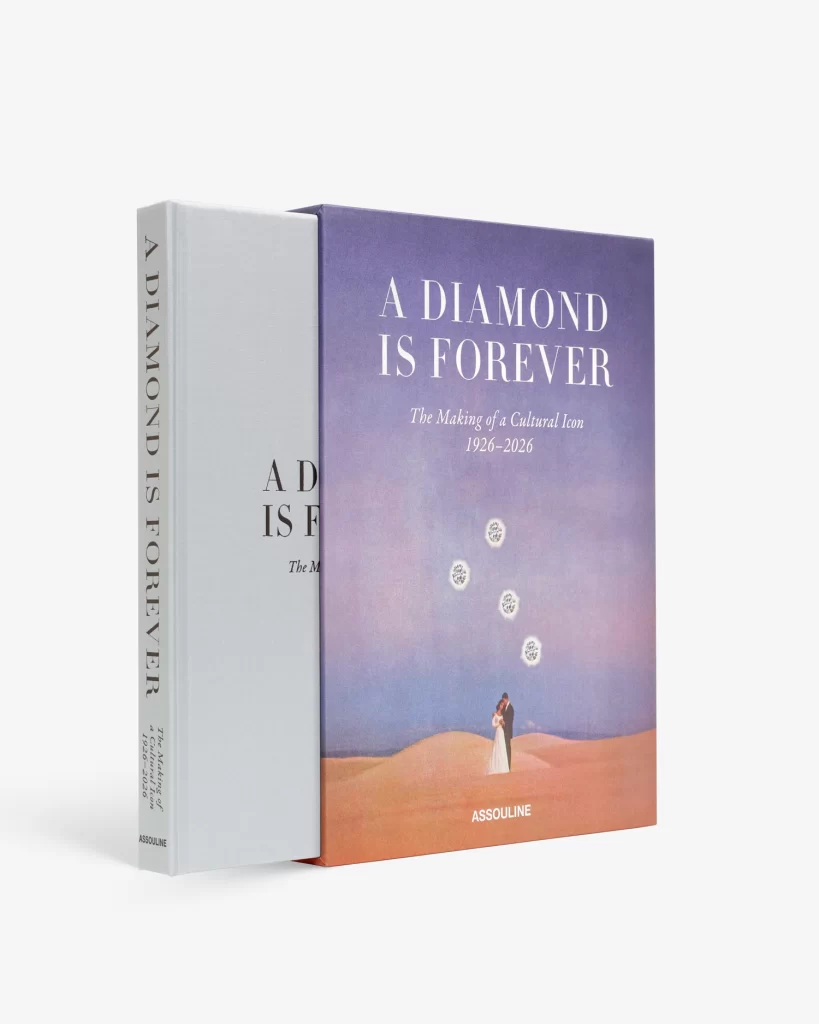
 De Beers is set to release A Diamond Is Forever

De Beers is set to release A Diamond Is Forever, a new luxury book exploring the evolution of the company’s natural diamond marketing and its profound influence on global culture, romance, and society. The book will be published next week by Assouline, a renowned publisher of high-end illustrated volumes.

Named after one of the most iconic advertising slogans in history, A Diamond Is Forever celebrates the cultural, artistic, and emotional legacy of natural diamonds — nature’s oldest treasure and one of humanity’s most enduring symbols of love and commitment.

De Beers is widely credited with transforming diamonds from an exclusive luxury reserved for society’s elite into a universal symbol used to mark life’s most important romantic milestones and personal achievements. Prior to the 1930s, diamond jewellery was exchanged discreetly within elite circles, with luxury houses maintaining strictly private client relationships. De Beers reshaped this narrative, positioning diamonds at the heart of modern romance.

In 1947, De Beers copywriter Frances Gerety coined the legendary phrase “A Diamond Is Forever,” embedding the gemstone into global consciousness as a lasting promise of love, endurance, and emotional significance. The slogan appeared across archival print advertising, magazine spreads, and celebrity endorsements, cementing the diamond’s place in popular culture.

The book also highlights De Beers’ historic collaborations with celebrated artists such as Pablo Picasso, Salvador DalĂ­, and Raoul Dufy, drawing parallels between the rarity of diamonds and the genius of fine art. These campaigns elevated diamonds beyond jewellery, reinforcing their artistic and cultural value while preserving a sense of exclusivity.

During the 1960s, Hollywood icons including Elizabeth Taylor and Marilyn Monroe further amplified the glamour of diamonds, while the company’s influential 1990s “Shadows” campaign — set to Karl Jenkins’ Palladio — captured the gemstone’s timeless, authentic, and eternal nature.

Over the past two decades, De Beers has periodically retired and revived the famed slogan, most recently reintroducing it in late 2023 as part of a refreshed “Seize the Day” campaign, originally launched in the 1990s.

According to the publisher, the story of diamonds is one of both transformation and continuity. In recent years, the narrative has expanded to include provenance, sustainability, and ethical stewardship, reinforcing the natural diamond as a symbol not only of beauty and permanence, but also of responsibility and conscience.

A Diamond Is Forever spans 240 pages and features 180 illustrations. Presented as a hardcover book housed in a luxury slipcase, it will retail for USD $195 and is scheduled for release on January 30.

Source: DCLA

Wednesday, 21 January 2026

Botswana Warns Diamond Oversupply Threatens Economic Growth

 Botswana has warned that a growing diamond oversupply

Botswana has warned that a growing diamond oversupply is set to weigh heavily on economic growth, as weak global prices and intensifying competition from lab-grown stones continue to suppress demand.

The world’s second-largest diamond producer after Russia is currently holding nearly double its permitted diamond stockpile, highlighting the severity of the downturn in the natural diamond market. Diamonds account for approximately one-third of Botswana’s GDP, making the sector critical to national economic stability.

According to the finance ministry’s 2026/27 Budget Strategy Paper published on Tuesday, Botswana held around 12 million carats of rough diamonds at the end of December, significantly above the government’s 6.5 million-carat ceiling.

“This suggests that, over the short term, production is expected to remain broadly unchanged until inventory levels are drawn down closer to minimum allowable thresholds, creating room for additional output,” the ministry said.

The prolonged slump has been exacerbated by weaker demand in the United States and China — the world’s two largest diamond markets — where retailers have scaled back orders amid growing consumer preference for lower-priced lab-grown diamonds.

Trade pressures are also adding to market strain. A 15 percent US tariff on diamonds, along with higher duties in key trading hubs such as India, is expected to prolong price weakness and further compress margins. The finance ministry described these developments as a “source of concern”.

Rough diamond prices are forecast to average $99.3 per carat, sharply lower than $128.8 in 2024. The ministry warned that any further decline during the current financial year could significantly reduce mineral revenues below current projections.

Mineral revenues are expected to fall to 10.3 billion pula ($770 million) in 2025/26, well below the long-term average of 25.3 billion pula. The shortfall, officials cautioned, is likely to persist over the medium to long term, with the possibility of a permanent structural decline.

The policy paper also warned that the extended weakness in the global diamond market “poses a significant threat” to economic growth. Botswana’s economy is forecast to contract by nearly 1 percent in 2025, following a 3 percent decline the previous year.

“Compounding this situation is the decline in foreign reserves and government savings, which is further constraining fiscal space and limiting exchange-rate policy options,” the ministry said.

Once among the poorest nations in the world, Botswana was transformed economically following the discovery of diamonds in the 1960s. Today, it is one of several African governments and businesses seeking a greater stake in De Beers, the world’s leading diamond producer.

Mining giant Anglo American has announced plans to divest from De Beers as the industry grapples with a prolonged downturn and structural shifts in global diamond demand.

Source: DCLA

Tuesday, 20 January 2026

Botswana’s Diamond Stockpile Nearly Doubles as Prolonged Price Slump Pressures Economy

 Botswana’s Diamond Stockpile Nearly Doubles

Botswana’s diamond stockpile has surged to almost double its targeted inventory levels as the global slump in gem prices shows little sign of easing, underscoring the mounting pressure on the world’s second-largest diamond-producing nation by volume.

According to Botswana’s Ministry of Finance, the country held an estimated 12 million carats of diamonds at the end of December 2025, nearly twice the government’s allowable inventory threshold of 6.5 million carats. The elevated stockpile reflects weak demand, subdued pricing, and limited scope for increasing production in the near term.

Botswana’s economy is forecast to contract by nearly 1% in 2025, following a 3% decline in 2024, with the downturn largely attributed to the collapse in diamond prices. The market has been weighed down by a surge in lab-grown diamond supply, cautious consumer spending, and softer demand across key luxury markets.

The price weakness has already had tangible operational consequences. Debswana, the 50:50 joint venture between the Government of Botswana and De Beers that accounts for roughly 90% of the country’s diamond sales, was forced to temporarily suspend production at several mines last year in response to unfavourable market conditions.

Despite these challenges, Botswana produced 18 million carats in 2024, second only to Russia, according to data from the Kimberley Process Certification Scheme. However, the finance ministry cautioned that elevated inventory levels will limit any meaningful increase in output until stockpiles are reduced closer to minimum allowable levels.

“This suggests that, over the short term, production is expected to remain broadly unchanged, until inventories are drawn down, creating room for additional production,” the ministry stated in its 2026/27 Budget Strategy Paper. As a result, economic growth will remain constrained unless the non-mining sectors deliver stronger performance.

Diamonds remain the backbone of Botswana’s economy, typically contributing around one-third of national revenues and approximately 75% of foreign exchange earnings. However, external pressures are compounding domestic challenges. Botswana’s diamond exports to the United States are now subject to a 15% tariff, while the prospect of higher tariffs in other major consuming markets, including India, risks prolonging the downturn in prices and compressing industry margins.

“These developments may ripple through to mining operations,” the ministry warned, noting that any sustained slowdown in diamond production would directly reduce government fiscal revenues.

Reflecting the sharp decline in sales, Botswana’s mineral revenues are projected to fall to 10.3 billion pula ($729 million) in 2025/26, well below the historical annual average of 25.3 billion pula. The figures highlight the scale of the challenge facing both the diamond sector and the broader economy as Botswana navigates a prolonged period of market weakness.

For the global diamond industry, Botswana’s swelling stockpile serves as a stark indicator of the structural pressures reshaping the market — from shifting consumer preferences to the growing impact of lab-grown alternatives — and reinforces the importance of restoring balance between supply and demand.

Source: DCLA

Monday, 19 January 2026

De Beers Confirms 2026 Sight Dates and Cuts Rough Diamond Prices as Global Market Pressures Intensify

 De Beers Confirms 2026 Sight Dates and Cuts Rough Diamond Prices

De Beers has released its 2026 sight schedule, confirming it will maintain its traditional 10 rough diamond sales over the 12-month period, providing a degree of operational continuity amid prolonged uncertainty across the global diamond industry.

The miner sells approximately 90% of its rough diamond output to approved sightholders, who commit to purchasing set volumes of rough diamonds in exchange for consistent and predictable supply. In line with this strategy, De Beers has confirmed it will extend its current sightholder agreement through 30 June 2026, ensuring stability within its sight system during a challenging market environment.

The extended contract continues to regulate De Beers’ rough diamond sales, which are sourced from its wholly owned and joint-venture mining operations in Botswana, Namibia and South Africa. Sales will continue to be conducted in these producing countries.

In a minor operational adjustment, De Beers announced that the April and September 2026 sights will be shortened to four days, compared with the traditional five-day format.

De Beers 2026 Sight Dates

  • Sight 1: 19–23 January
  • Sight 2: 23–27 February
  • Sight 3: 23–27 March
  • Sight 4: 27–30 April
  • Sight 5: 25–29 May
  • Sight 6: 6–10 July
  • Sight 7: 17–21 August
  • Sight 8: 22–25 September
  • Sight 9: 26–30 October
  • Sight 10: 30 November–4 December

De Beers Cuts Rough Diamond Prices Amid Weak Demand

Alongside the announcement of its 2026 sight calendar, De Beers has reportedly cut rough diamond prices, reflecting mounting pressure from weak demand, surging lab-grown diamond supply and ongoing trade disruptions.

The January reduction marked the company’s first official price cut since December 2024, following months of quietly offering discounts while maintaining official list prices above prevailing market levels. At the first regular sight of the year, De Beers implemented price reductions on rough stones larger than three-quarters of a carat, according to industry sources.

The exact scale of the price cuts remains unclear, as De Beers has adjusted its billing structure and altered the composition of its diamond boxes, making direct comparisons difficult. Under the sight system, De Beers sets prices and indicates expected purchase volumes for sightholders, a structure that continues to give the miner significant influence over the rough diamond market, despite buyers retaining the technical right to refuse goods.

Industry Downturn and Structural Challenges

The global diamond industry is experiencing one of its deepest downturns in decades, with demand and prices for natural diamonds declining sharply from 2023 through 2025. Miners have been forced to scale back production and reassess long-term strategies as market conditions deteriorate.

A major structural challenge has been the rapid rise of lab-grown diamonds, whose prices have collapsed in recent years. This has enabled lab-grown stones to capture increasing market share, particularly in the bridal jewellery segment, undercutting natural diamonds across key consumer categories.

China, once a vital growth engine for diamond jewellery, has become a significant drag on demand due to a slowing economy and declining marriage rates. At the same time, geopolitical pressures, including tighter sanctions on Russian diamonds, ongoing tariff threats and global trade frictions, continue to disrupt the diamond supply chain.

Trade Tensions Add Pressure to India’s Diamond Sector

Further uncertainty has emerged from US–India trade tensions, which have weighed heavily on India’s diamond industry. Under President Trump, US tariffs on a range of Indian imports — including gems and jewellery — were raised to as high as 50%, creating additional headwinds for global diamond flows.

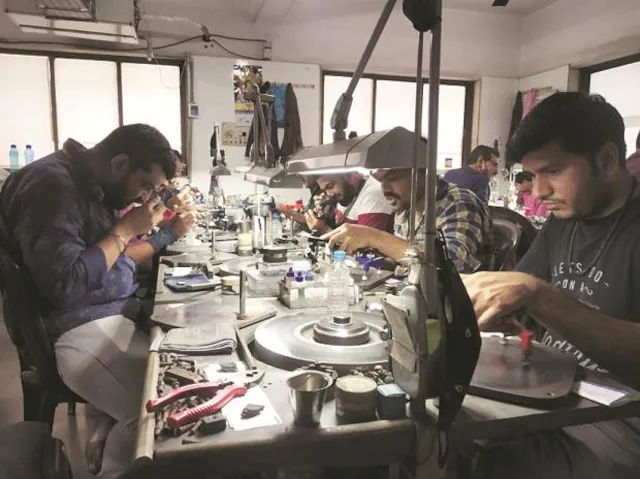
The impact has been particularly acute given India’s central role in the industry. The country cuts and polishes around 90% of the world’s diamonds by volume, while the United States remains its largest export market, accounting for approximately one-third to nearly half of India’s diamond and jewellery exports.

As the official CIBJO laboratory for Australia, DCLA continues to closely monitor developments in rough supply, pricing dynamics and certification standards, as the natural diamond sector navigates a period of profound structural change.

Source: DCLA

Sunday, 18 January 2026

The Farnese Blue Diamond: Three Centuries Through Europe’s Royal Courts

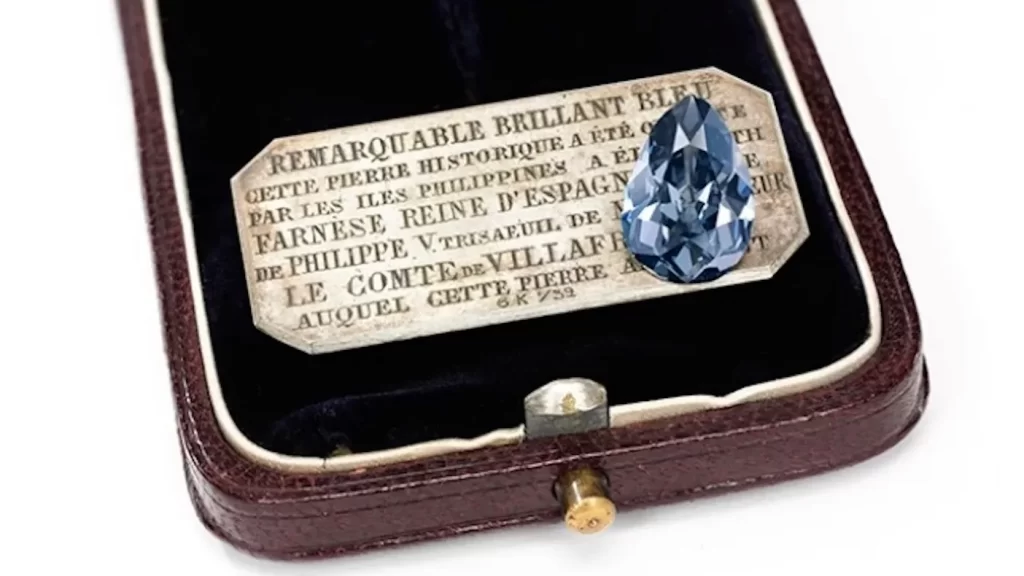
 The Farnese Blue Diamond

The Farnese Blue occupies a rare position among historic natural diamonds. It is not merely a gemstone with provenance, but a silent participant in more than three centuries of European political power, dynastic ambition, revolution, and exile. For most of its existence, it remained known only to a small circle of royal descendants, absent from public record and scholarly examination.

That secrecy ended in 2018 when the 6.16-carat pear-shaped natural Fancy Dark Gray-Blue diamond appeared unexpectedly at Sotheby’s Geneva. Its emergence stunned historians and gem specialists alike. Offered publicly for the first time in its recorded history, the Farnese Blue achieved USD $6.7 million—well above estimate—before being acquired by an anonymous buyer. With that sale, one of Europe’s most historically significant diamonds passed from royal custody into the modern market.


A Golconda Diamond of Exceptional Origin

The Farnese Blue originated in the legendary Golconda mines of India, the world’s most important diamond source for over a millennium. Long before Brazil or South Africa entered the diamond trade, Golconda supplied every known diamond in existence. The Hope Diamond, the Koh-i-Noor, the Regent, and the Wittelsbach-Graff all share this same geographic origin near present-day Hyderabad.

Golconda diamonds travelled ancient trade routes linking Asia and Europe, where merchants competed for stones prized for their exceptional clarity, colour, and crystalline structure. Their rarity and value ensured they were acquired almost exclusively by royalty and the most powerful figures of their time. The Farnese Blue belongs firmly within this elite lineage.


A Queen Without a Dowry: Entry Into Spanish Royal History

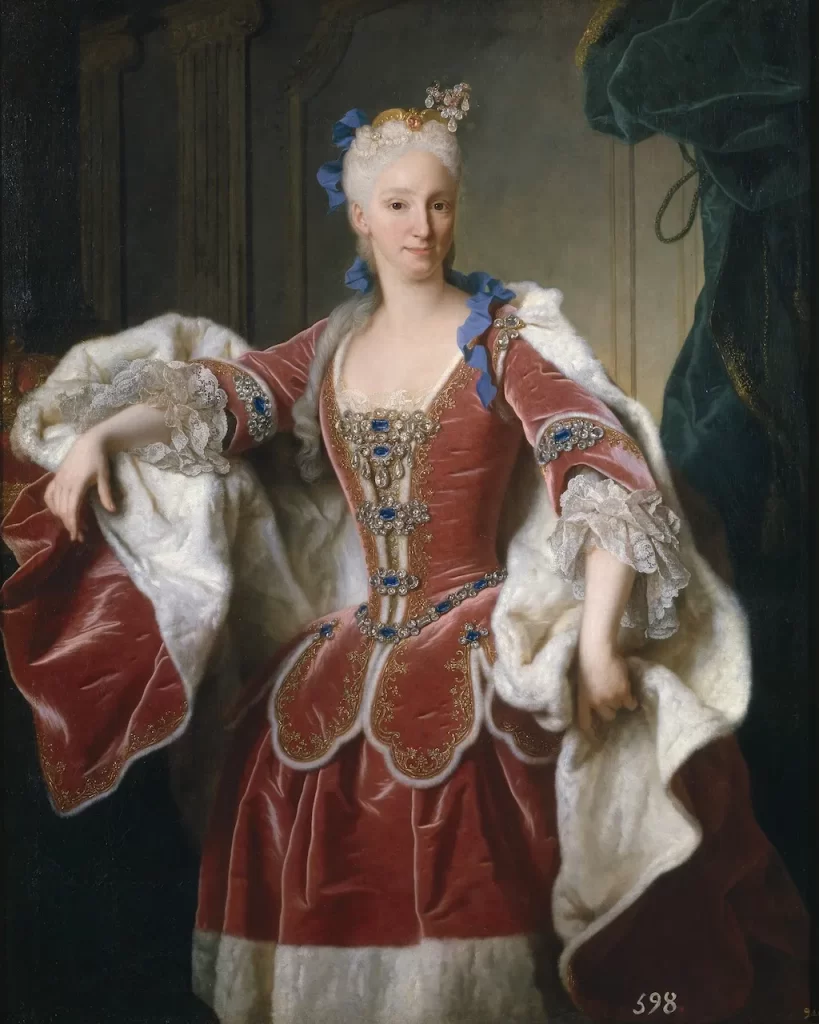
Elisabeth Farnese, Queen consort of Spain. In 1715, King Philip V of Spain

The Farnese Blue first entered recorded European history through Elisabeth Farnese, Queen consort of Spain. In 1715, King Philip V of Spain grandson of Louis XIV required a new queen. The political climate demanded a bride of royal blood, but without excessive dynastic influence.

Elisabeth, a princess of the Duchy of Parma and a descendant of Pope Paul III, met these requirements precisely. However, Spain’s finances had been devastated by the War of the Spanish Succession, and her father was unable to provide a traditional royal dowry.

To compensate, Spain turned to its global colonies. In August 1715, the so-called “Golden Fleet” departed Cuba carrying gold bullion and precious gemstones gathered for the royal wedding. A hurricane in the Gulf of Florida destroyed nearly the entire fleet, consigning its riches to the sea.

One extraordinary diamond survived.

The governor of the Philippine Islands presented a pear-shaped blue diamond to the new queen. That stone would become known as the Farnese Blue.


Three Centuries in Royal Exile

From that moment onward, the Farnese Blue passed quietly through Europe’s most powerful royal houses. Elisabeth Farnese bore seven children and worked tirelessly to secure dynastic influence across the continent. The diamond was likely entrusted to her son Philip, founder of the House of Bourbon-Parma.

It subsequently passed through successive generations: to Ferdinand, to King Louis of Etruria, and then to Charles Louis (King Louis II), who mounted the diamond as a tie pin. Political upheaval forced him into exile under the title Comte de Villafranca, yet he retained the diamond throughout his life.

Upon his death in 1883, the Farnese Blue passed to his grandson Robert, the last ruling Duke of Parma. After losing his throne, Robert sought refuge with his cousin, Emperor Franz Joseph of Austria, taking the diamond with him.

The stone later passed to Prince Elia and his wife, Archduchess Maria Anna of Austria. Her meticulous jewellery inventories proved invaluable to history, preserving the diamond’s provenance with remarkable clarity. Among her collection was a tiara containing diamonds once owned by Marie Antoinette. She incorporated the Farnese Blue still set as a tie pin into that tiara and wore it frequently.


Reemergence at Sotheby’s: From Royal Secrecy to Public Record

Following the collapse of the Austrian Empire in 1918, the Farnese Blue disappeared once again from public view. For decades, it remained absent from scholarship and gemological examination.

Its reappearance in 2018 marked a pivotal moment. Now mounted within a colourless diamond halo on a detachable pin, the Farnese Blue was examined and graded by the Gemological Institute of America for the first time. It received an official classification as a natural Fancy Dark Gray-Blue diamond with SI1 clarity.

That same year, Sotheby’s offered the stone at auction for the first time in its three-hundred-year history. The result confirmed what experts already understood: a natural diamond of exceptional rarity, when paired with uninterrupted, well-documented royal provenance, transcends its material value.

The Farnese Blue stands today as one of the most extraordinary surviving diamonds of European royal history an enduring witness to the rise and fall of empires, preserved through centuries by those who understood its significance long before the modern world was permitted to see it.

Thursday, 15 January 2026

Diamond Industry Pioneer Louis Glick Passes Away at 102

 Louis “Louie” Glick

Louis “Louie” Glick, one of New York’s most respected diamond dealers and a pioneering force behind the rise of yellow diamonds, passed away on 10 January at the age of 102.

Born in 1924, Glick entered the diamond trade at just 21 years old, founding the diamond company that would later bear his name. His firm went on to become a De Beers sightholder in 1976, cementing his position among the industry’s elite.

Glick was widely recognised for his visionary role in advancing yellow diamonds into the mainstream market. Together with his business partner Stanley Doppelt, he co-created the StarBurst cut — a modified radiant cut designed specifically to enhance yellow diamond colour. The innovation played a crucial role in increasing demand for fancy yellow diamonds, as documented in GIA’s Gems & Gemology.

Don Spak, who previously worked under Glick, credited him with reshaping industry attitudes toward coloured diamonds.

“Mr Glick believed in the yellow diamond market and helped develop it,” Spak wrote on LinkedIn. “Today, there is not a designer, manufacturer, or retailer who does not carry yellow diamonds in their collections or inventory. The place of yellow diamonds will forever be part of the industry thanks to people like Louis Glick.”

Among his many achievements, Glick was also part owner of one of the world’s most famous yellow diamonds — the extraordinary 407-carat Incomparable.

Former Stuller vice president Stanley Zale reflected fondly on his time working with Glick, describing him as both a brilliant businessman and a deeply principled individual.

“The word mensch doesn’t even begin to do justice to who he was,” Zale. “He was the smartest businessperson I’ve ever known. If you wanted to learn the diamond business, he was the person to learn it from. He led with humility, kindness and respect. It was an honour to have known and worked for him.”

Glick’s influence extended well beyond his own success. His nephew, diamond dealer Daniel Sklarin, noted that Glick’s greatest legacy was the people he helped along the way.

“He was a giant in the diamond business, and at his height there was no one even close,” Sklarin said. “His greatest successes were the many individuals he helped establish their own paths in the diamond trade.”

Louis Glick is survived by his son, Simon Glick, and his daughter, Esther Pluchenik. His legacy as a visionary, mentor and true gentleman of the diamond industry will endure for generations.

Source: DCLA

Wednesday, 14 January 2026

Angola Diamond Mines Generate $1.8 Billion in Revenue Despite Pricing Pressures

 Angola Diamond Mines

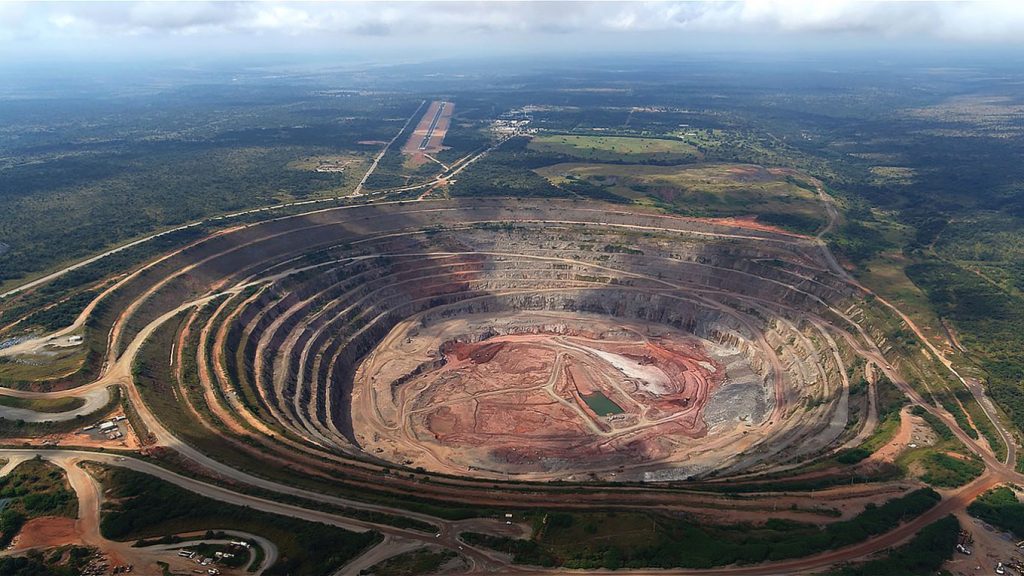
Angola’s diamond sector delivered a robust production and sales performance in 2025, generating approximately $1.8 billion in rough-diamond revenue, even as global trading conditions remained challenging.

According to Sodiam, Angola’s state-owned diamond marketing and sales authority, the country exported 17.2 million carats of rough diamonds during the year, representing a 69% increase compared with 2024. Total sales volume rose by 70% to 17.7 million carats, while overall sales value increased by 21% year-on-year, highlighting Angola’s growing capacity to bring rough supply to the international market.

Sodiam attributed the strong volume growth to improved sales management practices, including tighter inventory control and strategies aimed at preventing excess stock accumulation. These measures helped stabilise cash flow and improve market access at a time when demand across parts of the midstream remained under pressure.

Angola’s rough diamond output is sourced primarily from major mining operations, including the CatocaLuele, and Lulo deposits. In particular, increased production at the Luele mine played a pivotal role in boosting export volumes and strengthening Angola’s position as one of Africa’s leading diamond producers.

“These figures reflect a significant expansion in the country’s capacity to place its diamonds on the international market,” Sodiam said, pointing to operational efficiencies and sustained investment in mining infrastructure.

Despite the strong gains in volume and revenue, average realised prices declined by 29% on a per-carat basis, underscoring ongoing pricing pressure in the global rough diamond market. The price contraction reflects softer demand in certain size and quality categories, as well as continued caution among manufacturers and traders.

For the wider diamond industry, Angola’s 2025 performance illustrates a clear divergence between volume-led growth and price dynamics, reinforcing the importance of disciplined production, transparent sales mechanisms, and accurate grading and valuation standards as market conditions continue to evolve.

Source: DCLA

Gems set to retain sheen, view cloudy for diamonds after US tariff cut

  Washington’s reciprocal tariff reduction is expected to help India’s gems and jewellery exporters regain lost ground in the US market, aft...