Showing posts with label Vivid blue Diamonds. Show all posts

Wednesday, 1 July 2026

Messika Showcases Botswana’s Extraordinary Okavango Blue Diamond in One of the World's Rarest High Jewellery Creations

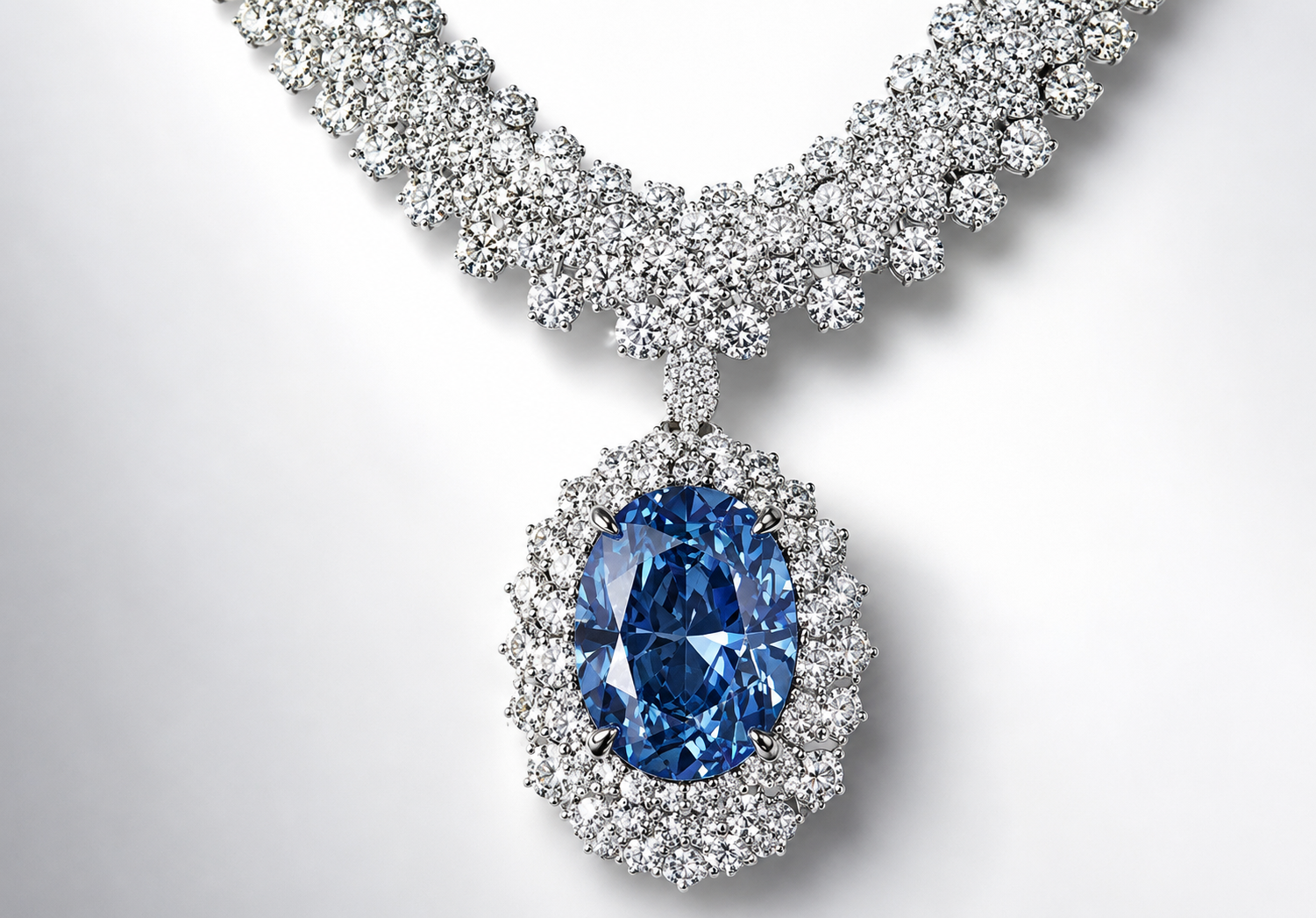
 20.46 carat Okavango Blue Diamond

French high jewellery house Messika has unveiled an exceptional necklace featuring one of the rarest natural diamonds ever discovered, the remarkable 20.46 carat Okavango Blue Diamond. The extraordinary gem, recovered from Botswana’s renowned Orapa mine, represents one of the finest blue diamonds ever unearthed and highlights the country’s position as a leading source of exceptional natural diamonds.

The story of the Okavango Blue began in 2019 when a 41.11 carat rough blue diamond was discovered at the Orapa mine. Following an extensive cutting and polishing process, the crystal was transformed into a breathtaking 20.46 carat Fancy Deep Blue VVS2 Type IIb oval diamond, a combination of colour, clarity and rarity seldom encountered in the natural world.

Recognising the significance of the gem, the Government of Botswana commissioned celebrated jewellery designer Valérie Messika to create a one of a kind masterpiece worthy of such an extraordinary diamond. Rather than overwhelming the centre stone, Messika chose a timeless design that allows the blue diamond to remain the undisputed focal point.

The completed necklace features the Okavango Blue suspended within a halo of white diamonds and attached to a collar containing more than 500 meticulously set diamonds. The contrast between the brilliant white diamonds and the deep blue centre stone intensifies the diamond’s remarkable colour while emphasising its exceptional size and beauty.

Messika explained that her objective was to create a design that honoured the diamond itself rather than compete with it. The elegant medallion inspired setting gives the necklace a classic appearance while showcasing one of nature’s rarest geological treasures.

Founded in Paris in 2005, Messika has become one of the world’s most recognised contemporary luxury jewellery brands. Valérie Messika inherited generations of diamond expertise through her father, renowned diamond dealer André Messika, and has built an international reputation for modern diamond jewellery collections that combine technical craftsmanship with contemporary design.

Despite its extraordinary value, the necklace has not been created for commercial sale. Instead, it serves as a celebration of Botswana’s natural diamond heritage and the country’s commitment to showcasing its exceptional mineral resources through world class craftsmanship.

The project also reflects Botswana’s long standing partnership with leading jewellers to promote the value and rarity of natural diamonds on the global stage. Messika previously collaborated with Botswana on another remarkable high jewellery creation featuring a rare 33 carat flawless diamond recovered from the country’s mining industry.

Blue diamonds remain among the rarest gemstones on Earth. Their distinctive colour is produced by trace amounts of boron incorporated into the diamond crystal during its formation billions of years ago under extreme geological conditions. Experts estimate that only a tiny fraction of all natural diamonds display a blue colour, making stones such as the Okavango Blue exceptionally scarce.

The Okavango Blue stands as both a geological marvel and a showcase of exceptional craftsmanship. While many of the world’s finest diamonds ultimately enter private collections, this extraordinary necklace has been created as a symbol of Botswana’s natural wealth and the enduring beauty of rare natural diamonds, demonstrating that some treasures transcend commercial value and become part of diamond history.

Source: DCLA

Wednesday, 17 June 2026

The Heart of Eternity Diamond: The Extraordinary Blue Diamond That Could Redefine Rarity

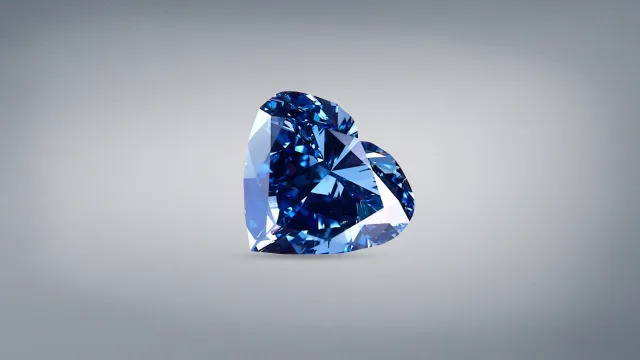
 Among the world’s most exceptional gemstones, few diamonds capture the imagination quite like the Heart of Eternity Diamond. A 27.64 carat Fancy Vivid Blue heart shaped diamond

Among the world’s most exceptional gemstones, few diamonds capture the imagination quite like the Heart of Eternity Diamond. A 27.64 carat Fancy Vivid Blue heart shaped diamond, this extraordinary gem represents one of the rarest combinations in the diamond world: exceptional size, intense colour, remarkable clarity, and a story filled with mystery, intrigue, and immense value.

Blue diamonds are among the rarest natural diamonds ever discovered. Their colour comes from trace amounts of boron trapped within the diamond crystal structure during formation deep beneath the Earth’s surface. Unlike traditional colourless diamonds, where rarity is often measured by size and clarity, coloured diamonds are judged by the strength and beauty of their colour, with vivid blues commanding extraordinary premiums.

The Heart of Eternity Diamond sits at the highest level of this category, officially graded Fancy Vivid Blue by the Gemological Institute of America (GIA), placing it among the finest blue diamonds ever evaluated.

A Diamond Born from One of the World’s Most Famous Mines

The story of the Heart of Eternity Diamond begins at the legendary Cullinan Diamond Mine in South Africa, formerly known as the Premier Diamond Mine.

This historic mine has produced some of the most important diamonds in history, including the famous Cullinan Diamond, discovered in 1905. The Cullinan Diamond weighed an extraordinary 3,106 carats in rough form and was later cut into nine major diamonds, many of which became part of the British Crown Jewels.

The same geological conditions that created the Cullinan Diamond also produced some of the world’s most valuable blue diamonds, including the Heart of Eternity.

A Gemstone From a Category of Extreme Rarity

At 27.64 carats, the Heart of Eternity is not the largest blue diamond ever discovered, but its combination of size, colour, and shape places it in a category occupied by only a handful of legendary stones.

Natural blue diamonds represent only a tiny fraction of all diamonds mined worldwide. Within that group, stones with a vivid blue colour, significant carat weight, and exceptional quality are almost impossible to replace.

The heart shape adds another layer of uniqueness. While round brilliant diamonds dominate the market for maximum brilliance, a perfectly executed heart shaped diamond requires exceptional rough material and highly skilled cutting to preserve both beauty and weight.

The Mystery Behind the Diamond

The Heart of Eternity Diamond was revealed to the world in the late 1990s after being cut from a much larger rough blue diamond. It became part of the collection of De Beers, which showcased the stone as one of the most remarkable examples of natural blue diamond beauty.

The diamond later attracted significant attention when reports linked it to private ownership and high profile collectors. Like many of the world’s greatest diamonds, its current ownership has remained surrounded by secrecy, adding to its legendary status.

A Value That Could Reach Historic Levels Today

When exceptional blue diamonds appear at auction, they frequently achieve some of the highest prices ever recorded for gemstones.

The famous Blue Moon of Josephine, a 12.03 carat Fancy Vivid Blue diamond, sold for more than US$48 million in 2015, setting a record price per carat at the time.

The Heart of Eternity Diamond is more than twice the size of the Blue Moon of Josephine, while also possessing the highly desirable Fancy Vivid Blue classification. If a diamond of this quality entered the market today, many experts believe it could command a valuation reaching hundreds of millions of dollars.

Why the Heart of Eternity Matters to the Diamond World

The Heart of Eternity Diamond represents more than just a beautiful gemstone. It is a geological miracle, created over billions of years under extreme conditions, then transformed by human craftsmanship into a piece of natural art.

For diamond professionals and collectors, stones like the Heart of Eternity demonstrate why exceptional natural diamonds remain among the world’s most sought after assets. Their rarity cannot be manufactured, their history cannot be replicated, and their value is driven by the simple reality that there are only a few truly exceptional examples in existence.

At DCLA, the study, grading, and understanding of diamonds is built around recognising these unique characteristics. Every extraordinary diamond tells a story, from its formation deep within the Earth to the moment it is revealed as one of nature’s rarest creations.

Monday, 15 June 2026

10 Carat Blue Diamond Expected to Achieve Over $6 Million at Sotheby’s High Jewelry Auction

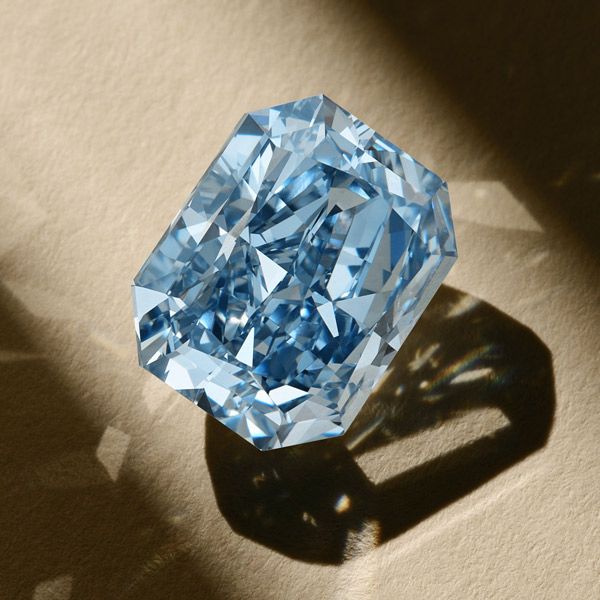
 A rare 10.02 carat fancy intense blue diamond is set to become the centrepiece of Sotheby’s

A rare 10.02 carat fancy intense blue diamond is set to become the centrepiece of Sotheby’s highly anticipated High Jewelry auction in New York, with an estimated value exceeding $6 million.

The exceptional unmounted diamond is a cut cornered rectangular modified brilliant cut and represents a significant rarity in the auction market. It is only the third fancy intense blue diamond weighing 10 carats or more to appear at auction since 2008, highlighting the extraordinary scarcity of these coveted coloured diamonds.

The auction will also feature a selection of remarkable coloured diamond jewels, with several lots carrying estimates above $1 million.

Among the highlights is a 13.77 carat fancy light purplish pink diamond, a cut cornered rectangular stone estimated between $1.5 million and $2 million. Another standout piece is a 6.76 carat fancy grayish blue cushion cut diamond ring, surrounded by pink diamonds and complemented by shield cut diamonds, with an estimate of $1.2 million to $1.8 million.

A 5.02 carat oval fancy intense pink diamond, accompanied by two light pink diamond side stones weighing over 0.40 carats each, carries an estimate of $2 million to $3 million. A 4.19 carat fancy purple pink oval diamond ring, enhanced with round diamonds along the band, is expected to achieve between $1 million and $1.5 million.

The cover lot of the sale is a spectacular 1960s diamond necklace created by Harry Winston. Unlike the house’s traditional designs that often feature marquise and pear shaped diamonds, this exceptional piece focuses on round diamonds. Containing more than 120 carats of diamonds, the necklace features trefoil clusters of marquise diamonds combined with round diamond pairings and can also be transformed into two bracelets. It carries an estimate of $800,000 to $1.2 million.

Continuing its collaboration with De Beers, Sotheby’s will also offer an 11.33 carat internally flawless old mine cut diamond with D colour and Type IIa classification, estimated at $600,000 to $800,000. The sale will also include two rings featuring 2.01 carat pear shaped diamonds, with part of the proceeds benefiting the Peace Parks Foundation, a conservation charity co founded by the late Nelson Mandela.

Other highlights include five exceptional Paraiba tourmalines ranging from 6.11 to 8.48 carats, sourced from a private collection. These rare gemstones will be offered individually, apart from one matching pair. The most valuable Paraiba tourmaline is estimated at $350,000 to $550,000.

The auction will also showcase important historic jewellery, including a diamond necklace created by René Lalique in the 1890s. The piece comes with significant provenance, having belonged to descendants of Elizabeth Sarah Morgan Jay, who was believed to have received it as a wedding gift from her relative J. P. Morgan in 1910.

Sotheby’s latest High Jewelry auction once again demonstrates the continued global demand for exceptional coloured diamonds, rare gemstones, and historically important jewels, where rarity, provenance, and craftsmanship continue to drive record breaking valuations.

Source: DCLA

Wednesday, 10 June 2026

Two Blue Diamonds Achieve More Than $8 Million Each at Christie’s Magnificent Jewels Auction


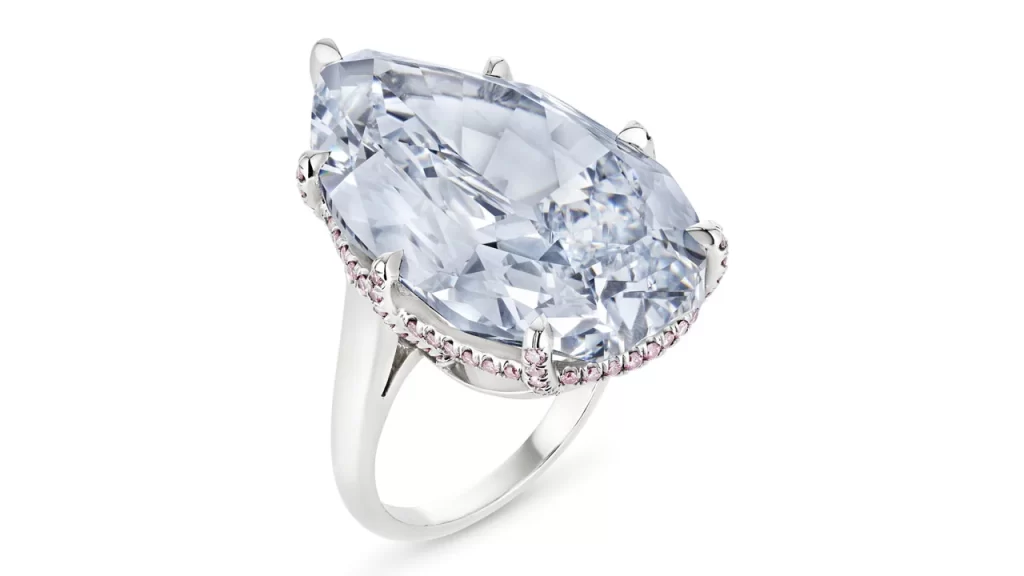
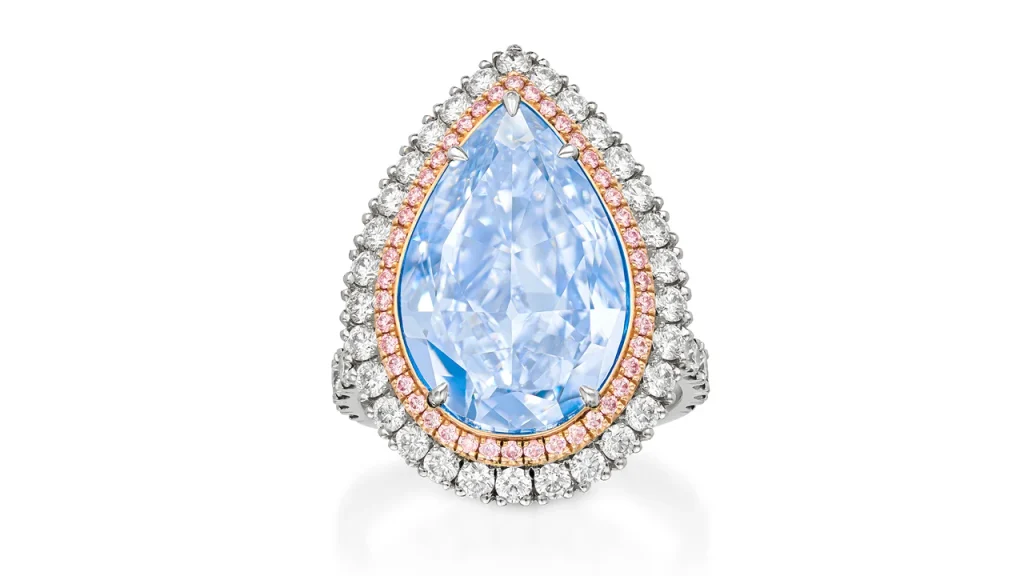
The Azure Blue, a pear modified brilliant-cut, 31.62-carat, internally flawless, VVS1-clarity, type IIb diamond

Rare coloured diamonds once again demonstrated their extraordinary appeal, with two exceptional blue diamonds selling for more than $8 million each at Christie’s Magnificent Jewels auction in New York.

The highlight was the Azure Blue, a remarkable 31.62 carat pear modified brilliant cut blue diamond. Graded internally flawless, VVS1 clarity and classified as a Type IIb diamond, the exceptional stone achieved $8.4 million, selling within its pre sale estimate.

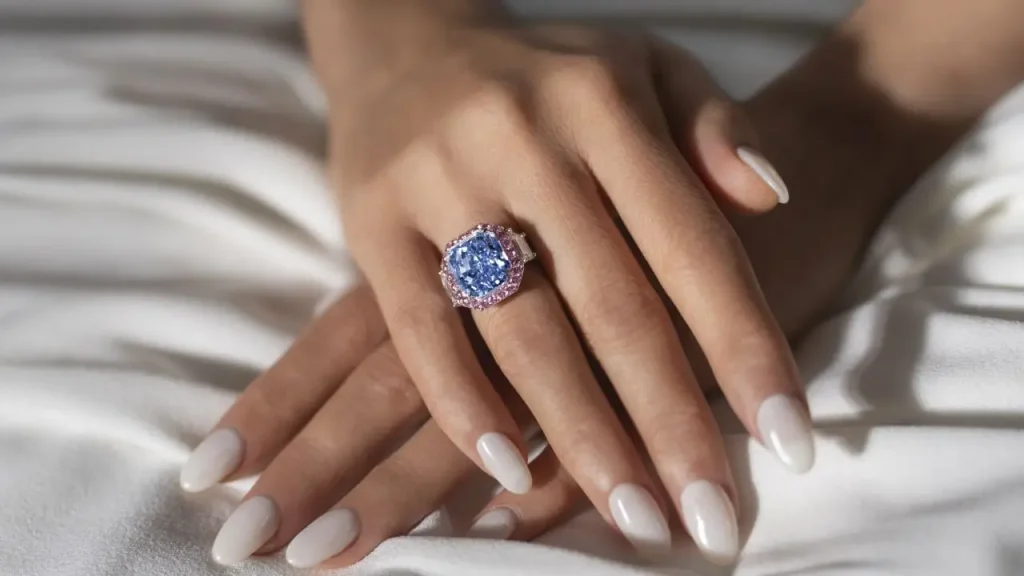
Another standout was a 5.04 carat fancy vivid blue diamond ring, a marquise modified brilliant cut stone with VVS2 clarity and Type IIb classification, which sold for $8.1 million, exceeding expectations and highlighting the continued demand for the world’s rarest coloured diamonds.

The auction generated a total of $49.7 million, with all 143 lots finding buyers. Alongside the blue diamonds, exceptional sapphires, rubies, emeralds and signed jewellery from renowned houses including Graff, Cartier and Bulgari attracted strong international interest.

“From rare blue diamonds to extraordinary sapphires and rubies, the strength of demand across categories, particularly coloured stones, underscores the global enthusiasm for jewels of beauty, rarity, and provenance,” said Claibourne Poindexter, head of jewellery for the Americas at Christie’s.

Other notable results included:

• A 41.29 carat Ceylon sapphire ring, which achieved $2.3 million against a $600,000 to $800,000 estimate.

• A 15.40 carat Kashmir sapphire ring, selling for $2.2 million.

• A Graff ring featuring a 30 carat Ceylon sapphire, which achieved $1.8 million.

• A pair of David Morris earrings featuring Burmese rubies and exceptional diamonds, selling for $1.4 million.

• A historic circa 1900 brooch featuring an 18.27 carat D colour diamond and natural saltwater pearls, achieving $1.2 million.

The results reinforce the enduring strength of the luxury gemstone market, where rarity, exceptional quality, and provenance continue to drive demand. As collectors compete for truly unique natural gems, exceptional coloured diamonds remain among the most sought after treasures in the world of fine jewellery.

Source: DCLA

Thursday, 14 May 2026

6.03 Carat Internally Flawless Blue Diamond Unsold at Major Geneva Auction


Rare 6.03 Carat Vivid Blue Diamond Fails to Sell at Sotheby’s Geneva Despite $12 Million Estimate

A rare 6.03 carat fancy vivid blue internally flawless diamond failed to secure a buyer at the recent Sotheby’s Geneva High Jewelry Sale, despite carrying a pre sale estimate between USD $9 million and $12 million. The exceptional blue diamond was the headline lot of the May 12 auction held at the Mandarin Oriental in Geneva.

matched pair of unmounted diamonds, each weighing 18.38 carats. Both diamonds were graded Type IIa and D colour


Although the blue diamond remained unsold, the auction itself was considered a strong success, achieving more than USD $30 million in total sales with 93% of lots sold. Sotheby’s reported its highest participation levels in a Geneva jewellery sale in more than five years, with an average of more than five bidders competing for each sold lot.

Collectors from over 30 countries participated in the auction, with strong interest from buyers across the United States, Asia, Europe and the United Kingdom. Fancy coloured diamonds, important gemstones and signed vintage jewellery continued to dominate buyer demand.

According to Jessica Wyndham, Head of High Jewelry at Sotheby’s Geneva, collector appetite for coloured gemstones remains exceptionally strong, while white diamonds are also experiencing renewed demand. Signed jewellery from iconic maisons, particularly bold 1970s and 1980s designs from Bulgari, significantly exceeded expectations during the sale.

The top performing lot of the auction was a perfectly matched pair of unmounted diamonds, each weighing 18.38 carats. Both diamonds were graded Type IIa and D colour, with one graded flawless and the other internally flawless. The pair sold for more than USD $3.2 million. The diamonds were sourced by De Beers from Botswana’s renowned Jwaneng Mine as part of a collaboration with Sotheby’s showcasing exceptional provenance diamonds.

the “Peacock of Ceylon,” a remarkable 102.4 carat unheated cushion cut sapphire

Another standout lot was the “Peacock of Ceylon,” a remarkable 102.4 carat unheated cushion cut sapphire, which achieved nearly USD $2 million at auction.

4.12 carat pear shaped fancy pink internally flawless diamond

A further highlight included a 4.12 carat pear shaped fancy pink internally flawless diamond ring, which sold for USD $1.4 million. The Type IIa diamond, graded by the Gemological Institute of America, featured excellent polish and was mounted between tapered baguette diamond shoulders.

The failure of the vivid blue diamond to sell highlights the increasingly selective nature of today’s high end gemstone market, where rarity alone is no longer enough to guarantee a record result.

Source: DCLA

Wednesday, 6 May 2026

Christie’s to Auction the Azure Blue, the Largest Fancy Blue Diamond Ever Offered

 5.04-carat Fancy Vivid Blue marquise-cut diamond

Christie’s has announced two exceptional natural blue diamonds for its upcoming Magnificent Jewels Auction sale at Rockefeller Center on June 9, highlighting the extraordinary rarity and complexity of the natural coloured diamond market.

Leading the sale is the Azure Blue, a remarkable 31.62-carat pear-shaped Fancy Blue diamond described by Christie’s as the largest Fancy Blue diamond ever offered at auction. The stone carries a pre-sale estimate of USD $6.5 to $8.5 million. Interestingly, sharing almost the identical estimate is a second diamond in the same auction: a 5.04-carat Fancy Vivid Blue marquise-cut diamond. Despite the dramatic size difference, the valuations sit within the same range, illustrating the immense importance of colour grading in the rare blue diamond market.

Natural blue diamonds derive their colour from boron, a trace element incorporated into the diamond’s crystal structure during formation deep within the Earth’s mantle. Boron causes selective absorption of red, orange, and yellow light wavelengths, leaving blue wavelengths dominant to the human eye.

the Azure Blue, a remarkable 31.62-carat pear-shaped Fancy Blue diamond


Blue diamonds are exceptionally rare, predominantly occurring within the Type IIb category, which accounts for fewer than 0.1 per cent of all natural diamonds. Many Type IIb diamonds also possess electrical conductivity, a highly unusual physical property rarely seen in gem materials.

Within the blue diamond category, colour saturation is one of the most significant drivers of value. GIA grades blue diamonds across a spectrum including Fancy Light, Fancy, Fancy Intense, Fancy Vivid, Fancy Deep, and Fancy Dark. Among these, Fancy Vivid Blue represents the highest level of saturation and rarity found in nature.

The Azure Blue carries a Fancy Blue grade, combined with exceptional size and clarity, reportedly potentially Internally Flawless. It is a stone of immense importance for collectors and connoisseurs alike. However, the 5.04-carat marquise achieves the far rarer Fancy Vivid Blue grade, alongside VVS2 clarity and Type IIb classification. That single grading distinction effectively compensates for the significant size difference between the two stones, explaining why Christie’s has valued them similarly.

The Azure Blue is mounted in a platinum ring featuring a concealed halo of natural pink diamonds, while the 5.04-carat Fancy Vivid Blue marquise is set in platinum with baguette-cut side diamonds. Both mountings are intentionally understated, allowing the diamonds themselves to remain the focal point.

Recent auction history demonstrates the extraordinary premiums achieved by the finest Fancy Vivid Blue diamonds. In May 2023, the The De Beers Blue sold at Sotheby’s Geneva for USD $57.5 million, achieving approximately USD $3.8 million per carat. Prior to that, the The Oppenheimer Blue achieved the same price at Christie’s Geneva in 2016, becoming the most expensive jewel ever sold at auction at the time.

In 2015, the Blue Moon of Josephine sold for USD $48.4 million at Sotheby’s Geneva after being purchased by Hong Kong businessman Joseph Lau for his daughter.

All of these record-breaking stones shared the coveted Fancy Vivid Blue grade, helping explain their extraordinary per-carat values. While the Azure Blue surpasses them all in physical size, its Fancy Blue classification places it within a different rarity category. By contrast, the 5.04-carat marquise sits within the same elite colour tier as those historic diamonds, reinforcing the significance of its estimate.

Christie’s continues to play a leading role in presenting some of the world’s most important natural coloured diamonds to market. According to Claibourne Poindexter, Head of Jewelry Americas at Christie’s, “With its striking color, exceptional size, and elegant shape, The Azure Blue is a rare masterpiece of nature.”

The appearance of both the Azure Blue and a highly significant Fancy Vivid Blue diamond within the same sale positions the June 9 Magnificent Jewels auction as one of the most important blue diamond auction events in recent years.

Source: DCLA

Thursday, 30 April 2026

Rough Diamond Jewellery Gains Momentum in the UK and USA

 De Beers’ women’s gold diamond rings

A clear shift is underway across the jewellery markets in the United Kingdom and the United States, where demand for rough, uncut diamond jewellery continues to accelerate. Against a backdrop of geopolitical tension and economic uncertainty, consumers are increasingly drawn to pieces that represent authenticity, individuality, and a deeper connection to natural origins.

Unlike traditional polished stones, rough diamonds present an organic, untouched aesthetic each one inherently unique. This raw beauty is resonating strongly with a new generation of buyers who prioritise personal expression over conventional notions of perfection. In this segment, irregularity is not a flaw, but a defining feature of value.

The momentum behind this trend has been amplified by the expansion of the De Beers Talisman collection. By pairing rough and polished diamonds in innovative designs, the collection has successfully repositioned rough stones within high jewellery bridging traditional craftsmanship with contemporary design language and attracting both collectors and design-led consumers.

From a broader market perspective, the rise of rough diamond jewellery reflects a growing preference for tangible, meaningful assets. In uncertain times, buyers are seeking rarity, permanence, and intrinsic value qualities naturally embodied by diamonds in their most authentic form.

For the trade, this evolution presents both opportunity and responsibility. Educating consumers on the characteristics, formation, and grading complexities of rough diamonds remains critical, alongside maintaining transparency and provenance areas where DCLA continues to play a pivotal role.

As the market evolves, rough diamonds are no longer viewed as unfinished they are increasingly recognised as a deliberate, sophisticated choice.


6.03ct Fancy Vivid Blue Diamond Could Fetch Up to $12 Million

6.03ct Fancy Vivid Blue Could Fetch $12m

A rare 6.03-carat fancy vivid blue diamond is set to headline an upcoming auction at Sotheby’s Geneva, with expectations reaching as high as CHF 9.5 million (approximately USD $12.2 million).

The cushion-modified brilliant, classified as a Type IIb diamond, originates from South Africa’s renowned Cullinan mine and is set in a platinum ring. It will lead the High Jewellery sale scheduled for 12 May.

This follows the strong performance of another Cullinan blue at Sotheby’s Geneva in May 2025, when the 10.3-carat “Mediterranean Blue” achieved $21.5 million, or approximately $2.09 million per carat highlighting sustained demand for rare blue diamonds at the top end of the market.

The current 6.03-carat stone carries an estimate of CHF 7.2 million to CHF 9.6 million (USD $8.0 million to $10.7 million), equating to roughly $1.33 million to $1.77 million per carat, reinforcing the continued strength of the coloured diamond segment.


Masked Raiders Steal Dozens of Rolex Watches in Texas

Masked Raiders Steal Dozens of Rolex Watches in Texas

In a stark reminder of rising security risks within the luxury sector, a group of masked thieves carried out a targeted raid on a jewellery store in Austin, Texas, stealing at least 50 pre-owned Rolex watches.

The incident occurred on 21 April at Marc Robinson Jewelers, where eight suspects used hammers to smash display cases after deploying pepper spray against an employee and a bystander. The group reportedly fled with a significant volume of high-value inventory before staff could intervene.

The store, known for holding one of the largest inventories of pre-owned Rolex watches in the region, was specifically targeted suggesting prior surveillance and planning. Authorities later recovered a stolen getaway vehicle but have yet to make any arrests.

The underscores the increasing need for enhanced security protocols across the jewellery and watch retail sector, particularly for businesses dealing in high-value branded goods.


DCLA Insight:
From evolving consumer preferences toward rough diamonds to continued strength in rare coloured stones and rising security concerns, the global jewellery market is undergoing dynamic change. For industry professionals, adaptability, education, and vigilance remain key to navigating this rapidly shifting landscape.

Monday, 27 April 2026

Geneva Set to Dazzle as Rare Blue Diamonds Headline May Auctions


6.03-Carat Fancy Vivid Blue Diamond

The global diamond market will turn its attention to Sotheby’s and Christie’s this May, as two exceptional blue diamonds each representing the pinnacle of rarity and natural beauty prepare to go under the hammer in Geneva.


Sotheby’s to Offer 6.03-Carat Fancy Vivid Blue Diamond

A 6.03-carat cushion-shaped fancy vivid blue diamond is expected to achieve up to CHF 9.5 million (approximately USD $12.2 million) at Sotheby’s High Jewellery auction on May 12 in Geneva.

The diamond is graded internally flawless and classified as a Type IIb stone a category that includes some of the rarest and most chemically pure diamonds in the world. Type IIb diamonds are distinguished by the presence of boron, which imparts their highly sought-after blue colour and exceptional optical properties.

This important piece will headline a broader offering of high jewellery from renowned maisons including Van Cleef & Arpels, Bucherer, and Cartier, alongside a curated selection of coloured diamonds and rare gemstones.


“The Ocean Dream” Returns to Christie’s

The Ocean Dream Diamond


Also commanding global attention is the reappearance of the legendary “Ocean Dream,” a 5.50-carat fancy vivid blue-green diamond, set to headline Christie’s Magnificent Jewels auction on May 13 at the Four Seasons Hotel des Bergues in Geneva.

Certified by the Gemological Institute of America, the Ocean Dream holds the distinction of being the largest known fancy vivid blue-green diamond in the world. Its unique hue reminiscent of tropical seawater places it among the rarest colour expressions ever documented in natural diamonds.

Unlike the Type IIb blue offered at Sotheby’s, the Ocean Dream is classified as a Type Ia diamond. While Type Ia stones account for approximately 95% of all natural diamonds, they are rarely associated with such intense and unusual colour saturation, making this specimen an extraordinary anomaly.

The diamond, cut into a distinctive triangular shape, originated from an 11.70-carat rough discovered in Central Africa during the 1990s. It is expected to achieve between CHF 7 million and CHF 10 million (USD $8.9 million to $12.7 million).


A Stone of Museum-Level Importance

The Ocean Dream first gained international recognition during the 2003 “Splendor of Diamonds” exhibition at the Smithsonian National Museum of Natural History, where it was showcased among eight of the rarest diamonds ever discovered.

Max Fawcett, Global Head of Jewellery at Christie’s, has described the stone as “an exceptional jewel of profound rarity and allure,” underscoring its importance not only within the auction market but also in the broader gemological landscape.

This upcoming sale marks the diamond’s second appearance at auction. It was previously sold by Christie’s in 2014 for CHF 7.7 million, achieving approximately $1.4 million per carat at the lower end of its estimate at the time.


Market Significance

The simultaneous offering of two world-class blue diamonds each representing different diamond types and colour origins highlights continued strength at the top end of the coloured diamond market. For collectors and investors alike, these stones underscore the enduring appeal of rarity, provenance, and gemological significance.

As Geneva once again becomes the focal point of the high jewellery world, the results of these sales will provide further insight into pricing dynamics for the rarest natural diamonds, particularly as supply remains constrained and global demand for exceptional stones continues to grow.

Source: DCLA

Wednesday, 8 April 2026

World Diamond Day: The Most Valuable Diamonds Ever Sold at Auction

In recognition of World Diamond Day, we reflect on some of the most extraordinary diamonds ever offered at auction stones that not only achieved record-breaking prices but also represent the pinnacle of rarity, craftsmanship, and natural beauty.

Established by the Natural Diamond Council, World Diamond Day celebrates the enduring significance of natural diamonds, highlighting their provenance, emotional value, and the moments they commemorate. It is also an opportunity to examine the exceptional stones that continue to define the upper limits of the global diamond market.

Below is a selection of some of the most important diamonds ever sold at auction.


The CTF Pink Star

CTF Pink Star

The CTF Pink Star remains the most expensive diamond ever sold at auction. This 59.60 carat oval-shaped, fancy vivid pink diamond achieved US$71.2 million at Sotheby’s Hong Kong in 2017.

Internally flawless and cut from a 132.5 carat rough discovered in 1999, the stone required over two years of meticulous planning and craftsmanship to realise its final form. It was acquired by Chow Tai Fook, setting a benchmark for coloured diamonds globally.


The Williamson Pink Star

The Williamson Pink Star

Achieving US$57.7 million in 2022, this 11.15 carat cushion-cut fancy vivid pink diamond is among the finest ever graded.

Originating from a 32.32 carat rough from Tanzania’s Williamson mine, it was classified as internally flawless by the Gemological Institute of America, placing it among the rarest gemstones known.


The Oppenheimer Blue

The Oppenheimer Blue

This 14.62 carat emerald-cut vivid blue diamond sold for US$57.5 million at Christie’s Geneva in 2016.

Named after its former owner, Sir Philip Oppenheimer, the diamond drew intense global attention and was ultimately secured after a competitive international bidding process.


The Blue Moon of Josephine

The Blue Moon of Josephine

Cut from a 29.62 carat rough discovered in South Africa in 2014, this 12.03 carat fancy vivid blue diamond achieved US$48.4 million at Sotheby’s Hong Kong in 2015.

Purchased by Hong Kong collector Joseph Lau, it was renamed in honour of his daughter, further cementing its place in modern diamond history.


The Graff Pink

The Graff Pink

This 24.78 carat fancy intense pink diamond sold for over US$46 million at Sotheby’s Geneva in 2010.

Acquired by Laurence Graff, the stone had not appeared on the market for more than 60 years prior to its sale, adding to its provenance and desirability.


The Princie Diamond

The Princie Diamond

Selling for US$39.3 million at Christie’s New York in 2013, the Princie Diamond carries remarkable historical significance.

Originating from India’s famed Golconda mines and once owned by the Nizams of Hyderabad, the diamond reflects the rich heritage of some of the world’s most celebrated diamond sources.


The The Orange

The The Orange

Weighing 14.82 carats, this pear-shaped fancy vivid orange diamond remains the largest of its kind ever recorded.

It achieved US$35.5 million at Christie’s Geneva in 2013, significantly exceeding pre-sale expectations and reinforcing the rarity of orange diamonds.


The Magnificent Oval Diamond

The Magnificent Oval Diamond

One of the largest D-colour flawless diamonds ever to appear at auction, this 118.28 carat oval-cut stone sold for US$30.8 million at Sotheby’s Hong Kong in 2013.

Its exceptional colour and clarity grading underscore the importance of strict laboratory standards in determining value—an area where independent certification remains critical.


A Reflection on Rarity and Value

These diamonds are more than record-breaking assets—they are geological miracles shaped over billions of years and refined through exceptional human skill. Their value lies not only in carat weight or colour grading, but in rarity, provenance, and the precision of their cutting and certification.

As World Diamond Day highlights, natural diamonds continue to occupy a unique position in both the luxury and investment landscape. For laboratories such as the Diamond Certification Laboratory of Australia, the role of accurate and independent grading remains fundamental in preserving confidence and transparency within the global diamond market.

Source: DCLA

World Diamond Council Reminds Industry of Approaching System of Warranties Deadline

  The World Diamond Council (WDC) has issued a reminder to the global diamond industry that the transition period for its revised System of ...