Rare blue diamond from South Africa’s Cullinan Mine demonstrates why colour, origin and rarity can transform a diamond into a global treasure
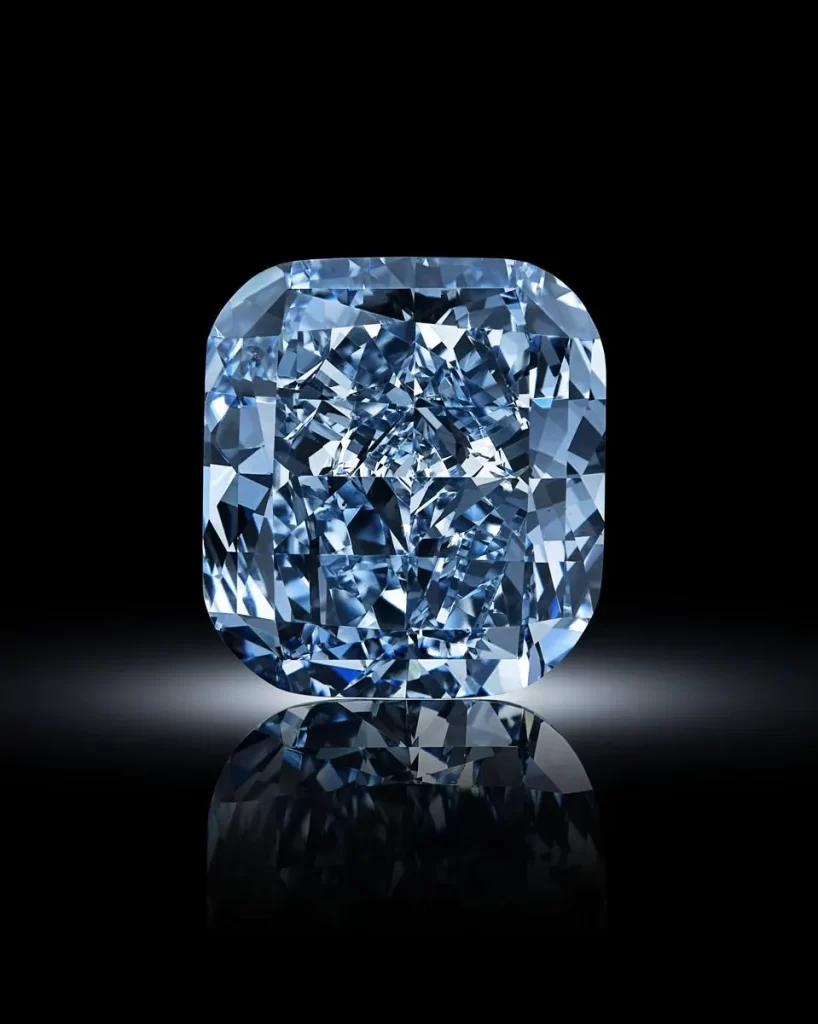
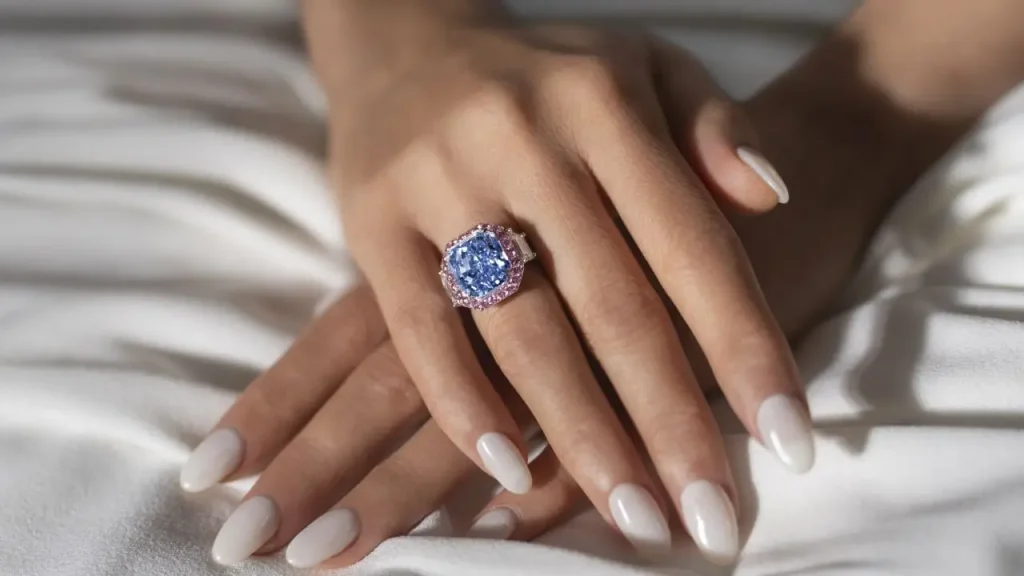
Few diamonds capture the imagination quite like a natural Fancy Vivid blue diamond. In 2023, one of the most remarkable examples in recent years the 11.28-carat Infinite Blue attracted worldwide attention when Sotheby’s Hong Kong offered it as a single-lot auction.
The diamond carried an ambitious pre-sale estimate of US$26 million to US$37 million, reflecting its extraordinary colour, size, provenance and rarity. However, the final result demonstrated just how unpredictable the market for exceptional coloured diamonds can be: the Infinite Blue sold for approximately US$25.3 million, below its low estimate.
A diamond born at the Cullinan Mine
The Infinite Blue has an exceptional pedigree.
Its rough origin was the famous Cullinan Mine in South Africa, operated by Petra Diamonds. Cullinan is internationally recognised as one of the world’s most important sources of natural blue diamonds and has produced some of the most celebrated diamonds ever offered at auction.
The Infinite Blue was cut from a 25.75-carat rough blue diamond, the largest stone in Petra’s Letlapa Tala collection. That collection itself was sold by Petra in 2020, and the rough was subsequently transformed into the polished 11.28-carat gem.
The transformation from rough to polished diamond illustrates one of the fundamental challenges of exceptional coloured diamonds: cutters must balance weight retention with the optimisation of colour, brilliance, proportions and overall appearance.
Why is a blue diamond so rare?
Blue diamonds occupy a very special position in the world of natural diamonds.
Unlike most colourless diamonds, where nitrogen is an important factor in colour, the blue colour in natural Type IIb diamonds is associated with the presence of boron within the diamond’s crystal structure.
The Infinite Blue is classified as a Type IIb diamond, a category representing an exceptionally small proportion of natural diamonds. Petra describes Type IIb diamonds as among the rarest stones recovered from the Cullinan Mine.
Its Fancy Vivid Blue colour grade is equally significant. In the world of coloured diamonds, the intensity and distribution of colour can have an enormous influence on value.
This is why two diamonds of similar size can have dramatically different market values.
The significance of 11.28 carats
There is also a deliberate piece of symbolism in the Infinite Blue’s final weight.
The diamond weighs 11.28 carats, with the number eight incorporated into its final carat weight. Eight is widely regarded as an auspicious number in Chinese and other Asian cultures, where it is associated with prosperity and good fortune.
There is another connection: when the number eight is turned on its side, it resembles the mathematical symbol for infinity.
That symbolism inspired the name Infinite Blue and added an element of cultural meaning to an already extraordinary gemstone.
What makes the Infinite Blue different?
According to published gemological information, the diamond is a Fancy Vivid Blue, VS2-clarity, radiant-cut diamond. Its combination of colour, size and natural origin puts it into an exceptionally small group of diamonds.
The distinction between colour grade and clarity is particularly important when assessing coloured diamonds.
With colourless diamonds, clarity can have a major influence on value. With strongly coloured diamonds, however, colour intensity, hue, saturation and distribution can be fundamental drivers of rarity and price.
This is one reason coloured diamonds require specialised knowledge when they are being evaluated.
Joining an extraordinary group
The Infinite Blue also belongs to a remarkable family of large blue diamonds associated with the Cullinan Mine.
The mine has produced several diamonds that have achieved extraordinary prices at international auctions.
Among them are:
- The Oppenheimer Blue — 14.62 carats, sold for approximately US$57.5 million in 2016.
- The De Beers Blue — 15.10 carats, sold for approximately US$57.5 million in 2022.
- The Infinite Blue — 11.28 carats, sold for approximately US$25.3 million in 2023.
Another famous Cullinan blue diamond, the Blue Moon of Josephine, weighs 12.03 carats and achieved US$48.5 million at auction in 2015.
These stones demonstrate an important fact about the diamond market: rarity does not automatically translate into a predictable price.
Auction values depend on a combination of factors including colour, clarity, size, cut, provenance, market conditions, collector demand and the circumstances of the sale.
A lesson in diamond valuation
The Infinite Blue is an excellent example of why a diamond’s value cannot be determined simply by multiplying carat weight by a price per carat.
A natural Fancy Vivid blue diamond of more than 10 carats belongs to an entirely different market from an ordinary commercial diamond.
Its value is influenced by a complex combination of:
Natural origin + colour + intensity + size + clarity + cut + provenance + rarity + market demand.
For consumers and collectors, this reinforces the importance of independent gemological assessment and accurate documentation when dealing with significant diamonds.
Nature creates the rarity — expertise reveals it
The Infinite Blue ultimately sold for less than its original estimate, but the auction result did little to diminish the gemological importance of the stone.
What makes diamonds such as the Infinite Blue fascinating is that their story begins millions and often billions of years before they ever reach an auction room.
A combination of geological conditions, trace elements, crystal structure and extraordinary rarity created the blue colour. Human expertise then transformed an unusual piece of rough into a polished gemstone capable of commanding more than US$25 million.
For the diamond industry, stones such as the Infinite Blue provide an important reminder that the true value of a rare diamond lies not simply in its size, but in the combination of characteristics that make that particular stone unique.
At DCLA, we believe that understanding those characteristics is fundamental to understanding diamonds themselves.