Showing posts with label Cullinan mine blue diamond. Show all posts

Wednesday, 28 January 2026

For the World’s Most Exceptional Diamonds, Price Lists Simply Don’t Apply

 World’s Most Exceptional Diamonds

A new Natural Diamond Council report reveals why record-breaking diamonds operate in a market beyond conventional valuation models

At the very top end of the diamond market, traditional pricing frameworks cease to function. Per-carat benchmarks, standard price lists, and even established scarcity models lose relevance when value is driven not by comparables, but by the willingness of elite buyers to secure assets of extreme rarity.

This rarefied segment is the focus of Record-Breaking Diamonds, a new report by the Natural Diamond Council (NDC), which examines the largest, most valuable natural diamonds ever discovered, cut, and sold. Drawing on mining data, gemmological research, and global auction results, the report offers a detailed analysis of how extraordinary rarity reshapes value within the natural diamond supply chain.

World’s Most Exceptional Diamonds

A Century Without a Challenger

One of the report’s most striking observations is the prolonged absence of truly massive diamonds following the 1905 discovery of the Cullinan in South Africa. Weighing an unprecedented 3,106.75 carats, the Cullinan established a benchmark that would stand unchallenged for more than 110 years. Until 2015, no gem-quality diamond exceeding 1,000 carats was recovered anywhere in the world.

That changed with the discovery of the 1,109-carat Lesedi La Rona at Botswana’s Karowe mine. Its recovery marked a turning point. Since then, at least nine rough diamonds weighing over 1,000 carats have been unearthed, including two exceptional finds exceeding 2,000 carats: the 2,488-carat Motswedi in 2024 and a 2,036-carat near-gem-quality rough diamond recovered in July 2025. Both originated from Karowe, with Motswedi now ranking as the second-largest gem-quality rough diamond ever discovered.

Technology, Not Abundance

The increased frequency of such discoveries does not signal a sudden abundance of large diamonds. Rather, it reflects a fundamental shift in extraction technology. The widespread adoption of X-ray Transmission (XRT) technology has transformed diamond recovery by identifying stones based on density before ore enters the crushing circuit. This significantly reduces the risk of fracturing large diamonds during processing.

Lucara Diamond Corp.’s Karowe mine — which installed XRT technology in 2015 and introduced a Mega Diamond Recovery (MDR) system two years later — accounts for the majority of exceptional stones recovered in the past decade. Other operations employing similar systems, including the Cullinan mine and Lesotho’s LetÅ¡eng deposit, have also reported a measurable increase in large, high-value diamonds.

Even so, diamonds weighing more than 1,000 carats remain extreme statistical outliers, even with the most advanced recovery methods.

World’s Most Exceptional Diamonds

The Superdeep Advantage

Size alone does not define value at this level. Many of the diamonds highlighted in the NDC report belong to the rare Type IIa category, meaning they contain no measurable nitrogen impurities. These chemically pure stones represent only a tiny fraction of global diamond production.

Some Type IIa diamonds form at extraordinary depths — between 360 and 750 kilometres beneath the Earth’s surface, according to the Gemological Institute of America (GIA). These “superdeep” diamonds belong to the CLIPPIR population (Cullinan-like, Large, Inclusion-poor, Pure, Prismatic, Irregular, Resorbed). Formed under extreme pressures in nitrogen-poor environments, they grow slowly and uninterrupted, resulting in unusually large, highly transparent crystals with minimal internal defects.

When Per-Carat Logic Breaks Down

In this ultra-exclusive segment, pricing behaves differently. Per-carat values no longer scale predictably with size. A defining example is Lucara’s 2016 sale of the 812.77-carat Constellation diamond, which achieved US$63.1 million — the highest price ever paid for a rough diamond. Its per-carat value far exceeded any precedent for an uncut stone, reflecting buyer confidence in its exceptional quality and cutting potential.

Colour, Rarity, and Market Psychology

In the polished market, the 59.60-carat CTF Pink Star remains the most expensive diamond ever sold at auction, achieving HKD 553 million (US$71.2 million) at Sotheby’s Hong Kong in 2017. While the headline price set the record, later sales demonstrated that per-carat value is often the more telling indicator of demand.

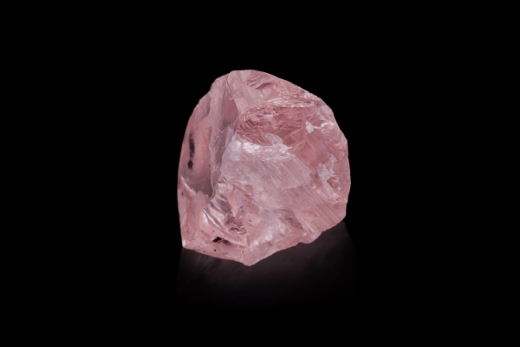
In 2022, the 11.15-carat Williamson Pink Star sold for HKD 453.2 million (US$57.7 million), equating to more than US$5 million per carat — the highest per-carat price ever achieved by a diamond.

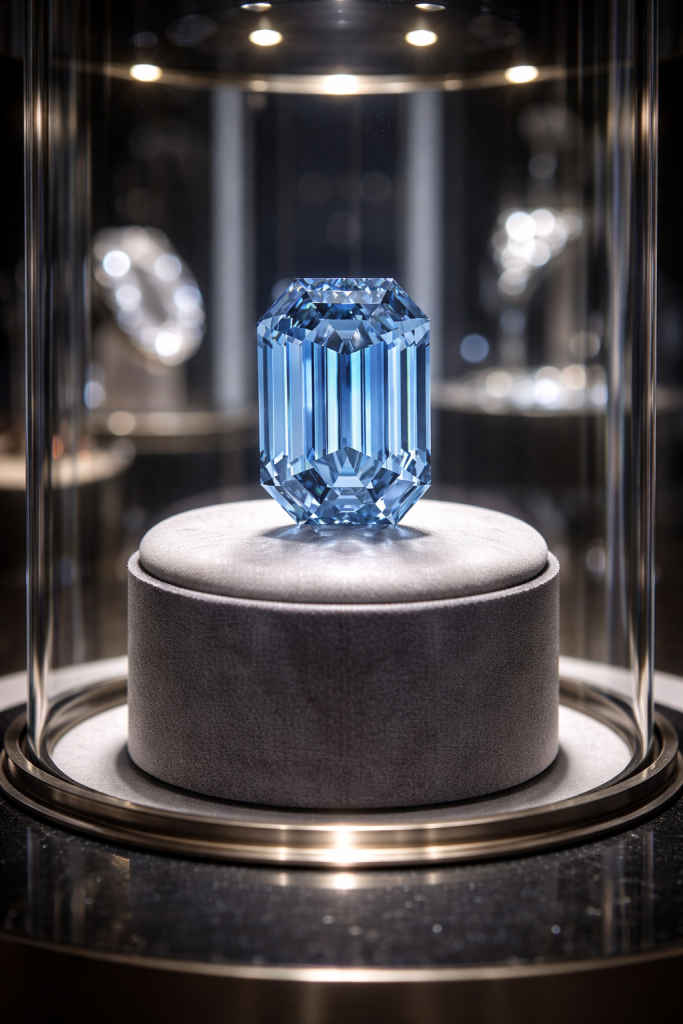
A similar phenomenon is evident in the blue-diamond category. Despite selling six years apart, the 14.62-carat Oppenheimer Blue (Christie’s Geneva, 2016) and the 15.10-carat De Beers Blue (Sotheby’s Hong Kong, 2022) each realised US$57.5 million, underscoring how rarity and desirability can outweigh minor differences in size or clarity.

Yellow diamonds, by contrast, trade at a substantial discount to pinks and blues, even in exceptional sizes. While the leading pink and blue diamonds regularly exceed US$1 million per carat, none of the top five yellow diamonds have reached that level. The highest-ranked example, the 100.09-carat Graff Vivid Yellow, sold for US$16.8 million in 2014 — approximately US$168,000 per carat.

Diamonds Beyond the Market

Not all record-breaking diamonds remain commercial assets. Some are removed from circulation entirely and repositioned as cultural or institutional icons. The 45.52-carat Hope Diamond, donated by Harry Winston to the Smithsonian Institution in 1958, has been viewed by more than 100 million visitors, making it one of the most publicly encountered diamonds in history.

Similarly, the 140.64-carat Regent Diamond at the Louvre serves not as a tradable asset, but as a benchmark of scale, rarity, and historical significance. Such exhibition stones continue to influence market perception, anchoring contemporary record prices within a much longer narrative of natural-diamond rarity.

As the NDC report makes clear, when diamonds reach this echelon, value is no longer governed by price lists or formulas. Instead, it is shaped by geology, technology, history, and the enduring human desire to possess the truly irreplaceable.

Source: DCLA

Tuesday, 13 January 2026

Petra Recovers Huge 41.82-ct Blue Diamond

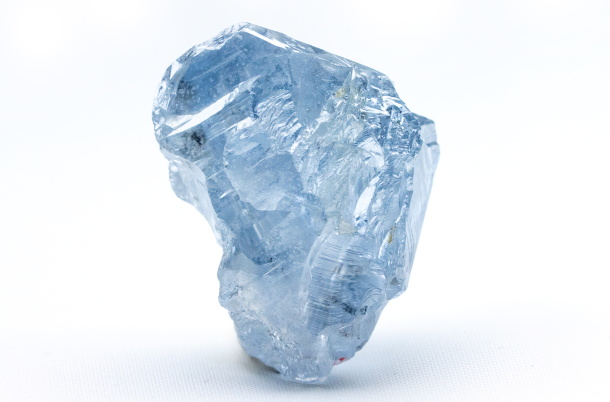
 Petra  41.82-carat Type IIb blue diamond

Petra Diamonds today announced the recovery of a huge 41.82-carat Type IIb blue diamond at its Cullinan Mine, in South Africa.

The UK-based miner described the stone as being of “seemingly exceptional quality in terms of both its colour and clarity”.

The iconic Cullinan mine is known for recovering high-value blue stones.

Last April it sold a 14.76ct blue stone, of “exceptional color and clarity” for $8.2m.

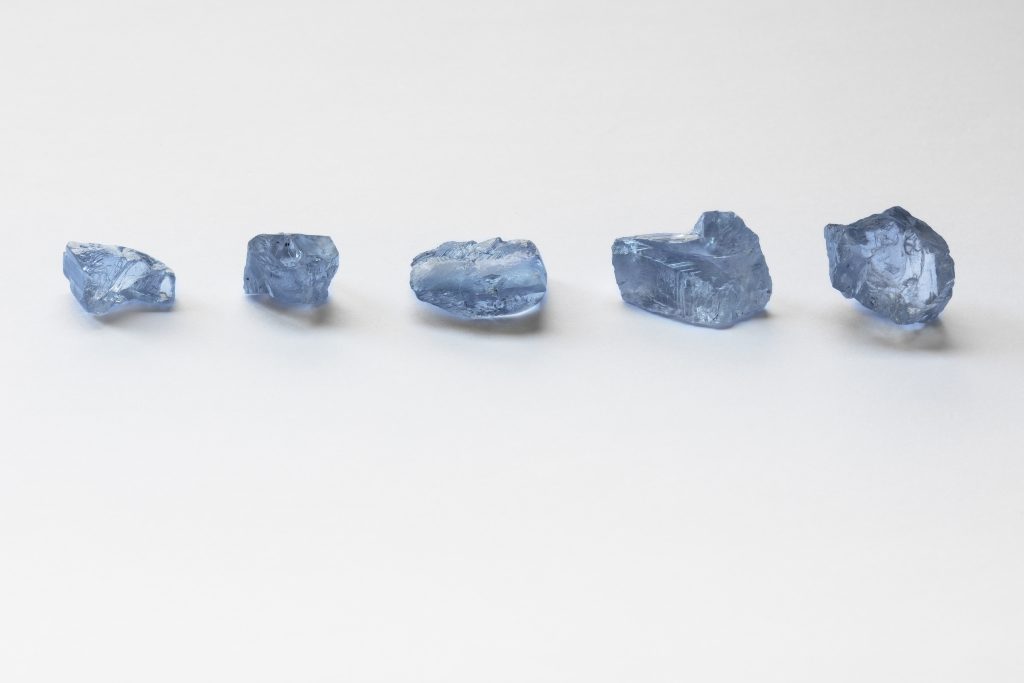
In July 2021 it sold a 39.34-carat blue diamond for $40.18m. The Letlapa Tala collection of five blue diamonds sold in November 2020 for $40.36m.

And a 29.60-carat rough that was cut into the Blue Moon sold for $25.6m in February 2014. It was subsequently auctioned in 2015 for $48.5m to Hong Kong billionaire Joseph Lau, who renamed it the Blue Moon of Josephine.

Petra says it is in the process of analyzing the stone and deciding on a preferred method of the sale.

In October Petra Diamonds announced details of a $25m rights issue to keep the company afloat as it battles falling prices and production, together with rising debt and cash flow difficulties.

Revenue for FY2025 was $206m, down 33 per cent year-on-year from $309m and net debt increased to $264m.

Source: DCLA

Monday, 11 August 2025

Petra to Refinance as Sales Slide by a Third

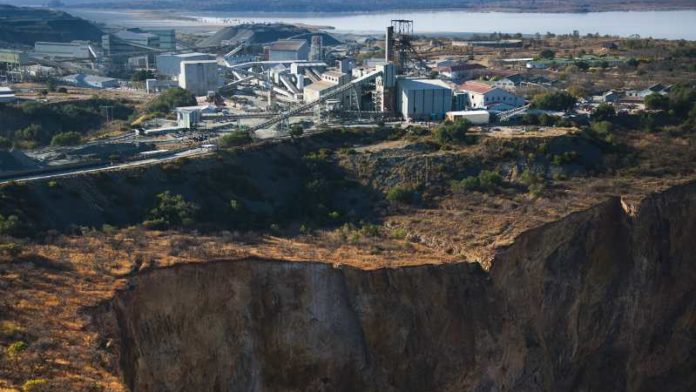
Petra Diamonds - Cullinan Diamond Mine

Petra Diamonds has announced plans for a major refinancing program – together with a 33 per cent slide in revenue for FY2025.

The UK-based miner, which has recently sold off two of its four diamond mines, is facing substantial financial and operational challenges.

It is proposing an extension of senior secured bank debt and notes due early next year to 2029 and 2030 respectively, together with a $25m rights issue.

The moves are designed to preserve cash, extend debt repayment timelines, and ensure Petra can continue investing in its two remaining core mines – Cullinan and Finsch, both in South Africa.

Petra’s latest sales results, published on the same day (8 August) as its refinancing package, show some positive momentum in the market with like-for-like rough diamond prices from its latest tender, but revenue for Q4 was down 49 per cent year-on-year to $50m.

Revenue for FY2025 was $206m, down 33 per cent year-on-year from $309m and net debt increased to $264m.

“We would once again like to acknowledge the resilience shown by our employees in navigating a very difficult period for the company and the diamond sector as whole,” the company said in its Q4 and FY 2025 Operating Update.

Meanwhile, in its refinancing proposal Petra said: “Petra has, over the past 18 months, been focused on an internal restructuring that has resulted in a simpler and more streamlined business and operating model.

“This has included the sale of the Koffiefontein and Williamson mines, multiple labour restructuring initiatives and an optimisation and smoothing of the group’s capital development profiles.”

Source: DCLA

Thursday, 22 May 2025

Petra Diamonds hits all-time low as cash burn continues

Petra's Cullinan mine

Petra Diamonds is to begin discussions with financiers on refinancing a $273m bond that matures in March next year amid scepticism that the company will survive the event.

The ratings agency S&P last week downgraded the company’s credit to CCC on the increased likelihood of default, and maintained a negative outlook.

Shares in the company fell 10% today shortly after the company posted its third quarter results. Petra is now trading at a fresh all-time low and is valued at only £34m on the London Stock Exchange.

While its remaining two assets – the Cullinan and Finsch mines in South Africa – had a solid three months operationally, with a quarter to go, full year guidance has been maintained at 2.4 to 2.7 million carats.

However, the company is still burning cash.

Petra drew on a further $33m as consolidated net debt increased to $258m as of end-March, which the company put down to working capital requirements.

The truth is that the company is desperately in need of improved diamond prices, which have continued to trough this year amid economic uncertainty generated by US President Donald Trump’s on-off tariff regime.

Petra said in April that it had postponed the sale of about 200,000 carats of diamonds from the Cullinan mine near Pretoria because of the “considerable diamond market uncertainty caused by the US tariffs announcement”.

“S&P believes the company faces mounting liquidity challenges amid uncertainty regarding the recovery of the rough diamond market and approaching debt maturities in 2026, with increased likelihood of default – including distressed exchange or debt restructuring – over the next 12 months, if Petra is unable to refinance its debt maturities on time,” said analysts at Berenberg Bank in a note last week.

Commenting on the third quarter results – in which revenue fell to $42m from $106m in the comparative quarter last year (buoyed by sales from a deferred tender) – interim joint CEOs Vivek Gadodia and Juan Kemp, said Petra had experienced “a very difficult diamond market”.

They added: “We believe the steps we have taken over the past 12 months position Petra well for a successful refinancing. We will now look to commence engagements with our lenders on the refinancing of our debt maturing in early 2026.”

Source:miningmx.com

Tuesday, 13 May 2025

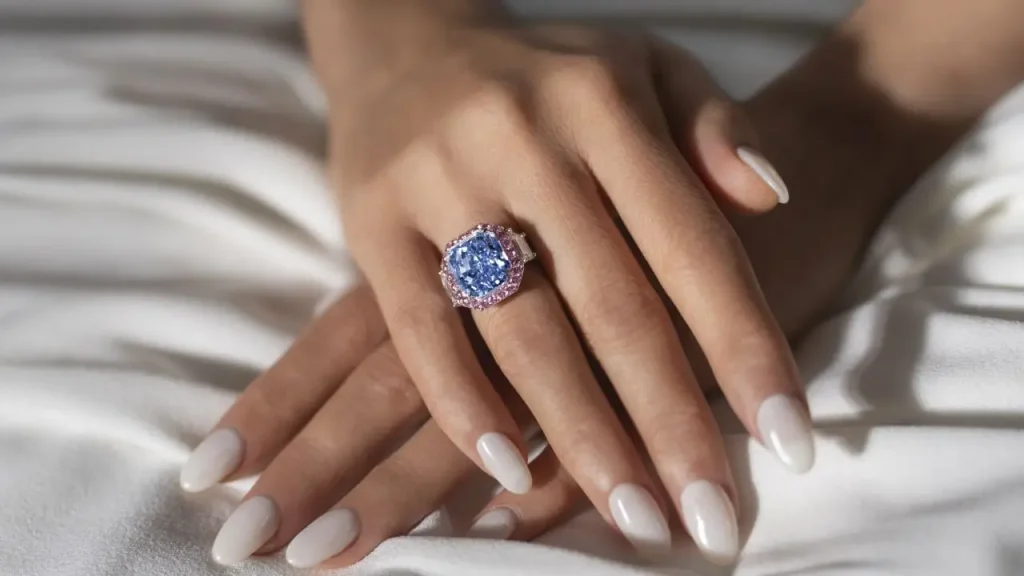
Rare 10.3-Carat ‘Mediterranean Blue’ Diamond Sells for $21.5 Million at Sotheby’s Geneva Auction

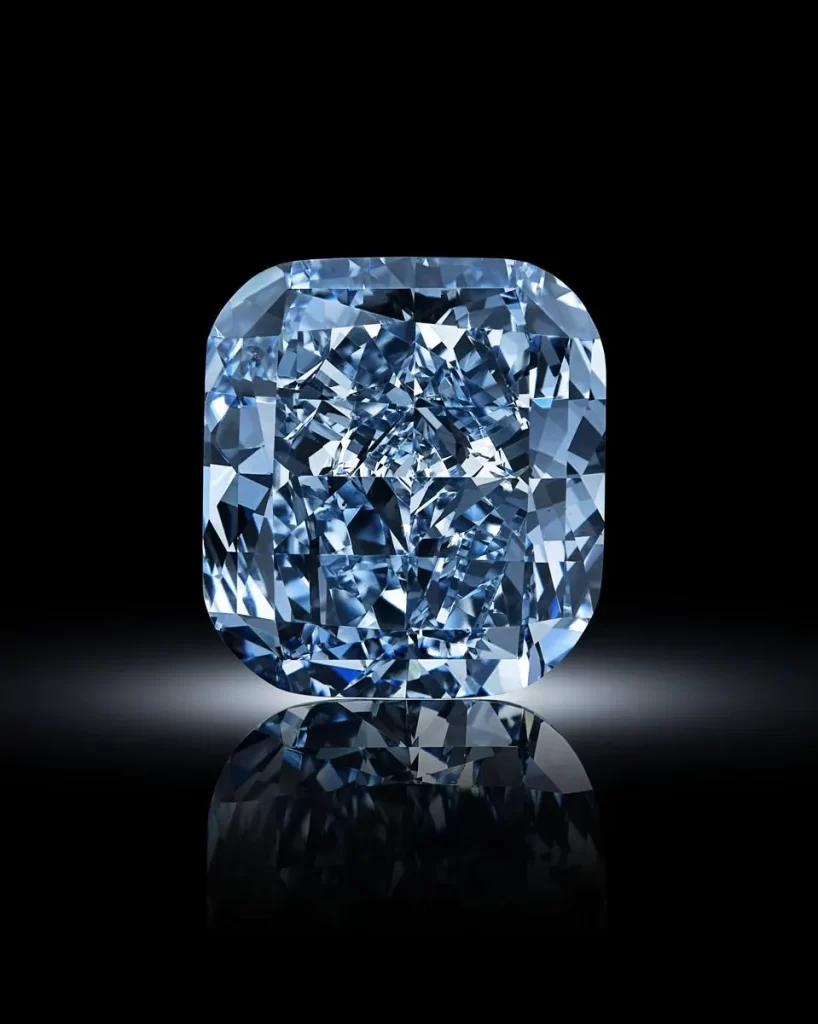
Mediterranean Blue’ Diamond

A rare 10.3-carat fancy vivid blue diamond, known as The Mediterranean Blue, has sold for an astonishing $21.5 million (17.9 million Swiss Francs) at Sotheby’s High Jewellery Auction in Geneva. This exceptional gemstone not only topped the auction but was also the headline piece of Sotheby’s week-long jewellery sales in Switzerland.

Intense Bidding War Over a Fancy Vivid Blue Diamond
The auction, livestreamed globally, saw a fierce bidding battle that began at 9 million Swiss Francs. Within the first minute, the price surged to 13 million, eventually narrowing to two determined phone bidders. After two and a half minutes of competitive bidding, the final hammer price landed at 15 million Swiss Francs, with additional premiums pushing the total sale price to $21.5 million.

The winning bidder was represented by Frank Everett, Vice Chairman of Jewelry, Americas at Sotheby’s. The blue diamond had been estimated at $20 million prior to the auction.

From Cullinan Mine to Record Sale
The Mediterranean Blue diamond was cut from a 31.94-carat rough blue diamond discovered in 2023 at the legendary Cullinan mine in South Africa, a source renowned for producing some of the world’s most important blue diamonds. Sotheby’s revealed that the rough stone underwent a full year of study before undergoing a meticulous six-month cutting and polishing process to achieve its final cushion modified brilliant-cut form.

Global Tour Boosted Demand
Sotheby’s launched a worldwide exhibition tour of the blue diamond, beginning with its unveiling at their inaugural show in Abu Dhabi. It was then displayed across the Middle East, Asia, and the United States, generating significant interest from collectors and high-net-worth buyers. The gem was showcased alongside seven other ultra-rare diamonds and gemstones, with the total collection valued at over $100 million.

A Defining Stone of the Season
Quig Bruning, Sotheby’s Head of Jewelry for the Americas & EMEA, described the diamond as a milestone for the season:

“It is undoubtedly the defining stone of the season and ranks among the top blue diamonds we have ever sold. The excitement it generated during its global tour reflects the increasing demand for rare, investment-grade diamonds and a growing flight to quality among collectors.”

Source: DCLA

LUCARA RECOVERS EXCEPTIONAL 36.92 CARAT BLUE DIAMOND FROM KAROWE

  Lucara Diamond Corp. has announced the recovery of a remarkable 36.92 carat blue diamond from its wholly owned Karowe Diamond Mine in Bots...