Thursday, 10 September 2026

Classic Diamonds, Reimagined: How Modern Jewellery Design Is Bringing Old Favourites Back to Life

 Diamond tennis bracelets, rivière necklaces, diamond studs and classic pendants have remained among the most recognisable and enduring pieces in fine jewellery. Their appeal is easy to understand: they are elegant, versatile and can be worn for almost any occasion.

Some jewellery designs never truly go out of fashion.

Diamond tennis bracelets, rivière necklaces, diamond studs and classic pendants have remained among the most recognisable and enduring pieces in fine jewellery. Their appeal is easy to understand: they are elegant, versatile and can be worn for almost any occasion.

But today’s jewellery customers are increasingly looking for something more than a traditional piece. They want the beauty and familiarity of classic diamond jewellery while incorporating a more contemporary style that reflects their individual personality.

This is creating an interesting new direction in jewellery design: reimagining the classics rather than replacing them.

For customers considering a completely individual piece, DCLA also offers Bespoke Jewellery services, combining traditional diamond knowledge with contemporary design.

The return of the classics with a modern attitude

A traditional diamond rivière, for example, has historically been associated with formal occasions and evening wear. Today, the same concept can be transformed into something far more relaxed and versatile.

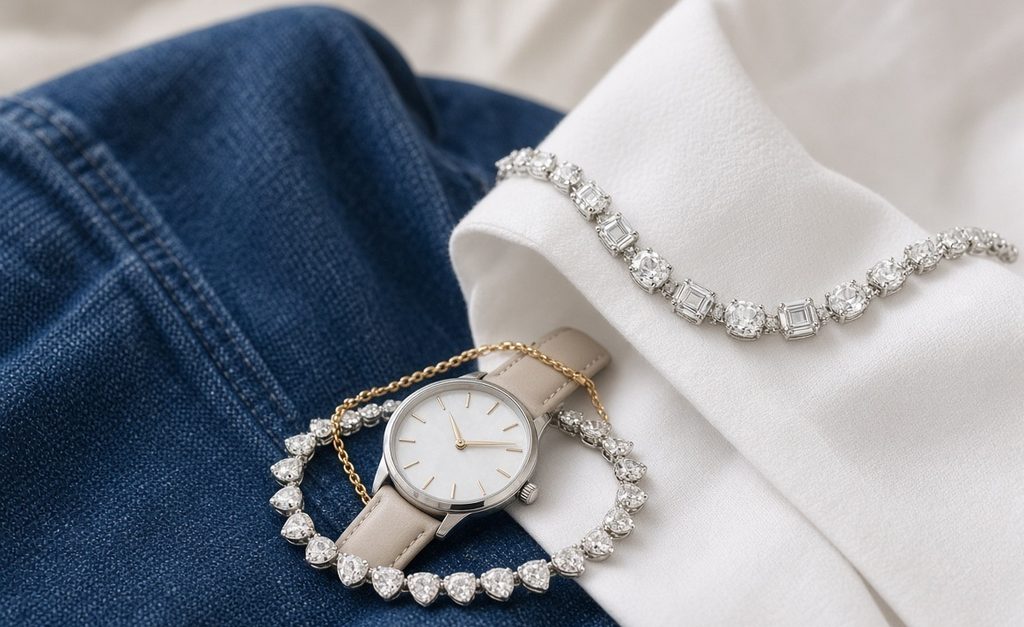
A diamond necklace can be worn with a simple shirt and jeans just as easily as with an evening gown. A tennis bracelet can be worn on its own for understated elegance or combined with gold bracelets, watches and other pieces to create a layered, contemporary look.

Diamond studs are also being reinvented. Instead of simply choosing two traditional round brilliant diamonds, customers are increasingly considering pear, marquise, princess, oval and other shapes, as well as modern settings and designs that give the classic stud a completely different appearance.

DCLA’s Diamond Shape guide provides information on the many different shapes available and how they influence the appearance and character of a diamond.

According to Michael Cohen, designer at the DCLA Diamond Exchange in Sydney, this shift reflects a broader change in the way people think about jewellery.

“The classic diamond has never lost its appeal. What is changing is the way people want to wear it. Customers are looking for jewellery that feels personal and contemporary while still having the quality and timelessness associated with traditional diamond jewellery.”

Layering creates individuality

One of the biggest changes in modern jewellery styling is the popularity of layering.

Instead of wearing a single necklace, bracelet or ring, customers can combine several pieces of different lengths, textures and designs.

A classic diamond necklace might be worn alongside a fine gold chain. A tennis bracelet can sit next to a watch or be stacked with plain gold and gemstone bracelets. Several delicate rings can be combined to create a look that changes from day to day.

This approach allows a traditional diamond piece to become part of a much more relaxed wardrobe.

The beauty of layering is that there are no strict rules. A customer can combine old and new, understated and extravagant, polished and casual.

Changing the diamond shape changes the entire look

The modernisation of classic jewellery is not limited to the setting. The diamonds themselves can dramatically change the character of a piece.

Round brilliant diamonds remain enormously popular, but fancy shapes such as oval, pear, marquise, emerald, princess and baguette cuts can give traditional jewellery a very different personality.

A rivière made entirely from round diamonds has a very different appearance from one incorporating graduated oval or emerald-cut stones.

Similarly, a tennis bracelet using pear-shaped diamonds can create a softer, more flowing appearance, while baguette diamonds can produce a sharper and more architectural design.

This gives designers enormous scope to create jewellery that is recognisably classic while still appearing completely modern.

DCLA’s Natural Diamond Search allows customers and industry professionals to explore diamonds by shape, including round, oval, pear, emerald, princess, radiant, marquise, baguette and many other shapes.

Colour can make a classic piece contemporary

Another increasingly popular design approach is the use of contrasting metals and subtle touches of colour.

Platinum or white gold can provide a clean, contemporary background for diamonds, while yellow gold can introduce warmth and contrast.

Coloured gemstones can also be incorporated into otherwise traditional diamond jewellery. A single sapphire, ruby or emerald can become a focal point within an otherwise diamond-dominated design.

Even small details can make a significant difference.

A traditional diamond bracelet with an unusual clasp, mixed-metal elements or a distinctive arrangement of diamond shapes can feel like an entirely new creation.

For coloured diamonds and unusual diamond characteristics, understanding the stone itself is particularly important. DCLA’s Diamond Certification service records important characteristics including colour, clarity, carat weight, proportions and other identifying features.

Jewellery designed to be worn, not stored

Perhaps the most important change is the attitude towards when fine jewellery should be worn.

For generations, diamonds were often associated with weddings, anniversaries, special celebrations and formal events. Modern customers are increasingly choosing to wear their fine jewellery as part of everyday life.

A beautiful diamond bracelet does not necessarily need to wait for a black-tie event.

Worn with denim, a simple shirt, a watch or casual clothing, a classic diamond can provide a subtle touch of luxury without appearing overly formal.

This makes versatility an increasingly important part of jewellery design.

The importance of timeless design

There is also a practical reason why classic designs continue to attract customers.

Fashion changes quickly. Jewellery can be expensive, and customers naturally want pieces they will continue to enjoy wearing for many years.

A completely trend-driven design may look spectacular today but can become dated as fashions change. A well-designed classic, however, can remain relevant while allowing the owner to style it differently over time.

A properly documented diamond can also provide important information for the owner over the years. DCLA’s Diamond Grading Report records the diamond’s technical characteristics, including carat weight, colour, clarity, measurements, cut, symmetry, polish and whether the stone is natural or laboratory-grown.

The importance of knowing what you are buying

Modern jewellery design also means consumers have more choices than ever before.

Natural diamonds and laboratory-grown diamonds can both be used to create beautiful jewellery, but they are different types of diamond and should be correctly identified and represented.

DCLA provides grading and certification for both natural and laboratory-grown diamonds, with its laboratory using advanced technology to identify and assess diamonds.

For customers purchasing a new piece or redesigning an existing one, independent grading can provide useful documentation about the diamond being used.

DCLA’s Technology & Grading Process explains how diamonds are examined and graded using a controlled, independent process.

Jewellery that can become part of a family’s story

One of the unique qualities of fine diamond jewellery is its ability to move between generations.

A bracelet purchased today may eventually be worn by a daughter or granddaughter. A pair of diamond earrings can be redesigned, reset or incorporated into another piece as styles and personal preferences change.

This is one reason classic diamond jewellery continues to have such enduring appeal.

Rather than thinking of a piece as something that belongs to one particular fashion period, a well-designed diamond jewel can become part of a family’s history.

For an existing family piece, professional examination and documentation can also help an owner understand what they have. DCLA provides Diamond and Jewellery Valuation services as part of its broader range of diamond and jewellery services.

The new classic

The future of fine jewellery may not be about choosing between traditional and contemporary design.

Instead, it is about combining the two.

The timeless appeal of diamonds, combined with modern cuts, creative settings, mixed metals, layering and personalised design, gives today’s customers far more ways to express themselves.

The result is what could be called the new classic: jewellery that respects the designs of the past while being created for the way people live today.

For customers considering a new diamond piece, the message is simple. A classic design does not have to look old-fashioned. With the right design approach, a traditional diamond can be transformed into something contemporary, personal and uniquely your own.

At the DCLA Diamond Exchange in Sydney, the combination of diamond expertise, independent grading and bespoke jewellery knowledge provides customers with the opportunity to take a traditional idea and give it a completely modern interpretation.

Whether it is a family heirloom being redesigned, a classic diamond being incorporated into a new piece, or an entirely new creation, the best modern jewellery does not abandon tradition.

It reinvents it.

Wednesday, 9 September 2026

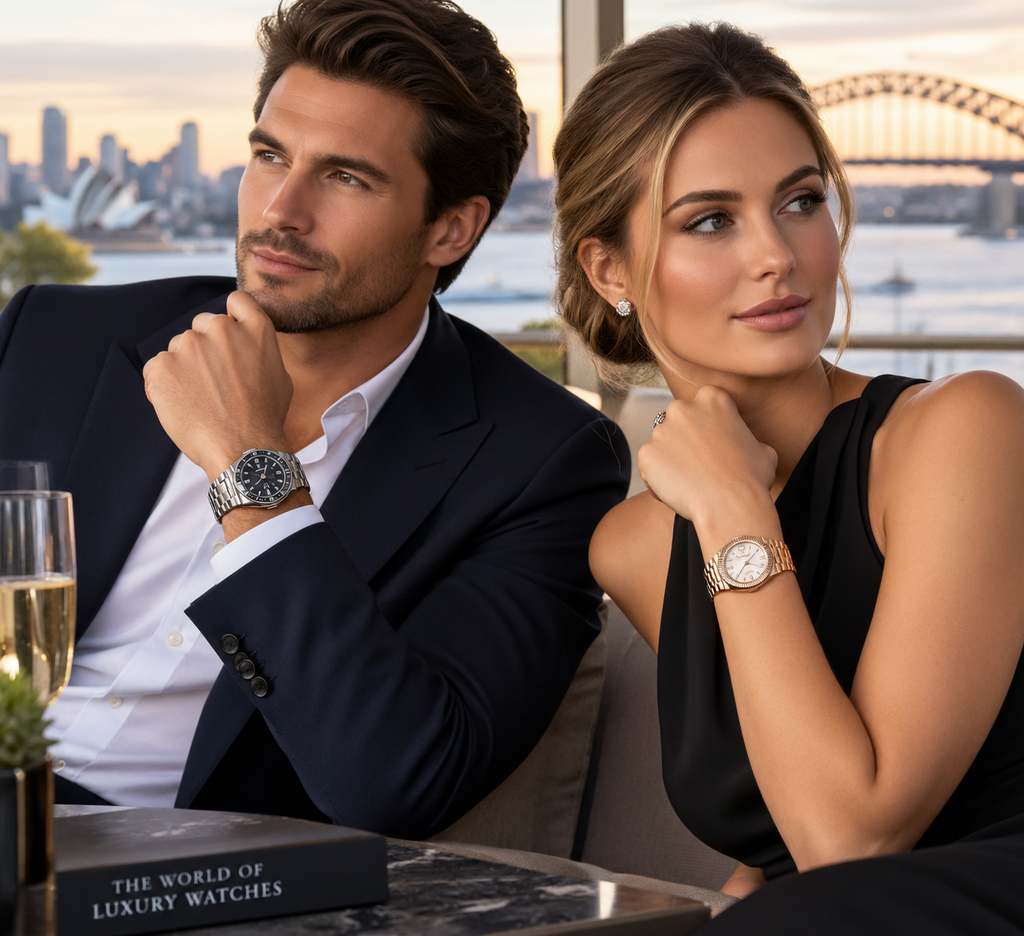
The Rise of the Luxury Watch: When Time Becomes an Investment

 There was a time when buying a high-end watch was simply about owning something beautifully made.

There was a time when buying a high-end watch was simply about owning something beautifully made. Today, for many collectors, a luxury watch is much more than a way of telling the time. It can be a statement of achievement, a piece of craftsmanship, a collector’s item and, when chosen carefully, a wearable asset.

From Rolex and Omega to Audemars Piguet, Vacheron Constantin and Patek Philippe, the world of fine watchmaking has developed into a global market where certain models can command extraordinary prices and maintain strong demand for years.

The names that define luxury watchmaking

Few names carry the prestige of Rolex. Models such as the Submariner, Daytona, GMT-Master II and Day-Date have become icons, recognised well beyond the traditional watch-collecting community.

Audemars Piguet, particularly with the Royal Oak, occupies another level of luxury watchmaking. Its distinctive design and highly regarded mechanical movements have made it one of the world’s most recognisable collector watches.

Then there is Patek Philippe, a name synonymous with traditional Swiss watchmaking. Its philosophy has always been centred on craftsmanship, exclusivity and longevity. Patek Philippe itself distributes watches through its authorised network, with availability dependent on the individual retailer and model.

Vacheron Constantin, one of Switzerland’s great historic manufacturers, appeals strongly to collectors who appreciate exceptional finishing and watchmaking heritage.

And then there is Omega. From the Speedmaster’s association with NASA and the Moon landing to the Seamaster’s long-standing reputation as a professional dive watch, Omega combines history, engineering and everyday wearability.

Other names including Cartier, Jaeger-LeCoultre, IWC, Panerai, Breitling, Tudor, Blancpain and Zenith have also established important places in the luxury-watch market.

A watch you can actually wear

Perhaps the greatest attraction of a luxury watch is that, unlike many traditional investments, you can enjoy it every day.

A share certificate stays in your portfolio. A property remains on the balance sheet. A luxury watch can be on your wrist.

That makes the concept of a wearable investment particularly appealing.

Of course, there are no guarantees. Not every luxury watch increases in value, and buying a watch purely because you expect it to appreciate can be risky. Model, reference, condition, rarity, provenance, box and papers, servicing history and market demand can all influence future value.

But certain watches have demonstrated remarkable resilience because collectors continue to want them.

The current market also shows how strongly the high end of Swiss watchmaking continues to attract collectors. Recent industry analysis indicates that value growth has become increasingly concentrated in ultra-luxury and highly sought-after timepieces, while the broader market has been more mixed.

The authorised retailer: The traditional way to buy

For many buyers, purchasing directly through an authorised retailer remains the ultimate luxury experience.

You get the brand environment, expert advice, manufacturer’s warranty and the knowledge that you are purchasing a genuine new timepiece through the manufacturer’s official distribution network. Rolex, for example, states that new genuine Rolex watches are sold exclusively through Official Rolex Retailers.

There is, however, one significant drawback.

You may have to wait.

For some of the most desirable models, availability can be extremely limited. The watch you want may not simply be sitting in a display cabinet waiting for the next customer.

You may register your interest, develop a relationship with the retailer and wait for the right allocation. Depending on the model and circumstances, that wait can be lengthy.

And that creates an interesting dilemma.

Do you wait years for the opportunity to buy the exact watch you want new?

Or do you find the watch now?

The rise of the specialist watch dealer

This is where the specialist secondary-market dealer has changed the way collectors buy luxury watches.

Rather than waiting indefinitely for a particular allocation, collectors can purchase an existing watch that has already entered the market.

One Sydney business that has embraced this model is The Watch Business, founded and operated by Dmitri.

Based in the Sydney CBD, The Watch Business specialises in pre-owned luxury watches and deals in brands including Rolex, Omega, Audemars Piguet, Patek Philippe, Vacheron Constantin, Cartier and many others. The business operates by private appointment and says its watches are inspected and authenticated by a professional watchmaker before being offered for sale.

For the collector, the attraction is simple:

If the watch you want is available, you don’t necessarily have to wait years to own it.

And that has fundamentally changed the buying experience.

From new to pre-owned and from one watch to another

names that define luxury watchmaking


Perhaps the biggest evolution is not simply the ability to buy a watch. It is the ability to trade.

Collectors rarely stay with one watch forever.

You might start with an Omega Speedmaster. A few years later, you decide you want a Rolex Submariner. Eventually, you might aspire to an Audemars Piguet Royal Oak or a Patek Philippe.

Traditionally, moving between watches could mean selling your existing watch privately, negotiating with buyers, waiting for payment and then starting the search for the next piece.

A specialist dealer can simplify that process.

The Watch Business, for example, offers buying and trade-in services, allowing clients to use an existing watch as part-payment towards another timepiece.

That creates a completely different way of thinking about collecting.

Instead of asking, “How much will my next watch cost?”

The collector can ask:

“What is my current watch worth, and what does it cost me to move up to the next one?”

That difference is significant.

The great advantage of the specialist dealer

There is another important distinction between the traditional retail model and the specialist dealer.

A traditional authorised watch retailer’s primary business is selling the manufacturer’s watches. It is not necessarily a place where you can walk in with your existing Rolex, Omega or Patek Philippe and negotiate a trade against another brand or model.

A specialist dealer operates in a different ecosystem.

They buy watches.

They sell watches.

They trade watches.

They source watches.

And, importantly, they can provide a market for the watch you already own.

This is one of the major limitations of the traditional retail experience: the store where you purchased a new watch may not be the same place that will buy it back from you or trade it towards your next watch.

That is where specialist dealers have carved out an increasingly important role.

The collector’s choice

For someone who has the time and patience, buying from an authorised retailer can be a wonderful experience.

You get the new-watch presentation, manufacturer’s warranty and the satisfaction of being the original owner.

But if you have decided exactly which watch you want and you don’t want to wait potentially years for availability the specialist dealer offers another route.

You can inspect the watch, establish its condition and provenance, understand its market value and potentially walk away with the watch you have been searching for.

And when you eventually decide to upgrade, you can return to the same market and trade your existing piece towards something different.

That makes luxury-watch collecting increasingly fluid.

A changing definition of investment

The luxury watch market has changed dramatically.

The modern collector isn’t necessarily buying one watch and keeping it locked away in a safe.

They may buy a watch, wear it, enjoy it, trade it, upgrade it and eventually move into another piece.

That is what makes a great luxury watch so interesting.

It can be craftsmanship, jewellery, history, status and a potentially valuable asset all on your wrist.

For today’s discerning collector, the question is no longer simply:

“What watch should I buy?”

It is increasingly:

“What watch should I own next?”

And with specialist dealers such as The Watch Business changing the way Australians buy, sell and trade luxury timepieces, building a collection has never been more accessible.

For collectors who value experience, expertise and the ability to trade one exceptional timepiece for another, this has quickly become a compelling alternative to the traditional retail model.

Source: DCLA

Tuesday, 8 September 2026

What Diamond Jewellery Can Men Wear?

 Diamonds are no longer confined to engagement rings and traditional women’s jewellery.

Diamonds are no longer confined to engagement rings and traditional women’s jewellery. Men are increasingly wearing diamonds in everything from understated wedding bands and cufflinks to bold Cuban-link bracelets and statement rings.

Whether the style is classic, contemporary or deliberately bold, natural diamonds can add sophistication, individuality and a distinctive touch to men’s jewellery.

The key is finding the right balance between the design, the diamonds and the wearer’s personal style.

Diamond Rings

Wedding and Eternity Bands

A diamond wedding band can provide a refined alternative to a traditional plain band. Diamonds can be flush-set, channel-set or pavé-set, creating a sophisticated look while maintaining a relatively low-profile design.

For men who prefer understated jewellery, a small number of carefully positioned diamonds can provide plenty of impact without making the ring overly elaborate.

Signet Rings

The traditional signet ring has also evolved. Modern signet designs can incorporate a central natural diamond, multiple diamonds or even a contrasting black diamond.

Combining the traditional character of a signet with diamonds creates a piece that can be both masculine and contemporary.

Statement Rings

For those who prefer something more distinctive, wider gold or platinum rings can incorporate multiple diamonds or elaborate pavé settings.

The result can range from a sophisticated luxury piece to a bold statement ring covered in diamonds.

Diamond Necklaces and Chains

Tennis Necklaces

Tennis necklaces are traditionally associated with women’s jewellery, but they can also make a striking men’s piece.

A continuous row of diamonds creates a bold look and can be worn on its own or layered with a simpler gold or platinum chain.

Diamond Pendants

Pendants offer another versatile option. Dog-tag designs, crosses, initials and personalised pendants can all incorporate diamonds.

A pendant can be an excellent way for someone who does not normally wear jewellery to introduce diamonds into their style without choosing a large or elaborate piece.

Diamond Bracelets

Understanding what diamonds are actually in the jewellery is equally important.


Tennis Bracelets

A diamond tennis bracelet can work particularly well when worn alongside a quality wristwatch.

The simplicity of a single row of diamonds makes it versatile, while the quality and consistency of the individual stones become particularly important because they are viewed together as a continuous line.

Cuban Links and Diamond Chains

For a much bolder look, Cuban-link and other substantial chain bracelets can incorporate diamonds across individual links or throughout the entire bracelet.

These designs can range from relatively subtle diamond accents to fully pavé-set pieces that make the diamonds the dominant feature.

Diamond Earrings

Diamond Studs

Diamond studs remain one of the simplest and most versatile choices for men.

Round brilliant and princess-cut diamonds are popular options, with smaller stones offering a discreet appearance suitable for everyday wear.

A single diamond stud provides an understated look, while a matching pair creates a more traditional appearance.

Diamond Accessories

Cufflinks and Tie Clips

Diamonds do not have to be the centrepiece of jewellery.

Small natural diamonds incorporated into cufflinks or tie clips can add a subtle touch of luxury to formal clothing without overpowering the overall look.

Diamond Watches

Luxury watches can incorporate diamonds in a variety of ways, including hour markers, bezels and pavé-set dials.

Depending on the design, diamonds can be a discreet detail or the dominant feature of the watch.

Why Knowing Your Diamond Matters

When purchasing diamond jewellery, the design is only part of the equation. Understanding what diamonds are actually in the jewellery is equally important.

Today’s consumers have a choice between natural and laboratory-grown diamonds. While laboratory-grown diamonds are real diamonds with the same basic chemical and physical properties as natural diamonds, they have a different origin and can have very different market characteristics.

For buyers specifically seeking natural diamonds, independent testing and certification can provide additional confidence.

DCLA explains that its diamond grading process includes testing to determine whether a diamond is natural or laboratory-grown, screening for known treatments and assessing characteristics including carat weight, colour, clarity, cut, polish, symmetry and transparency.

You can learn more about the process through DCLA’s Diamond Grading Process.

Certification Adds Confidence

A diamond grading report provides an independent record of a diamond’s characteristics. DCLA reports are used by jewellers, insurers, investors and courts, and DCLA states that its reports are backed by a written grading guarantee.

For consumers purchasing an important piece of diamond jewellery, having the diamond independently assessed can help establish exactly what they own.

DCLA’s Diamond Grading Report service provides further information about the certification process and what is included in a DCLA report.

Natural Diamonds for Men

For men who specifically want natural diamonds, DCLA also provides access to a range of certified natural diamonds in different shapes, colours, clarities and carat weights.

The choice does not have to be limited to traditional round diamonds. Oval, emerald, princess, radiant, pear, marquise, Asscher and many other shapes can be incorporated into men’s jewellery depending on the design.

Explore DCLA’s Natural Diamond Search to see the range of characteristics available.

The Right Diamond for the Right Style

Ultimately, there is no single type of diamond jewellery that is “right” for men.

A simple diamond wedding band can be just as effective as a substantial diamond Cuban link. A single stud can be understated and sophisticated, while a large statement ring can be deliberately bold.

The important considerations are the design, quality and authenticity of the diamonds and, for buyers seeking natural diamonds, knowing that the stones have been independently identified and assessed.

At the Diamond Certification Laboratory of Australia (DCLA), diamonds are examined by qualified gemmologists using specialised testing and analytical technology in its Sydney laboratory. DCLA’s laboratory provides services including diamond identification, grading, treatment detection and origin analysis.

Visit DCLA to learn more about diamond grading, certification and professional gemological services.

Whether it is a wedding band, signet ring, tennis bracelet, pendant, pair of diamond studs or a statement watch, diamonds have a place in modern men’s jewellery. The choice is simply how much — and what style — suits you.  

Monday, 7 September 2026

The Infinite Blue: The Extraordinary Story Behind a $25 Million Blue Diamond

 Rare blue diamond from South Africa’s Cullinan Mine demonstrates why colour, origin and rarity can transform a diamond into a global treasure

Rare blue diamond from South Africa’s Cullinan Mine demonstrates why colour, origin and rarity can transform a diamond into a global treasure

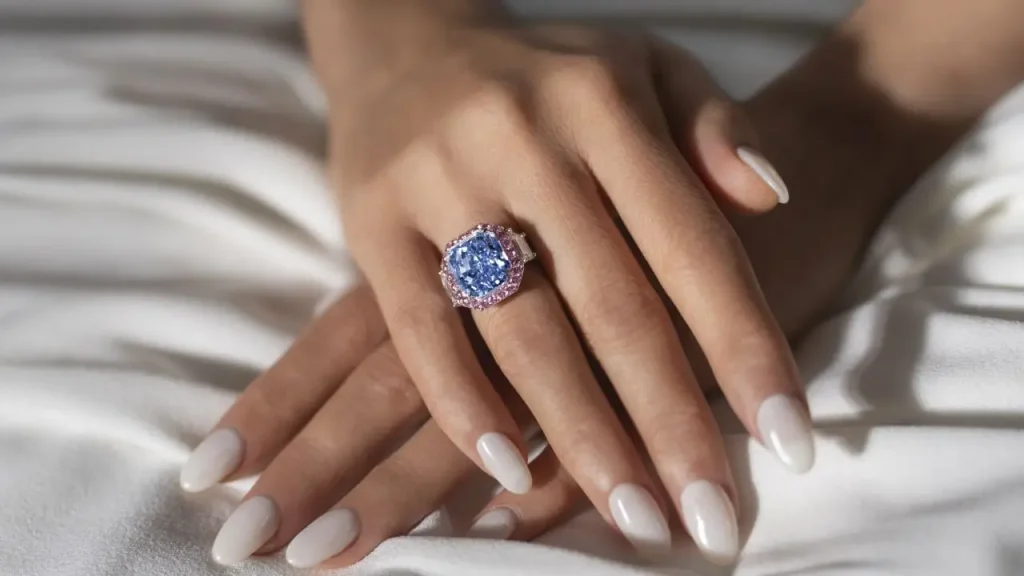
Few diamonds capture the imagination quite like a natural Fancy Vivid blue diamond. In 2023, one of the most remarkable examples in recent years the 11.28-carat Infinite Blue attracted worldwide attention when Sotheby’s Hong Kong offered it as a single-lot auction.

The diamond carried an ambitious pre-sale estimate of US$26 million to US$37 million, reflecting its extraordinary colour, size, provenance and rarity. However, the final result demonstrated just how unpredictable the market for exceptional coloured diamonds can be: the Infinite Blue sold for approximately US$25.3 million, below its low estimate.

A diamond born at the Cullinan Mine

The Infinite Blue has an exceptional pedigree.

Its rough origin was the famous Cullinan Mine in South Africa, operated by Petra Diamonds. Cullinan is internationally recognised as one of the world’s most important sources of natural blue diamonds and has produced some of the most celebrated diamonds ever offered at auction.

The Infinite Blue was cut from a 25.75-carat rough blue diamond, the largest stone in Petra’s Letlapa Tala collection. That collection itself was sold by Petra in 2020, and the rough was subsequently transformed into the polished 11.28-carat gem.

The transformation from rough to polished diamond illustrates one of the fundamental challenges of exceptional coloured diamonds: cutters must balance weight retention with the optimisation of colour, brilliance, proportions and overall appearance.

Why is a blue diamond so rare?

Blue diamonds occupy a very special position in the world of natural diamonds.

Unlike most colourless diamonds, where nitrogen is an important factor in colour, the blue colour in natural Type IIb diamonds is associated with the presence of boron within the diamond’s crystal structure.

The Infinite Blue is classified as a Type IIb diamond, a category representing an exceptionally small proportion of natural diamonds. Petra describes Type IIb diamonds as among the rarest stones recovered from the Cullinan Mine.

Its Fancy Vivid Blue colour grade is equally significant. In the world of coloured diamonds, the intensity and distribution of colour can have an enormous influence on value.

This is why two diamonds of similar size can have dramatically different market values.

The significance of 11.28 carats

There is also a deliberate piece of symbolism in the Infinite Blue’s final weight.

The diamond weighs 11.28 carats, with the number eight incorporated into its final carat weight. Eight is widely regarded as an auspicious number in Chinese and other Asian cultures, where it is associated with prosperity and good fortune.

There is another connection: when the number eight is turned on its side, it resembles the mathematical symbol for infinity.

That symbolism inspired the name Infinite Blue and added an element of cultural meaning to an already extraordinary gemstone.

What makes the Infinite Blue different?

According to published gemological information, the diamond is a Fancy Vivid Blue, VS2-clarity, radiant-cut diamond. Its combination of colour, size and natural origin puts it into an exceptionally small group of diamonds.

The distinction between colour grade and clarity is particularly important when assessing coloured diamonds.

With colourless diamonds, clarity can have a major influence on value. With strongly coloured diamonds, however, colour intensity, hue, saturation and distribution can be fundamental drivers of rarity and price.

This is one reason coloured diamonds require specialised knowledge when they are being evaluated.

Joining an extraordinary group

The Infinite Blue also belongs to a remarkable family of large blue diamonds associated with the Cullinan Mine.

The mine has produced several diamonds that have achieved extraordinary prices at international auctions.

Among them are:

  • The Oppenheimer Blue — 14.62 carats, sold for approximately US$57.5 million in 2016.
  • The De Beers Blue — 15.10 carats, sold for approximately US$57.5 million in 2022.
  • The Infinite Blue — 11.28 carats, sold for approximately US$25.3 million in 2023.

Another famous Cullinan blue diamond, the Blue Moon of Josephine, weighs 12.03 carats and achieved US$48.5 million at auction in 2015.

These stones demonstrate an important fact about the diamond market: rarity does not automatically translate into a predictable price.

Auction values depend on a combination of factors including colour, clarity, size, cut, provenance, market conditions, collector demand and the circumstances of the sale.

A lesson in diamond valuation

The Infinite Blue is an excellent example of why a diamond’s value cannot be determined simply by multiplying carat weight by a price per carat.

A natural Fancy Vivid blue diamond of more than 10 carats belongs to an entirely different market from an ordinary commercial diamond.

Its value is influenced by a complex combination of:

Natural origin + colour + intensity + size + clarity + cut + provenance + rarity + market demand.

For consumers and collectors, this reinforces the importance of independent gemological assessment and accurate documentation when dealing with significant diamonds.

Nature creates the rarity — expertise reveals it

The Infinite Blue ultimately sold for less than its original estimate, but the auction result did little to diminish the gemological importance of the stone.

What makes diamonds such as the Infinite Blue fascinating is that their story begins millions and often billions of years before they ever reach an auction room.

A combination of geological conditions, trace elements, crystal structure and extraordinary rarity created the blue colour. Human expertise then transformed an unusual piece of rough into a polished gemstone capable of commanding more than US$25 million.

For the diamond industry, stones such as the Infinite Blue provide an important reminder that the true value of a rare diamond lies not simply in its size, but in the combination of characteristics that make that particular stone unique.

At DCLA, we believe that understanding those characteristics is fundamental to understanding diamonds themselves.

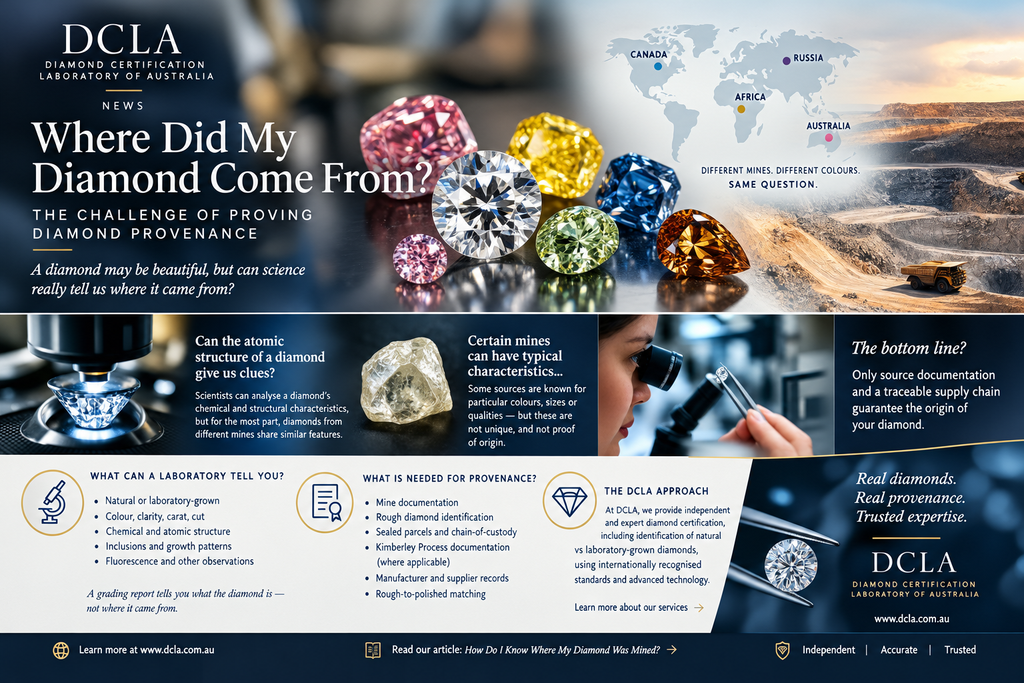
Where Did My Diamond Come From?

  How can you prove the provenance of a polished diamond? When buying a natural diamond, one question is becoming increasingly important: Wh...