Sunday, 7 September 2025

Why Old Mine Cut Diamonds Are Back in Vogue

Old Mine Cut Diamonds

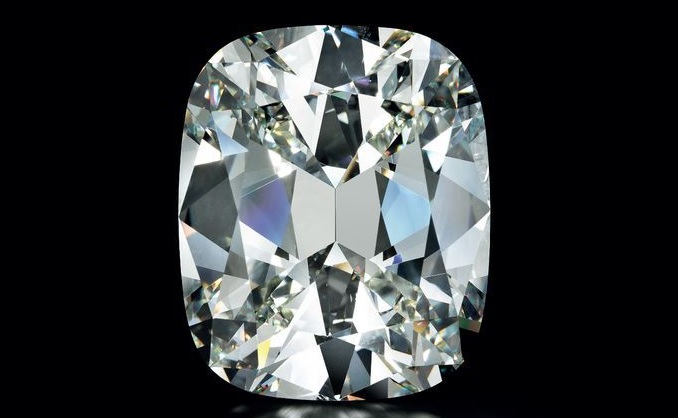
In a world where modern technology has made diamond cutting more precise than ever, there has been a surprising revival of one of the oldest styles in diamond history – the old mine cut. Once considered outdated compared to today’s brilliant cuts, these antique gems are now finding favour among collectors, jewellery designers, and couples searching for something truly unique.

A Glimpse into History

The old mine cut originated in the 18th and 19th centuries, long before advanced cutting technology existed. Cut by hand, often by candlelight, each stone carries its own distinctive character. With their cushion-like shapes, high crowns, and larger culets, old mine cuts reflect the craftsmanship of a bygone era. These diamonds were the predecessor to today’s modern round brilliant and are often set in antique or Victorian-era jewellery.

The Allure of Imperfection

Unlike modern cuts that maximise sparkle through precision, old mine cut diamonds are celebrated for their individuality. Their facets were designed for softer, romantic light sources like candlelight, giving them a warmer, more subtle glow. For many buyers, this charm lies in their imperfections – no two are exactly alike.

Sustainability and Authenticity

As sustainability becomes increasingly important in jewellery, old mine cut diamonds are seen as an eco-conscious choice. They are recycled treasures, requiring no new mining, which makes them especially appealing to ethically minded consumers. Owning one also means owning a tangible piece of history – a connection to a time when diamonds were cut entirely by hand.

Modern Designers Embrace the Vintage Appeal

Jewellery houses and bespoke designers are incorporating old mine cut diamonds into contemporary settings, blending antique beauty with modern design. Their romantic look pairs well with minimalist mountings, allowing the character of the stone to shine through. Many brides-to-be are also choosing them for engagement rings, preferring their vintage charm over mass-produced, uniform cuts.

A Market on the Rise

With limited supply and growing demand, old mine cut diamonds are becoming more sought after. Collectors appreciate their rarity, while younger generations value their individuality and authenticity. This resurgence has pushed prices higher, making them not just a sentimental choice, but also a potentially wise investment.

The revival of old mine cut diamonds reflects a broader trend in the jewellery world: a desire for uniqueness, sustainability, and authenticity. Far from being a relic of the past, these antique diamonds are back in vogue – and for many, they represent the perfect blend of history and timeless beauty.

Source: DCLA


Thursday, 4 September 2025

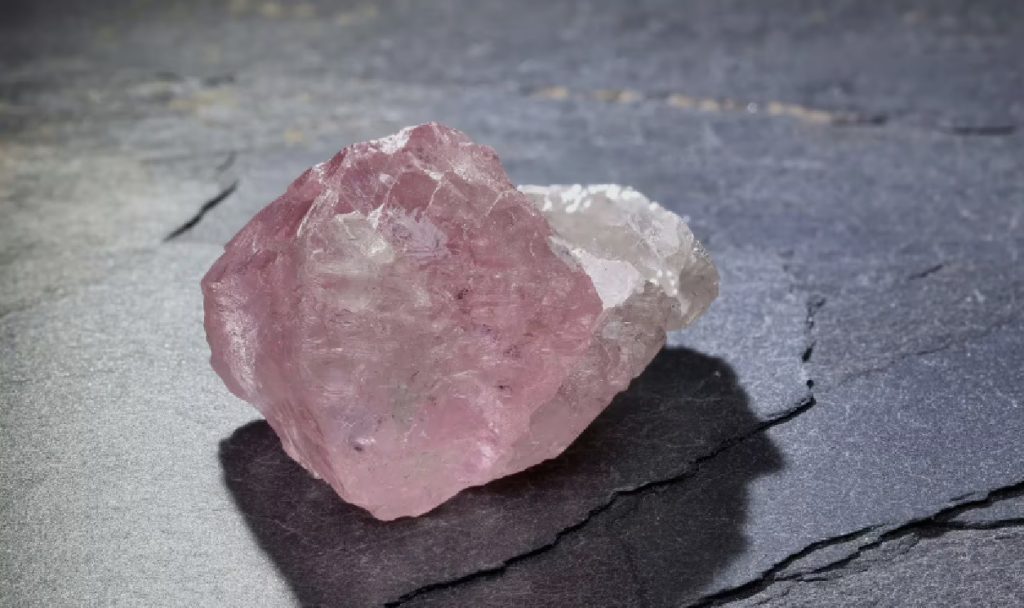
Lucara Recovers Rare 37-Carat Pink Diamond from Karowe

37-Carat Pink Diamond from Karowe

Lucara Diamond Corp. has announced the recovery of a rare and unusual pink diamond from its Karowe mine in Botswana.

The 37.42-carat stone, classified as a Type IIa, was unearthed in August and is described as near-gem quality with a distinctive bicoloured appearance. While the majority of the diamond displays an intense pink hue, part of the stone appears partially colourless an exceptionally rare feature.

HB Antwerp, Lucara’s cutting and technology partner, described the discovery as “a rare and remarkable find.” Oded Mansori, co-founder of HB Antwerp, noted:
“This stone has the potential to become one of the most important pink diamonds ever polished. Its intensely rich coloration is a testament to the geological uniqueness of the Karowe mine, and our expertise in the manufacturing process will ensure its vibrant colour is maximised.”

The recovery underscores Karowe’s reputation as a consistent source of exceptional diamonds. Also in August, Lucara recovered a 1,019.85-carat non-gem-quality diamond, the third stone of more than 1,000 carats to be found at Karowe in 2025. This brings the total number of diamonds over 1,000 carats from the mine to nine.

Both diamonds were recovered from the EM/PK(S) section of the deposit using Lucara’s Mega Diamond Recovery (MDR) unit, an advanced X-ray transmission system installed in 2017 to identify and preserve large stones. The MDR is credited with detecting several of Karowe’s most significant recoveries, including the 2,492-carat diamond discovered in August 2024—the second-largest rough diamond ever found.

Meanwhile, Lucara has announced a $10 million drawdown from its $63 million standby loan facility with Nemesia, its largest shareholder, to address short-term funding needs for the Karowe underground expansion project. The $683 million project, now scheduled for completion in the first half of 2028, is expected to extend the mine’s life to at least 2040.

Lucara President and CEO William Lamb said the arrangement reflects the company’s commitment to financial prudence while advancing the underground project.
“This funding mechanism demonstrates the continued confidence and support of our major shareholders in Lucara’s long-term strategy and in the exceptional value potential of the Karowe mine, including the ongoing recovery of some of the world’s most significant diamonds.”

Source: DCLA

Wednesday, 3 September 2025

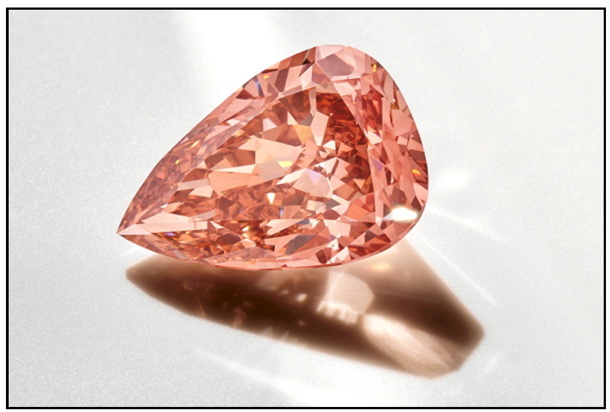
Sotheby’s to Sell 31.86 carat Pink Diamond in Abu Dhabi

Desert Rose 31.86 carat Pink Diamond

Sotheby’s is to offer for sale the largest fancy vivid orangy pink diamond ever graded, at a debut event in Abu Dhabi in December.

The pear-shaped gem, known as the Desert Rose, weighs 31.86 carats and is expected to fetch $5m to $7m.

It is the jewelry highlight of Sotheby’s inaugural Abu Dhabi Collectors’ Week of exhibitions, sales, masterclasses and panel discussions.

The Desert Rose is part of a single-owner collection of watches and jewelry, including vintage and contemporary signed pieces, that is estimated to raise more than $20m in total.

Among the watch highlights is an exceptionally rare Rolex “Oyster Albino” Daytona, reference 6263, produced in the late 1960s and early 1970s, with an estimate of $500,000 to $1m.

Abu Dhabi Collectors’ Week takes place from 2 – 5 December on Saadiyat Island, just off the Abu Dhabi coast.

It coincides with the Abu Dhabi Grand Prix and features auctions of collector cars, real estate, and international fine art exhibitions.

Source: DCL

Tuesday, 2 September 2025

Lab Grown Diamond Market to Hit $44bn

The global lab grown diamond market

The global lab grown diamond market will grow 60 per cent in the next seven years, from $27.7bn this year to $44.5bn in 2032, according to India-based Coherent Market Insights (CMI).

That represents a compound annual growth rate (CAGR) of 7 per cent annually. It did not provide comparable figures for the natural diamond market, although growth there is expected to be considerably slower.

The CMI report identifies North America as the current market leader, expected to capture roughly 40% of global demand in 2025.

However, it says the Asia-Pacific region, which currently accounts for 40 per cent of lab grown sales, is projected to experience the fastest growth, driven by rapid industrialization and increasing disposable incomes.

China is the biggest producer – accounting for almost half of global production – but most is by HPHT, an older and less sophisticated system than CVD.

Source: IDEX

Monday, 1 September 2025

GIA to Ditch 4Cs Lab Grown Grading from October

GIA to Ditch 4Cs Lab Grown Grading

GIA says the switch to grading lab grown diamonds simply as “premium” or “standard” will take on 1 October.

The lab announced an end to full 4Cs color and clarity reports in June, but did not say at the time when the change would take effect.

In a statement yesterday (26 August) it also laid out the criteria it will use to distinguish Premium lab growns from Standard. Diamond that don’t meet all the minimum criteria for Standard will not receive a GIA assessment.

Premium diamonds must meet all these criteria:

  • Clarity – Very, Very Slightly included and higher
  • Color – D
  • Polish, symmetry – Excellent
  • Cut grade – Excellent (round brilliant cut diamonds only)

Standard diamonds must meet all these criteria:

  • Clarity – Very Slightly included
  • Color – E-to-J
  • Polish – Very Good
  • Symmetry – Very Good (or Good for fancy shapes)
  • Cut grade – Very Good (round brilliant cut diamonds only)

GIA will charge $15 per carat, with a minimum fee of $15. Evaluation fee for diamonds below the minimum criteria is $15.

“Using descriptive terms for the quality of laboratory-grown diamonds is appropriate as most fall into a very narrow range of color and clarity,” said Pritesh Patel, GIA president and CEO.

“Because of that, GIA will no longer use the nomenclature created for natural diamonds to describe what is a manufactured product.”

Meanwhile rival lab IGI (International Gemological Institute) insists it will carry on with 4Cs grading for lab growns “to prevent industry and consumer confusion”.

Source: IDEX

Sunday, 31 August 2025

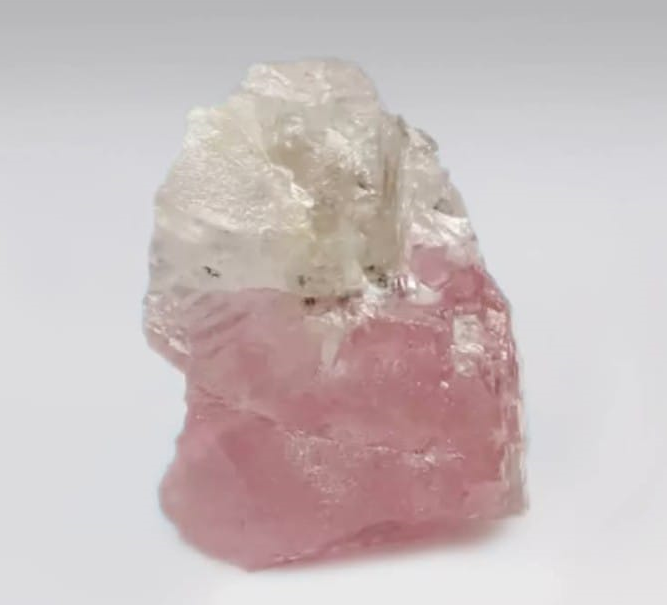
Lucara Recovers 1,019 Carat Diamond and Rare Pink Type IIa at Karowe Mine

Rare Pink Type IIa Diamond

Lucara Diamond Corp has announced the recovery of two notable stones from its 100% owned Karowe Mine in Botswana during August 2025.

The most significant find is a 1,019.85 carat non-gem diamond, recovered through Lucara’s Mega Diamond Recovery unit. This marks the ninth diamond weighing over 1,000 carats to be recovered from Karowe, and the third such discovery in 2025 alone. In addition, the company reported the recovery of a 37.42 carat near-gem pink Type IIa diamond.

Both stones were recovered from processing EM/PK(S)1 material — the same unit that has produced the majority of the world’s largest recorded natural diamonds.

William Lamb, President and CEO of Lucara, stated that drawing $10 million from the company’s Standby Undertaking with its largest shareholder was a strategic step to ensure financial flexibility during the ongoing Underground Project (UGP) capital programme. He added that the recovery of such exceptional diamonds continues to demonstrate the long-term value potential of Karowe and the ongoing confidence of Lucara’s shareholders.

Thursday, 28 August 2025

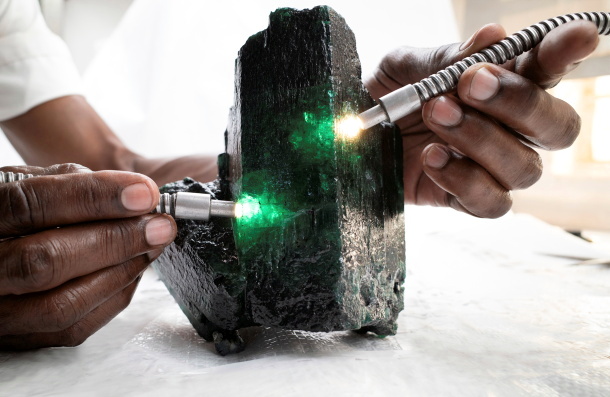
Gemfields Recovers its Biggest Ever Emerald

Biggest Ever Emerald

Gemfields has recovered a huge 11,685-carat (2.3kg) emerald – the biggest from its Kagem mine, Zambia, and possibly the biggest in the world.

The gemstone, called Imboo (the ‘buffalo’ in the local Bemba and Lamba dialects), eclipses the 7,525-carat Chipembele (the ‘rhino’), which was recovered at Kagem in July 2021, and which was recognized by Guinness World Records in April 2022 as the largest uncut emerald crystal recovered from a mine.

In January 2025, Almighty Gems in Coimbatore, India, displayed what it described as a record-breaking single emerald stone weighing 53,750 carats.  But it has yet to be officially verified by an independent authority.

The newly-recovered Imboo emerald is being offered for sale at the Gemfields auction in Bangkok which runs until 11 September.

Jackson Mtonga, grading manager at the Kagem sort house, said: “In my 30 years at Kagem, I’ve rarely seen such a remarkable formation of large, high-quality crystals.  This is a true masterpiece carved by nature’s hand.”

Imboo was discovered at Kagem’s Chama pit on 3 August by geologist Dharanidhar Seth, and Justin Banda, a veteran chiseller.

Source: DCLA

Lab-Grown Diamonds Surge in Popularity, Both Globally and in Australia

Lab-grown diamonds are transforming the global jewellery market and Australia is no exception. What began as a value-driven alternative is n...