Showing posts with label GIA Triple Ex. Show all posts

Monday, 8 September 2025

HPHT-Processed Natural and Laboratory-Grown Diamonds with Counterfeit Inscriptions

HPHT-Processed Natural and Laboratory-Grown Diamonds with Counterfeit Inscriptions

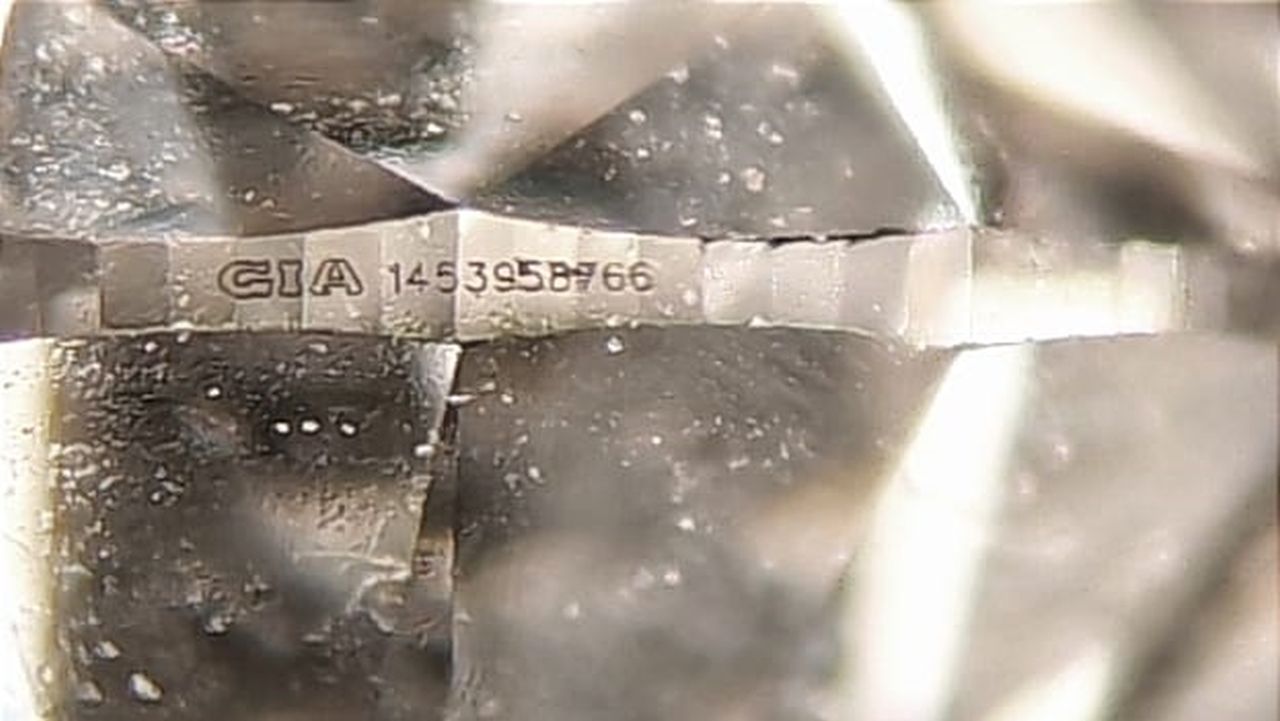
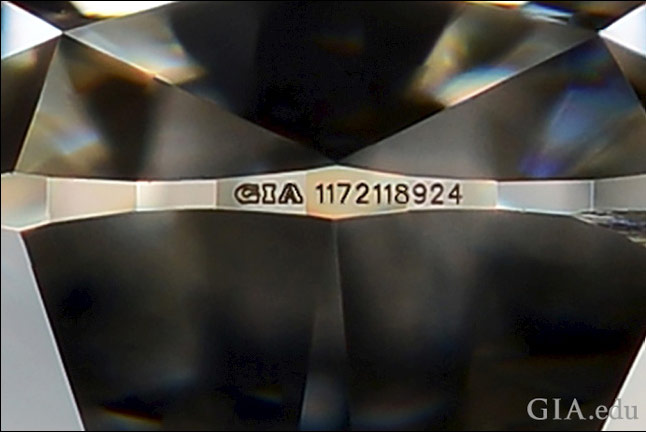
Recently, the Dubai laboratory encountered four stones submitted for update services inscribed with fraudulent GIA report numbers. Inconsistent font styles and placement indicated the numbers were not authentic GIA inscriptions.
Diamonds with Counterfeit Inscriptions

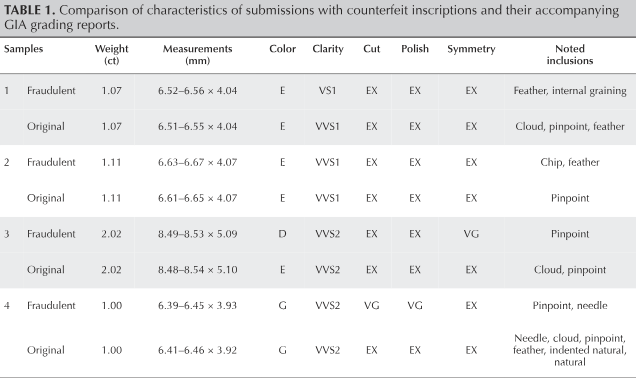
Table 1. Comparison of characteristics of submissions with counterfeit inscriptions and their accompanying GIA grading reports.
A careful comparison of their quality characteristics confirmed that these were not the same diamonds as described in their accompanying reports. Although the diamonds were carefully selected to closely match the features listed on the original reports, several subtle differences in their color grades, measurements, and other characteristics were identified (table 1). Even more obvious were the spectral differences between the fraudulent and original stones. The difference in the one-phonon region of the Fourier-transform infrared absorption spectroscopy clearly revealed a discrepancy in the diamond types. The diamonds from the original reports were type Ia with aggregated nitrogen impurities, while these submitted stones were all type IIa, confirming they were, in fact, different stones.

On fraudulent diamonds 1 and 2, photoluminescence (PL) spectra produced by 514 nm laser excitation at liquid-nitrogen temperature showed that 637 nm peaks were greater than 575 nm peaks. The 575 and 637 nm peaks are emissions from the nitrogen vacancy center in its neutral [NV]0 and negative [NV]− charge states, respectively. The 575:637 nm emission ratio of intensities of less than 1 (D. Fisher and R.A. Spits, “Spectroscopic evidence of GE POL HPHT-treated natural type IIa diamonds,” Spring 2000 G&G, pp. 42–49), along with other PL features, indicated that fraudulent diamonds 1 and 2 with the counterfeit inscriptions were natural diamonds that had undergone high-pressure, high-temperature (HPHT) treatment for color improvements.

The visible/near-infrared (Vis-NIR) absorption spectrum for fraudulent diamond 3, on the other hand, showed a 737 nm peak, which corresponds to the unresolved silicon vacancy [SiV]– defect at 736.6/736.9 nm commonly seen in laboratory-grown diamonds using the chemical vapor deposition (CVD) growth method (P. Martineau et al., “Identification of synthetic diamond grown using chemical vapor deposition (CVD),” Spring 2004 G&G, pp. 2–25). The observation of such features led to the determination that this stone was CVD-grown and subjected to post-grown HPHT processing.

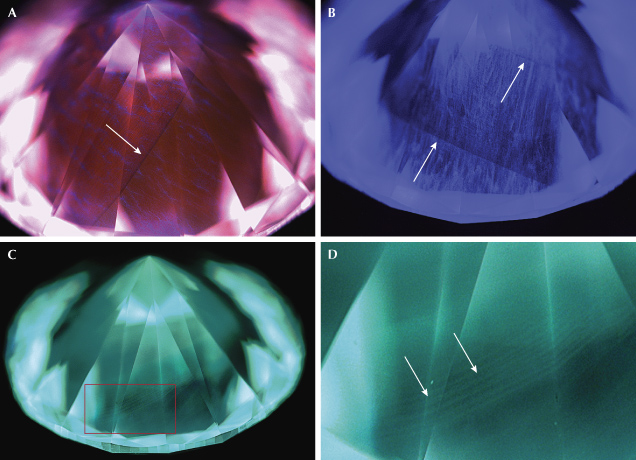
Further PL spectroscopy analysis on fraudulent diamonds 3 and 4 using 633 nm excitation confirmed the presence of the SiV– doublet feature on both diamonds. In alignment with the Vis-NIR and PL spectra, DiamondView images of these two fraudulent stones displayed clear striations with interruption layers indicative of CVD growth (figure 1). These patterns are consistent with the step-flow growth structure of CVD-grown diamond, which was also visible under the microscope using crossed polarizers and further supported their laboratory-grown origins. The other two fraudulent diamonds (1 and 2), however, showed a lack of such patterns and demonstrated natural-looking features, which confirmed them as HPHT-processed natural diamonds.
Diamonds with Counterfeit Inscriptions

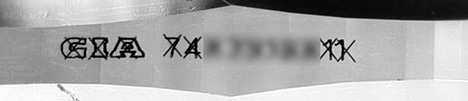
Figure 2. GIA’s standard procedure is to cross out the counterfeit inscription. Image by GIA staff.
Considering all evidence, we concluded that two of the four stones were laboratory-grown diamonds, and the other two were HPHT-processed natural diamonds. All four diamonds were not the same natural diamonds as described in their accompanying GIA grading reports. In accordance with GIA procedures, the counterfeit inscriptions were crossed out (figure 2) and new report numbers were assigned. In addition, GIA inscribes “TREATED COLOR” on natural diamonds with post-treatment history and “LABORATORY-GROWN” along with a GIA report number and distinct GIA LG logo on laboratory-grown diamonds.

Deceptive practices have occurred previously in the trade; similar instances of diamonds with fraudulent inscriptions have been reported by GIA (e.g., Summer 2021 Lab Notes, pp. 150–152; Fall 2021 Lab Notes, pp. 258–259). Additionally, non-diamond materials, such as synthetic moissanite, with fraudulent GIA inscriptions have been submitted as diamonds to GIA (Fall 2020 Lab Notes, pp. 424–425; Fall 2022 Lab Notes, pp. 360–361). These cases highlight the importance of verifying inscription authenticity because a fraudulent inscription could be overlooked by simple visual examination. One possible solution is GIA’s Match iD, a device that compares a diamond’s inscription with its grading report in the GIA database.

Source: DCLA

Monday, 1 September 2025

GIA to Ditch 4Cs Lab Grown Grading from October

GIA to Ditch 4Cs Lab Grown Grading

GIA says the switch to grading lab grown diamonds simply as “premium” or “standard” will take on 1 October.

The lab announced an end to full 4Cs color and clarity reports in June, but did not say at the time when the change would take effect.

In a statement yesterday (26 August) it also laid out the criteria it will use to distinguish Premium lab growns from Standard. Diamond that don’t meet all the minimum criteria for Standard will not receive a GIA assessment.

Premium diamonds must meet all these criteria:

  • Clarity – Very, Very Slightly included and higher
  • Color – D
  • Polish, symmetry – Excellent
  • Cut grade – Excellent (round brilliant cut diamonds only)

Standard diamonds must meet all these criteria:

  • Clarity – Very Slightly included
  • Color – E-to-J
  • Polish – Very Good
  • Symmetry – Very Good (or Good for fancy shapes)
  • Cut grade – Very Good (round brilliant cut diamonds only)

GIA will charge $15 per carat, with a minimum fee of $15. Evaluation fee for diamonds below the minimum criteria is $15.

“Using descriptive terms for the quality of laboratory-grown diamonds is appropriate as most fall into a very narrow range of color and clarity,” said Pritesh Patel, GIA president and CEO.

“Because of that, GIA will no longer use the nomenclature created for natural diamonds to describe what is a manufactured product.”

Meanwhile rival lab IGI (International Gemological Institute) insists it will carry on with 4Cs grading for lab growns “to prevent industry and consumer confusion”.

Source: IDEX

Tuesday, 12 August 2025

The Industry’s “False Sense of Security” – Why Laser Inscriptions Alone Are Not Enough

Why Laser Inscriptions Alone Are Not Enough

In the diamond trade, we often speak of a laser inscription as if it is an unbreakable bond between a diamond and its grading certificate. However, anyone with real-world experience whether on the manufacturing floor or in the secondary market knows the truth: inscriptions can be removed, altered, or forged.

Polish the girdle and the inscription disappears. Re-cut the stone and it’s gone entirely. Worse still, an inscription can be duplicated onto a different diamond to mimic an existing report number. This is not speculation; it has happened, and more often than many in the trade care to admit.

Another serious vulnerability occurs after grading. Once a diamond is set into jewellery, nothing prevents a switch from taking place during setting, repair, or even in transit. This risk is not confined to smaller stones high-value diamonds have been switched in exactly this way.

Verification presents its own challenges. Even if the diamond is the original stone graded by the laboratory, the inscription is frequently obscured by the jewellery setting. Accessing it often requires removing the stone a delicate procedure that carries risk to both the stone and the setting. Most grading laboratories, including DCLA, will not remove diamonds from their mountings, and many jewellers are reluctant to attempt it due to the potential for irreversible damage.

Digital records, blockchain entries, and grading reports track the details, but they do not track the actual physical stone. If the diamond is switched but the paperwork remains unchanged, the system still appears to validate it as authentic. This is precisely how sophisticated fraud can go undetected.

Until the industry bridges the gap between the physical diamond and its digital record, laser inscriptions will remain a weak link in the chain of security.

At DCLA, we believe the next step in true physical traceability lies in combining advanced identification technology with secure, tamper-proof verification processes ensuring that a diamond’s identity is as enduring as the stone itself.

Source: DCLA

Wednesday, 4 June 2025

DCLA to Continue Full Grading of All Diamonds, Including Laboratory-Grown

DCLA to Continue Full Grading of All Diamonds

The Diamond Certification Laboratory of Australia (DCLA) reaffirms its commitment to providing precise and comprehensive grading for all diamonds, including laboratory-grown stones. This approach ensures consistency, transparency, and informed decision-making across the industry.

While the GIA has announced it will introduce a simplified classification system for lab-grown diamonds — using the categories “Premium” and “Standard” — the DCLA will maintain its tradition of detailed grading across the full range of quality characteristics. This includes reporting actual colour, clarity, cut, and carat weight for every diamond submitted, regardless of its origin.

The GIA’s new system, expected later this year, will group lab-grown diamonds based on overall appearance and finish, with certificates including carat and cut details but without specific colour and clarity grades.

DCLA recognises that both natural and laboratory-grown diamonds hold unique value and significance. By continuing to offer full grading reports, the DCLA supports both the trade and consumers in understanding and appreciating the distinct qualities of each stone.

At DCLA, we believe that consumers and the trade deserve full and detailed grading information, regardless of the diamond’s origin. Misrepresentation and confusion are more likely to arise when simplified or vague grading systems are used — especially as laboratory-grown diamonds become more prevalent in the market.

As Australia’s official CIBJO laboratory, DCLA remains dedicated to upholding the highest international standards in diamond certification and grading.

Monday, 2 June 2025

 GIA Moves to Redefine Lab-Grown Diamond Grading, Signaling Clearer Divide from Natural Diamonds

Rough Lab-Grown Diamond

In a landmark decision that will reverberate through the global diamond industry, the Gemological Institute of America (GIA) the world’s foremost authority in gemology—has announced it will no longer use its internationally recognized 4Cs grading system for laboratory-grown diamonds. Instead, beginning later this year, lab-grown diamonds submitted to GIA will receive simplified descriptors—categorized broadly as either “premium” or “standard”—or no grade at all if the quality is subpar.

While GIA’s move to redefine lab grown diamond grading might sound like a simple nomenclature change, it’s much more than that. This move marks a definitive moment in the ongoing separation of natural diamonds from lab-grown diamonds. It confirms what many in the industry have long known: lab-grown diamonds are not the same as natural diamonds and should not be treated as such.

Why the 4Cs Is Essential for Natural Diamonds

GIA created the 4Cs—cut, color, clarity, and carat weight—as a rigorous system to help consumers understand the unique and complex qualities of natural diamonds. No two natural diamonds are exactly alike. They are rare geological miracles forged deep within the Earth over billions of years, each carrying a singular fingerprint from Mother Nature. A grading report for a natural diamond is essential because these stones exist along an immense spectrum of characteristics. 

Meet the Expert

GIA Moves to Redefine Lab-Grown Diamond Grading, Signaling Clearer Divide from Natural Diamonds
  • Grant Mobley is the Jewelry & Watch Editor of Only Natural Diamonds.
  • He is a GIA Diamonds Graduate.
  • He has over 17 years of jewelry industry experience, starting with growing up in his family’s retail jewelry stores.
Lab Grown Diamond grading: lab grown diamond
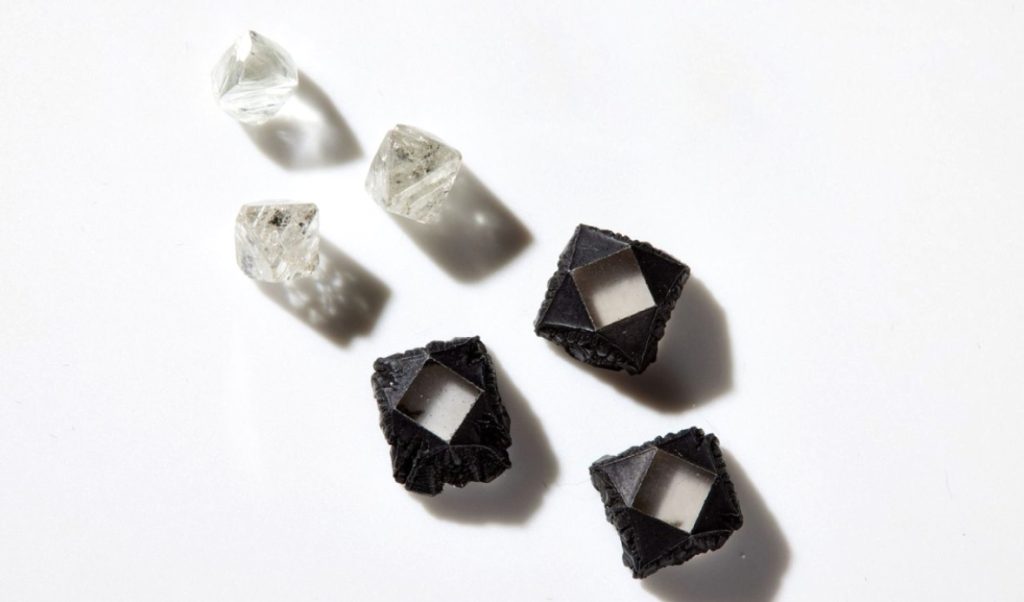
An uncut lab grown diamond

Why GIA Is Changing the Way Lab Grown Diamonds Are Graded

Lab-grown diamonds, on the other hand, are man-made and mass-produced using high-pressure high-temperature (HPHT) or Chemical Vapor Deposition (CVD) processes. According to Tom Moses, GIA executive vice president and chief laboratory and research officer, “More than 95% of laboratory-grown diamonds entering the market fall into a very narrow range of color and clarity. Because of that, it is no longer relevant for GIA to describe man-made diamonds using the nomenclature created for the continuum of color and clarity of natural diamonds.”Why Lab Grown Diamond Grading Needs a Different System

By replacing detailed grading reports with broader descriptors, such as “premium” and “standard,” GIA is drawing a clear line in the sand. They are telling consumers that these are not the same products and they should not be evaluated in the same way. And coming from GIA—the trusted nonprofit organization that established global diamond grading standards in 1953—this statement couldn’t be more authoritative.

Natural Diamonds: Rarity, Value, and Geological Identity

To understand why this change to lab grown diamond grading matters, it’s essential to examine what drives the value of natural diamonds: rarity and identity. Each natural diamond is finite, with unique growth patterns, internal inclusions, and color subtleties shaped by millions or even billions of years underground. These one-of-a-kind gems are the original luxury product—not just beautiful but rare and no longer forming in nature. Lab-grown diamonds, conversely, can be created in virtually unlimited quantities and replicated in appearance with astonishing ease. There is no rarity. There is no geological story. There is no true investment potential.

GIA Moves to Redefine Lab-Grown Diamond Grading, Signaling Clearer Divide from Natural Diamonds
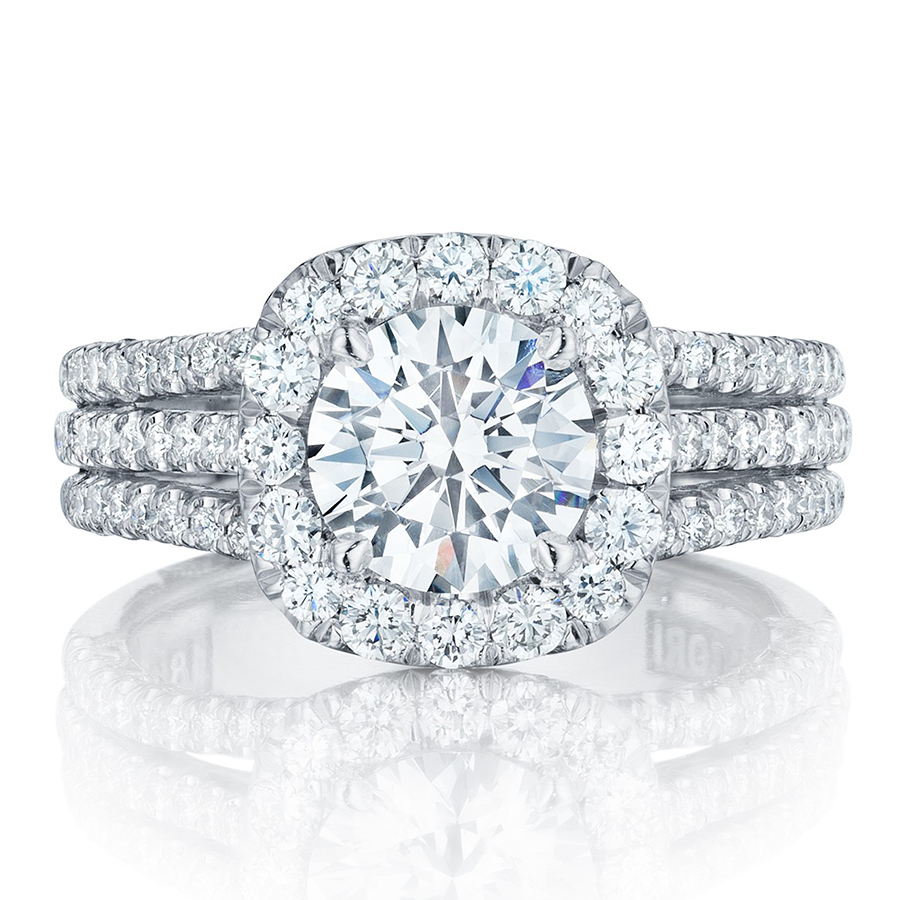
Ring Courtesy of The Clear Cut
GIA Moves to Redefine Lab-Grown Diamond Grading, Signaling Clearer Divide from Natural Diamonds

Why Clarity in Lab Grown Diamond Grading Matters for Consumers

This distinction has become increasingly blurred by confusing marketing language and unclear labeling practices. Some in the lab-grown diamond space have leaned on the unsubstantiated language of “sustainability” and “equality” in comparison to natural diamonds, despite offering a fundamentally different product. But consumers deserve transparency. They deserve to understand what they’re buying, what it’s worth, and what makes one stone different from another. That’s precisely why this change from GIA is so important.

It’s also a return to the Institute’s founding principles. GIA exists to protect the public trust in gems and jewelry. With this shift, the Institute is ensuring that consumers can make informed choices without being misled by false equivalencies. By stepping away from the 4Cs for lab-grown diamonds, GIA is reaffirming its commitment to scientific integrity and public transparency.

GIA Moves to Redefine Lab-Grown Diamond Grading, Signaling Clearer Divide from Natural Diamonds
GIA Diamond Grading Report

Let me be clear: This is not about pitting one product against another. Lab-grown diamonds have their place in the market. But we must stop pretending they are interchangeable with natural diamonds. They are not heirlooms, they are not investments, and they are not rare.

GIA’s decision demonstrates that natural diamonds continue to be the benchmark of authenticity, value, and irreplaceability. They are not merely carbon crystals—they are ancient, unrepeatable creations of nature, each with a backstory written in geologic time.

As this policy rolls out in late 2025, expect other gem labs to follow suit. The line separating lab-created simulacra and natural geological masterpieces is being redrawn with bold ink—and GIA is holding the pen.

Source: DCLA

Thursday, 29 May 2025

Why Diamond Grades Can Differ Between Laboratories: Understanding Colour and Clarity Variations

Why Diamond Grades Can Differ Between GIA and DCLA: Understanding Colour and Clarity Variations

The difference in diamond grading between laboratories like GIA (Gemological Institute of America) and DCLA (Diamond Certification Laboratory of Australia) can occur due to the subjective nature of diamond grading and variations in grading standards, tools, and methodology.

Here’s a detailed explanation of why this happens:

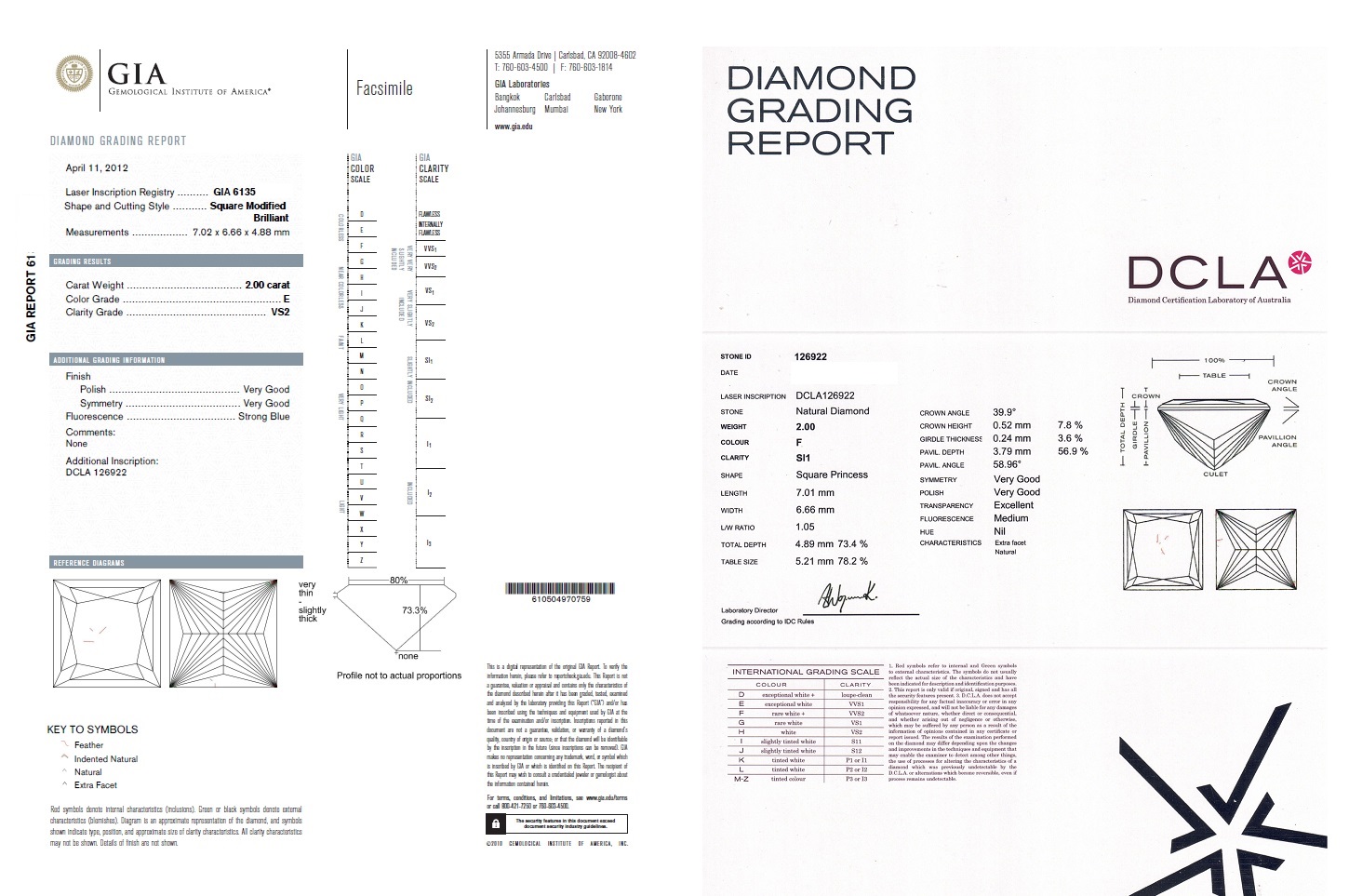
Example of a diamond graded GIA E VS2 vs DCLA F SI1:


1. Grading is Subjective to Some Extent

Even though labs follow international grading systems like those defined by CIBJO or GIA, colour and clarity grading involves human judgment under magnification and controlled lighting conditions. Two experienced graders may interpret borderline characteristics differently.

  • Colour: E and F are adjacent grades, and the difference is extremely subtle—often imperceptible to the untrained eye.
  • Clarity: The distinction between VS2 (Very Slightly Included 2) and SI1 (Slightly Included 1) can also hinge on size, position, nature, and number of inclusions, which may be judged differently by separate labs.

2. Different Lab Philosophies

  • GIA is widely considered the global benchmark for consistency and tends to be more conservative in some grading aspects, especially in colour.
  • DCLA, while highly respected and CIBJO-accredited (and Australia’s official diamond authority), might interpret certain characteristics differently based on their internal grading protocols.

3. Grading Conditions and Equipment

Minor differences in:

  • Lighting
  • Magnification tools
  • Grading environments
    can affect the appearance of a diamond, especially in borderline cases.

4. Grading Date and Re-evaluation

Grading can differ if:

  • The diamond was graded at different times.
  • The diamond was repolished or slightly recut between submissions.
  • The grader has different levels of training or experience (even within the same lab over time).

5. Lab-to-Lab Variance Is a Known Industry Factor

Even among top labs (GIA, IGI, HRD, AGS, DCLA), 1-grade differences in colour or clarity are common and not considered errors. This is why many dealers and appraisers say a difference of one colour or clarity grade is within acceptable tolerance.


In Your Example:

  • GIA E VS2 vs DCLA F SI1:
    • The colour difference (E vs F): within acceptable tolerance; both are considered colourless.
    • The clarity difference (VS2 vs SI1): SI1 is a full grade lower, but this could be due to:
      • An inclusion judged more impactful by DCLA
      • A stricter application of clarity grading by DCLA
      • GIA possibly being more lenient on that particular clarity characteristic

Differences like GIA E VS2 and DCLA F SI1 can result from:

  • Subjective human interpretation
  • Slightly different grading standards
  • Borderline characteristics
  • Environmental and technical grading factors

For buyers or sellers, it’s important to:

  • Always compare certificates from top-tier labs.
  • Understand that 1-grade discrepancies are common.
  • Consider getting a professional review if there’s a significant value implication.

Thursday, 10 April 2025

US Tariffs: GIA Expands Dubai and Hong Kong Services

GIA Expands Dubai and Hong Kong Services

GIA says its Dubai and Hong Kong labs will accept larger stones for grading, in the wake of President Trump’s imposition of retaliatory tariffs on its trading partners.

Last week GIA said its US labs in New York and California would not accept submissions from overseas until confusion had been cleared up over the status of stones entering the country for grading rather than for sale.

In a statement on Monday (7 April) the world’s biggest grading lab said that because of tariff-related “logistical challenges” it was temporarily expanding services in Dubai and Hong Kong.

Dubai will now accept rough or polished diamonds (D-Z) up to 9.99-cts and Hong Kong will impose no size limit, until further notice.

Both labs previously had a 3.99-cts upper size limit. In addition, Hong Kong will now grade fancy color diamonds.

Source: DCLA

Tuesday, 5 November 2024

Downturn Forces GIA to Close Israel Lab

GIA is to close its lab in Ramat Gan, Israel, saying it is no longer "financially sustainable".

GIA is to close its lab in Ramat Gan, Israel, saying it is no longer “financially sustainable”.

The facility, which opened in August 2012, will close by the end of this year. Submissions will be sent to GIA labs elsewhere, with no additional shipping costs, the lab said in a press statement.

GIA was not able to say at this stage which other labs it would use (Dubai is the closest), or how much extra time that would take.

“Despite reductions in operating costs and reduced staffing through attrition, the laboratory is not financially sustainable,” said GIA, which grades the majority of the world’s polished diamonds.

“The GIA laboratory in Ramat Gan, Israel, will end operations by the end of 2024 due to changes in the global diamond industry that resulted in significant declines in submissions from local clients over the last several years.”

GIA closed its Antwerp lab in July 2022, citing “limited demand for services and financial performance that did not support continued operations”.

It also has labs in Bangkok, Hong Kong, Mumbai, Surat, Tokyo, Carlsbad, New York, Dubai, Gaborone and Johannesburg, according to its website.

From 17 November submissions to the Ramat Gan laboratory will be sent elsewhere. “GIA is working to establish a third-party process to accept submissions from walk-in clients in Ramat Gan for service in other GIA laboratories,” the lab said.

Source: DCLA

Sunday, 25 February 2024

GIA Expands Fraud Checks to All Labs

GIA Expands Fraud Checks to All Labs

GIA says it has expanded its new verification service – aimed at combating “cloned diamond” fraud – to all its labs.

The Report Confirmation Service was launched last month in New York to identify lab growns being submitted for regrading as natural diamonds.

GIA says the service is now available at all locations. It will accept walk-in and courier submissions, will turn around loose diamonds in as little as 15 minutes, and will, initially, make no charge.

The service is available for GIA-graded diamonds with and without inscriptions. An original GIA cert is helpful but not essential.

An increasing number of lab growns are being fraudulently submitted for re-grading. They are cut to match the specifications of natural diamonds that have already been graded and inscribed with either with a GIA number (genuine or fake).

“Combatting this fraud is vital to protecting the public and ensuring their confidence in gems and jewelry – this is GIA’s mission,” said GIA president and CEO Susan Jacques.

Source: DCLA

Wednesday, 21 February 2024

GIA Opens New Lab in Dubai


GIA Opens New Lab in Dubai

The Gemological Institute of America (GIA) has launched a new laboratory in the Dubai Multi Commodities Centre (DMCC).

The location opened on February 19, the GIA said Tuesday. The lab will provide services only for clients operating in Dubai’s free trade zones and will be unable to accept submissions from other areas in the emirate, the GIA explained. However, in the near future the location will be able to accept intake from additional countries.

“The establishment of the GIA DMCC laboratory…adds significant value not only for our free-zone members but also for the wider industry, particularly when it comes to speeding up cycle times,” said Ahmed bin Sulayem, executive chairman and CEO of the DMCC.

The new Dubai lab will grade diamonds ranging in color from D to Z and weighing up to 3.99 carats, the GIA added.

Source: DCLA

Monday, 4 September 2023

GIA Lays Off 151 Employees at Carlsbad Headquarters


GIA Lays Off 151 Employees at Carlsbad Headquarters

The Gemological Institute of America (GIA) has cut some 20% of the workforce at its Carlsbad, California, headquarters amid a prolonged slowdown in the industry.

In late July, the lab let 151 employees go, primarily in its laboratory, as well as some in corporate positions, Stephen Morisseau, the GIA’s director of communications, told Rapaport News Sunday. The lab made the layoffs as a result of a drop in the number of diamonds submitted for grading.

“Many organizations in the global gem and jewelry sector are experiencing a downturn due to economic conditions affecting the global gem trade,” Morisseau explained. “Due to those economic conditions, there has been a decline in demand for GIA’s gem identification and grading services, which led to the difficult decision to reduce staffing.”

The layoffs will bring the GIA’s total workforce in Carlsbad to 600, according to The San Diego Union-Tribune, which was the first to report the story. Globally, the lab has approximately 3,500 employees.

“The reductions will not affect our ability to advance our important consumer-protection mission, nor to meet the needs of our clients,” Morisseau added.

Source: DCLA

Wednesday, 4 January 2023

GIA Launches The Digital Diamond Dossier


Digital GIA Diamond Dossier
                 Digital GIA Diamond Dossier

The start of 2023 marks a significant milestone in the digital transformation of the global diamond industry – the launch of the fully digital GIA Diamond Dossier, the most widely available diamond grading report in the world. The GIA Diamond Dossier is available for D-to-Z diamonds from 0.15 to 1.99 carats without colour treatments. Printed GIA Diamond Dossier reports issued before January 2023 remain valid.

Tom Moses, GIA Executive Vice President and Chief Laboratory and Research Officer, said, “The launch of the digital GIA Diamond Dossier report starts the conversion of all GIA’s laboratory reports to a modern digital format. This important change improves data security, offers efficiencies across the supply chain and reduces our reliance on paper.”

The first digital GIA Diamond Dossier report was issued at the GIA laboratory in Ramat Gan, Israel, on Monday, 2nd January 2023. More than 33 million printed GIA Diamond Dossier reports were issued since the introduction of the service in 1998.

Pritesh Patel, GIA’s Chief Operating Officer, added, “In 2025, when all GIA reports are digital, retailers and consumers will find greater convenience and a more immersive experience. Eliminating printed reports is an important advancement, reducing the impact of using, shipping and storing the nearly 40 tons of paper and plastic that go into printed GIA reports each year.”

The secure digital GIA Diamond Dossier is available in the reimagined GIA App or on computers, tablets and phones through the robust and secure online GIA Report Check Service and the GIA advanced application programming interface (API) for commercial users. The digital report service includes a Report Access Card with the report number, a QR code linking to the digital report and 4Cs information to embed into receipts, invoices and e-commerce sites.

The new GIA App is widely available for Apple and Android devices. The Android app for China is in development and will be available at a later date. The GIA Match iDTM inscription matching service is expected to be available in the first half of 2023, accessible exclusively through the reimagined GIA App.

Printed GIA Diamond Dossier reports issued before January 2023 remain valid.

Source: DCLA

Thursday, 28 July 2022

GIA Launches Diamond Origin Service


The Gemological Institute of America (GIA) has begun accepting submissions for a new service providing consumers with source verification for diamonds.

Leading manufacturers sent the first polished diamonds to the GIA’s Source Verification Service in early July, the institute said Wednesday. GIA-graded diamonds with confirmed origin information will be available to consumers when the initial submissions are returned and as more manufacturers join the program, the organization explained.

An independent auditing firm will vet all cutters before they enter the program. The auditors will confirm the company has the ability to track a diamond from receipt of the rough through the entire manufacturing process. The GIA will evaluate all participating firms regularly to ensure they are continuing to adhere to the guidelines, it noted.

Initially, the GIA will accept only polished natural diamonds with verified source documentation, including Kimberley Process (KP) certificates and invoices from vetted manufacturers. It will add lab-grown diamonds to the service in the near future. Consumers can access the information through the GIA’s online Report Check service, it added.

“GIA’s new service provides diamond-source information to consumers as quickly as possible,” said its CEO, Susan Jacques. “The GIA Source Verification Service is ready to provide verified diamond-source information to address increasing consumer demand and government interest in transparency and traceability across the supply chain.”

Source: DCLA

Sunday, 26 June 2022

Welcome to the top diamond jewellery insurance specialists

Why Certin ?

Because of the way we have designed the cover, we are able to offer very competitive premiums and guarantee no shortcuts in the quality of your replacement in the event of a loss or damage.

Diamond Jewellery Insurance Specialists


We offer 30 days complimentary cover


We offer 30 days complimentary cover to ensure you are covered from the day you pick up your precious diamond piece from one of our network jewellers. Fill in your details online, register your diamond and receive instant cover. Alternatively, give us a call and we can provide your cover over the phone Your policy is underwritten by Lloyd’s of London, the oldest and one of the most prestigious name in insurance.


Worldwide Cover

Diamond Jewellery Insurance


Worldwide Cover ensures you are covered anywhere in the world for trips up to 60 days.


Quick and equivalent replacement


We provide expert diamond advice in the event of replacement. We understand how important these items are to you and our expert team will ensure quick and equivalent replacement in the event of a loss.

Diamond Jewellery Insurance


We pride ourselves in providing an excellent claims service and making the process as easy and as quick as possible We provide dedicated insurance for your most sentimental and precious diamonds. We pride ourselves in offering Friendly and helpful first class service Our staffs are based in Australia and we are here to assist you with your insurance needs.


Complimentary Health Check for Your Item


As a preventative measure we offer a complimentary health check for your item with a network jeweler. If you have to make a claim under your policy we do not deduct any excess for specified items. We can add your other diamond Jewellery items to your policy by specifying them.


More information: Certin 

Wednesday, 8 June 2022

All GIA Reports to Be Digital by 2025


The Gemological Institute of America (GIA) plans to convert all of its paper reports to digital within the next three years, beginning with its Diamond Dossier in 2023.

The digital reports, which it will link to an app, will be more secure than their paper counterparts, the GIA said Tuesday. They will be paired with a new inscription-matching service, called GIA Match iD. This feature captures a diamond’s inscription image and links the stone to its GIA report using artificial intelligence (AI).

As each report category is introduced in digital form, the printed reports will be discontinued, the GIA told Rapaport News. However, some specialty services, such as the Monograph reports and notable letters, will continue to be available in printed versions.

“Digital reports…build on our decades of innovation and move our consumer protection mission forward,” said GIA CEO Susan Jacques. “This important transformation allows GIA to offer consumers a truly modern and engaging experience while helping our industry progress toward a more sustainable future.”

Starting in January 2023, the new Diamond Dossier service will offer a fully digital report, including the 4Cs; the app, which enables retailers and consumers to view, save and share information for their diamonds; and the Match iD instrument.

The elimination of GIA paper reports will save 20 tons of paper and 18.5 tons of plastic each year, the GIA said. It will also reduce transportation-related carbon emissions, the institute added.

Source: DCLA

Tuesday, 23 February 2021

Diamonds with Fake Inscriptions Turn Up at GIA


The Gemological Institute of America (GIA) has recently received “a number of” lab-grown or treated stones carrying natural-diamond reports and fake inscriptions, the organization warned.

Clients submitted the stones for updated reports or verification services, but the grading documents that came with the goods did not match the stones, the GIA explained Tuesday. The weights and grading scores of the lab-grown and treated diamonds were close but not identical to the original stones that appeared on the reports, and they all featured the corresponding natural-diamond report numbers in the form of counterfeit girdle inscriptions.

In one example, a stone submitted was a 1.51212-carat, D-color, VVS2-clarity, type IIa, lab-grown diamond with a cut grade of “very good.” However, the accompanying report — for which the client was seeking an update — was for a 1.50362-carat, VVS2, E, type I natural diamond with “excellent” cut.

In line with its policy, the GIA overwrote all the fraudulent inscriptions with X’s to obscure them, it added. The organization also issued new reports with the accurate details, and engraved the correct report number onto the girdle, and, where relevant, the phrase “laboratory-grown.” In these cases, it also considers informing the client that submitted the stone, law enforcement, and the public, the GIA noted.

Last month, the institute revealed that it had spotted three synthetic moissanites that clients had submitted with forged girdle inscriptions that disguised them as natural diamonds. The cases at its Johannesburg laboratory were the first times the GIA had discovered fake inscriptions on diamond simulants.

Source: DCLA

Diamonds with Fake Inscriptions Turn Up at GIA


The Gemological Institute of America (GIA) has recently received “a number of” lab-grown or treated stones carrying natural-diamond reports and fake inscriptions, the organization warned.

Clients submitted the stones for updated reports or verification services, but the grading documents that came with the goods did not match the stones, the GIA explained Tuesday. The weights and grading scores of the lab-grown and treated diamonds were close but not identical to the original stones that appeared on the reports, and they all featured the corresponding natural-diamond report numbers in the form of counterfeit girdle inscriptions.

In one example, a stone submitted was a 1.51212-carat, D-color, VVS2-clarity, type IIa, lab-grown diamond with a cut grade of “very good.” However, the accompanying report — for which the client was seeking an update — was for a 1.50362-carat, VVS2, E, type I natural diamond with “excellent” cut.

In line with its policy, the GIA overwrote all the fraudulent inscriptions with X’s to obscure them, it added. The organization also issued new reports with the accurate details, and engraved the correct report number onto the girdle, and, where relevant, the phrase “laboratory-grown.” In these cases, it also considers informing the client that submitted the stone, law enforcement, and the public, the GIA noted.

Last month, the institute revealed that it had spotted three synthetic moissanites that clients had submitted with forged girdle inscriptions that disguised them as natural diamonds. The cases at its Johannesburg laboratory were the first times the GIA had discovered fake inscriptions on diamond simulants.

Source: DCLA

Thursday, 5 March 2020

GIA Calls Off New York Career Fair


The Gemological Institute of America (GIA) has canceled next week’s career event in New York due to the coronavirus.
The GIA Jewelry Career Fair was due to take place on March 13. It targets job seekers in the greater New York City area, and is open to the public. The organization plans to find a new date for the event.
“We believe this is in the best interest of all participants’ health and safety,” a GIA spokesperson said Wednesday.
Last year, the fair attracted more than 450 students, GIA alumni, job seekers and other professionals, as well as 56 companies looking to hire and 23 career coaches.
The GIA has already reduced the operating hours at its Hong Kong and Tokyo laboratories due to the health situation. It continues to monitor the conditions in all its locations, the spokesperson added.
Concerns about the spread of the coronavirus in the US increased this week. As of Wednesday, nine people had died out of a total of 80 cases across 13 states, according to the Centers for Disease Control and Prevention. The US has not yet banned public events, but California declared a state of emergency on Wednesday.
The JCK Las Vegas and Luxury shows will still take place in late May and early June, organizers Reed Jewelry Group confirmed on Tuesday. This week’s Hong Kong shows and the Baselworld fair — scheduled for April 30 to May 5 in Switzerland — have both fallen victim to the epidemic.
Source: DCLA

How Efforts to Control the Diamond Trade Are Hurting the Very Communities They Were Supposed to Protect

For more than two decades, global policies aimed at restricting the flow of diamonds from conflict zones most notably through the “blood dia...