Showing posts with label Gemfields. Show all posts

Thursday, 28 August 2025

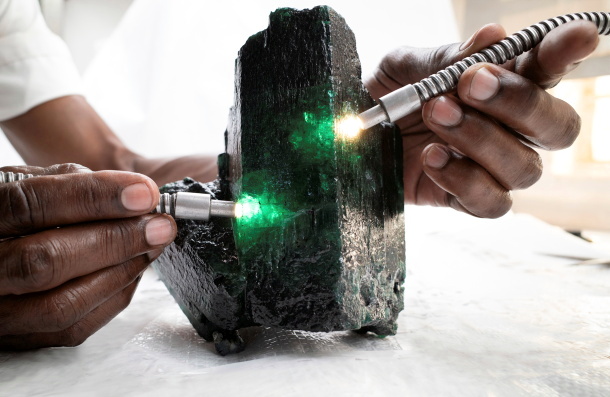
Gemfields Recovers its Biggest Ever Emerald

Biggest Ever Emerald

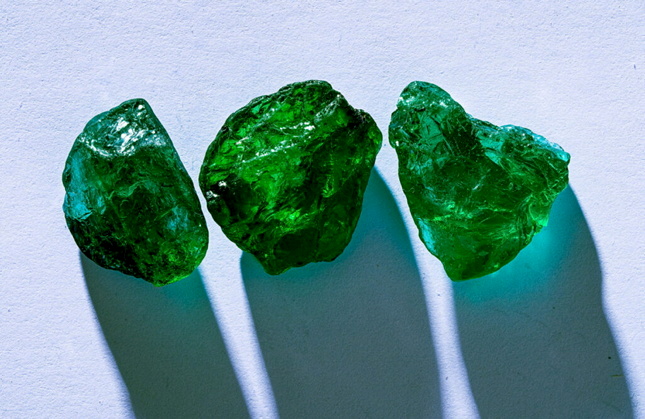
Gemfields has recovered a huge 11,685-carat (2.3kg) emerald – the biggest from its Kagem mine, Zambia, and possibly the biggest in the world.

The gemstone, called Imboo (the ‘buffalo’ in the local Bemba and Lamba dialects), eclipses the 7,525-carat Chipembele (the ‘rhino’), which was recovered at Kagem in July 2021, and which was recognized by Guinness World Records in April 2022 as the largest uncut emerald crystal recovered from a mine.

In January 2025, Almighty Gems in Coimbatore, India, displayed what it described as a record-breaking single emerald stone weighing 53,750 carats.  But it has yet to be officially verified by an independent authority.

The newly-recovered Imboo emerald is being offered for sale at the Gemfields auction in Bangkok which runs until 11 September.

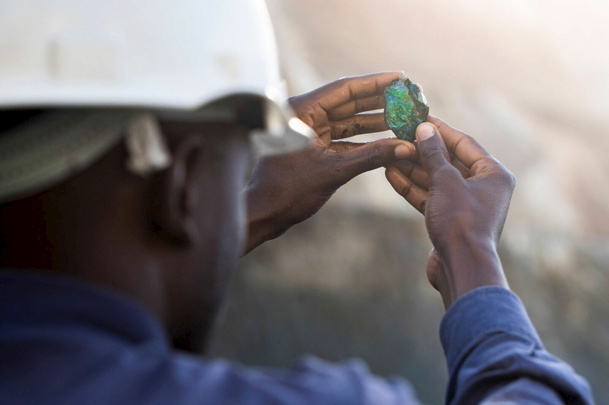
Jackson Mtonga, grading manager at the Kagem sort house, said: “In my 30 years at Kagem, I’ve rarely seen such a remarkable formation of large, high-quality crystals.  This is a true masterpiece carved by nature’s hand.”

Imboo was discovered at Kagem’s Chama pit on 3 August by geologist Dharanidhar Seth, and Justin Banda, a veteran chiseller.

Source: DCLA

Wednesday, 16 April 2025

Gemfields Blames Market Conditions for $100m Loss

Gemfields, the world's largest colored gemstone miner

Gemfields, the world’s largest colored gemstone miner has reported a $100.8m loss for 2024 – and announced a $30m a rights issue to help secure its future.

It suspended mining at its Kagem emerald mine in Zambia for up to six months last December. It was also forced to temporarily close its Montepuez ruby mine, in Zambia due to civil unrest.

The UK-based miner made a comparatively small loss of $2.8m in 2023, but says market conditions in 2024 were “more challenging than we could have anticipated”.

Gemfields, the world's largest colored gemstone miner

In its latest trading update Gemfields blamed the oversupply of emeralds by a Zambian competitor, lower-than-expected production of premium rubies at Montepuez and a weak gemstone market, especially in China.

“While our planning of Gemfields’ growth programme did not envisage the requirement of additional funds from shareholders, the scope and scale of the difficulties we have encountered contemporaneously has unfortunately necessitated a change in approach,” said CEO Sean Gilbertson.

The company will be seeking shareholder approval for a fully committed and underwritten rights issue of 556m new shares to raise approximately $30m.

Total revenue for 2024 was $213m, down 19 per cent, due to disrupted market for emeralds in H2 2024 and lower production of premium rubies.

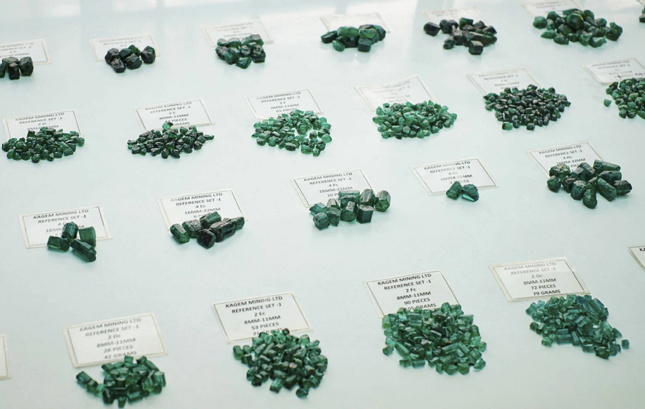
Gemfields said construction of a second ruby processing plant in Montepuez was on track. At Kagem the only produced are by processing the pre-mined stockpile.

Source: DCLA

Thursday, 9 January 2025

Gemfields Hit by Shock 15% Export Tax on Emeralds

emeralds in Zambia

Gemfields is reeling from the shock imposition of a 15 per cent export duty on the emeralds it mines in Zambia.

The duty on precious gemstones was originally introduced at the start of 2019, but was suspended a year later after protests. It was re-introduced, without warning, on 1 January 2025.

The re-introduction is a further blow for Gemfields, which announced last month that it would have to halt operations at the Kagem mine for up to six months as part of a package of cost-cutting measures.

In a statement the UK-based miner said there had been no notice or prior consultation about re-introducing the duty, and said it was calling on the Zambian government to reverse its position.

“This 15 per cent export duty now applies on top of the existing 6 per cent mineral royalty tax and meaning that Kagem faces an effective tax on revenues of 21 per cent (in addition to corporation tax of 30 per cent),” it said.

Brazil and Colombia, also major emerald producers, impose lesser tax burdens, it noted.

“Brazil’s aggregate tax on revenues is 2 per cent (in the form of mineral royalty) and Colombia’s aggregate tax on revenues is 2.5 per cent (being a 1.5 per cent mineral royalty and a 1 per cent national emerald fund contribution) in addition to corporation taxes of 34 per cent and 33 per cent respectively.”

Source: DCLA

Tuesday, 18 June 2024

Ex-De Beers CEO Takes Charge at Gemfields

Ex-De Beers CEO Takes Charge at Gemfields

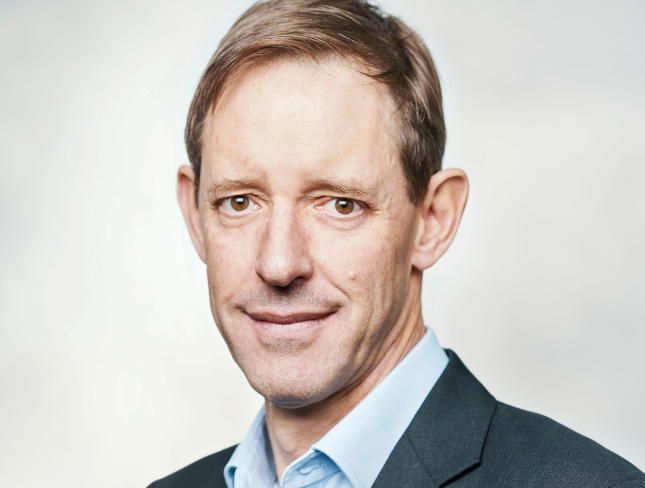
Bruce Cleaver, former CEO at De Beers Group, has been appointed chair and independent non-executive director of Gemfields, the UK-based emerald and ruby miner.

He said the company, founded in 2005, was bringing sophistication to a fragmented and informal colored gemstone industry, much as De Beers did more than a century ago for diamonds.

Cleaver, 59, (pictured) served as De Beers CEO from 2016 until his resignation in February 2023, during which time the company launched its Lightbox range of lab growns and extended its diamond mining agreement with the Botswana government for a further 10 years.

“The parallels with De Beers’ origins and how consistent and reliable supply can deliver remarkable industry growth and positive contributions to communities, are clear to all,” he said.

“The coloured gemstone market has long transcended the arrival of their lab-grown counterparts, with lab-grown rubies having been around for more than 120 years.”

Gemfields operates the Kagem emerald mine and Montepuez, the world’s largest ruby mine, in Mozambique. It holds a 75 per cent stake in both.

Construction of a new processing plant at Montepuez, which will triple its throughput capacity, is due to complete in the first half of 2025.”

Gemfields reported near-record revenues of $262m for FY2023.

Cleaver will replace Martin Tolcher as chair, and Lumkile Mondi who was lead independent non-executive director, effective 1 July.

Source: DCLA

How Efforts to Control the Diamond Trade Are Hurting the Very Communities They Were Supposed to Protect

For more than two decades, global policies aimed at restricting the flow of diamonds from conflict zones most notably through the “blood dia...