Thursday, 27 August 2026

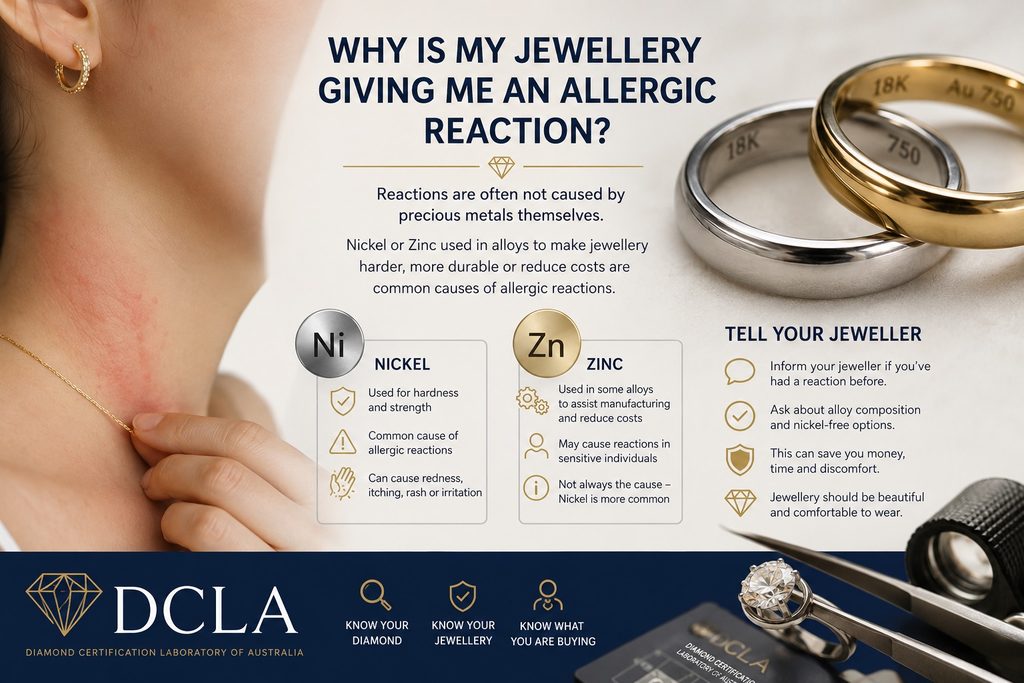
Why Is My Jewellery Giving Me an Allergic Reaction?

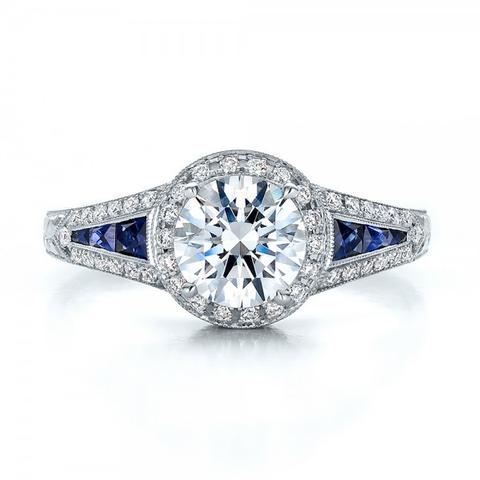
 Nickel is well known as a cause of allergic contact dermatitis.

Jewellery is meant to be worn, enjoyed and treasured. But for some people, wearing a ring, necklace, bracelet or pair of earrings can result in redness, itching, irritation or even a rash.

When this happens, many people immediately assume they are allergic to gold, silver or another precious metal. That is not always the case.

In many instances, the reaction may be caused by another metal contained within the jewellery alloy particularly nickel, and in some circumstances zinc or other alloying metals.

Precious Metals Are Rarely Used Completely Pure

Most jewellery is manufactured from alloys rather than pure precious metals.

Pure gold, for example, is extremely soft and is generally mixed with other metals to create an alloy that is harder, more durable and suitable for everyday wear. The same principle applies to many other precious metals.

The metals added to an alloy can affect its:

  • Hardness and durability
  • Colour
  • Strength
  • Manufacturing characteristics
  • Weight
  • Cost

This is where understanding exactly what is in your jewellery becomes important.

Nickel: One of the More Common Causes

Nickel is well known as a cause of allergic contact dermatitis.

It has historically been used in jewellery alloys because it can provide hardness, strength and particular colour characteristics. White gold is one example where alloy composition is particularly important, although modern jewellery manufacturers have a number of nickel-free alternatives.

A person who is sensitive to nickel may develop irritation where the jewellery contacts the skin. This can include redness, itching, dryness, swelling or a rash.

The reaction does not necessarily mean that the jewellery itself is poorly made. It may simply mean that the wearer is sensitive to one of the metals contained in the alloy.

What About Zinc?

Zinc can also be used as an alloying metal in jewellery manufacturing. It can assist with casting and manufacturing characteristics and may form part of certain lower-cost alloys.

It is important, however, not to automatically assume that zinc is responsible for every jewellery reaction. Nickel sensitivity is much more commonly recognised as a cause of allergic contact dermatitis, while irritation can also have other causes.

This is why identifying the actual composition of the jewellery can be valuable.

Is It Possible to Be Allergic to Gold?

Is It Possible to Be Allergic to Gold?


Yes, although reactions specifically to gold are less common than nickel allergy.

Some people can develop a sensitivity to gold itself or to particular gold compounds, while others may actually be reacting to one of the other metals present in the alloy.

For example, two pieces of jewellery can both be described as 18-carat gold, yet have different alloy compositions depending on the manufacturer and the metals used to create the final colour and properties.

This is particularly relevant when comparing yellow, white and rose gold.

Don’t Assume the Jewellery Is the Problem

A reaction can also be caused by factors other than the metal.

Moisture, soap, cosmetics, perspiration, dirt trapped underneath a ring and prolonged contact with the skin can all contribute to irritation. In some cases, what appears to be a metal allergy may actually be contact irritation from something else.

If you repeatedly experience a reaction when wearing a particular piece of jewellery, it is worth discussing it with a medical professional or dermatologist rather than simply guessing which metal is responsible.

Tell Your Jeweller Before You Buy

This is one of the most important pieces of advice for anyone who has previously experienced a reaction to jewellery:

Tell your jeweller before the jewellery is made.

If you know that you have a nickel sensitivity, for example, make sure the jeweller knows before they recommend an alloy or manufacture a ring, earrings or other piece specifically for you.

The same applies if you have previously reacted to a particular type of gold, white gold or other jewellery.

Your jeweller can then discuss alternative materials and alloys that may be more appropriate.

Why This Can Save You Money

A custom piece of jewellery can represent a significant investment.

Imagine ordering a beautiful ring, having it manufactured and paying for the finished piece only to discover that you cannot comfortably wear it because your skin reacts to the alloy.

A remake may be possible, but it can involve additional manufacturing costs, time and inconvenience.

A simple conversation before the jewellery is made can potentially prevent an expensive problem later.

Ask What Is Actually in the Alloy

Don’t be afraid to ask questions.

If you have sensitive skin or have previously experienced a reaction, ask your jeweller:

  • What metals are contained in the alloy?
  • Is the alloy nickel-free?
  • What karat or fineness is the precious metal?
  • Is the jewellery plated, and if so, with what?
  • What will happen if the plating wears through?
  • Is there an alternative alloy available?

A reputable jeweller should be able to explain the materials being used and discuss suitable alternatives.

Jewellery Should Be Beautiful and Comfortable

Buying jewellery is about much more than appearance. The metal, alloy, construction and intended use all matter.

If you have experienced an allergic reaction in the past, don’t keep it a secret from your jeweller. Tell them before you purchase or commission your next piece.

At DCLA, we believe that understanding jewellery begins with understanding what you are actually buying. Whether it is a diamond, a precious metal or a finished piece of jewellery, knowledge gives you confidence.

And when it comes to jewellery that sits directly against your skin every day, knowing what is in the metal can be just as important as knowing what is on the outside.

DCLA — Know Your Diamond. Know Your Jewellery. Know What You Are Buying.

Wednesday, 26 August 2026

Best Place to Buy Diamonds in Australia: Knowledge, Experience and Confidence

 Two diamonds with apparently similar specifications can look very different and can have significantly different values. Small variations in colour, clarity, proportions, fluorescence, transparency and cut can influence both appearance and price.

Buying a diamond is one of the most important jewellery purchases many people will ever make. Yet with thousands of diamonds available online and through jewellery stores, knowing where to buy a diamond, and who to trust, can be difficult.

Price, appearance and marketing can all influence a purchase, but there is another factor that should never be overlooked: knowledge.

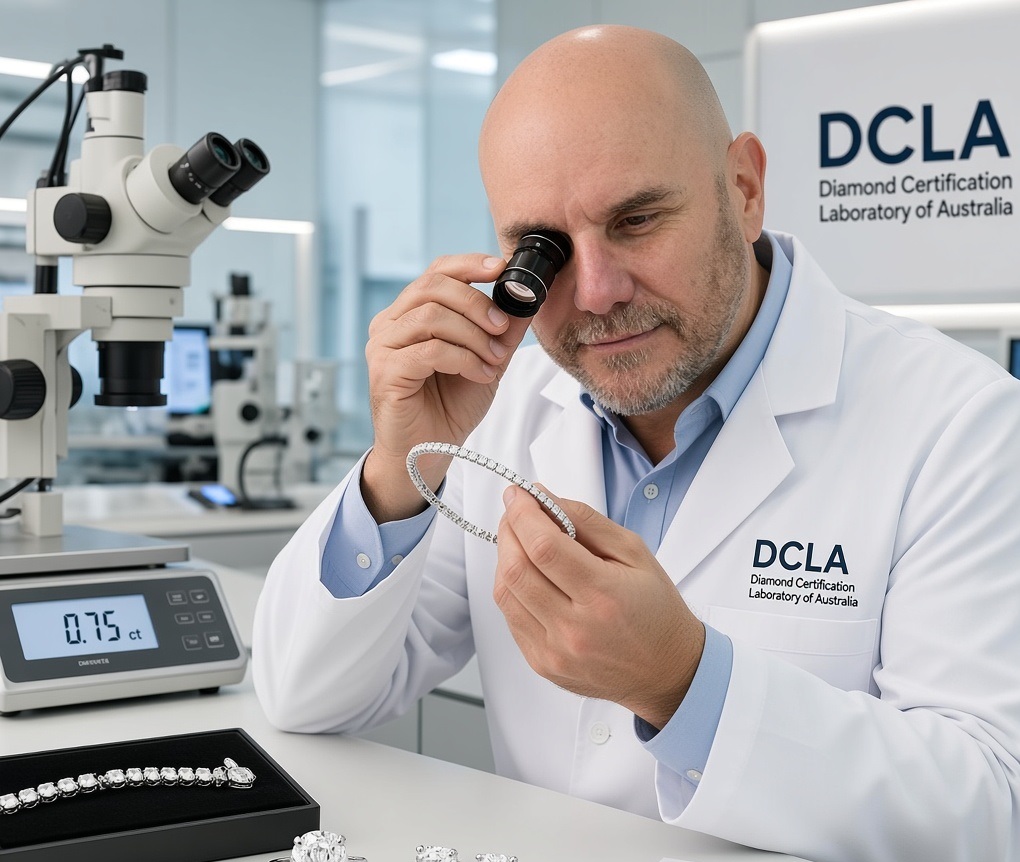
At the Diamond Certification Laboratory of Australia (DCLA), decades of experience in the diamond industry have created a unique depth of knowledge, from rough diamond mining and trading, through to cutting, polishing, grading and certification.

That experience provides something a price tag alone cannot: confidence that you understand what you are buying.

Why experience matters when buying a diamond

Why experience matters when buying a diamond

It is easy to look at the famous 4Cs, carat, colour, clarity and cut and assume that buying a diamond is simply a matter of comparing numbers.

It isn’t.

Two diamonds with apparently similar specifications can look very different and can have significantly different values. Small variations in colour, clarity, proportions, fluorescence, transparency and cut can influence both appearance and price. DCLA notes that even small changes in the characteristics of a diamond can have a substantial effect on value.

This is where real diamond experience matters.

Someone who has spent decades examining diamonds doesn’t simply read a certificate. They understand how a diamond behaves, how it was cut, how its proportions affect light performance and how the individual characteristics of the stone influence its desirability.

From the mine to the polished diamond

From the mine to the polished diamond

The DCLA story is unusual because its expertise extends far beyond laboratory grading.

The Cohen family’s involvement in the diamond industry stretches back to Johannesburg in the 1970s. Bruce Cohen began his diamond career under the guidance of his father, David Cohen. Michael Cohen trained as a polisher, cleaver and marker with a major De Beers sightholder before establishing diamond offices and cutting operations in southern Africa. Roy Cohen subsequently became involved in rough diamond trading and mining interests.

That means the knowledge behind DCLA has been developed across virtually every stage of a diamond’s journey.

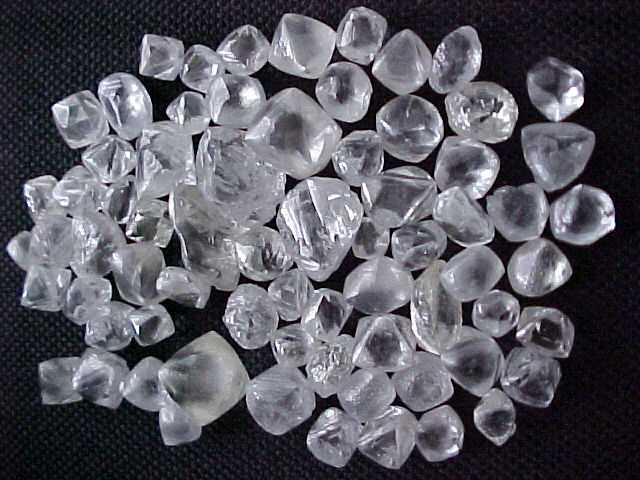
Rough diamond.
Mining.
Trading.
Planning.
Cleaving.
Polishing.
Grading.
Certification.
Buying and selling.

This provides a perspective that is difficult to replicate.

The advantage of buying with an independent laboratory behind you

The advantage of buying with an independent laboratory behind you

One of the most important questions a diamond buyer should ask is:

Who graded the diamond?

A grading report should come from an independent laboratory rather than simply being an in-house document produced by the person selling the diamond.

DCLA specifically warns consumers to be cautious about reports produced by retailers or merchants who have a financial interest in the stone. Independent grading provides an additional layer of confidence because the laboratory is assessing the diamond rather than selling it.

DCLA is an internationally accredited diamond grading laboratory in Australia, with grading conducted in Sydney by qualified gemmologists according to IDC and CIBJO standards.

Don’t just buy the certificate, understand the diamond

Buying a diamond is one of the most important jewellery purchases

A certificate is important, but the real value comes from understanding what the certificate means.

A DCLA Diamond Grading Report records characteristics including:

  • Carat weight
  • Colour
  • Clarity
  • Cut
  • Symmetry and polish
  • Measurements and proportions
  • Fluorescence
  • Transparency
  • Whether the diamond is natural or laboratory-grown
  • Treatments or enhancements
  • Unique identifying information

But experienced diamond professionals can take that information further.

They can help explain why one diamond may offer better visual performance than another, whether you are paying for characteristics that you can actually see, and where your money may be better spent.

The best diamond isn’t necessarily the most expensive

One of the biggest mistakes a buyer can make is believing that the highest grades automatically represent the best purchase.

The objective should be to find the right diamond for your budget and your priorities.

Perhaps you want maximum size.

Perhaps brilliance is your priority.

Perhaps you want exceptional colour.

Perhaps you want a diamond with a particular shape.

Or perhaps you want to maximise beauty while avoiding paying a premium for characteristics that make little visible difference to the eye.

This is where independent advice can make a significant difference.

Rather than simply selling you a diamond, the objective should be to help you understand why one diamond represents a better choice than another.

Buying online versus buying from an expert

Online diamond retailers can offer enormous choice and make it easy to compare prices.

But a photograph and a list of specifications cannot always tell the whole story.

A diamond is a three-dimensional optical object. Its proportions, facet arrangement, inclusions and light performance all contribute to how it looks in real life.

For a significant purchase, having access to someone who can explain the diamond in understandable terms can be invaluable.

And for buyers who want the ultimate level of confidence, an independent laboratory provides another important safeguard.

Australian consumer organisation CHOICE similarly recommends shopping around and obtaining an independent grading certificate for significant diamond purchases.

Confidence is more than a good price

The cheapest diamond is not necessarily the best diamond.

The best diamond is the one you understand, are confident in, and believe represents the right combination of beauty, quality and value for your circumstances.

This is why DCLA believes diamond buying should be an educational experience rather than simply a sales transaction.

With decades of experience extending from rough diamonds and polishing to modern scientific grading, DCLA brings together old-fashioned diamond knowledge and modern laboratory technology.

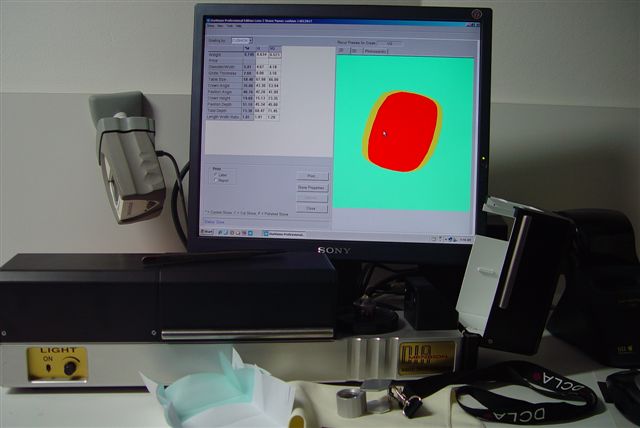
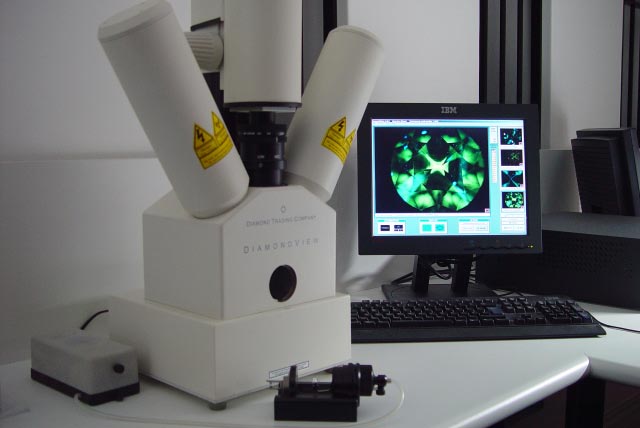
Every diamond certified by DCLA is examined in its Sydney laboratory, combining hands-on expertise with advanced instrumentation.

So, where is the best place to buy a diamond in Australia?

There are many places Australians can purchase diamonds, from online retailers and traditional jewellers to specialist diamond dealers.

But if you are looking for something more than a transaction, look for experience, independence, transparency and expertise.

That is what makes the DCLA approach different.

You are not simply buying a stone.

You are making a significant financial and emotional decision with the benefit of people who have spent decades working with diamonds at almost every level of the industry.

From the rough diamond to the finished gem, that experience matters.

And when you are spending thousands, or tens of thousands, of dollars on a diamond, having the right knowledge behind your decision can be worth far more than simply finding the lowest advertised price.

Buy with knowledge. Buy with confidence. Buy a diamond you understand.

Visit the Diamond Certification Laboratory of Australia

DCLA is an independent diamond grading and certification laboratory. A grading report describes the characteristics of a diamond and is not, by itself, a valuation or statement of market price.

Tuesday, 25 August 2026

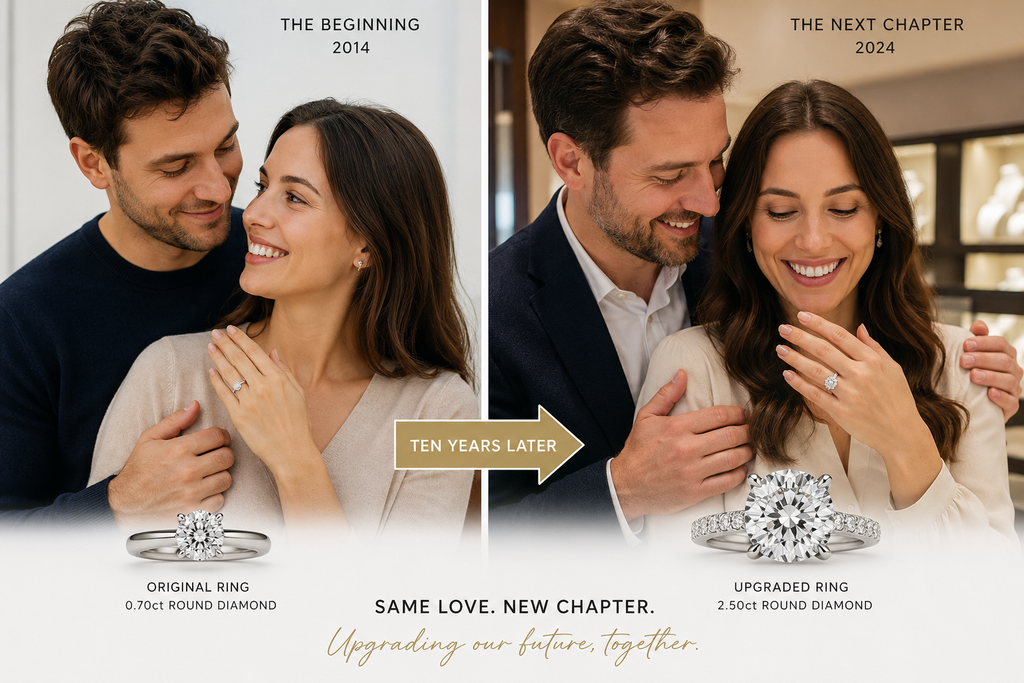
Should You Upgrade Your Engagement Diamond?

 An engagement ring is one of the most sentimental pieces of jewellery a person can own. It represents a promise, a relationship and a moment in time. But what happens when life changes?

An engagement ring is one of the most sentimental pieces of jewellery a person can own. It represents a promise, a relationship and a moment in time. But what happens when life changes?

Perhaps the couple’s financial position has improved significantly. Perhaps the original diamond was chosen when money was tighter, and she has always secretly dreamed of a larger stone or a completely different diamond shape. Or perhaps jewellery styles have changed and the original setting no longer reflects her personal taste.

This raises an interesting question: Should you upgrade an engagement diamond, or is the original stone too sentimental to replace?

At the Diamond Certification Laboratory of Australia (DCLA), we believe there is no single right answer. The decision comes down to the meaning attached to the original diamond, its quality and value, and what the owner wants from the jewellery today.

The Diamond May Be Sentimental — But the Memory Is Not Only in the Stone

There is a common belief that the original engagement diamond should never be changed because it represents the beginning of the marriage.

That is certainly a valid view.

For some couples, the original diamond is an important family heirloom in the making. It is the stone that was present when the proposal happened, and no larger or more valuable diamond could replace that emotional significance.

But jewellery can also evolve.

A diamond is a precious asset, but it is also a piece of jewellery designed to be worn and enjoyed. If circumstances change, there is nothing inherently wrong with changing the stone, redesigning the ring or even selling the original diamond.

The sentimental value does not necessarily disappear simply because the jewellery changes.

What If She Has Always Wanted a Different Shape?

Diamond shapes are highly personal.

Perhaps the original engagement ring contains a round brilliant diamond, but she has always preferred an oval, emerald cut, pear, cushion or radiant cut.

If the couple can now comfortably afford the diamond she always wanted, upgrading can be an opportunity to create the ring that reflects her personality today.

A larger diamond is not necessarily a better diamond. Shape, proportions, cut quality, colour, clarity and the overall design of the ring all influence its appearance.

This is where professional diamond advice becomes particularly important.

A significant increase in size may look impressive, but changing shape can sometimes produce an even more dramatic transformation without simply buying the biggest stone available.

Should You Trade In the Original Diamond?

There are several options.

1. Trade the Original Diamond Toward the New One

This is probably the simplest solution.

The original diamond can be professionally assessed and valued, with its value contributing toward the purchase of the replacement diamond.

However, owners should understand that the original retail purchase price is not necessarily what the diamond is worth when it is traded.

The diamond’s current quality, certification, market demand, proportions, colour, clarity and overall desirability will influence its value.

This is why an independent assessment and proper diamond grading can be extremely useful before making a decision.

2. Keep the Original Diamond

For some couples, this is the best of both worlds.

The original diamond can be removed from the engagement ring and preserved, while a new diamond becomes the centrepiece of the redesigned engagement ring.

The original stone can then remain with the family as an heirloom.

One day it might become a pendant, a dress ring or even another family member’s engagement ring.

The important point is that the original diamond does not have to disappear simply because the engagement ring has been upgraded.

3. Remodel the Original Diamond

Sometimes the diamond is not the problem the setting is.

An old-fashioned setting can make a beautiful diamond look dated.

A new setting can completely transform the appearance of the original diamond.

This can be particularly attractive when the diamond itself has strong sentimental value.

Instead of replacing the stone, the couple can create an entirely new piece of jewellery around it.

4. Create Another Piece of Jewellery

There is also the possibility of taking the original diamond out of the engagement ring and creating something completely different.

A diamond that has spent decades in an engagement ring could become a pendant, earrings or another ring.

This can be a wonderful way of preserving the original diamond while allowing the owner to enjoy a new design.

Is the Original Diamond an Heirloom?

If the diamond was passed down from a parent or grandparent, its emotional value may far exceed its monetary value.


This is perhaps the most important question.

If the diamond was passed down from a parent or grandparent, its emotional value may far exceed its monetary value.

In that situation, selling or replacing it may not make sense.

But if the diamond was purchased specifically for the original engagement and has no previous family history, the decision may be different.

A diamond can become an heirloom because of the story attached to it not simply because of its age.

Keeping the original stone means preserving that story.

But creating a new piece of jewellery from it can also preserve the story.

Jewellery Trends Will Change — But Quality Should Remain

Fashion inevitably changes.

The popularity of particular diamond shapes, settings, metal colours and jewellery styles can move in cycles.

What looks contemporary today may look dated in twenty years.

That does not mean an engagement ring should be changed every time fashion changes. Good jewellery should have longevity.

However, there is nothing wrong with updating a piece when the owner genuinely wants something different.

The key is not to confuse a temporary fashion trend with a genuine change in personal preference.

The Emotional Decision


Ultimately, upgrading an engagement diamond is not simply a financial decision.

It is worth asking:

Does the original diamond still make you happy?

Would you regret selling it?

Have you always wanted a different shape or larger diamond?

Would keeping the original diamond as an heirloom be meaningful to your family?

Could the original diamond be remodelled into another piece that you would actually wear?

If the answer is that the original diamond has enormous sentimental value, keep it.

If the answer is that it is simply an old piece of jewellery that no longer suits your taste, upgrading may make perfect sense.

And sometimes the best answer is both: buy the diamond you always wanted and preserve the original diamond for the next generation.

There Is No Rule That Says Jewellery Cannot Evolve

An engagement ring marks the beginning of a marriage. It does not have to remain frozen in time for the next fifty years.

People change. Relationships grow. Financial circumstances change. Tastes develop. Jewellery can change too.

The original engagement diamond may remain the most important diamond you ever owned even if it eventually becomes a pendant or is carefully stored as a family heirloom.

Alternatively, it may simply be a piece of jewellery that has served its purpose and can be traded toward something that better reflects your life today.

The right decision is the one that balances sentimental value, financial value and personal enjoyment.

At DCLA, we believe the most important step is to understand exactly what you have before deciding what to do with it. Professional diamond grading and identification can help establish the characteristics of the original stone, allowing you to make an informed decision about keeping, remodelling, trading or upgrading it.

After all, an engagement diamond is valuable but the story surrounding it can be priceless.

Monday, 24 August 2026

The Diamond Market Has Changed, Could This Be the Time to Buy?

 Could now be the time to buy the diamond you have always wanted?

The diamond market is going through one of the most significant periods of change in recent decades. A combination of economic pressures, changing consumer behaviour, increased competition from laboratory-grown diamonds and a prolonged correction in diamond prices has created opportunities for buyers that would have been difficult to imagine only a few years ago.

For consumers, this raises an important question:

Could now be the time to buy the diamond you have always wanted?

The answer depends on what you are buying, but there is no question that today’s market offers buyers an opportunity to access diamonds at substantially different price levels from the past.

Economic Conditions Have Changed the Diamond Market

Diamonds are not immune to the broader economy.

Higher interest rates, increased living costs, weaker consumer confidence and pressure on household budgets have all affected discretionary spending, including luxury jewellery. At the same time, retailers and dealers have had to manage inventory more carefully as demand has changed.

But the diamond market is facing another major structural change: the rapid growth of laboratory-grown diamonds.

Laboratory-grown diamonds have the same basic chemical and physical characteristics as natural diamonds, but they can be produced at scale. The resulting price competition has dramatically changed consumer expectations.

Recent market reporting highlights just how far laboratory-grown diamond prices have fallen, with wholesale prices in some segments reaching around US$100 per carat.

Natural diamonds have also experienced significant price pressure. Rough diamond prices have fallen sharply, with Anglo American’s CEO recently acknowledging that the industry underestimated the competitive threat posed by laboratory-grown diamonds.

This does not mean every diamond has fallen by the same amount. Diamonds are not commodities where one price applies to every stone. Shape, carat weight, colour, clarity, cut, fluorescence, proportions, provenance, certification and overall appearance can make enormous differences to value.

That is precisely why expert advice matters.

Falling Prices Can Create Opportunity

For someone who has been considering purchasing a diamond, a falling market can be an opportunity rather than a reason to stay away.

When prices are under pressure, buyers can sometimes find exceptional diamonds at considerably more attractive prices than they could previously.

But there is an important distinction:

A cheap diamond is not necessarily a bargain.

The real opportunity is finding a high-quality diamond at a price that represents genuine value.

This is where diamond knowledge becomes critical.

A stone that appears inexpensive may have compromises in cut, proportions, clarity, colour, fluorescence or other characteristics that affect its beauty and value. Two diamonds with apparently similar specifications can look very different and have very different market values.

The challenge for consumers is therefore not simply finding the lowest price.

It is finding the right diamond at the right price.

Natural or Laboratory-Grown, Know What You Are Buying

Today’s consumer has more choice than ever.

A natural diamond represents a geological creation that formed deep within the earth over millions or even billions of years. A laboratory-grown diamond is created using advanced technology and has essentially the same chemical composition and crystal structure as a natural diamond.

Neither choice should be made simply because one is cheaper.

The right choice depends on what the diamond means to you, your budget, your priorities and what you expect from the purchase.

And with laboratory-grown diamond prices falling so dramatically, consumers need particularly good advice about pricing and long-term value.

Understanding what you are buying is more important than ever.

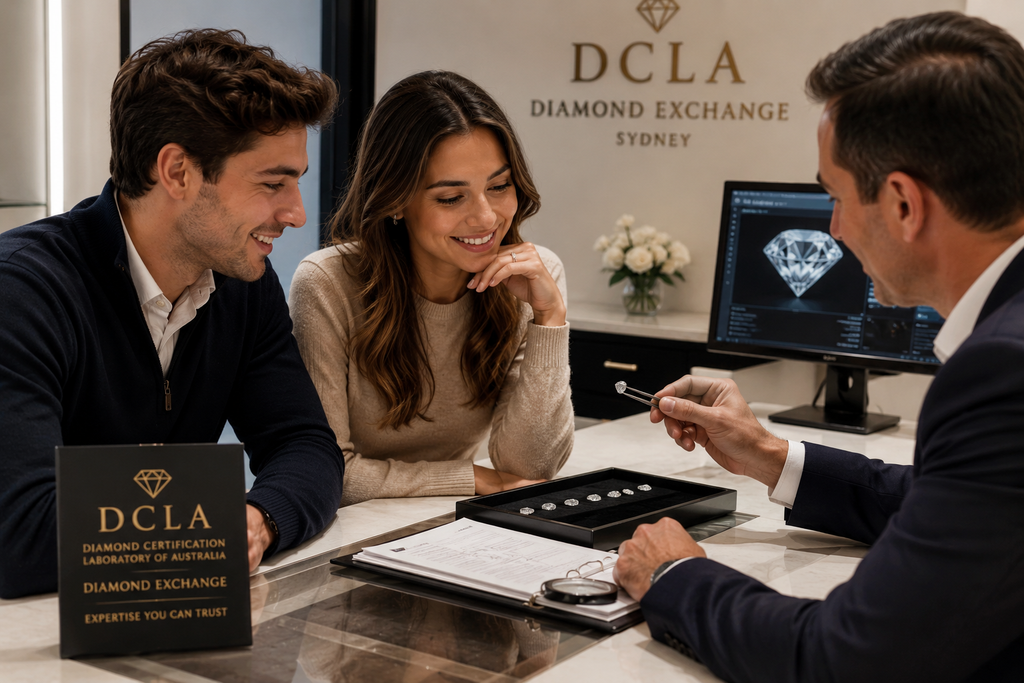
This Is Where the DCLA Diamond Exchange Can Help

For anyone considering buying, selling, upgrading or trading a diamond, the Diamond Certification Laboratory of Australia (DCLA) in Sydney provides access to an extraordinary depth of diamond expertise.

DCLA is Australia’s internationally accredited diamond grading laboratory and provides independent certification for both natural and laboratory-grown diamonds. Its Sydney laboratory works with buyers, sellers, jewellers, insurers and the wider diamond trade.

The DCLA’s expertise extends far beyond simply looking at a certificate.

Its founders and team have experience across the diamond industry, including rough diamonds, cutting and polishing, trading, grading, certification and jewellery. That industry knowledge provides an important perspective when assessing a diamond’s characteristics and market position.

More Than a Certificate

A diamond certificate tells you what a diamond is. Expertise helps you understand what that information means.

The DCLA can help consumers understand the differences between diamonds and identify the characteristics that can make one stone a better purchase than another.

Its diamond search service allows buyers to consider diamonds by shape, carat, colour, clarity, cut, fluorescence, laboratory certification and budget helping turn what can otherwise be an overwhelming purchase into an informed decision.

And for the diamond trade, DCLA has become a trusted resource when jewellers and dealers need independent grading, verification, valuation or professional assistance.

The Go-To Resource for Diamond Knowledge

The diamond industry is changing rapidly.

Natural diamond prices have been under pressure. Laboratory-grown diamonds have transformed the market. Consumers have more choices, more information and potentially greater buying power than they have had for many years.

But greater choice also creates greater complexity.

This is not necessarily the time to buy the cheapest diamond. It may be the time to buy the best diamond you can find at the right price.

That requires knowledge.

From mining and rough diamonds through to cutting and polishing, grading, certification and jewellery, the DCLA brings together decades of industry experience under one roof.

For consumers looking for a diamond, jewellers sourcing stones, or members of the trade who need professional advice, the DCLA Diamond Exchange in Sydney is a place where knowledge, experience and independent expertise can make a genuine difference.

In a changing diamond market, having an expert on your side could be the most valuable part of the purchase.

Visit the DCLA Diamond Certification Laboratory of Australia

Diamond prices vary significantly according to individual characteristics, market conditions and certification. A fall in general market prices does not mean every diamond has fallen by the same percentage. Professional assessment is recommended before purchasing or selling a diamond.

Selling Jewellery: How to Make the Right Decision When Sentiment and Value Collide

  Selling a piece of jewellery is rarely just a financial decision. Whether you are selling because of a divorce, upgrading to something new...