Showing posts with label buy platinum. Show all posts

Thursday, 27 August 2026

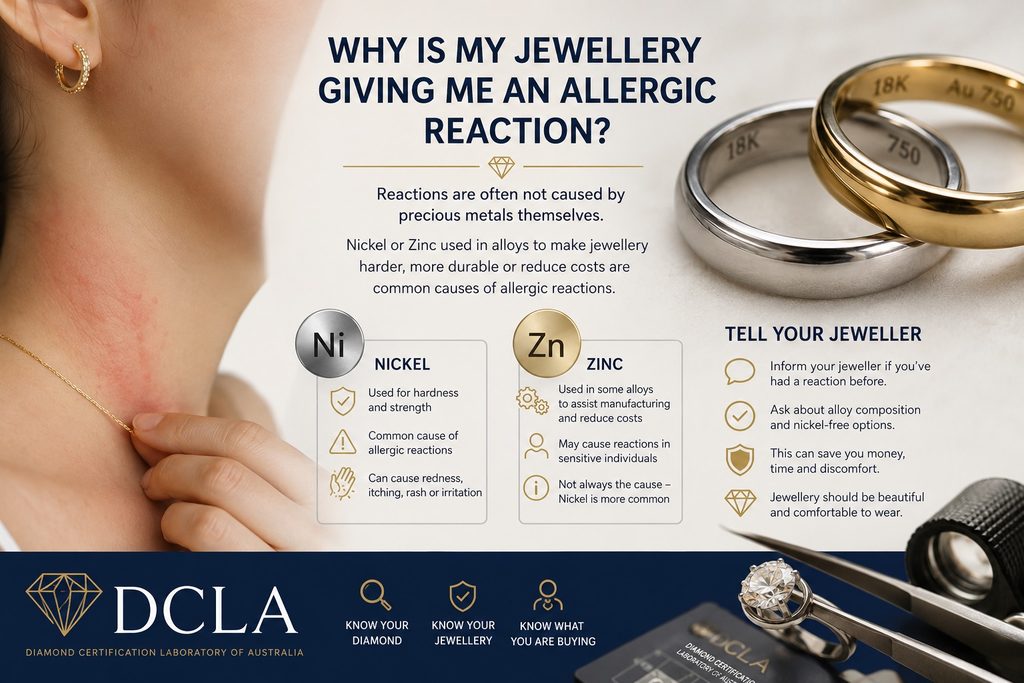
Why Is My Jewellery Giving Me an Allergic Reaction?

 Nickel is well known as a cause of allergic contact dermatitis.

Jewellery is meant to be worn, enjoyed and treasured. But for some people, wearing a ring, necklace, bracelet or pair of earrings can result in redness, itching, irritation or even a rash.

When this happens, many people immediately assume they are allergic to gold, silver or another precious metal. That is not always the case.

In many instances, the reaction may be caused by another metal contained within the jewellery alloy particularly nickel, and in some circumstances zinc or other alloying metals.

Precious Metals Are Rarely Used Completely Pure

Most jewellery is manufactured from alloys rather than pure precious metals.

Pure gold, for example, is extremely soft and is generally mixed with other metals to create an alloy that is harder, more durable and suitable for everyday wear. The same principle applies to many other precious metals.

The metals added to an alloy can affect its:

  • Hardness and durability
  • Colour
  • Strength
  • Manufacturing characteristics
  • Weight
  • Cost

This is where understanding exactly what is in your jewellery becomes important.

Nickel: One of the More Common Causes

Nickel is well known as a cause of allergic contact dermatitis.

It has historically been used in jewellery alloys because it can provide hardness, strength and particular colour characteristics. White gold is one example where alloy composition is particularly important, although modern jewellery manufacturers have a number of nickel-free alternatives.

A person who is sensitive to nickel may develop irritation where the jewellery contacts the skin. This can include redness, itching, dryness, swelling or a rash.

The reaction does not necessarily mean that the jewellery itself is poorly made. It may simply mean that the wearer is sensitive to one of the metals contained in the alloy.

What About Zinc?

Zinc can also be used as an alloying metal in jewellery manufacturing. It can assist with casting and manufacturing characteristics and may form part of certain lower-cost alloys.

It is important, however, not to automatically assume that zinc is responsible for every jewellery reaction. Nickel sensitivity is much more commonly recognised as a cause of allergic contact dermatitis, while irritation can also have other causes.

This is why identifying the actual composition of the jewellery can be valuable.

Is It Possible to Be Allergic to Gold?

Is It Possible to Be Allergic to Gold?


Yes, although reactions specifically to gold are less common than nickel allergy.

Some people can develop a sensitivity to gold itself or to particular gold compounds, while others may actually be reacting to one of the other metals present in the alloy.

For example, two pieces of jewellery can both be described as 18-carat gold, yet have different alloy compositions depending on the manufacturer and the metals used to create the final colour and properties.

This is particularly relevant when comparing yellow, white and rose gold.

Don’t Assume the Jewellery Is the Problem

A reaction can also be caused by factors other than the metal.

Moisture, soap, cosmetics, perspiration, dirt trapped underneath a ring and prolonged contact with the skin can all contribute to irritation. In some cases, what appears to be a metal allergy may actually be contact irritation from something else.

If you repeatedly experience a reaction when wearing a particular piece of jewellery, it is worth discussing it with a medical professional or dermatologist rather than simply guessing which metal is responsible.

Tell Your Jeweller Before You Buy

This is one of the most important pieces of advice for anyone who has previously experienced a reaction to jewellery:

Tell your jeweller before the jewellery is made.

If you know that you have a nickel sensitivity, for example, make sure the jeweller knows before they recommend an alloy or manufacture a ring, earrings or other piece specifically for you.

The same applies if you have previously reacted to a particular type of gold, white gold or other jewellery.

Your jeweller can then discuss alternative materials and alloys that may be more appropriate.

Why This Can Save You Money

A custom piece of jewellery can represent a significant investment.

Imagine ordering a beautiful ring, having it manufactured and paying for the finished piece only to discover that you cannot comfortably wear it because your skin reacts to the alloy.

A remake may be possible, but it can involve additional manufacturing costs, time and inconvenience.

A simple conversation before the jewellery is made can potentially prevent an expensive problem later.

Ask What Is Actually in the Alloy

Don’t be afraid to ask questions.

If you have sensitive skin or have previously experienced a reaction, ask your jeweller:

  • What metals are contained in the alloy?
  • Is the alloy nickel-free?
  • What karat or fineness is the precious metal?
  • Is the jewellery plated, and if so, with what?
  • What will happen if the plating wears through?
  • Is there an alternative alloy available?

A reputable jeweller should be able to explain the materials being used and discuss suitable alternatives.

Jewellery Should Be Beautiful and Comfortable

Buying jewellery is about much more than appearance. The metal, alloy, construction and intended use all matter.

If you have experienced an allergic reaction in the past, don’t keep it a secret from your jeweller. Tell them before you purchase or commission your next piece.

At DCLA, we believe that understanding jewellery begins with understanding what you are actually buying. Whether it is a diamond, a precious metal or a finished piece of jewellery, knowledge gives you confidence.

And when it comes to jewellery that sits directly against your skin every day, knowing what is in the metal can be just as important as knowing what is on the outside.

DCLA — Know Your Diamond. Know Your Jewellery. Know What You Are Buying.

Wednesday, 26 August 2026

Best Place to Buy Diamonds in Australia: Knowledge, Experience and Confidence

 Two diamonds with apparently similar specifications can look very different and can have significantly different values. Small variations in colour, clarity, proportions, fluorescence, transparency and cut can influence both appearance and price.

Buying a diamond is one of the most important jewellery purchases many people will ever make. Yet with thousands of diamonds available online and through jewellery stores, knowing where to buy a diamond, and who to trust, can be difficult.

Price, appearance and marketing can all influence a purchase, but there is another factor that should never be overlooked: knowledge.

At the Diamond Certification Laboratory of Australia (DCLA), decades of experience in the diamond industry have created a unique depth of knowledge, from rough diamond mining and trading, through to cutting, polishing, grading and certification.

That experience provides something a price tag alone cannot: confidence that you understand what you are buying.

Why experience matters when buying a diamond

Why experience matters when buying a diamond

It is easy to look at the famous 4Cs, carat, colour, clarity and cut and assume that buying a diamond is simply a matter of comparing numbers.

It isn’t.

Two diamonds with apparently similar specifications can look very different and can have significantly different values. Small variations in colour, clarity, proportions, fluorescence, transparency and cut can influence both appearance and price. DCLA notes that even small changes in the characteristics of a diamond can have a substantial effect on value.

This is where real diamond experience matters.

Someone who has spent decades examining diamonds doesn’t simply read a certificate. They understand how a diamond behaves, how it was cut, how its proportions affect light performance and how the individual characteristics of the stone influence its desirability.

From the mine to the polished diamond

From the mine to the polished diamond

The DCLA story is unusual because its expertise extends far beyond laboratory grading.

The Cohen family’s involvement in the diamond industry stretches back to Johannesburg in the 1970s. Bruce Cohen began his diamond career under the guidance of his father, David Cohen. Michael Cohen trained as a polisher, cleaver and marker with a major De Beers sightholder before establishing diamond offices and cutting operations in southern Africa. Roy Cohen subsequently became involved in rough diamond trading and mining interests.

That means the knowledge behind DCLA has been developed across virtually every stage of a diamond’s journey.

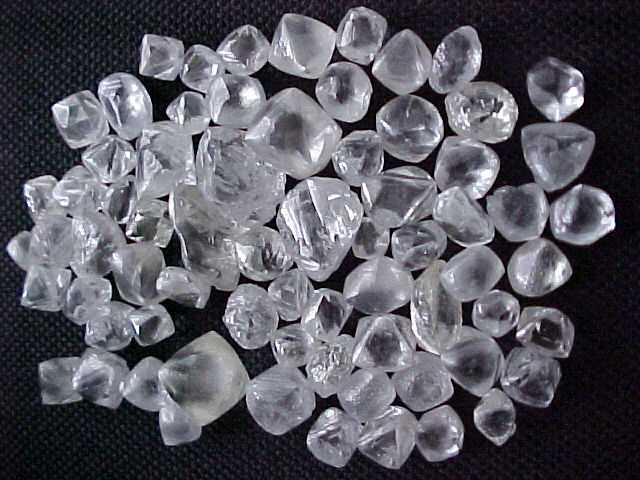
Rough diamond.
Mining.
Trading.
Planning.
Cleaving.
Polishing.
Grading.
Certification.
Buying and selling.

This provides a perspective that is difficult to replicate.

The advantage of buying with an independent laboratory behind you

The advantage of buying with an independent laboratory behind you

One of the most important questions a diamond buyer should ask is:

Who graded the diamond?

A grading report should come from an independent laboratory rather than simply being an in-house document produced by the person selling the diamond.

DCLA specifically warns consumers to be cautious about reports produced by retailers or merchants who have a financial interest in the stone. Independent grading provides an additional layer of confidence because the laboratory is assessing the diamond rather than selling it.

DCLA is an internationally accredited diamond grading laboratory in Australia, with grading conducted in Sydney by qualified gemmologists according to IDC and CIBJO standards.

Don’t just buy the certificate, understand the diamond

Buying a diamond is one of the most important jewellery purchases

A certificate is important, but the real value comes from understanding what the certificate means.

A DCLA Diamond Grading Report records characteristics including:

  • Carat weight
  • Colour
  • Clarity
  • Cut
  • Symmetry and polish
  • Measurements and proportions
  • Fluorescence
  • Transparency
  • Whether the diamond is natural or laboratory-grown
  • Treatments or enhancements
  • Unique identifying information

But experienced diamond professionals can take that information further.

They can help explain why one diamond may offer better visual performance than another, whether you are paying for characteristics that you can actually see, and where your money may be better spent.

The best diamond isn’t necessarily the most expensive

One of the biggest mistakes a buyer can make is believing that the highest grades automatically represent the best purchase.

The objective should be to find the right diamond for your budget and your priorities.

Perhaps you want maximum size.

Perhaps brilliance is your priority.

Perhaps you want exceptional colour.

Perhaps you want a diamond with a particular shape.

Or perhaps you want to maximise beauty while avoiding paying a premium for characteristics that make little visible difference to the eye.

This is where independent advice can make a significant difference.

Rather than simply selling you a diamond, the objective should be to help you understand why one diamond represents a better choice than another.

Buying online versus buying from an expert

Online diamond retailers can offer enormous choice and make it easy to compare prices.

But a photograph and a list of specifications cannot always tell the whole story.

A diamond is a three-dimensional optical object. Its proportions, facet arrangement, inclusions and light performance all contribute to how it looks in real life.

For a significant purchase, having access to someone who can explain the diamond in understandable terms can be invaluable.

And for buyers who want the ultimate level of confidence, an independent laboratory provides another important safeguard.

Australian consumer organisation CHOICE similarly recommends shopping around and obtaining an independent grading certificate for significant diamond purchases.

Confidence is more than a good price

The cheapest diamond is not necessarily the best diamond.

The best diamond is the one you understand, are confident in, and believe represents the right combination of beauty, quality and value for your circumstances.

This is why DCLA believes diamond buying should be an educational experience rather than simply a sales transaction.

With decades of experience extending from rough diamonds and polishing to modern scientific grading, DCLA brings together old-fashioned diamond knowledge and modern laboratory technology.

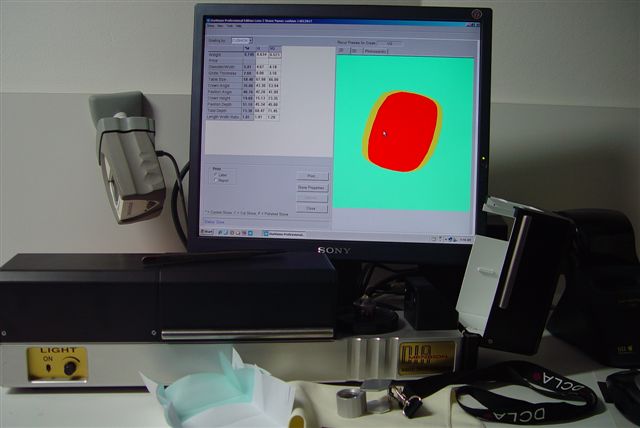
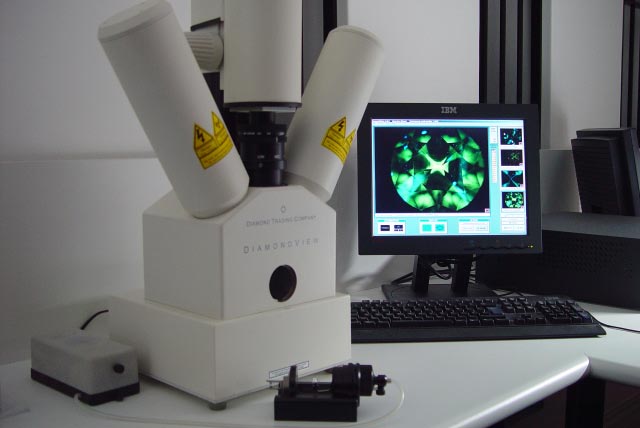
Every diamond certified by DCLA is examined in its Sydney laboratory, combining hands-on expertise with advanced instrumentation.

So, where is the best place to buy a diamond in Australia?

There are many places Australians can purchase diamonds, from online retailers and traditional jewellers to specialist diamond dealers.

But if you are looking for something more than a transaction, look for experience, independence, transparency and expertise.

That is what makes the DCLA approach different.

You are not simply buying a stone.

You are making a significant financial and emotional decision with the benefit of people who have spent decades working with diamonds at almost every level of the industry.

From the rough diamond to the finished gem, that experience matters.

And when you are spending thousands, or tens of thousands, of dollars on a diamond, having the right knowledge behind your decision can be worth far more than simply finding the lowest advertised price.

Buy with knowledge. Buy with confidence. Buy a diamond you understand.

Visit the Diamond Certification Laboratory of Australia

DCLA is an independent diamond grading and certification laboratory. A grading report describes the characteristics of a diamond and is not, by itself, a valuation or statement of market price.

Friday, 17 April 2026

Consumers Switching to Platinum as Gold Price Soars

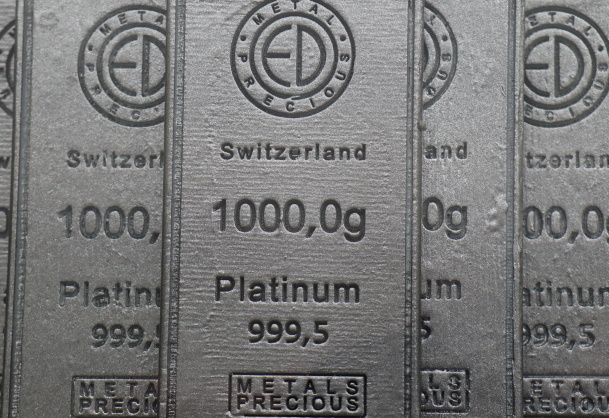
 bars of platinum, noble metals

Consumers are switching from gold to platinum as the price gap between the metals widens, according to a report published today (15 April) by the Platinum Guild International (PGI).

In the US, unit sales of platinum jewelry fell (-10% year-on-year), says its Q4 2025 Platinum Jewellery Business Review, but the value increased (+48% year-on-year).

The PGI does not provide hard figures on volumes or values, but says its strategic partners reported double-digit revenue growth during the quarter.

Platinum traditionally traded above gold, but the switch came in December 2008 during the global financial crisis.

Gold is now more than twice the price of platinum. Today’s spot prices show gold at approximately $4,825 per ounce and platinum at about $2,148 per ounce.

White gold remains less costly than platinum though, because it is generally used in an alloy with palladium or nickel.

“The momentum we observed across key regions in the fourth quarter validates platinum’s growing relevance in today’s jewellery market,” said Tim Schlick, CEO of PGI.

 “With gold prices remaining elevated, platinum continues to offer a premium yet accessible alternative that appeals to value-conscious consumers and luxury buyers alike.”

Retail sales of platinum jewelry grew 10% by value in India, and 7% by volume in China.

Source: DCLA

Friday, 1 March 2024

Start your Investment Journey with FirstGold


Start your Investment Journey with FirstGold


Start Buying Gold, Platinum and Silver

FirstGold™ takes Gold, Platinum and Silver bullion accumulation and storage to a new level of security and convenience.

The FirstGold platform gives the smart investor the ultimate way to save in real bullion which is 100% Gold, Platinum and Silver stored in your physical account.

FirstGold is simple to use, safe and secure, and is your own physical asset.

Located in the heart of Sydney, FirstGold is a reputable and trusted player in the bullion industry, with a commitment to safeguarding and growing consumers wealth through bullion.

FirstGold makes accumulating physical investment bullion easy and safe. At the core of our business lies a dedication to customer service, and we take great pride in our multiple service awards, which are a testament to our commitment.

At FirstGold, we offer the most flexible and cost-effective means to save, providing a platform that adapts to your unique needs and preferences.

Read more: FirstGold

Fancy Colour Diamonds, From Hollywood Statement to the Ultimate Collectable

  For generations, the traditional diamond engagement ring has been dominated by the classic colourless stone. But the world of exceptional ...