Showing posts with label coloured diamonds. Show all posts

Wednesday, 15 July 2026

Nature's Rarest Masterpieces: The World's Most Valuable Coloured Diamonds and the Science Behind Their Extraordinary Colours

 The Rarest Diamond Colours Ranked

While the classic colourless diamond remains the benchmark for brilliance and purity, some of the world’s most valuable gemstones owe their beauty to something entirely different rare imperfections deep within the Earth. These exceptional coloured diamonds, known as Fancy Colour Diamonds, represent some of the rarest natural treasures ever discovered.

Unlike colourless diamonds, which are prized for the absence of colour, fancy coloured diamonds derive their remarkable hues from trace elements, atomic irregularities and geological forces that occurred billions of years ago during their formation under immense heat and pressure.

Only around one in every 10,000 gem-quality natural diamonds possesses a naturally occurring fancy colour, and only a tiny fraction of these display the intense saturation required to achieve the highest values.

The Rarest Diamond Colours Ranked

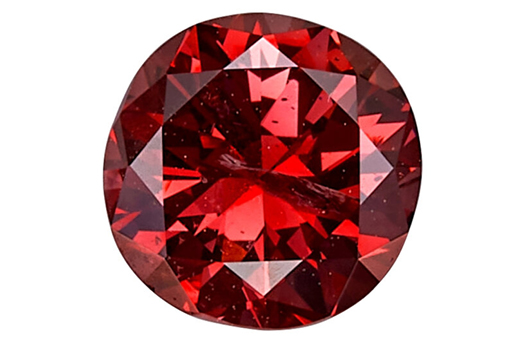
1. Red Diamonds – The Rarest Diamond on Earth

Red diamonds occupy the pinnacle of rarity.

Red diamonds occupy the pinnacle of rarity.

Fewer than 30 true Fancy Red diamonds are known to exist worldwide, with most weighing less than one carat. The famous 5.11-carat Moussaieff Red Diamond remains one of the most celebrated coloured diamonds ever discovered.

Unlike many coloured diamonds, red diamonds contain no measurable trace elements responsible for their colour.

Instead, scientists believe their colour results from extreme plastic deformation of the diamond crystal lattice while deep within the Earth’s mantle. As enormous tectonic pressures distort the crystal structure, light passing through the diamond is selectively absorbed, producing its remarkable crimson appearance.

Because the exact combination of deformation required is extraordinarily rare, red diamonds remain virtually impossible to find.


2. Blue Diamonds – Coloured by Boron

Blue diamonds owe their magnificent colour to one of the rarest impurities found in diamonds—boron

Blue diamonds owe their magnificent colour to one of the rarest impurities found in diamonds boron.

Only a few atoms of boron replacing carbon atoms during crystal growth are enough to create shades ranging from pale blue to vivid ocean blue.

Boron also gives blue diamonds another unusual property they conduct electricity, unlike ordinary diamonds.

The legendary Hope Diamond, weighing 45.52 carats, is perhaps the world’s best-known blue diamond.

Natural Fancy Vivid Blue diamonds regularly command prices exceeding US$3–5 million per carat, making them among the world’s most valuable gemstones.


3. Pink Diamonds – Formed by Crystal Distortion

For decades, Australia’s Argyle Mine produced over 90% of the world’s pink diamonds before closing in 2020.

Like red diamonds, pink diamonds derive their colour not from impurities but from plastic deformation of the crystal lattice during formation.

The difference lies in the degree of distortion.

Slight deformation creates pink tones, while much greater distortion may produce the exceptionally rare red diamonds.

Because no new major source of pink diamonds has replaced Argyle, prices have risen dramatically over recent years.


4. Green Diamonds – Naturally Irradiated

Green diamonds receive their colour from natural radiation exposure over millions of years.

Radioactive minerals surrounding the diamond emit particles that alter the crystal’s atomic structure, affecting only the outer layers in most cases.

Unlike laboratory irradiation, natural irradiation occurs over geological time and is exceptionally uncommon.

The famous Dresden Green Diamond, weighing over 41 carats, is one of the finest examples known.


5. Orange Diamonds – Pure Fire

Pure orange diamonds are among the least frequently encountered fancy colours.

Their colour is generally associated with complex interactions involving nitrogen atoms within the crystal structure.

Finding an orange diamond without secondary yellow or brown modifiers is exceptionally rare.

Collectors prize diamonds graded simply as Fancy Vivid Orange because of their scarcity.


6. Violet Diamonds – An Enigmatic Beauty

Violet diamonds remain one of gemology’s greatest mysteries.

Scientists believe their colour may result from a combination of hydrogen impurities, crystal defects and trace structural irregularities.

Only a handful of significant violet diamonds exist, making them highly desirable among collectors.

Several originated from Australia’s Argyle Mine, further increasing their rarity.


7. Purple Diamonds – A Delicate Combination

Purple diamonds are even less common than many collectors realise.

Their colour often results from a combination of crystal deformation together with hydrogen-related defects within the crystal lattice.

Many display subtle pink or grey secondary hues.

Pure Fancy Purple diamonds remain exceptionally scarce.


8. Yellow Diamonds – Nature’s Sunshine

Yellow diamonds are created by the presence of nitrogen atoms replacing carbon atoms during crystal growth.

Nitrogen absorbs blue wavelengths of light, allowing yellow tones to dominate.

Yellow is the most common naturally occurring fancy colour, yet highly saturated Fancy Vivid Yellow diamonds remain rare and valuable.

The famous Tiffany Yellow Diamond, weighing 128.54 carats, demonstrates the extraordinary beauty achievable from this natural process.


9. Brown Diamonds – The Power of Pressure

Brown diamonds are among the most abundant fancy colours but still have fascinating origins.

Rather than impurities, their colour results primarily from plastic deformation within the crystal lattice caused by intense geological pressure.

The distortion changes the way light travels through the diamond.

In recent decades, carefully selected brown diamonds have gained popularity under luxury trade names such as Champagne, Cognac and Chocolate Diamonds.


How Trace Elements Create Colour

Every diamond begins as pure carbon.

However, during crystallisation deep beneath the Earth’s surface, tiny changes can occur.

Some carbon atoms may be replaced by other elements:

Element or Structural ChangeResulting Colour
BoronBlue
NitrogenYellow, Orange
Hydrogen-related defectsViolet, Purple
Plastic deformationPink, Red, Brown
Natural radiationGreen

These changes occur at the atomic level sometimes involving only a handful of atoms within billions of carbon atoms—yet they dramatically alter how the diamond interacts with light.


Why Are Fancy Coloured Diamonds So Rare?

Natural coloured diamonds require an extraordinary sequence of geological events.

First, the diamond must form approximately 150 to 250 kilometres beneath the Earth’s surface under immense pressure and temperatures exceeding 1,000°C.

Then, during or after formation, precisely the right combination of trace elements, radiation exposure or crystal deformation must occur without damaging the stone.

Finally, the diamond must survive billions of years before being transported to the Earth’s surface through volcanic kimberlite eruptions.

The probability of every one of these conditions occurring together is extraordinarily small.

That is why exceptional coloured diamonds continue to command record-breaking prices at auction and remain among the most coveted gemstones in the world.

DCLA Expert Insight

Understanding the origin of a diamond’s colour is one of the most specialised areas of modern gemology. Advanced laboratory analysis is essential to determine whether a colour is natural, treated or laboratory-induced, as many enhancement techniques can imitate nature’s rarest creations.

At DCLA (Diamond Certification Laboratory of Australia), sophisticated gemological testing enables the accurate identification and grading of natural fancy coloured diamonds, providing confidence for collectors, jewellers and investors alike.

In the world of diamonds, it is often nature’s tiniest imperfections that create its greatest masterpieces. From the almost mythical Fancy Red to the electrically conductive Fancy Blue, each coloured diamond tells the story of billions of years of geological evolution making every natural fancy colour diamond truly one of a kind.

Sunday, 12 July 2026

Jewellery Trends Defining 2026: Colour, Layers and Individual Expression

 Coloured Gemstones Take Centre Stage

For several years, minimalist jewellery dominated fashion, with fine chains and delicate diamond pendants becoming everyday staples. In 2026, however, the industry has taken a noticeable turn. Jewellery is becoming more expressive, more colourful and, above all, more personal.

Consumers are no longer choosing a single statement piece. Instead, they are curating collections that reflect their own style through layered necklaces, stacked rings, colourful gemstones and a mix of precious metals. The result is a fresh approach to fine jewellery that celebrates individuality rather than conformity.

Coloured Gemstones Take Centre Stage

While diamonds remain the cornerstone of fine jewellery, coloured gemstones are experiencing a remarkable resurgence. Designers are increasingly incorporating vibrant sapphires, emeralds, rubies, spinels, tourmalines, aquamarines, morganites and even lesser-known gems into both everyday and high jewellery collections. Recent high jewellery collections from the world’s leading luxury houses have placed exceptional coloured gemstones at the forefront, reflecting growing consumer demand for rarity, individuality and vibrant colour.

Consumers are seeking jewellery that tells a story, and colour provides an emotional connection that white diamonds alone cannot always achieve.

Each gemstone carries its own symbolism:

  • Blue sapphires represent wisdom and loyalty.
  • Emeralds symbolise renewal and prosperity.
  • Rubies continue to represent passion and strength.
  • Tourmalines offer an extraordinary palette of colours that appeals to younger buyers.
  • Morganite and aquamarine provide softer pastel tones that complement modern fashion.

Increasingly, clients are choosing gemstones based not only on beauty but also on personal meaning, birthstones or unique colour combinations.

Layering Has Become an Art Form

One of the strongest trends throughout 2026 is jewellery layering.

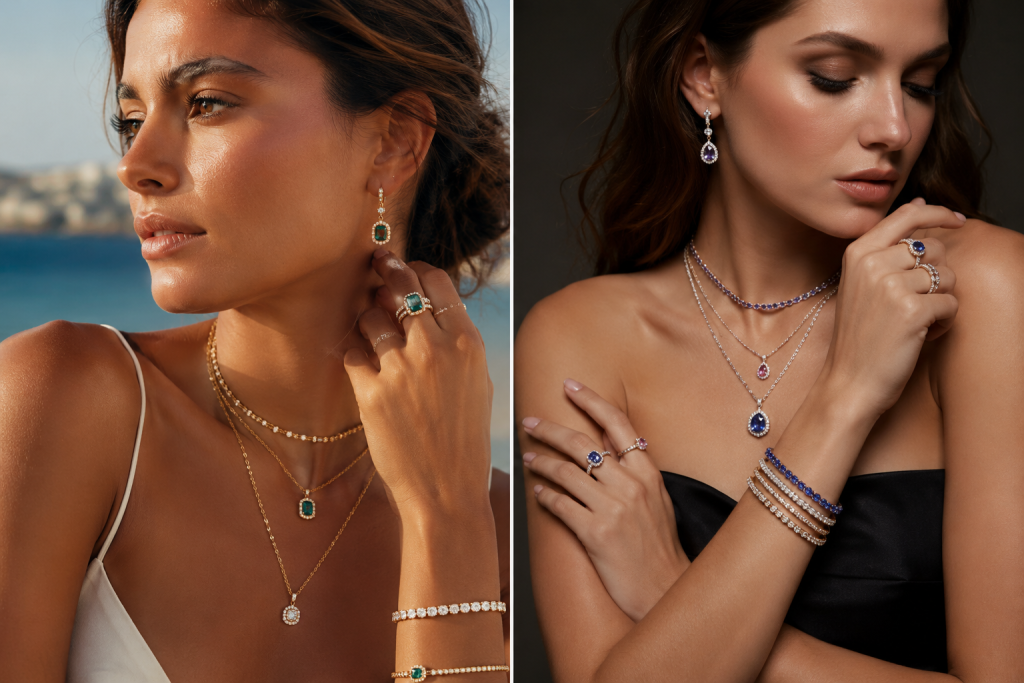
Rather than wearing a single necklace or bracelet, consumers are combining multiple pieces of varying lengths, textures and gemstone colours to create a personalised look. The trend extends across virtually every jewellery category:

  • Multiple necklaces worn together.
  • Diamond tennis necklaces paired with coloured gemstone pendants.
  • Stacked bangles and bracelets.
  • Several rings worn across both hands.
  • Earrings featuring multiple piercings with coordinated designs.

Layering allows jewellery collections to evolve over time. Instead of purchasing one large statement piece, clients can add individual items over many years, creating combinations that are unique to them. The growing popularity of personalised layering has become one of the defining luxury jewellery trends of the year.

Mixing Metals Is No Longer a Fashion Mistake

For decades, jewellery etiquette suggested that yellow gold should never be worn with white gold or silver.

Today, that rule has largely disappeared.

Designers are actively encouraging combinations of yellow gold, white gold, rose gold and platinum within the same outfit. Mixed-metal jewellery creates greater versatility and allows existing collections to work together rather than limiting clients to one metal colour. Fashion editors and luxury designers now regard mixed-metal styling as one of the year’s defining jewellery looks.

Larger Gemstones Are Making a Comeback

After years of understated designs, larger centre stones are once again attracting attention.

This does not necessarily mean extravagant jewellery. Instead, jewellers are using bold coloured gemstones as centrepieces, surrounded by refined diamond settings that allow colour to become the hero.

Oval, emerald-cut and cushion-cut gemstones remain particularly popular due to their ability to maximise colour while maintaining elegant proportions.

Personalisation Continues to Drive Buying Decisions

Perhaps the biggest change is the consumer’s desire for jewellery that feels unique.

Rather than following trends alone, buyers increasingly want pieces that represent milestones, family, travel or personal achievements.

Custom-designed engagement rings featuring coloured centre stones continue to grow in popularity, while remodelled heirloom jewellery allows families to preserve sentimental value in contemporary designs.

Bespoke manufacturing has become one of the fastest-growing areas of the jewellery industry as clients seek one-of-a-kind creations that cannot be replicated by mass production.

Natural Diamonds Continue to Complement Colour

Although coloured gemstones are enjoying unprecedented popularity, natural diamonds remain the foundation of fine jewellery.

Rather than replacing diamonds, coloured stones are enhancing them.

Diamond halos surrounding vibrant sapphires, emerald side stones paired with oval diamonds, and alternating diamond-and-gemstone tennis bracelets are all becoming increasingly common.

The contrast between colourless diamonds and richly saturated gemstones creates visual depth while maintaining the timeless elegance that natural diamonds have always provided.

Quality Matters More Than Ever

As colourful jewellery becomes increasingly desirable, buyers should remember that not all gemstones are equal.

Natural gemstones vary enormously in colour, clarity, cut and origin, while laboratory-grown alternatives are becoming more widely available across several gemstone categories.

Professional grading and independent laboratory assessment remain essential for consumers seeking confidence in the authenticity and quality of significant gemstone purchases.

Whether purchasing a natural diamond, a vivid sapphire or an exceptional emerald, independent certification provides assurance regarding identity, treatments and quality characteristics.

Looking Ahead

The jewellery industry is entering a vibrant new era where individuality is replacing uniformity. Layered jewellery, colourful gemstones, mixed metals and bespoke design are redefining luxury for a new generation of buyers.

Rather than following rigid fashion rules, today’s consumers are building collections that evolve over time combining diamonds with coloured gemstones, vintage pieces with contemporary designs, and treasured heirlooms with modern craftsmanship.

For jewellers, designers and laboratories alike, the trend is clear: jewellery is becoming increasingly personal, expressive and colourful, with quality, authenticity and expert craftsmanship remaining at the heart of every exceptional piece.

Source: DCLA

Thursday, 13 November 2025

Iconic Rainbow Collection Sells Just Above Low Estimate at Christie’s Geneva

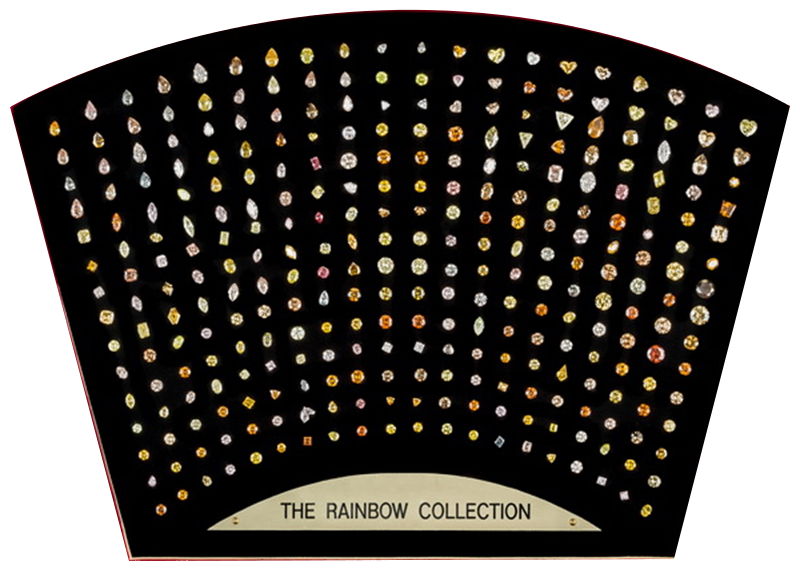
Rainbow Diamond Collection

The legendary Rainbow Collection more than 300 fancy coloured diamonds amassed over four decades by the late Eddy Elzas sold for just above its low estimate at Christie’s Geneva on 11 November, achieving $2.19 million against a pre-sale estimate of $1.98 million to $2.98 million.

Comprising around 350 carats and spanning the full colour spectrum, the collection was once hailed as one of the world’s most extraordinary private assemblages of fancy coloured diamonds. Over the years, press reports placed its value between $60 million and $100 million.

Elzas, affectionately known as “The King of Coloured Diamonds,” famously declined a lavish offer from a Saudi prince who reportedly wished to purchase the collection as a wedding gift for Prince Charles and Lady Diana.

A true pioneer in the fancy colour diamond trade, Eddy Elzas was instrumental in elevating global recognition of coloured diamonds during his 40-year career. He passed away in November 2021 at the age of 79.

Christie’s described the Rainbow Collection as “an impressive collection of unmounted coloured and treated coloured diamonds,” featuring 300 stones across an array of hues and shapes. The lot included 291 GIA reports dated between 2008 and 2025, with diamonds ranging from 0.24 carats to 4.89 carats in yellow, orange, blue, pink, red, brown, and grey tones.

For the DCLA, this sale highlights not only the enduring fascination with fancy colour diamonds but also the evolving market perception of rarity and provenance in today’s auction landscape.


Tuesday, 11 November 2025

Rare ‘Mellon Blue’ Diamond Fetches $25.5 Million at Christie’s Geneva – Market Reflects Shifting Demand for Coloured Diamonds

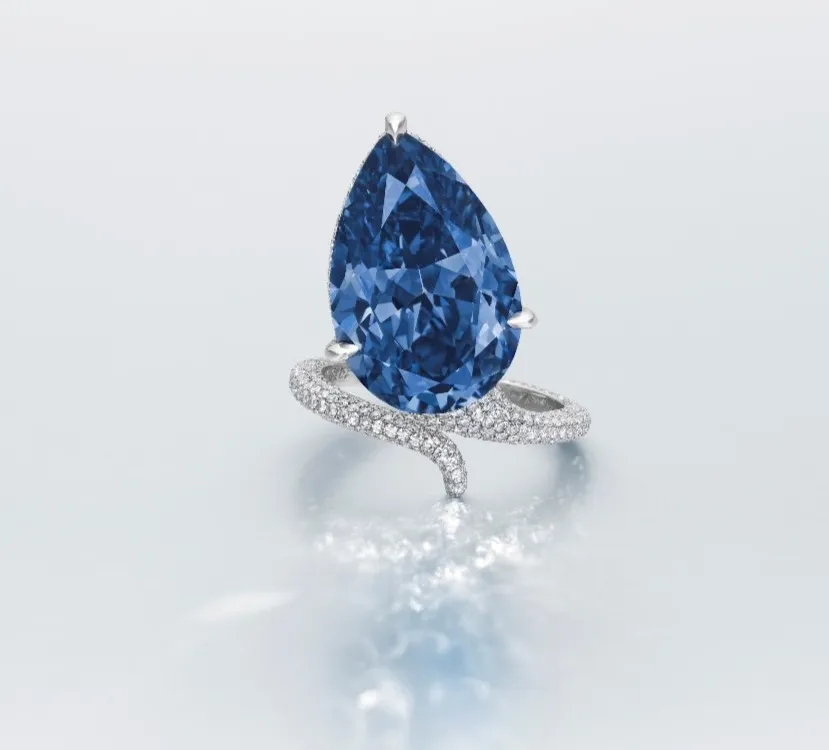
The legendary Mellon Blue Diamond a 9.51-carat fancy vivid blue, internally flawless gem

The legendary Mellon Blue Diamond a 9.51-carat fancy vivid blue, internally flawless gem sold for $25.5 million USD at Christie’s Magnificent Jewels auction in Geneva this week. The sale, held at the Four Seasons Hotel des Bergues, drew global attention from elite collectors and gem enthusiasts alike.

The Mellon Blue once belonged to renowned art collector Rachel Lambert “Bunny” Mellon, whose refined taste and cultural influence continue to shape the world of art and jewellery. Despite its exquisite pedigree, the price achieved represents a 22 percent decrease from its previous sale 11 years ago and a nearly 60 percent drop in real value when adjusted for inflation.

Originally auctioned at Sotheby’s in 2014 as part of Mellon’s estate collection, the diamond fetched $32.6 million USD, setting a world record for a blue diamond at that time. Adjusted for inflation, that sum equates to approximately $44.7 million in 2025.

Christie’s had estimated the gem between $20 million and $30 million, and the final sale once again highlighted the continuing prestige of exceptional coloured diamonds despite softer market conditions.

Rahul Kadakia, Christie’s Chairman of Global Luxury and President of Asia Pacific, remarked:

“It was a true honour to offer for sale the exquisite Mellon Blue Diamond here at Christie’s Geneva. It was another notable moment for Christie’s Luxury, evidencing the elite appetite amongst collectors for extraordinary and storied gems.”

The winning bidder, identified only as a collector from Hong Kong, continued the stone’s legacy of global fascination.

While the Mellon Blue once held the world record for a blue diamond, that benchmark has since been overtaken by two other remarkable stones:

  • The 14.62-carat Oppenheimer Blue, sold at Christie’s in 2016 for $57.5 million USD
  • The 15.10-carat De Beers Cullinan Blue, sold by Sotheby’s in 2022, also for $57.5 million USD

These historic sales underline the rarity and enduring appeal of fancy vivid blue diamonds, which represent less than 0.1 percent of all diamonds, and of those, fewer than 1 percent qualify as fancy vivid.

Bunny Mellon, who passed away in 2014 at age 103, was celebrated not only for her wealth being heiress to the Listerine and Mellon fortunes but also for her artistry and impeccable taste. She famously designed the White House Rose Garden and curated an impressive art collection that included two Rothko masterpieces, which together realised $76 million USD at auction.

When Christie’s announced the diamond’s return to auction earlier this year, Kadakia described the sale as a tribute to Mellon’s lasting influence, saying her legacy “elevates the Mellon Blue’s allure by tying it to her sophisticated aesthetic and cultural prominence.”

The auction itself was as heated as the competition literally with the auctioneer requesting the windows be opened mid-sale to cool the room as bidding intensified.


About DCLA: The Diamond Certification Laboratory of Australia (DCLA) is the official CIBJO-recognised diamond laboratory in Australia, specialising in independent diamond grading and certification. DCLA ensures the highest international standards of accuracy, integrity, and transparency in diamond evaluation.

Wednesday, 25 June 2025

Gemologists Uncover the Secrets Behind the Rarity of Red Diamonds

The Winston Red on display at the Smithsonian sheds light on nature’s rarest colour in diamonds

Red diamonds remain one of nature’s most elusive and captivating treasures. With only 24 specimens over one carat ever publicly recorded, their scarcity is legendary. Among them, the remarkable Winston Red has now taken centre stage at the Smithsonian National Museum of Natural History in Washington, DC.

This exceptional gem was donated in December 2023 by Ronald Winston, son of the renowned American jeweller Harry Winston. Weighing over one carat, the Winston Red is not only a visual marvel but also a scientific mystery—until now.

Recent research published in Gems & Gemology has provided unprecedented insight into what makes red diamonds so rare. Using advanced imaging and spectroscopic techniques, gemologists have identified that the Winston Red’s vivid crimson hue results from a combination of factors: a unique distribution of nitrogen impurities and a heavily deformed crystal lattice structure composed of tightly stacked red-to-pink layers.

These structural distortions—formed under extraordinary heat and pressure—are thought to alter the way light interacts with the diamond, giving rise to its intense red colour. Such conditions are extremely rare in the Earth’s mantle, further explaining the diamond’s scarcity.

Historical records trace the Winston Red as far back as 1938, when Jacques Cartier sold the stone to the Maharajah of Nawanagar. Combined with its cutting style and geological characteristics, the evidence suggests the gem likely originated from diamond-producing regions in Brazil or Venezuela.

For gemologists and collectors alike, the Winston Red represents both a scientific breakthrough and a pinnacle of natural beauty—an enduring reminder of the Earth’s ability to create something truly extraordinary.

Source: DCLA

Wednesday, 23 April 2025

One of the World’s Rarest Red Diamonds Goes on Display

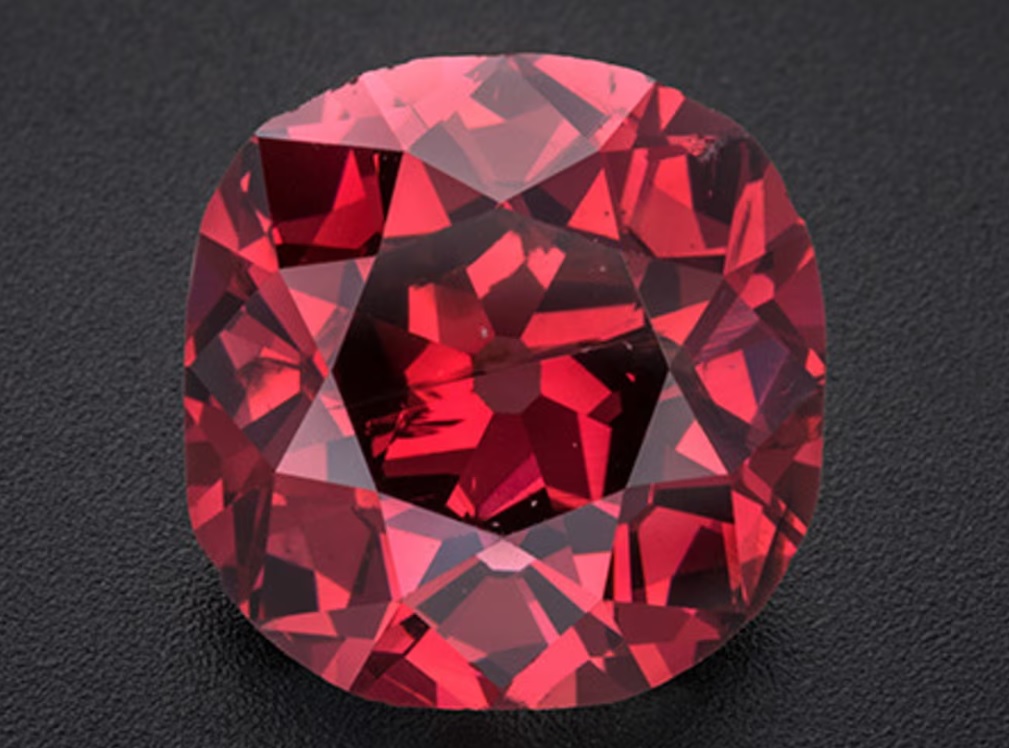
The Winston Red, an extraordinary and exceptionally rare diamond

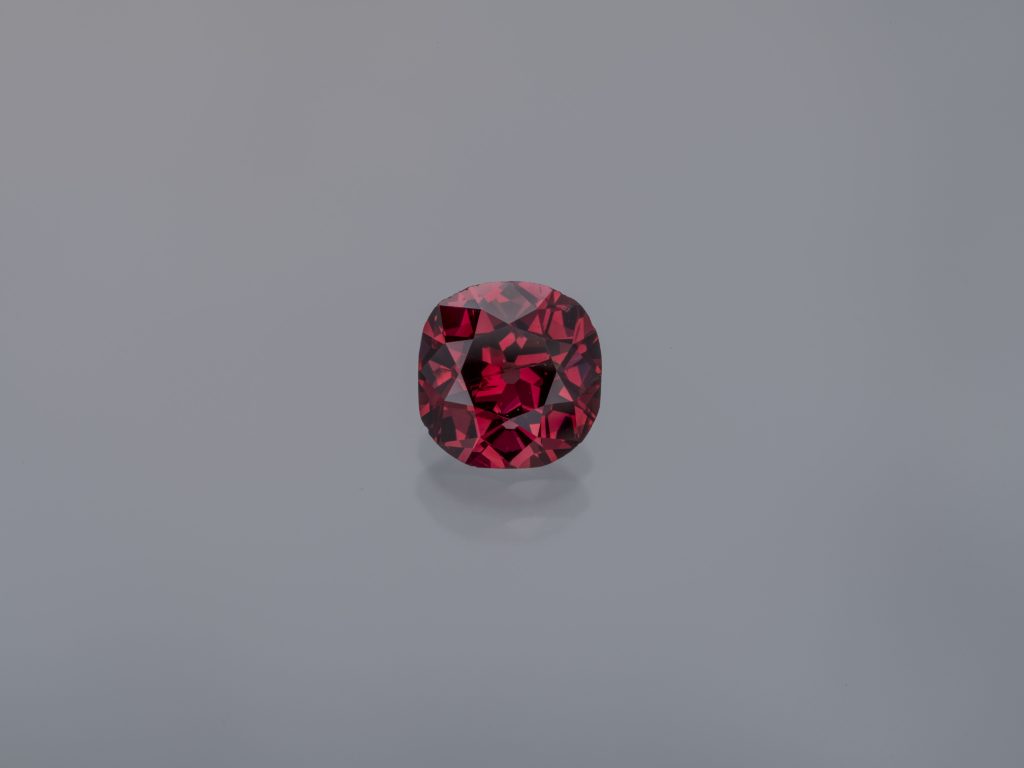
The Winston Red, an extraordinary and exceptionally rare diamond, is now on show to the public — making it the only known pure red diamond of its kind currently on display anywhere in the world.

Weighing 2.33 carats, it holds the distinction of being the fifth-largest pure red diamond known to exist. To put that into perspective, fewer than two dozen red diamonds over one carat have ever been recorded, making this a truly exceptional stone.

It’s now on exhibit at the Smithsonian National Museum of Natural History in Washington, D.C., as part of a special showcase of natural coloured diamonds.

A team from the Gemological Institute of America (GIA), working alongside experts from the Smithsonian’s Department of Mineral Sciences and the Paris School of Mines, have conducted an in-depth examination of the gem.

GIA’s president and CEO, Susan Jacques, called the Winston Red “one of the most exquisite gems on Earth,” noting its intense deep-red colour and fascinating history. Red diamonds are incredibly rare, and among the more than one million coloured diamonds studied by GIA, a mere 0.07% were red — and just over half of those qualified for the elite ‘Fancy red’ grade awarded to the Winston Red.

Through advanced research, GIA scientists have identified the diamond’s colour origin and believe it likely came from either Brazil or Venezuela.

Tom Moses, GIA’s executive VP and head of research, shared his personal connection to the stone, having first examined it back in 1987. He recalled its striking deep red hue and historical significance — a diamond once sold by Jacques Cartier in 1938 to the Maharaja of Nawanagar.

The Winston Red is now the star attraction in a new exhibition at the Smithsonian, which features 40 other rare coloured diamonds from the Winston Fancy Color Diamond Collection. The collection was donated by Ronald Winston, son of legendary jeweller Harry Winston.

This exhibition is a rare opportunity to witness one of nature’s most elusive and captivating treasures — a true celebration of colour, history, and craftsmanship.

Source: DCLA

Tuesday, 18 February 2025

Smithsonian Acquires One of the World’s Largest “Fancy Red” Diamonds

Natural red diamonds are among the rarest gemstones on Earth, and the Winston Red Diamond stands out as exceptional. At 2.33 carats, it ranks among the largest diamonds ever bestowed with the coveted “Fancy red” color grade by the Gemological Institute of America (GIA).

Winston Red Diamond Will Be Unveiled to the Public at the National Museum of Natural History Alongside a Rainbow of Colorful Diamonds

The Smithsonian’s National Museum of Natural History will unveil the Winston Red Diamond and Winston Fancy Color Diamond Collection Tuesday, April 1—an extraordinary showcase of some of the world’s rarest and most dazzling gems.

The breathtaking diamonds were gifted to the museum by Ronald Winston, the son of distinguished jeweler and gem collector Harry Winston. In 1958, Harry Winston donated the iconic Hope Diamond to the Smithsonian, laying the foundation for the National Gem Collection. Now, the Winston Red Diamond and Winston Fancy Color Diamond Collection will be featured in the museum’s Winston Gallery, offering visitors the rare opportunity to witness one of the finest collections of fancy color diamonds ever amassed.

“This ranks among the most significant gifts ever received by the Smithsonian,” said Kirk Johnson, the Sant Director of the National Museum of Natural History. “The Winston diamonds are unprecedented in their beauty and rarity, and we are thrilled to welcome them as additions to our National Gem Collection. We extend our gratitude to Ronald Winston for making this gift to the nation possible.”

Natural red diamonds are among the rarest gemstones on Earth, and the Winston Red Diamond stands out as exceptional. At 2.33 carats, it ranks among the largest diamonds ever bestowed with the coveted “Fancy red” color grade by the Gemological Institute of America (GIA). Researchers estimate that less than one in 25 million diamonds is a Fancy red, and the Winston Red Diamond is one of the most exquisite in existence.

“The red diamond is the highlight of my career, and I have never seen anything else like it,” Ronald Winston said. “This donation to the museum represents my life’s achievements in this domain, and I am so happy to share this collection with the Institution and the museum’s visitors.”

While some colorful diamonds get their pigmented appearance from atomic impurities in their crystal structure, the Winston Red Diamond’s striking crimson hue is the product of extremely high pressure and temperature conditions deep within the Earth that strained and altered the crystal. The diamond features an old mine brilliant cut, a style that predates the round brilliant cut used in engagement rings today. With fewer, larger facets, this distinctive cut suggests the stone was fashioned before the mid-1900s. A study on the science and history of the Winston Red Diamond is forthcoming in the spring 2025 issue of Gems & Gemology, the quarterly professional journal of the GIA.

“In this collection, we have diamonds in colors I could never have dreamed of,” said mineralogist Gabriela Farfan, the Coralyn W. Whitney Curator of Gems and Minerals. “These gems give us the opportunity to share with our visitors the full range of colors in which diamonds occur.”

The Winston Red Diamond will be displayed alongside 40 other gems from the Winston Fancy Color Diamond Collection. The diamonds will be arranged in a radiant rainbow of color, featuring every shade imaginable from deep teal to soft peach.

The Winston Red Diamond and Fancy Color Diamond Collection are the result of 60 years of dedicated acquisitions by Ronald Winston. Alongside the Hope Diamond, the new display will honor the legacy of the Winston family and showcase the brilliance and rarity of these exceptional gems.

Source: DCLA

Wednesday, 1 May 2024

IDEX Price Report for 1 May: Prices Show Signs of Stabilizing


IDEX Price Report for 1 May: Prices Show Signs of Stabilizing
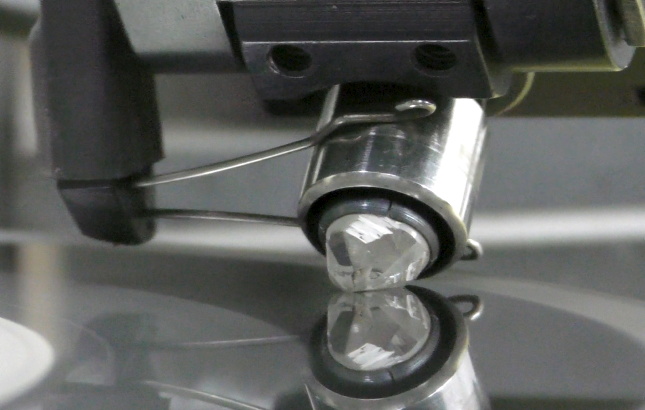
A diamond held by dop is polished on rotating automatic cast iron lap

Prices showed signs of stabilizing during April, with an even mix of increases and decreases in many sizes, especially fancy cuts. Overall there were more clusters of price rises than we have seen of late.

It’s too early to positively identify a clear upward trend, but the “end of the lab grown boom” is arguably having an impact. Lab grown prices are now so low – in some case just 10 per cent of natural – that many jewelers are opting not to stock them in inventory and are only buying them on consignment.

In addition the G7 sanctions, in place since 1 March, are now starting to bite, and to slowly push up prices.

They have effectively restored the De Beers monopoly, although its rough production is down by almost a quarter so far this year (as is Rio Tinto’s) and rough sales remain sluggish (down 18 per cent on last year). Meanwhile polished exports from India fell by 27 per cent during March to $1.2bn

Highlighted changes

Rounds

1.00-1.24 ct. D-F / VVS2-VS1 +4-5%, F-I / IF-VVS1 -1-7%

2.00-2.99 ct. D-G / VVS2-VS2 +2.5-5%, G-N / IF-VVS1 -2-5%

4.00-4.99 ct. E-I / VS1-2 +1-4%, K-M / VS2-SI1 -1-2%

Fancy Cuts

1.25-1.49 ct. D-I / VVS1-SI1 -1-6.5%

1.50-1.99 ct. D-E / VVS1-VS2 +1-5%, I-J / IF-VS2 -4.5-5.5%

2.00-2.99 ct. D-H / VVS2-VS2 +2.5-3%, H-N / IF-VVS1 -2-5%

Source: DCLA

Tuesday, 30 August 2022

Rare Orange-Red Diamond Appears at Auction

 Rare Orange-Red Diamond Appears at Auction

1.21-carat, fancy-orangey-red
                    1.21-carat, fancy-orangey-red

Heritage Auctions has unveiled a 1.21-carat, fancy-orangey-red diamond that will go under the hammer at its Fall Fine Jewelry Signature auction on September 29.

“This gem is one of only a few diamonds to display enough saturation and intensity to be graded as a true red,” said Jill Burgum, Heritage Auctions’ executive director of fine jewelry. “Adding to the allure, the cause of a red diamond’s color remains a mystery to scientists, making this stone even more of a marvel.”

The stone has a presale estimate of $100,000 to $150,000.

Other notable diamonds included in the sale are a 17.63-carat, fancy-intense-yellow diamond ring from the estate of Dallas philanthropist Mary Anne Sammons Cree, which is expected to fetch $300,000 to $400,000. More than 125 jewels from Cree’s collection are up for sale, with the proceeds going to the Communities Foundation of Texas as well as Dallas-area nonprofits.

Source: DCLA

Choosing the Right Precious Metal for Fine Diamond Jewellery

  Why Gold Purity, Colour and Craftsmanship Matter When purchasing a fine diamond, most buyers focus on the stone itself its cut, colour, cl...