Showing posts with label Red. Show all posts

Wednesday, 23 April 2025

One of the World’s Rarest Red Diamonds Goes on Display

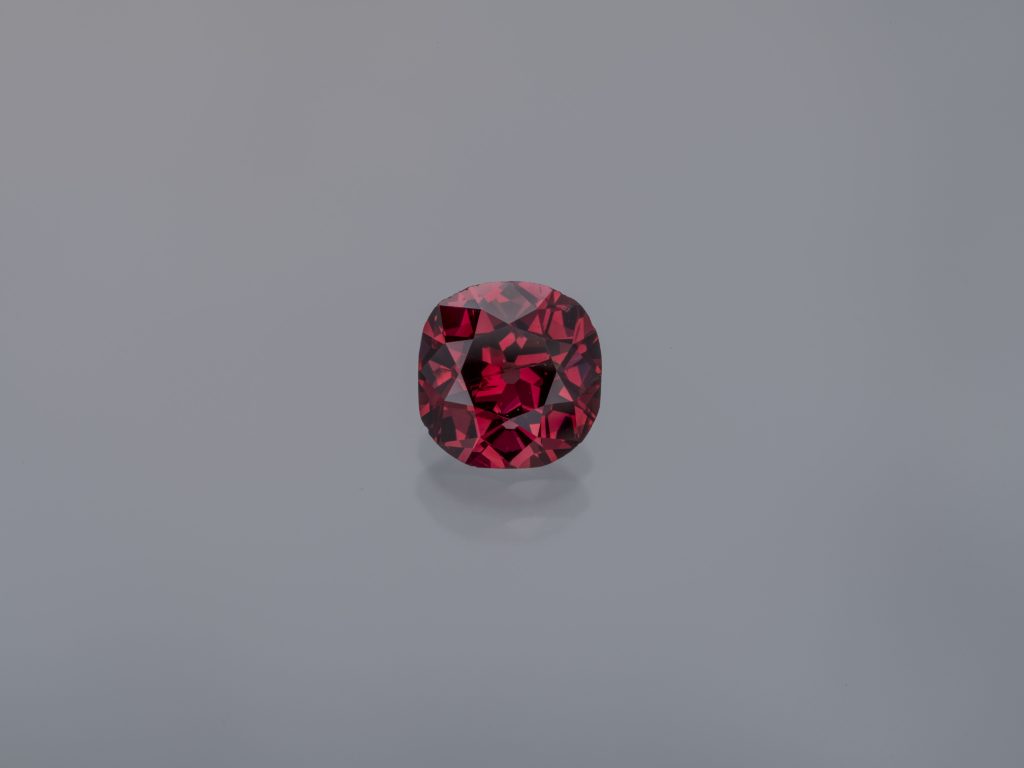
The Winston Red, an extraordinary and exceptionally rare diamond

The Winston Red, an extraordinary and exceptionally rare diamond, is now on show to the public — making it the only known pure red diamond of its kind currently on display anywhere in the world.

Weighing 2.33 carats, it holds the distinction of being the fifth-largest pure red diamond known to exist. To put that into perspective, fewer than two dozen red diamonds over one carat have ever been recorded, making this a truly exceptional stone.

It’s now on exhibit at the Smithsonian National Museum of Natural History in Washington, D.C., as part of a special showcase of natural coloured diamonds.

A team from the Gemological Institute of America (GIA), working alongside experts from the Smithsonian’s Department of Mineral Sciences and the Paris School of Mines, have conducted an in-depth examination of the gem.

GIA’s president and CEO, Susan Jacques, called the Winston Red “one of the most exquisite gems on Earth,” noting its intense deep-red colour and fascinating history. Red diamonds are incredibly rare, and among the more than one million coloured diamonds studied by GIA, a mere 0.07% were red — and just over half of those qualified for the elite ‘Fancy red’ grade awarded to the Winston Red.

Through advanced research, GIA scientists have identified the diamond’s colour origin and believe it likely came from either Brazil or Venezuela.

Tom Moses, GIA’s executive VP and head of research, shared his personal connection to the stone, having first examined it back in 1987. He recalled its striking deep red hue and historical significance — a diamond once sold by Jacques Cartier in 1938 to the Maharaja of Nawanagar.

The Winston Red is now the star attraction in a new exhibition at the Smithsonian, which features 40 other rare coloured diamonds from the Winston Fancy Color Diamond Collection. The collection was donated by Ronald Winston, son of legendary jeweller Harry Winston.

This exhibition is a rare opportunity to witness one of nature’s most elusive and captivating treasures — a true celebration of colour, history, and craftsmanship.

Source: DCLA

Tuesday, 18 February 2025

Smithsonian Acquires One of the World’s Largest “Fancy Red” Diamonds

Natural red diamonds are among the rarest gemstones on Earth, and the Winston Red Diamond stands out as exceptional. At 2.33 carats, it ranks among the largest diamonds ever bestowed with the coveted “Fancy red” color grade by the Gemological Institute of America (GIA).

Winston Red Diamond Will Be Unveiled to the Public at the National Museum of Natural History Alongside a Rainbow of Colorful Diamonds

The Smithsonian’s National Museum of Natural History will unveil the Winston Red Diamond and Winston Fancy Color Diamond Collection Tuesday, April 1—an extraordinary showcase of some of the world’s rarest and most dazzling gems.

The breathtaking diamonds were gifted to the museum by Ronald Winston, the son of distinguished jeweler and gem collector Harry Winston. In 1958, Harry Winston donated the iconic Hope Diamond to the Smithsonian, laying the foundation for the National Gem Collection. Now, the Winston Red Diamond and Winston Fancy Color Diamond Collection will be featured in the museum’s Winston Gallery, offering visitors the rare opportunity to witness one of the finest collections of fancy color diamonds ever amassed.

“This ranks among the most significant gifts ever received by the Smithsonian,” said Kirk Johnson, the Sant Director of the National Museum of Natural History. “The Winston diamonds are unprecedented in their beauty and rarity, and we are thrilled to welcome them as additions to our National Gem Collection. We extend our gratitude to Ronald Winston for making this gift to the nation possible.”

Natural red diamonds are among the rarest gemstones on Earth, and the Winston Red Diamond stands out as exceptional. At 2.33 carats, it ranks among the largest diamonds ever bestowed with the coveted “Fancy red” color grade by the Gemological Institute of America (GIA). Researchers estimate that less than one in 25 million diamonds is a Fancy red, and the Winston Red Diamond is one of the most exquisite in existence.

“The red diamond is the highlight of my career, and I have never seen anything else like it,” Ronald Winston said. “This donation to the museum represents my life’s achievements in this domain, and I am so happy to share this collection with the Institution and the museum’s visitors.”

While some colorful diamonds get their pigmented appearance from atomic impurities in their crystal structure, the Winston Red Diamond’s striking crimson hue is the product of extremely high pressure and temperature conditions deep within the Earth that strained and altered the crystal. The diamond features an old mine brilliant cut, a style that predates the round brilliant cut used in engagement rings today. With fewer, larger facets, this distinctive cut suggests the stone was fashioned before the mid-1900s. A study on the science and history of the Winston Red Diamond is forthcoming in the spring 2025 issue of Gems & Gemology, the quarterly professional journal of the GIA.

“In this collection, we have diamonds in colors I could never have dreamed of,” said mineralogist Gabriela Farfan, the Coralyn W. Whitney Curator of Gems and Minerals. “These gems give us the opportunity to share with our visitors the full range of colors in which diamonds occur.”

The Winston Red Diamond will be displayed alongside 40 other gems from the Winston Fancy Color Diamond Collection. The diamonds will be arranged in a radiant rainbow of color, featuring every shade imaginable from deep teal to soft peach.

The Winston Red Diamond and Fancy Color Diamond Collection are the result of 60 years of dedicated acquisitions by Ronald Winston. Alongside the Hope Diamond, the new display will honor the legacy of the Winston family and showcase the brilliance and rarity of these exceptional gems.

Source: DCLA

How Efforts to Control the Diamond Trade Are Hurting the Very Communities They Were Supposed to Protect

For more than two decades, global policies aimed at restricting the flow of diamonds from conflict zones most notably through the “blood dia...