Monday, 9 February 2026

Pandora Opts for Platinum Plated Jewelry as Silver Prices Surge

 Pandora Opts for Platinum Plated Jewelry

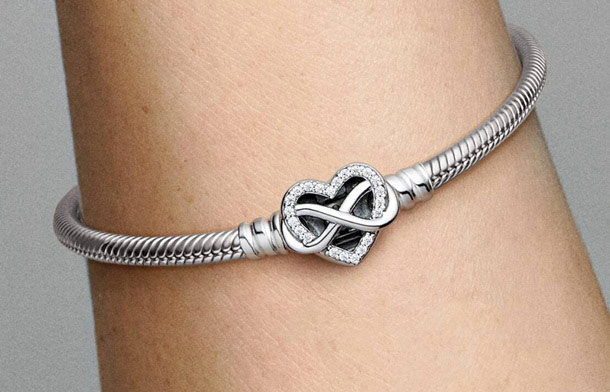
Pandora is introducing platinum-plated jewelry to reduce its reliance on sterling silver, after silver prices more than doubled over the past year.

The Danish company, best known for its charm bracelets, has developed a new platinum plating process that builds on its proprietary Pandora Evershine metals alloy core, using a very thin layer of the precious metal over an alloy base.

In the first quarter of 2026, Pandora will pilot a curated selection of platinum plated versions of its best selling bracelets across 30 stores and online in northern Europe, ahead of a wider global rollout in the second half of 2026 that will also include a selection of charms.

“With this innovation, we can navigate the new realities of raw material costs while offering consumers precious metal jewellery that is exceptionally well suited for everyday wear,” said Pandora CEO Berta de Pablosa Barbier. The company said silver and gold prices had surged over the past year.

Platinum is significantly more expensive per ounce than silver but has seen comparatively stable price movements recently, and because Pandora uses only a very thin plated layer over an alloy core, the products remain economically viable.

In a July 2025 consumer study of 23,000 people, 78 per cent recognized platinum as a precious metal, compared to 69 per cent for sterling silver, underscoring its appeal as a premium white metal.

Source: DCLA

Sunday, 8 February 2026

Historic Crown of Empress Eugénie to Be Restored After Louvre Heist

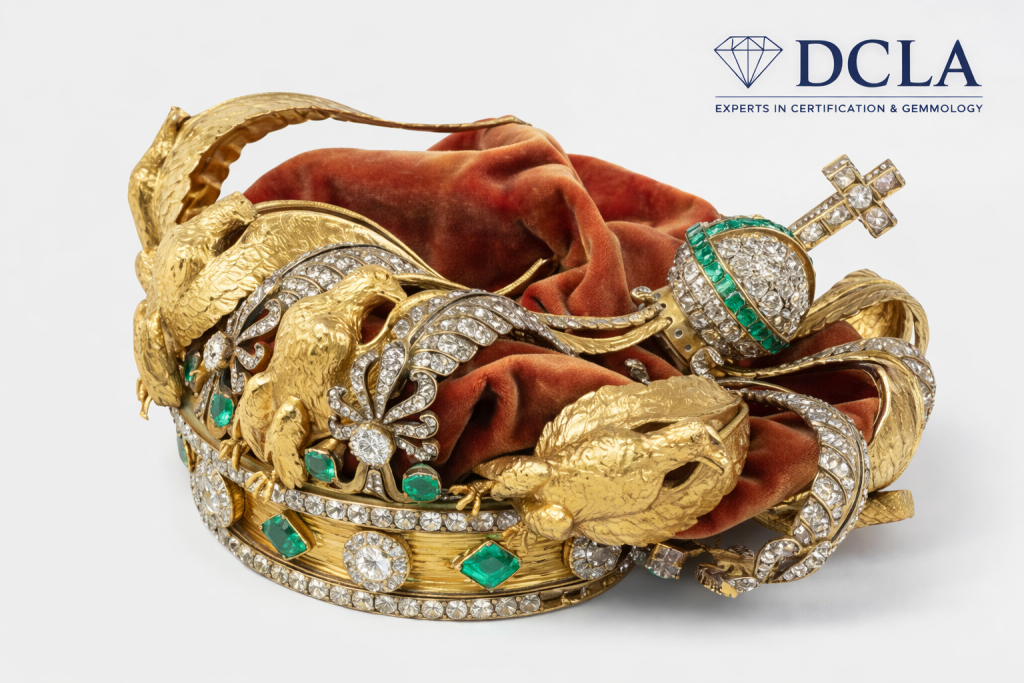
 Empress Eugénie's crown with emeralds

The Louvre Museum has released striking images of a historic crown once worn by Empress Eugénie, following its dramatic recovery after a high-profile jewellery heist at the Paris landmark. The crown, abandoned by thieves during their escape, was discovered crushed and badly deformed—but remarkably, largely intact.

The jewel-encrusted crown forms part of France’s imperial heritage and dates back to the Second French Empire (1852–1870), when Eugénie de Montijo reigned alongside her husband, Emperor Napoleon III. A noted style icon of her era, Empress Eugénie was instrumental in reviving court jewellery traditions inspired by earlier monarchies, commissioning elaborate pieces that blended imperial symbolism with exceptional gemstone craftsmanship.

The crown itself is a masterwork of 19th-century high jewellery, adorned with 56 emeralds and more than 1,350 diamonds, and originally surmounted by eight golden eagles—a powerful imperial emblem echoing Napoleonic authority. Such pieces were not merely ornamental; they were statements of political power, wealth, and France’s dominance in the decorative arts.

During the robbery in October last year, thieves escaped with an estimated €88 million worth of jewels, but were forced to abandon the crown after attempting to remove it through a narrow opening cut into the display case. This crude extraction caused significant deformation, flattening and damaging the metal structure. Despite this, the Louvre has confirmed that the crown retains all of its emeralds and all but ten of its diamonds. One golden eagle remains missing.

Crucially, museum experts report that the crown is “nearly intact” and can be restored without the need for reconstruction, preserving its original materials and craftsmanship. An expert restoration committee, led by Louvre president Laurence des Cars, has been appointed to oversee the delicate conservation process—an effort that will rely heavily on historical jewellery-making techniques and forensic gem analysis.

The heist also involved the theft of eight additional jewels, including a diamond tiara belonging to Eugénie. While investigations continue, the fate of the remaining pieces remains unknown.

For gemologists and historians alike, the incident underscores both the vulnerability and resilience of historic jewellery. Beyond its dramatic recovery, the crown of Empress Eugénie stands as a rare surviving example of imperial French jewellery—an object whose value lies not only in its diamonds and emeralds, but in its irreplaceable cultural and historical significance.

At DCLA, such cases highlight the importance of expert gemstone documentation, certification, and conservation, ensuring that historic jewels can be accurately studied, restored, and preserved for future generations.

Source: DCLA

Thursday, 5 February 2026

Anglo flags third De Beers writedown as Teck merger looms

 Anglo flags third De Beers writedown

Anglo American is weighing a third writedown of De Beers in as many years as weak diamond prices persist and the miner advances asset sales ahead of its merger with Canada’s Teck Resources.

The century-old group said on Thursday it was reviewing the carrying value of its diamond business after average realized prices fell in 2025, warning the unit is likely to be lossmaking again.

The potential impairment comes as Anglo moves to finalize the sale of non-core assets, including De Beers. At the same time, the miner is preparing to merge with Teck in a transaction approved by shareholders and regulators late last year, creating Anglo Teck (official named confirmed).

The company booked a $2.9 billion impairment on De Beers in February last year, following a $1.6 billion writedown in 2024. Anglo, which owns 85% of the diamond company, offered few details on a sale process, saying only that it was “progressing.”

In a fourth-quarter production update, Anglo said diamond trading conditions “continued to be challenging” amid industry weakness, geopolitical tensions and tariff uncertainty. It said lower prices and market conditions could lead to an impairment when full-year results are released.

Diamond prices have come under pressure from weaker consumer demand in China and competition from cheaper, lab-grown stones. De Beers’ average realized price fell 7% to $142 per carat in 2025, driven by a 12% drop in the average rough price index.

Anglo said the decline was exacerbated by selling inventory below cost, largely lower-value goods. Adjusted for that mix, the equivalent price index reduction would have been 25% year on year, suggesting some underlying resilience in the market.

De Beers sold 5.9 million carats in the fourth quarter, up from 4.6 million a year earlier, lifting revenue to $571m from $543m. Even so, Anglo said it was undertaking an impairment review that could result in another writedown.

Exit hurdles
The prolonged slump complicates Anglo’s efforts to exit De Beers. Chief executive Duncan Wanblad said only that the sale was moving forward. A consortium led by former De Beers managing director Gareth Penny is seen as a frontrunner, though Botswana, which owns 15% of the company, has said it wants to take control.

Namibia has also expressed interest, and former chief executives Bruce Cleaver and Penny have been mentioned as potential buyers.

The De Beers sale forms part of a restructuring unveiled in 2024. Anglo demerged its platinum arm, Amplats (now Valterra), in June 2025, while the planned sale of its Australian metallurgical coal mines stalled after Peabody Energy (NYSE: BTU) walked away following a fire at Moranbah North.

Wanblad said on Thursday that the formal sale process for steelmaking coal was “progressing well,” without naming alternative buyers or addressing potential compensation from the US firm.

Copper reality check
Copper remains central to the Anglo-Teck investment case, but near-term output expectations have softened. Anglo cut its 2026 copper guidance to 700,000 to 760,000 tonnes from 760,000 to 820,000 tonnes, citing lower grades at several operations.

It also trimmed 2027 guidance to 750,000 to 810,000 tonnes, including at Collahuasi in Chile, which Anglo and Teck plan to integrate with Teck’s neighbouring Quebrada Blanca mine. For the longer term, the group added new guidance for 2028 of 790,000 to 850,000 tonnes.

A 15-km (9.3-mile) conveyor would be built to feed Collahuasi’s high-quality ore into QB’s new processing plants. (Click on map to enlarge)
Copper production in 2025 was 695,000 tonnes, roughly flat year on year and at the lower end of guidance. Goldman Sachs said output missed its estimate by 5%, with Anglo’s Quellaveco mine in Peru falling short by 10% on lower-than-expected grades. Collahuasi’s underperformance was already known, while Los Bronces in Chile ended the year strongly.

Adjusting for Collahuasi, the underlying miss narrows to about 2%, which Goldman said better reflects what the market had already priced in.

A sharp rise in copper prices in recent months has renewed interest in the metal and helped spur merger talks between rivals, including the once again abandoned merger between Rio Tinto (ASX, LON: RIO) and Glencore (LON: GLEN).

With ageing mines delivering lower grades and new projects costly and slow to develop, copper dealmaking has become more attractive as supply constraints tighten across the sector.

Source: DCLA

Wednesday, 4 February 2026

IDEX Price Report: Further Drops for Rounds and Fancies

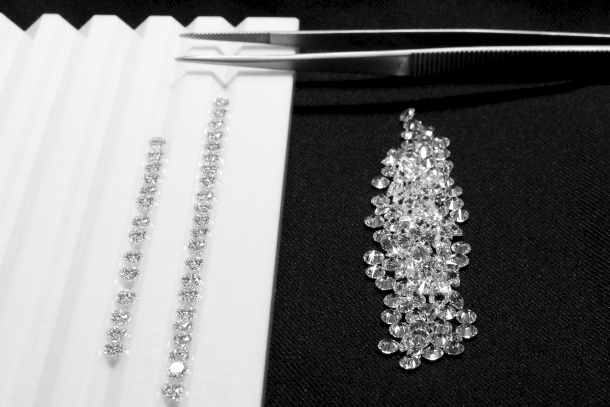
 Diamonds and Tweezers diamond on black background

Price drops dominated yet again both for rounds and fancies during January, as US tariffs on India and the continuing rise of lab growns took their toll.

Rounds

Among 1.00-cts to 1.24-cts, the price of almost all G+ and VVS2+ goods fell. 0.80-cts to 0.89-cts also saw price drops in most G+ and VVS1+ goods.

There were many more drops in goods 1.25-cts to 5.99-cts, albeit with some clusters of increase in 3.00-cts to 4.99-cts. Very limited activity in goods under 0.79-cts.

Fancies

Price drops more pronounced than among rounds in 2.00-cts to 3.99-cts, but less so in 4.00-cts to 5.99-cts. Overall, still a month of significant decline.

There was a large cluster of price drops among 1.50-cts to 1.99-cts, notably in I+ and SI1+ goods. Little significant activity in fancies under 0.69-cts.

Highlighted changes

Rounds

0.80-0.89 ct. D-E / IF-VS1 -1.5-5.0%

1.00-1.24 ct. D-G / IF-VVS1 -1.0-3.0%

2.00-2.99 ct. G-J / VS1-2 -1.0-3.0%

Fancies

0.70-0.79 ct. D-E / IF-VS -1.5-6.0%

1.25-1.49 ct. D-H / IF-VVS1 -1.0-5.5%

4.00-4.99 ct. K-M / VVS2-VS2 +1.0-2.0%

Source: DCLA

Tuesday, 3 February 2026

Gems set to retain sheen, view cloudy for diamonds after US tariff cut

 polished diamonds and coloured gemstones

Washington’s reciprocal tariff reduction is expected to help India’s gems and jewellery exporters regain lost ground in the US market, after shipments fell 44% during April-December this fiscal.

However, diamond exporters are awaiting clarity on whether shipments of the precious stone will be covered under Annexure III of the US reciprocal tariff list, which could allow zero duty.

Duties on polished diamonds and coloured gemstones had surged from 0% to 10% in April, then to 50% by August.

The key categories that have been hard hit are exports of cut and polished diamonds, which fell by 60% to $1.4 billion, studded gold jewellery by 24.54% to $1.5 billion and plain gold jewellery by 29% to $183.84 million.

Lab-grown diamond (LGD) trade is also hopeful of garnering a higher share of the US market. “The decision to reduce tariff is a timely positive for the LGD ecosystem, as the US is the largest gem and jewellery market globally,,” said Namita Kothari, founder of Akoirah by Augmont.

Source: DCLA


Monday, 2 February 2026

Justin and Hailey Bieber Return to the Grammys Draped in Over 160 Carats of Diamonds

 Justin and Hailey Bieber

Justin and Hailey Bieber made a dazzling return to the Grammy Awards in 2026, stepping onto the red carpet for the first time in four years adorned in a combined 162 carats of high jewellery diamonds. The couple attended the ceremony in Los Angeles wearing standout creations by renowned jeweller Lorraine Schwartz, reaffirming diamonds’ enduring status as the ultimate red-carpet statement.

Hailey Bieber commanded attention in a strapless Alaïa gown, elevated by a striking 30-carat pear-shaped diamond pendant suspended from a sleek silver choker. She paired the necklace with statement diamond earrings totalling 20 carats and a 12-carat diamond cocktail ring, showcasing a refined balance of elegance and bold design. Her look was completed with a slicked-back updo and understated makeup, allowing the exceptional stones to remain the focal point.

Justin Bieber complemented Hailey’s brilliance with a custom Balenciaga suit, finished with a 100-carat diamond-encrusted chain necklace. The substantial carat weight and pavé-style setting delivered maximum impact, reflecting the growing trend of high-carat diamond jewellery in contemporary men’s fashion.

Beyond the glamour, the couple also wore “ICE Out” pins in solidarity with ongoing protests against U.S. Immigration and Customs Enforcement, a gesture echoed by several other artists on the night.

The 2026 Grammys marked a milestone return for the Biebers following the birth of their son, Jack. Justin received multiple nominations, including Album of the Year and Best Pop Vocal Album for Swag, as well as Best Pop Solo Performance for “Daisies.”

For DCLA, moments like these highlight not only the spectacle of celebrity jewellery, but also the importance of accurate diamond grading, carat verification, and craftsmanship at the highest level. Red-carpet appearances continue to influence global perceptions of diamond value, rarity, and desirability—making independent certification and expert assessment more relevant than ever in today’s market.

Source: DCLA

Sunday, 1 February 2026

The Apollo and Artemis Diamonds: The Most Expensive Pair of Diamond Earrings Ever Sold

 Apollo and Artemis diamonds A Once-in-a-Lifetime Matched Pair of Fancy-Coloured Diamonds

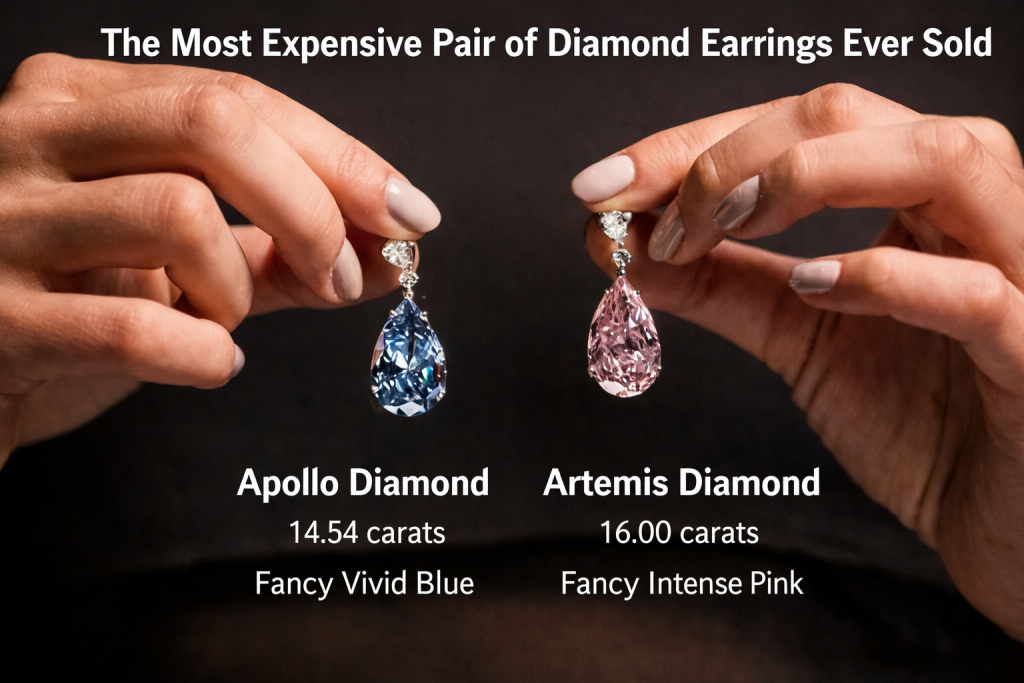
The Apollo and Artemis diamonds stand among the rarest gemstones ever discovered—extraordinary not only for their individual beauty, but for the near-impossible fact that they exist as a perfectly matched pair. When they appeared at Sotheby’s Magnificent Jewels & Noble Jewels auction in Geneva in May 2017, they instantly rewrote auction history, becoming the most expensive pair of diamond earrings ever sold.

Introduced by Sotheby’s as “the most important pair of diamond earrings ever brought to market”, the description was no exaggeration. These two fancy-coloured diamonds—one vivid blue, the other intense pink—represent a convergence of rarity, science, and artistry that may never be repeated.


A Once-in-a-Lifetime Matched Pair of Fancy-Coloured Diamonds

Matched pairs of diamonds are rare. Matched pairs of large fancy-coloured diamonds, cut to mirror one another in size, shape, and visual balance, are virtually unheard of.

The Apollo and Artemis diamonds were presented as pear-shaped earrings, deliberately contrasting in colour yet perfectly balanced in form. Although offered as separate lots, they were conceived as twins—cut with harmony in mind rather than individual dominance.

Both diamonds made their first-ever public appearance at the 2017 Geneva auction. Industry experts believe the stones were fashioned by the same master cutters, who recognised early on that the rough diamonds had the potential to yield near-perfect counterparts. At this level of diamond cutting, prioritising symmetry between two stones rather than maximising the yield of a single gem is almost unprecedented.


The Apollo Blue Diamond: A Record-Breaking Fancy Vivid Blue

The undisputed centrepiece of the pair is the Apollo Blue Diamond, a 14.54-carat Fancy Vivid Blue diamond of exceptional pedigree. Discovered at South Africa’s legendary Cullinan Mine, Apollo belongs to the rarest category of natural diamonds.

Graded Internally Flawless and classified as Type IIb, the Apollo Blue contains no nitrogen and trace amounts of boron—the element responsible for its extraordinary blue colour. According to the GIA, fewer than one percent of diamonds are Type IIb, and only a tiny fraction of those achieve a Fancy Vivid colour grade.

At auction, the Apollo Blue sold for just over USD $42 million, becoming the largest internally flawless Fancy Vivid Blue diamond ever offered publicly. Even without its counterpart, Apollo would have been a headline-making stone.


The Artemis Pink Diamond: Scientific Purity and Rare Colour

Its counterpart, the Artemis Pink Diamond, weighs an exact 16.00 carats and is graded Fancy Intense Pink. Artemis is classified as a Type IIa diamond, the most chemically pure diamond type, containing no measurable nitrogen or boron impurities.

Natural pink diamonds are among the rarest of all fancy colours. The GIA reports that fewer than three percent of diamonds qualify as coloured diamonds, and less than five percent of those are predominantly pink. Achieving intense saturation in a diamond of this size is exceptionally uncommon.

The Artemis Pink achieved a hammer price of more than USD $15 million, confirming its status as both a collector’s gem and a scientific rarity.


Mythology Behind the Names: Apollo and Artemis

Named after the twin gods of Greek mythology, the diamonds reflect a powerful symbolic duality. Apollo, god of the sun, light, and order, mirrors the clarity and brilliance of the blue diamond. Artemis, goddess of the moon and the natural world, embodies independence, intuition, and quiet strength—qualities echoed in the pink diamond’s softer yet commanding presence.

Like their mythological namesakes, the diamonds are complete on their own, yet unmistakably connected.


How the Apollo and Artemis Diamonds Made Auction History

Although offered as separate lots, Sotheby’s later confirmed that both diamonds were acquired by the same anonymous buyer, ensuring the pair would remain together. Combined, the Apollo and Artemis diamonds achieved more than USD $57 million, setting a world record for diamond earrings sold at auction.

David Bennett, then Worldwide Chairman of Sotheby’s International Jewellery Division, expressed particular satisfaction that the stones would not be separated, noting that they were conceived as twins from the very beginning.

Following the sale, the buyer renamed the diamonds “The Memory of Autumn Leaves” and “The Dream of Autumn Leaves”, adding a personal narrative while preserving their shared identity.


A Benchmark in Diamond History

The Apollo and Artemis diamonds remain a defining moment in the history of natural fancy-coloured diamonds, setting benchmarks for rarity, value, and gemmological excellence. For laboratories, collectors, and connoisseurs alike, they represent the outer limits of what nature—and human craftsmanship—can achieve.

Source: DCLA

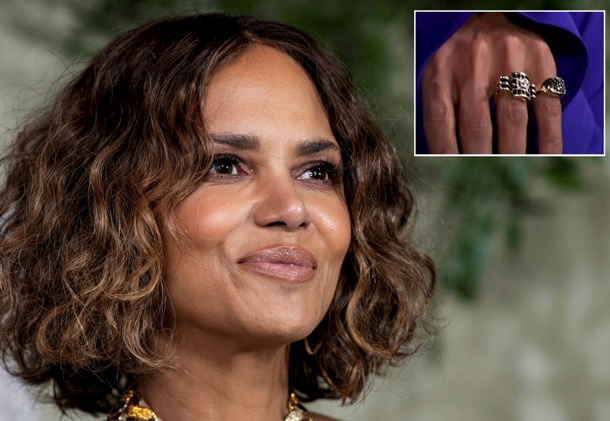
Halle Berry Follows Celebrity Trend for Vintage Diamonds

  Halle Berry shifted the focus back to vintage diamonds with her latest engagement ring. The US actress, producer, and former beauty queen ...