Wednesday, 3 September 2025

Sotheby’s to Sell 31.86 carat Pink Diamond in Abu Dhabi

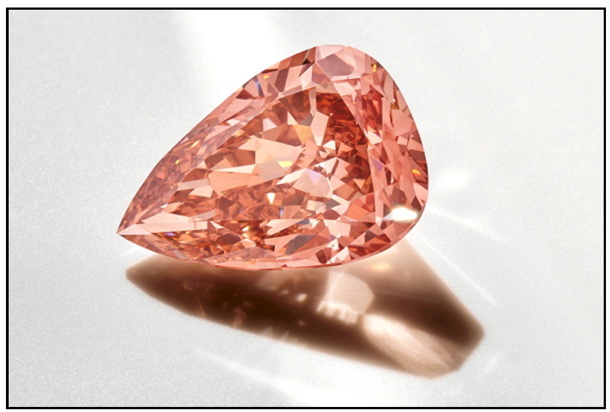
Desert Rose 31.86 carat Pink Diamond

Sotheby’s is to offer for sale the largest fancy vivid orangy pink diamond ever graded, at a debut event in Abu Dhabi in December.

The pear-shaped gem, known as the Desert Rose, weighs 31.86 carats and is expected to fetch $5m to $7m.

It is the jewelry highlight of Sotheby’s inaugural Abu Dhabi Collectors’ Week of exhibitions, sales, masterclasses and panel discussions.

The Desert Rose is part of a single-owner collection of watches and jewelry, including vintage and contemporary signed pieces, that is estimated to raise more than $20m in total.

Among the watch highlights is an exceptionally rare Rolex “Oyster Albino” Daytona, reference 6263, produced in the late 1960s and early 1970s, with an estimate of $500,000 to $1m.

Abu Dhabi Collectors’ Week takes place from 2 – 5 December on Saadiyat Island, just off the Abu Dhabi coast.

It coincides with the Abu Dhabi Grand Prix and features auctions of collector cars, real estate, and international fine art exhibitions.

Source: DCL

Tuesday, 2 September 2025

Lab Grown Diamond Market to Hit $44bn

The global lab grown diamond market

The global lab grown diamond market will grow 60 per cent in the next seven years, from $27.7bn this year to $44.5bn in 2032, according to India-based Coherent Market Insights (CMI).

That represents a compound annual growth rate (CAGR) of 7 per cent annually. It did not provide comparable figures for the natural diamond market, although growth there is expected to be considerably slower.

The CMI report identifies North America as the current market leader, expected to capture roughly 40% of global demand in 2025.

However, it says the Asia-Pacific region, which currently accounts for 40 per cent of lab grown sales, is projected to experience the fastest growth, driven by rapid industrialization and increasing disposable incomes.

China is the biggest producer – accounting for almost half of global production – but most is by HPHT, an older and less sophisticated system than CVD.

Source: IDEX

Monday, 1 September 2025

GIA to Ditch 4Cs Lab Grown Grading from October

GIA to Ditch 4Cs Lab Grown Grading

GIA says the switch to grading lab grown diamonds simply as “premium” or “standard” will take on 1 October.

The lab announced an end to full 4Cs color and clarity reports in June, but did not say at the time when the change would take effect.

In a statement yesterday (26 August) it also laid out the criteria it will use to distinguish Premium lab growns from Standard. Diamond that don’t meet all the minimum criteria for Standard will not receive a GIA assessment.

Premium diamonds must meet all these criteria:

  • Clarity – Very, Very Slightly included and higher
  • Color – D
  • Polish, symmetry – Excellent
  • Cut grade – Excellent (round brilliant cut diamonds only)

Standard diamonds must meet all these criteria:

  • Clarity – Very Slightly included
  • Color – E-to-J
  • Polish – Very Good
  • Symmetry – Very Good (or Good for fancy shapes)
  • Cut grade – Very Good (round brilliant cut diamonds only)

GIA will charge $15 per carat, with a minimum fee of $15. Evaluation fee for diamonds below the minimum criteria is $15.

“Using descriptive terms for the quality of laboratory-grown diamonds is appropriate as most fall into a very narrow range of color and clarity,” said Pritesh Patel, GIA president and CEO.

“Because of that, GIA will no longer use the nomenclature created for natural diamonds to describe what is a manufactured product.”

Meanwhile rival lab IGI (International Gemological Institute) insists it will carry on with 4Cs grading for lab growns “to prevent industry and consumer confusion”.

Source: IDEX

Sunday, 31 August 2025

Lucara Recovers 1,019 Carat Diamond and Rare Pink Type IIa at Karowe Mine

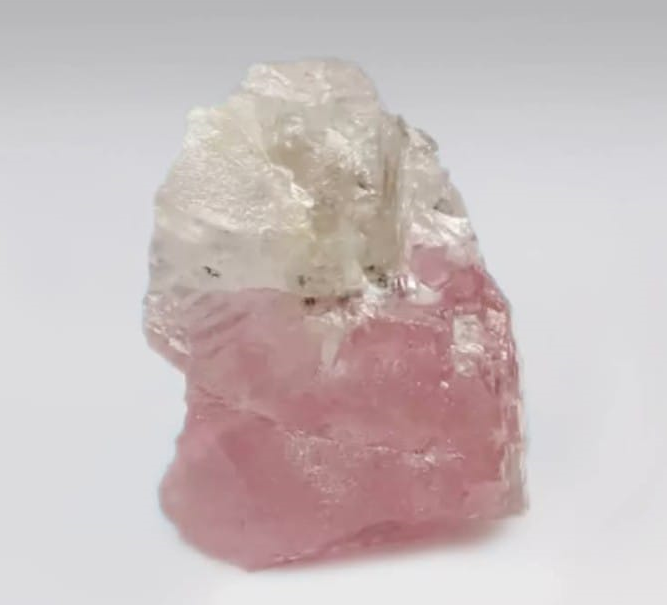
Rare Pink Type IIa Diamond

Lucara Diamond Corp has announced the recovery of two notable stones from its 100% owned Karowe Mine in Botswana during August 2025.

The most significant find is a 1,019.85 carat non-gem diamond, recovered through Lucara’s Mega Diamond Recovery unit. This marks the ninth diamond weighing over 1,000 carats to be recovered from Karowe, and the third such discovery in 2025 alone. In addition, the company reported the recovery of a 37.42 carat near-gem pink Type IIa diamond.

Both stones were recovered from processing EM/PK(S)1 material — the same unit that has produced the majority of the world’s largest recorded natural diamonds.

William Lamb, President and CEO of Lucara, stated that drawing $10 million from the company’s Standby Undertaking with its largest shareholder was a strategic step to ensure financial flexibility during the ongoing Underground Project (UGP) capital programme. He added that the recovery of such exceptional diamonds continues to demonstrate the long-term value potential of Karowe and the ongoing confidence of Lucara’s shareholders.

Thursday, 28 August 2025

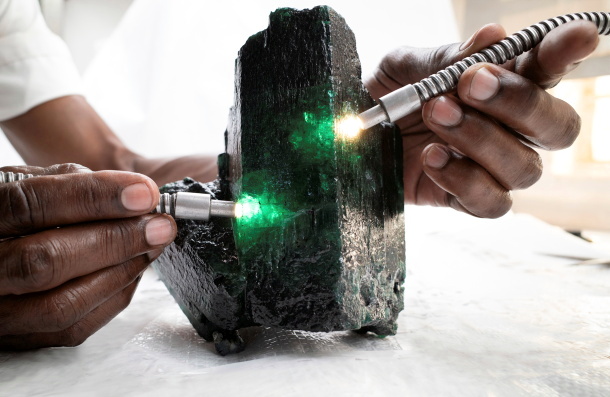
Gemfields Recovers its Biggest Ever Emerald

Biggest Ever Emerald

Gemfields has recovered a huge 11,685-carat (2.3kg) emerald – the biggest from its Kagem mine, Zambia, and possibly the biggest in the world.

The gemstone, called Imboo (the ‘buffalo’ in the local Bemba and Lamba dialects), eclipses the 7,525-carat Chipembele (the ‘rhino’), which was recovered at Kagem in July 2021, and which was recognized by Guinness World Records in April 2022 as the largest uncut emerald crystal recovered from a mine.

In January 2025, Almighty Gems in Coimbatore, India, displayed what it described as a record-breaking single emerald stone weighing 53,750 carats.  But it has yet to be officially verified by an independent authority.

The newly-recovered Imboo emerald is being offered for sale at the Gemfields auction in Bangkok which runs until 11 September.

Jackson Mtonga, grading manager at the Kagem sort house, said: “In my 30 years at Kagem, I’ve rarely seen such a remarkable formation of large, high-quality crystals.  This is a true masterpiece carved by nature’s hand.”

Imboo was discovered at Kagem’s Chama pit on 3 August by geologist Dharanidhar Seth, and Justin Banda, a veteran chiseller.

Source: DCLA

Wednesday, 27 August 2025

Michael Hill Revenue Flat in Challenging Market

Michael Hill

Australia-based jewelry retailer Michael Hill International says revenue for FY 2025 – the year to 29 June 2025 – was broadly flat compared with the previous year, down 0.2 per cent to AUD 643.7m (USD 431.3m).

Trading conditions remained challenging, it said, with the addition of volatile gold and diamond prices and US tariffs.

However group sales for the first seven weeks of FY 2026 were up 3.0 per cent year-on-year, and same store sales were up 3.2 per cent.

The company has 287 stores (down from 300 last year) in Australia, New Zealand and Canada, including low-price retailer Bevilles, Medley, and its new luxury business TenSevenSeven.

“Global economic uncertainty and challenging retail trading conditions persisted across all markets, with full year sales, gross margin and earnings broadly in line with prior year,” the company said in its Full Year Results, published yesterday (25 August).

Michael Hill chair Rob Fyfe paid tribute to CEO Daniel Bracken, aged 57, who died suddenly in February, and to founder Sir Michael Hill who died of cancer, aged 86, in July.

Source: DCLA

Tuesday, 26 August 2025

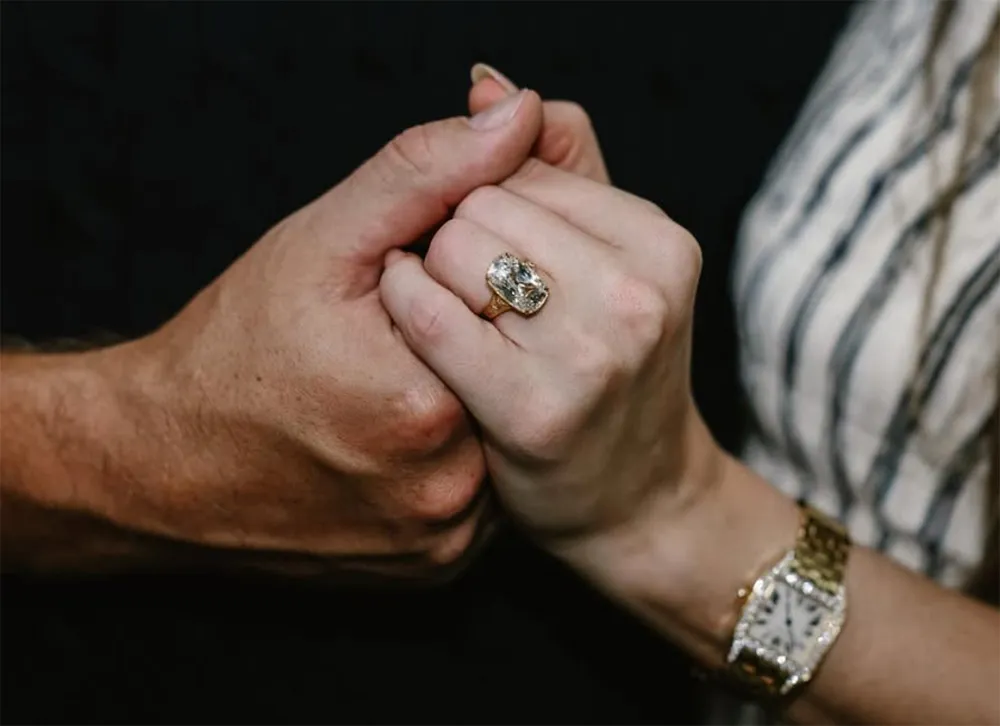
Will Taylor Swift’s Engagement Ring Spark a Revival of Old Mine Cut Diamonds?

Taylor Swift’s Engagement Ring

Taylor Swift and Travis Kelce’s engagement has captured global attention but it’s the diamond on Swift’s finger that has the jewellery world talking. The ring, created by Kindred Lubeck of Artifex Fine Jewelry, showcases what appears to be an old mine cut diamond, set in a delicate yellow gold bezel band. Its vintage charm, impressive size, and famous wearer have already made it one of the most talked-about engagement rings of the year.

What Makes Old Mine Cut Diamonds Special?

Old mine cuts are antique diamonds, hand-cut in the 18th and 19th centuries, before modern technology standardised proportions. Each one is truly unique, known for:

Chunky facets that give off a soft, romantic sparkle.

A high crown and small table, creating depth and character.

An open culet, a tiny facet at the bottom that adds to its antique charm.

Unlike today’s round brilliants, no two old mine cuts are ever the same—making them a perfect choice for those who want something one-of-a-kind.

The Value of Swift’s Diamond

Experts estimate Taylor’s diamond to be between 8 and 15 carats, with valuations ranging anywhere from USD $400,000 to over $1 million depending on its exact specifications. While few engagement ring budgets stretch quite that far, her choice highlights a rising trend: a return to antique and vintage stones.

Why Are Couples Choosing Antique Cuts?

In recent years, there’s been a growing interest in diamonds with personality and heritage. With the rise of lab-grown diamonds offering affordability and size, many buyers are instead turning to antique stones for uniqueness and history. As one jeweller put it: “Antique stones offer character you simply can’t replicate.”

A Timeless Trend

Taylor Swift’s engagement ring has brought the old mine cut back into the spotlight, and for many couples, it’s a reminder that engagement rings don’t have to follow the latest modern style. Choosing an antique cut is about more than sparkle—it’s about individuality, history, and wearing a diamond with a story.

At the Diamond Certification Laboratory of Australia (DCLA), we see growing demand for antique diamonds, and we understand why. They’re rare, distinctive, and timeless—just like the love stories they represent.

Source: DCLA 

How Efforts to Control the Diamond Trade Are Hurting the Very Communities They Were Supposed to Protect

For more than two decades, global policies aimed at restricting the flow of diamonds from conflict zones most notably through the “blood dia...