Tuesday, 4 February 2025

De Beers seals sales and mining contract with Botswana

De Beers

De Beers, the world’s leading diamond producer by value, has concluded negotiations with the Botswana government on a new sales agreement and the extension of mining licenses for their joint venture, Debswana, until 2054.

The finalized agreement, the Anglo American unit said on Monday, follows discussions aimed at setting a new framework for the sale of rough diamond production from Debswana, a 50:50 partnership between De Beers and Botswana. The deal also secures the renewal of Debswana’s mining licenses, which were previously set to expire in 2029.

“Until the execution of these new agreements, the terms of the existing agreements will continue to remain in effect,” the diamond producer said.

Currently, 75% of Debswana’s diamond output is sold to De Beers. In 2023, the two parties reached a provisional 10-year agreement under which Botswana’s share of production was set to gradually increase to 50%.

The accord also established that Botswana’s state-owned diamond trading company was expected to receive 30% of Debswana’s production.

The government would also secure 10 billion pula ($712 million) in development funding as part of the deal. However, the deal stalled under the leadership of former President Mokgweetsi Masisi.

In January, newly elected President Duma Boko announced that his administration had reached an agreement with De Beers. Botswana, the world’s largest producer of rough diamonds by value, depends on the industry for the majority of its national revenue.

This new agreement comes at a pivotal time for De Beers as parent company Anglo American plans to spin off the diamond business through either a sale or an initial public offering. Analysts have noted that current depressed diamond prices may complicate efforts to finalize such a transaction.

Botswana remains a cornerstone of De Beers’ operations, accounting for 70% of its annual rough diamond supply. The government also holds a 15% stake in De Beers, underscoring the importance of the long-standing partnership between the two parties.

Source: DCLA

Monday, 3 February 2025

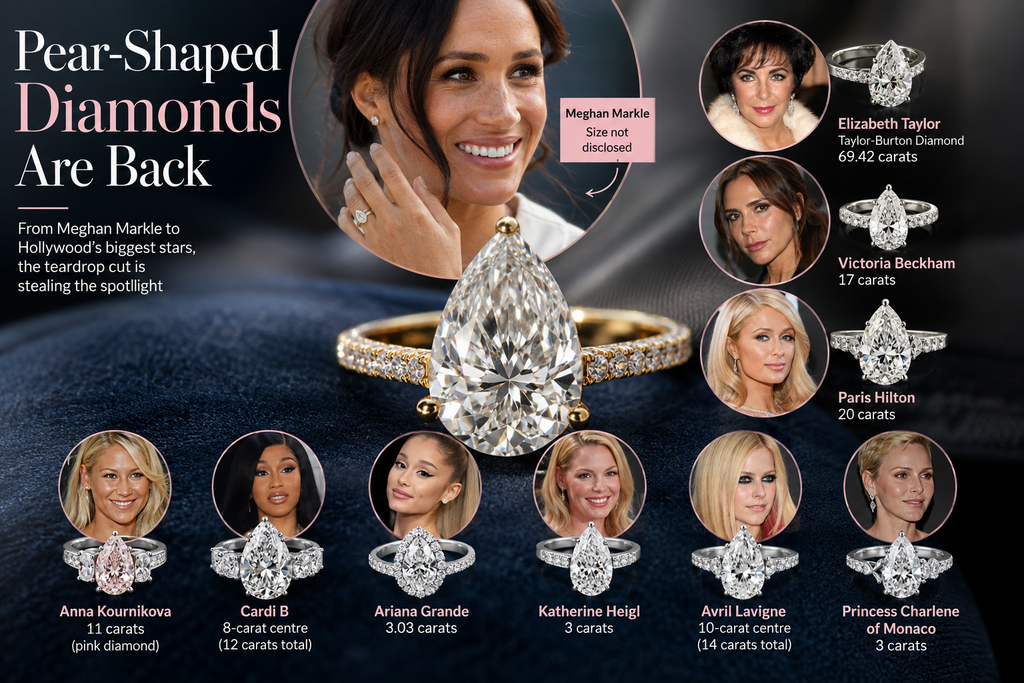
Liz Taylor Bracelet Smashes Estimate

Liz Taylor Bracelet

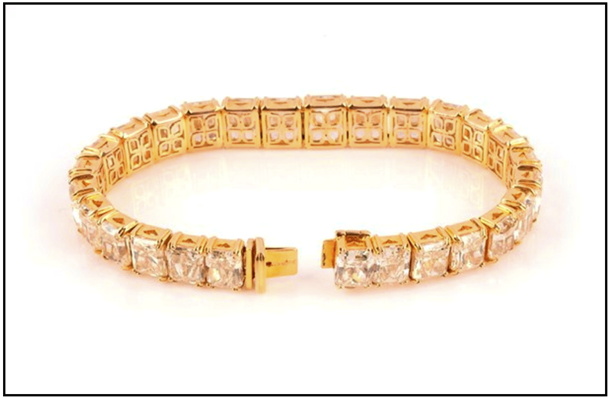
A diamond bracelet gifted by Michael Jackson to Elizabeth Taylor sold for $147,000, almost double its high estimate.

The diamond line bracelet, set with 27 graduated radiant-cut yellow-tinted diamonds was expected to fetch $61,000 to $86,000 (£50,000 to £70,000).

It sold on 30 January at the Woolley & Wallis auction house, in Sailsbury, southern England.

Taylor (who died in 2011) and Jackson (who died in 2009) were close friends for many years. Taylor was godmother to Jackson’s children Paris and Prince, and Jackson, the King of Pop, gifted her a number of jewelry pieces over the years. Among them was this bracelet, with a central diamond weighing 3.38 carats. 

The bracelet was sold previously in December 2011, for $182,500, at Christie New York’s The Collection of Elizabeth Taylor. It raised $116m (way beyond its $20m estimate) and broke the record for any collection of jewelry sold at auction.

Marielle Whiting, jewelry specialist at Woolley & Wallis, described the bracelet as a “beautiful and highly wearable diamond bracelet with truly legendary provenance that continues to live on”.

Source: DCLA

Sunday, 2 February 2025

“Sharp Contraction” for Swiss Watch Exports

Swiss Watch Exports

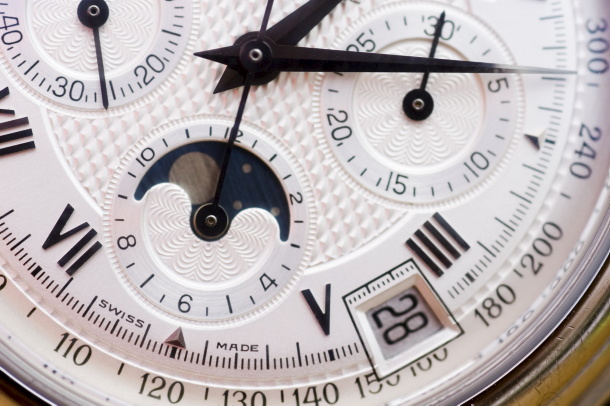
Swiss watch exports slumped in December, with the US suffering its first drop in six months.

Total foreign sales were down 5.4 per cent year-on-year to CHF 2.033bn ($2.23bn) in what the Federation of the Swiss Watch Industry Exports (FHS) said was a “sharp contraction”. It’s the biggest drop since June 2024 (-7.2 per cent).

Sales in China continued their decline (down 19.0 per cent), ditto Hong Kong (down 6.4 per cent). Hong Kong is currently the second biggest market globally for Swiss watches and China is the third.

Exports to the biggest single market, the US, fell by 1.0 per cent during the month, ins spite of the holiday season, following on from a 4.7 per cent increase in November.

Among the top 15 markets, the only ones to show growth during the month were UAE (+0.6 per cent), United Kingdom (+5.8 per cent), Spain (+19.3 per cent) and Australia (+7.2 per cent).

The FHS said it recorded falls in all price segments, with the sharpest decline among watches priced at CHF 200 to CHF 500 ($220 to $550). The CHF 500 to CHF 3,000 ($550 to $3,300) segment held up better, declining by just 1.8 per cent.

Source: Idex

Thursday, 30 January 2025

De Beers sees India as a bright spot, notes early recovery signs in US

De Beers sees India as a diamond bright spot

India has been emerging as a bright spot for the cut and polished diamonds amidst a slowdown in key markets such as the US and China, Amit Pratihari, managing director, De Beers India told Reuters on Wednesday.

India is the world’s largest centre for cutting and polishing diamonds, accounting for nine out of 10 diamonds polished globally, according to Indian government data.

However, the country’s cut and polished diamond exports fell this year because of weak demand from China and the US, forcing the industry to focus on the growing domestic market that surpassed China last year to become the world’s second-largest.

“China has completely slowed down in the luxury segment … We see India growing very strongly,” Pratihari said in an interview.

De Beers, a unit of Anglo American, is the world’s top diamond producer by value and India’s number one supplier of rough diamonds.

However, there were some early signs of recovery in the US and “big growth” in the Middle East, Pratihari said.

“In next couple of months, we expect recovery,” he said.

Weak exports demand for polished diamonds forced Indian processors to trim imports of rough diamonds by 22% to $7.9 billion during April to December, according to India’s Gem and Jewellery Export Promotion Council (GJEPC).

De Beers is adjusting prices of rough diamonds to support the midstream industry – companies that buy rough diamonds from miners and sell them after cutting and polishing to retailers – in the face of polished diamond prices falling more than those of rough diamonds, he said.

“Miners are controlling the supply so more rough does not come into the market that would put additional pressure on the polished prices. But the pressure on polished prices is in midstream as in retail there is no change,” he said.

India’s cut and polished diamond exports fell by 8.3% to $9.76 billion in April-December compared with the 2023 period, according to GJEPC.

Source: DCLA

Wednesday, 29 January 2025

High Value Recoveries Boost Gem’s Revenue

Gem Diamonds 212.91 carat rough diamond

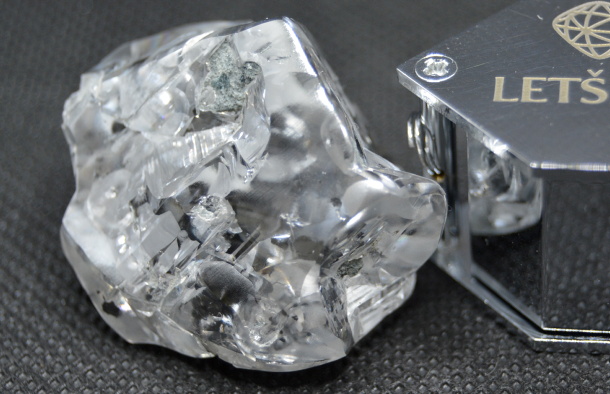
Gem Diamonds today (29 January) reported a dip in quarterly revenue but a year-on-year increase of 10 per cent, boosted by a flurry of high-value recoveries.

The UK-based miner sold $152.8m of rough in 2024, compared to $139.4m in 2023. Sales in Q4 last year were $32.2m, down almost 25 per cent on Q3.

Gem’s Letseng mine, in Lesotho, is the highest dollar per carat kimberlite diamond mine in the world.

During the year Gem sold 13 +100-cts diamonds recovered during the year, compared with just five the previous year.

The mine has averaged eight +100-cts since it started operations 17 years ago.

Six diamonds sold for more than $1m during Q4, the company said, contributing $11.6m. The highest price achieved in the quarter was $45,077 per carat for a 3.52-carat pink diamond.

Average price per carat during FY2024 was $1 ,334, a 4 per cent increase on the previous year. Th e number of carats recovered fell 4 per cent to 105,012.

Source: DCLA

Tuesday, 28 January 2025

Botswana’s leader says diamond deal reached with De Beers

Botswana President Duma Boko

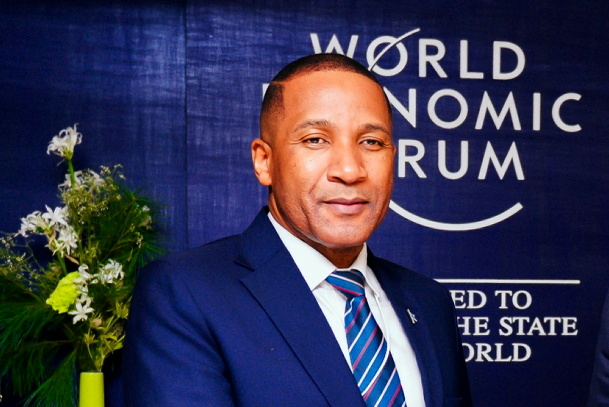
Botswana’s president Duma Boko, who swept to power in October elections, said his government has reached a diamond extraction and sales agreement with De Beers that will bring certainty to the gem-dependent economy.

Terms were finalized by midnight on Jan. 24 and will be announced soon, Boko said in an interview on Tuesday. The southern African nation is the world’s biggest producer of rough diamonds by value and the industry generates the bulk of its income. Most of Botswana’s gems are mined by Debswana, a venture between Anglo American Plc’s De Beers unit and the government.

“The issue with De Beers has been settled,” Boko said in Dar es Salaam, Tanzania, where he is attending an energy conference. He indicated last week at the World Economic Forum in Davos, Switzerland, that an agreement was imminent, and said he had followed through on his commitment to conclude it.

During his election campaign, Boko was critical of his predecessor Mokgweetsi Masisi’s handling of talks with De Beers to renew the more than half century alliance between Botswana and the world’s largest diamond firm. Masisi had caused De Beers to consider walking away from the deal, Boko said, and he sought to reopen talks.

Boko’s Umbrella for Democratic Change coalition unseated Masisi’s Botswana Democratic Party, which had led the country since independence from the UK in 1966.

The new agreement had not resulted in “any major changes, just a little tweaking of things here and there,” he said.

Under the provisional terms of a 10-year accord announced by Botswana’s previous administration in July, the state-owned diamond trader was to get 30% of Debswana’s output, while the government would secure 10 billion pula ($720 million) in development funding.

De Beers didn’t immediately respond to a request for comment.

An arid, underdeveloped nation at independence, Botswana has leveraged the discovery of diamonds in 1967 to build itself into the richest country per capita on Africa’s mainland, according to the World Bank.

Lab threat
Still, a prolonged slump in the global diamond market and a challenge from lab-grown gems has hurt its economy. Boko said the agreement will restore certainty and economic growth will follow.

The country will focus on promoting its gems as natural and charging a premium for their provenance, marking them to show they have been mined in the country and their sale promotes development, he said. Diamond revenues in some other parts of Africa have been used to finance conflict.

“We appreciate the threat posed by lab-grown diamonds. I don’t want to give them the privilege of calling them diamonds. Diamonds are natural,” he said. “We will then market our diamonds in terms of their provenance and of the story behind the diamond.”

Source: mining.com

Monday, 27 January 2025

Botswana and De Beers “on Brink of Deal”

Botswana and De Beers are reportedly on the brink of signing a critical and long-awaited sales agreement that was due for renewal back in June 2023.

Botswana and De Beers are reportedly on the brink of signing a critical and long-awaited sales agreement that was due for renewal back in June 2023.

Botswana’s new President Duma Boko told reporters last Thursday (23 January) he was hoping it would happen as early as Friday, although as of Sunday (26 January) there was still no confirmation.

Boko, speaking at the World Economic Forum’s annual meeting in Davos, Switzerland, said there was just some “tidying up” left, according to a Reuters report.

The deal, which would see Botswana’s share of diamonds from the Debswana joint venture increase from 25 per cent to 50 per cent over the next decade, was agreed in principle by Boko’s predecessor Mokgweetsi Masisi after he repeatedly threatened to walk away from it.

But the actual deal, with all the small print, was never signed. The deal also extends mining licenses until 2054 and commits De Beers to invest up to $825m over 10 years to help develop Botswana’s economy.

Source: Idex

How Efforts to Control the Diamond Trade Are Hurting the Very Communities They Were Supposed to Protect

For more than two decades, global policies aimed at restricting the flow of diamonds from conflict zones most notably through the “blood dia...