Showing posts with label Russian diamonds. Show all posts

Sunday, 13 April 2025

Russia Partners with Belarus

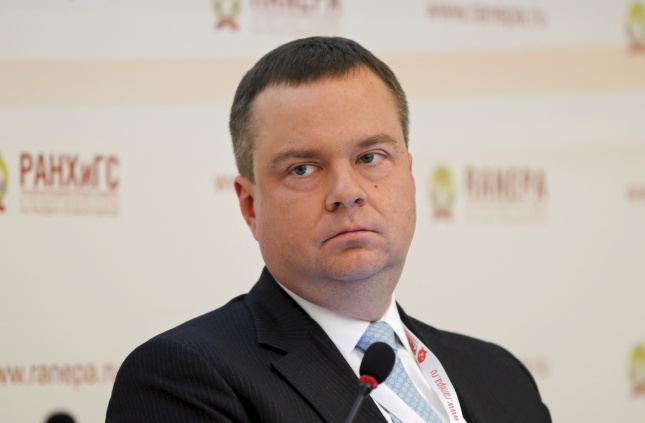
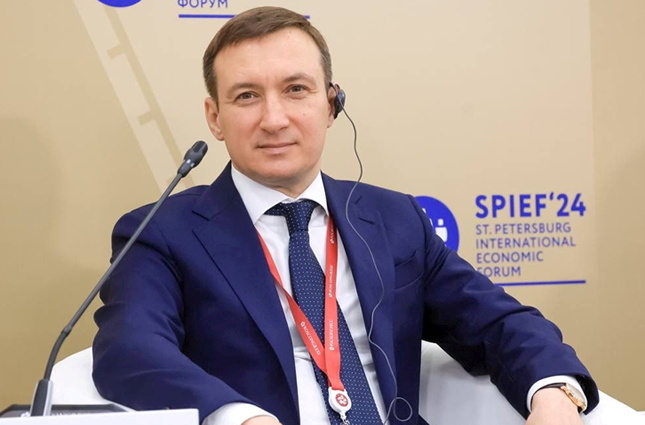
Alexei Vladimirovich Moiseev - Russian Deputy Minister of Finance

Russia is joining forces with its ally Belarus to promote jewelry exports to China, the UAE, Vietnam, and Southeast Asia, in response to G7 sanctions.

The collaboration was agreed last Friday (4 April) after Russia’s deputy finance minister Alexei Moiseyev (pictured) met Belarus’s finance minister Yury Seliverstov in the Belarus capital, Minsk.

Both sides discussed further developing e-commerce in jewelry made in Belarus and Russia, as well as the mutual recognition of state standard marks.

The two countries are close trade partners and Belarus has been sanctioned for supporting Russia’s invasion of Ukraine.

“A marketplace for the sale of Belarusian and Russian jewelry on foreign markets is planned to be launched in test mode this year, Moiseyev said, according to BelTA, Belarus’s state news agency.

He said the Eurasian Development Bank, founded jointly by Russia and Kazakhstan, was taking part in the collaboration.

Source: IDEX

Sunday, 6 April 2025

Mining Company Alrosa Unveils Russia’s Largest-Ever Diamond

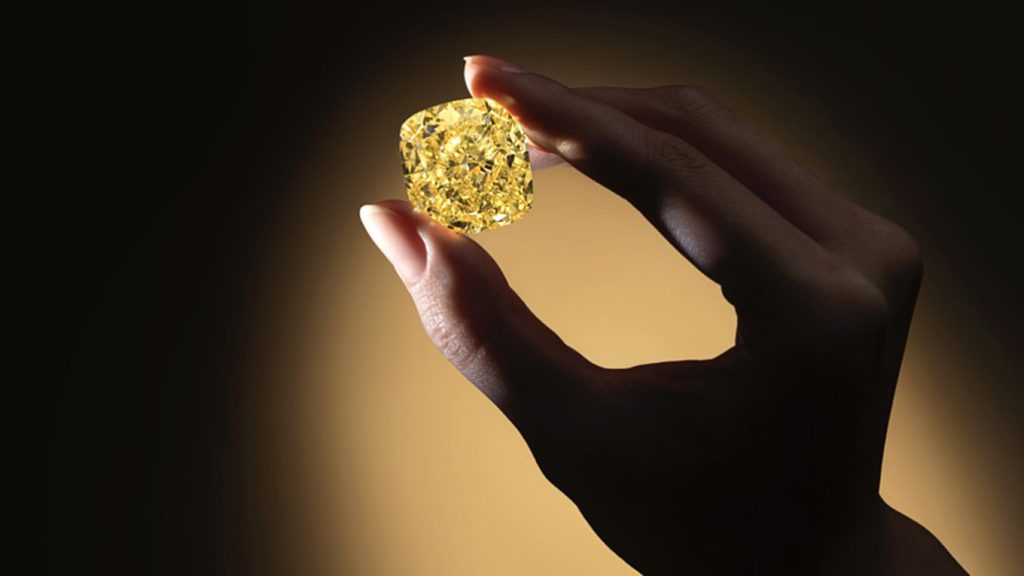
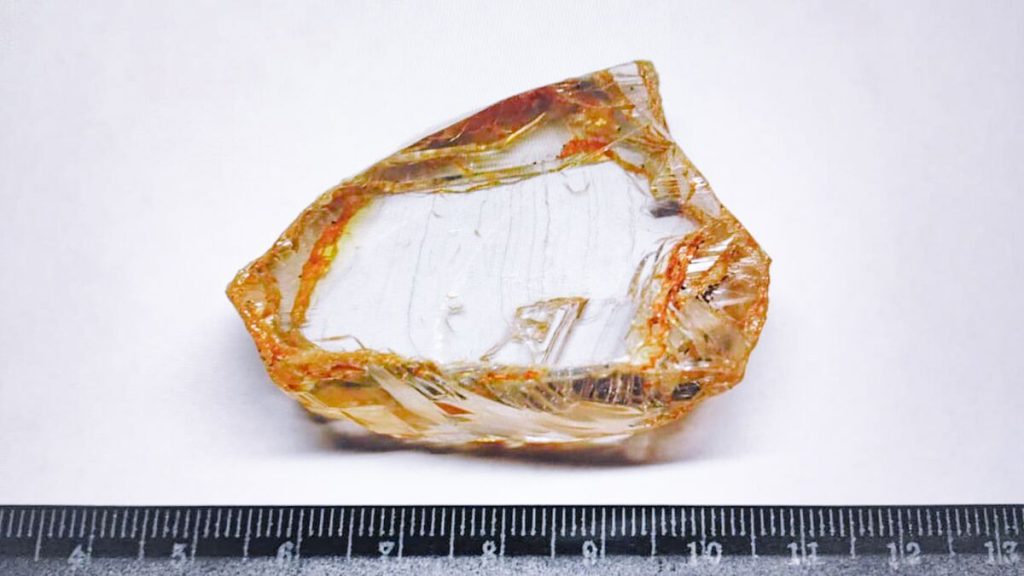
The 100-carat vivid yellow stone named New Sun

Russian diamond producer Alrosa announced Friday that it finished the two year cutting process of the country’s largest ever diamond a 100 carat vivid yellow stone named New Sun.

New Sun was cut from a billion year old 200 carat rough diamond, which was unearthed from an ancient riverbed at the Ebelyakh mine in the Far East republic of Sakha (Yakutia).

Alrosa said 15 of Russia’s top jewelers worked meticulously to “achieve the perfect balance between light, color and the play of shades.”

“Thanks to the highest skill of Russian experts, the diamond has acquired impeccable proportions that accentuate its depth and brightness of its sunny hue,” the company said.

The cutting process marks a “new stage” in the development of the Russian Cut, a gem cutting technique known for its precision and brilliance, Alrosa said.

“New Sun is one of the most significant events in the gemstone industry in recent years, highlighting Russia’s high status in the global diamond industry,” the company said.

Last month, Alrosa announced the temporary suspension of operations at several less profitable sites, reducing annual production by less than 1 million carats. The company still plans to produce 29 million carats of diamonds in 2025.

Alrosa, which is under an EU and G7 import ban, is the world’s largest diamond mining company by volume. It cut production by 2.8% to 34.6 million carats in 2023 and by 4.6% to 33 million carats in 2024.

Source: DCLA

Sunday, 9 March 2025

Alrosa set to Sell More Rough to Government

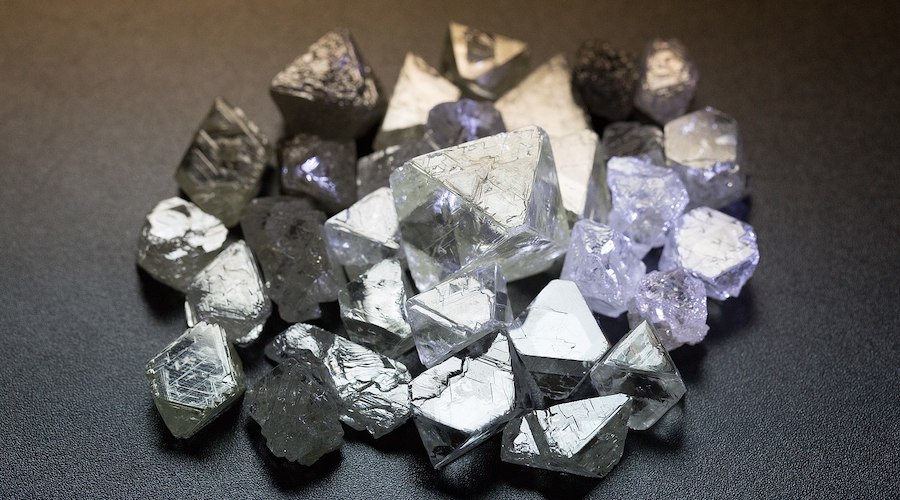
Alrosa Rough diamond weighing 390.7 carats

                                       Rough diamond weighing 390.7 carats

The Russian government could buy more rough diamonds from the state-run miner Alrosa, as it faces ongoing G7 sanctions and weak global demand.

The Finance Ministry says it will assess the situation after seeing second quarter results.

Alrosa last week reported a 77 per cent slump in profits for 2024 (down to $223m) and has said it could suspend some less profitable activities and lay off some of its 35,000 workers.

“As we have already said, it is possible that Gokhran will buy some of the stones, said Deputy Finance Minister Alexey Moiseyev, according to a report by the privately-run Interfax news agency.

“At this stage, we are still observing the market dynamics, indeed, it is quite weak, but not much time has passed. In principle, the first quarter is rarely good.”

Alrosa has previously offloaded excess inventory to Gokhran, the Russian State Precious Metals and Gemstones Repository in times of weak demand.

During the financial crisis of 2009 Gokhran bought up $1bn of Alrosa’s diamonds. And it sold back millions of carats in 2022, when a surge in post-lockdown demand outstripped the miner’s production capacities.

Last November it said it would be selling a batch of rough diamonds, including its largest recovery in a decade – an irregular-shaped diamond weighing 390.7 carats

Source: DCLA

Sunday, 9 February 2025

US Diamond Importers Must Declare Country of Origin

New rules announced by US Customs and Border Protection (CBP) will require all diamond importers to declare the country of origin of all goods.

New rules announced by US Customs and Border Protection (CBP) will require all diamond importers to declare the country of origin of all goods.

The move, to be implemented in April, is aimed at enforcing sanctions on Russian diamonds.

Importers have been required, since last March, to certify that their goods are not Russian, but not to disclose where they are from.

The G7 nations – including the US and EU – imposed a ban on Russian diamonds of 1 carat or more from March 2024 and on goods of 0.5 carats or above from September 2024.

Despite the sanctions, Russia is still thought to be exporting 40 per cent of its diamonds output because they are below the size threshold or industrial quality.

The US Customs and Border Protection (CBP) said in a statement that it plans to start collecting additional data in April on jewelry imports (and seafood) requiring filers to provide the country of mining.

They’ll be required to upload a PDF document on official company letterhead to CBP’s automated commercial environment (ACE) document image system.

The requirement applies to both loose diamonds and jewelry containing diamonds. Jewelry imports without diamonds are exempt.

The carat size threshold is not mentioned in the CBP announcement.

Source: IDEX

Monday, 6 January 2025

ALROSA Predicts Rising Demand and Diamond Prices in 2025

Russian diamond giant Alrosa

The high demand for jewelry and a decline of up to 20% in global diamond mining volumes compared to levels recorded 5-6 years ago will drive the industry’s growth, according to Sergey Takhiev, Head of Corporate Finance at Russian diamond giant Alrosa, reported by Rough&Polished.

According to Takhiev, while diamond prices are currently at a low point, demand is expected to grow due to a reduction in diamond inventories at manufacturing centers in India and a decline in diamond production volumes by major mining companies.

Alrosa Rough Diamonds

When asked about the timeline for market inventory replenishment, Takhiev estimated it would likely occur within a few months. He explained that the restocking of rough and polished diamond inventories is expected to impact the entire value chain, from manufacturers to retailers. Takhiev further emphasized that the depletion of global diamond resources, coupled with growing demand for luxury jewelry, is set to drive long-term price increases.

Meanwhile, ALROSA announced that the company’s Deputy CEO, Vladimir Marchenko, who has held the position since 2018, will step down to take on another role in the mining industry.

Source: DCLA

Thursday, 28 November 2024

Botswana to become certifier in G7 Russian diamond ban

Major African diamond producer Botswana will join Antwerp as an origin certifier of rough diamonds for export to the G7 which banned imports of Russian stones from the start of this year, a joint statement said on Wednesday.

Major African diamond producer Botswana will join Antwerp as an origin certifier of rough diamonds for export to the G7 which banned imports of Russian stones from the start of this year, a joint statement said on Wednesday.

The addition of Botswana looks set to salvage implementation of the ban. The initial system would have seen all diamonds go through Europe’s diamond hub in Antwerp for verification, backed by a new tracing system.

African diamond producers Angola, Botswana and Namibia, as well as diamond miner De Beers, had said the mechanism was unfair and would hurt their economies.

“Botswana and the G7 diamond technical team are now crafting a roadmap to address any identified gaps, aiming to have the export certification node fully operational in Botswana as soon as possible next year,” the statement said.

The Group of Seven (G7) nations ban on direct Russian diamond imports took effect on Jan. 1, followed by a ban on Russia-origin diamonds via third countries from early March.

The tracing system was meant to be up and running by Sept. 1, but the EU delayed the implementation to March 2025.

Source: Mining.com

Thursday, 21 November 2024

Russia to continue buying diamonds through state fund in 2025

Russia to continue buying diamonds through state fund in 2025

Russia will continue to buy diamonds through a state fund in 2025 in order to support the diamond industry and market, Deputy Finance Minister Alexei Moiseev said on Thursday.

The Russian budget for 2025-2027 has set aside $1.55 billion for the purchase of precious metals and gems, Moiseev said in a statement.

Sign Up for the Precious Metals Digest

Russia will continue to ensure “stable global rough diamond prices in the wake of oversupply in the current market,” the same statement said.

State-owned precious metals and gems repository Gokhran resumed buying diamonds from Alrosa in March 2024. Alrosa, under US and EU sanctions, is the world’s largest producer of rough diamonds by volume with 30% of the market.

Source: DCLA

Monday, 9 September 2024

Russia Increases Rough Exports to India

Rough diamonds imported from Russia to India

Russian exports of rough diamonds to India increased by well over a fifth, to 4.1m carats, during the first six months of the G7 sanctions.

Total sales were up by 22.23 per cent for January to June 2024, according to the Indian Ministry of Commerce and Industry. But revenue fell by 15.22 per cent, as prices keep declining, from $614m to $520m.

Russian exports for June alone were 347,620 carats, an increase of almost 32 per cent on the same month last year.

The G7 and EU nations imposed sanctions on all Russian diamonds of 1.0-cts and above, regardless of where they were cut and polished, from 1 January. The threshold was lowered to 0.50-cts and above from 1 September.

Rough diamonds imported from Russia to India can only be sold to markets beyond the G7 and EU.

India’s diamond industry has been calling on the government to allow direct payments to Russia so it can more easily buy sanctioned goods.

Source: DCLA

Monday, 12 August 2024

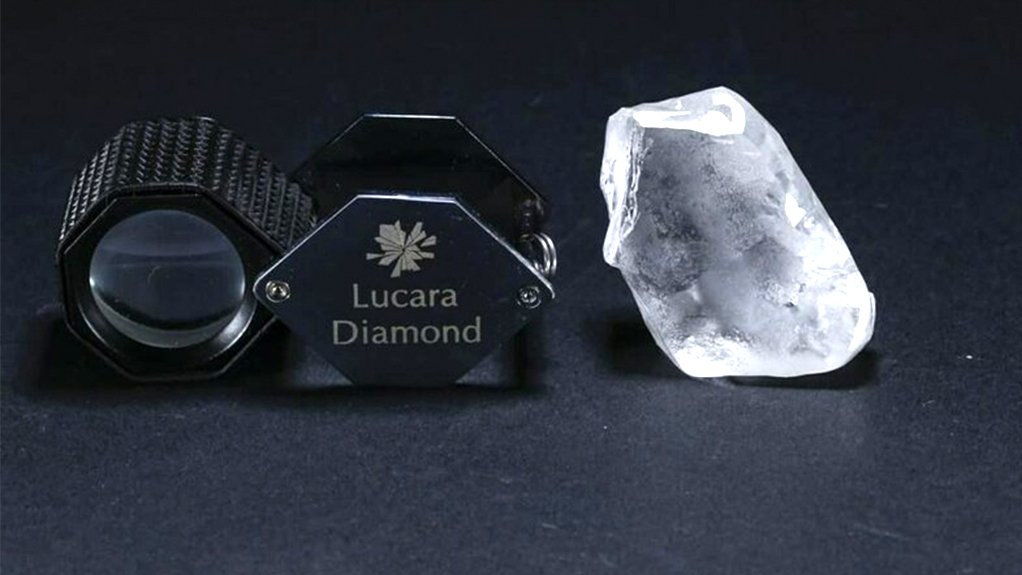
Lucara sold 76 387 ct during the second quarter

Diamond producer Lucara Diamond Corp

Diamond producer Lucara Diamond Corp sold 76 387 ct of diamonds, generating $41.3-million in revenue, during the second quarter ended June 30.

The company recovered 92 419 ct of diamonds at a grade of 12.9 ct for every 100 t of direct milled ore.

Additionally, 8 349 ct were recovered from processing historic recovery tailings. The company recovered 206 special diamonds, defined as rough diamonds weighing more than 10.8 ct, representing 6.9% by weight of the total recovered carats from the second quarter’s processed ore. This aligns with the company’s expectations, Lucara said.

Noteworthy recoveries during the period included a 491 ct Type IIa diamond, a 225.6 ct Type IIa diamond and a 109 ct Type IIa diamond.

Significant progress was made in shaft sinking for the ventilation and production shafts during the second quarter, with the critical path ventilation shaft ahead of the July 2023 rebase schedule. By the end of the quarter, the production and ventilation shafts had reached depths of 557 m below collar and 550 m below collar, respectively.

Operational highlights from the Karowe mine for the quarter included ore and waste mined of 700 000 t, with ore processed totalling 700 000 t.

Financial highlights for the second quarter revealed operating margins of 67%, compared with 59% in the second quarter of 2023. This strong operating margin is attributed to robust pricing for the company’s larger stones and cost reduction initiatives, supported by a strong dollar.

The operating cost was $26.32/t processed, a 6% decrease from $27.97/t in the second quarter of 2023 and consistent with the $26/t in the first quarter of this year.

Lucara believes the impact of inflationary pressures, particularly in labour, was well-managed by the operation, with a strong dollar offsetting a slight increase in costs compared with the previous period.

Adjusted earnings before interest, taxes, depreciation and amortisation (Ebitda) were $18.8-million, up from $16.5-million in the second quarter of 2023, driven by increased revenue and lower operating expenses.

During the second quarter, the company invested $11.2-million into the Karowe Underground Project (KUP), excluding capitalised cash borrowing costs. The ventilation shaft sank 128 m, and development of the 470-level station, located at about 550 m below collar, began.

Production shaft activities included the sinking of 104 m and the completion of three probe hole covers, with no water being intersected. A total of 26 m of lateral development on the 470-level, along with the 470-level station development, was completed.

As of June 30, Lucara reported cash and cash equivalents of $21.9-million and working capital of $21.7-million. The company had drawn $165-million on the $190-million project facility for the KUP, with an additional $25-million drawn on the $30-million working capital facility and a cost overrun reserve account balance of $37.5-million.

The Karowe mine registered no lost-time injuries during the second quarter, taking the mine to more than three years without a lost-time injury.

“Lucara’s performance this quarter reaffirms our position as a leader in the diamond industry. Our . . . safety and operational excellence [record] continues to drive our success, with both our openpit operations and underground construction progressing admirably. The Underground Expansion Project, in particular, is advancing well, with shaft sinking progress surpassing our expectations,” Lucara president and CEO William Lamb said on August 12.

Lucara noted that, in the diamond market, the long-term outlook for natural diamond prices remains positive owing to improving supply and demand dynamics, largely driven by long-term reductions from major producing mines.

However, the market for smaller-sized diamonds remains soft, impacted by a weak Asian market and the rise of laboratory-grown diamonds.

Lucara said demand for larger diamonds over 10.8 ct remained robust, as reflected in the company’s sales.

However, the G7 sanctions on Russian diamonds over 1 ct, effective March this year, have caused some trade delays owing to new regulations requiring these diamonds to be processed through the Antwerp World Diamond Centre for origin verification.

Lucara, with its established operations producing Botswana diamonds, stands to benefit from this heightened focus on origin verification.

Sales of laboratory-grown diamonds increased steadily through 2023 and into this year, with many smaller retail outlets increasingly adopting these diamonds as a product.

In the second quarter, diamond producer De Beers announced that it would cease creating synthetic diamonds and focus on selling natural diamonds. This decision aligns with several major brands confirming they would not market laboratory-grown diamonds.

Lucara said the long-term impact was expected to support the natural diamond market, with a bifurcation between the natural and laboratory-grown diamond markets expected in the medium term.

The company believes that the longer-term market fundamentals for natural diamonds remain positive, as demand is expected to outstrip future supply, which has been declining globally over the past few years.

Source: DCLA

Monday, 1 July 2024

Russian exports of diamonds to Hong Kong up 18-fold in 5M24

Russian diamonds

ALROSA MINING COMPANY, RUSSIA

In the first five months of the year, imports of Russian diamonds to Hong Kong increased 18-fold year on year, according to data from Hong Kong’s Statistics Bureau published on its official website on June 30.

Hong Kong has dramatically stepped its imports of diamonds from Russia, purchasing $657.3mn worth of Russian diamonds in the first five months of 2024.

In the period from January to May 2024, Hong Kong’s imports of Russian diamonds soared from $36.5mn a year earlier to $657.3mn. As a result, Russia has become the third-largest supplier of diamonds to Hong Kong, with its share of total diamond imports rising to 12% from just 1% in 2023.

India remains the leading supplier of diamonds to Hong Kong, with imports valued at $2.9bn, followed by Israel with $716.6mn. Notably, both India and Israel, unlike Russia, do not mine diamonds themselves.

The substantial increase in Hong Kong’s diamond imports from Russia highlights a significant shift in the global diamond market. Dubai has also become a major market for the trade in Russian diamonds.

As bne IntelliNews reported, the EU included sanctions on Russian diamond exports as part of the twelfth sanctions package, but due to intensive lobbying by Belgium, where Antwerp is the leading European diamond market and the number-one destination for rough diamonds from Russian miner Alrosa, the sanctions were watered down and will be phased in gradually.

Russian diamond sanctions watered down again

Afraid of losing the diamond business completely to the growing rival markets in Asia and the Middle East, the EU has watered down the restrictions on trading Russian diamonds again last week.

The EU has extended the “sunrise period” for sanctions on Russian diamonds by six months and included an important concession for goods that predate the new rules, according to a statement released by the EU on June 24.

The EU also said the update “fine-tunes” the import ban on Russian diamonds included in the twelfth package and is included as part of the fourteenth sanctions package. Earlier in June, De Beers called for a one-year extension to the sunrise period for the G7 sanctions on Russian diamonds, but it is up to the individual countries to rule on the implementation of the ban.

The mandatory traceability programme for imports of rough and polished natural diamonds will now take effect on March 1, 2025 instead of September 1, 2024. This extension is intended “to allow more time to set up the G7 traceability scheme,” the EU explained reports Rapport.

This decision comes in response to calls from diamond trading powerhouse De Beers and other industry leaders to extend the interim period during which importers can use alternative documentation to prove that diamonds are not of Russian origin. Once this period ends, importers into the EU must use a traceability-based certification scheme to verify imports of diamonds over 0.50 carats.

Additionally, the EU has introduced a “grandfathering” clause to exempt diamonds that were already located in the EU or a third country other than Russia – or were manufactured in a third country – before the new rules were implemented. The EU ban on direct imports of diamonds from Russia began on January 1, 2024, while the ban on goods processed outside Russia started on March 1, 2024.

The EU said that these pre-existing diamonds no longer provide revenue to Russia.

“We are extremely pleased that, after months of intense negotiations, we have succeeded in pushing the needle to allow regularisation of so-called ‘grandfathered stock,’” said the Antwerp World Diamond Centre (AWDC). “Sanctioning these goods and prohibiting their trade would impose an unfair and severe financial burden on diamond companies without significantly impacting Russia’s revenues.”

The extension and concession aim to balance the need for stringent sanctions with the “practical realities of the diamond industry,” providing additional time and clarity for businesses to adapt to the new regulations.

Moreover, temporary imports or exports of jewellery, for example for trade fairs or repairs, will not fall under the ban. In addition, the EU has delayed the prohibition on jewellery incorporating Russian diamonds processed in third countries until the European Council, the EU’s executive arm, “decides to activate” it, the EU statement said.

The US currently has the strictest limits on Russian trade, requiring self-certification for diamonds of 1 carat or lower, falling to 0.50 carats on September 1. Larger diamonds are not covered by the sanctions.

Source: Intellinews.com

Sunday, 23 June 2024

Russia Seeks New Markets as "Illegal Unilateral Restrictions" Bite


Russia Seeks New Markets as “Illegal Unilateral Restrictions” Bite

Russia is seeking to strengthen ties with Brazil, India, China, and South Africa and other BRICS countries in response to tighter sanctions on diamonds from the G7 and EU.

Setting an agenda for “equal and fair interaction between the parties involved in all segments of the global diamond trade” was the focus of a roundtable discussion at the St. Petersburg International Economic Forum earlier this month.

Russia currently chairs BRICS (the initial letters of Brazil, Russia, India, China, and South Africa. Later additions are Iran, Egypt, Ethiopia, and the United Arab Emirates).

“The only universal mechanism for regulating the global diamond trade, the Kimberley Process Certification Scheme (KPCS), is being undermined by the attempts of numerous countries to introduce unilateral trade barriers,” said BRICS in a statement.
Alrosa CEO Pavel Marinychev said: “New cooperation mechanisms will ensure the stability of the global diamond market and preserve the system of the free global trade of diamond products based on the core principles of the Kimberley Process.”

Russia warned back in November 2023 that sanctions on it diamonds would have a “boomerang” effect – harming the countries that imposed them more than Russia itself.

Nikolayev Aysen, head of Russia’s Yakutia republic, where state-controlled diamond miner Alrosa is based, told the BRICS audience: “Given the illegal unilateral restrictions that certain Western countries have imposed on Russian diamonds, it is crucial for us to support the efforts of ALROSA, which aim to diversify international supply markets. For example, this will make it possible to maintain the sustainable socioeconomic development of Yakutia.”

Source: DCLA

Monday, 20 May 2024

The US is reportedly rethinking plans to ban Russian diamonds amid industry pushback

The US is reportedly rethinking plans to ban Russian diamonds amid industry pushback

The US is rethinking restrictions on Russian diamonds after a wave of pushback from the industry and nations heavily involved in the diamond trade, Reuters reported on Monday.

Western countries have placed stiff restrictions on Russia’s diamond trade, with fresh sanctions in December banning the gems throughout the European Union. That’s a step up from the initial sanctions, which previously allowed the trade of Russian diamonds that were polished in other countries.

Diamond traders now need to self-certify that the gems they sell are not of Russian origin. By September, diamond traders in the European Union will need to send diamonds through a certification system in Belgium before selling them.

Those measures have helped crimp Russia’s war revenue, given that the nation is one of the largest producers of diamonds in the world. Yet the US, one of the world’s largest diamond consumers, could pull back on its commitment to implement the latest restrictions, three people familiar with the matter told Reuters.

Two sources said the US had pulled back on working with the G7 to implement the diamond ban and certifying that gems were not of Russian origin. Officials are “there but not engaging” in the discussion, one person said.

A senior White House official told Reuters the US would continue to work with the G7 on the Russian diamond ban, and that it had not changed its mind on the issue, but they noted several obstacles in enforcing the latest restrictions:

“We will want to make sure that we strike the right balance between hurting Russia and making sure that everything is implementable,” the official said.

The government has received pushback from firms and nations heavily involved in the diamond trade. Some African nations and Indian diamond polishers have complained about the latest restrictions, warning that the ban was faulty in its design and could raise problems in the industry. Diamond prices could also rise due to scarcer supply, they warned.

Virginia Drosos, the CEO of Signet, asked the US government to “stand against … the G7 Belgian solution,” according to a letter seen by Reuters.

De Beers, one of the world’s largest diamond miners, said it supported a ban on Russian diamonds but wants diamonds to be verified at the source of production, rather than in Belgium.

“The opportunities for, and likelihood, of Russian diamonds infiltrating the legitimate supply chain are in fact higher when you move further away from the source,” it told Reuters.

Source: DCLA

Thursday, 2 May 2024

Russia’s Alrosa says output stable amid Western sanctions

Russia’s Alrosa says output stable amid Western sanctions

Russian diamond miner Alrosa has no plans to reduce production amid tougher Western sanctions, its chief executive Pavel Marinychev said on Thursday.
The Russian finance ministry said last month that Russia will regularly buy diamonds from the sanctions-hit producer through a state fund, suggesting that Western restrictions on the country’s diamond exports may be having some impact.
Group of Seven (G7) countries banned direct imports of Russian diamonds in January. A European Union and G7 ban on imports of Russia-origin diamonds via third countries came into effect last month.

Source: DCLA

Sunday, 14 April 2024

Antwerp World Diamond Centre CEO resigns amid Russia diamond sanctions


Antwerp World Diamond Centre CEO resigns amid Russia diamond sanctions

Antwerp World Diamond Centre (AWDC) chief executive Ari Epstein resigned unexpectedly on Thursday, the AWDC’s board of directors said in a statement.

A spokesperson for AWDC, Belgium’s main diamond industry group, said on Friday that Epstein, who had been CEO for 13 years, did not wish to communicate about the reason for his sudden departure, but Belgian financial newspaper De Tijd reported that Russian diamond sanctions had been the cause of conflict between the diamond sector and the Belgian government.

AWDC did not say who would replace Epstein as CEO. Epstein did not immediately respond to a request for comment sent via LinkedIn.

Following an EU ban on Russian-origin diamonds that took effect on March 1, rough and polished diamonds have to enter the EU and G7 countries with documentary proof and declarations that the stones are not of Russian origin.

Antwerp’s diamond dealers have said they are facing long and costly delays as a consequence.

Source: DCLA

Sunday, 24 March 2024

Belgian police conduct raids after suspected Russian diamonds seized


Belgian police conduct raids after suspected Russian diamonds seized

Antwerp police conducted six raids on Wednesday and made four arrests as part of an investigation into some diamond imports suspected of being Russian-origin, Antwerp’s public prosecutor office said in a statement on Friday.

The investigation is the first related to the EU and Group of Seven (G7) import ban on diamonds from Russia that began on Jan. 1 to punish Moscow for its invasion of Ukraine. A wider ban on Russian-origin stones imported via third countries began on March 1. Russia’s state-owned company Alrosa is one of the world’s largest diamond miners.

The investigation was launched after customs officials seized diamonds in late February, the statement said. A spokesperson for the prosecutor said three shipments had been confiscated.

The Belgian city has for centuries been a global diamond hub, particularly for rough diamonds, though 90% of polishing is now done in India.

Sources familiar with the matter said the value of the three seized shipments was in the millions of euros. One source specified the overall value was around 8 million euro ($8.64 million).

A spokesperson for the prosecutor declined to comment on the combined value of the shipments. In the statement, the prosecutor’s office added that documents and digital media were seized during the raid.

Source: DCLA

Would be interesting to know how they test for origin

Thursday, 14 March 2024

Russian diamond ban creates costly delays, Antwerp diamond dealers say


Russian diamond ban creates costly delays, Antwerp diamond dealers say

Antwerp’s diamond dealers face long and costly delays following an EU ban on Russian-origin diamonds that took effect on March 1 and has slowed imports, they say in a letter seen by Reuters.

The letter, dated March 13, said the disruptions would erode the competitive advantage of the centuries-old Antwerp diamond trade. It was addressed to Belgium’s main diamond industry group, Antwerp World Diamond Centre (AWDC), and requested a review of the new procedures.

Any impact is likely to be reduced by sluggish market conditions. Diamond inventories are high and prices have fallen. Paul Zimnisky, a global diamond analyst, said last month that prices were down 25% from their early 2022 peak.

Al Cook, CEO of mining company Anglo American’s De Beers’ diamond business, has said the miner would reduce production this year in response to surplus supply.

“While we fully support the decisions taken by Belgium, the European Union, and the G7 nations, in regards to the sanctions of January 1st 2024, the implementation of the measures to enforce the sanction has adversely affected all of our operations,” said the letter, signed by over 100 local firms.

“The intention was to prevent the flow of diamonds from sanctioned states, but the reality we face is the severe disruption of our supply chains, and alienation from the rest of the global trade.”

A Belgian government official said the delays were temporary and were easing.

The EU and Group of Seven (G7) countries agreed to ban direct imports of Russian diamonds to their markets as of Jan. 1 and before phasing in a full ban on Russian-origin stones via third countries from March 1 because of Moscow’s war in Ukraine.

Russia’s state-run Alrosa, which together with De Beers is one of the world’s top diamond producers, was also placed under sanctions by the EU.

Diamond hub
Antwerp remains the world’s biggest diamond hub though 90% of stones are polished in India. Belgium pushed hard for the G7 to adopt a version of its proposed plan to try to prevent Antwerp from losing more business after major Western jewellers began eschewing Russian stones.

Diamond dealers said their shipments have been held up for over a week at customs even if the gems were straight from African producers.

The Belgian government official said shipments pending would be processed within 24 hours.

“The indirect ban coincided with the Hong Kong Diamond Fair which is an annual peak period… This, in combination with the expected teething problems caused some initial delay in processing of shipments during the first days,” he said.

Diamond dealers say they expect more problems when the additional tracing requirements take effect from September.

“We see the procedures will cause Antwerp to further lose competitive advantage… rather than deal a meaningful blow to any sanctioned products,” the letter said.

“The current trajectory threatens the existence of Antwerp’s diamond industry, a heritage of six centuries.”

The head of the AWDC, Ari Epstein, said the group would soon present the new measures, adding it was “acutely aware of the challenges and disruptions this timing may have caused”.

“Let me be unequivocally clear: the violation of sanctions is criminal in nature and not taken lightly by governments or our organization. Our commitment to compliance… is unwavering and absolute,” Epstein said in a statement.

Source: DCLA

Sunday, 3 March 2024

US to Require Self-Certification for Russian Diamond Ban


US to Require Self-Certification for Russian Diamond Ban

The US and the UK will require importers of polished diamonds weighing 1 carat and above to apply a “self-certification” declaring the stones are not of Russian origin, while the UK will also expect documentary proof in some cases.

The new US guidelines are a follow-up to last month’s directive by the US Office of Foreign Assets Control (OFAC) implementing tighter restrictions on loose Russian diamonds and those set into jewelry that had been in part or fully manufactured or “substantially transformed” in another country. The rules address a loophole that had been in place since the US first imposed sanctions in March 2022.

The US Customs and Border Protection released an update to the bans beginning March 1, calling for importers to upload a PDF on official company letterhead, it said last week. For nonindustrial diamonds, the self-certification should state: “I certify that the nonindustrial diamonds in this shipment were not mined, extracted, produced, or manufactured wholly or in part in the Russian Federation, notwithstanding whether such diamonds have been substantially transformed into other products outside of the Russian Federation.”

Those bringing in diamond jewelry or unsorted diamonds should submit a document saying: “I certify that the diamond jewelry and unsorted diamonds in this shipment are not of Russian Federation origin or were not exported from the Russian Federation.”

The UK government’s Department for Business and Trade has followed suit, noting that supplier declaration of compliance with the sanctions “may be acceptable,” but that “traders should be prepared to provide documentation to demonstrate evidence of a stone’s supply chain.” That evidence can include the original Kimberley Process (KP) certificate issued when shipped from the diamond’s origin country, an invoice, a certificate of origin issued by a chamber of commerce, or a diamond origin report. The government also distributed rules for diamonds manufactured in another country that were outside of Russia before March 1.

Last week, the London Diamond Bourse (LDB) held an emergency meeting to discuss the ban due to the “absence of clarity and guidance…as to how we might conform with the restrictions…in terms of paperwork and provenance” before the March 1 launch, it said. The exchange noted it was in an “invidious” position and felt its members and the greater trade should avoid importing polished loose diamonds above 1 carat until there is “less ambiguous guidance.” The bourse may put out updated guidance following the release of the new rules.

While neither the US or the UK has given a timeline as to how long these guidelines will be in effect, it’s likely the less restrictive rules will only be valid during the “sunrise period,” which ends August 31 and allows importers time to become accustomed to the new measures. The European Union has stated that it would accept documentation proving non-Russian origin during the initial timeframe but will expect all stones passing through Antwerp to be placed on a traceability system beginning September 1. At that point, restrictions in all Group of Seven (G7) nations — Canada, France, Germany, Italy, Japan, the US and the UK, as well as the EU — will expand to include diamonds weighing more than 0.50 carats.

For its part, Canada also produced a statement noting it would comply with the March 1 curbs against indirect imports of Russian-origin diamonds.

“Canada has been at the forefront of imposing economic barriers on the Putin regime,” said MĂ©lanie Joly, the country’s minister of foreign affairs. “Along with our allies and partners, we have imposed severe sanctions on the Russian regime, and we will continue to do so to hold [Russian President Vladimir] Putin and his enablers to account.”

The current self-certification rules are likely to provide a temporary solution to concerns industry groups voiced over a proposal that all diamonds would be funneled through Antwerp for screening and certification prior to arriving at their destination countries, a move the organizations feared would harm the rest of the industry.

On Saturday, India’s Gem and Jewellery Export Promotion Council (GJEPC) sent a message to members urging them to “review guidelines meticulously,” and “exercise utmost caution when dispatching shipments to G7 countries.” The council also advised exporters to “maintain meticulous records of all documents of import and purchase.” A large portion of the world’s rough is manufactured in the country before making its way to consumer nations.

“It is crucial to emphasize that while some of the G7 countries/EU have already issued guidelines to their importers, a few are still in the process of finalizing theirs,” the GJEPC said. “We believe even the issued ones are initial guidelines and are subject to changes [and] updates during the course of time.”

Source: DCLA

Thursday, 29 February 2024

Alrosa Sales Rise Despite Sanctions


Alrosa Sales Rise Despite Sanctions

Alrosa’s revenue rose in 2023 as the Russian diamond miner continued to sell despite sanctions.

Sales increased 9% to RUB 322.57 billion ($3.55 billion) for the year, the company reported Wednesday. However, net profit fell 15% to RUB 85.18 billion ($939.3 million).

Alrosa and its diamonds have been the subject of sanctions by the US and other Western countries since Russia’s war in Ukraine began in February 2022. Major markets including India and China still permit imports of Russian diamonds. On March 1, the US will introduce stricter measures banning the import of 1-carat and larger stones of Russian origin, even if they went through manufacturing in a third country.

The miner’s announcement was its second full results statement since March 2022. On both occasions, it withheld information on the destination of its sales, which usually shows Belgium, the United Arab Emirates (UAE) and India to be the largest buyers.

Last week, De Beers reported a 36% drop in 2023 revenue for a total of $4.27 billion, with the diamond unit recording a net impairment of $1.56 billion, reflecting a weaker demand outlook.

Source: DCLA

Wednesday, 28 February 2024

Russia diamond producer Alrosa’s annual net USD profit drops


Russia diamond producer Alrosa’s annual net USD profit drops

Russia’s sanctions-hit diamond producer Alrosa, opens new tab on Wednesday reported 2023 net profit of $925 million, down 15.2% from the previous year, Turnover was up 9.2% at 322.6 billion roubles.


Group of Seven leaders agreed in December to ban non-industrial diamonds from Russia by January, and Russian diamonds sold by third countries from March.


The European Union added Alrosa, Russia’s biggest diamond producer, to its sanctions list in January as part of punitive measures it has imposed on Moscow over the war in Ukraine.

Sunday, 25 February 2024

US’s New List of Russian Sanctions Includes Diamond Exporter


US’s New List of Russian Sanctions Includes Diamond Exporter

The US Treasury has imposed sanctions against nearly 300 Russian entities in its latest round, including a company specializing in the export of rough and polished diamonds.

The new series of restrictions the Office of Foreign Assets Control (OFAC) has applied marks the two-year anniversary of Russia’s invasion of Ukraine, and is also in response to the death of opposition politician and anti-corruption activist Aleksei Navalny, the Treasury said last week.

OFAC has targeted Almazyuvelirexport, Russia’s state-owned exporter of rough and polished diamonds and precious metals. The company was designated for “operating, or having operated, in the metals and mining sector of the Russian Federation economy,” it added.

Other companies that were banned included financial institutions, the defense industry, companies “providing backdoor support for Russia’s war machine,” and those connected to Navalny’s imprisonment.

Source: DCLA

How Efforts to Control the Diamond Trade Are Hurting the Very Communities They Were Supposed to Protect

For more than two decades, global policies aimed at restricting the flow of diamonds from conflict zones most notably through the “blood dia...