Showing posts with label Russian royal gems. Show all posts

Monday, 22 June 2026

Russia Moves to Ban Lab Grown Diamond Terminology in Major Industry Shift


The global diamond industry is facing another major terminology debate as Russia introduces some of the strictest rules yet regarding the sale and description of laboratory grown diamonds.

The global diamond industry is facing another major terminology debate as Russia introduces some of the strictest rules yet regarding the sale and description of laboratory grown diamonds.

From 1 September 2026, new Russian regulations will restrict how synthetic diamonds can be marketed, with the aim of creating a clearer distinction between natural diamonds and stones produced through laboratory technology. Under the new rules, the word “diamond” and related terms will be reserved for natural diamonds, while laboratory created stones must be identified as “synthetic”.

New Rules Focus on Consumer Transparency

The Russian government has stated that the changes are designed to improve transparency and prevent consumers from confusing synthetic stones with natural diamonds. Retailers will be required to clearly disclose the origin of the stone, and synthetic diamonds will need to be labelled accordingly.

The new regulations also restrict the use of traditional diamond terminology when describing synthetic stones. Words associated with natural diamonds, including “natural”, “genuine”, “real”, “precious”, “mined” and similar descriptions, will not be permitted in connection with synthetic products.

In addition, synthetic stones will not be marketed using traditional diamond grading language relating to colour, clarity or carat weight. Instead, their weight must be disclosed in grams rather than carats under the new framework.

A Clear Divide Between Natural and Laboratory Created Diamonds

The move reflects a growing global discussion about how the jewellery industry communicates the difference between natural diamonds and laboratory grown diamonds.

Natural diamonds are formed deep within the Earth over billions of years and are valued for their rarity, geological history and limited supply. Laboratory grown diamonds are created using advanced technology that replicates the conditions required for diamond formation, producing stones with the same chemical composition and crystal structure as natural diamonds.

The key difference is not the material itself, but the origin and rarity.

Impact on the Global Diamond Market

Russia is one of the world’s largest producers of natural diamonds, and the introduction of stricter terminology rules comes at a time when laboratory grown diamond production has expanded rapidly worldwide.

The rise of laboratory grown diamonds has transformed parts of the jewellery market, particularly among consumers seeking larger stones at lower prices. However, the significant price decline of many laboratory grown diamonds has also raised questions about long term value, resale potential and the role of rarity in diamond ownership.

For the natural diamond industry, clear terminology remains a central issue. Industry organisations have long argued that consumers should understand exactly what they are purchasing and that natural diamonds and laboratory grown diamonds should not be marketed in a way that creates confusion.

The Importance of Independent Diamond Certification

As the market continues to evolve, independent diamond certification remains essential. A professional grading report provides consumers with confidence by identifying whether a stone is natural or laboratory grown and documenting its characteristics.

Laboratories such as the Diamond Certification Laboratory of Australia play an important role in maintaining transparency and trust within the diamond trade through scientific examination and accurate reporting.

The Russian decision highlights a broader global movement towards clearer diamond disclosure. As technology continues to reshape the industry, accurate terminology and independent verification will remain critical in protecting consumer confidence.

Source: DCLA

Monday, 15 December 2025

Alrosa Upbeat, Despite Tariffs and Lab Growns

Alrosa diamond mining

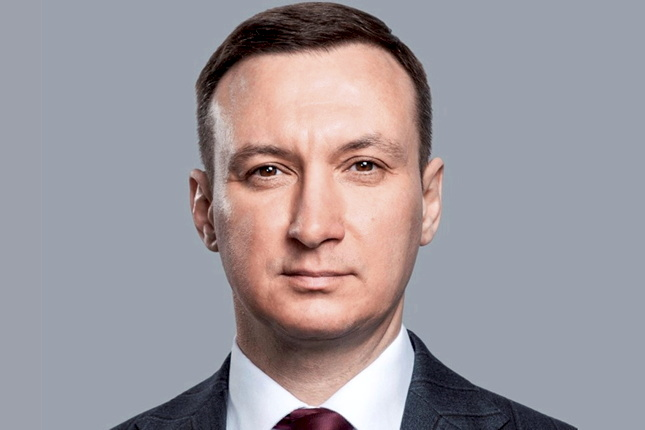
Alrosa CEO Pavel Maryinchev gave a remarkably upbeat assessment of the natural diamond market, telling the Times of India (TOI) that the industry is adapting well to US tariffs and that the threat from synthetic diamonds is diminishing.

Maryinchev (pictured) highlighted two major factors behind his optimism: steady global demand for jewelry and a decline in diamond production. “Inventories throughout the diamond pipeline are gradually normalizing, creating favorable conditions for price recovery,” he said.

Alrosa CEO Pavel Maryinchev

Alrosa, Russia’s state-owned and sanctioned diamond miner, reported a 24 per cent drop in revenue in the first half of 2025 and has suspended production at several low-margin mines.

But Maryinchev remains confident. “Our expectations are that the high import tariffs will not have a long-lasting impact, and businesses will be able to adapt and minimize the effect,” he said.

He also pointed to a significant decline in wholesale prices for lab-grown diamonds, which fell nearly 40 per cent year-on-year in Q3 2025, reducing the competitive pressure on natural stones.

“Fears that synthetic substitutes might replace natural diamonds are becoming less likely to come true every year,” he told TOI.

He noted that, with no major new deposits discovered and existing mines producing less, supply constraints are increasingly stabilizing the market.

Global rough diamond production is expected to fall to 100 million carats in 2025, a 30-50% decline compared to six to eight years ago.

Maryinchev said the effect of US tariffs on demand was muted because luxury jewelry buyers tend to be less price-sensitive, and retailers can temporarily adjust markups.

“Diamond jewelry manufacturers may need time to adapt, but we expect India’s demand to recover once the first positive sales figures post-tariffs are achieved,” he said.

Source: DCLA

Thursday, 2 May 2024

Russia’s Alrosa says output stable amid Western sanctions

Russia’s Alrosa says output stable amid Western sanctions

Russian diamond miner Alrosa has no plans to reduce production amid tougher Western sanctions, its chief executive Pavel Marinychev said on Thursday.
The Russian finance ministry said last month that Russia will regularly buy diamonds from the sanctions-hit producer through a state fund, suggesting that Western restrictions on the country’s diamond exports may be having some impact.
Group of Seven (G7) countries banned direct imports of Russian diamonds in January. A European Union and G7 ban on imports of Russia-origin diamonds via third countries came into effect last month.

Source: DCLA

Wednesday, 3 November 2021

Russian royal gems, rare coloured diamonds on Geneva auction block


Russian royal jewels smuggled out of the country during the 1917 revolution, alongside rare coloured diamonds, are on offer at auction next week in Geneva, looking for deep-pocketed collectors emerging from the pandemic.

An orange-pink diamond weighing 25.62 carats, estimated at 3.6 million to 5.38 million Swiss francs ($3.9 million to $5.9 million), set in a ring, is the star lot at auction house Sotheby’s semi-annual jewellery sale in the Swiss city on Nov. 10.

“A beautiful crystal, it’s a fantastic colour with a little bit of orange but not too much, so it’s a very subtle colour,” Olivier Wagner, head of sale and jewellery expert at Sotheby’s Geneva, told Reuters in the showroom in a lakeside hotel.

“The market is currently very dynamic and after the pandemic people are very keen to buy jewellery today and to buy something tangible they can enjoy.”

For collectors of historic gems, a large oval sapphire and diamond brooch and matching earclips from the jewellery box of Grand Duchess Maria Pavlovna, the aunt of the last Russian Emperor Nicholas II, is back on the block.

“They belonged to the Grand Duchess Maria Pavlovna of Russia who was the queen of social life in St. Petersburg. She was the wife of the Grand Duke Vladimir, so the son of the tsar (Alexander II), and she had a fantastic collection of jewels,” Wagner said.

The royal set, entrusted to her friend the British diplomat Albert Henry Stopford, who took them to London for safekeeping along with other jewels, is estimated at 280,000-480,000 francs, the auction house said.

Pavlovna escaped from revolutionary Russia and died in France in 1920. Her brooch and earrings are being sold by a European princely family who bought them at auction in 2009, the auction house said.

Source: DCLA

Russian royal gems, rare coloured diamonds on Geneva auction block


Russian royal jewels smuggled out of the country during the 1917 revolution, alongside rare coloured diamonds, are on offer at auction next week in Geneva, looking for deep-pocketed collectors emerging from the pandemic.

An orange-pink diamond weighing 25.62 carats, estimated at 3.6 million to 5.38 million Swiss francs ($3.9 million to $5.9 million), set in a ring, is the star lot at auction house Sotheby’s semi-annual jewellery sale in the Swiss city on Nov. 10.

“A beautiful crystal, it’s a fantastic colour with a little bit of orange but not too much, so it’s a very subtle colour,” Olivier Wagner, head of sale and jewellery expert at Sotheby’s Geneva, told Reuters in the showroom in a lakeside hotel.

“The market is currently very dynamic and after the pandemic people are very keen to buy jewellery today and to buy something tangible they can enjoy.”

For collectors of historic gems, a large oval sapphire and diamond brooch and matching earclips from the jewellery box of Grand Duchess Maria Pavlovna, the aunt of the last Russian Emperor Nicholas II, is back on the block.

“They belonged to the Grand Duchess Maria Pavlovna of Russia who was the queen of social life in St. Petersburg. She was the wife of the Grand Duke Vladimir, so the son of the tsar (Alexander II), and she had a fantastic collection of jewels,” Wagner said.

The royal set, entrusted to her friend the British diplomat Albert Henry Stopford, who took them to London for safekeeping along with other jewels, is estimated at 280,000-480,000 francs, the auction house said.

Pavlovna escaped from revolutionary Russia and died in France in 1920. Her brooch and earrings are being sold by a European princely family who bought them at auction in 2009, the auction house said.

Source: DCLA

The Diamond: Nature’s Most Remarkable Gem

Diamonds are among the most fascinating natural materials on Earth. Known for their beauty, rarity, and incredible durability, diamonds have...