Showing posts with label Alrosa’s Catoca mine. Show all posts

Wednesday, 29 October 2025

Alrosa to Extract Gold as Byproduct of Diamond Mining

Alrosa to Extract Gold as Byproduct Mirny, in Russia's Sakha Republic.

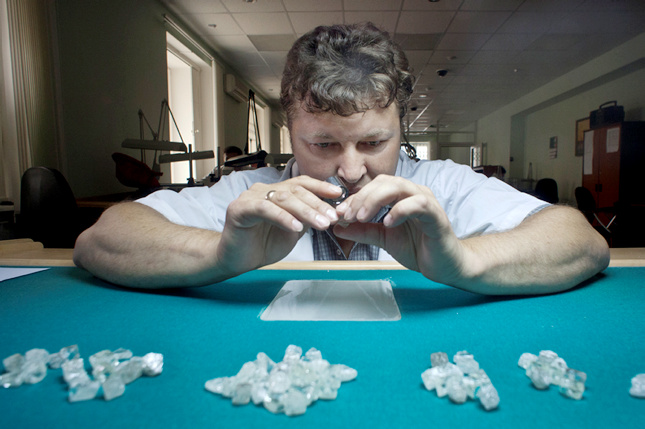
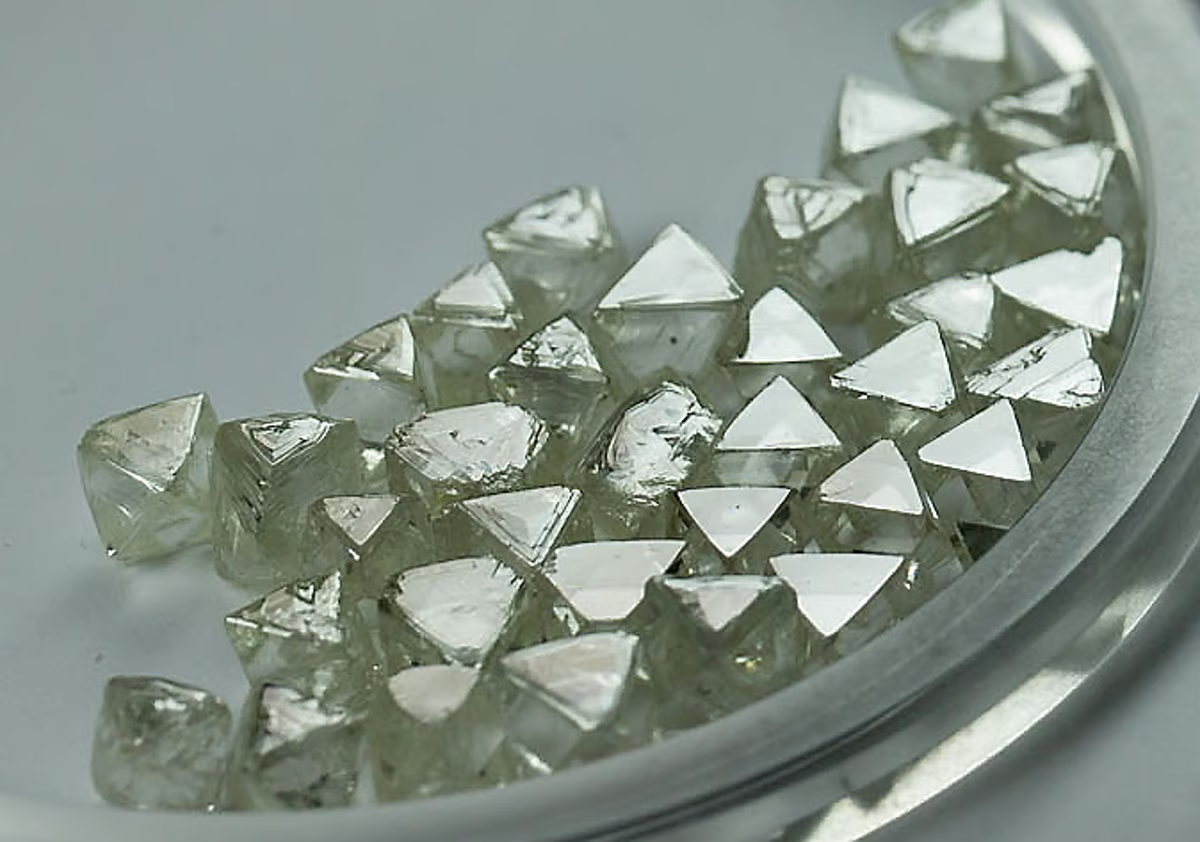
Alrosa plans to extract gold from its diamond-bearing alluvial deposits in Mirny, in Russia’s Sakha Republic.

The move comes as demand for natural diamond continues to slide, and gold prices reach record highs.

Alrosa, Russia’s state-controlled miner, announced on Friday (24 October) that it was “considering extracting gold as a byproduct during diamond mining at the Mirny-Nyurba Mining and Processing Division”.

Gold was first found in the area in 2020 and Alrosa says a team of geologists has so far recovered 433kg of it.

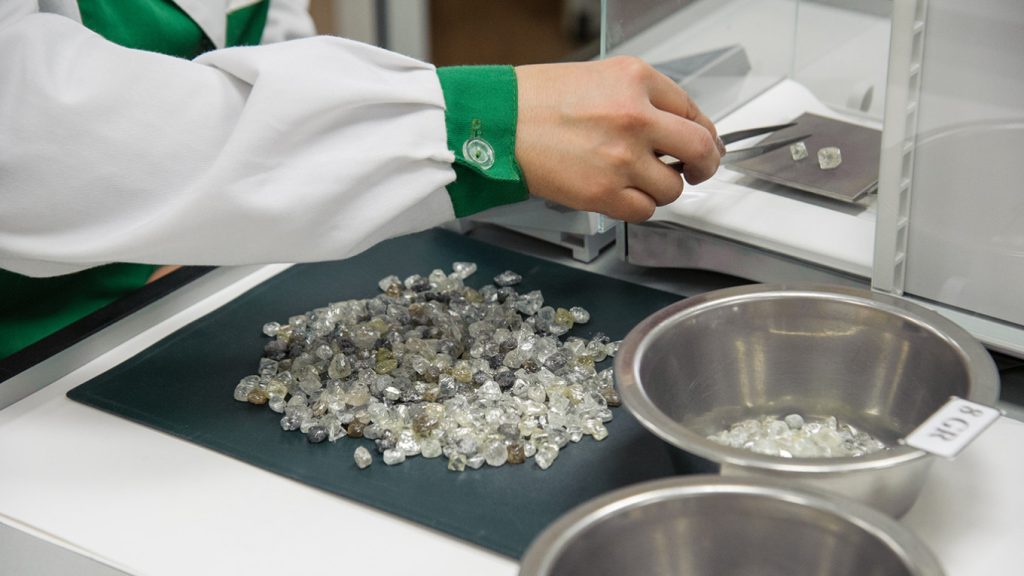
The proposal is that gold will be recovered as a byproduct from diamond-bearing sands and placer deposits (accumulations of valuable minerals) in the Mirny area. Alrosa will use existing processing facilities.

In 2024, the company bought the Degdekan gold deposit in the Magadan region – in a notable departure from its core activity of diamond mining.

It said it would invest over $100m in the project, which is expected to produce about 3.3 tonnes of gold annually when it reaches full capacity around 2030.

Source: DCLA

Tuesday, 30 September 2025

Alrosa’s $240m Plan to Dig Deeper at Udachny Mine

Udachny Mine

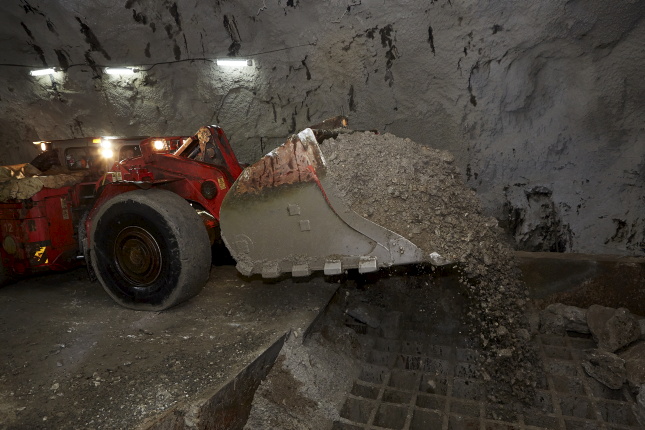
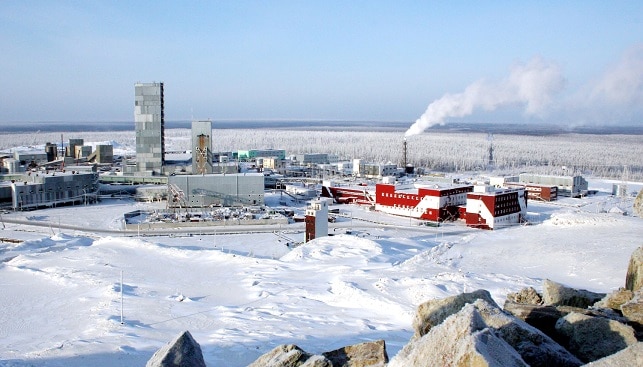
Alrosa is to invest RUB 20bn ($240m) digging deeper to extend the life of the vast underground Udachny mine, just outside the Arctic Circle, until at least 2055.

Mining will eventually take place more than 1km below the surface, extracting 4.1m tonnes of ore annually. The target horizon – the level where mining operations are planned – is 1.13 km below the surface ( at an absolute elevation of -780 m, when taking the surface elevation as a baseline).

Alrosa CEO Pavel Marinychev says annual profit from the planned expansion is estimated at almost RUB 6bn ($73m) a year.

Udachny opened as open-pit mine in 1967 and switched to underground operations in 2014, producing over 10 per cent of Alrosa’s total output. It was due to reach the end of its life in 2039.

Alrosa said the investment committee had approved the project. Udachny is one of the world’s largest kimberlite pipes. Trucks take over 30 minutes to reach the bottom, currently 680 metres below the surface.

“The implementation of the investment project will enable us to significantly extend the duration of mining at the deposit, which currently produces more than 10 per cent of Russian rough diamonds,” said Marinychev.

“From 2025 through 2055, 4.1 million tonnes of ore will be mined here annually and profit is estimated at almost 6 billion rubles per year.”

Source: DCLA

Thursday, 10 July 2025

Alrosa Starts Mining at New Kimberlite Pipe

Alrosa Starts Mining at New Kimberlite Pipe

Alrosa has started operations at additional kimberlite pipe at its Lomonosov deposit, one of the largest diamond mines in Russia.

The state-run miner said on Tuesday (8 July) that the Karpinsky-2 pipe, one of six at Lomonosov, held more than 40m tonnes of diamond bearing ore.

Its subsidiary, Severalmaz, already mines two other pipes at the site in Arkhangelsk, northwestern Russia – Arkhangelskaya and Karpinsky-1 – and is now mining Karpinsky-2.

Alrosa, currently sanctioned by the G7 nations, said in March that it was suspending production at four low-margin mines – Zapolyarny, Magnitny, Khara-Mas and Ochuos – because of a “deep crisis” in the industry.

It is also selling a large proportion of its output to Gokhran, the state repository of precious metals and gemstones.

Gokhran has historically functioned as a buffer, stockpiling diamonds during market downturns and selling them back when demand recovers, for example, during the 2009 financial crisis.

Source: DCLA

Tuesday, 24 June 2025

Russia Still World’s Biggest Diamond Producer

Russia Alrosa Diamonds

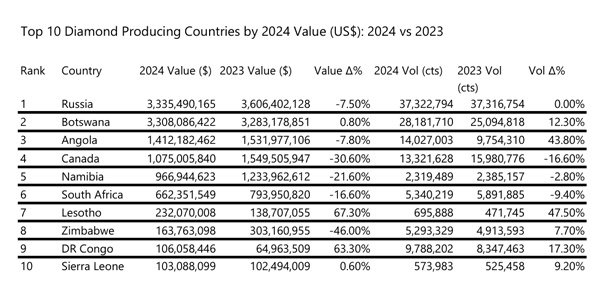
Russia remained the biggest rough diamond-producing country in the world in 2024, by both volume and value, despite the impact of G7 sanctions.

By volume it accounted for 32 per cent of global production in 2024 – or 37.3m carats – according to newly-released figures by the Kimberley Process Certification Scheme.

And by value it accounted for 29 per cent – or $3.335bn.

Botswana came second by volume – 24 per cent, 28.2m carats – and a very close second by value – 28.8 per cent, $3.308bn.

Overall global rough output fell 10 per cent to $11.48bn.

India was the biggest importer (40 per cent by carats, 39 per cent by dollars) followed by UAE (29 per cent by carats, 24 per cent by dollars).

Source: DCLA

Monday, 23 June 2025

Moscow Investigators Uncover Diamond Theft Scheme Involving Alrosa Employee

diamond producer Alrosa

Moscow investigators on Monday said they сharged an employee of the state-run diamond producer Alrosa, her son and two others in connection with a diamond theft scheme at the company.

Valentina Matyushenkova, an Alrosa employee, is accused of swapping high-value diamonds with cheaper industrial-grade stones between September 2024 and January 2025, according to Russia’s Investigative Committee.

Authorities say the stolen diamonds were smuggled to Armenia.

Matyushenkova was caught in the act while attempting to steal a batch of diamonds valued at more than 1.7 million rubles ($21,700), investigators said. Her son, Alexei Matyushenkov, is accused of acting as a middleman.

Two other suspects, Armen Petrosyan and Arman Sahakyan, allegedly transported the stolen stones across the border to Armenia.


A video published by the Kommersant business newspaper showed Matyushenkova confessing to her role in the scheme during questioning. One of the other suspects claimed he was working as a deliveryman at the time of his arrest.

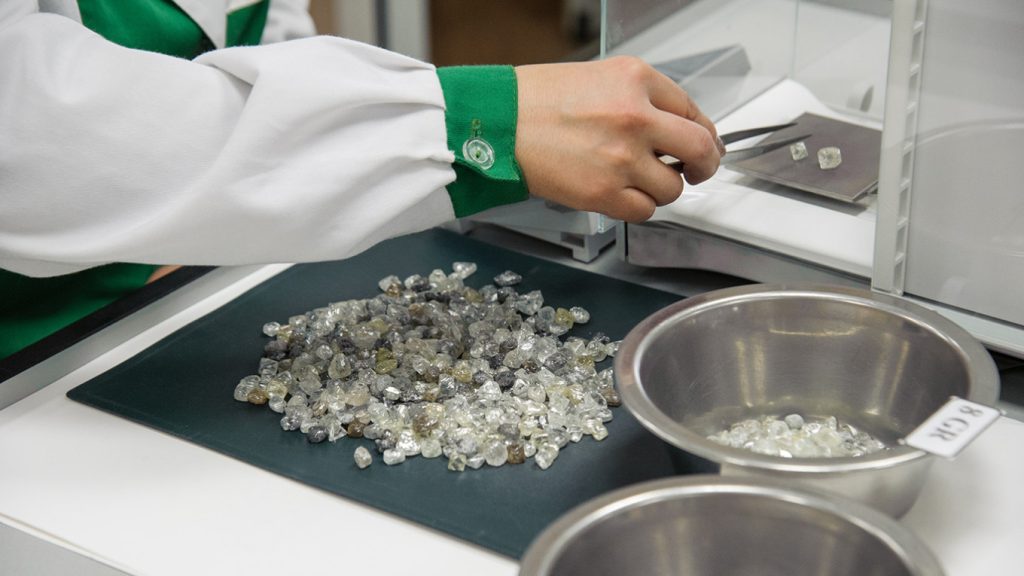
Searches of the suspects’ homes uncovered some 200,000 carats of low-grade industrial diamonds, which investigators say were used to replace the high-quality raw stones.

All four suspects have been placed in pre-trial detention. If convicted, they face up to 10 years in prison on theft charges and up to seven years for the illicit trafficking of precious stones and metals.

Source: DCLA

Wednesday, 11 June 2025

Alrosa Concludes Sale of Share in Catoca

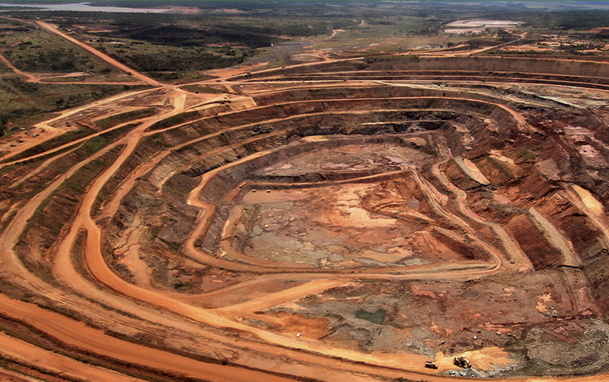
Catcoca mine, Angola.

Alrosa has concluded the sale of its 41 per cent share in Catoca, Angola’s state-controlled diamond miner, drawing an end to a 32-year partnership.

It has been acquired by Taadeen, a subsidiary of Oman’s sovereign wealth fund.

The move was announced last November, after Angola’s mineral resources minister Diamantino Azevedo described Alrosa, the sanctioned Russian miner, as a “toxic partner”.

The transfer was formalized on 26 May and leaves Angola’s national diamond company Endiama EP retaining a controlling 59 per cent.

Catoca’s updated website now lists its company shareholder structure as: “Endiama EP (National Diamond Company of Angola) – 59% Taadeen (Subsidiary company of the Sovereign Wealth Fund of Oman) – 41%”.

No financial details of the share transfer have been released.

Alrosa acquired 32.8 per cent of Catoca shares in 1992, soon after the country’s long-running civil war came to an end, and increased its stake to 41 per cent in 2018.

Source: DCLA

Sunday, 6 April 2025

Mining Company Alrosa Unveils Russia’s Largest-Ever Diamond

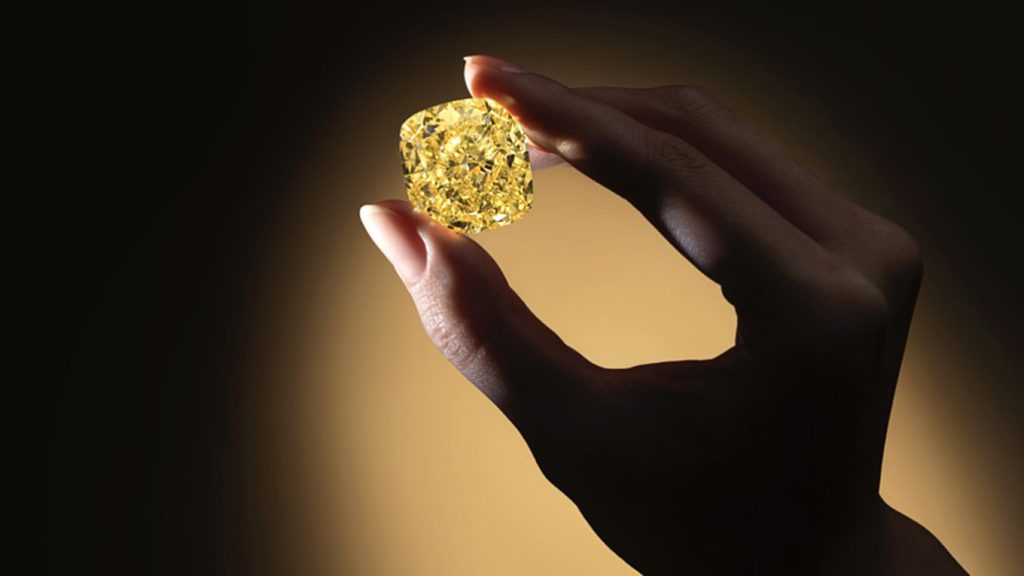
The 100-carat vivid yellow stone named New Sun

Russian diamond producer Alrosa announced Friday that it finished the two year cutting process of the country’s largest ever diamond a 100 carat vivid yellow stone named New Sun.

New Sun was cut from a billion year old 200 carat rough diamond, which was unearthed from an ancient riverbed at the Ebelyakh mine in the Far East republic of Sakha (Yakutia).

Alrosa said 15 of Russia’s top jewelers worked meticulously to “achieve the perfect balance between light, color and the play of shades.”

“Thanks to the highest skill of Russian experts, the diamond has acquired impeccable proportions that accentuate its depth and brightness of its sunny hue,” the company said.

The cutting process marks a “new stage” in the development of the Russian Cut, a gem cutting technique known for its precision and brilliance, Alrosa said.

“New Sun is one of the most significant events in the gemstone industry in recent years, highlighting Russia’s high status in the global diamond industry,” the company said.

Last month, Alrosa announced the temporary suspension of operations at several less profitable sites, reducing annual production by less than 1 million carats. The company still plans to produce 29 million carats of diamonds in 2025.

Alrosa, which is under an EU and G7 import ban, is the world’s largest diamond mining company by volume. It cut production by 2.8% to 34.6 million carats in 2023 and by 4.6% to 33 million carats in 2024.

Source: DCLA

Monday, 6 January 2025

ALROSA Predicts Rising Demand and Diamond Prices in 2025

Russian diamond giant Alrosa

The high demand for jewelry and a decline of up to 20% in global diamond mining volumes compared to levels recorded 5-6 years ago will drive the industry’s growth, according to Sergey Takhiev, Head of Corporate Finance at Russian diamond giant Alrosa, reported by Rough&Polished.

According to Takhiev, while diamond prices are currently at a low point, demand is expected to grow due to a reduction in diamond inventories at manufacturing centers in India and a decline in diamond production volumes by major mining companies.

Alrosa Rough Diamonds

When asked about the timeline for market inventory replenishment, Takhiev estimated it would likely occur within a few months. He explained that the restocking of rough and polished diamond inventories is expected to impact the entire value chain, from manufacturers to retailers. Takhiev further emphasized that the depletion of global diamond resources, coupled with growing demand for luxury jewelry, is set to drive long-term price increases.

Meanwhile, ALROSA announced that the company’s Deputy CEO, Vladimir Marchenko, who has held the position since 2018, will step down to take on another role in the mining industry.

Source: DCLA

Sunday, 20 October 2024

Russia’s finance ministry considering new diamond purchases from Alrosa in 2025

Russia's Finance Ministry is considering new purchases of rough diamonds from Alrosa for the State

Russia’s Finance Ministry is considering new purchases of rough diamonds from Alrosa for the State Precious Metals and Gemstones Repository (Gokhran) in 2025, Deputy Finance Minister Alexei Moiseyev told reporters on the sidelines of the Moscow Financial Forum.

“We are considering this possibility,” Moiseyev said in response to possibly resuming purchases. “In order to allow Alrosa the opportunity to be calm and not feel obliged to sell on the market in order to maintain its liquidity position. Because the market looks alarming.”

The government could use budgetary allocations for precious metals and stones to purchase rough diamonds. The purchase limit is planned at 51.5 billion rubles for next year, Moiseyev said.

It became known in March that Alrosa and the Finance Ministry had concluded an agreement to buy out part of the raw materials produced in 2024 and completed a transaction for the first consignment of rough diamonds. There have been no reports since then regarding Alrosa purchasing diamonds from Gokhran.

“There are no plans for this year, though we are considering the possibility for next year,” Moiseyev said. “In general, this is all confidential, so we may not announce it.”

Monday, 9 September 2024

Russia Increases Rough Exports to India

Rough diamonds imported from Russia to India

Russian exports of rough diamonds to India increased by well over a fifth, to 4.1m carats, during the first six months of the G7 sanctions.

Total sales were up by 22.23 per cent for January to June 2024, according to the Indian Ministry of Commerce and Industry. But revenue fell by 15.22 per cent, as prices keep declining, from $614m to $520m.

Russian exports for June alone were 347,620 carats, an increase of almost 32 per cent on the same month last year.

The G7 and EU nations imposed sanctions on all Russian diamonds of 1.0-cts and above, regardless of where they were cut and polished, from 1 January. The threshold was lowered to 0.50-cts and above from 1 September.

Rough diamonds imported from Russia to India can only be sold to markets beyond the G7 and EU.

India’s diamond industry has been calling on the government to allow direct payments to Russia so it can more easily buy sanctioned goods.

Source: DCLA

Monday, 26 August 2024

US Lifts Ban on Grandfathered Diamonds Amid New Sanctions on Russian Gems

diamond jewellery and loose rough gem-quality diamonds

The Office of Foreign Assets Control (OFAC) has issued new licenses under the Russian Harmful Foreign Activities Sanctions Regulations, allowing for the sale of diamond jewellery and loose gem-quality diamonds imported before recent sanctions were implemented. This significant policy shift permits goods that were previously prohibited to re-enter the market.

Under the new guidelines, diamond jewellery purchased before March 1, 2024, as well as loose diamonds of 1 carat or larger bought before that date, and those of at least 0.50 carats purchased before September 1, 2024, can now be sold. The relaxation for loose diamonds will remain in effect until September 1, 2025.

However, starting September 1, 2024, the next phase of G7 diamond sanctions will impose restrictions on all goods of 0.50 carats or above from Russia, regardless of where they are cut and polished. This phase of sanctions is set to take effect next Sunday, despite substantial opposition from various industry stakeholders.

In response, the Jewelers Vigilance Committee has reported that the United States is considering supporting a delay in the implementation of these sanctions. This potential delay, which aligns with the European Union’s proposed extension to March 1, 2025, aims to provide additional time to resolve the intricacies of the sanctions and their impact on the diamond trade.

Source: DCLA

Thursday, 29 February 2024

Alrosa Sales Rise Despite Sanctions


Alrosa Sales Rise Despite Sanctions

Alrosa’s revenue rose in 2023 as the Russian diamond miner continued to sell despite sanctions.

Sales increased 9% to RUB 322.57 billion ($3.55 billion) for the year, the company reported Wednesday. However, net profit fell 15% to RUB 85.18 billion ($939.3 million).

Alrosa and its diamonds have been the subject of sanctions by the US and other Western countries since Russia’s war in Ukraine began in February 2022. Major markets including India and China still permit imports of Russian diamonds. On March 1, the US will introduce stricter measures banning the import of 1-carat and larger stones of Russian origin, even if they went through manufacturing in a third country.

The miner’s announcement was its second full results statement since March 2022. On both occasions, it withheld information on the destination of its sales, which usually shows Belgium, the United Arab Emirates (UAE) and India to be the largest buyers.

Last week, De Beers reported a 36% drop in 2023 revenue for a total of $4.27 billion, with the diamond unit recording a net impairment of $1.56 billion, reflecting a weaker demand outlook.

Source: DCLA

Wednesday, 28 February 2024

Russia diamond producer Alrosa’s annual net USD profit drops


Russia diamond producer Alrosa’s annual net USD profit drops

Russia’s sanctions-hit diamond producer Alrosa, opens new tab on Wednesday reported 2023 net profit of $925 million, down 15.2% from the previous year, Turnover was up 9.2% at 322.6 billion roubles.


Group of Seven leaders agreed in December to ban non-industrial diamonds from Russia by January, and Russian diamonds sold by third countries from March.


The European Union added Alrosa, Russia’s biggest diamond producer, to its sanctions list in January as part of punitive measures it has imposed on Moscow over the war in Ukraine.

Sunday, 25 February 2024

US’s New List of Russian Sanctions Includes Diamond Exporter


US’s New List of Russian Sanctions Includes Diamond Exporter

The US Treasury has imposed sanctions against nearly 300 Russian entities in its latest round, including a company specializing in the export of rough and polished diamonds.

The new series of restrictions the Office of Foreign Assets Control (OFAC) has applied marks the two-year anniversary of Russia’s invasion of Ukraine, and is also in response to the death of opposition politician and anti-corruption activist Aleksei Navalny, the Treasury said last week.

OFAC has targeted Almazyuvelirexport, Russia’s state-owned exporter of rough and polished diamonds and precious metals. The company was designated for “operating, or having operated, in the metals and mining sector of the Russian Federation economy,” it added.

Other companies that were banned included financial institutions, the defense industry, companies “providing backdoor support for Russia’s war machine,” and those connected to Navalny’s imprisonment.

Source: DCLA

Sunday, 3 July 2022

Report: Russia to Impose Zero VAT on Diamonds

 “The government has approved amendments to the Tax Code, said Deputy Finance Minister Alexei Moiseev 

230 carat diamond Russian miner Alrosa
Alrosa Rough Diamond

According to media reports quoted by Rough & Polished, Russia’s Deputy Finance Minister Alexei Moiseev said during the Cheboksary Economic Forum that the government of the Russian Federation “approved the introduction of a zero VAT rate on rough and polished diamonds.”

“The government has approved amendments to the Tax Code, which provide for the introduction of a zero VAT rate on rough and polished diamonds,” he said on the sidelines of the Cheboksary Economic Forum.

Diamond Mine snow Russia

This decision, he reportedly added, “will facilitate growth in demand for investment diamonds within Russia.”Credit: Alrosa

Source: DCLA

Wednesday, 29 June 2022

Russia hits back at attempts to ‘politicise’ its diamonds


Alrosa rough diamonds
                     Alrosa rough diamonds

ussia condemned what it called a push to “politicise” its diamonds over the conflict in Ukraine and said attempts to question its compliance with the international diamond certification scheme were “totally unfounded” and “far-fetched”.

The Kimberley Process, a coalition of governments, the diamond industry and civil society responsible for certifying diamonds as conflict-free, is split over a push by Ukraine and others to expand its definition of conflict diamonds to include those funding aggression by states.

The KP Civil Society Coalition (CSC) and some member states sought to discuss whether Russia’s diamonds were helping to fund the war in Ukraine during a KP meeting in Botswana last week.

“The Russian Federation absolutely condemns the orchestrated attempts of CSC, backed by absolute minority of some Western participants, to politicize the work of the Kimberley Process by deliberately distorting or even openly replacing its basic principles,” Russia’s finance ministry said in an emailed statement. It did not specify which principles it felt were being distorted or replaced.

The CSC did not immediately respond to an emailed request for comment.

The KP defines conflict diamonds as those that fund rebel movements seeking to overthrow legitimate governments, a narrow definition that many have sought to widen since the KP was founded in 2003.

Russia, which was KP chair last year, has “championed” work on revising the definition of conflict diamonds for the past five years, the finance ministry said, and it is committed to continuing talks on the definition.

“We therefore call on our opponents to refrain from further speculative accusations, abstain from political demagoguery and concentrate on the substantive work of the KP,” the finance ministry said.

The KP makes all decisions by consensus and the rift over Russia and Ukraine could jeopardise its effectiveness.

Source: DCLA

Tuesday, 17 May 2022

Botswana sees Russian diamond ban opening door to synthetic gems

Mirny, Sakha Republic, Russian Rough Dimaonds

Botswana, Africa’s top diamond producer, sees a prolonged ban on Russian diamonds opening the way for synthetic gems to expand market share, the country’s minister told a mining conference on Monday.

The United States, the world’s largest market for natural diamonds, imposed sanctions on Russia’s state-controlled Alrosa in April, aiming to cut off a source of revenue for Moscow after its February invasion of Ukraine.

Alrosa, the world’s largest producer of rough diamonds, accounted for about 30% of global output in 2021.

Botswana’s Minister of Minerals and Energy Lefoko Moagi said the ban on Russia diamonds might push prices up to the benefit of rival producers but he also said the gap would be hard to fill.

“We see the 30% gap that will be left by the ban being plugged by something else that is not natural. And for us that will be a challenge,” he said.

Jacob Thamage, head of Botswana’s Diamond Hub, said uncertainty over the Ukraine conflict makes it difficult for Botswana and other natural diamond miners to fill the supply gap as ramping up operations requires significant investment.

“You don’t want to invest a lot of money to up-scale and then the war ends the next day,” Thamage said. “We also see the higher prices pushing consumers to substitutes such as the synthetics and this can cause problems for us if we cede the market to unnatural stones.”

Sales at Debswana, a joint venture between Anglo American unit De Beers and Botswana’s government, accounts for almost all of Botswana diamonds exports. These stood at $3.466 billion in 2021 compared with $2.120 billion in 2020.

Thamage also fears that consumers might start to shun natural diamonds due to traceability issues.

“There is an increased fear that buyers of diamonds will begin to treat all natural diamonds as conflict diamonds and therefore shift to unnatural diamonds,” he said.

Source: DCLA

Monday, 16 May 2022

Diamond prices are spiking and even De Beers can’t fill the gap

Alrosa canceled its last sale in April and is unlikely to sell any large volumes again this month

Prices are surging in some corners of the rough-diamond market, as sanctions on one of the world’s two giant miners ripple through the supply chain. In the past, the industry could turn to behemoth De Beers to crank out extra gems when supply ran tight — but not this time.

The price of a small rough diamond, the type that would end up clustered around the solitaire stone in a ring, has jumped about 20% since the start of March, according to people familiar with the matter. The reason: Diamond cutters, polishers and traders are struggling to source stones after the US levied sanctions on De Beers’s Russian rival, Alrosa PJSC, which accounts for about a third of global production.

For most of the modern history of diamonds, this is the sort of situation where De Beers could have tapped its vast stockpiles or simply fired up latent mining capacity. Little more than 20 years ago, its safes in London held stocks of diamonds worth perhaps as much as $5 billion.

Those days are now long gone. The company only carries working inventory stocks and its mines are running at full tilt. There is little chance of material increases in supply before 2024, when an expansion at its flagship South African mine will be completed.

“It’s very difficult to see us bringing on any new production,” Chief Executive Officer Bruce Cleaver said in an interview in Cape Town. “Thirty percent of supply being removed isn’t sustainable.”

De Beers also produces relatively few of the type of diamonds Alrosa specializes in: the small and cheap gems that surround a larger center-point stone or are used in lower-end jewelry sold in places like Walmart or Costco.

For many in the sector, that means growing shortages unless Alrosa and its trade buyers can find a work around.

Alrosa canceled its last sale in April and is unlikely to sell any large volumes again this month, the people said. It’s uncertain when the company will be able to sell normally again, they said, even as the company, banks and buyers look for solutions.

Source: DCLA

Monday, 9 May 2022

Angolan diamond mine says Russia sanctions could hurt operations


                      Angolan diamond mines

Endiama, which holds the exclusive concession for diamond mining rights in Angola, has already flagged an almost one-third reduction in diamond output this year.

Angola’s state-run diamond miner Endiama could face a hit to its operations as Western sanctions on Russia could delay supplies of parts and machinery, according to a government brochure.

The government publication was made available at the Mining Indaba conference in Cape Town on Monday.

Western nations have unleashed crippling economic sanctions against Russia after Moscow’s invasion of Ukraine in late February.

Endiama, which holds the exclusive concession for diamond mining rights in Angola, has already flagged an almost one-third reduction in diamond output to 10.05 million carats this year, from a forecast 13.8 million carats.

The company expects revenue of about $1.42bn from the sale of its diamonds this year.

“One of the great challenges for 2022 will certainly be to maintain the sustainability of the mines while the war between Russia and Ukraine lasts,” said the government brochure, “since the sanctions that the United States and Western countries have imposed on Russia may affect some national mining companies, delaying the supply of some machinery, parts and spares.”

Endiama has signed contracts with Rio Tinto to explore its Chiri mine in the Angolan province of Lunda Norte, while another project, Luaxe, was also expected to begin pilot production, it added, without providing a timeline.

Last month, diamond miner De Beers signed two mineral investment contracts with the Angolan government, the Anglo American subsidiary said ahead of a return to the country it left in 2012.

Source: DCLA

Wednesday, 20 April 2022

De Beers goes back into Angola after the country radically improves its investment legislation


                    Bruce Cleaver, CEO, De Beers

De Beers is to start diamond exploration in Angola later this year after signing two mineral investment contracts with the Angolan government but the secretive group is giving little away on the details of the agreements.

De Beers announced today that the two licences covering prospects in the north-east of the country are for the “award and exercise of mineral rights covering all stages of diamond resource development from exploration to mining and span a period of 35 years.”

But the group does not specify its shareholding in the new developments which are joint ventures with Endiama – the Angolan government’s state-owned diamond company.

In a statement De Beers said only that “De Beers Group will hold a substantial majority in the new companies, with Endiama having the ability to incrementally increase its equity share over time in line with certain conditions outlined in the shareholder agreements, albeit with De Beers Group maintaining a substantial majority.”

By contrast, when Rio Tinto announced it was returning to Angola in October last year it specified that it would hold a 75% stake in the first phase of any mine developed with Endiama holding 25% but that the contract left open the possibility of Endiama increasing its holding to 49%.

De Beers’ return to Angola represents a breakthrough for the country following the regulatory and policy changes made by the government of President Joao Lourenco who replaced former president Jose Eduardo dos Santos in 2017.

Angola is arguably the most prospective country in the world in which to look for a major new diamond deposit but De Beers and most other diamond explorers left the country in the early 2000’s.

That was because of the repressive business conditions imposed by Dos Santos. These included a ban on any foreign company owning a majority interest in the diamond projects it was developing.

De Beers CEO Bruce Cleaver commented that, “Angola has worked hard in recent years to create a stable and attractive investment environment and we are pleased to be returning to active exploration in the country.

“Angola remains highly prospective and we look forward to being part of this next stage in the development of Angola’s diamond sector.”

Source: DCLA

How Efforts to Control the Diamond Trade Are Hurting the Very Communities They Were Supposed to Protect

For more than two decades, global policies aimed at restricting the flow of diamonds from conflict zones most notably through the “blood dia...