Showing posts with label Canada Diavik. Show all posts

Tuesday, 26 May 2026

India’s Lab Grown Diamond Exports Surpass Natural Diamonds for the First Time

 India’s polished lab grown diamond exports have overtaken natural diamond exports by volume for the first time

India’s polished lab grown diamond exports have overtaken natural diamond exports by volume for the first time, marking a significant shift in the global diamond manufacturing industry.

According to figures released by the Gem and Jewellery Export Promotion Council (GJEPC), exports of polished lab grown diamonds reached 18.84 million carats during the financial year ending March 2026, an increase of almost 31 per cent year on year.

By comparison, polished natural diamond exports fell nearly 4 per cent to 16.00 million carats.

Despite the dramatic rise in lab grown volumes, natural diamonds continue to generate the overwhelming majority of industry revenue due to the substantial price difference between the two categories. Average export values for natural diamonds remain around US$760 per carat, compared to approximately US$60 per carat for lab grown goods.

As a result, natural diamond exports generated approximately US$12.16 billion during the year, while lab grown exports totalled around US$95.52 million.

The figures nevertheless highlight the rapid transformation of India’s diamond manufacturing sector. Just a decade ago, in 2015 to 2016, India exported only around 10,000 carats of polished lab grown diamonds.

Recent monthly data suggests the trend is continuing. During April 2026, India exported 1.36 million carats of polished lab grown diamonds, marginally exceeding natural diamond exports of 1.34 million carats.

The continued growth of lab grown production is reshaping the global diamond trade and placing increasing pressure on the natural diamond pipeline, particularly in the lower price categories.

The Future of Canada’s Ice Road Under Threat
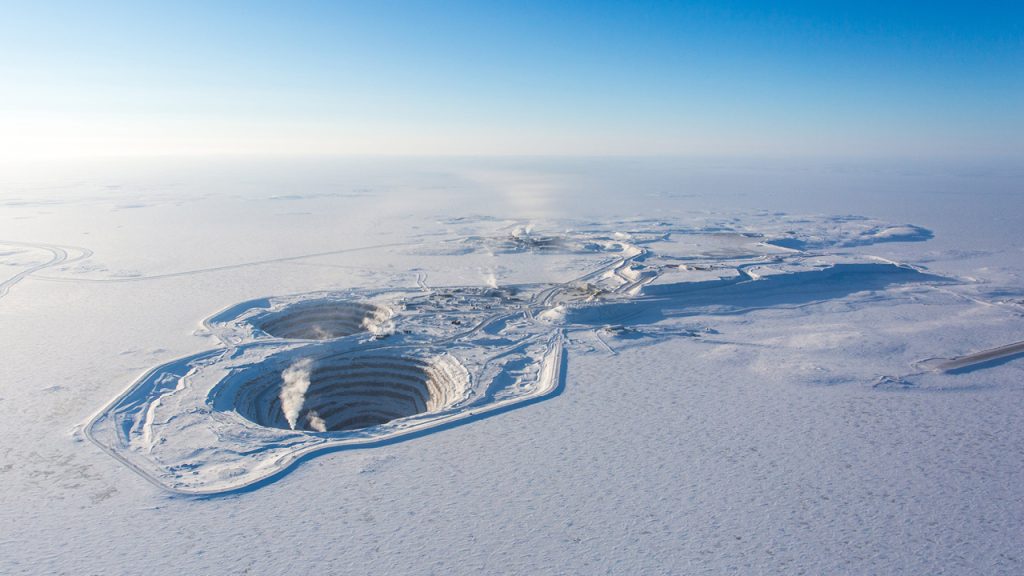
The 370 mile ice road, commonly known as the TCWR, stretches across frozen lakes and remote terrain in the Northwest Territories near the Arctic Circle.

The long term future of Canada’s famous Tibbitt to Contwoyto Winter Road, the critical supply route servicing diamond mines in the country’s far north, is increasingly uncertain amid mine closures, financial instability and warmer winters.

The 370 mile ice road, commonly known as the TCWR, stretches across frozen lakes and remote terrain in the Northwest Territories near the Arctic Circle. For decades it has provided an essential seasonal transport link to the region’s major diamond operations, including Diavik, Ekati and Gahcho Kué.

However, the future viability of the route is now being questioned.

Rio Tinto officially closed the Diavik Diamond Mine in March 2026, while Ekati Diamond Mine entered creditor protection proceedings in April. Meanwhile, De Beers operated Gahcho Kué Mine continues to face significant financial pressure.

The winter road plays a vital logistical role each year, allowing operators to transport fuel, cement, heavy mining equipment, tyres and explosives during a narrow eight to ten week operating window when the lakes remain frozen.

Construction and maintenance of the road reportedly costs around US$20 million annually.

Following the closure of Diavik, De Beers has assumed oversight responsibilities for future operations of the road and has confirmed planning is underway for the 2027 season.

However, uncertainty remains over how long the route can continue operating, particularly as increasingly mild winter conditions shorten the period of safe ice access.

Local media reports have raised concerns over whether sufficient funding and operational support will remain available in coming years, fuelling speculation that the famous ice road may be approaching the end of its operational life.

Source: DCLA

Monday, 6 April 2026

What Will Become of the Final Diavik Diamond?

 The Final Diavik Diamond

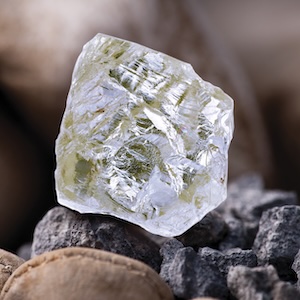
Earlier this month, the Diavik Diamond Mine officially ceased operations, drawing to a close a remarkable 23-year chapter in Canada’s diamond history. Over its lifespan, the mine produced approximately 150 million carats, earning a reputation for consistent output and high-quality stones. Now, attention turns to a symbolic question: what will become of the final diamond recovered from this iconic deposit?

As processing of the last ore continues, the ultimate stone has yet to be identified. According to Matt Breen, it may take several weeks to fully clear the system and assess the final production. Diavik was particularly known for its 3 to 4 carat octahedral diamonds, and there is cautious optimism that the last parcel may still yield notable stones.

Any exceptional diamonds recovered during this final phase are likely to be preserved due to their historical significance. Potential outcomes include placement in a regional museum or retention by Rio Tinto as part of its corporate heritage collection.

A Mine at the End of Its Natural Life

While broader softness in the diamond market has led some to speculate on the timing of the closure, Breen emphasised that Diavik has simply reached the end of its economic life. Operating in Canada’s remote north presents unique challenges, including extreme weather, seasonal access via ice roads, and substantial energy requirements. Maintaining profitability required sustained production levels of 300,000 to 350,000 carats per month thresholds no longer achievable at the site.

Despite this, the closure does not necessarily signal the end of diamond development in the region. Infrastructure remains the key constraint. Future viability will depend heavily on reduced logistical costs, particularly through potential government-backed initiatives such as the Arctic Economic & Security Corridor, which could unlock access to known but undeveloped deposits.

The Human Legacy of Diavik

Beyond production figures, Diavik’s legacy is fundamentally a human story. From its discovery by Eira Thomas and her father Grenville Thomas, to the thousands of workers who operated under some of the harshest conditions in the mining world, the project stands as a testament to resilience and ingenuity.

Breen reflected on the unique culture forged at the mine, where extreme conditions were part of daily life. In one instance, during a rescue operation in temperatures nearing minus 30 degrees Celsius, a worker remarked: “For you, it’s cold, dark, and windy. For us, it’s Thursday.” The comment encapsulates the spirit that defined Diavik’s workforce.

Importantly, the mine also leaves behind a strong economic and social contribution to Northern communities. Of the approximately CAD 11 billion spent over its lifetime, CAD 8 billion was directed to Northern businesses, with around half benefiting Indigenous enterprises.

Closure and Beyond

The formal closure process for Diavik is expected to take approximately four years, involving site rehabilitation and environmental management. As the final diamond emerges from the last ore processed, it will serve not only as a geological artefact but as a symbol of one of Canada’s most significant modern mining achievements.

In the end, the true legacy of Diavik may not rest in a single stone, but in the enduring impact it has had on the industry, the region, and the people who brought it to life.

Source: DCLA

Thursday, 26 March 2026

Rio Tinto’s Final Diamond: The Closure of Diavik Marks the End of an Era

 Diavik mine in Canada’s Northwest Territories

Rio Tinto has officially extracted the last diamond from its Diavik mine in Canada’s Northwest Territories, bringing to a close more than two decades of production and signalling the company’s exit from the diamond sector. The milestone reflects a strategic shift by the global mining giant toward core commodities such as copper and iron ore.

Over its 23 year lifespan, Diavik produced in excess of 150 million carats of rough diamonds, establishing itself as one of Canada’s most significant diamond operations. With economically recoverable reserves now fully depleted, the mine has ceased production, concluding a chapter that began in 2003.

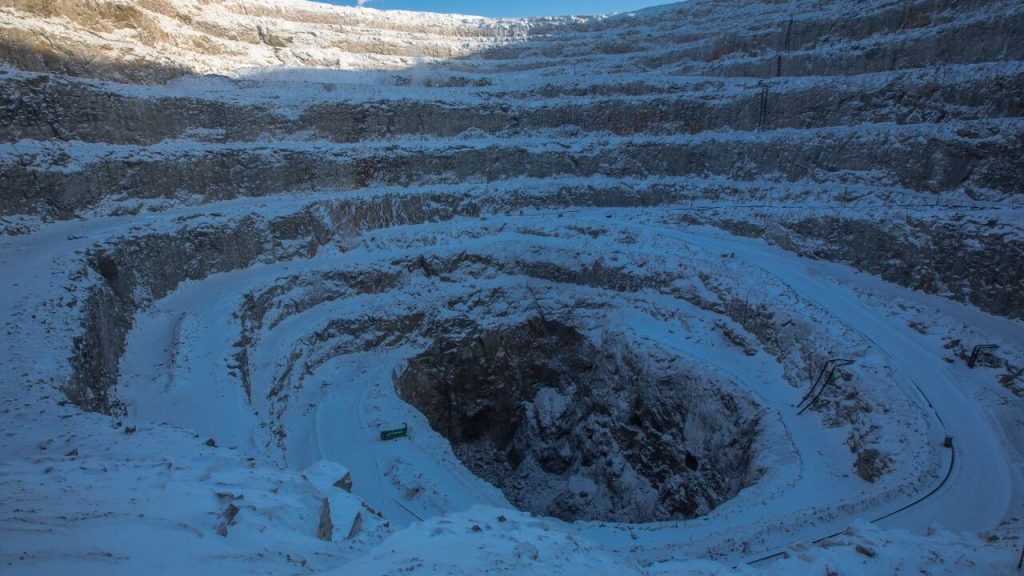
Situated beneath Lac de Gras, approximately 220 kilometres south of the Arctic Circle, Diavik was discovered in 1991 and developed into a world-class operation. The mine exploited four kimberlite pipes through a combination of open pit and underground mining methods, yielding predominantly high-quality white diamonds alongside a smaller proportion of rare yellow stones.

The closure was marked by a formal ceremony attended by Indigenous representatives, government officials, and key stakeholders, highlighting the longstanding partnerships that underpinned the mine’s success. Diavik has been widely recognised as a model of collaboration between industry and Indigenous communities, delivering sustained economic and social benefits to the region.

Despite the end of mining activities, Rio Tinto will continue to process, polish, and distribute the remaining production through its global sales network, including its Select Diamantaires, into 2026 and beyond.

The closure comes at a challenging time for the Northwest Territories’ diamond sector. Operations at the Ekati mine were curtailed last year amid increased competition from lab grown diamonds and softer global pricing, while the Gahcho Kué mine remains in operation with a projected life extending to 2030.

Planning for Diavik’s closure had been integrated from the outset, and rehabilitation efforts will now accelerate. Site reclamation is expected to continue through to 2029, followed by a structured period of environmental monitoring to ensure long term sustainability and land restoration.

The end of Diavik is more than the closure of a mine. It represents the conclusion of one of Canada’s most important diamond producing assets and a notable moment in the evolution of the global diamond industry.

Source: DCLA

Unseen Imperial Russian Jewels for Sale

  Rare Imperial Russian jewels, including Catherine the Great’s diamonds, and a Faberge necklace from the reign of Nicholas II, are to be of...