Showing posts with label Diavik mine. Show all posts

Wednesday, 21 October 2026

Rio Tinto Diamond Production Falls 68% After Diavik Mine Closure

 Rio Tinto Diamond Production Falls 68% After Diavik Mine Closure

The closure of Canada’s Diavik diamond mine marks the end of Rio Tinto’s active diamond mining operations, highlighting a wider shift in the natural diamond industry as established sources of rough diamonds reach the end of their productive lives.

Rio Tinto’s rough diamond production fell sharply during the first nine months of 2026, following the closure of its Diavik mine in Canada. According to the mining group’s latest production figures, the company recovered approximately 1.074 million carats during the period, down from 3.317 million carats in the corresponding period of 2025.

The decline of approximately 68% reflects the winding down of operations at Diavik, which produced its final diamonds in March 2026 after 23 years of operation.

The figures underline a significant development for the global diamond industry: Rio Tinto, once one of the world’s most prominent diamond producers, has now ended active diamond mining operations.

Diavik’s closure ends an important chapter

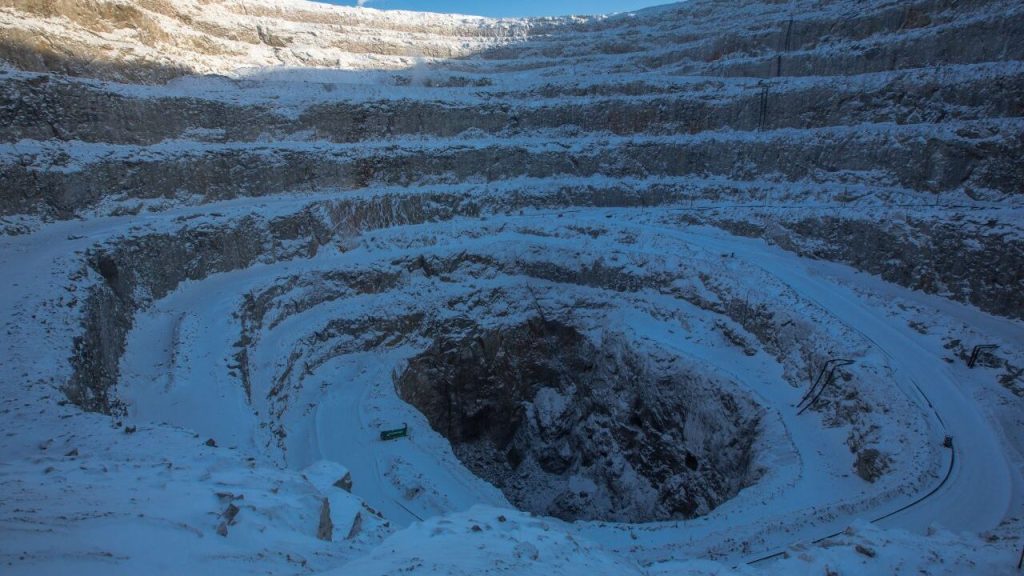
Located in Canada’s Northwest Territories, Diavik was a major source of natural rough diamonds for more than two decades. During its operating life, the mine produced more than 150 million carats.

Mining activity concluded in March 2026 after the deposit’s economically recoverable reserves were exhausted. Although production has ceased, Rio Tinto has indicated that it will continue processing and selling its remaining diamond inventory through at least the end of 2026.

Diavik’s closure follows the shutdown of Western Australia’s Argyle diamond mine in November 2020. Argyle was internationally recognised for its extraordinary pink and red diamonds, alongside its substantial production of other natural diamonds.

For further background, read DCLA’s coverage of the Diavik mine expansion and its final years of operation and the closure of the Argyle diamond mine.

Rio Tinto shifts its focus away from diamonds

The end of production at Diavik represents the latest stage in Rio Tinto’s withdrawal from much of the diamond sector.

The company closed Argyle in 2020 and subsequently exited its interest in the Fort à la Corne diamond exploration project in Saskatchewan, Canada. Its broader business strategy has increasingly focused on other commodities, including iron ore, copper and other minerals.

Rio Tinto continues to explore for diamonds in Angola, but it no longer has an operating diamond mine producing rough stones.

The distinction between mining and selling is important. Existing inventories can continue to reach the market after a mine closes, meaning that the end of production does not immediately eliminate all supply from that source.

What does declining mine production mean for natural diamonds?

The reduction in Rio Tinto’s diamond output comes amid wider changes across the natural diamond industry. Producers have been dealing with challenging market conditions, shifting consumer preferences and competition from laboratory-grown diamonds.

However, declining production alone does not guarantee higher diamond prices. Prices also depend on consumer demand, the quality and size of available stones, inventories held throughout the supply chain and broader economic conditions.

DCLA has examined these competing pressures in its coverage of declining rough diamond supply and the changing outlook for natural diamond prices.

The market is not uniform. Commercial-grade natural diamonds can experience very different pricing conditions from exceptional stones with unusual colour, size, clarity or historical significance.

Argyle’s legacy and the rarity of natural pink diamonds

The closure of Argyle is particularly significant for the fancy-coloured diamond market. For decades, the Western Australian mine was the world’s leading source of rare pink diamonds, producing stones that became highly sought after by collectors and luxury jewellers.

Unlike a mine that temporarily suspends production, a permanently closed deposit cannot supply newly mined diamonds once its remaining inventory has been exhausted. Existing stones can, however, continue to circulate through private collections, auctions and the jewellery trade.

DCLA recently reported on Boodles’ acquisition of the remaining Argyle Pink Diamonds inventory, demonstrating how the legacy of a closed mine can continue to influence the market years after mining ends.

The history of Argyle also illustrates why provenance, documented origin and rarity can matter when assessing exceptional natural diamonds.

The importance of independent diamond expertise

As the diamond industry evolves, understanding the differences between natural and laboratory-grown diamonds, assessing quality accurately and verifying relevant documentation remain important for consumers, jewellery businesses and collectors.

A diamond’s value cannot be established from its carat weight alone. Colour, clarity, cut, proportions, treatments, market conditions and, where relevant, provenance all contribute to an assessment.

DCLA provides independent diamond examination and reporting services to help clients understand the characteristics of their diamonds. Its work supports informed decisions in a market where the distinction between different diamond types and qualities is increasingly important.

The bigger picture: Rio Tinto’s exit from active diamond mining is a reminder that natural diamond production depends on finite geological resources. While the effect of declining supply will vary across the market, the closure of major mines is reshaping the industry’s long-term supply landscape.

For further information about diamond examination and reporting, visit DCLA.

Tuesday, 7 April 2026

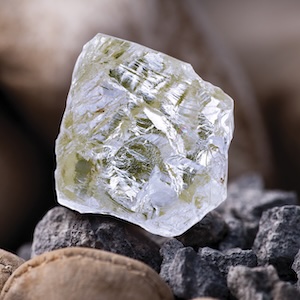
What Will Become of the Final Diavik Diamond?

 The Final Diavik Diamond

Earlier this month, the Diavik Diamond Mine officially ceased operations, drawing to a close a remarkable 23-year chapter in Canada’s diamond history. Over its lifespan, the mine produced approximately 150 million carats, earning a reputation for consistent output and high-quality stones. Now, attention turns to a symbolic question: what will become of the final diamond recovered from this iconic deposit?

As processing of the last ore continues, the ultimate stone has yet to be identified. According to Matt Breen, it may take several weeks to fully clear the system and assess the final production. Diavik was particularly known for its 3 to 4 carat octahedral diamonds, and there is cautious optimism that the last parcel may still yield notable stones.

Any exceptional diamonds recovered during this final phase are likely to be preserved due to their historical significance. Potential outcomes include placement in a regional museum or retention by Rio Tinto as part of its corporate heritage collection.

A Mine at the End of Its Natural Life

While broader softness in the diamond market has led some to speculate on the timing of the closure, Breen emphasised that Diavik has simply reached the end of its economic life. Operating in Canada’s remote north presents unique challenges, including extreme weather, seasonal access via ice roads, and substantial energy requirements. Maintaining profitability required sustained production levels of 300,000 to 350,000 carats per month thresholds no longer achievable at the site.

Despite this, the closure does not necessarily signal the end of diamond development in the region. Infrastructure remains the key constraint. Future viability will depend heavily on reduced logistical costs, particularly through potential government-backed initiatives such as the Arctic Economic & Security Corridor, which could unlock access to known but undeveloped deposits.

The Human Legacy of Diavik

Beyond production figures, Diavik’s legacy is fundamentally a human story. From its discovery by Eira Thomas and her father Grenville Thomas, to the thousands of workers who operated under some of the harshest conditions in the mining world, the project stands as a testament to resilience and ingenuity.

Breen reflected on the unique culture forged at the mine, where extreme conditions were part of daily life. In one instance, during a rescue operation in temperatures nearing minus 30 degrees Celsius, a worker remarked: “For you, it’s cold, dark, and windy. For us, it’s Thursday.” The comment encapsulates the spirit that defined Diavik’s workforce.

Importantly, the mine also leaves behind a strong economic and social contribution to Northern communities. Of the approximately CAD 11 billion spent over its lifetime, CAD 8 billion was directed to Northern businesses, with around half benefiting Indigenous enterprises.

Closure and Beyond

The formal closure process for Diavik is expected to take approximately four years, involving site rehabilitation and environmental management. As the final diamond emerges from the last ore processed, it will serve not only as a geological artefact but as a symbol of one of Canada’s most significant modern mining achievements.

In the end, the true legacy of Diavik may not rest in a single stone, but in the enduring impact it has had on the industry, the region, and the people who brought it to life.

Source: DCLA

Friday, 27 March 2026

Rio Tinto’s Final Diamond: The Closure of Diavik Marks the End of an Era

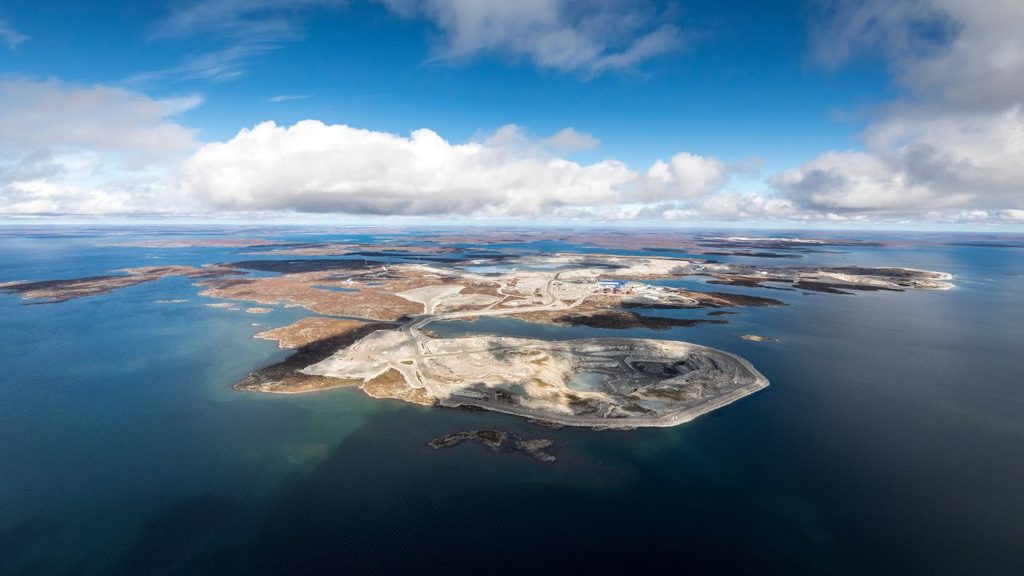
 Diavik mine in Canada’s Northwest Territories

Rio Tinto has officially extracted the last diamond from its Diavik mine in Canada’s Northwest Territories, bringing to a close more than two decades of production and signalling the company’s exit from the diamond sector. The milestone reflects a strategic shift by the global mining giant toward core commodities such as copper and iron ore.

Over its 23 year lifespan, Diavik produced in excess of 150 million carats of rough diamonds, establishing itself as one of Canada’s most significant diamond operations. With economically recoverable reserves now fully depleted, the mine has ceased production, concluding a chapter that began in 2003.

Situated beneath Lac de Gras, approximately 220 kilometres south of the Arctic Circle, Diavik was discovered in 1991 and developed into a world-class operation. The mine exploited four kimberlite pipes through a combination of open pit and underground mining methods, yielding predominantly high-quality white diamonds alongside a smaller proportion of rare yellow stones.

The closure was marked by a formal ceremony attended by Indigenous representatives, government officials, and key stakeholders, highlighting the longstanding partnerships that underpinned the mine’s success. Diavik has been widely recognised as a model of collaboration between industry and Indigenous communities, delivering sustained economic and social benefits to the region.

Despite the end of mining activities, Rio Tinto will continue to process, polish, and distribute the remaining production through its global sales network, including its Select Diamantaires, into 2026 and beyond.

The closure comes at a challenging time for the Northwest Territories’ diamond sector. Operations at the Ekati mine were curtailed last year amid increased competition from lab grown diamonds and softer global pricing, while the Gahcho Kué mine remains in operation with a projected life extending to 2030.

Planning for Diavik’s closure had been integrated from the outset, and rehabilitation efforts will now accelerate. Site reclamation is expected to continue through to 2029, followed by a structured period of environmental monitoring to ensure long term sustainability and land restoration.

The end of Diavik is more than the closure of a mine. It represents the conclusion of one of Canada’s most important diamond producing assets and a notable moment in the evolution of the global diamond industry.

Source: DCLA

Inherited Jewellery and Family Valuables, Why Expert Assessment Matters

  Inherited jewellery, diamonds, gold and family heirlooms can represent significant financial and sentimental value. Before dividing an est...