
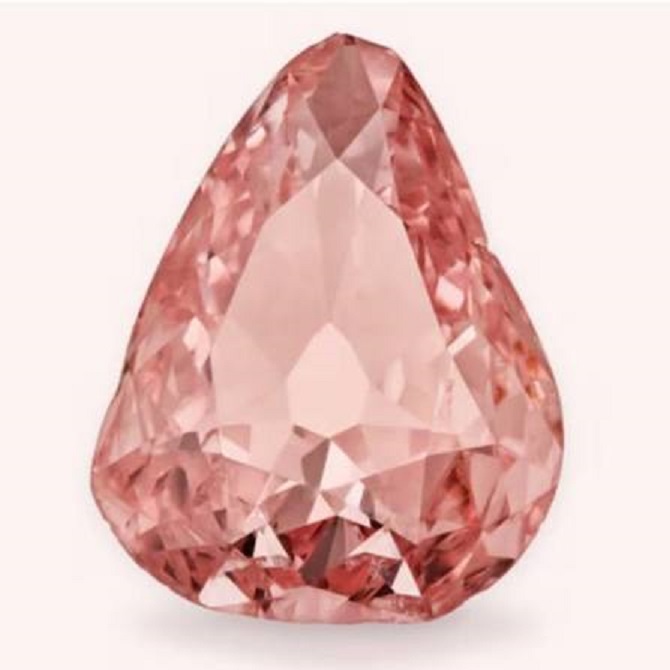
Nearly a century after an audacious theft, one of France’s most remarkable historic diamonds is returning to public view. The nine carat Grand Condé is more than a rare pink gemstone. Its extraordinary history highlights the enduring fascination with natural diamonds, the importance of gemmological identification and the responsibility involved in protecting irreplaceable cultural treasures.
A Royal Diamond with an Unbelievable Past
A rare pink diamond with a history stretching back centuries is once again taking centre stage at the Château de Chantilly, north of Paris. Known as the Grand Condé, the nine carat, pear shaped gemstone is being displayed at the Condé Museum for the first time since its last public appearance almost 100 years ago.
The diamond became the subject of international attention in October 1926, when it was stolen during an overnight raid on the château. What followed was a remarkable episode involving an amateur thief, a concealed gemstone and an unexpected discovery that sounds more like a fictional detective story than a real historical event.
According to contemporary accounts, the stolen diamond was hidden inside a hollowed out apple. The thieves reportedly took refuge in a hotel, where a hungry maid unknowingly helped bring the mystery to an end. When she bit into the apple, the concealed diamond was discovered, allowing the precious stone to be recovered only weeks after the theft.
The story has endured for generations, adding another extraordinary chapter to the history of a diamond that had already survived revolution, royal ownership and the passage of time.
Why Natural Pink Diamonds Are So Exceptional
Pink diamonds occupy a special position in the world of natural gemstones. Unlike colourless diamonds, whose value is influenced by factors such as carat weight, colour, clarity and cut, fancy coloured diamonds are assessed with particular emphasis on the characteristics and intensity of their colour.
Natural pink diamonds are exceptionally rare. Their colour is generally associated with complex changes in the diamond’s crystal structure rather than the presence of a simple colouring element. The precise mechanisms responsible for pink colouration are not fully explained by conventional trace element analysis alone.
This geological rarity, combined with the limited supply of exceptional stones, has helped establish natural pink diamonds as some of the most sought after gemstones in the international market.
The closure of Australia’s Argyle mine in 2020 was particularly significant for the pink diamond trade. The Western Australian mine had become one of the world’s most important sources of pink diamonds, producing stones that ranged from delicate pastel pinks to highly saturated colours. With production having ceased, the availability of newly mined Argyle pink diamonds is limited to existing inventories and previously recovered material.
However, not all pink diamonds originate from Argyle, and the value of an individual stone depends on its own characteristics, provenance and market demand.
Exceptional natural pink diamonds have achieved extraordinary prices at auction. In 2017, the 59.60 carat Pink Star sold for approximately US$71.2 million, establishing a record for a diamond sold at auction. Although that stone was substantially larger than the nine carat Grand Condé, the result demonstrates the remarkable prices that exceptional natural coloured diamonds can command.
Identification: The Science Behind a Unique Diamond
The Grand Condé’s return to public display also highlights an important aspect of modern gemmology: establishing the identity of a valuable gemstone.
According to the museum, extensive academic research has been undertaken to study the diamond’s properties and establish characteristics that can help distinguish it from other stones. The exhibition also includes previously unseen archival material relating to the diamond’s history and theft.
For a historically important gemstone, identification involves more than recording its weight and appearance. Detailed examination may include measurements, proportions, internal characteristics, inclusions and other physical features that contribute to an individual stone’s identifying profile.
Depending on the gemstone and the available evidence, advanced analytical techniques may also help establish whether a diamond is natural or laboratory grown and identify characteristics relevant to its origin or treatment history.
It is important to distinguish between identifying a diamond and establishing its historical provenance. Gemmological testing can provide valuable evidence about the stone itself, while archival records, historical inventories, ownership documents and other independent evidence help establish its journey through history.
Together, these disciplines can provide a more complete picture of an exceptional diamond.
At the Diamond Certification Laboratory of Australia (DCLA), the examination and identification of diamonds are central to understanding what a stone is, what characteristics it possesses and how those characteristics should be documented.
For owners who want to establish the identity and characteristics of a diamond, professional examination can help distinguish natural diamonds from laboratory grown stones and document relevant gemmological features. Learn more about DCLA’s diamond laboratory services and the role independent diamond expertise can play in understanding and documenting valuable gemstones.
For collectors, jewellers and owners of important diamonds, reliable identification can be an essential part of preserving a stone’s identity and supporting informed decisions about its care and ownership.
Protecting Treasures in an Age of High Profile Thefts
The exhibition also comes at a time when security at major cultural institutions has attracted renewed international attention. High profile jewellery thefts, including the reported daylight robbery at the Louvre in Paris, have highlighted the challenges museums face when protecting objects of exceptional financial, historical and cultural importance.
The Grand Condé’s history offers a striking reminder that security risks are not new. Almost 100 years ago, a relatively unsophisticated theft was enough to remove a royal diamond from its display. Its eventual recovery depended not on advanced surveillance technology or sophisticated forensic systems, but on an extraordinary coincidence.
Today, the protection of important gemstones can involve detailed documentation, secure display systems, controlled access, insurance arrangements and scientific examination. A well documented gemstone can be easier to distinguish from a substitute or disputed object, although identification records alone cannot guarantee recovery following a theft.
For museums and private collectors alike, preserving a gemstone’s identifying characteristics and documenting its history are important parts of protecting an asset that may be impossible to replace.
For jewellery owners, understanding exactly what they possess is an important first step. DCLA provides diamond expertise to help establish a stone’s characteristics and support appropriate documentation. Further information is available through the DCLA website.
From Royal Collections to the Modern Diamond Industry
The Grand Condé’s documented history reaches back to the eighteenth century. The Château de Chantilly records its appearance in a 1740 inventory prepared following the death of Louis Henri de Bourbon, Prince of Condé.
The diamond later became part of the collection of Queen Marie Amélie of Bourbon-Sicily, the wife of King Louis Philippe I of France. It subsequently passed to her son, Henri of Orléans, Duke of Aumale, who bequeathed it to the Institut de France.
The Institut de France now owns the Château de Chantilly and its extensive collections of artworks, manuscripts and historic objects, including the Grand Condé.
Its survival across centuries illustrates how diamonds can acquire significance far beyond their original purpose as gemstones. Their importance may come to encompass royal history, family inheritance, artistic appreciation, scientific interest and cultural heritage.
A Diamond Is More Than Its Carat Weight
The Grand Condé is a reminder that the significance of a diamond cannot always be expressed through a price per carat.
Its nine carats are only one part of the story. Its unusual colour, historical associations, documented ownership and remarkable recovery all contribute to its importance. The diamond’s cultural value is inseparable from the events and people connected with it.
For the wider diamond industry, this is an important distinction. Two diamonds of similar weight can differ enormously in rarity, appearance, identification characteristics, provenance and desirability. A reliable assessment requires an understanding of the individual stone rather than a reliance on size alone.
At DCLA, diamond examination and certification help provide a clearer understanding of a stone’s characteristics. For anyone seeking professional information about a diamond they own or are considering purchasing, visit DCLA’s diamond laboratory website to learn more about its services.
As the Grand Condé returns to public view at the Château de Chantilly, visitors have an opportunity to appreciate both its physical beauty and the extraordinary events that have shaped its place in history.
Nearly a century after it disappeared into a hollowed out apple, the diamond’s story continues to capture the imagination. It is a remarkable example of how a natural gemstone can become a lasting historical treasure, valued not only for its rarity, but also for the story it carries through generations.


No comments:
Post a Comment